A Conversation with Scott Bagby and Carter Adamson of streaming music service Rdio, February 2012

February 24th, 2012

The concept of paying month-by-month to stream music from your computer and smartphone remains a relatively new idea in Australia. In the last year or two, a number of contenders have emerged. Nokia has had their ‘Comes With Music’ service for a while now. Sony launched their ‘Music Unlimited’ product in February 2011. Hulking, canary-yellow retailer JB Hi-Fi launched their own streaming platform in December 2011, dubbed ‘NOW’. BlackBerry, Samsung and Microsoft all have proprietary systems operating in some capacity. Rumours abound of Spotify’s Australian launch. A site named Guvera offers a slight twist on the idea: ‘guilt-free’ mp3 downloads. None of these services have yet gained any real traction in the Australian market.

Clearly, it’s becoming an increasingly crowded marketplace, as app developers and record companies alike cosy up to the assumption that most people don’t give a fuck about music ownership anymore. That whatever CDs, vinyl and cassettes they own gather dust on a shelf somewhere, immobile and largely useless in the era of interconnectivity. These companies believe that most music fans – ‘consumers’ – simply want the ability to take all the world’s music with them, wherever they go. For a monthly fee, of course.

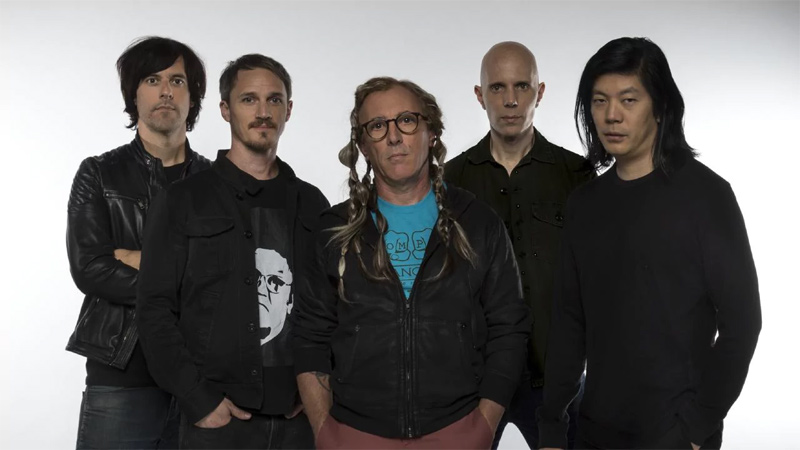
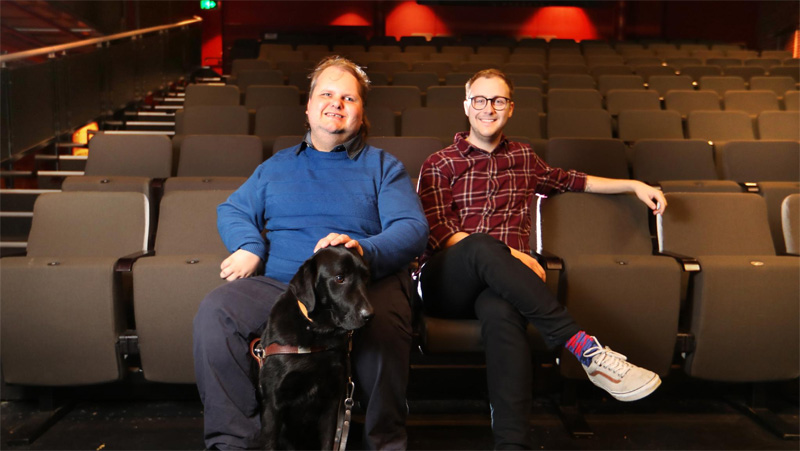
The newest contender on the Australian market is named Rdio [pictured above]. It’s web-based and also has apps for the main phone platforms (iOS, Android, BlackBerry… Windows Phone?). It was founded by a couple of the guys behind Skype, it’s been public in the States since August 2010, and it’s pronounced exactly like it’s written (‘radio’ minus the ‘a’). For AUD$13.90 per month, you get access to unlimited PC and mobile streaming of their library, which apparently consists of over 14 million songs. Ahead of a launch party at Bondi’s Beach Road Hotel in early February 2012, a couple of the Rdio guys flew me to Sydney, bought me lunch, and answered my questions as best they could.

Andrew: How long has Rdio’s Australian launch been in the works?

Scott [Bagby, VP Strategic & International Partnerships; pictured left]: I first came down to Australia to start the discussions at Easter 2011. We were pretty much sewn up by the end of the year. So not quite a year.

There’s been a few streaming services available in Australia over the last few years, but none of them have had any real success in terms of market penetration. Is that fair to say?

Scott: Streaming services on the whole, globally, are quite nascent. I was just hanging out with a bunch of labels. I can’t verify these numbers, but this label guy told me that worldwide, there’s only about 7 million subscribers, to any streaming service. It is very much in the early days of all streaming services. But the potential is huge. They’re planning on massive growth in the area, especially this year. I think you’ll find that here in Australia, as well. There’s still an education that needs to happen for the user to understand streaming services. [They need to] just learn about ‘em, and use ‘em, and get what I refer to as the ‘a-ha’ moment, of why streaming services are so much better than buying individual tracks.

Carter [Adamson, co-founder; pictured right]: But seven million music subscribers in a world where everyone loves music? There’s a lot of room to grow. For ten years, we’ve had various fits and starts with digital music: DRM, tethered CDs, and that kind of stuff. We have services like Rhapsody in the US, who are stuck at around 600,000 subscribers. Now within the past year, you have more than a handful of services that have well over a million subscribers apiece. That only happened within the past year. You have markets like Australia, where 40% of all music revenue is digital music revenue. Korea’s over 50%. For the first time, digital music revenue globally is growing quicker [than physical sales]. I think we’re now at an inflection point with digital music subscription services.

Scott: The timing’s also great, because of the iPhone and other smartphones. People want to take their music with them. Back in the old days, when I was travelling around I used to have a CD case [for a discman], but that’s just too much of a hassle now. With this streaming service, we have 14 million songs at your disposal, no matter where you are in the world. You can download songs to your phone, switch ‘em out; every Tuesday, there’s new releases [on Rdio]. These sort of things – that’s the education that has to happen, and that’s the ‘a-ha’ moment when you get all of that going. The perfect alignment of the ubiquity of smartphones is what’s really helping it along.

Carter: Well, connected devices. Any single device that can talk to the internet is a playback device now. Whereas before you had one device; a record player, CD player, 8-track player. Now there’s a wide array of devices that are effectively playback devices, so it no longer makes sense to buy one song for each device. It no longer makes sense to port all the downloads that you bought a la carte via external hard drive to every single device that you have. The only thing that makes sense is for you to access it seamlessly wherever you are, using whatever platform or device you have.

Using the US service as an example, what percentage of users are using Rdio on their phones?

Carter: Over 85% of our subscribers are on the higher-priced tier. [Note: PC-only access to Rdio is AUD$8.90 per month – five bucks cheaper than the PC/phone combo.] And that makes sense, because the value proposition has always been seamless mobility. People always wanted to move their music around. No-one’s ever bought a song on iTunes to just play it on their computer. They’ve been waiting for 10 years for this whole seamless mobility thing to become a reality. Now it’s finally here.

Scott: I think that’s one of the reasons that the music industry faced such a piracy problem in the past, because they didn’t offer it in a format in which people wanted to consume music. Now that it’s coming into that format, you see a lot of people moving into services like ours. They wanted to listen in several places at once, but they couldn’t, so the only way they could do it is to steal it. It was still happening up until a month ago in Hong Kong. Everyone was saying, ‘I want to buy music, but there’s no iTunes, there’s no digital services here. I can’t buy what I want; you leave me no choice but to steal it’. These people were lawyers, bankers – people that had the means [to pay], they didn’t want to steal it, they just didn’t have it.

Carter: And also, the price has never been so low. We’re talking about 34 cents a day for access to the world’s music, across all your devices. That’s an insanely low price.

Tell me about that education process you mentioned earlier. How do you turn seven million streaming music subscribers into seven billion?

Scott: [laughs] Well, one of the benefits is to have your music everywhere and anywhere. Part of my job is to go around to all the different countries and get the rights sorted, so at least it’s available to everyone. Once it’s available, the education process is an ongoing one. And it’s one for the entire industry to be involved in. The best way to get there is to allow people to get that ‘a-ha’ moment. That moment comes at certain times, like when they’re at their friend’s place, they’re sitting around and they want to hear that song from their childhood that they’re all laughing about. Obviously no-one has it in their collection anymore, but then you – boom – you stream it down, you get a big laugh, and it kicks off. You can almost have Rdio and some beers, and you have a party.

I think a lot of people would be using YouTube for that purpose at the moment.

Scott: But YouTube, again, isn’t all that mobile. I mean, not as mobile as Rdio is.

Which labels do you have on board for the Australian launch?

Scott: We’ve got all the major labels, and we have some indies like Shock, MGM and Inertia. We won’t open up in any market, anywhere in the world, unless we have the domestic music, as well. At the end of the day, it’s about enjoying the content. That’s what makes a good service – the titles that you have. We have a whole team who just make sure that we have as much music as we can on the service. Funnily enough, I was just in Germany, doing a radio interview with a DJ. She is in love with Australian music, specifically Australian hip-hop. She used to fly out here, buy the CDs, then play it on her station. What she loves about this now is that she can now follow Australian influences [using the service], get the music that she wants, and find new music just through the service.

Will Rdio have an Australian office?

Scott: Yes.

In Sydney, I suppose?

Scott: We’re looking for some key players. Who’s the best person to hire? Once we find that person, they can determine where the office is going to be. Sydney, Melbourne, Brisbane, Perth… they’re all options. It all depends on who the best person is to run [Rdio] Australia.

You talked about the ‘a-ha’ moment earlier. For me, when I was testing out the app, that moment was when I realised that Rdio had taken over the iPod player interface on the iPhone [ie the screen that appears when you’re playing music]. I thought that was pretty clever, how similar and familiar that screen was, even though I was using a web streaming service.

Carter: Two of the most common pieces of feedback we receive: “I just deleted my iTunes collection because I no longer need it,” and “I’ve discovered more music on Rdio in the past two days than in the past two decades”. We’ve obviated a lot of what you would’ve needed iTunes for, and we’ve made it even better with the whole discovery [aspect].

Scott: How we discovered music in our teenager years is we’d go to our mate’s house and you’d wait to hear their song. It wasn’t until you’d heard it a couple of times that you’d go out and buy it. It’s rare that you’d buy a song without hearing it first. That was one of the disadvantages that iTunes has; you couldn’t hear it without purchasing it.

Carter: Every Tuesday, new music comes out [on Rdio]. You don’t have to pay a dollar a song, or eighteen dollars an album: you can play literally everything that’s out on Tuesday. You can save it to your mobile device, you can un-save it and throw it back into the water if you don’t like it. People are consuming more music now. I’ve never seen higher retention or engagement metrics in the 17 years I’ve been doing consumer software, or consumer services. It’s insanely high. People get on it, they love it, they use the hell out of it.

The recommendation worked really well for me. It’s probably a simple thing, but it seemed to work better than most other services I’ve tried.

Carter: We wanted to be the most comprehensive service out there. Unlike the other services, we offer a little of everything. We not only have the social music discovery stuff, which is always front and centre, no matter where you dial up the service; we also have the algorithmic recommendations, which you were playing around with. They’re getting better and better every day as we see more data, and learn more about you. We also have the on-demand aspect; “I know exactly what I want to listen to,” whether it’s a song or a playlist. And we have the passive listening stuff; “I like an artist, but I don’t really know which song or album to play. Just play me some of this artist’s songs, and maybe mix in related artists.” Or you can play your ‘heavy rotation’ or your entire collection as a radio station. Or your network’s ‘heavy rotation’, or collection.

In the US… we haven’t carried it over anywhere else because no-one uses it, but we have built our own iTunes store. So you can buy [songs] a la carte in the US, but we found that no-one uses it, because once you’ve used the streaming service, there’s really no reason to buy stuff a la carte.

How does the Australian subscription price point compare to the American version?

Carter: Scott, I’ll let you take that one…

Scott: [laughs] Thanks. The price point is heavily influenced by the rights holders. Between different markets, we have similar… every market to us is the exact same. So the price point basically was just taking into [account] what we had to pay the artists, the labels and publishers. How does it compare? Unfortunately it’s more expensive than the US market. That was just due to market circumstances when we came here. But we personally didn’t treat Australia any different to the US.

How do you pitch the service to fence-sitters? Those people who say they love music, but rarely pay for it. They might go to a lot of shows, but most of the music they download is via torrents and other shady methods, not via iTunes or equivalent stores.

Scott: I think in general, most people want to do the right thing. Music lovers want the artist to get paid. I’ve never come across a music lover that says, “Screw the artist, I want to steal from them”. I think the key is making the service as easy and quick to use that it’s almost the default. So that you’re almost paying for the convenience. Instead of researching on BitTorrent, I have ‘social discovery’ [on Rdio]. I’ve built my playlists around my influencers. I like a particular DJ, and a good friend of mine knows a lot about music, so it just kinda bubbles up [in my playlist]. What used to take me a half hour of reading different music blogs and listening to their tunes, it just comes to me easily, now. As Carter says, discovering more music in two days than in two decades – that is what’s going to engage these music lovers, and make it worth them spending the money that they would otherwise gain through BitTorrent.

Can the service be used offline, or do you have to be connected to a 3G network or equivalent for it to work?

Carter: You can save as much music as you want to your device’s memory card. So if you have a 32gb iPhone, you can save that much. Again, for 34 cents a day – instead of spending $10,000 to fill up your iPhone or iPad…

The mp3s are saved onto the device’s hard drive?

Carter: They’re locally cached, yeah.

Has that been hacked yet?

Carter: Not yet. [laughs]

What are the most common comments you get when people are engaging with Rdio for the first time?

Scott: The people who’re born before 1980, their concern is: “why am I just renting my music? I want to own it; I want to have a collection.” I think that’s just a lack of understanding of the access model. It almost goes back to the heyday of having a massive CD collection, and looking at it, touching and feeling it. But more and more, as that moves on… there are a lot of 21 year-olds who’ve never owned a CD. So that question is more of a theoretical until they start using the service, and then they realise, “Hey, I can hear all my songs, and it’s actually better because I can hear my entire collection no matter where I am, not just in my house.”

Carter: I think there’s a general lack of knowledge. Most mainstream consumers don’t understand why they need a service like this, but strangely, they’re already doing it with other types of services, like movies, videos and books.  You have a digital book reader; you pull down your books electronically, you don’t have a physical copy. Same with video. They’re getting the fact that, “Oh yeah, this is what I do with other forms of content. Now I have this wide array of connected devices, I don’t need to buy one song for every device.” But I think there’s a general lack of education on why you need the service. I don’t think it’s a resistance, per se.

The desktop client – which is optional to download – has a matching feature, which looks at the music on your iTunes or your computer, and if we have the rights to stream it, it automatically moves it to your Rdio collection. It’s kind of like a locker service, for those people who’ve paid a ton of money – or any money at all – buying digital downloads a la carte. We do that as well. We make it an easier transition.

Going back to what you were just saying about existing libraries; part of my job is being a record critic. It shits me to tears when labels still insist on sending me a CD – which I’ll rip to mp3 immediately anyway – rather than supplying the mp3s so that I can hear the music instantly.

Scott: The industry itself is still in a physical mode. It’s turning around. I get CDs all the time, but I don’t have a CD player. My laptop doesn’t have a CD drive. I can’t rip the CDs. I say “thank you very much” and I usually hand ‘em over to the maid at the hotel. [laughs] It’s a transition period.

Carter: In general, we’re leaving a hit-driven business when you move to services like this. It’s a more personalised view on music. You follow specific people because you like their taste in music. You don’t go to Rdio and look at a ‘top 50’. You go there and you look at what’s relevant, what your friends are listening to. That is a fundamental shift in the industry – along with the mobility [the app allows].

I want to touch on what artists are being paid through Rdio. As I’m sure you’re aware, Spotify had some bad press about how little artists were being paid per-stream. What’s your model like compared to Spotify’s?

Scott: The model’s similar, because the tariff is going to be similar.  There’s a couple ways to approach this question. First and foremost, we don’t know about the labels’ relationships with their artists. Those are confidential. I have no idea how the labels are paying the artists. I know the majority of our revenue goes to the rights holders. How that’s being distributed afterwards is a black hole as far as I’m concerned. Having said that, there’s other ways to look at this. Net present value of money and all that other stuff aside, if you buy a [music] download, you only get paid once. That person can listen to that song thousands and thousands of times and you don’t get paid for that. On Rdio, you get paid every single time that song gets played. If it’s a good song, and it goes on for a long time [in terms of popularity], you’ll get paid a lot more than you’ll ever get paid than by a [single] download.

The second way of looking at things is, there’s been cases where artists or labels will pull their music off streaming services off Spotify. It was funny, because this label guy I was talking to – the one I mentioned earlier – was talking to a big artist of his. He turned around and said, “OK, you want me to pull it off streaming for these reasons? That sounds good. So you want me to close YouTube as well, and also the radio?” [The artist] was like, “No no no, keep those open…” The label guy was like, “Hang on a second. You make 200 times more on the streaming service than you do on YouTube, and 150 times more on the streaming service than you do on the radio. So… I don’t understand your reasoning.”

So I think there’s another education [required] on how these [services] can help and build the labels. The actual money pool for these artists, as of 2011 – two months ago? It probably was too nascent, too small to be anything significant to walk away from. However, the way that the ‘hockey stick’ [graph] of digital music and streaming services are going? I don’t think you’ll see those same stories this time next year, because the pie is getting bigger. That is one of the biggest complaints – that dollar-for-dollar, they’re not getting as much from our service as they are from iTunes. But the iTunes pie is a hell of a lot bigger than seven million people worldwide. I understand the gripe now – again, I don’t know what [the artists] are getting from their labels – but if they look at it in a promotional way and also that this is a nascent service and it will grow, you’ll see more and more people come online and stay online.

Carter: In a nutshell, we’re driving up music consumption. Once people are on this service, they’re listening to a lot more music. As Scott said, there’s been a model shift in terms of how they’re paid. So you’ll no longer get paid from only one transaction; you get paid each time you play a song. And we’re driving up consumption. So theoretically, that should even out very soon, as we get to scale. The other part of the equation is, we’re hitting segments of the music value chain that have never paid for music, or only pay $30 or $40 a year through iTunes gift cards. We’re reaching new segments. More people will be paying for music again, as we reach scale.

Scott: And not only that, but the smaller independent labels in each country – because we do worldwide deals – we’ve now given them reach, very quickly and with no cost to the label or artist. In America, in Brazil, in Germany. That exposure can translate into a great opportunity that they’ve never thought of before.

Carter: They can be big in Japan.

Scott: Yeah – it’s not just a t-shirt! [laughs] Going back to our Skype days; when we first launched Skype, we had no idea that Brazil was going to be as big as it was [in terms of users]. It was huge. I’m sure there’s some artists sitting here going, “I don’t know if we can do stuff in Brazil.” Now they’re getting feedback from streaming services and they’re like, “OK, everyone in Brazil is streaming our music, now it makes sense for us to tour there, rather than taking a blind punt.” Or maybe they wanted to go to Rio anyway, which is an understandable blind punt. But this sort of exposure is global, at very, very little cost.

Those are some well-rehearsed answers to a very hard question.

Scott: [laughs] Well, we think about it. It is a concern for us. Because if all of a sudden, the artists don’t want to be on streaming services, we’re in trouble. But we’ve thought about it. It’s an industry-wide discussion.

++

Andrew McMillen (@NiteShok) is a freelance journalist based in Brisbane, Australia.

For more on Rdio, visit their website.

Australian Penthouse story: “The High Road: Silk Road, an online marketplace like no other”, January 2012

February 7th, 2012

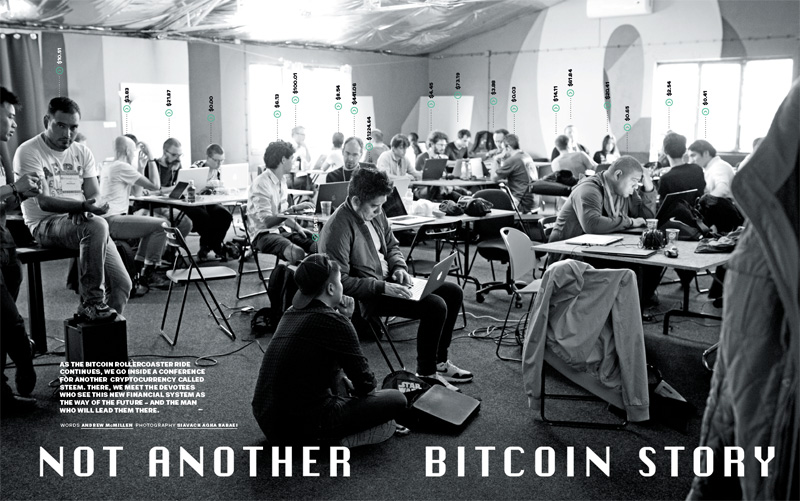
A story for the January 2012 edition of Australian Penthouse, reproduced below in its entirety. Click the main image for a closer look (which will open a PDF in a new window), or read the article text underneath. You can click any of the below images and screenshots for a larger version, too.

The High Road
by Andrew McMillen

Silk Road is an online marketplace like no other. Totally anonymous, the website uses sophisticated encryption software and a digital currency to facilitate the worldwide sale of prohibited items, particularly illicit drugs. Australian Penthouse investigates.

“Imagine how exciting it is when you get something in the mail; even the shittiest thing, like a free sample. But in this case, you’re getting drugs that you really want to take, and get high on. It’s a compounded experience of excitement; an exponential high.”

A 24-year old man who lives in an inner-city suburb of Brisbane is describing what he felt upon opening his mailbox one day in 2011 and discovering a package containing one gram of cocaine. It was addressed to a person who does not exist. He does not know the source of the substance beyond its country of origin. This was not the first time he had purchased drugs online; his first order was for one gram of MDMA powder. That package was sent to a house that he knew was unoccupied; it took around nine days to arrive from Canada. He checked the vacant mailbox daily. “I’m still waiting for some undies off of eBay from Hong Kong,” he says. “[The MDMA] arrived way quicker than that.”

Why the alternate address in the first instance? “Because having something illicit sent in the mail seems fairly thick,” he replies. “It seems so simple; too good to be true. I wanted to put some form of buffer between myself and the order I made, as a ‘test run’.

“One day it was in there and it hadn’t been intercepted. I didn’t get immediately arrested when I took it out of the mailbox. Since I didn’t use my real name, it didn’t seem possible to get traced back to me. It still hasn’t been.”

These orders were made using a website called Silk Road. It can only be accessed after installing anonymity-enabling software called Tor. All purchases are made using Bitcoin, a currency which only exists online and whose public transaction history can be untraceable if handled correctly.

My interviewee randomly discovered online mentions of Silk Road in May 2011, and pursued the intriguing concept all the way through to installing Tor and trading Australian dollars for Bitcoin; a process he calls “semi-prohibitive” owing to the persistence and tech-knowledge required to check all the boxes before users can place an order. In four transactions, my interviewee has ordered three grams of MDMA and three grams of cocaine at a cost of “close to AUD$700”.

So what motivated him to take a chance on buying illicit substances online from a complete stranger?

“I’m interested in taking drugs casually, but I hate the process,” he says. “I don’t know any dealers. Even if I want to get weed, I don’t know anyone, so it always becomes this drawn out process of finding someone who knows someone who knows someone. It’s a real pain in the arse. Whereas this way, it’s so direct and private. I didn’t leave my room, and then nine days later there was something in the mailbox that was for me. It’s discreet and exciting. Imagine the fun of shopping on eBay, but then you can also get high.”

Visiting Silk Road for the first time, I feel a little like Alice falling down the rabbit hole. After downloading the correct Tor software bundle, I connected within five minutes. A warning appears at the bottom of the registration screen: “Be advised: This website is experimental. We do not guarantee your anonymity, protection from law enforcement in your jurisdiction, or protection from other users of this service. You and you alone are responsible for the risks associated with entering and using this website.” The site does not request any information from its users beyond a username and password; not even an email address. And then, you’re in.

The site’s bright, clean design displays images of nine items for sale; among them, ‘red joker’ ecstasy pills, one-ounce of the ‘purple kush’ cannabis strain, a $50 Australian banknote and syringes. When I first visit the site in late August 2011, one bitcoin is worth USD$11.15; a fortnight later, the exchange rate has dropped to USD$6.18 per bitcoin.

The nine ‘featured’ items change upon each page refresh. A column on the left categorises the goods for sale: ‘drugs’ is split into sub-categories like ‘dissociatives’ (11 items for sale), ‘psychedelics’ (123 items), ‘stimulants’ (65) and the most popular category, ‘cannabis’ (237). Other categories include ‘digital goods’, ‘money’, ‘XXX’, ‘weaponry’ and ‘forgeries’.

At first, it’s a little overwhelming. What Silk Road [SR] offers is the online equivalent of strolling down a dim-lit alley filled with surly guys wearing heavy trenchcoats, except that you can contemplate purchasing their goods while lounging in your underwear, without fear of being stabbed.

Each page on the site generally takes a few seconds to load, regardless of the user’s connection speed, due to an overcrowded Tor network. A page called ‘how does it work?’ describes the site as “an anonymous marketplace where you can buy and sell without revealing who you are. We protect your identity through every step of the process, from connecting to this site, to purchasing your items, to finally receiving them”. Lengthy guides for both buyers and sellers are freely available. The latter guide states that “every precaution must be taken to maintain the secrecy of the contents of your client’s package. Creatively disguise it such that a postal inspector might ignore it if it was searched or accidentally came open.”

It concludes with a ‘final note’: “Regardless of your motivations, you are a revolutionary. Your actions are bringing satisfaction to those that have been oppressed for far too long. Take pride in what you do and stand tall.”

There’s an active and boisterous SR forum community, which is hosted off-site and requires an additional registration; this process requests an email address, but a note states that it doesn’t have to be a legit address.

After poking around the site and smirking at some of the items for sale – condoms, an e-book of Neil Strauss’ pick-up artist classic The Game, military training manuals – I decide to engage with a few sellers by requesting interviews using the site’s private messaging system.

Within 10 minutes, three sellers respond enthusiastically to my request; one says, “I’ll even give you a media discount if you order.” The website’s administrator, who goes by the username Silk Road, also responds. “Sorry, we aren’t doing interviews at the moment,” he says. “Good luck.”

Of the 27 SR sellers I approach during a two-week period on the site, seven respond thoughtfully and at length to my questions. They are mostly based in the US and Canada, though one is Australian. All seven request that I don’t mention their usernames. A few prefer to conduct the interview using PGP text encryption, which adds another element of spookiness to the situation. Most of the sellers found their way to Silk Road after the site was covered online by Wired and Gawker in June 2011.

When I ask what they like about Silk Road, I’m met with a range of responses. “Being able to provide a safe and anonymous way for someone to purchase that they choose to put into their body,” says one seller. “It’s nice how it turns drug dealing into an office job, with less risk and more stable demand while interacting openly with customers,” replies another. This focus on administrative duties is echoed by another seller, who says it’s “nice to have everything so organized and centralized, it really cuts down on the time spent per order which is a huge plus when you’ve got a mountain of them to work through.”

One source remarked aloud, ‘this is the future’, upon finding the site. “The free market has provided for one of the oldest needs in human history,” they elaborate. “[SR] removes the elements of danger that exist in in-person black market arrangements, and offered anonymity for all parties involved.”

I ask what sellers don’t like about the service. One tells me, “while the majority of users are honest and trustworthy, you always have to keep your guard up. There are plenty of scammers here on SR.” Another is frustrated by the long wait between making a sale and receiving the bitcoins in their account. “It can take a while for people to finalize transactions, so the money gets stuck in escrow until the customer remembers to finalize, or it auto-finalizes after like 20 or so days.”

One seller is concerned about the silo-like nature of the site: “Having everything organized – vendor statistics easily accessible, reliance on a single server, etc – all makes any vendor, or even SR itself, a juicier target for LE [law enforcement].” An Australian seller replies, “I don’t like being out in the open. Even though I feel rather anonymous within SR, I could always make a simple mistake with my packaging or use of encryption that would give me away.”

A few of my respondents reveal that they have sold drugs in the real world. One dubs the online process “much easier” than face-to-face sales. “SR buyers have no info about me whatsoever. Whereas with a face-to-face transaction, a buyer might know my name, what I look like, the car that I drive, or the city that I live in. So if they get caught, LE goes up the food chain. Here on SR, there’s nowhere for LE to go.”

Another seller says SR is preferable because it “takes potential violence right out of the equation, and mitigates theft; you can’t exactly take someone to court for robbing you during a black-market trade, which is why there is so much violence. I prefer SR to offline, any day of the week.” One seller candidly replies, that SR is “better and cleaner. Customers are more educated and nice, and it leaves you more spare time to study, play with the kids, and clean the house. It’s telecommuting at its finest.”

None of the seven sellers I interviewed would detail how they package the illicit substances sent through the international postal system. A couple mentioned that it’s an unwritten law among SR sellers to not disclose such methods, though I learn by reading the forums that vacuum sealing is common. The young man from Brisbane who received MDMA and cocaine in the mail didn’t want to discuss the appearance of the packages he received, either.

All this illegal activity must be a rush, even if the process does become somewhat normalised due to the volume of orders that some sellers process. I have one final question. What does it feel like to sell illicit drugs over the internet to complete strangers?

One replies, “honestly, it can be quite nerve racking. I have no idea if I just sent some illegal items to LE. That’s why it’s so important for a good vendor to use all precautionary tactics to keep important info away from them. Leaving no DNA or fingerprints, and sending from an area where you don’t live. It’s not unusual for a vendor to be wearing hairnets and multiple layers of gloves while packaging the material. If there is even a one-percent chance of some identifying marks on or inside that package, it will be thrown out.”

Another says, “It’s awesome. Most of the users on Silk Road are good people, and it’s always been a pleasure providing them goods that their corrupt governments have denied them. By simply living our lives and doing what we want to do, we break the government’s iron fist. It’s pretty satisfying.”

“It feels great,” agrees another. “I get to make a positive contribution in the lives of people who otherwise wouldn’t have access to drugs, such as old folks, and people in remote locations.” The seller shares some feedback received by a buyer that they found “really touching”. The feedback reads, “I don’t want to sound all sentimental and crap but in all honesty, my friends and I have become closer and happier with ourselves and each other, thanks to you and your stuff. It’s really been a bonding experience for everyone. We aren’t really the partying type and instead like to chill and talk for hours. Thanks to you, we have shared some amazing experiences.”

The seller tells me that “getting feedback like that makes those nights spent sweating over a hot vacuum sealer seem worthwhile!”

For more on Silk Road, visit its Wikipedia page.

Mess+Noise ‘Storytellers’ article: Gotye – ‘Hearts A Mess’, February 2012

February 6th, 2012

An interview for Mess+Noise. Excerpt below.

Storytellers: Gotye - ‘Hearts A Mess’

ANDREW MCMILLEN revisits our occasional “Storytellers” series, whose premise is simple: one song by one artist, discussed at length. This week it’s Gotye, the Lana Del Rey of M+N, but not for the song you might expect.

It feels a little strange to revisit what was once Gotye’s biggest hit in light of the monster that is ‘Somebody That I Used To Know’, the Melbourne-based songwriter’s 2011 collaboration with Kimbra which topped the Hottest 100 and has since clocked up more than 63-million views on YouTube since being posted last July.

Yet without that track’s runaway success, Wally de Backer might not have felt as comfortable in discussing ‘Hearts A Mess’, the third track from his 2006 album Like Drawing Blood.

When I first approached de Backer via email in May 2010 to raise the possibility of a Storytellers feature about this song, he declined, stating that, “I’ve talked about that song a lot, and I’m working on new stuff, trying not to look back at the moment.” I picked up the thread again in September 2011 and found him in a place where he seems more than happy to look back.

Between overseas trips and a 10-date Australian tour, we spoke at length over the phone about the track that charted at #77 on triple j’s Hottest 100 Of All Time countdown in 2009.

Gotye on ‘Hearts A Mess’

‘Hearts A Mess’, with apostrophe, not without, correct?
[Laughs] To be honest, I think the lack of an apostrophe was just an oversight. Which, for me – someone who’s fairly fastidious with grammar – it’s quite hilarious. It was an oversight at first, then I just decided to leave it.

Does that mean your high school English teachers are cursing your name for making such a simple mistake?
[Laughs] It’s funny. I’m actually in touch with my Year 9 high school English teacher reasonably regularly. He sends me [album] covers to sign for his friends in random places like Scotland and South Africa. He’s never mentioned that before. [Laughs]

Do you feel like you’re in a good place to reflect on this song now, after it’s been superseded by a bigger hit?
I guess so, yeah. I guess the songs are kind of related; the place in the track list on the respective records, the kind of emotional terrain, my own possible scruples while putting together this record [Like Drawing Blood], wondering whether the song ‘Hearts A Mess’ was the high watermark of what I want to achieve with my music – at least in terms of the response from people, the connection with it. So that’s been interesting to see [‘Somebody’] take off and eclipse it, from one perspective.

I believe ‘Hearts A Mess’ was two years in the making. Is that correct?
Yeah. It’s like a macro example of my whole process. It spanned the whole making of the last record.

Where do you start, with a song like that? The final product is so smooth and seemingly effortless, but I know there are so many layers going on underneath.
Well, quite specifically, I started with laboriously editing multiple snippets of Harry Belafonte’s ‘Banana Boat’ song [embedded below] into a coherent, one-bar loop of music. That was an interesting process in itself. I’ve never edited bits out of a track so extensively, to then reconstitute them into such a small amount of music; that one bar. For whatever reason, when I heard the possibility of chopping around Belafonte’s vocals to get into the backing track of that recording, and turn that into a loop to underpin a possible track … I don’t know. Right from the start, that loping groove had something for me that felt – how can I describe it? Like it had something special about it. I felt the desire to keep that specialness right to whatever the end product, whatever the song would become. That pulled me forward through the pretty extreme length of finishing the song.

It’s almost like I committed myself; in that regard, I feel like ‘Somebody That I Used To Know’ is quite similar, to a lesser extent, because the little two-note guitar lines from the Brazilian guitarist Luiz Bonfá that I sampled [in ‘Somebody’] also started that song off. It didn’t necessarily have as much of a hypnotic pull for me as that bar loop that underpins ‘Hearts A Mess’. It still felt the same thing. I was like, “This has an aura about it that I can’t quite describe, and I just need to not fuck that up. And anything I add feels like it has to enhance that and feel like it stays with that initial aura that I sense, whatever it is”. In both instances, that would lead me through to the final song.

How much live instrumentation was recorded?
For ‘Hearts A Mess’? None. Oh, not true. The shakers are played by me. [Laughs]

At what point did you begin introducing lyrics to the equation?
I can’t remember whether it was before or after I had some of the “hook” figure, like the Hammond line that’s in there. I think it might have been before. I basically had that kind of loop from the ‘Banana Boat’ song, and I had some textural things like the lofty string bits that provided a sense of the chord progression over that loop. Then I started bits of the verse, and found bits of strings that would give some of the descending chord progression the turnarounds throughout the song … There’s an interim bit in the song with the lyric, “Love ain’t fair/So there you are/My love.” I had that penned as an anti-chorus for the song. The chorus was written quite late, and I had it penned as a textural piece that just had these little drops, that functioned as anti-choruses for probably the good first six months to a year of it sitting around, as a piece.

In the second verse there’s a bit of call-and-response going on between your vocals. What was the intention there? Was that the narrator arguing with himself?
Yeah, as it usually is. Possibly even more so on tracks from the new record [Making Mirrors]. There’s kind of multi-voice conversations happening in a few songs, which I think usually represents the various internal dialogues that sometimes can go on in my head, or the discussions that you sometimes have with yourself: second-guessing yourself, playing devil’s advocate.

For the full interview, visit Mess+Noise.

The Vine live review: Roger Waters ‘The Wall Live’ in Brisbane, February 2012

February 6th, 2012

A live review for The Vine. Excerpt below.

Roger Waters – ‘The Wall’ Live
Brisbane Entertainment Centre
Wednesday 1 February 2012

If rock music is, at its heart, a mad combination of theatre, escapism and expression, then The Wall Live must be the warped apex of what rock music was designed for. It has to be said that this is an absurd concept: a band playing the entirety of an album released 32 years ago, while a 12-metre-high white wall is constructed between musicians and audience. It is the product of a brilliant imagination and a breathtaking commitment to realising an absurd concept, night after night, in a series of far-flung countries over the last 18 months. To think that one man envisioned all of this, notebook in hand, is incredible. The logistics of this tour and stage coordination alone is enough to make my head spin.

Tonight marks the 125th time that this show has been performed since its debut in September 2010. It is a spectacle; an event. Something to get dressed up for; in your best Pink Floyd t-shirt, if the majority of the crowd can be used as a measure. Shortly before the show starts, when everyone’s settled in their seats, a disembodied voice instructs us to turn off the flash on our cameras, as “all you’ll see is white bricks” in the captured image. And that it’ll mess with their projections. A lonely horn plays over the PA in a darkened room. It feels like misdirection. We’re looking around, into the abyss, wondering what’s going to happen.

Then: the band hit the first chord of ‘In The Flesh?’, pink fireworks launch from the stage into the ceiling, and Roger Waters emerges with his arms held aloft like a prize fighter, soaking in the applause while his band casually work through the track. A stagehand places a thick black trenchcoat upon his shoulders, he dons black sunglasses, and says into the microphone: “So you thought you might like to go to the show? / To feel the warm thrill of confusion, that space cadet glow?” By the end of the song, rows of sparks are cutting across the top and bottom sections of the stage, seemingly showering the band in a hail of white-hot fury; flag-hoisting Nazi look-alikes are being hoisted skywards on a mechanical lift; and a fucking airplane descends from the ceiling, somewhere above the sound desk, and knocks over part of the wall while flames lick its exterior. It is the most jaw-droppingly elaborate concert introduction I’ve seen – and I saw Kanye West last week. Someone behind me jokes, “We might as well go home now.”

Waters cuts a distinctive figure on stage. Clad in all-black, wearing white sneakers and luminiscent silver hair; but for the bass regularly held in his hands, he’s pure cat burglar. He is the archetypal bassist/frontman combo, perhaps the best we’ll ever see [Waters vs McCartney? - Ed]. And all of this belongs to him. It’s difficult to avoid discussing economics when it comes to this show. We’ve all paid stupid amounts of money to be here — albeit happily. Though he’s doing three shows at this particular venue, The Wall Live is a once-off proposition.

For the full review, visit The Vine.

Mess+Noise story: Interview with Heatwave Festival founder and CEO Patrick Whyntie, January 2012

February 6th, 2012

An interview for Mess+Noise. Excerpt below.

Heatwave Promoter Breaks Silence: ‘We Bit Off More Than We Could Chew’

In his first interview since his fledgling hip-hop festival came to a dramatic close last week, besieged Heatwave promoter Patrick Whyntie tells ANDREW MCMILLEN that he’s determined to prove doubters wrong. 

A festival “worse than any other failed festival in the history of Australian music” was how Tonedeaf reported on the final leg of Heatwave 2012, a national hip-hop tour that began in South Australia as a three-night camping festival on January 12 and ended in Melbourne on January 22. Between those dates, capital city shows were booked in Brisbane, Sydney, Perth and Canberra, in some of those cities’ biggest venues.

The festival debuted in January 2010 with a single South Australian show, at Abbotts Reserve, 90 kilometres south of Adelaide. Headlined by American rapper Xzibit and Australian DJ tyDi, the all-ages event was attended by an estimated 800 people.

Festival founder Patrick Whyntie – who also performs under the MC name Mastacraft – was 22 when he staged the 2010 show. His LinkedIn profile states that he has “been around the Australian entertainment industry for 10 years” and has “connections from Australia all the way to Detroit”. Whyntie had previously told the Victor Harbor Times that people were “blown away” by the first event. “There are a thousand things I can grow and build on for next year,” he said at the time, “but we had tons of security and everyone was safe.” Though there was no 2011 event, Whyntie returned to concert promotion in 2012 with a significantly ballsy move: a national hip-hop tour.

Announced some 35 days before the tour’s first date, Heatwave 2012 – featuring Kid Cudi, D12, Obie Trice, Tech N9ne, Chamillionaire and Crazy Town – was an eclectic proposition from day one. By the end of the 10-day stint, D12 had missed most of the tour due to mishandling immigration paperwork, the Perth show was cancelled via Facebook on the day of the event, and the whole thing culminated in a disastrous Melbourne leg that saw liquor licensing issues, a no-show from Chamillionaire, and Kid Cudi trashing the stage after power was cut due to reported schedule mismanagement. A couple of Facebook hate pages emerged in the wake of the Melbourne show, with punters calling for refunds and describing it as “the biggest music festival fail ever”.

Schadenfreude runs rife in the notoriously vicious live music industry, so it was unsurprising to see sections of the Australian music media taking delight in Heatwave’s perceived failures, especially following recent debacles such as Blueprint and BAM!. However, recent Flo Rida and Mos Def tour cancellations have highlighted how bringing US hip-hop artists in this country can be an exercise in hair-pulling frustration at the best of times, not to mention the difficulties faced by even seasoned promoters such as the Big Day Out’s Ken West.

In an email interview with M+N, 24-year-old festival founder and CEO Patrick Whyntie speaks for the first time about the controversial 2012 events; his regrets, the so-called media “misrepresentation”, dealing with Kid Cudi, and what he’s learned after coordinating his first national festival.

What inspired you to become a festival promoter in the first place, Patrick?
Festivals are great fun and I wanted to bring some entertainment to my local area – which has never seen anything like this.

I’m guessing that the 2010 event was a big learning experience. What did you learn?
Quite a lot: from visas, to how much fencing was required, to how to deal with on-the-spot problems. A substantial learning curve.

Who funded Heatwave 2012?
Outside investment.

Leading into your preparations for the 2012 event, were you concerned about whether or not the Australian market could support a national hip-hop festival like Heatwave?
I think if all the stars align, any genre of music can be supported. It’s always a risky business, and things need time to grow. We did go too big, too quick.

It seems to me that the festival’s main point of differentiation is its low cost. The festival’s marketing reflects this, and I saw on the event Facebook that you even taunted rival festivals about this. How did you manage to keep costs so low?
We decided to put prices extremely low – the cost of, say, one concert act – to attract more people in. We took a risk keeping them low.

Did the 2012 line-up reflect your particular musical tastes, or were you aiming to book a diverse group of bands to attract as many people as possible?
Hip-hop is obviously my fave genre, however I listen to a wide range of music. We booked a range of hip-hop – from mainstream to underground – to reach all bases.

Tell me about how you were feeling ahead of the tour’s first show, in Adelaide. Did you have all your ducks in a row? Were you happy with how the event planning and set-up went?
Costs blew out substantially and we were having battles with council and police to keep the event going. This cost quite a bit of money and time, fighting something they should have supported. The camping festival [in SA] was a huge undertaking, and in hindsight, we would preferred to have concentrated solely on this [event], and had other national promoters taken the other states.

At what point were you told that D12 had missed their flight?
D12 was an ongoing struggle to coordinate them here to Australia. There was a range of problems. We were desperately trying to negotiate them getting here for the Saturday [for the first weekend, at the SA camping event], or even the Sunday.

What happened next? Did you have a contingency plan in place, or did you have to scramble to make new plans?
Just like most major festivals, an act sometimes does miss a few dates. We moved things around, of course.

How many staff did you employ to assist with the festival?
It varied in each state. SA had well over 50 staff, and even more volunteers.

You told me via email that the Sydney and Canberra shows were “awesome”. What worked with those two shows, as opposed to the rest of the tour?
Sydney ran well both nights, though minor problems occurred. The crowd was great for Sydney, aside from a guy running on stage and quickly being removed by our security guard.

For the full interview, visit Mess+Noise.

The Vine story: Interview with Fat As Butter promoter on Flo Rida cancellation, January 2012

February 6th, 2012

An interview for The Vine. Excerpt below.

Interview: Fat As Butter on Flo Rida cancellation: “Some hip-hop artists tend to disrespect Australia.”

An eleventh hour cancellation is every live music promoter’s worst nightmare. Last week, we published an interview with Mos Def’s 2011 Australian tour promoter, who also revealed – in graphic detail – the financial burdens attached to such outcomes.

Another prime example of this type of behaviour on the Australian touring circuit occurred at the 2011 Fat As Butter festival at Newcastle’s Foreshore Park, on 22 October. Headlined by Empire Of The Sun, The Living End and Illy among a line-up of 38 Australian and international acts, event promoters Mothership Music had also booked the American rapper Flo Rida (pictured, with orange) – known for such modern classics as ‘Low (feat. T-Pain)’‘Good Feeling’ and ‘Right Round’ – to play the main (‘Fat’) stage at 5.10pm, after The Jezabels and before Naughty By Nature. Twenty minutes before he was due, organisers received a phone call from his tour manager: Flo Rida wouldn’t be able to make it to the show. Uh oh.

The aftermath was covered in detail by FasterLouder, and event organiser Brent Lean posted the following message on the festival’s Facebook a couple of hours after the cancellation: “We’re as upset as you are. We paid Flo to appear months ago and since he’s been on his Australian tour, he’s been an absolute Tonk. He’s been in Sydney today, and he’s had a hissy fit. We did everything we absolutely could to get him here, but he wouldn’t come. We’re absolutely devastated he decided not to be a part of Fat As Butter.”

What happens next, though? What recourse does a burned Australian festival promoter have in terms of recouping the artist fee they’d paid to Flo Rida and his entourage months in advance? I connected with Mothership Music managing director – and Fat As Butter promoter – Brent Lean back in November 2011 to find out.

TheVine: It’s been a couple of weeks since the Flo Rida incident went down, Brent. How are you feeling about it all now?

BL: Look, we’re OK about it. We’re going about the correct processes to find out exactly what happened. We know the circumstance of what happened, but now we’re in the process of seeking the return of the [performance] fee. That’s with the agent and record company over in America. Overall it’s disappointing he didn’t appear, but we’re happy that we got the message out there so that the fans know exactly what the circumstance was. We’re just being truthful in the process.

At any point during the negotiation process did you have an inkling that this might happen?

No, not at all. We bought the show from another company that was touring him in the country. We were tracking his movements at other shows, leading in [to the festival]. We were aware of certain incidents and bits and pieces that made us wary, but they were more about when he was at the event, as opposed to whether he’d turn up. At no point did we think that he’d cancel, and not show. That was never on our radar.

You always expect that something may go wrong, and you work every contingency you can to avoid that, but at the end of the day, when the news came through that he was cancelling, that was an absolute shock. We had to go into damage control straight away, because it’s a large festival – with 38 acts appearing – so we had to work out how to fill the spot and advise the punters. We understood that they’d be very frustrated and disappointed by the announcement. We had to go into contingency plans as to how to handle that.

Will you be hesitant to book hip-hop acts in future, having had this experience with Flo Rida?

Not really. You pick and choose where they’re at. Last year we had Ice Cube headline Fat As Butter, and he was an absolute joy to deal with. Very professional; met all of his contractual obligations, we met all of ours; a hug at the end of the night and ‘great job’.

What we do find with some hip-hop artists is that they tend to disrespect Australia, I think. They tend to disrespect the audience and promoters, because effectively – and it happens quite often – they don’t stick to the terms of their contracts. They arrive here, then they’re seeking additional things on top of the contract; left, right and centre. And in some cases, strong-arming promoters into paying for additional things outside of the contract.

Now, in comparison to Australian artists? That would never happen. In the 20 years I’ve been doing [event organisation and promotion], I’ve never had a contract dispute with an Australian artist. Everyone’s up front; everyone signs a contract, everyone knows what the terms are, and each party meets those terms. I find it very disappointing that, for whatever reason, some of the American hip-hop artists can come out here and think that they can disrespect promoters, events, and the audience by, clearly, wanting additional conditions – or money, whatever it may be – outside of the signed contract. And as I said, and I don’t mind saying it: strong-arming promoters into doing that. It’s disappointing.

So without a doubt, buyer beware. All you can do is make sure your contract is watertight, and then you need the strength of your convictions to say, “Well, I’m not going to give you anything outside of that contract.” I think in the past, perhaps, [Australian] promoters have given in to the additional considerations, or whatever they’re trying to put on you, and there seems to be a threat, at times. For us personally, we just don’t stand for any of those sorts of things. If we’ve got indications through the negotiating process that anything like that is going to happen, then we’d rather not have them appear on any of our shows.

For the full interview, visit The Vine.

The Vine festival review: Big Day Out 2012, Gold Coast

February 6th, 2012

A festival review for The Vine. Excerpt below.

Big Day Out 2012
Gold Coast Parklands
Sunday 22 January 2012

Twenty years into this festival’s existence and strangely, the Big Day Out has less cultural relevancy than ever before. Or so you might believe if you paid attention to the Australian music media in the months leading up to the 2012 event. Or the BDO Facebook page. There irate fans compiled a list: the line-up’s shit, all the acts are tired and stale, they booked The Living End for the 18th year in a row, they’ve been beaten to the punch by specialist festivals booking bigger and better acts, Kanye West isn’t a proper headliner – ad nauseum. No wonder festival co-founder Ken West got vocal with frustrations at such concerns.

So travelling to the Parklands today, I’m half expecting to spend the festival in a relatively empty venue. It’s a pleasant surprise to be completely wrong. This show isn’t sold out – none of the 2012 shows reached capacity, for the first time in a long time – yet it’s hard to discern much of a drop in attendance. Despite the vocal online haters, a summer in Australia without a Big Day Out to look forward to seems a sad prospect. This year’s tour needs to be excellent if the event is to survive, and it needs to start here on the Gold Coast.

Up first on the Orange Stage is Abbe May and her three offsiders, who play compact, elegant rock songs led by May’s strong voice and commanding stage presence. The Perth-based singer evokes memories of Magic Dirt’s Adalita Srsen in full-flight; boot resting on the foldback, guitar held aloft. There’s a lot to like here for rock fans, and she seems to impress a lot of newcomers today as her crowd slowly swells past triple figures. Next on the Green Stage are Stonefield, who’re running 15 minutes late due to transport issues. The four Findlay sisters are forced to swallow the embarrassment of soundchecking their own instruments before a nearly full tent. Once they start playing, though, they’re thoroughly impressive. This tour could mark the beginning of their transition into a band who deserve to be taken seriously: strong musicianship, quality songwriting and a formidable frontwoman in drummer Amy Findlay. They cover Zeppelin’s ‘Whole Lotta Love’ and it slays: the day’s first goosebump-provoking moment. Funnily, Holly – the band’s bassist, and youngest member at 13 – starts windmilling her hair during the drum solo, apropos of nothing. It’s awesome. The crowd goes wild.

On the Blue Stage, Parkway Drive outline the crossover appeal of their distinctive style of metalcore. By now, they’re essentially a mainstream act, so well-known is their image and presence. In ten years’ time, will we look back on these five Byron boys’ output as one of the defining Australian sounds? I hope so. These songs are etched onto the DNA of a generation of young hardcore fans, and they run through a solid set before a big crowd today. They’re a fine example of a band who clearly enjoy the hell out of their success; there’s nothing but smiles on show today. Singer Winston McCall struggles with the heat but keeps up with his incandescent bandmates; he even manages to catch two airborne water bottles during a single song, ‘Anasasis’. Five huge Parkway Drive-branded beach balls bounce around the D section for the duration of their set, which thoroughly satisfies.

The same can’t be said for OFWGKTA, the Los Angeles hip-hop collective. Today is the day that the Odd Future Wolf Gang Kill Them All bubble bursts. They sound like shit live. I wrote otherwise when they visited Australia for the first time last June, but today’s performance is truly horrendous. It’s not a matter of how the show’s mixed, either: the problem can be isolated to five dudes holding microphones and using them incessantly, rather than sparingly. Each line is barked by the rappers, not rapped. As a result, the sonic nuance that the group exhibit on record is non-existent today; instead, a hodge-podge of disparate, aggressive voices over a backbeat. The crowd at the Boiler Room is huge, and they explode with joy once the five rappers and one DJ – singer Frank Ocean nowhere to be seen, apparently – show their faces. After 15 minutes of watching and attempting to listen to their set, it becomes funny to think about how bad they sound. On record, impressive. Here? Appalling. At times it sounds like they’re just rapping over an mp3; during the Tyler, The Creator track ‘Transylvania’, the group’s original lines can be clearly heard underneath their live raps. 35 minutes in, ‘Yonkers’ could be the set’s only saviour, yet it too disappoints. Tyler barely raps a word; the crowd does it for him. When he does use the mic, he’s drowned out by his bandmates barking his best lines. In a short, it’s a bomb. Which ruins the last chance that this set had of redeeming itself. The crowd leaves en masse at song’s end and I wonder why I’m still standing here.

For the full review and many more photos, visit The Vine. Above photo credit: Justin Edwards.

The Vine story: Interview with Sam Speaight, Mos Def’s Australian tour promoter, January 2012

February 6th, 2012

An interview for The Vine. Excerpt below.

Interview: Mos Def tour promoter Sam Speaight: “I literally broke down and cried.”

One year ago, acclaimed American hip-hop artist Dante Smith – stage name Mos Def (pictured right) – was set to tour Australia for the first time. Eleven shows were booked, including headline festival appearances at Soundscape in Hobart and The Hot Barbeque in Melbourne. After failing to appear at his first scheduled performance in Adelaide, he went on to randomly skip four shows of the itinerary. Such was the ensuing confusion, that following the postponements, cancellations and sternly-worded press releases from the promoter, Peace Music, became something of a sport here at TheVine. For background, revisit our news story ‘Mos Def gone missing on Australian tour’.  (I’m pleased to note that he made it to Brisbane for his Australia Day show, which was actually pretty great.)

What did those four cancellations mean for Peace Music, though? The promoters were awfully quiet for the remainder of the year, which posed the question: “Did the Mos Def debacle put an end to their live music interests?”. In late 2011, I contacted the company’s managing director, Sam Speaight, requesting an interview about the logistics of touring American hip-hop artists in Australia. “I’d love to do this,” he replied via email. “So often promoters are dragged into the street and shot (proverbially speaking) by the ticket-buying public over hip-hop artists’ cancellations and their childlike antics. Few people understand that, in many cases, the promoters have driven themselves to the brink of sanity and financial ruin to avoid an artist cancelling.”

A couple of days later, we connected via Skype. “The total chaos that seems to govern most of all the management side of these artists’ careers is just dumbfounding,” Sam told me from his new pad in London. “If people knew what went on behind the scenes, if nothing else, it would be a spectacle worth reading about.” He’s not wrong.

AM: Tell me about the Mos Def tour, Sam. Was this your worst experience with touring hip-hop artists in Australia?

SS: Oh, yeah. That was definitely the worst example of madness and insanity from an international artist that I’ve ever seen, or heard of. Utter madness permeated everything that happened, in terms of the artist’s management, the delivery and management of the artist’s live engagement. He’s since pulled similar things at the Montreaux Jazz Festival. They’ve just gone through a similar experience to what I did, but fortunately, they only had one show to deal with, whereas I had an entire headlining tour.

Let’s go back to the start. When you first confirmed the booking, was there a point at which you realised that things might not go to plan? Were alarm bells ringing at any point during the lead-up to his arrival in Australia?

Good Lord, yes. Even before I signed the contract with his “management”, in inverted commas, I was aware that this was a difficult, tricky, potentially trouble-fraught artist to deal with. I structured as best I could my strategy for dealing with this artist to minimise the potentiality for misadventure in the establishment phase of that project. But all the pre-planning in the world couldn’t have prepared me for the living nightmare that was the reality of doing that tour and dealing with Mos Def. [Laughs] I literally broke down and cried partway through the tour.

You need to set the scene. Where were you when you broke down and cried?

[Laughs] I was at home. It was a Sunday afternoon, if I recall correctly, at my house in Redfern – which I’ve now sold, by the way. I’ve moved to the other side of the world to try and forget all about this experience! [laughs].

I was at home, hanging out with my lovely girlfriend, Gillian. Earlier in the day, Mos’ tour manager had called to advise that the rescheduled make-up show, which had been put in place in connection with one of the shows that he’d cancelled on his tour – the Tasmanian show. He advised that the make-up show would not be going ahead, and they would be unable to play it. Which was a disaster. One of a string of disasters that occurred on that tour. I was in an awful state of mind as a result of that, because it meant yet more massive financial losses, and yet more damage to my company’s name and reputation insofar as I was delivering the show to a promoter in Tasmania, I wasn’t promoting it myself. So there was a third party affected by this madness.

A few hours after I dealt with that disaster, I got a call from my tour manager, to say that he’d been asked a question via [Mos Def’s] managers, the question being: “Are there any other shows that we can play on this tour? Can you please investigate booking us some more shows? We would like to try and play some more shows.”

This is three or four days before the end of the tour. I remember reaching this psychological breaking point, where I’d been assaulted by this emotional nightmare every day for a month, in the lead-up to the rescheduling of, then delivery of this project. I said to my tour manager, “I can’t believe you’ve just asked me that question. You know how much money I’ve lost here. You know that the tour’s four days from completion. Are you totally insane? Who in the southern hemisphere is ever going to book this artist ever again? After what’s gone down here, for a start. And further to that, how on earth would I be able to organise any new shows within the space of four days given the fact that I’m staring down the barrel of financial ruination?”

That was basically just what tipped me over the edge. I just remember being in my living room, just losing the plot. It was the straw that broke the camel’s back! [laughs]

But it gives you an insight into just how warped and twisted, and how absolutely separated from reality the awareness of management – within the scope of that being a professional function – is, in the minds of these artists. They seem to live in such a bizarre, self-constructed reality that is so far away from what you might describe as career management, business, or just basic logic. [Laughs] Their worldview and outlook… it’s difficult for people like me — and I assume like you, too — to understand people who have to justify their existence by earning a dollar, which is then pursuant to them doing a good job of things, and being a professional. This is just a world that a lot of these people seem to be able to avoid living in.

And Mos Def’s a great example. If you Google, you’ll see that in the last 12 months there’s been a spate of these absolute last-minute cancellations. If the cancellation or postponement is done in a way that allows the promoter some opportunity to minimise their losses and to at least deal with the ticket buying public in a professional fashion, so that it doesn’t damage that artist’s fanbase and the promoter’s business, then cancellations are unfortunately sometimes a part of doing business in the music industry. But that’s not the approach that’s usually taken in these situations by these American hip-hop artists. More often than not, there’s very little justification if any given for it. It’s oftentimes just a childish whim, whereby they’ve decided that something about the project isn’t to their liking, or they’ve got something better to do that day, or they don’t feel like getting out of bed that morning.

As a result of that, they’re perfectly happy to – in some promoters’ cases – turn people’s lives upside down, and send peoples’ whole businesses spiralling toward the ground without any thought for basic humanity.

This is probably a long bow to draw, but I see a lot of this same attitude toward happily disregarding other people within the scope of business, and totally ignoring the massive financial ramifications of doing something like cancelling a show 24 hours out, to the problems we’re seeing across the entire global financial system at the moment. You’re basically talking about an approach to doing business that is morally bankrupt. It’s the exact same underpinning ideology that I see caught up in the actions of Goldman Sachs, and Bank of America, whereby these people are perfectly happy, without a single qualm in the world, to destroy peoples’ lives, trash peoples’ businesses, send people broke, without even a second thought. Just as long as – whatever they decided to do that day, gets done. I think that’s what really drives at this. The financial system that these people are participating in, and their actions, by association and as a function of that system, are absolutely and utterly morally bankrupt. But that’s a very long view, I guess. [Laughs]

For the full interview, visit The Vine.