Archive for January, 2012

  • “In Search Of Ukrainian Summer Romance: Inside Anastasia’s Odessa Odyssey”, January 2012

    In July 2011, my girlfriend and I travelled to Ukraine as guests of a dating website named Anastasia to report on one of their so-called romance tours. It was one of the strangest and coolest experiences of our lives.

    What appears below is a longer version of a story that was published in the December 2011 issue of Maxim Australia. That story, entitled “European Union: Riding shotgun on a Ukrainian summer romance tour“, can be read here.

    All words below were written by myself, Andrew McMillen. All photos below were taken by Rachael Hall; you can click any of them to view a larger version, which will open in a new window.

    If you would like to republish this story or these photos, please contact me via email or Twitter.

    ++

    In Search of Ukrainian Summer Romance: Inside Anastasia’s Odessa Odyssey
    by Andrew McMillen

    “This is a situation that very few men in the world have ever been in, to walk into a place where there’s no pretence about what everybody is there for.”

    We’re in a seaside city called Odessa, in south Ukraine. More accurately, we’re in a stuffy basement conference room at the Continental Hotel in the city’s centre. We’re being addressed by Larry Cervantes, public relations manager of a website named Anastasia, which claims to be “the world’s leading international dating and romance tour company”. My girlfriend Rachael and I are here as guests of Anastasia to report on their Ukrainian ‘summer romance tour’.

    “Beautiful women grow in certain parts of the world more than others,” Larry continues, “and you’re in one of them. Maybe six or seven thousand guys in the world have experienced what you’re going to experience: being put into a situation where you have so much choice that it’ll be mind-boggling. So be prepared, gas up, and I guarantee you’re going to have a wonderful time.”

    One seasoned summer romance tourist adds, “Plan to do this a lot in the future!”, and two dozen men join him in laughter.

    Larry is impressively tanned, speaks in a deep, low Californian drawl, and offered us a forceful handshake at Odessa Airport yesterday afternoon. Odessa is a strange, beautiful city; in the midst of summer, the air crackles with a dry, insistent heat that’s a pleasant change from the humidity of Brisbane. It’s home to one of the largest ports in the Black Sea basin, yet as our taxi driver threads his way through traffic sans seatbelt while yelling into his mobile phone we get the distinct impression that most buildings outside of the tourist-friendly city centre are slowly falling apart from decades of neglect.

    Larry tells us that 45 men have signed on for this tour; a statement which seems strange, as over the next seven days we follow the tour, we never see more than 30 at any one time. One can only assume that their reasons for attending lie somewhere on the spectrum between searching for casual sex and lifelong commitment. Whatever the case, they’re each prepared to spend US$5,000 – including return airfares from New York’s JFK airport and local accommodation – to be here. The median age of the mostly-American tour group sits between 40 and 45. There’s one Australian: Owen, a West Australian miner in his early 40s. Most of the men are educated professionals. Many of them have at least one divorce under their belt.

    The walls of the basement conference room feature tasteful oil paintings of the London Bridge and World Trade Centre. Four Anastasia reps are seated at the front of the room: Larry, William Tate – an affable American tour representative who served in the United States Marines – and two Ukrainian representatives named Olga and Anna. Before they address us, the mood is somewhat standoffish. Some of the 24 men chat quietly amongst themselves; most sit alone, eyes to the front, wondering silently what they’ve gotten themselves into. None of them give off the impression of being pick-up artists, or Neil Strauss acolytes. Just like in any high school classroom, the back row is full, but the first couple are sparse.

    Eight media types line the aisle, ourselves included. Two comically large TV cameras – one from Australian 60 Minutes, the other from Sky News – scan the room. Their footage will undoubtedly be edited down to include only the most forlorn facial expressions. Over the next hour, the four Anastasia reps give their charges a rough ‘n’ ready guide to the Wild West that is Ukrainian dating. Most of the men have some familiarity with local members of Anastasia, having thoroughly combed the ladies’ profiles in search of their ideal match. Some have already set up dates through the website while they’re in town.

    The company reps explore the concept of scamming – or, as euphemistically dubbed by William, “getting sushi’d” – at length. This is an apparently common situation during these kinds of tours, where a foreign man may unwittingly find himself footing the bill for an entire table’s drinks, entrees, steak, sushi; in the parlance of the overwhelmingly American entourage, ’the whole nine yards’. Local custom deigns that men invariably take care of most monetary concerns, and some of the women they’ll meet in the next week will try to exploit this to their advantage. ”You don’t want to appear cheap, or miserly,” explains Larry, “but you don’t want to appear to be foolish with money.”

    Based on the witty quips a couple of the men toss in throughout the hour, it’s apparent that they’re return visitors to this region. Their knowledge sets them apart as the group’s worldly alpha males, and they seem only too happy to inhabit this role. A pair sat toward the back snigger conspiratorially over a laptop. The younger, shaggy-haired surfer-type, Derek, shows his white-haired pal Roger a photograph of a European-looking lady lying on what appears to be a hotel bed, dressed only in lingerie.

    ++

    The next day, on the bus ride to the first social, I meet a portly, genial German in his early 30s named Edward. He’s a return visitor to Anastasia’s Ukraine tours, but claims to be here more out of boredom – he had a week off from his job in Frankfurt – than any real desire to meet local women. It sounds like he’s hedging his bets in anticipation of failure. He tells me that most of these guys won’t get laid on this trip, let alone find long-term partners. “If you’re looking for a fuck trip, you should go to Germany,” he advises me via a thick accent. He politely declines my offer of a more formal interview later in the week.

    We arrive at The Park Residence [pictured above], a luxury country club-style venue built featuring a central swimming pool and adjacent tennis courts. Anastasia’s photographer and videographer circle the group, madly recording away as the men stroll through a car park. It’s hot; many of the guys are dressed to impress in dark suits, which must be uncomfortable. They all head for the poolside bar, while a house music soundtrack – managed by a bored-looking dude in his 20s – washes over a crowd of women. The vast majority of them are young and stunning. So begins the group’s first six hours of socialising, Odessa-style.

    The men here aren’t only outnumbered by women – perhaps four-to-one at the party’s peak – but female interpreters, too: 45 of them have been commissioned for this event alone, which means that there’s always a few extras lounging around in the shade and picking at fruit platters. Some of the tourists appear to use the trip as an excuse to become new men; performers whose egos float far, far higher than their everyday persona. Others remain trapped by their insecurities and self-esteem issues. They may be in a different country, but it’s hard to forget everything they’ve learned in their life when it comes to women, and the attraction thereof.

    Though initially the mood at The Park is more high-school disco than adult social, owing to the awkwardness and segregation between the sexes, most of the guys are mingling within the hour. Larry’s initial prediction about the nature of this event rings true on two counts: the women are improbably attractive, though to be fair, they’re all members of local agencies whose clients consist entirely of beautiful women. And secondly: they all know that they’re here for the sole purpose of meeting men. Given the median age of the tour group, it’s likely that these guys won’t have been in this kind of environment – as artificial as it may be – since college keggers. Which is ironic, as many of these girls would appear to be college freshmen at best. There’s eye candy on display, sure, but when it comes to the likelihood of a middle-aged man finding both physical and intellectual stimulation in a barely-adult woman, it’s easy to slip into scepticism.

    In the late afternoon, tour host Olga MCs a poolside dance-off that’s narrated entirely in Ukrainian, for the benefit of the local women. Derek is paired with a lustrous blonde, who he later tells us is a stripper. Tour guide William Owen – the West Australian miner, who is being closely filmed by 60 Minutes – and an American attorney named James battle it out over a few rounds. James is incredible shape for a 53 year-old: he pops, locks and swings his partner around like a hula hoop. He’s also a spitting image of a younger Sean Connery. Derek’s shirt is soon removed and he engages in some crude arse-grabbing and breast-motorboating with his partner [pictured below]. As far as gentlemanly conduct is concerned, he and James are oceans apart, yet together they’re the tour’s most extroverted characters. So ends the first of three socials, yet several of the men keep the party going elsewhere by arranging impromptu dates immediately afterwards. Others collect phone numbers with a view to set up dates in a few days’ time.

    ++

    Saturday’s event – in neighbouring city Kherson – is a four-hour bus ride away. The roads in south Ukraine seem to be populated with vehicles driven by sociopaths. The asphalt is falling apart; indicators are rarely used; seatbelts are never used; and no-one is willing to show the slightest compassion for their fellow drivers. It’s vehicular madness, and it’s utterly fascinating. Tour rep William notices our interest and tells us that, for Ukrainian drivers, road signs and speed limits are considered “suggestive”, not prescriptive. He’s lived here on-and-off for six years, and believes that if you have “$100 and a face”, you’ll be given a driver’s license. He replaces the brakes and tyres on his BMW yearly due to the wear and tear caused by the poor road surface. “You’ve never experienced tailgating until you’ve driven here,” he tells us. “If you can fit a credit card between your car and theirs, that’s plenty of room.”

    Luckily we brought three buses on the trip to Kherson, as one breaks down halfway there; its passengers join ours. At the back of the bus, Derek reveals to the group that he met his “smoking hot” Russian ex-wife of five years on a flight from Vienna to New York immediately after an Anastasia tour, not on the tour itself. She recently left him, soon after he’d put her through medical school. Curious. Group morale is high as we pass through the city of Kherson and arrive at a club named Amigo [pictured below]. Its location is anything but central; housing commission-style flats and a couple of convenience stores are Amigo’s only neighbours.

    Walking off a bus at 1pm and upstairs into a dark, hot, smoky club feels as dirty as it sounds. We’re late – the bus driver took a few wrong turns – so most of the club’s seats are already occupied by women, who sip drinks and judge every man in eyeshot. If The Park’s circumstance felt questionably artificial, this feels outright plastic. To make matters worse for the guys, the ratio today is more like 2:1. Which still betters most real-world nightclub situations, but it’s a disappointment after the quantity of women in attendance yesterday. To be fair, Kherson is home to only a third of Odessa’s million-strong population.

    Spending six hours breathing in Amigo’s poisonous atmosphere is a tall ask for non-smokers like us – though, incidentally, the tour’s smokers are thrilled to discover that 12-packs here cost the equivalent of AUD$1. The strangest thing about this club is that it’s attached to a bowling alley. Apparently Ukrainians are crazy about tenpin bowling, and not in an ironic manner. To break up the monotony of watching men dance awkwardly with women half their age, Rachael and I hire a lane for an hour and throw down.

    Halfway through our second round, Olga announces another dance-off. Predictably, Derek and James reappear; the former loses his shirt again, while today James is paired with a chesty 20 year-old in a green dress who appears to be having the time of her life. Alarmingly, one of the tour’s oldest – and heaviest – men is relieved of his shirt and tie by a cunning local. A topless, sweating fat man is not something I thought I’d ever witness on a Saturday afternoon in south Ukraine. 7pm rolls around, mercifully, and then it’s adios, Amigo.

    There’s a striking contrast between the tour’s mood upon arrival and departure. Under the blazing sun it was all laughs and optimism; as night descends on the ride home, it’s more funereal, with a dash of crushed expectations. No-one really knows what to say. Many of the tourists opt to stare out the window, lost in thought. To complicate matters and unintentionally rub salt in the group’s wounds, one Canadian guy has picked up a woman and is bringing her back to Odessa. Other than Rachael, she’s the only female on board. James is practically beside himself with incredulity. “How did this happen?” he asks the smug dude and his date, who both appear to be in their mid-30s. “You only met today, and you’re bringing her home?”

    Moments before we left the venue, Derek gave a silver dress to a woman he’d met here years ago, yet within minutes of the gift-giving she left him drunk, shirtless and dejected. As our bus begins the long trek back to Odessa, Roger won’t stop giving him shit about it. “What happened with your gal? She didn’t like the dress?” Derek says she fed him a story about having to leave due to a sick mother – which makes sense, he says, as last time they met, she bailed on him to take care of her sick father. Roger laughs like a hyena. Derek, nonplussed, passes out flat on his back, blocking the aisle with his feet. His accomplice, too, has been drinking, and he deems now an appropriate time to share his perspective on these tours.

    Roger – a personal trainer from St Louis, Missouri in his early 40s – has toured Odessa with Anastasia four times. He’s the relatively introverted yin to Derek’s relentlessly provocative yang. “I come for the party; for the kick of it,” he says. This’ll probably be his last trip. “The only reason I did it this time was because whine-bag back there” – he points his thumb at his recently-divorced friend Derek – “begged me to.” In his mind, he can either spend “$5,000 to go to Florida and lay on a beach for 10 days”, or the same amount of money to do the same thing here. He’s sceptical about the long-term prospects of any relationships formed here. ”I’m not saying that guys don’t find girls, because I’ve brought two back to the States.” Neither worked out for him; one was an interpreter who was simultaneously courting both him and another guy in Texas, unbeknownst to either of them. She used Roger for the airfare to St Louis, then fled south. It was a crushing disappointment at the time, but an experience he can laugh about now.

    He believes that every man on this trip will return home alone. “You ain’t gonna meet somebody and fall in love in five days.” Roger says hasn’t used the website in 11 years, but still gets weekly email notifications from the site that Ukrainian women are allegedly “trying to connect with him” – which he deletes, unread. His take on Anastasia is that it’s simply “bringing a bunch of old men a little bit of happiness. It’s money for [Anastasia], but it’s also happiness for the old guy on the computer thinking he’s writing a cute girl.” Which is not always the case: often, the girls’ interpreters answer their mail on their behalf, he says. These tours are rarely a try-before-you-buy scenario for guys seeking potential brides; Roger says he “guarantees that 95 or 96% of the guys never sleep with the girls.” He laughs and tells me that “all men are lonely old fools. You’ll get there one day.”

    We pull into a petrol station for a break, which rouses Derek from his slumber. He hasn’t eaten all day, yet he selects a Stella Artois for sustenance, returns to the bus, and starts drunk-dialling every woman in his phone. Which is amusing for a while, until I realise I’m speeding through the dark Ukrainian countryside, listening to a grown man acting like a desperate and dateless teenager. It’s a dark thought, and I try to shake it immediately, but it’s stuck. If the tour’s most experienced and extroverted guy is striking out, what chance do the rest of these dudes have? My mind is filled with despair for the plight of the summer romance tour. It’s nearly midnight when we return to Odessa. The Kherson trip has been a failure, and everyone knows it – except for the Canadian guy and his date, perhaps.

    The tour’s third and final social takes place on Sunday evening, and it’s going to have to be something special to recoup the team morale lost in Kherson. It’s also the guys’ last realistic opportunity to meet local women and set up dates for the remaining five days. After this, they’re essentially on their own, which is a tough place to be in an unfamiliar country. Stakes are high.

    ++

    On Sunday afternoon, we’re ushered into the same room used for orientation on Friday morning. Again the mood of the room tilts toward tension, as an overweight, greying Anastasia media rep named Walter Bodkin treats the 24 guys in attendance like naughty schoolchildren by, essentially, warning them to behave themselves tonight as there’ll be “loads of media there”. Upon our arrival in Ukraine, Larry spoke in awed tones of Walter’s presence on this trip: his 35 years of experience at US television network CBS lends heft to his professional capabilities. On Friday, Rachael and I spent nearly an hour listening to his tales and theories regarding international dating. Walter has been married twice; his most recent divorce cost him over $1 million – which he didn’t tell us, but I later discovered online.

    Ostensibly, a lot is riding on this final social for Anastasia in PR terms, and they don’t want the guys to mess it up. Tonight’s centrepiece is the Miss Bikini 2011 contest, which, frankly, the Anastasia staff seem more excited about than the tourists. Walter takes an ominous tone when advising the group that “once the local guys hear that there’s a bikini show on, they’re gonna want to get inside”, and that security will be tight. Yet, walking down Odessa’s main shopping strip a few days ago, we came across several large billboards advertising all three Anastasia socials in Ukrainian. To publicly advertise what’s being portrayed – by Walter, to the tourists – as a secret event seems deceptive. Olga presents each man with an Anastasia-branded gift bag containing a white sailor cap, which the guys are asked to wear before disembarking from the bus and strolling down the main strip of the popular Arcadia Beach. It’s corny as hell, but most of them comply.

    The footpath to the social venue – a beachside club named Itaka – is congested with human traffic heading in the opposite direction to our group. Someone comments on this, and Walter laughs as he tells us that “they” – Anastasia, presumably – have cleared the beach ahead of our arrival. Which sounds like it’d take considerable cash and muscle to pull off, as there are hundreds of shirtless, suntanned locals streaming past us and throwing dirty looks. It’s impressive, to some extent, that they’d do that just for a couple of dozen guys, but also questionable considering that all these people were, until a few moments ago, doing their best to snatch some sunny Sunday joy amid a challenging day-to-day life. As in any other tourism-reliant city around the world, cash is king.

    The group pauses for a brief photo opportunity outside the club [above], and then we venture into the belly of the beast. We’re led down three flights of stairs and through a busy bar to the bottom level, where 22 bikini-clad models are fanning themselves and posing for photos. Like Friday’s social, it’s centred around a swimming pool; like on Friday, security are actively discouraging patrons from diving in. Opposite the impromptu stage is the ocean, which shimmers as the sun starts to dip. The cordoned-off section of water at the foot of Itaka’s real estate is eerily sparse for such an idyllic location, until I remember the fleeing crowds. Now, dozens of empty plastic sun lounges face the Black Sea [pictured below]. A stray cat paws at the sand in search of salty snacks. House music – a fixture in this part of the world, it seems – thumps soullessly from the speakers as final preparations are made for Miss Bikini 2011.

    The tour group has been led into this surreal scene and left to fend for themselves. There’s a lot of standing around and gawking at the bikini girls. The wiser members of the tour fan out and begin introducing themselves to women seated poolside, interpreters in tow. The smartest guys ignore the bikini contest altogether and relocate to a second, smaller pool area to court women away from the glare and noise. The West Australian miner Owen – who, incidentally, is attending this tour for free as a guest of Anastasia – is judging the contest; so too is Walter, a British journalist from Loaded magazine, and a woman named Dasha Astafieva, who was Playboy’s 55th anniversary Playmate in January 2009.

    Larry MCs the event in English; a female offsider does the same in Ukrainian. He introduces Dasha with an air of reverence, as if she discovered penicillin. Interestingly, scores of local women queue for photos with the porn star between breaks in her judging duties. Here, she has far more female fans than males, but that could also be because there are far more women in attendance. I’m watching the fawning group from behind [pictured below], when an overzealous admirer suddenly clutches her too hard and Dasha’s left breast momentarily slips out of her strapless dress. The crowd of surrounding women gasp in amazement as she quickly fixes herself, embarrassed. I’m convinced that I’m the only male in attendance who saw this happen.

    We meet another Australian named Chris. He is dressed in a blue singlet, jeans, work boots, trucker cap and sunglasses, and sports ponytailed grey hair and a foot-long grey beard. He wields an explosive laugh and speaks in the broadest Australian accent imaginable. Within our first five minutes of conversation, he reveals himself to be a xenophobe and a climate change sceptic. It’s fascinating to meet an archetypal bogan in a place like this. Naturally, 60 Minutes sink their claws into him immediately, and he’s plainly thrilled by the idea of appearing on national television while holidaying in Ukraine. This is his first trip outside of Australia. He’s only paid to attend this one social; the rest of his trip was self-arranged, including his apartment on the outskirts of Odessa. I’m impressed, because organising something of this scale seems far beyond his abilities. [Pictured below, left to right: 60 Minutes reporter Michael Usher, Chris, and myself.]

    The bikini contest is won by a petite blonde from neighbouring city Nikolaev named Natalia, who earns a Yamaha jetski for her trouble. Dasha then leads a performance by her pop group, Nikita [pictured below], which features another female vocalist, backup dancers, and a shirtless male DJ who does little more than press ‘play’ and show off choreographed dance moves. There’s around 50 girls in the audience. I can only see five guys from the tour in the throng. After their eight-song set – performed alternately in English and Ukrainian – the stage is broken down and a dance floor opens up in front of the bar.

    By this point, Itaka could be any club anywhere in the world. Some guys pick up; some don’t. Chris hits the beer pretty hard; he’s tanked before midnight, and asks an Anastasia rep to arrange a taxi home, alone. Looking across the crowds dancing poolside or conversing with the opposite sex, it does seem quite a stretch that this is all worth it, romantically speaking. In terms of meeting new people and having new experiences – sure. Just by signing up to this thing, it’s impossible for the guys not to tick both boxes. But finding a long-term partner – let alone a casual sex partner – in Odessa seems no more likely for these men than in their hometowns, were they actively pursuing either outcome.

    ++

    With the three socials over, the rest of the week is left fairly open. Daily sightseeing tours run to nearby venues like a winery and the Odessa catacombs. They’re sparsely-attended, but interesting and worthwhile for Rachael and I; less so for the single tourists, it seems, though a couple of guys bring dates and interpreters. From an Irish bar on the main strip on Tuesday night, we spy three of the tour guys walking alongside a tall, leggy blonde. ”So many hoops to jump through to probably not get laid,” remarks the American journalist we’re drinking with.

    We get to talking with a couple of the other guys about their impressions of this trip. Lee [pictured in foreground, above], 43, owns a small trucking company in western Pennsylvania. “I’ve been married three times before,” he says. “No regrets. I never wanted to be divorced once; never thought it would happen three times.” He’s been a member of Anastasia since January 2011. This is his first trip outside of the US. He’s been on several dates and is particularly keen on two women: one in Odessa, who we’ve seen him with on several occasions and seems lovely, and another in Nikolaev who has been having problems finding a babysitter for her young child in order to meet Lee again. He doesn’t think dating here is any easier than back home. “If everything was easy, why would I need to come to Odessa? If it was easy I could walk down to the local pub, and – there she is.” He advises those intending to join a tour like this to “not set your expectations so high that they’re unattainable, because then you’re going to be disappointed”, and “just be yourself. I’ve been myself since the day I landed.” It seems to be working well for him.

    Like Lee, James – the 53 year-old attorney, stunning dancer, and Sean Connery lookalike – wears his heart on his sleeve. They’re both totally sincere, and make no bones about their intentions here: to find their respective soulmates. “Most of these men are here for that reason,” James believes. “We’re not looking for a good time for a week. We’ve had that back home. We’re looking for somebody we can share our life with, but we have to be attracted to them as well, on every level. Do you really think we’d come all this way if we could find it at home? We can’t!” He first visited Odessa in May 2011, and says he did everything he was told not to do – “except wander off by myself. I didn’t do that. But – did I take them shopping? Yes. Did I fail to attend the socials in full? Yes. Women took me elsewhere; they took me out of the competition. I bought girls a pair of shoes, a purse, a cell phone, a laptop… it was about a $2,000 lesson, in total. Painful, but necessary.” He wasn’t self-aware last time, but believes he is now. He’s been on several dates, and he’d been corresponding with almost all of them through Anastasia beforehand. “I genuinely want to find the person who can love me the way I want to love them,” he says. “That’s what my parents had for 59 years. I’ve seen it. It exists.”

    Word spreads among the group that Roger got sushi’d big-time earlier that night; his date and interpreter took him to the tune of US$900. We also hear that the oldest guy on the tour, Richie, yesterday proposed to a local girl. We catch up with him on our final night in Odessa, and he lays it all out on the table during a two-hour conversation. Like many elderly people, he goes to great pains to describe the smallest, most insignificant details of his stories, as if to justify his continuing existence. He tells us of his three failed marriages; his six children; his careers in construction, firefighting and police investigation, and everything in between. He tells us of meeting his new fiancée, Tanya, through Anastasia in March, after dreaming of a woman who looked exactly like her and combing the website for nearly a year.

    “I flew 7,000 miles – a third of the way around the world – to meet the most gorgeous woman I’ve ever met in my life,” Richie says. “She’s beautiful inside and out. Every word she said on the computer, she’s proven beyond any reasonable doubt that she is the person that she claimed to be. I love her dearly. We’re hoping that we can get her visa and passport through as quickly as possible. We’re both very excited. We both want it to happen,” he says of his intention to take her back to his home in the United States. “I’m ecstatic. I can’t even begin to tell you how much I love her. Our biggest argument is who loves whom more. If our whole life goes that way, it’ll be the best argument the world has ever seen!”

    At 29, Tanya is 39 years Richie’s junior. She doesn’t speak English; he doesn’t speak Ukrainian. I suspect deep down he knows the odds are against him. But what is love if not an insane leap at happiness? As we shake hands and say goodbye, I wish Richie all the best, and mean it more than I have in my whole life.

    Andrew McMillen (@NiteShok) is an Australian freelance journalist.

  • Vale Andrew McMillan, Darwin-based journalist and author: 1957-2012

    Darwin-based journalist and author Andrew McMillan [pictured below] died yesterday, January 28 2012, aged 54. I received word via a text message from Andrew Stafford just after I went to bed, around midnight. I wrote back, “Holy shit. Thanks.” Then I lay awake for the next hour, cursing myself. I was to meet him in Darwin, six days later.

    I first became aware of the eerie reality that I was following in the footsteps of my near-namesake soon after my work was nationally published. Looking at my email history, the first mention of his name is in a note from Australian writer Clinton Walker on August 12, 2009.

    andrew,
    this is so funny because only lately been in touch w my old friend from bris old rock writer andrew mcmillan, you must be aware of your precedence, and a fine one it is too [...] i had a look ata bit of your stuff and really enjoyed it and wanted to say goodonya and keepitup. clinton walker

    In February 2010, I was emailed by the international label manager/A&R at Shock Records, David Laing.

    hey Andrew,
    I assume you’re the same AM who used to write for RAM? If yes, first of all, thanks for all the great writing that was hugely influential on me in my teenage years fromthe 100th issue of RAM (my first) onwards… also, I’m responsible for a few releases that you may have an interest in if you care at all for the styles of music you used to write about – including a couple of compilations called Do The Pop! that trace the incluence of the Saints and primarily Radio Birdman into the local real rock’n'roll scene in ’80s, and also some reissued from the Hitmen – and I’d love to send you copies if you’re interested in seeing them…
    Thanks and regards
    dave

    Then in May 2010, in an email conversation with Brisbane writer Andrew Stafford:

    By the way, are you aware of yet another rock-writing Andrew, your namesake in fact, Andrew McMillan? Slightly different spelling – but Andrew, along with Clint Walker, was one of the original rock journos in this town, and arguably the most original. Started Suicide Alley (later Pulp) fanzine with Clint – the first rock fanzine in the country – and later wrote Strict Rules, his fantastic account of Midnight Oil’s tour through Aboriginal communities in 1986, leading to the Diesel and Dust album. A fascinating man and a great writer, well worth your checking out. – AS

    Then in November 2010, in an email conversation with Australian singer Carol Lloyd of the band Railroad Gin:

    It may freak you out to know that in the 70’s, Railroad Gin were often reported on by a guy who wrote for Rolling Stone, Juke etc. who was called Andrew McMillan….! He’s now a novelist based in Darwin..saw him when I did a panel thing with Noel Mengel at last year’s Brisbane Writers Festival.

    I wrote back, “By the way, I am aware of Andrew McMillan! We’ve not met yet, but I’m sure it’ll happen eventually.”

    The sad reality is that this will never happen, now.

    In recent months – having reached a point in my writing career where I felt up to the challenge – I became more interested in exploring the concept of meeting this man, this well-known writer with whom I share more than a few parallels. I knew that he was ill, first with bowel cancer, and now with liver cancer. On November 25, 2011, I emailed him for the first time:

    Hi Andrew,

    I don’t believe we’ve ever emailed, but I’ve certainly been aware of you for a few years now as we have almost exactly the same name. I’ve been mistaken for you many times! More on me at the web address in my signature..

    How are you? Last I heard was that you were in a poor state following the removal of a bowel tumor – I think this is the last thing I read about you, just over a year ago. Judging by your Facebook page, seems you’re doing much better now. I caught your recent interview on the MusicNT website, too. Good stuff.

    I wanted to ask a favour. I’d like to visit you at your home in the new year, and interview you extensively. I think it’d be an interesting idea for a young journalist like myself to talk about writing and life with an older bloke who almost shares the same name with me.

    Is this a possibility? Is this something you’d be interested in? Or should I bugger off?

    Happy to chat anytime mate. My number below.

    He replied the next day:

    Hi Andrew,

    Tickled to hear from you. The first I heard of you was via a flurry of emails from fans who read a piece in the The Australian and wondered what the fuck had happened to my style. I was bewildered. Then in 2009 when I was due to appear at the Brisbane Writers’ Festival I found myself on the bill of a Queensland music festival with old mate Christie Eliezer etc talking about music journalism. A strange call, given I’d rarely concentrated on music writing since about 1985. I accepted the invitation but got no response. Obviously they had the ‘en’ in mind.

    I get emails occasionally congratulating me on reviews of records I’ve never heard. And calls from people seeking contact details for band managers I’m supposed to be best mates with. I plead ignorance; they, no doubt, hold my ignorance against you.

    That said, I’m intrigued by the concept of a music journo called Andrew McMillen coming out of Brisbane. I was first published in 1975 and got out of there in 1977. Never looked back.

    I’m now dealing with liver cancer and all kinds of shit, so my time appears to be short, hence forming a band The Rattling Mudguards and having much fun on the way out.

    I trust your transcriptions are accurate so I’d be happy to entertain you in Darwin in January.

    Cheers,

    Andrew McMillan.

    * Patron, Life Member: Northern Territory Writers’ Centre
    * Acting Chief Of Staff (1991-2011): DARWIN’S 4TH ESTATE
    www.myspace.com/darwins4thestate
    www.youtube.com/watch?v=8ryZ36Ts0Gg&feature=email
    * President For Life: Darwin Foreign Correspondents’ Association
    * Founder: John Jenkins Society (est. Hotel Darwin, 1989)
    www.andrewmcmillan.com.au

    The Christmas period passed. I finished reading Andrew Stafford’s copy of Strict Rules: The Blackfella-Whitefella Tour, Andrew’s account of the 1986 tour of remote Aboriginal communities shared by the Australian rock groups Midnight Oil and Warumpi Band.

    (To further confuse matters, a handwritten note on the book’s first page reads, “To Andrew – welcome to Strict Rules. Best wishes, Andrew McMillan.” It’s for Stafford, not me, but plenty of people thought otherwise when I showed them.)

    It’s an excellent read; profound, beautiful, and heartbreaking, by turns. You can read an excerpt on Midnight Oil’s website. Drummer Rob Hirst wrote the foreword for a re-released version of the book in 2008; it was first published in 1988, the year I was born.

    McMillan captures the feel of the Australian desert better than any writer I’ve read. For the first half of the book, he refers to himself in the third person, as “the hitch-hiker”. (The book is dedicated to Andrew’s mother, father, and “the people who pick up hitch-hikers.”) It’s a cracking read, and the pace never wavers as he explores the logistics behind the tour, the nightly performances to mostly-bewildered locals, the history of the land, and the people who live there. After I finished, all I could think was: I wish I read this sooner.

    On January 2, I emailed Andrew to arrange my Darwin visit.

    Hi Andrew – happy new year. How are you?

    I want to check with you re timing for my planned excursion to Darwin. Are there any particular days or weeks that we should avoid? My January is filling up pretty fast so it might be best to look at early-mid Feb. What do you think?

    He replied the same day:

    At this stage my diary is free for 2012, apart from putting the finishing touches to an anthology (selected works 1976-2011) and the live album my new band The Rattling Mudguards recorded in October with Don Walker on piano and the Loose Screws on backing vocals.

    Apart from that, everything else is dictated by my health. I’m fairly confident, despite the prognosis, that I’ll still be around in February and look forward to meeting you then.

    I asked him whether I could stay at his home, and about the exact nature of his prognosis. On January 3, he told me:

    You’re welcome to camp here unless I’m in need of a full-time carer by then. Hopefully that won’t be the case.

    The prognosis? They got it wrong last year when they said I wouldn’t make through the footy season. The latest, a month ago, gave me three months max. I aim to beat that. I’ve got a few things to finish off yet.

    On January 16, after getting caught up in the day-to-day minutiae of freelance journalism for a couple of weeks, I emailed Andrew after working out my ideal travel dates.

    Hey Andrew,

    How are you? A quick note to let you know that I’m intending to fly to Darwin on Thursday February 2. Not sure how long I intend to stay yet; up to a week is my best estimate at the moment. I just wanted to check that this date is OK before booking flights.

    The next day, Andrew said:

    Feb 2 sounds good. If we run into problems, friends within the neighbourhood and without have offered to put you up for a few nights.

    I’ve attached an old RAM story from 1981 I’ve dug up for my anthology. I transcribed it a few nights ago. Would you mind proof-reading it for words that are obviously out of place? I figure it’ll be a neat exercise for you, giving you a clean sense of how I was writing 30 years ago and how we move on.

    I was honoured to proof-read his old work, about an Australian band named Matt Finish. The same day, January 17, I replied:

    Flights are booked for Friday Feb 3, returning Wed Feb 8. Arriving around midday on the Friday. I’m seeing (and reviewing) Roger Waters do The Wall on Feb 1 and didn’t fancy the early flight on the 2nd. So 3rd it is.

    A good read on Matt Finish. Had never heard of them. I’ve attached a doc with a couple of comments down the right side, but no changes to the main text. Just a few small things that I noticed.

    I was chatting to Jim White of Dirty Three today for a story I’m writing. He asked whether I was you. He remembers your writing from RAM.

    Do keep sending through some stuff to read ahead of my visit. I finished Strict Rules a couple weeks back (borrowed Andrew Stafford’s copy) and loved it.

    That was the last I heard from Andrew. On January 24, I followed up my last email and asked, “Is everything OK – or as OK can be, given your situation?” Four days later, he died.

    I feel foolish for having not ventured north earlier, for not having appreciated the urgency of his situation. Upon receiving that text message last night, I felt immediately that this mistake will be one of my biggest regrets.

    I have no idea how our meeting would have unfolded. I was looking for inspiration, for insight; I wanted to learn about writing from a man who has written his whole life. It saddens me that we only ever exchanged a few casual emails. I was looking forward to days of conversation, of introspection, of self-analysis, of advice, of inspiration.

    Vale Andrew McMillan. I hardly knew you. I wish I did.

    Written by Brisbane-based journalist Andrew McMillen, January 29 2012.

    Above photo credits, respectively: Bob Gosford, Glenn Campbell, Bob Gosford.

    Update, January 30: ABC News NT have uploaded a fine video tribute to Andrew on their YouTube channel. It runs for two and a half minutes and can be viewed below.

  • Maxim Australia story: “European Union: Riding shotgun on a Ukrainian summer romance tour”, December 2011

    A story for the December 2011 issue of Maxim Australia. Click the below image for a closer look, or read the article text underneath.

    Travel: European Union

    Maxim rides shotgun on the world’s premier romance tour. Truth by told, we left feeling weird and depressed.

    Words by Andrew McMillen, photographs by Rachael Hall

    Odessa, Ukraine

    “Beautiful women grow in certain parts of the world more than others, and you’re in one of them. Maybe six or seven thousand guys in the world have experienced what you’re going to experience: Being put into a situation where you have so much choice that it’ll be mind-boggling. So be prepared, gas up, and I guarantee you’re going to have a wonderful time.”

    These are the words of Larry Cervantes, public relations manager of a website named Anastasia (anastasiadate.com), which claims to be “the world’s leading international dating and romance tour company”.

    My girlfriend – we met in Australia, but thanks for asking – and I are in a seaside city called Odessa, in south Ukraine, as guests of Anastasia. They invited us to check out their ‘Summer Romance Tour’ – a weeklong leap into the exotic abyss in search of love… or something like it.

    The tour is centred around three “socials”, which are parties arranged by Anastasia in conjunction with local dating agencies. Really, it was a heart-warmingly wacky offer we just couldn’t refuse.

    Friday

    Our first social is at The Park Residence, a luxury venue with a swimming pool and tennis courts. The touring men aren’t just outnumbered by prospective partners but 45 female interpreters are also in attendance. They’re a necessity, as few Ukrainian women speak English, and none of the men (mostly Americans) speak the local tongue.

    As the day begins, the atmosphere is more awkward high-school disco than adult social. But most of the guys are mingling within the hour. Larry’s initial prediction about the nature of this event rings true on two counts: The women are improbably attractive, though they are all members of local agencies whose clients consist entirely of beautiful women. And secondly: They all know they’re here for the sole purpose of meeting men.

    The median age of the tour group sits between 40 and 45, so it’s likely these guys haven’t been in this kind of environment – artificial as it may be – since they last had a kegger at the frat house. It’s ironic, since many of the girls appear to be college freshmen age at best.

    Sure, there’s a Willy Wonka factory’s worth of eye candy on display, but the likelihood of a “romance” blossoming between a middle-aged American man and a barely-adult Ukrainian woman? Call me the anti-Cupid but I’m a little sceptical.

    Saturday

    Today’s social is a four-hour bus ride away, in neighbouring city Kherson. Like the testosterone levels, group morale is high as we arrive at a club named Amigo. Unlike yesterday’s opulent surroundings, housing commission-style flats and a couple of convenience stores are Amigo’s only neighbours. As you may have guessed, there aren’t any tennis courts and swimming pools here.

    Walking into a dark, hot, smoky club in the middle of nowhere at 1pm feels and smells just like it sounds. To make matters worse for the potential Romeos, the babe ratio is a measly two-to-one – around half of yesterday’s embarrassment of female riches. Still, those are better odds than most real-world nightclub situations.

    Spending six hours inhaling the Amigo air is a tall ask for non-smokers. If, unlike myself and the missus, you are a smoker, I can’t recommend this place highly enough – 12 packs of gaspers here cost about a dollar.

    Through the haze, Anastasia’s Ukrainian tour rep Olga leads a dance-off, wherein one of the tour’s oldest – and heaviest – men is relieved of his shirt and tie by a cunning local. A topless, sweating fat man is not something I thought I’d ever witness on a Saturday afternoon in south Ukraine. Mum always did say I was lucky, though.

    In what I would call proof that a higher power exists, the 7pm finishing time draws near. Adios, Amigo. As we drive away, there’s a striking contrast between the tour’s mood upon arrival and departure. Under the blazing July sun it was all laughs and optimism, but as night falls on the ride home, there’s a distinct air of crushed expectations and the sound of hearts beginning to break. Or that could be the shonky bus suspension. Either way, there’s a noise.

    Sunday

    The tour’s third and final social is going to have to be something special to recoup the battering team morale took in Kherson. It’s also the group’s last realistic opportunity to meet local women and set up dates for the remainder of their stay in Odessa. If that doesn’t happen, it means being stuck with just your stockpile of cheap ciggies for company and nothing else.

    Outside the venue – a beachside club named Itaka – the group pauses for a brief photo opportunity in the twilight, before venturing into the belly of the beast. We’re threaded down three flights of stairs and through a busy bar to the poolside bottom level, where 22 bikini-clad models are fanning themselves and posing for photos. It looks promising for the lads…

    Tonight’s, we are here to behold the Miss Bikini 2011 contest. One of the judges is Dasha Astafieva, who was Playboy‘s 55th Anniversary Playmate in 2009. The winner is a petite blonde from neighbouring city Nikolaev named Natalia, who earns a Yamaha jet ski for her efforts. Post-ceremony, we’re treated to the musical stylings of Dasha’s pop group, Nikita. The mosh pit consists of around 50 local girls… and five tourists. After the eight-song set – performed alternately in English and Ukrainian – the stage is broken down and a dance floor emerges in front of the bar. The starter’s pistol has been fired. Party time!

    Itaka could be any club anywhere in the world. Some guys pick up, some don’t. Looking across at the men clumsily dancing poolside or trying to converse with the opposite sex, it seems a bit of a stretch that it’s all worth it, romantically speaking. Finding a long-term partner – let alone a casual sex partner – in Odessa seems no more likely for these men than in their hometowns. True, you won’t be treated to a Euro pop performance or have access to dirt-cheap smokes, but if you’re looking to have a ‘Summer Romance Tour’ that’s affordable and where the women understand what you’re saying, I’d say do it domestically.

    Sidebar: Love Bytes

    An Odessa veteran gives us a hard dose of romantic reality

    Roger – a personal trainer from St Louis, Missouri, in his early-40s – has toured Odessa with Anastasia four times. This’ll probably be his last trip. He says he only returned this time because his recently divorced friend Derek begged him to. He believes that every man on this trip will return home alone, because “you ain’t gonna meet somebody and fall in love in five days”. He hasn’t used the site in 11 years, but still gets weekly notifications from Ukrainian women trying to connect with him – which he deletes, unread.

    His take on Anastasia is that it’s simply “bringing a bunch of old men a little bit of happiness. It’s money [for Anastasia], but it’s also happiness for the old guy on the computer thinking he’s writing a cute girl”. This is not always the case: often, the girls’ interpreters answer mail on their behalf. Physically, these tours are rarely a try-before-you-buy scenario for guys seeking potential brides; Roger guarantees that “95 or 96 per cent of the guys never sleep with the girls”. He laughs, saying, “All men are lonely old fools. You’ll get there one day.” Can’t wait!

    For more on Anatasia and their romance tours, visit anastasiadate.com.

    This 1,200 word story was edited down from a 5,000 word version, which can be read here: “In Search Of Ukrainian Summer Romance: Inside Anastasia’s Odessa Odyssey”. This link also includes many more photos, taken by Rachael Hall.

  • The Vine story: “My Top 10 Musical Moments of 2011″, December 2011

    A list of my ten favourite music-related memories and moments from 2011 for The Vine, reproduced below in its entirety.

    My Top Ten Musical Moments of 2011
    by Andrew McMillen

    As we hurtle towards 2012 and the holiday season, TheVine has asked our critics to give us their Top 10 best music “things” from over the past year — whatever the hell they may be and in whatever haphazard fashion they so declare. Go.

    10. The Drones at The Hi-Fi, October 28 2011

    I didn’t review this one. I went by myself. I don’t think I even spoke to anyone at this show. But over two intense hours, The Drones reinforced why they’re my favourite band. ‘I’m Here Now’, in particular, blew my mind. I think the bit where Gareth sings, “…and for the first time now, I’m looking right at you” is my favourite moment in any Drones song. Cathartic. It kinda goes without saying, but: never, ever pass up an opportunity to see The Drones live. Here’s footage from Sydney, the night after I saw them:


    9. Les Savy Fav at Laneway Festival Brisbane

    This was one of those “you had to be there” kind of shows, so I’m a little hesitant to include this on the list. But Christ, are this band incredible live! I haven’t seen one man own a room – or, in this case, a tin shed – like this before, and doubt I will again (until Les Savy Fav visit Brisbane again). Watch this video, and keep in mind that the rest of their 45 minute set was just like this:

    I tried to describe it. Excerpt:

    “Some bands simply have singers; guys with strong vocals that get the job done. Some have frontmen; guys who, in addition to singing, take it upon themselves to keep the crowd pumped. I’m reminded of that quote from Almost Famous, where the singer is like “You know what I do? I connect. I get people off. I look for the guy who isn’t getting off, and I make him get off”. This is entirely apt when discussing Tim Harrington of Les Savy Fav. To say that his performance sets the Inner Sanctum alight is to understate the obvious. For the next 45 minutes, he owns the room. A chubby, bearded, near-bald man with a hell of a voice and (metaphorical) balls the size of grapefruits, has – within minutes of the band taking the stage – commandeered an orange vest from TheVine’s photographer, Justin Edwards and marched through the crowd; extra-long corded microphone in hand, singing in people’s faces, rubbing himself against poles, and drinking whatever people offer him.

    At times, his performance veers toward the unbelievable. Like when he grabs some silver paint from his bag of props – the dude comes prepared with all manner of costumes and supplements – and rubs it all over himself, before dropping into the front row and leaving gigantic silver handprints on the faces of the entire front row. Or when, right near the end, he marches through the crowd, picks up an orange security barrier, and has the crowd hold him aloft while he stands and sings. All the while, his gun band thrash away at their idiosyncratic style of danceable noise-punk, with barely a glance toward the mesmeric insanity of what their singer is doing. Even as it happens, it feels like one of those performances that you’ll be telling people about for years to come. Harrington redefines the boundaries of what’s possible and acceptable onstage.”

    8. Nova Scotia – Nova Scotia

    This fine debut was released at the start of the year, but it’s still one of 2011’s best albums. They’re an indie rock band who live in Brisbane. They’ve hardly toured outside of this city so you’ve probably never heard of them, but believe me, they’re worthy of your attention. Try this track:

    Excerpt from album review: “Final track ‘The World Is Not Enough’ is the best cut they’ve put to tape. Built around an instant-classic bassline and subdued guitar licks – which must have been tough for the three guitarists – the song does an abrupt about-face at the halfway mark and becomes another thing entirely. The inclusion of brass instruments late in the piece is the final inspired decision on an album full of them.”

    Buy the album on their Bandcamp.

    7. Warpaint [pictured above] visiting Australia twice: Laneway Festival and Splendour In The Grass

    I would be even happier if this was an annual occurrence. A fantastic band.

    Laneway review excerpt: “On the Car Park Stage, four women called Warpaint prove themselves as one of the day’s highlights, soon after shouldering instruments and counting in. I spend most of the set in awe of Stella Mozgawa, whose control and power behind the drumkit is a thing of rare beauty. While all four of the LA-based band are strong instrumentalists, Mozgawa is the band’s beating, metronomic heart. She’s not a particularly flashy player, but the way she dominates her kit with an insistent, rolling flurry of notes has to be seen to be believed. Warpaint’s sound is rarely brash; they often opt for creeping subtlety in their guitar lines and vocal delivery, though there are occasional moments of raised heartbeats, as in standout ‘Undertow’. The crowd increases as their set progresses; quite possibly the result of text messages sent across the festival instructing friends to come witness this shit-hot American rock band. Highly recommended.”

    Splendour review excerpt: “Under the McLennan tent, Los Angeles quartet Warpaint are the closest thing to perfect we’ve heard so far today. They write intelligent dream pop and deliver it in an effortlessly smooth style. In Sydney-born Stella Mozgawa, they’ve got one of the best rock drummers alive. It’s clear that Warpaint live, breathe and love their music. They toured with the Laneway Festival only a few months ago, but they’ll always be welcome on these shores.”

    6. Witch Hats – Pleasure Syndrome

    An incredible second album from one of the best rock bands in Australia. I hope I don’t have to use the phrases ‘criminally underrated’ and ‘underground’ when describing Witch Hats for much longer. Here’s a taste: ‘Hear Martin’, the first single from an album which you can – and should – buy directly from the band. Here.

    5. Eddie Vedder dedicating ‘The Needle and the Damage Done’ to — the very recently deceased (at the time) — Mike Starr, at Vedder’s first show of his Australian tour, 10 March 2011

    This broke me. An incredibly sad, beautiful, powerful, unforgettable moment. I had a strange feeling that something remarkable would happen at this show, which is why I brought my audio recorder along. I was right. Excerpt:

    “Though Vedder’s performance – nearly two hours long, and featuring nearly two dozen songs – is thoroughly entertaining, there is a very dark moment embedded toward the end; curiously, right after ‘Betterman’, a track whose narrative shifts from depressed to optimistic across three minutes. Here’s the moment transcribed below in its entirety.

    [Vedder finishes playing ‘Betterman’. Crowd cheers. A few moments later, a woman yells from the back of the room, “That was beautiful, Eddie!” Crowd cheers again.]

    Vedder: Thank you very much. First night of a new tour – that’s exactly the kind of support you appreciate.

    [Crowd laughs and cheers.]

    Vedder: There was a, um… the first tour our group ever went on was with another band. It all seemed… I mean, it’s still new and exciting, but you have to work at ways to make it new and exciting. It was just a trip. It was just mind-blowing, starting out. I’d never actually been, like, in a band, and on tour. I’d played little shows here and there. But this was, like, the real thing. There was another band that we were with, and they had records out, and I was kind of looking at them to see how to behave. It was pretty intense. There was a guy in that group – the group was Alice In Chains, that we toured with.

    [Crowd cheers.]

    Vedder: The guy who played bass in that band, his name was Mike Starr. Our orbits changed a long, long time ago. We hadn’t seen him for years. He’d been going through a rough time for quite some time. Uh, yeah. I don’t know if you heard, but he’s no longer with us, as of yesterday. I’ve just been thinking about him. A lot. I don’t know what anybody could have done. It’s just really sad when life, and living life, and all that the planet and the people on it have to offer; and all that you can offer it, and them. It’s too bad when sobriety’s just not enough to keep you alive.

    [Crowd applauds. Vedder begins playing ‘The Needle And The Damage Done’ by Neil Young. It's heartbreaking.]”

    4. The Dandy Warhols at The Tivoli, May 31 2011

    This is one of few shows I witnessed this year that I wish I could relive. Despite going to dozens of gigs and nearly every major festival that visited south-east Queensland in 2011, I find myself returning to this particular set. An unlikely Tuesday night highlight at the tail end of a national tour. Magic. Excerpt:

    “What if I put it to you that The Dandy Warhols are one of the best American rock bands alive? The more I watch and listen tonight, the more plausible it seems. I didn’t walk in expecting to happen upon this realisation. It hit around halfway through, when the rest of the band left the stage—keyboardist Zia McCabe and drummer Brent ‘Fathead’ DeBoer for a toilet break, apparently—which left frontman Courtney Taylor-Taylor to unveil his “secret weapon”: a solo version of ‘Every Day Should Be A Holiday’. I doubted whether he could pull it off. The Dandys tend to work through sheer volume, I figured, not cutesy, sentimental moments better suited to stadium schlock-rockers. I was way the fuck wrong. From the first downward, loosely-strummed chord, CT-T begins singing. Right near where I’m standing—up the back of the balcony— a bunch of middle-aged men begin bouncing around, arms around shoulders, singing along at the top of their lungs. Then, what seems like the entire crowd joins him to harmonise during the chorus. Its ascending melody is irresistible; contagious. Over a thousand voices follow his trajectory: “Anytiiiii-hiiii-IIIME / Baby let’s goooo-hoooo-HOOO / EverydAAAA-AAaay-aayyyyyy / Should be a holidaaaaaay”. Which sounds fucking stupid on paper, sure, but in the flesh, it’s hair-raising. He gets to the line in the second verse – “Super cool / The Dandys rule, okay?” – and…I can’t disagree. All of a sudden, I realise I’m watching one of my favourite bands.”

    3. Daring to criticise Tool’s Big Day Out sideshow in Brisbane (see here)

    Even though I’ve been a hardcore Tool fan for around half of my 23 years, when I saw their Brisbane show the day after the Gold Coast BDO in January, I had forgotten just how intense their fanbase is. So when I wrote a mostly positive live review that poked fun at a few elements of their oh-so-serious concert, I was surprised at the reaction from a handful of Tool fans who took umbrage at my decision to criticise the band. It’s worth clicking the above link and reading through all 31 comments to witness the sheer blind insanity that Tool invoke in certain people, but here’s a sample of awesome eloquence:

    “SHUT THE FUCK, UP AND GO BACK TO YOUR UNEDUCATED,OVER CRITICAL CORNER, WITH YOUR CD COLLECTION THAT NO DOUBT, CONSISTS OF SHIT LIKE “SOMETHING FOR KATE” “OPERATOR PLAESE” “MILLI VANILLI” “MGMT” AND THE LIKES, AND refrain from slowing down the natural evolution of mankind!”

    And from the same commenter, this time sent to me via TheVine’s personal message system:

    “Put your pen down, and do the world a favour…. kill yourself!!! Kind regards. Pete.”

    2. Gotye feat. Kimbra – ‘Somebody That I Used To Know’

    I was in Odessa, Ukraine with my girlfriend when I saw this video for the first time, soon after Gotye tweeted its release in early July. Our hotel’s shonky internet connection meant that we had to pause halfway through to let the rest of it load, but once viewed in full, the song’s power was remarkable. Even then. Incredibly, it still is, even after hearing it hundreds of times. The intertwining male and female vocal harmonies toward the end of the song still give me goosebumps, every time. Watching the pair duet at Splendour 2011 was a revelation: the crowd response was extraordinary. I knew then and there that this track would win the Hottest 100 (and wrote as much for Mess+Noise). Simply a killer tune.

    1. Tyler The Creator – ‘Yonkers’

    32 million YouTube views and counting, this still stands up as my favourite track of the year. Released in February seemingly out of nowhere – I hadn’t heard of Odd Future before ‘Yonkers’ – this sparse, menacing narrative sent me and many others down the rabbit hole of discovering a prolific and diverse catalogue, one self-released by a group who only just left their teens. Coupled with an instant-classic music video and verse after verse of memorable lyrical hooks, ‘Yonkers’ is a modern hip-hop masterpiece. Though nothing on Tyler’s 2011 release Goblin came close to the quality of this first single, this young writer/producer and his crew of collaborators certainly made their mark this year.

    Andrew McMillen

  • The Weekend Australian book review: ‘Women Of Letters’, curated by Marieke Hardy and Michaela McGuire, December 2011

    A book review for The Australian, reproduced below in its entirety.

    Love letters for weird families and those nights best forgotten

    Women of Letters: Reviving the Lost Art of Correspondence
    Curated by Marieke Hardy and Michaela McGuire
    Penguin, 412pp, $29.95

    A fine cross-section of humanity – largely womankind – is on display in Women of Letters, a book born from a series of live letter reading and writing events “celebrating wine, women and words” in eastern capital cities in 2010.

    The events were founded by writers Marieke Hardy and Michaela McGuire through their desire to “showcase brilliant female minds”, and also in the name of a good cause: all royalties from the sale of this book will go to Edgar’s Mission, an animal shelter in Victoria.

    Comprising 69 authors, many of whom are well-known Australian musicians, writers and actresses, and 16 topics, Women of Letters contains many surprises, joys and profound learnings. Here are but a handful of moments that this reviewer felt most appealing:

    Comedian Judith Lucy’s letter “to the night I’d rather forget” taught her “the invaluable lesson that it is never a good idea to combine alcohol with being a f . . kwit”. In a letter “to my first pin-up”, Adam Ant, former Triple J Magazine editor Jenny Valentish reflects on music journalism: “writing about tortured artists for a living, my keyboard is constantly awash with salty sentiment . . . I’m like a professional enabler for these people”. Actress Claudia Karvan and comedian Virginia Gay take a literal interpretation of “a love letter” by addressing theirs to the concept of love itself, with very different outcomes.

    In a letter “to the moment it all fell apart”, musician Amanda Roff strikes on speculative fiction so absorbing that John Birmingham would give a nod of approval. “I remember lining up outside Melbourne Zoo, waiting for the army to sell the last of the meat,” she writes, taking the reader deep into her post-apocalyptic world.

    This freedom of the open brief offered each writer the ability to choose how much of themselves to reveal. Many opt for brazen honesty. Singer Missy Higgins is particularly touching when writing “to my turning point”: she discusses her first experiences with depression. “I’m thankful to you, dear Turning Point, for . . . showing me that I’m not alone, that it’s OK to be sad.” In “to the letter I wish I’d written”, musician Georgia Fields asks, “Why am I still, at 27 years of age, so paralysingly terrified of what people think of me?” she writes. “Why can’t I just relax and be myself?”

    The few blokes who appear in these pages generally opt for sentimentality too, especially when writing “to the woman who changed my life”.

    Bob Ellis writes to his wife: “You are more than I deserved, and I less than you deserved, and this is too hard.” Rocker Tim Rogers is brutally honest in his self-assessment while writing to his ex-wife. “I wanted to thank you for what you’ve done to me. It wasn’t intended to be a love letter. But what changes someone more completely than love, and loss?”

    Comedian and actor Eddie Perfect comes up with a great line while writing to his wife: “I don’t know what a family is, how to define it, other than as a collection of people who bind themselves together and get weirder and weirder until no one understands them.”

    The highlights are so plentiful that I must mention a few more: Crikey editor Sophie Black writing “to my first boss” about her 1993 work experience at New Idea (“in one working week, at five dollars a day, I learnt enough to put me off journalism for the next decade”); Jennifer Byrne’s decision to read a heart-wrenching letter written in 1910 by a dying explorer on a fraught expedition to Antarctica; Noni Hazlehurst writing “to my ghosts”, which turn out to be the “gloriously impulsive, intuitive, emotional” voices in her head, and radio broadcaster Fee-B Squared writing “to my nemesis”, her bad back.

    Women of Letters offers a joyous bounty of many voices, writing styles, laughs and regrets. Having read this book, I feel as though I know humans and their various conditions much better.

    Andrew McMillen is a Brisbane-based freelance journalist.

    This review was originally published in The Weekend Australian Review on December 31. For more on Women Of Letters, visit their website.

  • Rolling Stone story: ‘The Discovery Channel: triple j’s power over Australian music’, December 2011

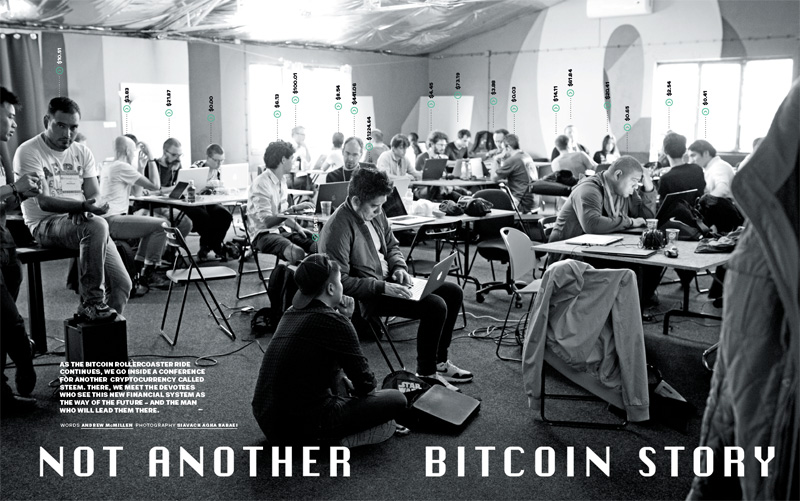
    A feature story published in the January 2012 issue of Rolling Stone Australia, under the ‘National Affairs’ banner.

    Click the below image for a closer look, or read the article text underneath.

    National Affairs: The Discovery Channel
    Is triple j’s power over Australian music being used for good, or evil?

    by Andrew McMillen. Illustration by Andrea Innocent

    In many ways, triple j studios – located on the third level of the cavernous ABC building on Harris Street, in inner Sydney – also functions as the central nervous system of the Australian music industry. On any given day, hundreds of thousands of listeners across the country are tuned in. Label owners, promoters, publicists and musicians follow the station with relentless fascination, as its playlist and musical preferences can literally make, delay, or break careers in the notoriously fickle music business.

    For decades, since the national broadcaster’s inception in August 1980, triple j has continued to grow: in terms of staff numbers, audience popularity and, as a direct result, cultural influence. With great power comes great responsibility. As triple j continues to slowly evolve into a gangly octopus whose arms now extend far beyond its initial radio habitat into print media, significant online networking, year-round event promotion, and – with the October launch of a standalone Unearthed station – digital radio, it’s worth taking a magnifying glass to the station’s many activities to examine whether their great power is being used for good or evil.

    Two senses are immediately pricked entering triple j studios: the eyes are met with bloody red walls contrasting against innocuous whites, and the ears latch onto the sounds of triple j being piped through the station’s corridors, while Zan Rowe broadcasts her morning show live to air just a few metres away. Station manager Chris Scaddan strolls past their huge music library to his corner office. His coffee table is stacked with months’ worth of printed music media: street press, monthlies, international imports. A recent issue of triple j magazine sits conspicuously atop the pile.

    He turns down the live broadcast to a quiet gurgle as he considers a question: how would he describe triple j to someone who’d never heard it before?

    “It’s uniquely Australian,” Scaddan says. “We’re about new music; mainly, new Australian music. We’re targeted at 18-24 year-olds, so we’re here for young Australians. We play diverse styles of music; we’re independent and non-commercial, which is important. At this point, we’re a brand that reaches across quite a few different platforms. We’re our audience as much as anything, as well. We’re really in touch with our listeners, and we hope that what we’re doing is reflecting and inspiring what they want, and what they want to listen to, and what they want to know about.”

    Eight minutes into the interview, in response to a question about whether triple j’s support is crucial to the success of Australian bands on a national scale, he cites a recently discovered statistic that he’s clearly very proud of: in October 2011, the station posted audience figures of 1.5 million in the five capital cities (Sydney, Melbourne, Brisbane, Perth, Adelaide).

    “At the moment, we’ve got as many people listening as we ever have. But are we crucial to a band’s success? I don’t think so,” Scaddan says. “Certainly we’re a national broadcaster, and we’ve got a really strong audience. I wouldn’t say it’s crucial to whether you make it or don’t. There are so many different ways that you can find a career or an audience through the Australian music industry. There’s so many examples of bands who may not have been played by triple j who are doing just fine.”

    “Just fine” is a relative term, of course. For every Art Vs Science, Boy & Bear or Washington playing to thousands-strong crowds on the national stage, there are dozens – perhaps hundreds – of acts across Australia who enjoy strong support within their hometowns or capital cities, but struggle to make the jump to national notoriety without the nod from triple j. Does Scaddan find that bands get pissed off when they get told, ‘thanks, but no thanks’ in response to their latest release?

    “That does happen,” he replies. “That’s the nature of the business we’re all in. Just like artists who are pitching for articles in Rolling Stone and don’t get a mention get pissed off, and can’t understand it sometimes. It is really, really difficult. We’re always looking to try and find a really good balance of genres, of locations – nationwide, so we’re not just picking bands from Sydney, Melbourne and Brisbane all the time.”

    “It’s difficult, and sometimes bands who want to get triple j airplay might not crack it on the playlist. That doesn’t mean they’re still not getting played in other ways on the station. They tune in and they’re not getting played as often as Gotye, or Florence + The Machine, and they think they should be. You just hope they can understand that there’s a limit to how much music can fit on the station and make it work.”

    Such programming decisions lie not with Scaddan, nor with music director Richard Kingsmill, but with the entire triple j staff. When Kingsmill is questioned – in jest – about whether he’s the most powerful man in Australian music, he practically explodes in exasperation from a couch positioned nearby the station’s carefully stacked CD collection.

    “It is not anywhere near the truth. It is just such a misconception to think this place isn’t a team of people,” Kingsmill says. “I have said this time and time again, and if people still think that I sit there and basically call all the shots, they are wrong. I can’t say it enough. This station is built on teamwork. It always has been. If you’ve got a bad framework, or teamwork vibe happening in this place, it shows on the other end of the radio. When we all work together, we get the results. It’s as simple as that.”

    ++

    What happens when your band wins the musical equivalent of the lottery, the triple j Unearthed slot to open the main stage of Splendour In The Grass? In 2011, the competition was won by Brisbane indie pop band Millions. Twenty-two-year-old drummer James Wright is being a little humble by equating the contest to a lottery: those rely on luck alone, not songwriting talent.

    Still, it’s curious to hear Wright honestly state Millions’ intentions upon forming in December 2010. “The entire objective of the band was using triple j to get where we want to go,” he says. A four-piece comprised of members from three Brisbane bands you’ve never heard of, Millions realised during their initial rehearsals that their sound might appeal to the national broadcaster.

    “There was the fleeting chance that, if we maybe more deliberately went towards the triple j sort of sound, in terms of being more accessible than our previous bands, then we might have a shot at actually doing some good, and getting played,” Wright says. “We didn’t exactly have high aspirations for it, but we were really happy with the two songs we’d written [at the time].”

    He says that Millions are “the exact opposite” of their previous bands, in that their path was “extremely thought through, to the point of calculating exactly how many shows it would take us to get where we wanted to go, and to who we should play these shows with and why we should do them and where we should play them.” The Splendour 2011 slot was unexpected for the band, and “pretty much blew everyone’s mind” according to Wright, but not unsurprising given their ambitions.

    Stephen Green is well acquainted with this kind of mindset among artists. Since beginning as a radio “plugger” – a guy who pitches new music to stations across the country – he now runs his own publicity consulting business, SGC Media.

    “The problem of triple j being so dominant is that it artistically skews what some bands are coming out with,” he says. “If you’ve got the opportunity to do the song that’s in your head that’s not very ‘triple j’, or you tweak it somewhat and make it sound like bands that are getting airplay… I think a lot of bands are going down [the second] path a little more.”

    “The tracks that I think work least are the ones that the band have gone, ‘right, we’ve got to get on triple j’, and they’ve tried to write a ‘triple j song’,” Green adds. “If it just happened like that, then – great. But I think too many bands push down that path. Being generic so that you sound like every other band is not usually the way to stand out and have a particularly successful career.”

    When Green works on publicity with Australian artists, he never plans a campaign assuming that the act will get triple j airplay. “If you do that, you’re setting yourself up for a big disappointment,” he says. “I don’t think you can make assumptions that anybody’s going to play anything.” So what happens when triple j rejects the song or record you’re pitching them? “Well, you kick the wall, the client gets shitty and says, ‘you didn’t rep it properly’. You break up, and that’s the end of that!” he laughs, clearly joking.

    Like Green, Megan Reeder Hope places a high value on including triple j in her marketing plans. As general manager at Secret Service Public Relations, Reeder Hope works regularly with the Brisbane-based record label Dew Process, whose roster includes Mumford & Sons, The Grates and Seeker Lover Keeper. “triple j is essential,” she says. “It’s probably the crux of my plans of how we work at Dew Process.”

    “That’s not to say that we don’t value the rest of the media: community radio is really important, as is commercial radio when you get to a certain point,” Reeder Hope says. “But I think triple j is that centrepiece that needs to be in place to be able to do all of the other ones, as well. From our perspective, triple j has a high level of integrity. They really do things in a way that’s uncompromising of their own editorial policy, while still always putting the music first. It really is all about the music for them. They support artists, and they support them throughout their careers.”

    Back at the station’s Sydney studios, music director Richard Kingsmill is clearly proud of the station’s success, and unapologetic to its critics. “If anyone’s got any complaints and arguments against us, or thinks that we’re in some ways trying to monopolise the Australian industry….” He pauses. “You get damned if you do and damned if you don’t. If we sat back and went, ‘Well, we shouldn’t monopolise the Australian music industry, we should sit in this corner and do our little job and not try to do anything,’ we’d get criticised for being negligent and not proactive. If you’re proactive, then you tread on toes a little bit, I guess, but we’re not meaning to tread on toes.”

    “It’s not supposed to be 100 per cent,” Kingsmill continues. “No one can be 100 per cent, and no one should expect triple j to be 100%. We do what we do to the best of our abilities, and we try as hard as we possibly can, with the best of intentions. But at the end of the day, we’re all humans. So we’ll take chances and we’ll take risks, and sure, we’ll piss people off, but we wouldn’t do it if we didn’t think there was a section of the community out there who was actually enjoying it.”

    Further reading and discussion:

  • The Weekend Australian album review: The Roots – ‘undun’, December 2011

    An album review for The Australian, reproduced below in its entirety.

    The Roots – undun

    As concept albums go, Philadelphia hip-hop band The Roots’ Undun isn’t too far removed from reality.

    Dubbed an “existential retelling” of the life of a fictional American man named Redford Stephens, who lived between 1974 and 1999, Undun “seeks to illustrate the intersection of free will and prescribed destiny as it plays out ‘on the corner”‘.

    Drugs, violence, desperation and regret play out in the narrative contained within these 14 tracks.

    The tale begins at the end of Stephens’s life: in Sleep, MC Black Thought raps: “All that I am, all that I was, is history / The past unravelled, adding insult to this injury”. In Make My, the protagonist, still in a disoriented state, concludes: “If there’s a heaven, I can’t find the stairway”.

    It’s a fascinating and original approach to urban storytelling that remains compelling throughout the album’s 39 minutes.

    After 13 albums together, the Roots’ sound has become so distinguished and refined that it’s simply a joy to hear them at the height of their game. In effortlessly smooth track Kool On, each instrument – guitar, bass, drums, keys, vocals – can be clearly identified in the mix. Drummer Ahmir “Questlove” Thompson can be relied on for at least one classic beat an album; on Undun, it’s The OtherSide.

    The final four tracks – the “Redford Suite” – consist of a beautiful, elegiac orchestral arrangement. It’s the final surprise on an album that further solidifies the Roots as genre leaders.

    LABEL: Universal
    RATING: 4 stars

    This review was originally published in The Weekend Australian Review on December 31. For more of The Roots, visit their website. The audio for ‘Make My‘ is embedded below.

  • The Weekend Australian album review: Witch Hats – ‘Pleasure Syndrome’, December 2011

    An album review for The Australian, reproduced below in its entirety.

    Witch Hats – Pleasure Syndrome

    Though this Melbourne quartet has been associated with jagged, sneering punk rock on previous releases, a second LP, Pleasure Syndrome, finds Witch Hats in pursuit of something less dark, more beautiful.

    The bass-heavy swagger and distorted guitars are still in place, but singer Kris Buscombe has clearly been honing his ear for pop songwriting in the three years since the band’s debut, Cellulite Soul.

    This repositioning of the sound has worked: those put off by Buscombe’s wounded howl and his bandmates’ discordant squall in the past will now enjoy songs such as In the Mortuary, a quasi-acoustic ballad featuring pretty lead guitar phrasing and Buscombe’s sweetest voice yet. These 10 songs are more confident than anything the band has released before.

    First single Hear Martin – built around a creepy keyboard line and written from the perspective of infamous gunman Martin Bryant – is the most accessible track here. It’s followed by Ashley, whose persistent bassline underscores the album’s most unsettling track. Buscombe revels in exploring the darker side of humanity, as best evidenced in album opener The Bounty, a gritty tale of frontiersmen scalping their peers for “fifty a head”.

    Witch Hats has heart, skill and wide appeal, and Pleasure Syndrome gives 10 more reasons descriptors underrated and underground should be associated with this band no longer.

    LABEL: Longtime Listener
    RATING: 4 ½ stars

    This review was originally published in The Weekend Australian Review on December 31. For more Witch Hats, visit their Bandcamp. The video for ‘Hear Martin‘ is embedded below.

  • The Weekend Australian album review: ‘Rewiggled: A Tribute To The Wiggles’, December 2011

    An album review for The Australian, reproduced below in its entirety.

    Rewiggled: A Tribute To The Wiggles

    Once you get past the initial cognitive dissonance of listening to well-known Australian adult bands cover songs written by coloured skivvy-clad adults for children, there’s a lot to like about Rewiggled.

    The concept is simple: 20 contemporary artists are given the chance to reinterpret the Wiggles’ songs, with consistently interesting results. Some bands sound right at home: Spiderbait’s Rock-a-Bye Your Bear is a cute, taut rock number, the Snowdroppers inject a bluesy swagger into Wags the Dog and Adalita’s Get Ready to Wiggle is full of hazy, down-strummed chords, true to character.

    Megan Washington and her band bring a surf-rock feel to The Monkey Dance, while Architecture in Helsinki’s Wiggly Party becomes a neon-tinged, hyperactive dance number (which, admittedly, is one of few tracks here that grates on repeated listens).

    The Living End thrashes out Hot Potato with such vigour one suddenly wishes they’d do a whole album of Wiggles covers. While most tracks are upbeat, there are some calmer moments: Sarah Blasko’s I Love It When It Rains is an earnest, piano-and-voice affair, Angie Hart’s midtempo Our Boat is Rocking on the Sea is drenched in reverb, and under Clare Bowditch’s guidance, Georgia’s Song becomes elegiac.

    The musicianship is so solid — and the songs so damn catchy — that Rewiggled could find its way on to the stereo without kids’ prompting.

    LABEL: ABC Music
    RATING: 3-1/2 stars

    This review was originally published in The Weekend Australian Review on December 24.

  • Rolling Stone album review: Eddy Current Suppression Ring – ‘So Many Things’, December 2011

    A short album review, published in the December 2011 issue of Rolling Stone.

    Eddy Current Suppression Ring 
    So Many Things (Fuse)

    Garage rockers collect odds and sods in one place

    A collection of this Melbourne band’s out-of-print singles and other rarities, So Many Things is a fine starting point for those who haven’t yet been charmed by Eddy Current’s addictive garage punk rock. Most of the 22 tracks here are so rare they’ll be new to most ears: gritty slow-burner “Demon’s Demands” might be the best ECSR track you’ve never heard; the title track is a hilarious rant about a failed relationship, while “Hey Mum” is a touching tribute to the singer’s mother set against characteristically trebley guitar tones. When they’re on, ECSR are among the best rock bands in Australia.

    Andrew McMillen

    Key tracks: “Demon’s Demands” [embedded below], “Precious Rose”, “You Let Me Be Honest With You”