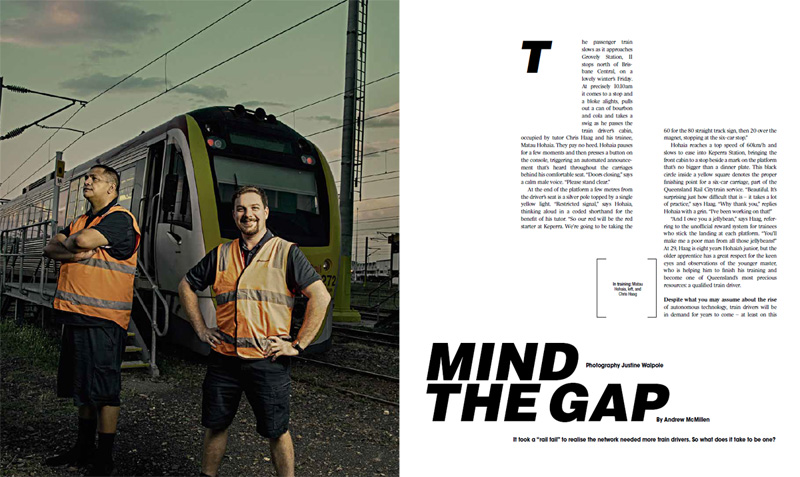
The Australian story: “Jay & Silent Bob: Comic duo gets serious, for laughs”, April 2012
A story for The Australian’s arts sections, which ran on April 12 2012. The full story appears below.
Comic duo gets serious, for laughs
by Andrew McMillenThe first time cinemagoers laid their eyes on Jason Mewes and Kevin Smith was in Clerks, a 1994 feature film that depicted a day in the working lives of two frustrated store clerks stuck in dead-end jobs.
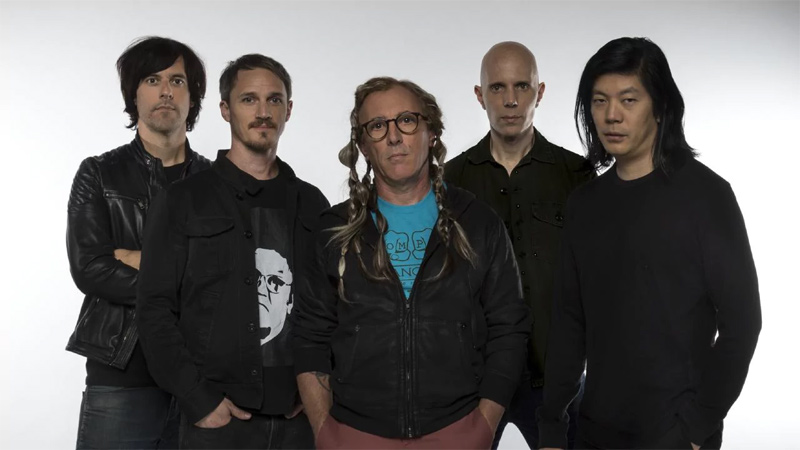
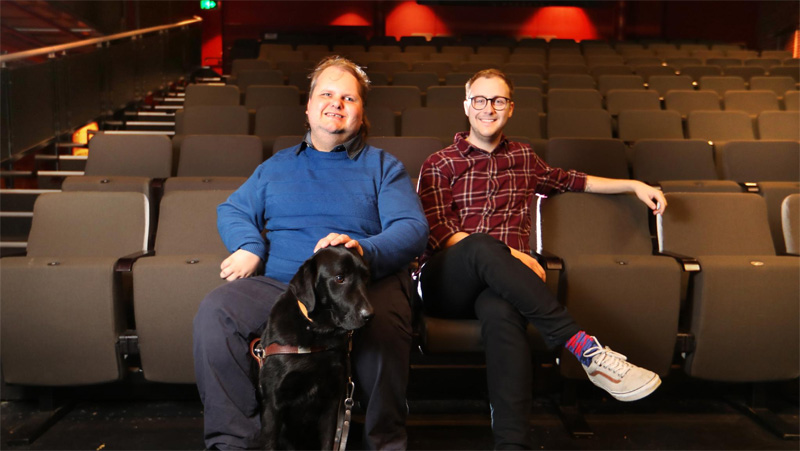
Mewes and Smith played the bit-part characters of Jay and Silent Bob, respectively [pictured above; Smith on the left]. Their introduction occurs seven minutes into the film, when Mewes — a tall, wiry youngster — takes up his regular post outside a convenience store (where Smith, then 24, worked as a clerk during the day). Jay drains a beercan, spits out its contents, then announces, “I need some tits and ass, yeah!” He does a little dance, then adds, “I feel good today, Silent Bob!” before expressing in detail his desire to copulate “with anything that moves”.
All the while, his stocky, mute friend in a trenchcoat puffs on a cigarette, barely acknowledging the string of explicit and provocative statements that Jay directs at passers-by. It remains a compelling introduction to two of modern American cinema’s most enduring — and unlikely — comedic characters.
Written, directed, produced and edited by Smith, Clerks never appeared on more than 50 screens at one time during its theatre run in the US. Rated R for “extensive use of extremely explicit sex-related dialogue”, the film seemed doomed to a niche audience at best. Yet word-of-mouth marketing prevailed and it grossed more than $US3 million for distributor Miramax Films.
Not bad for a project made on a shoestring budget.
Clerks became a cult favourite that led to a string of popular comedies directed by Smith: Mallrats in 1995, Chasing Amy in 1997, Dogma in 1999 and Jay and Silent Bob Strike Back in 2001. The two characters last appeared on screen together in 2006′s Clerks II.
This month Mewes and Smith will tour a live show in Australia for the first time, under the name Jay and Silent Bob Get Old.
Mewes, now 37, casts his mind back to his late teens, when Smith — four years older — began working on Clerks. “Back then, it was just me and him,” Mewes says. “We’d wake up and work our nine-to-five jobs at the convenience store and the video store. He told me he was writing a script and was going to go to film school. It wasn’t that I doubted him; it was like, ‘Oh cool, you’re going to school.’ I didn’t think anything about it. I was just like, ‘I’m going to go to work tomorrow, you have fun.’ ”
Smith’s hard work evidently paid off, and he brought his new friend along for the ride: one that took the wealthy writer-director to the heights of owning a home in the Hollywood Hills with his wife and daughter, and Mewes to the depths of addiction to heroin and, later, the painkiller OxyContin.
In a 10-part series published on his blog in 2006, entitled Me and My Shadow, Smith described at length the roller-coaster ride of Mewes’s addiction and his numerous attempts at rehabiliation. Using his flair as a writer and eye for detail, Smith wrote of Mewes’s “first taste of heroin courtesy of a girl whose name he doesn’t remember, on a jungle gym in a park lit by the Canadian moon”. Later republished in the 2007 book My Boring-Ass Life, Smith’s tale remains moving, even for those with little interest in his films.
Mewes has never read Me and My Shadow in full. “I’ve read sections of it,” he says. “It sort of upsets me a bit to read it. I’ve never been able to sit through and read it from beginning to end.” The Australian tour, Get Old, born from a successful podcast of the same name, has its roots in Mewes’s addictions, too.
Six years sober, he relapsed in 2009 on painkillers after a dental procedure. “When people go into surgery, you try not to take pain medicine if you’ve (been) addicted to pain medicine (in the past),” he says. “But if you are going to take it, you should talk to some people; a sponsor, friends, and you have to see them every day, (to) be accountable for what’s going on. I didn’t have any of that going on at the time. There was no one I had to be accountable to.”
When Mewes told Smith of his desire to record a regular podcast before a live audience, his friend encouraged him to speak about his experiences with addiction. According to Smith, “it’s much easier to fight a dragon if everyone can see it, and it’ll remind you about where you don’t want to be ever again.” The live shows became a kind of therapy for the actor.
“Talking about everything has been very helpful for me,” Mewes says. An unexpected outcome eventuated, too: group therapy. “I’ve had people come up to me after shows and be like, ‘Hey man, I’m six months sober today and it’s seriously because of you because when I was sick and I was getting off the painkillers, I wanted to go use but then I’d listen to three of your podcasts in a row and it would inspire me not to go get high again.’ That’s very flattering and awesome. It’s just a bonus to what I thought (the podcast) would be about.”
Jay and Silent Bob Get Old has no real structure: it’s just two friends who happen to be famous speaking about whatever comes to mind. The show was first hosted at a 45-seat venue in Los Angeles, which sold out five weeks in a row. On upgrading to the 230-seat Jon Lovitz Comedy Club in Universal City, the pair continued to fill the venue each week. They booked bigger shows in capital cities across the US, and their Australian tour — consisting of theatres that hold 1000 to 2000 people — has mostly sold out.
“That we can get 2000 people who want to come listen to me and Kevin sit down and talk and tell some of our stories is pretty amazing,” Mewes says, laughing.
When asked whether he’s concerned about sharing too much, Mewes replies: “No, not really. Not when I hear stuff like (former addicts thanking me).
“Sometimes I think I over-share about me and my wife, and my wife might be at the show and afterwards she’ll get a little embarrassed or upset with me.”
This is unsurprising, given that both men discuss the topic of sex — both in the past and with their wives — frequently during the stage show. “That’s about it. There hasn’t really been any backlash.”
Despite the gravity of discussing Mewes’s former demons, there’s much more light than shade at play in Get Old. After all, most people are there to laugh with their film idols rather than mull over life lessons.
“My goal is to entertain everybody,” Mewes says. “I hope they have a really good time. And of course people are paying money. I want them to be like, ‘Oh man, we went out last night, and we saw Jay and Bob. I’m glad I did that on my Friday night, instead of going out to the bar or to the movies.”‘
Jay and Silent Bob Get Old is in Adelaide on April 18 and 28; Brisbane, April 19; Sydney, April 20 and 23; Melbourne, April 26.
The Vine interview: The Butterfly Effect, April 2012
An interview with all four members of The Butterfly Effect for The Vine. Excerpt below.
The Butterfly Effect: “I felt that I’d lost everybody’s faith and trust.”
by Andrew McMillen
I arrive at The Butterfly Effect’s rehearsal space in an inner north suburb of Brisbane on the afternoon of Wednesday, 8 February 2012. After pushing open a door bearing the band’s name in bold type, I find all four members in band position, almost as if they’re ready to begin playing. Ben Hall is sitting behind his drum kit, Kurt Goedhart is sitting before a wall of amps and noodling on his guitar, Glenn Esmond is cradling his bass and leaning over his pedalboard, and singer Clint Boge sits at a desk behind a computer and a set of speakers. They’re not rehearsing at the moment, though: instead, these four men are working on a first draft of the setlist for their final tour together. Two days earlier, the Brisbane-based hard rock act announced that Boge will be leaving the band after the tour culminates in early June. The other three members will keep the name, audition to find a new singer, and press on.
Though the announcement was a shock to the band’s significant national fanbase, it’s less surprising when you consider their last few years of activity – or lack thereof, perhaps. Their last album was released in 2008, the sprawling, ambitious Final Conversation Of Kings, which saw the band reaching toward a more epic, prog-rock sound than what we heard on their 2003 debut Begins Here or its superb follow-up, 2006’s Imago. Though the quartet had toured occasionally throughout the last few years – including a short run of dates celebrating their 10th year together, in October 2011 – they had also been trying to produce a fourth album. They still haven’t gotten very far, apparently.
Clint disconnects the speakers on his desk and distributes the milk crates that supported them. Kurt stays more or less in the same spot he was sat when I first entered the room; he continues to hold his guitar, and absent-mindedly plays a few notes occasionally, while the other three position themselves around the desk and do the majority of the talking. It’s clear that Clint and Ben are most interested in having their say, though Glenn does interject with a few nuggets of wisdom throughout our 45 minute conversation. Immediately before the interview begins, there’s an air of friendliness which morphs into tension remarkably quickly, as I start with the most important question: why is Clint leaving, after over 10 years fronting one of Australia’s most successful hard rock bands?
TheVine: How long have you all known about Clint’s decision?
Ben: It’s been a few months.
Clint: September [2011]. It was mid-September when I came in and said I didn’t feel like going on anymore; continuing on. It took a little while to cement in, I suppose.
How did the rest of the band react?
Ben: I think it’d been coming. Everyone knew that there was something that was simmering. Not simmering, but… we’d obviously been trying to make a record for three years, and I just don’t think we were getting very far. I don’t think we were all happy with the way it was going. There was many tense moments, lots of points over those three years where we sat down and tried to realign, and I think it just came to a head on that day. We all agreed that we weren’t in the same direction, so maybe we shouldn’t waste any more time doing that. It was not a decision that was made…
Clint: It wasn’t made lightly. It was something I’d thought about quite a lot leading up to that day. I think it came from… there were a couple of suggestions made to me about who I should work with, and who I should be trying to extract the best melodies with, and not really getting the songs, or delivering them in the right way. That was the last straw for me. I thought, ‘If I’ve lost the faith from my bandmates to produce what I think are the best melodies…’ and to have that trust taken away, then I couldn’t go on working like that. Not only that, but I don’t want to be the weak link in a band. I don’t want to be the guy that’s not pulling his weight. That was another reason, too. I thought, ‘If that was the case, I’ve got to go.’
Not only that, man, but I think musically-wise I was looking for something different that I wasn’t quite hearing in the songs. I [think that some] of the ideas that I [was trying to communicate] weren’t being actioned. They weren’t being done, so I felt lost in that department, as well. It’s probably been happening for some time. I really felt some pressure, to not make the same mistakes that I feel we made on Final Conversation. Wanting to step up and go beyond was the focus.
In terms of the band’s style, you mean?
Clint: Yeah, yeah, and especially my vocal delivery, and what I heard in the songs and what I could hear being the final product. That was all taken into consideration, and the decision was made based on all of those points.
Where were you on that day? Did you meet here [at the rehearsal room], and discuss it?
Clint: Yeah, it was just another practice day, pretty much. I sat in my car for about 20 minutes, pretty nervous, thinking, “This is a big decision to make.” And not only that, to come in and do it cold. I pretty much walked in, grabbed my mic, put it in my pocket… because I thought, “I’m taking my bloody microphone!”
[Ben begins laughing, and says, “Far out!” Glenn laughs and says, “I’m taking my bat and ball, and going home!”]
Clint: [laughs] It was a bit symbolic, but nah, I actually needed it to do something with it. I was going to do some singing at home, and it’s a better microphone than I’ve got at home. I said to the guys, in light of the email that was sent and the two band meetings that happened previously in the year, I felt that I’d lost everybody’s faith and trust, so I removed myself from the band. Everyone took it pretty well. I thought so. There was no, “Fuck you, and up yours Jack” and whatever. “Get the fuck out of here or I’ll bash you,” or any of that sort of bullshit.
Ben: Would’ve made for more of an exciting story, but. We can organise it?
Clint: And also, Benny sent me a text message afterwards and just said, “Look man, you know we don’t want to go out like that.” Which I said to the guys, “I don’t want to go out arguing and screaming, and calling each other names”.
Ben: We’ve done plenty of that over the years. There’s been of that sort of shit going on. It’s not just Kurt and me; it’s Clint and Kurt, or me and Glenn. We’ve had plenty of years worth of fights and all that sort of that shit. The second that Clint walked in, when that was the outcome, I think we all felt that this time, more than any before, that it was probably the right decision. It was probably something that had been coming for a fair while. As much as you don’t want to let it go, you fear having nothing. This band’s everything to all of us. It has been. But you go, ‘Cool, let’s reflect and look at what we’ve done.’
Clint: And celebrate it.
Ben: Immediately, I started to feel a better sense of achievement than I had the whole time I’ve been in the band. We’ve done a lot of stuff together, and we’ve achieved a lot, and it’ll be great to hold this together in light of what we’ve done, and do this tour that’s coming up. Already today, we’re talking about the setlist, piecing it together, and getting excited about it. Which is awesome. It could be a terrible break-up, but everyone’s been adult-like.
Clint: I think that’s the surreal thing for me — when we did that tour in October. That week or two for the [band’s] ten year anniversary. We all came in, the pressure was off of writing an album, and it felt good to hang out. I really enjoyed that tour. [He looks around the room and is met with nods.] I thought everyone got along really well. There was a good sense of camaraderie. There was no hint of any malice towards each other. It was really… and it was odd, because I was expecting being at the airport and being sat in a different section of the plane. Sort of feeling this – ‘Oh shit, I’m the odd guy out’, and having the crew shun me and go, ‘You bastard, you’ve effectively taken one of our meal tickets off the table’ sort of thing. But no, it was good. Everyone was really good. And now it’s — do the last tour, really celebrate and enjoy a long time in the music industry, and some great achievements, and off we go. And then it’s a new singer for The Butterfly Effect, and a solo album for me, and rock’ n roller.
For the full interview, visit The Vine.
Note: Quotes from this interview originally appeared in the April 2012 issue of Rolling Stone Australia.
Mess+Noise Storytellers Q+A: The Panics – ‘Cash’, April 2012
An interview for the Mess+Noise ‘Storytellers’ series. Excerpt below.
ANDREW MCMILLEN revisits our occasional “Storytellers” series, whose premise is simple: one song by one artist, discussed at length. This week it’s The Panics Jae Laffer talking about ‘Cash’, a song from their 2003 EP ‘Crack In The Wall’.
Four years before striking it big with their breakout, ARIA-nominated single ‘Don’t Fight It’ in 2008, Perth-based rock band The Panics released their third EP, Crack In The Wall. A stopgap between their 2003 debut LP House on a Street in a Town I’m From and 2005’s Sleeps Like A Curse, its seven tracks saw the still-young band yearning to find a sound of their own. Chief songwriter and singer Jae Laffer is the first to admit that their previous releases sounded like “guys imitating their heroes”, while doing a good job of it.
Crack In The Wall’s second track, ‘Cash’, is instantly appealing. The song opens with a finger-picked acoustic guitar riff, which remains a central motif even while Laffer’s bandmates build around that earworm riff. I meet with Laffer at The Hi-Fi in Brisbane in late 2011 after their soundcheck. In a few hours’ time, he’ll lead his band through a set which focuses largely on their 2011 release Rain On The Humming Wire and its precursor, 2007’s ARIA-winning Cruel Guards.
For the moment, though, Laffer is happy to cast his mind back seven years and relive ‘Cash’, a song he demonstrates and narrates for a few minutes while I film him near atop the venue’s staircase. After being interrupted by a couple of Hi-Fi staff, we relocate downstairs, where he continues to strum his guitar while we talk, eking out all manner of half-formed ideas and subconscious melodic curiosities. At one point I pull out my phone to play ‘Cash’ and jog his memory about a particular sound effect; he admits he hasn’t listened to it in a while.
‘Cash’ was off Crack in the Wall. I wrote it in 2004. We call it an album; it’s got seven tracks, and it feels like an album. But ‘Cash’ is a good example of what was on the record at the time. I’m trying to think of what we were listening to at the time. There was definitely a little bit of Radiohead in our life, that kind of thing. We’ve been big fans of English music for a long time. I can just remember simply doing that [guitar riff].
The title ‘Cash’ came because Johnny Cash died around the time we were rehearsing the words and writing the tune … At the time, I think because we were so into the Johnny Cash stuff that he was doing – the American Recordings stuff – we started calling the song ‘Cash’ because it had a country feel to it … It wasn’t about him; it was about his kind of character. It’s kind of autobiographical. It’s a hazy song but there was that uncompromising kind of spirit of someone like Johnny. The lyrics started to pour out like [sings], “He took his own life in a fire/To warm his hands, to feel it right.” … [It’s about] the people who give all for art, or for life, or whatever it is. That whole song kind of drifts along that. It’s just the timing of his death, what we were listening to, and just coming up with a riff that had a vague country feel.
Were you surprised when I asked to talk to you about this song?
Yeah, because I’ve never talked about that, apart from at the time when … it was on the radio a little bitt. It’s nice. People still request it. It’s a hazy kind of subject but it also seems to be full of purpose, and it’s catchy as hell. There’s something intriguing about the whole thing. I like it for that reason.I think of it as the ultimate Panics song, in some ways. It sums the band up well, lyrically and musically. Do you agree with that?
I don’t know. Because we’ve had a bunch of albums now I could probably think of half a dozen songs which sum up maybe that time, or a couple of years. It is quintessential and I think it’s the style of lyric and also it’s the soft-meets-really-thumping sound as well. We’re known for a few ballads, but at the same time the guys are all-out rockers as well … When we mix them together with my voice, which is – I’m not Tom Jones, I kind of rap along like that. That’s just how I sing. You’re right.What do you recall about how the song came together? Was it that guitar bit that started it off?
Definitely. I can’t remember what we were listening to at the time, but it seemed to be very “of the moment”. I remember thinking that about the riff … It was one of the ones where you start playing it and realise you want to finish the song quick because you want to get it on the radio. It had one of those feels to it. It was cool like that.
For the full interview, visit Mess+Noise. The song ‘Cash‘ is embedded below.
Rolling Stone story: “The Butterfly Effect splinter”, April 2012
A story which appeared in the April 2012 issue of Rolling Stone Australia. Click the below image for a closer look, or read the article text underneath.
The Butterfly Effect splinter
Brisbane rockers part ways with singer after 10 years together
In mid-September 2011, Clint Boge drove to The Butterfly Effect’s rehearsal space in an inner north suburb of Brisbane. It was just like any other practice day for the hard rock act, who had released three albums since their debut EP in 2001. Boge switched off the engine and sat alone in nervous silence for 20 minutes, thinking about the bombshell he was about to drop on his three bandmates: he was quitting.
Boge recounts the tale in blunt terms. “I felt that I’d lost everybody’s faith and trust, so I removed myself from the band. Everyone took it pretty well, I thought,” he says. “There was no, ‘Fuck you, and up yours Jack,’; no ‘Get the fuck out of here or I’ll bash you,’ or any of that sort of bullshit.”
Rolling Stone arrives at the same rehearsal space on February 8, two days after Boge’s announcement was made public. The band are putting together the first draft of a setlist for the 20-odd tour dates that will run through late April until early June.
The ‘Effected’ tour and the best-of compilation released simultaneously will allow fans to farewell Boge, and mark the end of an era for one of this country’s most successful hard rock acts.
Boge’s bandmates weren’t entirely blindsided by his decision. “It’d been coming,” says drummer Ben Hall. “We’d obviously been trying to make a record for three years, and we weren’t getting very far. There was many tense moments; lots of points where we sat down and tried to realign. It just came to a head on that day. We all agreed that we weren’t [heading] in the same direction, so maybe we shouldn’t waste any more time doing that.”
It wasn’t a decision that Boge made lightly. “I’d thought about it quite a lot leading up to that day,” he says. “There were a couple of suggestions made to me about who I should work with, who I should be trying to extract the best melodies with; and [that I wasn’t] really getting the songs, or delivering them in the right way. I couldn’t go on working like that.”
The Butterfly Effect was formed in 1999 by Hall and guitarist Kurt Goedhart while the pair were in high school. Boge saw one of their first gigs, at the Ipswich Racecourse – with a different vocalist – then rode home with Hall and showed the drummer lyric ideas that would form the basis for their debut EP. Bassist Glenn Esmond joined the group in 2002.
“It’s definitely going to be sad. I’m not going to bullshit to you,” Boge says of the forthcoming tour. “I have moments where I just think, ‘Fuck – it sucks that it’s gotta go like this.’ But the thing is, I’d rather walk now than have these guys looking at me in a year’s time, saying, ‘Fuck you, I hate you, get out of my face.’”
After the ‘Effected’ tour, Boge plans to record and release a solo album, continue working with his other hard rock act, Thousand Needles In Red, and devote more time to his vocal coaching clinic, Road Coach. His three former bandmates will audition for a new singer – they won’t reveal who’s on their shortlist – and work toward the release of their elusive fourth album.
“We’ve been extremely blessed to be able to do this for as long as we have,” says Esmond. “I really do appreciate all the stuff we’ve had done far. I just feel stoked to have been able to do it. Whatever happens from here – I’m content that I satisfied all my dreams [doing] this.”
“I’m sure we’ve all still got more to achieve,” adds Hall. “We’ve lost a limb, but hopefully we’ll find another one, and power on. We’ve got plenty of songs, so we’ve just got to find the right person. They’re some big shoes for someone to fill.”
The Global Mail story: ‘Do You C What I C?’, March 2012
My first story for The Global Mail: a feature about the use of the word ‘cunt’ in modern Australia.
Excerpt below; click the image to view the story on The Global Mail website (link will open in a new window).
Do You C What I C?
by Andrew McMillenLong absent from polite society, it is widely considered one of the most obscene words in the English language — and yet this very vulgarity is suddenly very vogue in some circles. But even the twentysomethings who fling it around willingly wouldn’t use That Word in front of their parents. What’s changed with the C word?
“WHAT A CUNT OF A WEEK,” writes a female friend on Facebook one Friday afternoon, after an apparently stressful week of work at a Brisbane radio station. A live music promoter friend updates his Facebook status in the early hours of a Sunday morning: “Extremely tired. Just found out the fucking dog has pissed on my bed. I’m done with that cunt.”
When I’m playing a first-person shooter video game online and my character is killed by an opponent’s bullets, I’m likely to type those four letters among a ridiculous string of expletives, mostly to amuse myself while I wait for the next round to begin.
As a 24-year-old Australian male, I’m drowning in the word. It seems to be the go-to expletive for people around my age — mostly males, but females aren’t exactly a rare exception. The word cunt is in common usage — most often as a term of frustration or ironic endearment rather than an insult directed at any particular person.
We say it because we think it’s a funny word to say, to type, to express to other human beings. It’s something of a naughty vice that we knowingly indulge in, smiling inwardly at our own wickedness. Among my friends, its use is entirely context-specific. It is not a word that would ever be uttered during dinner table conversation with my parents. But in the lounge room with my housemates, all in their 20s, it falls from our mouths at a frequency that would undoubtedly shock my grandparents. I recall that during my early high school years, the word was perceived as risqué by my friends and me. When our schoolmates said it, we flinched. How dare they say that?
But by senior year, something had changed – trends, taboos, our maturity or lack thereof – and we’d regularly make each other laugh by quoting lyrics from a song titled ‘I’m a Cunt‘ by West Australian rappers Hunter and Dazastah. Sample: “I’ve done a lot of cunty things / And out of cunts you know / You know I be the king.”
CUT TO March 2012. I walk the streets of Brisbane with a blue A4 folder in my hand. Underneath the cover, wedged inside the plastic sleeves, I’ve printed six words in mega-sized fonts. Dark blue cardboard separates the six pages, so the next word can’t be seen until the page is turned.
I meet 43-year-old local author Krissy Kneen at a New Farm café as she flips through the words: bloody, arsehole, shit, fuck and motherfucker. Before she flips to the final word, I ask Kneen what she thinks will be next.
A brief pause. “Cunt?”
And there it is, in 255-point Times New Roman.
To read the full 4,400 word story, visit The Global Mail.
Mess+Noise story: ‘The Lost Weekend: How A Festival Featuring The Drones, Dinosaur Jr Went Down’, March 2012
A story for Mess+Noise. Excerpt below.
The Lost Weekend: How A Festival Featuring The Drones, Dinosaur Jr Went Down
Almost two years to the day since he pulled the pin on his fledgling festival, the founder of Brisbane’s Lost Weekend speaks for the first time about what went wrong and why punter apathy is the biggest threat to would-be promoters. Interview by ANDREW MCMILLEN.
Billed as a three-day camping event located at a conference centre 45 minutes south-west of Brisbane, a 2010 music festival named The Lost Weekend seemed a worthy contender for the interests of Queensland rock fans who couldn’t afford to head south for Golden Plains. Headlined by Dinosaur Jr, The Dirty Projectors, Wooden Shjips and Nashville Pussy – among Australian bands like The Drones, Tumbleweed, Little Birdy and Whitley – the festival shared several of Golden Plains’ bigger names. Unpowered camping ticket prices ranged from $166 to $207, for a two- or three-day pass, respectively. Hardly a princely sum, considering the ever-increasing costs of competing events on the annual calendar.
Alarm bells began ringing three months after the initial announcement. A month out from its debut, The Lost Weekend was downsized to two dates and relocated to the Brisbane Riverstage due to apparent licensing disputes. The two-day ticket cost dropped to $150. A M+N news story reported that organisers were determined to make the event in March the “perfect end to the festival season”, and not another Blueprint”. And then, just days out, organisers pulled the plug citing “insufficient time to achieve critical mass”. Unlike the aborted BAM! Festival, an overly ambitious camping event that was set to be hosted at the same venue, The Lost Weekend at least had the foundation of an appealing event by booking a strong, rock-centric line-up.
It also had festival promotion brains and experience behind the operation. Founder Michael Kerr, 38, had hosted the Sounds Of Spring festival at Brisbane’s RNA Showgrounds in 2008 and 2009, and appeared to be slowly growing the event: the second year saw 14,000 fans take in artists like The Living End, Tex Perkins, My Disco and Giants of Science (the latter two in the midst of a rare dust storm). Yet as The Lost Weekend disintegrated, Kerr went to ground, and hasn’t publicly commented since the public failure of his latest festival attempt. Sounds Of Spring has yet to return, either.
I meet Kerr for the first time in March, two years and two days after the event would’ve debuted – if only he’d sold a few more tickets. He sips a hot chocolate while we sit at a cafe outside the Queensland Performing Arts Centre. During a wide-ranging conversation, I find Kerr to be quite upfront about his mistakes, slightly disdainful toward the unfortunate habit of Brisbane concert-goers to postpone buying tickets until the last minute, yet optimistic about the possibility to organise future events here in Queensland. He also laughs a lot, even though the topic we met to discuss isn’t particularly funny – or so I thought.
What was your original desire with The Lost Weekend?
There was nothing going on. Generally, you try to do events because nothing comes to Brisbane, and we miss out. So we got onto the guys at Golden Plains, and agreed to share some bands but not all, and grew from there. [Laughs] Just to make a good weekend. It was never going to be that large. Never wanted it to be that large. [I wanted it to be] something I want to go to.So the Golden Plains connection was pretty integral to making it all work?
Yes, and no. We probably picked that weekend so we could [make it work], but if nothing happened there wasn’t a big issue. There were enough bands around otherwise to make it work. We did pick up seven or eight of their bands, but not all of them. And that was a deliberate thing we spoke about, because we didn’t want to just do what they were doing, and they didn’t want us to do what they were doing as well.Why Ivory’s Rock [Convention Centre]? Had you looked at a few other locations before that?
We looked at a number of places; particularly it was a really good site. It had all the facilities, had an undercover amphitheatre, had everything; places for food stores, toilets, loos, showers. [It had] everything, everywhere to deal with; where everything else was getting port-a-loos and sleep in the bush. It had proper, flat, perfect camping areas. And no neighbours to disturb.How did you come across it in the first place? I had never heard of it until The Lost Weekend was announced.
Neither had I, actually. Ipswich City Council, who actually were really supportive of doing something, and I originally spoke to them because I was interested in using the Archerfield Speedway area, and they said, “Oh, you should check this place out.” So I checked it out and it worked. [Laughs] Nothing will ever happen there now, though; they don’t want to do anything. They had a change in management and the new managers – it’s run by this religious organisation. The guru from India comes out and speaks there every couple of years and they have like 6000 grannies there. Well, not just grannies but all these people come and hang out there, and pay 500 bucks to hear him talk for five days.That sounds interesting…
The manager at the time wanted other things to go on there, and he pushed really hard to get events in. He’s gone, and the new management don’t want to do a thing.So they don’t like the idea of a rock music festival?
They don’t like the idea of anything else. It’s their little land just for them.As you know, after you, BAM! Festival tried to go there. It’s interesting to know nothing at all is going to happen there now.
Nothing’s going to happen out there.
To read the full story, visit Mess+Noise.
Australian Penthouse story: ‘The Low Down: male mental health and Soften The Fuck Up’, March 2012
A story published in the February 2012 issue of Australian Penthouse.
Click the below image to read as a PDF in a new window, or scroll down to read the article text.
The Low Down
Feelings. We don’t like them – they’re awkward and can suck the joy out of a night on the town with the boys. But can deliberately avoiding our emotions be killing us? New website campaign Soften The Fuck Up believes so, and with youth suicide statistics showing a disproportionate number of men are killing themselves, they might just have a point.
Story: Andrew McMillen
++
Ehon Chan, 24
I grew up in Malaysia. When I was 16, my best friend died in a drowning accident. For three months, I went through a period where I was, in some sense, questioning what life was all about. I asked myself, “If everyone lives to die, why do we all live?” I found it really hard to understand that we all could die tomorrow. I did what every man does at that time; the whole “suck it up, just move on,” kind of thing. I kept thinking, “I have to be strong for everyone else”. I kept a very strong face; on the outside I was normal, I was happy. When I’d get home and be in my bedroom at night, all these self-reflective questions would come up.
When I moved Australia in 2006, I discovered that there is a really low level of mental health literacy in this country; for men, even moreso. Australian men generally can’t pick up mental health signs and symptoms. They don’t know where to get help. A lot of people don’t know that their first point of call could be their GP, or they could call Lifeline. I decided to start something to challenge that knowledge gap. What’s the most common thing that Australian men get when they talk about any kind of weaknesses? The response is generally, “Harden the fuck up.” There’s no equivalent phrase for that in Malaysian!
My friend said, “why don’t we call it Soften The Fuck Up?” Initially it was a joke; we all laughed at it. It’s currently an online campaign (softenthefckup.com.au, launched in July 2011), but we also want to make it an offline conversation. We want to take the conversation to the next level, so it’s not just about having a conversation with your mates, but equipping young people – in particular, men – with an idea of how to recognise signs and symptoms of mental health issues. And also, when someone comes up to you and says “I’ve got depression”, or “I haven’t been feeling well for the past five days”, what do you tell that person? What are the things you can and can’t say? Where do I get help?
I was hesitant when the name was first suggested, because the word ‘fuck’ was in there. I wasn’t comfortable going ahead with it, but the more we thought about it, the more we decided, “you know what? That’s the whole point of this campaign”. We want to be unapologetic, we want to be in your face, and we want to push the extreme because we really want to change the culture. The more extreme we go, the more conversation it’s going to generate.
++
Paul Klotz, 51
At the age of 13, I suffered sexual and physical abuse at the hands of the Catholic boarding system in Brisbane. After many months of being abused in every form you could imagine, I was then beaten with a leather strap for being a ‘bad boy’. After 36 years of hiding in a false existence and having to support a facade of a personality, I finally collapsed, and all of my defences began to crumble. I told a very select group; immediate family, my psychiatrist, and a few other friends. They were shocked, angry, and frustrated in terms of not knowing all these years. It’s not something that was easy to talk about.
I’ve spent most of my life under the influence of drugs or alcohol to pretend that I was a normal, sane person. Despite that, I was extremely successful throughout my business career. But I’ve always lived with that self-destructive path. Once I achieved, I didn’t feel worthy. Because of this lack of self-esteem and self-belief, I was just continually and totally despising myself. Two years ago, I was able to look in the rear vision mirror, look at all those demons that had been there for the last 35-plus years and say, “enough’s enough; I need to deal with this”.
This decision came at a huge cost. It’s doubtful if I’ll work again in anything near the capacity that I was before, because I’ve withdrawn from society. I feel uncomfortable around people, moreso than I ever did. It’s great to finally confront those demons and understand and recognise that I’ve suffered from severe depression, and severe post-traumatic stress disorder. I see a psychiatrist. I’m on all sorts of drugs and pills to try and keep that balance of life.
In the last eight months I’ve been through five suicide attempts, and I’ve had to resign from the last two jobs because of the impact that my mental condition was having, and the episodes of depression, and being put into hospital. That started a period of living on the streets. I have nothing to hide. I’m quite comfortable in saying that if it wasn’t for my four beautiful boys, I wouldn’t be here. I have no doubt about that. During the last few suicide attempts, when I was fading away, it was the image of those guys that allowed me to get some strength, and fight back.
If I get through all of this, my burning ambition is to assist other males out there. I want to let other males know that it is okay to put your hand up, it is okay to cry. It is okay to say, “I have been abused”, as difficult as that is. It is okay to say, “I’m suffering from depression”. It is okay to say, “I feel suicidal”. I live with the thoughts of suicide every single day of my life. We need to break down all these stereotypes that my generation – and I suppose it continues on, of – “Harden up son. Big boys don’t cry. You’ve just gotta suck it in, and move on,” because that’s such a narrow-minded, dead-end approach. Those feelings of discomfort, unhappiness, pain, guilt, shame; if they’re left inside, they do fester, and fester badly.
++
Nick Backo, 23
I’ve lived in the same house in Parramatta all my life. I’m a social worker for child protection services, as well as studying post-graduate psychology and refereeing soccer. When I was 15, my Dad died. There was a lot of shock initially, because his death was unexpected. I became the eldest male in the house. I felt that I had to be strong, and look after my family. I saw a counsellor for two years, on and off, which was really useful for just talking with someone who was neutral, and who could give me some strategies around managing grief. I had a lot of support from friends, who gave me someone to talk to, even if it was just, “hey, I’m feeling shit”.
It was hard to talk about. It brought up a lot of my own emotions, and you feel vulnerable sharing that sort of experience with people. It was also hard because a lot of people wouldn’t know what to say, or how to manage it. They were generally lost for words, so it was an awkward experience for me in bringing that up with them. To an extent, it’s something that you’ve got to live to understand. It would be beneficial for others to learn about grief, though. More broadly, it’s about educating people on supporting their mates, and being open to those types of conversations. Even if you don’t know what to say, just being there to listen and saying how you feel during those conversations is helpful.
It’s important to embrace the characteristics of masculinity. One of those is ‘being strong’, and it’s not necessarily a bad thing. It’s also really important to talk about how you’re feeling, and your experiences. When Dad died, I was at that ‘coming of age’ stage in life. A lot of people were saying to me, “make sure you look after your Mum”, or “you’re the man of the house now”. I don’t think they were meaning it to put pressure on me. I guess it’s just what people say.
For people currently experiencing grief, I’d tell them that it’s OK to feel however you’re feeling. If you’re angry or upset, or if you’re feeling okay or happy, that’s all part of the experience of grief. It’s fine to have those emotions. I’d really encourage them to talk to people that they feel comfortable with, and to talk about their grief and the person who has died. Even if it seems a bit crazy or unusual, that’s OK, because it’s an unusual experience to go through. I think about Dad every day, but as I’ve gotten older, I’ve learned how to manage my grief better. I took away a lot of positives from it, as well. I think I’m a better person because of that experience. On the same hand, if I could change that and have Dad back, I would in a second.
++
Ben Pobjie, 32
I only recognised this year that I am suffering an illness. Since I was a teenager I’ve suffered periodical depression; I’d sink into a deep low for no particular reason. In the past I’ve been advised by people close to me that I should seek counselling. I’d shrug it off, saying “no, no, I’m just sad. Just going through a bad patch.” Which is not the right thing to do, really. You try and fight through it, because I didn’t want to appear weak or like I was making a big fuss over nothing. It builds up and gets worse and worse, and you have to admit that it’s not nothing. I broke down early this year, then realised that it’s not normal. I generally write jokes, and comedy. I’ve been writing more serious reflective things, having admitted to this. It’s possibly made me a little bit more honest as a writer. I’m on medication now, and I’m seeing a therapist.
When I’ve been at my worst, I’ve self-harmed. I’ve cut myself. It’s hard to explain after the event, when you’re not in that headspace, exactly why you did something like that. It’s a culmination of trying to distract yourself from an emotional pain by giving yourself some physical pain. It’s a confusing time because when you go through those episodes, because obviously you’re not thinking rationally, and you don’t react to your own feelings rationally.
When you’re depressed, you feel ashamed of yourself. It feels like something that you shouldn’t talk about. But I came to the realisation that if I didn’t tell people about it, then this can’t really be recognised as an illness. It couldn’t just be a secret that I kept. It takes courage to admit that you have a weakness. Everyone has weaknesses. It’s gutsy to own up to that. Most people are very willing to understand, and to show sympathy and support if it’s brought out into the open. That’s what I’ve found.
++
William Wander, 24
I’m Brisbane born and bred. I went through various Catholic schools, though I’m definitely not Catholic. I work in sales for a software company. By night, I’m a writer and blogger. I’m that guy in their group of friends who always says the things that nobody really wants to hear. I’m a little bit too honest. I’ve always had something to do with depression, even from the age of 11 or 12. I had a very rough childhood; I had an abusive father, and was quite sick as well, while growing up. From the age of 13 or 14, I was on anti-depressants. For me, having depression is like having asthma; it’s just part of your genetic makeup, and you learn how to appropriately deal with it.
I hadn’t been on anti-depressants for years until the GFC hit. I lost my job, I was unemployed for the first time in my life. I applied for 250 jobs and couldn’t get a single one. I hit rock bottom. The thing about depression is: it’s a hole that you can’t get out yourself. I’ve spoken to a lot of people about depression, and I’ve never met anybody that’s got out of it by themselves. I don’t think it can happen, honestly. You need to have somebody else, or some other group that helps you get out. You can take the first step, obviously, and say “I need help”. But in the end, it’s the support of other people that helps you to get out of that, and start to feel better.
Depression is a disease that you can’t see. If you get hit by a car and your leg is twisted, that’s very visible and we can understand that. When people talk about depression, they feel weird about it for one of two reasons: they’re experienced it and they’re embarrassed about it and don’t know how to talk about it, or they have never experienced it and they can’t conceptualise it in their own head.
I don’t care who you are, or how in touch with your emotions you are; it’s never easy to admit that you’re depressed. It’s always difficult, because the nature of depression is that you don’t want to acknowledge it. It’s easy to talk about it now, but when I am actually depressed, it is hard to acknowledge that, even to myself. I’m a very emotional guy. At the same time, I’m a fairly typical Aussie bloke, but I’ve always thought it’s ridiculous how closed-up guys are in general in Australia. Let’s not skirt around the issue. Let’s be men about it. Which, ironically, means approaching something, rather than just avoiding it.
An enormous thanks to the brave men I interviewed for this story, and to Australian Penthouse for publishing.
For more on Soften The Fuck Up, watch the below video and visit their website.
For more about depression, visit Beyond Blue.
If you are distressed after reading this story, please call Lifeline immediately on 13 11 14 (free call from all telephones in Australia).
The Australian story: ‘Dirty Three’s divine trinity of sound’, March 2012
A story for The Weekend Australian’s Review section, published in the March 3-4 edition.
Dirty Three’s divine trinity of sound
by Andrew McMillen
In his 2009 book The 10 Rules of Rock and Roll, Australian singer-songwriter Robert Forster wrote that “the three-piece band is the purest form of rock and roll expression”. The author had American band Nirvana in mind when he penned that line but admits instrumental trio Dirty Three fits “the whole theory and idea perfectly”.
Brandishing an unconventional guitar-drums-violin configuration, Dirty Three formed in Melbourne in 1992 and has celebrated its 20th anniversary by releasing its eighth album, Toward the Low Sun. Forster, co-founder of Brisbane pop giants the Go-Betweens, describes the band’s unique musical style as “the magic of a chemical explosion”, and notes “they come from the time of grunge. They existed when Nirvana existed; another three-piece who were chaotic, mad and intense on stage. You can probably still see a bit of that in them.”
Dirty Three’s catalogue evokes by turns deep melancholia – due largely to Warren Ellis’s emotive violin strokes – and sublime euphoria when the three members lock into a rhythmic pulse that is, oddly, reliant more on guitarist Mick Turner than drummer Jim White. Bobby Gillespie of Scottish rock band Primal Scream has referred to Turner’s idiosyncratic playing as “the way that stars are spaced out in the sky”, while White is more interested in exploring experimental percussive techniques than holding down anything resembling a standard rock drumbeat.
Yet viewing Dirty Three through the lens of rock – or, for that matter, jazz or folk – is wrong. And although the band lacks a vocalist, it doesn’t sit comfortably with what’s typically understood as instrumental music, either. “Normally people who do instrumental music can be quite dry and sedate, whereas Dirty Three put on a show,” Forster says. “They have an aesthetic of something like ‘minimal’, or instrumental music, but they have a rock ‘n’ roll attitude. It’s almost like there was an invisible lead singer there. That was part of their appeal, besides the fact that they have very good melodies, and that there was something charismatic about the band.”
The group’s absence of vocals has affected the course of contemporary Australian music in strange ways.
Gareth Liddiard says Dirty Three has been “a huge influence on what I do lyrically” with Melbourne band The Drones, of which he is lead singer, as well as his solo material. “They made me realise that if you’re going to have words, they need a f. . king good excuse to be there in the first place. They better be good, otherwise why bother?”
Liddiard says Dirty Three’s music “sounds like someone pushed a drum kit down the stairs and plugged a violin into a f. . kin’ Marshall [amplifier]“. He follows this stark assessment with the highest compliment: “For my money, they’re the best band from this country, ever.”
Before the band’s formation, all three members had spent years playing in various rock groups. “It seemed like there was this healthy live scene starting in Melbourne,” Ellis says of the early 1990s. “There was a lot of venues to play in, a lot of opportunities to get out and play in front of people. The live scene provided a livelihood for a lot of people. Bands were really trying to confront and challenge you, and there was this great crowd of people going along to check it out each week.”
Ellis puts the band’s irregular musical components down to a desire to be different. “When we started off, we really wanted to challenge people’s conceptions and also to go against the mainstream,” he says. “There’s something great about feeling like you’re out there, flying your own flag. There is something really empowering about it.”
The story behind the trio’s debut gig is emblematic of the hunger for original live music in Melbourne at the time. Ellis had a friend who owned a bar called the Baker’s Arms; he told the violinist that he wanted background music but didn’t want to play CDs. Ellis asked White to play drums; he, in turn, asked Turner to play guitar. On a Friday afternoon, hours ahead of the band’s first performance, the trio rehearsed some ideas in Ellis’s kitchen, then played them that night.
“We had to play for three hours, so we made the songs really long,” Ellis says. This ideology is occasionally reflected in the length of the band’s recordings, too: ‘Deep Waters’, from the 1998 album Ocean Songs, runs for 16 minutes. Ellis’s pal enjoyed the performance, paid them $50 apiece and asked them to come back the next week. To three young men trying to support themselves as working musicians, this was a great deal. “We’d go down and play every Friday night, and get out of our brains,” Ellis says. “Our mates would come along; it was just this great Friday night where nobody had to clean up the mess after.”
Two decades later, the trio commands a worldwide following and the kind of deep respect among the Australian music community that has been afforded to few acts. All three attribute the band’s longevity to the fact they rarely meet face to face: Turner lives in Melbourne, Ellis calls Paris home, and White splits his time between Brooklyn, Detroit and Australia.
A week or two before its national tour in March to celebrate the release of Toward the Low Sun, the band will convene in the Victorian capital for rehearsals and simply to catch up. “We usually sit around talking for a few hours talking, just because we haven’t seen each other for so long,” Turner says. “We don’t necessarily talk about music; just about life, our friends, our families.”
The guitarist believes this close friendship is another reason they have lasted the distance. “We’ve all got a high regard for each other,” Turner says. “If you lose respect for your bandmates, that’s when it’s going to fall apart, I think.” Ellis agrees. “We’ve always treated each other as equal in the musical sense, and in terms of the group’s profile. We share all the songwriting, and royalties equally,” he says.
“Nobody’s seen as contributing more or less. We’re a group, in the purest sense.” The trio are in regular contact via phone and email; a necessity, given that they split band management duties three ways.
“We did that a long time ago,” White says. They were once managed by Rayner Jesson, who also handled Nick Cave and the Bad Seeds, but that relationship ended a few years before Jesson’s death in 2007. “It ebbs and flows over the years in terms of how engaged we are,” says the drummer, who handles their tour bookings. Last year the band played just two shows together: a festival slot at All Tomorrow’s Parties in Tokyo and a benefit concert in January for 3RRR announcer Stephen Walker (to raise money for the legendary broadcaster’s multiple sclerosis treatment) at the Forum in Melbourne, featuring Cave on keyboard.
Turner admits the lack of a single decision-maker can be problematic. “If a question comes up, it’s got to be fielded around, so it takes a while to be answered,” he says. “One of us might be on tour, and it’s hard to get down and do your email when you’re in the middle of travelling.”
The three men occupy themselves with other creative outlets during the band’s downtime. White regularly tours and records with other bands: last year he toured with Australian folk-pop trio Seeker Lover Keeper, and the week after we spoke he was scheduled to play shows in Helsinki, Geneva, Istanbul and Tel Aviv with American singer-songwriter Cat Power (real name Chan Marshall) who is one of only two vocalists to have lent their voices to Dirty Three songs. The other singer is Sally Timms, of British rock act The Mekons; both contributions appeared on the trio’s previous release, 2005′s Cinder.
Ellis has been a member of Nick Cave and the Bad Seeds since 1995; he plays electric mandolin and guitar in the band. With Cave, he has scored several films, including The Assassination of Jesse James by the Coward Robert Ford, The Road and Australian film The Proposition, directed by John Hillcoat, which won the pair an AFI award for best original music score in 2005. He also played in Cave’s other rock band, Grinderman, which announced a hiatus at the Meredith Music Festival last December after releasing two albums together.
Turner splits his focus 50-50 between art and music. His distinctive paintings have appeared on the cover of all of the band’s albums besides its 1995 debut, Sad & Dangerous. His work has been exhibited at galleries across the world and he plans to release a fourth solo album later this year. The guitarist recently attended his primary school reunion, and was amused to discover not one of his former Black Rock State School classmates had heard of his 20-year-old band; unsurprising, perhaps, given that the trio’s sound exists on the periphery of contemporary Australian music tastes.
Ellis’s Bad Seeds bandmate, Ed Kuepper, calls Dirty Three’s output “a form of pure expression”. According to Kuepper – who co-founded Brisbane punk rock group the Saints and whom Turner considers “one of my only guitar hero figures” – the band consists of “three very recognisable, distinct musicians and they don’t get in each others’ way. They probably become even stronger together. It’s a rare thing.
“It’s a really unusual thing that they do in terms of Australian music; the approach to the way they play, and the non-standard rhythm [section],” Kuepper says.
“Very few people do that. Even fewer have any sort of success because in some way it’s quite an esoteric thing that sits outside of the kind that seems to get lauded in Australia, which is generally a lot more mainstream and musically conventional.”
Since Toward the Low Sun is an extension of the band’s remarkably consistent canon, rather than a stylistic reinvention, it’s unlikely Dirty Three’s eighth album will set the ARIA charts alight on release. The nine theatre shows the band has booked in March, though, are likely to sell out, if its previous national trek two years ago – billed as a performance of the 1998 LP Ocean Songs in full – is to be used as a benchmark of popularity on the live circuit.
The new album had a particularly long gestation period: the band recorded for six days in February 2010, then didn’t review the recordings for more than a year. It did some additional recording in March last year. An American producer based in Melbourne, Casey Rice, captured the first session at Head Gap Studio in Preston: he worked with the band on its last release, Cinder, too.
“They’re very focused,” Rice says of Dirty Three’s work ethic in the studio. “A lot of time it’s not just a matter of trying to get it right in a performative sense; it’s more of a feel thing.” The band will play a song slowly, then speed it up for the next take; it will try a song played softly, and then louder; White will work the kit with his drumsticks, then try his brushes for a softer percussive tone.
“The basis of everything is tracked live,” Rice says. “If there’s more than an electric violin, guitar, and drums on a song, then it’s been added as an overdub. So the bass, extra strings, mellotron, and nylon stringed guitar were overdubbed. But the process remained the same for Toward the Low Sun: they set up, and played it down. That’s what works about Dirty Three; that’s where the magic comes from.”
There’s that word again, the one Forster used: magic. A distinct sense of the otherworldly encompasses everything the trio does. Yet it’s not exactly the most accessible sound in the world, and there are few points of reference for unfamiliar listeners to latch on to. Liddiard recounts an anecdote that highlights the band’s divisive nature.
“I’ve seen Dirty Three 40,000 times,” says Liddiard, exaggerating only slightly. “I remember standing behind two dudes at one of their gigs; it could have been in Sydney, or Perth. One guy’s like, ‘This sounds like cat shit, let’s go.’ The other guy just looks at him, incredulous. Like: ‘What the f. . k? Can you not hear that?’ That really sums them up. Some people just don’t get it. And if they don’t get it, there’s something wrong with them, I find.”
Dirty Three‘s tour starts in Perth on Friday, then WOMADelaide, Adelaide, March 10; Port Macquarie, March 12; Melbourne, March 16; One Perfect Day Festival, Gippsland, March 17; Castlemaine, March 18; Sydney, March 21; Brisbane, March 22; Lismore, March 23.
Toward the Low Sun is out on Remote Control Records.
This story was originally published in The Australian; view online version here. For more Dirty Three, visit their website.
A Conversation with Scott Bagby and Carter Adamson of streaming music service Rdio, February 2012
The concept of paying month-by-month to stream music from your computer and smartphone remains a relatively new idea in Australia. In the last year or two, a number of contenders have emerged. Nokia has had their ‘Comes With Music’ service for a while now. Sony launched their ‘Music Unlimited’ product in February 2011. Hulking, canary-yellow retailer JB Hi-Fi launched their own streaming platform in December 2011, dubbed ‘NOW’. BlackBerry, Samsung and Microsoft all have proprietary systems operating in some capacity. Rumours abound of Spotify’s Australian launch. A site named Guvera offers a slight twist on the idea: ‘guilt-free’ mp3 downloads. None of these services have yet gained any real traction in the Australian market.
Clearly, it’s becoming an increasingly crowded marketplace, as app developers and record companies alike cosy up to the assumption that most people don’t give a fuck about music ownership anymore. That whatever CDs, vinyl and cassettes they own gather dust on a shelf somewhere, immobile and largely useless in the era of interconnectivity. These companies believe that most music fans – ‘consumers’ – simply want the ability to take all the world’s music with them, wherever they go. For a monthly fee, of course.
The newest contender on the Australian market is named Rdio [pictured above]. It’s web-based and also has apps for the main phone platforms (iOS, Android, BlackBerry… Windows Phone?). It was founded by a couple of the guys behind Skype, it’s been public in the States since August 2010, and it’s pronounced exactly like it’s written (‘radio’ minus the ‘a’). For AUD$13.90 per month, you get access to unlimited PC and mobile streaming of their library, which apparently consists of over 14 million songs. Ahead of a launch party at Bondi’s Beach Road Hotel in early February 2012, a couple of the Rdio guys flew me to Sydney, bought me lunch, and answered my questions as best they could.
Andrew: How long has Rdio’s Australian launch been in the works?
Scott [Bagby, VP Strategic & International Partnerships; pictured left]: I first came down to Australia to start the discussions at Easter 2011. We were pretty much sewn up by the end of the year. So not quite a year.
There’s been a few streaming services available in Australia over the last few years, but none of them have had any real success in terms of market penetration. Is that fair to say?
Scott: Streaming services on the whole, globally, are quite nascent. I was just hanging out with a bunch of labels. I can’t verify these numbers, but this label guy told me that worldwide, there’s only about 7 million subscribers, to any streaming service. It is very much in the early days of all streaming services. But the potential is huge. They’re planning on massive growth in the area, especially this year. I think you’ll find that here in Australia, as well. There’s still an education that needs to happen for the user to understand streaming services. [They need to] just learn about ‘em, and use ‘em, and get what I refer to as the ‘a-ha’ moment, of why streaming services are so much better than buying individual tracks.
Carter [Adamson, co-founder; pictured right]: But seven million music subscribers in a world where everyone loves music? There’s a lot of room to grow. For ten years, we’ve had various fits and starts with digital music: DRM, tethered CDs, and that kind of stuff. We have services like Rhapsody in the US, who are stuck at around 600,000 subscribers. Now within the past year, you have more than a handful of services that have well over a million subscribers apiece. That only happened within the past year. You have markets like Australia, where 40% of all music revenue is digital music revenue. Korea’s over 50%. For the first time, digital music revenue globally is growing quicker [than physical sales]. I think we’re now at an inflection point with digital music subscription services.
Scott: The timing’s also great, because of the iPhone and other smartphones. People want to take their music with them. Back in the old days, when I was travelling around I used to have a CD case [for a discman], but that’s just too much of a hassle now. With this streaming service, we have 14 million songs at your disposal, no matter where you are in the world. You can download songs to your phone, switch ‘em out; every Tuesday, there’s new releases [on Rdio]. These sort of things – that’s the education that has to happen, and that’s the ‘a-ha’ moment when you get all of that going. The perfect alignment of the ubiquity of smartphones is what’s really helping it along.
Carter: Well, connected devices. Any single device that can talk to the internet is a playback device now. Whereas before you had one device; a record player, CD player, 8-track player. Now there’s a wide array of devices that are effectively playback devices, so it no longer makes sense to buy one song for each device. It no longer makes sense to port all the downloads that you bought a la carte via external hard drive to every single device that you have. The only thing that makes sense is for you to access it seamlessly wherever you are, using whatever platform or device you have.
Using the US service as an example, what percentage of users are using Rdio on their phones?
Carter: Over 85% of our subscribers are on the higher-priced tier. [Note: PC-only access to Rdio is AUD$8.90 per month – five bucks cheaper than the PC/phone combo.] And that makes sense, because the value proposition has always been seamless mobility. People always wanted to move their music around. No-one’s ever bought a song on iTunes to just play it on their computer. They’ve been waiting for 10 years for this whole seamless mobility thing to become a reality. Now it’s finally here.
Scott: I think that’s one of the reasons that the music industry faced such a piracy problem in the past, because they didn’t offer it in a format in which people wanted to consume music. Now that it’s coming into that format, you see a lot of people moving into services like ours. They wanted to listen in several places at once, but they couldn’t, so the only way they could do it is to steal it. It was still happening up until a month ago in Hong Kong. Everyone was saying, ‘I want to buy music, but there’s no iTunes, there’s no digital services here. I can’t buy what I want; you leave me no choice but to steal it’. These people were lawyers, bankers – people that had the means [to pay], they didn’t want to steal it, they just didn’t have it.
Carter: And also, the price has never been so low. We’re talking about 34 cents a day for access to the world’s music, across all your devices. That’s an insanely low price.
Tell me about that education process you mentioned earlier. How do you turn seven million streaming music subscribers into seven billion?
Scott: [laughs] Well, one of the benefits is to have your music everywhere and anywhere. Part of my job is to go around to all the different countries and get the rights sorted, so at least it’s available to everyone. Once it’s available, the education process is an ongoing one. And it’s one for the entire industry to be involved in. The best way to get there is to allow people to get that ‘a-ha’ moment. That moment comes at certain times, like when they’re at their friend’s place, they’re sitting around and they want to hear that song from their childhood that they’re all laughing about. Obviously no-one has it in their collection anymore, but then you – boom – you stream it down, you get a big laugh, and it kicks off. You can almost have Rdio and some beers, and you have a party.
I think a lot of people would be using YouTube for that purpose at the moment.
Scott: But YouTube, again, isn’t all that mobile. I mean, not as mobile as Rdio is.
Which labels do you have on board for the Australian launch?
Scott: We’ve got all the major labels, and we have some indies like Shock, MGM and Inertia. We won’t open up in any market, anywhere in the world, unless we have the domestic music, as well. At the end of the day, it’s about enjoying the content. That’s what makes a good service – the titles that you have. We have a whole team who just make sure that we have as much music as we can on the service. Funnily enough, I was just in Germany, doing a radio interview with a DJ. She is in love with Australian music, specifically Australian hip-hop. She used to fly out here, buy the CDs, then play it on her station. What she loves about this now is that she can now follow Australian influences [using the service], get the music that she wants, and find new music just through the service.
Will Rdio have an Australian office?
Scott: Yes.
In Sydney, I suppose?
Scott: We’re looking for some key players. Who’s the best person to hire? Once we find that person, they can determine where the office is going to be. Sydney, Melbourne, Brisbane, Perth… they’re all options. It all depends on who the best person is to run [Rdio] Australia.
You talked about the ‘a-ha’ moment earlier. For me, when I was testing out the app, that moment was when I realised that Rdio had taken over the iPod player interface on the iPhone [ie the screen that appears when you’re playing music]. I thought that was pretty clever, how similar and familiar that screen was, even though I was using a web streaming service.
Carter: Two of the most common pieces of feedback we receive: “I just deleted my iTunes collection because I no longer need it,” and “I’ve discovered more music on Rdio in the past two days than in the past two decades”. We’ve obviated a lot of what you would’ve needed iTunes for, and we’ve made it even better with the whole discovery [aspect].
Scott: How we discovered music in our teenager years is we’d go to our mate’s house and you’d wait to hear their song. It wasn’t until you’d heard it a couple of times that you’d go out and buy it. It’s rare that you’d buy a song without hearing it first. That was one of the disadvantages that iTunes has; you couldn’t hear it without purchasing it.
Carter: Every Tuesday, new music comes out [on Rdio]. You don’t have to pay a dollar a song, or eighteen dollars an album: you can play literally everything that’s out on Tuesday. You can save it to your mobile device, you can un-save it and throw it back into the water if you don’t like it. People are consuming more music now. I’ve never seen higher retention or engagement metrics in the 17 years I’ve been doing consumer software, or consumer services. It’s insanely high. People get on it, they love it, they use the hell out of it.
The recommendation worked really well for me. It’s probably a simple thing, but it seemed to work better than most other services I’ve tried.
Carter: We wanted to be the most comprehensive service out there. Unlike the other services, we offer a little of everything. We not only have the social music discovery stuff, which is always front and centre, no matter where you dial up the service; we also have the algorithmic recommendations, which you were playing around with. They’re getting better and better every day as we see more data, and learn more about you. We also have the on-demand aspect; “I know exactly what I want to listen to,” whether it’s a song or a playlist. And we have the passive listening stuff; “I like an artist, but I don’t really know which song or album to play. Just play me some of this artist’s songs, and maybe mix in related artists.” Or you can play your ‘heavy rotation’ or your entire collection as a radio station. Or your network’s ‘heavy rotation’, or collection.
In the US… we haven’t carried it over anywhere else because no-one uses it, but we have built our own iTunes store. So you can buy [songs] a la carte in the US, but we found that no-one uses it, because once you’ve used the streaming service, there’s really no reason to buy stuff a la carte.
How does the Australian subscription price point compare to the American version?
Carter: Scott, I’ll let you take that one…
Scott: [laughs] Thanks. The price point is heavily influenced by the rights holders. Between different markets, we have similar… every market to us is the exact same. So the price point basically was just taking into [account] what we had to pay the artists, the labels and publishers. How does it compare? Unfortunately it’s more expensive than the US market. That was just due to market circumstances when we came here. But we personally didn’t treat Australia any different to the US.
How do you pitch the service to fence-sitters? Those people who say they love music, but rarely pay for it. They might go to a lot of shows, but most of the music they download is via torrents and other shady methods, not via iTunes or equivalent stores.
Scott: I think in general, most people want to do the right thing. Music lovers want the artist to get paid. I’ve never come across a music lover that says, “Screw the artist, I want to steal from them”. I think the key is making the service as easy and quick to use that it’s almost the default. So that you’re almost paying for the convenience. Instead of researching on BitTorrent, I have ‘social discovery’ [on Rdio]. I’ve built my playlists around my influencers. I like a particular DJ, and a good friend of mine knows a lot about music, so it just kinda bubbles up [in my playlist]. What used to take me a half hour of reading different music blogs and listening to their tunes, it just comes to me easily, now. As Carter says, discovering more music in two days than in two decades – that is what’s going to engage these music lovers, and make it worth them spending the money that they would otherwise gain through BitTorrent.
Can the service be used offline, or do you have to be connected to a 3G network or equivalent for it to work?
Carter: You can save as much music as you want to your device’s memory card. So if you have a 32gb iPhone, you can save that much. Again, for 34 cents a day – instead of spending $10,000 to fill up your iPhone or iPad…
The mp3s are saved onto the device’s hard drive?
Carter: They’re locally cached, yeah.
Has that been hacked yet?
Carter: Not yet. [laughs]
What are the most common comments you get when people are engaging with Rdio for the first time?
Scott: The people who’re born before 1980, their concern is: “why am I just renting my music? I want to own it; I want to have a collection.” I think that’s just a lack of understanding of the access model. It almost goes back to the heyday of having a massive CD collection, and looking at it, touching and feeling it. But more and more, as that moves on… there are a lot of 21 year-olds who’ve never owned a CD. So that question is more of a theoretical until they start using the service, and then they realise, “Hey, I can hear all my songs, and it’s actually better because I can hear my entire collection no matter where I am, not just in my house.”
Carter: I think there’s a general lack of knowledge. Most mainstream consumers don’t understand why they need a service like this, but strangely, they’re already doing it with other types of services, like movies, videos and books. You have a digital book reader; you pull down your books electronically, you don’t have a physical copy. Same with video. They’re getting the fact that, “Oh yeah, this is what I do with other forms of content. Now I have this wide array of connected devices, I don’t need to buy one song for every device.” But I think there’s a general lack of education on why you need the service. I don’t think it’s a resistance, per se.
The desktop client – which is optional to download – has a matching feature, which looks at the music on your iTunes or your computer, and if we have the rights to stream it, it automatically moves it to your Rdio collection. It’s kind of like a locker service, for those people who’ve paid a ton of money – or any money at all – buying digital downloads a la carte. We do that as well. We make it an easier transition.
Going back to what you were just saying about existing libraries; part of my job is being a record critic. It shits me to tears when labels still insist on sending me a CD – which I’ll rip to mp3 immediately anyway – rather than supplying the mp3s so that I can hear the music instantly.
Scott: The industry itself is still in a physical mode. It’s turning around. I get CDs all the time, but I don’t have a CD player. My laptop doesn’t have a CD drive. I can’t rip the CDs. I say “thank you very much” and I usually hand ‘em over to the maid at the hotel. [laughs] It’s a transition period.
Carter: In general, we’re leaving a hit-driven business when you move to services like this. It’s a more personalised view on music. You follow specific people because you like their taste in music. You don’t go to Rdio and look at a ‘top 50’. You go there and you look at what’s relevant, what your friends are listening to. That is a fundamental shift in the industry – along with the mobility [the app allows].
I want to touch on what artists are being paid through Rdio. As I’m sure you’re aware, Spotify had some bad press about how little artists were being paid per-stream. What’s your model like compared to Spotify’s?
Scott: The model’s similar, because the tariff is going to be similar. There’s a couple ways to approach this question. First and foremost, we don’t know about the labels’ relationships with their artists. Those are confidential. I have no idea how the labels are paying the artists. I know the majority of our revenue goes to the rights holders. How that’s being distributed afterwards is a black hole as far as I’m concerned. Having said that, there’s other ways to look at this. Net present value of money and all that other stuff aside, if you buy a [music] download, you only get paid once. That person can listen to that song thousands and thousands of times and you don’t get paid for that. On Rdio, you get paid every single time that song gets played. If it’s a good song, and it goes on for a long time [in terms of popularity], you’ll get paid a lot more than you’ll ever get paid than by a [single] download.
The second way of looking at things is, there’s been cases where artists or labels will pull their music off streaming services off Spotify. It was funny, because this label guy I was talking to – the one I mentioned earlier – was talking to a big artist of his. He turned around and said, “OK, you want me to pull it off streaming for these reasons? That sounds good. So you want me to close YouTube as well, and also the radio?” [The artist] was like, “No no no, keep those open…” The label guy was like, “Hang on a second. You make 200 times more on the streaming service than you do on YouTube, and 150 times more on the streaming service than you do on the radio. So… I don’t understand your reasoning.”
So I think there’s another education [required] on how these [services] can help and build the labels. The actual money pool for these artists, as of 2011 – two months ago? It probably was too nascent, too small to be anything significant to walk away from. However, the way that the ‘hockey stick’ [graph] of digital music and streaming services are going? I don’t think you’ll see those same stories this time next year, because the pie is getting bigger. That is one of the biggest complaints – that dollar-for-dollar, they’re not getting as much from our service as they are from iTunes. But the iTunes pie is a hell of a lot bigger than seven million people worldwide. I understand the gripe now – again, I don’t know what [the artists] are getting from their labels – but if they look at it in a promotional way and also that this is a nascent service and it will grow, you’ll see more and more people come online and stay online.
Carter: In a nutshell, we’re driving up music consumption. Once people are on this service, they’re listening to a lot more music. As Scott said, there’s been a model shift in terms of how they’re paid. So you’ll no longer get paid from only one transaction; you get paid each time you play a song. And we’re driving up consumption. So theoretically, that should even out very soon, as we get to scale. The other part of the equation is, we’re hitting segments of the music value chain that have never paid for music, or only pay $30 or $40 a year through iTunes gift cards. We’re reaching new segments. More people will be paying for music again, as we reach scale.
Scott: And not only that, but the smaller independent labels in each country – because we do worldwide deals – we’ve now given them reach, very quickly and with no cost to the label or artist. In America, in Brazil, in Germany. That exposure can translate into a great opportunity that they’ve never thought of before.
Carter: They can be big in Japan.
Scott: Yeah – it’s not just a t-shirt! [laughs] Going back to our Skype days; when we first launched Skype, we had no idea that Brazil was going to be as big as it was [in terms of users]. It was huge. I’m sure there’s some artists sitting here going, “I don’t know if we can do stuff in Brazil.” Now they’re getting feedback from streaming services and they’re like, “OK, everyone in Brazil is streaming our music, now it makes sense for us to tour there, rather than taking a blind punt.” Or maybe they wanted to go to Rio anyway, which is an understandable blind punt. But this sort of exposure is global, at very, very little cost.
Those are some well-rehearsed answers to a very hard question.
Scott: [laughs] Well, we think about it. It is a concern for us. Because if all of a sudden, the artists don’t want to be on streaming services, we’re in trouble. But we’ve thought about it. It’s an industry-wide discussion.
++
Andrew McMillen (@NiteShok) is a freelance journalist based in Brisbane, Australia.
For more on Rdio, visit their website.
Mess+Noise ‘Storytellers’ article: Gotye – ‘Hearts A Mess’, February 2012
An interview for Mess+Noise. Excerpt below.
Storytellers: Gotye - ‘Hearts A Mess’
ANDREW MCMILLEN revisits our occasional “Storytellers” series, whose premise is simple: one song by one artist, discussed at length. This week it’s Gotye, the Lana Del Rey of M+N, but not for the song you might expect.
It feels a little strange to revisit what was once Gotye’s biggest hit in light of the monster that is ‘Somebody That I Used To Know’, the Melbourne-based songwriter’s 2011 collaboration with Kimbra which topped the Hottest 100 and has since clocked up more than 63-million views on YouTube since being posted last July.
Yet without that track’s runaway success, Wally de Backer might not have felt as comfortable in discussing ‘Hearts A Mess’, the third track from his 2006 album Like Drawing Blood.
When I first approached de Backer via email in May 2010 to raise the possibility of a Storytellers feature about this song, he declined, stating that, “I’ve talked about that song a lot, and I’m working on new stuff, trying not to look back at the moment.” I picked up the thread again in September 2011 and found him in a place where he seems more than happy to look back.
Between overseas trips and a 10-date Australian tour, we spoke at length over the phone about the track that charted at #77 on triple j’s Hottest 100 Of All Time countdown in 2009.
Gotye on ‘Hearts A Mess’
‘Hearts A Mess’, with apostrophe, not without, correct?
[Laughs] To be honest, I think the lack of an apostrophe was just an oversight. Which, for me – someone who’s fairly fastidious with grammar – it’s quite hilarious. It was an oversight at first, then I just decided to leave it.Does that mean your high school English teachers are cursing your name for making such a simple mistake?
[Laughs] It’s funny. I’m actually in touch with my Year 9 high school English teacher reasonably regularly. He sends me [album] covers to sign for his friends in random places like Scotland and South Africa. He’s never mentioned that before. [Laughs]Do you feel like you’re in a good place to reflect on this song now, after it’s been superseded by a bigger hit?
I guess so, yeah. I guess the songs are kind of related; the place in the track list on the respective records, the kind of emotional terrain, my own possible scruples while putting together this record [Like Drawing Blood], wondering whether the song ‘Hearts A Mess’ was the high watermark of what I want to achieve with my music – at least in terms of the response from people, the connection with it. So that’s been interesting to see [‘Somebody’] take off and eclipse it, from one perspective.I believe ‘Hearts A Mess’ was two years in the making. Is that correct?
Yeah. It’s like a macro example of my whole process. It spanned the whole making of the last record.Where do you start, with a song like that? The final product is so smooth and seemingly effortless, but I know there are so many layers going on underneath.
Well, quite specifically, I started with laboriously editing multiple snippets of Harry Belafonte’s ‘Banana Boat’ song [embedded below] into a coherent, one-bar loop of music. That was an interesting process in itself. I’ve never edited bits out of a track so extensively, to then reconstitute them into such a small amount of music; that one bar. For whatever reason, when I heard the possibility of chopping around Belafonte’s vocals to get into the backing track of that recording, and turn that into a loop to underpin a possible track … I don’t know. Right from the start, that loping groove had something for me that felt – how can I describe it? Like it had something special about it. I felt the desire to keep that specialness right to whatever the end product, whatever the song would become. That pulled me forward through the pretty extreme length of finishing the song.It’s almost like I committed myself; in that regard, I feel like ‘Somebody That I Used To Know’ is quite similar, to a lesser extent, because the little two-note guitar lines from the Brazilian guitarist Luiz Bonfá that I sampled [in ‘Somebody’] also started that song off. It didn’t necessarily have as much of a hypnotic pull for me as that bar loop that underpins ‘Hearts A Mess’. It still felt the same thing. I was like, “This has an aura about it that I can’t quite describe, and I just need to not fuck that up. And anything I add feels like it has to enhance that and feel like it stays with that initial aura that I sense, whatever it is”. In both instances, that would lead me through to the final song.
How much live instrumentation was recorded?
For ‘Hearts A Mess’? None. Oh, not true. The shakers are played by me. [Laughs]At what point did you begin introducing lyrics to the equation?
I can’t remember whether it was before or after I had some of the “hook” figure, like the Hammond line that’s in there. I think it might have been before. I basically had that kind of loop from the ‘Banana Boat’ song, and I had some textural things like the lofty string bits that provided a sense of the chord progression over that loop. Then I started bits of the verse, and found bits of strings that would give some of the descending chord progression the turnarounds throughout the song … There’s an interim bit in the song with the lyric, “Love ain’t fair/So there you are/My love.” I had that penned as an anti-chorus for the song. The chorus was written quite late, and I had it penned as a textural piece that just had these little drops, that functioned as anti-choruses for probably the good first six months to a year of it sitting around, as a piece.In the second verse there’s a bit of call-and-response going on between your vocals. What was the intention there? Was that the narrator arguing with himself?
Yeah, as it usually is. Possibly even more so on tracks from the new record [Making Mirrors]. There’s kind of multi-voice conversations happening in a few songs, which I think usually represents the various internal dialogues that sometimes can go on in my head, or the discussions that you sometimes have with yourself: second-guessing yourself, playing devil’s advocate.
For the full interview, visit Mess+Noise.


Four years before striking it big with their breakout, ARIA-nominated single ‘Don’t Fight It’ in 2008, Perth-based rock band The Panics released their third EP, Crack In The Wall. A stopgap between their 2003 debut LP House on a Street in a Town I’m From and 2005’s Sleeps Like A Curse, its seven tracks saw the still-young band yearning to find a sound of their own. Chief songwriter and singer Jae Laffer is the first to admit that their previous releases sounded like “guys imitating their heroes”, while doing a good job of it.

Billed as a three-day camping event located at a conference centre 45 minutes south-west of Brisbane, a 2010 music festival named The Lost Weekend seemed a worthy contender for the interests of Queensland rock fans who couldn’t afford to head south for 
I grew up in Malaysia. When I was 16, my best friend died in a drowning accident. For three months, I went through a period where I was, in some sense, questioning what life was all about. I asked myself, “If everyone lives to die, why do we all live?” I found it really hard to understand that we all could die tomorrow. I did what every man does at that time; the whole “suck it up, just move on,” kind of thing. I kept thinking, “I have to be strong for everyone else”. I kept a very strong face; on the outside I was normal, I was happy. When I’d get home and be in my bedroom at night, all these self-reflective questions would come up.
At the age of 13, I suffered sexual and physical abuse at the hands of the Catholic boarding system in Brisbane. After many months of being abused in every form you could imagine, I was then beaten with a leather strap for being a ‘bad boy’. After 36 years of hiding in a false existence and having to support a facade of a personality, I finally collapsed, and all of my defences began to crumble. I told a very select group; immediate family, my psychiatrist, and a few other friends. They were shocked, angry, and frustrated in terms of not knowing all these years. It’s not something that was easy to talk about.
I’ve lived in the same house in Parramatta all my life. I’m a social worker for child protection services, as well as studying post-graduate psychology and refereeing soccer. When I was 15, my Dad died. There was a lot of shock initially, because his death was unexpected. I became the eldest male in the house. I felt that I had to be strong, and look after my family. I saw a counsellor for two years, on and off, which was really useful for just talking with someone who was neutral, and who could give me some strategies around managing grief. I had a lot of support from friends, who gave me someone to talk to, even if it was just, “hey, I’m feeling shit”.
I only recognised this year that I am suffering an illness. Since I was a teenager I’ve suffered periodical depression; I’d sink into a deep low for no particular reason. In the past I’ve been advised by people close to me that I should seek counselling. I’d shrug it off, saying “no, no, I’m just sad. Just going through a bad patch.” Which is not the right thing to do, really. You try and fight through it, because I didn’t want to appear weak or like I was making a big fuss over nothing. It builds up and gets worse and worse, and you have to admit that it’s not nothing. I broke down early this year, then realised that it’s not normal. I generally write jokes, and comedy. I’ve been writing more serious reflective things, having admitted to this. It’s possibly made me a little bit more honest as a writer. I’m on medication now, and I’m seeing a therapist.
I’m Brisbane born and bred. I went through various Catholic schools, though I’m definitely not Catholic. I work in sales for a software company. By night, I’m a writer and blogger. I’m that guy in their group of friends who always says the things that nobody really wants to hear. I’m a little bit too honest. I’ve always had something to do with depression, even from the age of 11 or 12. I had a very rough childhood; I had an abusive father, and was quite sick as well, while growing up. From the age of 13 or 14, I was on anti-depressants. For me, having depression is like having asthma; it’s just part of your genetic makeup, and you learn how to appropriately deal with it.
The three men occupy themselves with other creative outlets during the band’s downtime. White regularly tours and records with other bands: last year he toured with Australian folk-pop trio Seeker Lover Keeper, and the week after we spoke he was scheduled to play shows in Helsinki, Geneva, Istanbul and Tel Aviv with American singer-songwriter Cat Power (real name Chan Marshall) who is one of only two vocalists to have lent their voices to Dirty Three songs. The other singer is Sally Timms, of British rock act The Mekons; both contributions appeared on the trio’s previous release, 2005′s Cinder.