Archive for February, 2010

  • A Conversation With Steve Milbourne and Phil Clandillon, Creative Directors of Sony Music London

    This is the full transcript of the December 2009 conversation I had with Steve Milbourne and Phil Clandillon, Creative Directors of Sony Music London, in their Kensington office. I interviewed them on behalf of The Music Network; you can read the published story here. [Note: if you're viewing this in an RSS reader, the video embeds might not work. I don't know why. Click through and view it on my blog.]

    Andrew: The main reason I’m aware of your work is because of the few campaigns you’ve been behind in the last year, like AC/DC, Kasabian, Editors, and Calvin Harris. Those are the ones I’m aware of, but before we go into those, I thought I’d ask you how you got into the music industry, and why.

    Steve Milbourne, Creative Director at Sony Music LondonSteve [pictured right]: The reason I got into the music industry is because I’ve always loved music. From my early twenties, what I wanted was to get into the business side of it. Then I kind of got into the whole creative thing. I went to work at an indie label after graduating from uni, called Kitchenware Records, which is based up in Newcastle. They’re sort of big old indie from the ‘80s. I had lots of success in the ‘80s and the ‘90s, and then they sort of reformed the label. It was a new entity in 2003.

    I went to work for them in 2004 at the exact same time they signed a band called Editors, which you know of. I got interested in their situation of not having any money to do anything with, so it was like I was given a band to work with and then I’d have to do the artwork, make a music video, do stuff online, make websites, and all that sorts of stuff with zero pounds to work with, which is quite good. I might have spent a few years just sort of honing all these skills that crossed a wide range of areas, from web programming to production and film, so it all kind of came in handy when I came to Sony about two and a half years ago, and then Phil came in. They brought us in separately but then we got put together as a creative team and that’s it.

    Phil [pictured below left]: I’ve basically spent the last ten years doing half my work in the music industry and half in advertising, in sort of digital agencies. I started off doing digital work around TV and then interactive TV. Then the dot-com crash happened and there weren’t any jobs, so I came to London. I got heavily into the club scene at the time, and met some people that were running nights and things like that. I ended up getting an office in an online radio station, which is in the Truman Brewery, and basically electronic artists were coming in to do shows and DJ on the station. I just ended up getting freelance work through that and I worked for years for an outfit called Sancho Panza, who are most famous for Notting Hill Carnival, for doing a big stage at Notting Hill Carnival. They also did warehouse parties and things like that.

    Phil Clandillon, Creative Director at Sony Music LondonFrom there I got offered a job at a record label, Sanctuary Records, which is now part of Universal. I started doing web stuff for them and after about three years there I got kind of fed up with the record industry as it was then and went back to advertising stuff. I worked at a digital ad agency and then a larger advertising group after that.

    About two years ago I decided it was a good time to go back to music. Sony came knocking so I came and met Steve and decided I could probably work with him, and that’s that. We kind of kicked it off from there, essentially.

    Is Creative Director a very common role within labels? I’ve not really heard of it before.

    Steve: Not particularly. We’re quite unique in what we do, with regard to the type of work that we do in the music industry, I guess. Essentially we run almost a boutique agency in-house and our clients are with various labels within the Sony umbrella. I don’t think the other labels do that.

    What it means is we essentially take on various groups from the big labels in here, which are Epic, Columbia, RCA, Syco, which is Simon Cowell’s label, and then some smaller labels, as well – Jive, and Deconstruction. What we do is get a brief of a band that Sony Music want to promote this band or this artist, then we come up with the creative and sort of service them as our clients.

    Phil: We sort of created the advertising creative time type model inside of the record label, which is kind of unique. There really isn’t anyone else doing that. The reason we can do it is because we’ve spent years gaining these skills of design, programming, video production, music skills in Steve’s case as well. We don’t do tons and tons of that stuff, hands on, but if we have to we can. When we’re commissioning the work we know what to go and get. It makes it easier for us to run a complex project because we’ve done it all in the past and we know how to do it, essentially.

    Steve: A lot of that stuff gets really complex at times. It’s quite weird; the sort of stuff we do is often experimental. You’re kind of always sitting on the edge; “is this going to work or not? Am I going to waste loads of money?”

    Phil: We’re always sticking our necks out, I guess, and one of the reasons we can do that is because what we do is very cost effective. It’s not as expensive as traditional advertising so it means we can do things that reach more people without spending as much money. That gives us a little bit of freedom to experiment and do more exciting things. To be honest, it generally goes fairly well, but if you do make mistakes it’s not the end of the world because you’re only talking about relatively small amounts of money.

    Steve: Yeah, we haven’t had any that haven’t worked out, yet.

    Phil: We presented all our work at a creative review conference, last week. A lot of questions we had from the audience were all about “This seems very risky. How could I sell this to the client if I was at an agency?” On the one hand our answer was you need the experience to be able to pull stuff like this off. If you don’t have the experience it will go wrong. The other thing is a lot of the stuff we do is designed to be shared. We don’t buy media. We don’t pay for advertising space, and in a way, as long as you’re doing something with good intentions, the worst thing that’s going to happen is it’s going to languish in the corner of the Internet somewhere and no one is going to see it. It’s not like putting a really inappropriate advertising campaign across London on billboards or whatever. It’s a totally different proposition. That allows us to take a few more risks, I guess.

    Steve: Going back to your question about our job title; I guess it depends on what you term as Creative Director. I think that’s slightly misleading. That’s what our titles are, and it’s in the context of what we do. I guess other labels have got creative directors, but probably do different things to us. I think what other labels – I’m not aware of any other labels who’ve got a creative team, in-house, who do this sort of work that Phil and I do. There are other creative directors in this building who look after different things, like artwork, or styling, and stuff like that. That’s just a title. It’s more about what we do, really.

    I mentioned the four campaigns of yours that I’m aware of: Kasabian, AC/DC, Editors, and Calvin Harris. I’m interested in how you run these as online marketing campaigns. Say, for example Kasabian ['Football Hero' video embedded below]; could you talk me through how that idea started and how it came across through the production?

    Steve: We work closely with a consumer insight team here. I guess part of what is loosely termed “briefing process” is that the consumer insight team, every time there is an artist with an album coming out, they do a lot of market research on that artist, on the audiences for that artist, and we have this thing called the ‘Segment Bible’, which is the UK music market split into 28 segments of consumer, based on age, interests, everything from what brands they buy, where they hang out, how much money they spend. It’s very in depth actually, so when we take on an act to do the online campaign for, we get told who the applicable segments are, and we get the opportunity to speak to people within that segment. They come in and we can talk to them. With Kasabian it was kind of – we already sort of know about Kasabian quite well because it’s their third album and –

    Phil: But there were some pretty obvious things coming out. With Kasabian, we were looking at – we have this thing called an artist DNA, which is a document that sums up everything to do with the audiences for that audience, what matters to them about the band, and so there were really strong themes coming out of that to deal with football, gaming, and the way they hung out with them, what they actually did, what they’re into.

    Steve: It’s interesting, that audience actually cares more about football and gaming than they do about music. Music is sort of a secondary thing in their lives.

    Phil: It was kind of sensible to try and reach them through those channels so we basically said let’s come up with a piece of content that –

    Photo from the set of Kasabian's 'Football Hero' videoSteve: Kind of seems really obvious but I guess it wasn’t like a eureka moment but it was like – Kasabian is sort of synonymous with football, especially here in the UK.

    Phil: If their music is used on the titles of the iTV football program and stuff like that and they’ve been on the Sony Bravia ad with Kaka, the Brazilian and AC Milan footballer. And also, the band are fans of football. They’re fans of Leicester City.

    Steve: They are big football fans. We kind of started off on this idea of doing something with football and then I guess that kind of progressed. We were thinking about loads of different ideas and kind of progressed into gaming.

    Phil: I guess quite a lot of that stuff involves music as well, so that kind of came around to trying to build a giant game of essentially a Guitar Hero type game that people could play with footballs. That was the pipe dream, and from then on it was trying to make it a reality. It was quite a lengthy process in the end!

    Steve: I think that we were sitting downstairs there, when we finally got exactly what we wanted to do. Especially, we knew we wanted to get some really cool, freestyle footballers to do it as well. We don’t know any, so then we had the whole process of finding out how we could build it, who we could get to play it, where we could build it, and all that sort of stuff.

    Phil: Again, we always work with fairly tight budgets and that was the case with this, as well. It had to be doable for a reasonably modest sum of money so that was a challenge as well. We used the hardware, and the software was all open source and it was pretty low cost, all that stuff. There was a very big production on the day but it was only for a day. The R&D process was relatively inexpensive. Then it was a case of building it and seeing how it would go, essentially, and spending a whole day building, and filming it.

    Throughout the whole process is there the risk that the thing wouldn’t work or the footballers weren’t good enough to make it work?

    Phil: Absolutely, yeah.

    Steve: I think so, but –

    Phil: We kind of knew that it would be okay.

    Steve: Just the experience, you minimize all the risks, so –

    Phil: The hardware, the actual game we built wasn’t technically complicated.

    Steve: No, it was one of the least technical things that we’ve done, really.

    Photo from the set of Kasabian's 'Football Hero' videoPhil: That was okay. We knew that was going to be alright so it really came down to would the footballers have enough time to practice, because it was something that wasn’t going to be easy to play.

    Steve: And, just the logistics of them playing it, balls bouncing everywhere, and all that sort of stuff.

    Phil: And the camera gear, as well, to be honest; there was a lot of expensive gear on the shoot and the balls were just flying everywhere. I was sure we were just going to smash everything.

    Steve: Yeah, it was like – you can see in the film, there are the five footballers and each one of them has got a ball boy who is feeding them balls. Then, behind them are literally about 20 people shielding all of the cameras –

    Phil: And jumping in front of the balls, saving something.

    Steve: The cameras, and the monitors, and all that sort of stuff.

    Phil: Yeah, the directors and monitors did get hit in the screen at one point, and it didn’t break. Luckily!

    Steve: The thing is, and this is kind of what all our work is about; it’s an experiment and we’re not aiming to do things that are going to be perfect. What we want to do is to tell a story about how we did it, what we’re trying to do, and gear that towards an audience that is interested in that. No one is ever going to believe it if we made this –

    Phil: It would be easy to fake –

    Steve: … came in and faked it, and all the footballers play and get 100% and everyone is really happy. That’s not believable. To us, what we try and do is to create stories that people want to talk about. I think one of the main things that came out of the Kasabian one was most people said, “I’d love to have a go on that. It looks really difficult. It’s obviously difficult but how much fun is that.”

    Phil: It’s like during the shoot, every time we’d stop the take and the footballers went off to have a drink or whatever, the whole crew was playing the game and we were creating just as much carnage ourselves as they were.

    A photo from the set of Kasabian's 'Football Hero' videoSteve: Most people we’ve spoke to since are like, “Where is it?” [laughs] We had to take it down, which was a shame.

    Phil: As Steve says, it’s all about telling the story of what we’re doing. It’s not – we’re all about taking on ambitious experiments, trying to make them work, and documenting the process, and telling people about it. The way that works is it becomes an interesting story for people. They pass it on to their friends and it travels around naturally like that.

    Steve: More importantly it becomes an interesting story for the type of people who we have an insight that they sort of might like that particular artist. Then it’s targeted marketing, essentially.

    Phil: But it’s not that we’re pushing a message at people. We’re letting them spread it. It’s up to them. We’re not even expecting people to do it. It’s just if we create a piece of content that is good enough and interesting enough to those people, then they’ll naturally spread it around. That’s how your message gets out.

    The way you describe it to me now, you knew that Kasabian fans were into football and gaming. It seems obvious that it was going to be a winner. I looked at it this morning. It was up to 800,000 views.

    Phil: That’s been out for about a month now, so I think it’s still growing quicker than the AC/DC one did. [The Excel-based 'Rock N Roll Train' AC/DC video embedded below.]

    Steve: That’s because it’s not the same segment as AC/DC. We sort of have an idea of population numbers of people in those segments.

    Phil: There’s about 5 million, isn’t there?

    Steve: 1.5 million in the UK. Then obviously our stuff sort of spreads around the world, as well. You can kind of get a good idea of whether you’re hitting the right people or not, and the amount of people in each territory that are hitting, and you get a good percentage on that from what you’ve spent to do it against how effective it’s been.

    Beyond the view count, what are the metrics you use to measure the effectiveness of these campaigns?

    Steve: We look at – I guess you could say a lot of people write stuff about what we do, and blog about it, and that’s one of the aims – to get people to share.

    Phil: It’s less about the view count, to be honest – actually, those view counts, on average 70% of those views come from embedded videos and articles, and blogs and things. It’s much more about securing coverage in the right channels, that we know that the targeted audience reads. If ‘Football Hero’ pops up in the tech channels, the gaming channels, and sports channels, it could be newspapers, blogs, or whatever, then we know that we’ve done the job.

    Steve: That one – most of the stuff that we’ve done often spreads out into traditional press, TV, and stuff like that as well.

    Which is the ultimate, in many ways, wouldn’t it be? Obviously, your work is online based, but making that leap across is quite the achievement.

    Steve: It’s quite interesting the way that you see it. It all transcends through various audience groups. When you read a newspaper, you’re kind of always reading yesterday’s news online. It’s like you pick up today’s newspaper and apart from the breaking stories, you could have read about all this stuff yesterday on Twitter, or blogs or stuff like that. It is interesting when you see – we don’t really press release what we do so it’s nice when you see a journalist has obviously seen it, and picked it up, and then written about it in the newspaper. It’s kind of cool.

    Phil: Yeah, that’s kind of that natural spread. That’s what we kind of aim for. What we try and do is to earn our own media so that’s really the magic – getting in the right media and in the right place. If we did, then fine, that’s the job done sort of thing.

    Steve: We believe that you shouldn’t have to pay for media, especially not online, because banner ads are really ineffective, and companies still spend a lot of money putting these banner ads on various sites.

    Phil: Yeah, they’re utterly ineffective. I think it’s fair enough; if you want to advertise outdoors, for whatever reason, then you’re going to have to pay to get billboards. It’s as simple as that. But, if you want to advertise online, then it makes much more sense to me to try and earn your own media, in the editorial of sites, and stuff, rather than trying to buy ad space where no-one’s looking. And in order to do that, there’s no shortcut to it. You have to create content that people care about, essentially.

    And as well as the content, the relationships with those people who write the content, I assume.

    Phil: Oh, not necessarily. You’d be surprised.

    Steve: I don’t think that’s as important because even the way that we sort of go about launching a campaign, we kind of experiment with a lot. Pretty much, our launch plan is to send it to a couple of blogs and –

    Phil: Yeah, so in a particular area there might be a fanatical blog about something to do with electronics, or football, or something like that. Then we’ll send it to one of them and say, “We’ve made this thing. Do you like it? Do you want to cover it?”

    Steve: One thing that we’ve sort of found is that generally bloggers and journalists want to kind of write their own content. They want to write their opinion on things and I think when you press release stuff, and you sort of bombard them with the copy, you tend to get a fairly uniform story but there’s not going to be much passion in it.

    Phil: There is not much variety, so you get the same story everywhere. What we try and do is don’t even press release.

    Steve: We just let people pick up on it because I guess if it’s good, people will do that. If it’s compelling, people want to share it. That just happens.

    Phil: They’ll come to you with questions if they have questions, and you can answer them.

    Steve: But you get people who write in about it for real, and you get people saying, “I’ve just seen this in Wired and here’s my opinion on it.” I guess people will talk.

    I saw AC/DC on Wired last year. I saw Editors on Creative Review ['Editors Hack Google Street View' video embedded below], and I’m not sure where I found the other two.

    So you guys didn’t really coordinate those placements?

    Phil: Well, Creative Review, we’ll tell them what we’re up to. They don’t have to cover it, but we’ll tell them.

    Steve: We’ve got a bit of a relationship with Creative Review, just in terms of we speak at some of their conferences and stuff like that.

    Have you given any presentations lately?

    Steve: We did Click two weeks ago.

    Phil: Which is like a London digital industry, digital advertising conference run by Creative Review. Inevitably, you end up making some contacts, so next time we go back to – do you know Make Magazine, which is like a – we’ve got a great contact at Make, a real nice guy who’s interested in the technical side of what we do. We’ll tell him about what projects we’re doing and he’ll go, “Oh, I like this one, and I’ll write about this one,” or whatever. He’ll ask us some questions.

    Steve: Yeah, but it’s not a formal thing. It’s more like conversation, only it’s the work that we’re up to at the minute. I think that it also depends on the type of project that you do because Creative Review, I guess will cover our stuff; it’s more of an industry thing. It sort of – because the projects vary quite a bit, you’re looking at different target audiences for it. We might not always have stuff that Make are going to cover, or Wired or people like that. It’s more about allowing self discovery in the channels of that audience.

    Phil: When it came to Kasabian, we didn’t really know anyone in the gaming channels at all, but we didn’t have to worry about it – or football, but we didn’t need to worry about that. It just came up in all the major gaming sites, major football sites. It’s much more about making good content. You need to get it out there, at the same time. Once it’s out there, small waves –

    Steve: I guess our theory is that if it’s good, and it’s compelling for people to share, it will do it anyway. If it doesn’t, then your content’s not good.

    It’s interesting to hear you say that, because it’s such a different way of thinking from the old way of spending on billboards, like you said earlier.

    Steve: It’s like Phil said; instead of being a push model, it’s a pull model. Yeah, you’re exactly right; it’s completely different from just putting things in front of everyone’s faces. It’s allowing –

    …the right faces, ones who will be interested in it, because it appears in those channels.

    Phil: Yeah, so instead of pushing a message out and paying for media for it to be there, you are putting a piece of content out and hoping it will pull people to it, and that people will share it around. It’s totally about making the content compelling and tailoring it to the right audience. It would be difficult to be doing that without the targeting information.

    Steve: We sort of talk about this a lot and talk about this with other people; I guess a lot of it is sort of digital creative agencies or creative agencies doing this type of content – I know a lot of people who do some really great work, and it’s really cool ideas, but I guess what we do which a lot of people don’t do is really think about who we’re targeting, rather than just having a cool idea. It’s having a cool idea for the right audience because it might be, sometimes, that we have to sell something to a bunch of 35-year old women, and it’s really easy to make assumptions and make mistakes when you’re making something that you think’s going to appeal to them. So having all this insight and artist DNA and stuff like that helps find something that you’ve got a good idea that they will be interested. They won’t feel like they’re being advertised to.

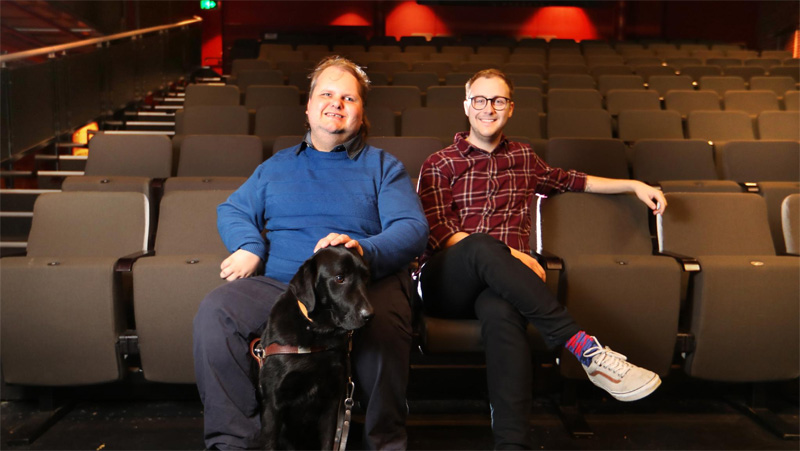
    Steve Milbourne and Phil Clandillon at the Sony Music London officePhil: You’ve got to get out there and put yourself into their head essentially, and think, “Alright, if I was this type of person, what would I…” The actual people in the insight department will go as far to do this. They’ll spend a week in the life of a particular segment; they’ll consume the right media, go to the right things, so they’ll try to experience that person’s world so they understand it better.

    A lot of people say, “That’s not very cool, targeting stuff, and consumer insight,” but what you’re doing is instead of filling the world with advertising which is generic, not aimed at anyone, and annoying for vast quantities of people, instead you’re trying to make something a certain type of person will be interested in. It will reach them naturally, through their friends, and the rest of them through channels they’ve been seeing, and the rest of the people just might see it. In a way, I would argue that type of advertising is more sensitive to end users than the current model of push advertising.

    Steve: Yeah, and it’s interesting that it’s not really about numbers, either. It’s about quality of engagement and the people that you’re engaging.

    Phil: Some of the segments have a very small active population so what we call the fanatical segments, which are really enthusiastic about music, and there’s not many of them. There might be 50,000 in the country.

    Steve: If that’s who you’re aiming for, if that’s who you’re aiming a particular creative ad, in order to get something back out of it, then it’s not really about numbers; it’s about engaging those particular people.

    Phil: So on the fanatics, we’ll look for smaller numbers, but engaging them for a longer period of time. The Editors project, that’s aimed at a fanatical segment, and that’s looking at smaller numbers. Something like 100,000.

    Steve: But you’re looking at stupidly high engagement rates.

    Phil: Yeah, like over 3 minutes per person, and an average of 4 tracks each across the application. That’s the opposite way of doing it. Some of the segments are, “Right, let’s go for a big audience, with low engagement.”

    Steve: I guess it depends on the objectives of what you’re trying to do, and it really has to support the wider market and campaign for the ad, as well.

    Phil: There will be other activity going on, posters and things like that, and events. Ideally, our activity will create a sort of buzz in the news at the same time as all that auxillary stuff is going around. Next time somebody’s buying some music, they’ll have it in their head that they’ve enjoyed this bit of content with that music in it.

    You’ve had a few successes with these kinds of campaigns now. How do you think the label management view these kinds of campaigns? Are they starting to see more value, giving you guys a bigger budget to work with for these kinds of projects?

    Steve: Kind of, I think it’s like anything; the music industry is very similar to the advertising industry as well. It sort of takes a long time to turn things around to new models, and to change the behaviors of old, in terms of something huge like advertising. Really, it’s about the way that people consume media, which is changing. Any big company that starts looking at new areas like that, it’s a bit like turning a super tanker. I guess it’s slowly but surely – we’ve kind of started rolling these campaigns out. We don’t spend enormous amounts of money, at all. In fact, anything but – it’s really modest sums, especially for the advertising world. It would be like pocket change.

    I guess the labels and the company in general sort of do attach value to what we do because we’re kind of proving we don’t need to do media spend, that we get really good engagement rates, and that we’re making interesting content that people are interested in, that isn’t just a Kasabian album out now. I guess budgets are going up a bit, but then –

    Phil: I think we may be seeing that over the last two years, they’ve gradually given us more freedom and more autonomy to do what we do. It isn’t directly giving us more money for our projects but they’ve made it gradually easier for us to do.

    Steve: I think that’s like a trust. I think sometimes an artist or artist manager might kind of see on paper what we’ve proposed to do and kind of go, “Ew, that’s different,” and they’re very sensitive to how artists are perceived by the public and things like that. I guess when we do stuff they feel like they’re taking a bit of risk, as well, but I guess the more we do this stuff, the more people see that it actually works and we sort of do the artist good. I guess more freedom comes from having that trust.

    Phil: I’d say that’s been the major change to the artists. It’s not like we’ve suddenly got tons of money to spend, but we do definitely have more freedom now and definitely have more trust from the managers and artists and people like that. That kind of comes back into the work, so that we can do better work next time around.

    Steve: The other thing about budgets is sometimes having endless budgets stifles your creativity. I think it’s nice to be able to execute stuff within the budgets that we do, and execute it well. Often, it means that we are very hands on, but I guess that being hands on means we also sort of keep an element of control and ownership over what we do so we get it the way we want it. We don’t just have an idea, then pass it to someone else and say, “Go and make that.”

    Phil: Under some extreme circumstances, we’ve actually been cleaning the floor after the shoot. If it has to be done, we’ll do it.

    Steve: Exactly, and I think that’s good too, because you think, “What’s the best that I can achieve for this amount of money that I’ve got to spend, when I can’t actually just go in and pay for lots of people to go do it?”

    Phil: It’s a bit like you’ll spend what you’re given, generally, so someone gives you fifty grand, you’ll spend fifty grand, but that doesn’t mean the work is going to be any better than if they’d given you twenty.

    Steve: I guess one of the things, as well, is that because we’re kind like an internal agency, we’re not trying to make money out of anyone. We’re actually just spending what we need to spend to do the project. It might be sometimes that actually what we need to spend is half of the budget that we’ve been given, and in that case – brilliant. Often, it’s not. Often, we’re sort of sitting on the very edge of what we’ve got to spend because it’s often not very much, but –

    Phil: Yeah, in theory, if we didn’t need the whole thing, we wouldn’t spend it, but in practice you’re talking about such small budgets that we do spend it all.

    Steve: We’re working on a new project at the minute. It’s quite difficult. One of the guys that helped on the Calvin Harris project. ['Humanthesizer' video embedded below.]

    Which other labels or teams in the industry are you aware of who do similar stuff to you guys? Do you think you’re unique?

    Phil: There isn’t anybody doing what we do.

    Steve: In the advertising industry, for sure.

    Phil: There are some campaigns, like you might have seen the Oasis campaign –

    The buskers?

    Phil: Yeah, and that’s BBH in New York, an ad agency.

    Steve: There are a lot of ad agencies that we really like the work of, and that we see doing really good work.

    Phil: That’s who we see our peers as other people in the advertising industry, rather than –

    Steve: Rather than the music industry. What we do is advertising for the music industry. That’s why we’ve got interesting projects to work with. We’re not trying to sell dog food. It kind of makes your job quite fun.

    Phil: Less soul-destroying.

    It does sound like a pretty awesome job, to get to be creative with artists’ work.

    Steve: It is really cool, actually. We have a lot of fun.

    Phil: Can’t complain.

    Steve: We have loads of fun doing what we do. It sort of is cool to be able to have really creative ideas and then be able to execute them for products that you’re actually quite passionate about or even if not passionate about, just sort of is more interesting than something which people generally find mundane. I’m not hugely into commercial pop music, but when you’re doing something for a really commercial pop act, and you see the people that you’re engaging, they’re really passionate about it so it kind of makes what you do feel worthwhile, rather than sort of –

    Phil: Trying to sell people something they don’t need.

    Steve: Yeah, try to sell a product that people don’t have – don’t care about at all. It’s completely different and it does make the job sort of really worthwhile and really good fun to do.

    Phil:  I guess the other side of it is we’re always seeing R&D on new ideas, new technologies, and new things that we might develop and we have the freedom to be able to do that alongside our normal work, so that’s really good fun. We’re always tinkering with something, making something new, or trying to investigate how to do something.

    Phil Clandillon and Steve Milbourne at the Sony Music London officeThat’s what I really enjoy, just getting my teeth into something that looks impossible and trying to make it happen. We’ll be trolling through the Internet, looking at writing programs, and drawing things, and trying to work out if we can make something work. It’s another fun side of it, what’s coming next, what are we going to do next.

    I’ll leave it there. I’m out of questions. Could I grab a photo of you two as you are now?

    Steve: Sure.

    View Phil Clandillon’s portfolio at: work.clandillon.com

    Steve Milbourne on Twitter: twitter.com/stevemilbourne
    Phil Clandillon on Twitter: twitter.com/philclandillon

    This interview was conducted for a story that appeared in The Music Network issue 770, January 18 2010. Read it here.

  • Discussing ‘Lonesome Highway’

    Let me tell you about ‘Lonesome Highway‘, my first feature for The Weekend Australian‘s ‘Review’ arts + culture lift-out. The story – which you should read (or glance at) here before continuing - discusses the challenges faced by Australian country musicians in 2010.

    'Lonesome Highway' by Andrew McMillen, The Weekend Australian Review, 6 February 2010

    I spent the week beginning Monday, 18 January 2010 playing the part of ‘freelance writer without work’. I was pitching stories every day, and none of them were sticking. By Friday – after alternating between liaising with editors, and catching up with some friends in the Brisbane music scene – all I had was an approval to interview a hip-hop act for an online publication.. who don’t pay for online content, as I learned soon thereafter.

    Earlier that week, I’d sent a Dirty Three/Laughing Clowns tour-related pitch to the editor of the Weekend Australian’s ‘Review’ arts and culture lift-out. I’d been email-introduced to her by a helpful fellow editor at The Australian a few months ago, when I was pitching the idea of a story around the Robert Forster book launch/conversation at Avid Reader. (That one didn’t stick either, obviously.)

    Fevered as I was in my determination to get a story idea – any story idea! – accepted, I sent that D3/Clowns pitch and promptly forgot about it. I’d prefaced it with a reminder stating that I’m a writer for Rolling Stone, jmag, etc, and that we’d last emailed in November.

    At 4pm on Friday, 22 January – generally despondent, after a week of work with few returns – the editor of ‘Review’ called me. That’s 5pm local time from her office in Sydney, owing to daylight savings.

    “I’ve got a problem,” she began.

    “Oh?” I replied, wondering a) what I might have done to cause a problem, and b) whether I could perhaps solve said problem.

    “I need a story on Australian country music following the conclusion of this year’s Tamworth Country Music Festival. My regular music writer’s just gone on leave. Would you feel comfortable taking on this story?”

    I paused for several seconds. “…you know I’m mostly a rock writer, right? For Rolling Stone, and stuff?”

    She confirmed, and reiterated the question. The story was due on Wednesday; as in, five days’ time. Word length unspecified; it could be 1,200, or it could be 2,000. I inhaled, and accepted the challenge.

    Immediately I pictured myself frantically pushing a library ladder around towering bookshelves that represent the contact details of everyone I’ve ever met. “Which of these people knows something about country music?” I yelled, in my mind. I sure didn’t.

    In a gesture that would be repeated throughout the time I spent researching, writing and editing the story, the editor took her time to provide me with some suggested paths of research, historical background, and narrative guidance.

    As soon as I hung up, I emailed dozens of my contacts within the music industry, searching for anything resembling a lead with regard to country music-related interview subjects. I put the call out on to my friends and followers on Facebook and Twitter. And for the first time, I used a site called SourceBottle, which allows journalists to request sources within a wide range of industries and subject matters.

    To my surprise, helpful responses began appearing in my inbox as fast as I could send out requests. My contacts introduced me to experts on the subject. My friends on social networks tipped me off to artists and their managers. And SourceBottle delivered some great offers from watchful PR professionals, who were keen to have their clients represented in a story.

    So began a crash course in researching the current players in Australian country music. I read stories filed from the Tamworth festival by The Australian’s regular music writer, Iain Shedden, who I’d interviewed a few months earlier for One Movement Word. I wrote an outline of what I planned for the story to cover, and warmed up with some phone conversations over the weekend. I spent Monday on the phone to country musicians, radio announcers, artist managers, alt-country artists, schoolteachers, historians and record label staff.

    All told, I conducted 18 interviews, throughout which I scribbled notes in preparation of listening back to the recorded audio. Tuesday – the 26th, Australia Day – was spent shaping what I’d learned from the experts into a coherent story.

    While interviewing, a frequently-recurring topic prompted me to pay more attention to the apparent dearth of  media opportunities available to country musicians. Ultimately, this would become the focal point of the story: what was imagined as a mere discussion on where the genre stands in 2010 morphed into a sympathetic piece highlighting the many challenges faced by country performers. As stated in the story, these are related to image, airplay opportunities, marketing, media attention, and even differences within the community.

    I submitted my first draft at 4am the next morning. Upon review, my editor suggested that a couple of follow-up quotes were required from Troy Cassar-Daley to describe the genre in his own words. And somewhere between fact-checking and quote-verifying, I’d forgotten to tighten the narrative structure, so my editor reshaped the piece to improve its flow.

    Upon confirming her final edit, the biggest story of my career was out of my hands. It wouldn’t appear in print for 10 days. (The cover from the February 6 issue of ‘Review’ is below right.)

    The Weekend Australian 'Review', February 6 2010It was the most exhilarating journalistic experience of my life. Five days focussed on researching and synthesising the story of a centuries-old art form into around 2,000 words. What a challenge. I’m so glad I accepted it. It even resulted in my first live-to-air radio interview for ABC Mid-North Coast the day before the story was published. (At the time of writing this, I’ve not yet listened back to it, owing to embarrassment…)

    In a way, the whole experience – the initial unexpected, but not unplanned-for phone call, the willingness on the editor’s part to take a chance with me – justified the time and effort I’ve dedicated to my writing since I changed my mindset and became serious about pursuing it as a career.

    Looking back, it seems that this occurred sometime in June 2009. I’m simply thrilled that eight months later, I’ve been published in The Weekend Australian, one of the country’s biggest newspapers. Awesome. If you have any questions relating to this story, I’ll try to answer them in the comments.

    Thanks to the following people who helped with the story.

    Interview subjects: Troy Cassar-Daley, Adam Harvey, Graeme Connors, Amber Lawrence, Anne Kirkpatrick, Joy McKean, Felicity Urquhart,  Luke Austen, Chris Pickering, Roz Pappalardo, John Elliott, Geoff Walden, Nick Erby, Bill Page, Aneta Butcher, Cheryl Byrnes, and Scott Lamond.

    Contact sources, miscellaneous inspiration: Stephen Green, David Carter, Craig Spann, Deb Suckling, Ed Guglielmino, Rick Chazan, Nick O’Byrne, Alison Brown, Dan Stapleton, Deborah Jones, Rachael Hall, Tim Lovett, Blair Hughes, Paul & Deb McMillen, and Matt Weller.

  • Anwyn Crawford discusses live music review techniques

    Owing to both arrogance and pride, it took me a while to realise that as a music critic, constructive criticism from your peers should be welcomed.  I get it now, which is why I was thrilled to receive an email from Anwyn Crawford in response to my Porcupine Tree review earlier in the week.

    “I have some thoughts on your recently linked-to live review,” she wrote, “if you’ll permit me to share them with you.”

    Of course.

    Anwyn is an Australian music critic based in Brooklyn. Her words have appeared in The AgeLoopsThe WireMess+Noise and Cyclic Defrost; contributions to the latter two are under the pen name Emmy Hennings. You should read her Overland opinion piece on Nick Cave, entitled ‘The Monarch Of Middlebrow‘.

    Anwyn doesn’t consider herself as a freelance writer, because in her own words, ”I probably only publish about three articles a year”. That said: she knows her shit. I’m holding her advice on par with what Andrew Ramadge told me last year.

    The topic of discussion – my Porcupine Tree review for The Vine – can be found here. You should read it before reading the below, which is an unedited copy of what was sent to me.

    First up, it’s far too long. Unless you’re going to be deliberately discursive, or be pursuing a particular thesis about a cultural event that is significant to a lot of people, for instance Marcus’s review of The Tote’s last evening, then less than half that length is ample. Believe me, readers don’t want or need that much information in a live review format. I’m not saying this because I think it should be a “dumbed down” format or that readers aren’t capable of digesting something more complicated – they are – but it’s important to respect the expectations of the form that you’re working in, whatever that might be, which means that if you break the expectations for a particularly compelling reason, then the results will be more fruitful. Part of the skill of a live review, I think, is try and relay, in a reasonably short numbers of sentences, your experience of the performance to a readership. This means trying to pick representative moments of the performance – or occasionally unrepresentative moments, if these seem to get closer to the truth of the event. A song-by-song catalogue has little narrative interest for a reader.

    Secondly, and this is my big beef with so much music writing – PUT YOURSELF IN IT. I know that the first rule of essay writing that we’re all taught at school is never to use the first person pronoun. It’s time to put that rule aside. Reviewing is an inherently subjective act. It’s your opinion, and your experience – own it. This doesn’t mean describe what you had for dinner and how your feet were sore and “Oh, I missed the opening band” (classic street press gaffe), it means: don’t let your writing be bloodless. A reader wants to know why the performance might have mattered (or not mattered) and the only way they’re going to be able to get a handle on that is if you tell them why it mattered to you. It will also, almost inevitably, make your sentences shorter and more energetic, because you can can avoid clunky constructions like “One expects” and its many bet-hedging variants. “I think” “I was ecstatic” “My brain was melting” “This has stayed with me for days” – don’t be afraid to say I.

    Thirdly, avoid Latinate constructions and “pretentious diction”. I’m with George Orwell on this one. Translate them back into plain English. “Resultantly” = “As a result”. It doesn’t sound more sophisticated when you write “Resultantly”, it just confuses the meaning. Same goes for words like “emotive” (emotional) “reciprocate” (respond) “regale” (you need “shout” or something similar there, because “regale nonsense” as a clause makes no grammatical sense without a subject who is being regaled). Take a sentence like: “It’s a fittingly exhilarating close to an achingly beautiful song, into which the singer interjects a heartily-applauded full band introduction.” It took me about three runs to actually figure out what that meant. “It’s an exhilarating close to a beautiful song, and when singer XY pauses to introduce the band, he gets hearty applause”, is much clearer.

    And lastly, also related to Orwell’s timeless advice, avoid cliches and ready-made phrases. Chords nearly always “flourish”. A band is too often on a “jaunt” when the writer doesn’t want to use the word “tour”. There are millions of basslines that “pulse” and countless pianos that sound “plaintive”. Find a more interesting and a more accurate word, if you can, but bear in the mind the above: don’t let it become pretentious. Verbs are your friend, adjectives are often not.

    Just the kind of kick-up-arse I needed. Thanks, Anwyn. Pay attention to her blog.

  • The Vine live review: Porcupine Tree @ The Tivoli, February 2010

    Here’s my first review for The Vine, a Fairfax Media-owned youth culture site. It’s of British progressive rock band Porcupine Tree [pictured right] playing The Tivoli on February 5, 2010. You can read it here.

    British progressive rock band Porcupine TreeI want to discuss this review from a writing perspective. Some background is required.

    If you’ve followed my writing over the years, you might have noticed that this review is a return to the long-form, descriptive style that I became known for when writing for FasterLouder.com.au.

    To illustrate: compare my Bloc Party @ Riverstage, November 2008 review for FL to this Robert Forster @ QLD Art Gallery, September 2009 review for Mess+Noise.

    With the former, I fell into a style that prized observing facts over engaging with the subject matter on an emotional level. To me, the Forster review reads like it’s written from a calm place more conducive to expressing one’s feelings, than simply listing songs played and key musical moments.

    To illustrate, it’s less this:

    It seems that foul weather has sidestepped Brisbane’s sore and sorry suburbs this weekend: clear skies greet Bloc Party’s arrival onstage, and an overwhelming sense of unity sweeps across the capacity crowd. [...] Following the guitar freak-out during Positive Tension’s bridge (“so fucking useless!”), Okereke’s closing words tease the crowd: “play it cool”. The searing guitar tone of that track and Helicopter number among the likes of Franz Ferdinand’s Take Me Out as the most memorable rock sounds to emerge from the United Kingdom this decade. (Bloc Party @ Riverstage, November 2008)

    Than this:

    For seven songs, Robert Forster is alone, armed only with six-string, voice, wit and stare. [...] There’s no hint of melancholy in Forster’s delivery, nor sense of mourning among the crowd; [songwriting partner Grant McLennan's death] happened three years ago, after all. I feel obscene for writing these words, like I’m prodding at Forster’s bruised heart for mentioning McLennan in this context. But more than the half-dozen times I’ve seen the man perform in the last few years, this stage configuration highlights the emotional distance between us and he. (Robert Forster @ QLD Art Gallery, September 2009)

    I mentioned earlier that I ‘fell into’ the descriptive style when writing for FasterLouder and street press because it’s the norm. It’s easy. It’s what the majority of street press writers do, and when I stepped into music writing, I paid a lot of attention to my peers within the local community. (I still do read street press, but now I find it most useful when viewed as a resource that highlights what not to do as a music writer.) [Clarification: I'm referring specifically to street press live reviews in this instance.]

    I feel that this style of writing is problematic purely because it is so safe. You can’t be wrong when you’re just listing songs played and key musical moments. I’m not saying that anyone can do that. More accurately, anyone familiar enough with a band and able to write coherently can do that.

    And if you can do that, if you want to call yourself a music writer or a music journalist – I alternate the two terms loosely, which may be problematic in itself – then that’s fine. You can get your name crossed off the list at the door and watch the band and write down the setlist in your notepad (or crib it from online forums) and write your little description and send it to your editor (who won’t fuck with your copy because it’s so inoffensive and beige) and get published and show your friends and perpetuate the delusion that you’re a worthwhile music writer just because you get published.

    If you’re reading this and getting pissed off, hey – I’ve been there. I was that person for nearly two years until I took this role seriously. (You can read more about that here – but I warn you, it’s reasonably incoherent.) Between July 2007 and May 2009, music ‘journalism’, to me, was putting my hand up to review shows that, 90% of the time, I knew I’d like. I’d show up with a friend and get my free tickets and have some drinks and maybe take some notes and if it was a weekend show, I’d write it up late on Sunday night to meet the Monday morning deadline. (I now write most reviews immediately afterwards.)

    If you view it in terms of free entertainment, as I did, there’s no problem. You might even embrace your mediocrity as a writer because hey, it’s a hobby, right? You can impress your friends by getting your named crossed off the guestlist. Seeing bands for free and getting paid (miserably) for it – the dream, right? High fives!

    After nearly two years, though, I could embrace my mediocrity no longer. You realise that publicists are quoting your published praise not because it’s good writing, but because your praise is so unashamedly hyperbolic that of course it’ll appear on the press release. Because at the time, as a ‘music writer’, I wasn’t sufficiently self-aware to realise that I was being so fucking immature.

    This is not to say that a good writer can’t praise a band. I still nominate to review shows by bands whose music I’m familiar with, and usually fond of. I’m not sure how to define it, but I think that an important self-realisation has to take place before a music writer can put aside the urge to praise and describe, and instead rely on gut instincts and feelings to shape their work. Still the best advice I’ve received is from Andrew Ramadge, who I think of whenever I write about music. The most important question I have to answer: what does it feel like?

    Returning to the Porcupine Tree review. It took me three or four hours to write, which is far longer than I’ve spent on any live review for Mess+Noise. In a way it feels like I’ve regressed, purely because of its length and my tendency to rely upon description instead of feel. As I’ve made clear, description without emotional engagement is for losers. There was some exposition about the potential hypocrisy of an internet-successful band disallowing the use of recording equipment, but as my first review for The Vine, I don’t feel that it’s particularly strong, or representative of my evolution as a writer.

    Why did I submit it if I wasn’t 100% happy with the outcome? I believe it’s because I was thrown by the show, and didn’t know how to write it any other way. I hadn’t seen a serious rock ‘production’ like that in some time, and while I was clearly impressed by the scope of their performance, I perhaps allowed myself to take the easy way out. I allowed my standards as a writer to drop, and I think it shows.

    Maybe I’m being over-cautious. Maybe I spent too long absorbed in a piece of writing that I can no longer tell whether it’s good or bad. (That happens sometimes.) What do you think? If you’ve read this far, I’d love your critical appraisal of my review, whether you’re familiar with Porcupine Tree or not.

  • The Weekend Australian Review story: ‘Lonesome Highway’, February 2010

    This is my first feature for national broadsheet newspaper The Weekend Australian‘s ‘Review’ arts and culture lift-out. Entitled ‘Lonesome Highway’, it’s 2,000 words on the challenges faced by Australian country musicians. [Click the image for a readable version.]

    'Lonesome Highway' by Andrew McMillen, The Weekend Australian Review, 6 February 2010

    This is by far the biggest story of my career; you can read about how it happened here. Full story text included below.

    Lonesome Highway

    Once a year country music gets its moment in the sun, then it all goes cold again. Andrew McMillen reports on a neglected genre

    The country music scene appears on the radar of most Australians only each January, at Tamworth Country Music Festival time. Television shows brief clips of guitar-slinging performers; newspapers run wide shots of cowboy hat-wearing, denim-clad fans lining the main street and, if we’re lucky, which we mostly are, we’ll be shown “the weirdest busker on Peel Street”, says singer-songwriter Felicity Urquhart with a sigh, referring to the many performers who line Tamworth’s main drag and vie for the attention of visiting news crews keen to shoot and run.

    Golden Guitar winners rate a mention in the mainstream media and then country music is put back in its box.

    As singer-songwriter Adam Harvey puts it, “people tend to dismiss country music without giving it a go. They think we still sing about the one where ‘my wife left me and my dog died’, or if you play it backwards, it’s where ‘my dog left me and my wife died,’ ” he says with a laugh.

    The problems are many: image, airplay opportunities, marketing, media attention, even differences in the sector about what country music should be in a wider music world dominated by glossy pop singers who flaunt skin and layer digitally enhanced vocals over processed beats .

    As Harvey suggests, not everyone even knows what country music is.

    The Australian’s music writer, Iain Shedden, puts it this way. “Country music, since it was first called that in the 1940s, has evolved and fractured into hundreds of sub-genres, from alt country to cowpunk to pop country crossover, so it’s impossible to attribute one strict formula to all of it.

    “In Australia, however, it’s a little easier to define. Stretching back to the pioneering output of Tex Morton and then Slim Dusty, songs have simple folk structures, generally led by acoustic guitar, but accompanied by other instruments also used in the folk tradition, such as mandolin, banjo, harmonica. Most often the songs are in waltz or 4/4 time,” he says.

    “The connection to the land is probably Australian country’s strongest lyrical characteristic, with John Williamson one of the leading exponents of that form. Lyrics often have a narrative, although at the pop end of country (taking Taylor Swift from the US as an example), they can be more abstract (or banal) with no ties to rural life at all.”

    Amiable superstar Troy Cassar-Daley calls country “the story of everyday people. Vocally, it’s sincere; instrumentally, it’s proud to wear sounds like banjos and fiddles in the mix. Other music steers clear of those because they don’t want to be labelled, but we proudly use instrumentation that has the feel of the hills that cover this great land,” he says. “Lyrically, it’s pure home-town pride. And you know you’re listening to country – not pop or rock – when you hear songs for the common man. There’s a lot of people living, loving and dying in Australia, and this music is about them.”

    Following this creed, Cassar-Daley won six Golden Guitars this year, including album of the year for I Love This Place, taking his career tally to 20.

    “Afterwards I got a text from Keith Urban asking, ‘Can you just leave some for someone else?’,” he says, laughing.

    Cassar-Daley was a popular winner, but there were questions elsewhere when writer-photographer John Elliott, a festival veteran, gave a lecture titled Let’s Get Real: The Need for Authenticity in Australian Country Music. “Great country music tells stories about our country; about who we are and where we come from. I think a lot of younger artists have lost this focus,” Elliott argued.

    He also said performers needed to have an appreciation of what had come before. “Without that respect it becomes very bad pop music,” Elliott said. “And it has to have more of a connection to the country than wearing a hat, having a twangy guitar and getting your clip played on the Country Music Channel.”

    Dusty’s widow Joy McKean, who celebrated her 80th birthday with a concert on January 21 at Tamworth’s Capitol Theatre, agreed. McKean is a songwriter who managed her husband’s career for more than 50 years. “As yet, no one has crystallised what it means to be country like Slim did. He was the point of reference for country music, and I don’t think we have that now. A lot of people are paying lip-service to country music for their own means, without having a genuine feeling for the music.”

    The variety of music styles being presented in Tamworth this year gave some force to this argument, although Dusty’s daughter Anne Kirkpatrick, while warning today’s performers not to get “too wound up in the image to the exclusion of the heart and soul”, acknowledged the stature of Urquhart and Cassar-Daley in the business.

    But no matter how good the country artist, there is still the matter of getting them heard. Aneta Butcher, who manages Australian country music at the nation’s largest independent record company, Sydney-based Shock Records, says: “I don’t know if we’re ever going to get mainstream radio to pick up what we market as country music. If we’re taking a country act to radio, we generally have to provide a pop mix of their single and hope for the best.”

    In the US – where Urban is a huge star – there is a vast network of country radio stations, something Australia lacks. Urquhart, who won female artist of the year last month, has been sitting in as host of ABC radio’s Saturday Night Country program while regular host John Nutting is on leave, and says that in the absence of other outlets, “all we can do is try our best to promote, expand and educate the listeners of our ABC program … I truly believe there’s something in country music for every Australian.”

    Scott Lamond, who was raised in Bundaberg on a healthy diet of Dusty and Williamson, has reported on country music events for the ABC for the past five years. “I know ABC radio takes country music seriously, but generally speaking there are limited broadcasting opportunities for country artists outside of community radio,” he says. “I spoke with [2010 Golden Guitar winner for group of the year] Jetty Road, who mentioned that there’s around 70 commercial stations in Canada playing country music 24/7. Australia just doesn’t have that; the platforms on offer to artists who want to share their music are limited.”

    Harvey has tackled the issue of attracting attention by inviting performers from outside the country realm – including pop singer Guy Sebastian – to sing on his 2009 release Duets. Sebastian headlined a show at this year’s Tamworth festival, which was one of the first to sell out. The presence of such an unashamedly un-country artist was the talk of Tamworth, but as Harvey sees it, there has always been a diverse array of acts on display at the festival, where this year an estimated 2500 acts played across 10 days.

    “The old guard tend to forget that the traditional Tamworth crowd’s getting older,” he says. “I understand we’ve got to respect our heritage, but we’ve also got to make sure we’re encouraging a steady influx of young performers. And if we’ve got to drag a few people with us to move the industry forward, we’ll do what we have to.”

    Harvey’s willingness to test boundaries, is, he says, just “a bit of common sense. I’m aware of how important it is that we plan a long-term future for our industry.” Performers needed to remember “that we’re product who’re expected to sell records”.

    Twelve-time Golden Guitar winner Graeme Connors says the country industry is in something of a trough.

    “From my perspective, the music business cannot function without artists who are creating interesting, challenging, and diverse works … The business has this constant demand for large-selling records, and not every artist can do that with every release.” A powerful, individual voice is what’s missing, Connors says.

    “That void will be filled in time, if only because the human spirit is incapable of staying in a lull. In the interim, there’ll likely be someone at the young end of the spectrum who’ll find a voice that reminds us just how good music can be.”

    This year’s anointed up-and-comer is Luke Austen, winner of the 31st annual Star Maker talent quest. It’s a title previously held by Urban and Lee Kernaghan. Austen, 28, isn’t exactly a neophyte, having spent four years on the road with lauded bush balladeer Brian Young and six years as bassist for Cassar-Daley. He also co-wrote a song on Cassar-Daley’s I Love This Place.

    “We prefer to select a winner who’s already working professionally in the industry, because they get it,” quest co-ordinator Cheryl Byrnes says.

    A cautionary note is struck, nevertheless, by Geoffrey Walden, founder of the Gympie-based Australian Institute of Country Music. He contends that the Tamworth talent quest programs tend to build artists who don’t appeal to the younger demographic of potential fans. “It’s about marketability from the perspective of what the industry sees as the future of country music. They’re generally after someone who’s marketable and who’ll appeal to a wide audience, but not necessarily a young audience.”

    Austen is acutely aware of the expectation thrust on him. “There hasn’t been a major star in a long time, but I’d like to put that pressure on myself because I feel that I’ll perform better. It inspires me to dig in and really make it work. I’ve won the respect of my peers, and now I just have to concentrate on backing it up with good product.”

    Nick Erby is a Tamworth local who has attended all 38 country music festivals. “Competitively, contemporary Australian country music is the best you’ll find anywhere. We’re not backwards, we’re just underexposed,” he says.

    Erby has a long history of broadcasting country music on radio, but now works online. He points out that terrestrial licenses for Australian radio are restricted and finite, but thousands of stations exist online, each broadcasting to niche audiences. “Online technology is shaking up the radio industry. Once the cost of access drops, the option will become more attractive to a wide array of listeners.”

    He sees this as a potential answer to the lack of exposure for country music: his Country Music Radio online simulcast of this year’s awards overloaded his US-based server. “You watch,” he predicts. “In the next two years, the awards will be streamed via live video.”

    Industry insiders also point to the success of the 20-year-old Swift, whose career and style could entice young Australian performers and fans. Swift’s second album, 2008′s Fearless, has sold more than seven million copies in the US. Butcher voices a hope shared widely: “Swift appeals to younger girls, who might be influenced to give country music a try,” she says.

    Traditionalists may squirm, but this could be the future. As Urquhart says when despairing of the limited view of country music held by the media at large: “What about our shining lights and our new discoveries? There’s so much more to country music than footage of a hay bale and a guy with a chook on his head.”

    And even someone as successful as Cassar-Daley half-jokes as he helps out with phone numbers: “Good luck with the story, mate. Keep it positive. We need it.”

    This story originally appeared in The Australian’s ‘Review’ lift-out on February 6 2010. A link to the story on The Australian’s website is here.

  • Rolling Stone story: ‘All Tomorrow’s Parties Turns Ten’, February 2010

    All Tomorrow's Parties story in Rolling Stone, February 2009 by Andrew McMillenHere’s a story for Rolling Stone that I wrote while in England for the 10th anniversary of the All Tomorrow’s Parties festival, which was headlined by The Mars Volta, Explosions In The Sky, Modest Mouse, Battles and like a hundred other awesome bands.

    I was there for the Nightmare Before Xmas festival curated by My Bloody Valentine the weekend before, too, and throughout the week for the In Between Days nightly shows. The entire experience was brilliant, but seeing Dirty Three play their album Horse Stories to around a hundred people on a Tuesday night was just something else.

    This story includes an interview with ATP founder Barry Hogan. Check back for the full transcript of our conversation in a couple of days. Click the image to the right to take a closer look; article text is included below.

    All Tomorrow’s Parties Turns Ten

    “The ultimate mixtape” as Thurston Moore described it, celebrates a decade.

    Indoor stages. Hour-long sets. Secure, comfortable accommodation. Rock trivia. Performers who favour watching bands with the crowd, instead of hanging backstage. An overwhelmingly positive, respectful community vibe.

    These factors might not have figured into your last experience at a major Australian festival, but it’s reality for those who attend All Tomorrow’s Parties (ATP), which celebrated its tenth birthday in mid-December 2009.

    Built upon a core ethos of respecting the concertgoer, All Tomorrow’s Parties (ATP) festivals are held in unique locales across a weekend. Bands are asked to choose the acts they’d like to see, which has resulted in artists like My Bloody Valentine, The Flaming Lips and Dirty Three curating for the pleasure of their open-minded fans. Like a balanced mixtape from a worldly friend, you’re likely to find a handful of bands you’ve never heard, but who you’ll soon love.

    ATP’s UK home is the 6,000-capacity Butlins holiday camp in Minehead, Somerset. The 10 Years Of ATP line-up included an array of ATP friends, associates and past curators, including The Mars Volta, Explosions In The Sky and Modest Mouse. Between bands, founder Barry Hogan reflected on how ATP has evolved from a weekend festival to a label and a community of passionate music fans in its own right.

    According to Hogan, the average ATP concertgoer is “the sort of person who, when they buy records, want to know the name of the producer and the studio where it was recorded. Not exactly record nerds, but people who actually give a shit about music. They don’t buy CDs in supermarkets, which seems to be one of the few places you can buy music these days.”

    The artist-chosen festival line-ups allows Hogan and his team to sidestep hype and work on their own terms. “It’s good having a curator,” Hogan says, “because it means we’re working within their tastes and desires, instead of agents, magazines, and labels all going, “You must put this band on because they’re the hot new thing.”

    Rolling Stone Australia cover, March 2010Hogan worked on the Belle and Sebastian-curated Bowlie Weekender in 1999. ATP – named after a 1966 Velvet Underground song – is based on Bowlie’s artist-as-curator concept. The festival ventured to Australia in January 2009, featuring a centrepiece weekend event at the off-season Mount Buller Ski Resort; day shows in Brisbane and Sydney followed. Nick Cave & The Bad Seeds were the inaugural Australian curators.

    Hogan’s offshoot ATP Recordings label has released music by dozens of indie artists, like British electronic/noise duo Fuck Buttons and Australian rock act The Drones. “We put out a lot of records that don’t necessarily sell a great deal, but ATP fans are generally willing to take a chance with our artists because they know we’re not going to put out Coldplay or Miley Cyrus records.”

    Memorable moments for the ATP founder? “I remember the first time that (Rhode Island experimental noise duo) Lightning Bolt played. Most people didn’t know their music or that they played on the floor; the great thing was seeing the reaction on peoples’ faces: “What the fuck is this?!”. And I’ll never forget the day Sonic Youth confirmed to headline our first event, curated by Mogwai. The minute they came on board, sales soared, and we never looked back.”