triple j mag story: Robert Forster interviews The John Steel Singers

November 30th, 2010

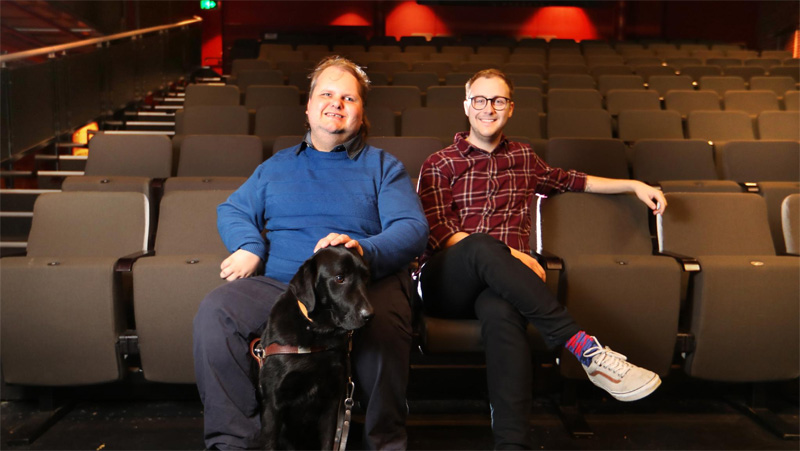
This is a feature story which was published in the November 2010 issue of triple j mag, but it was an unconventional one: the editor assigned me to observe Robert Forster interviewing Brisbane pop act The John Steel Singers. Forster produced their debut album, Tangalooma, so there was a nice synchronicity to it all.

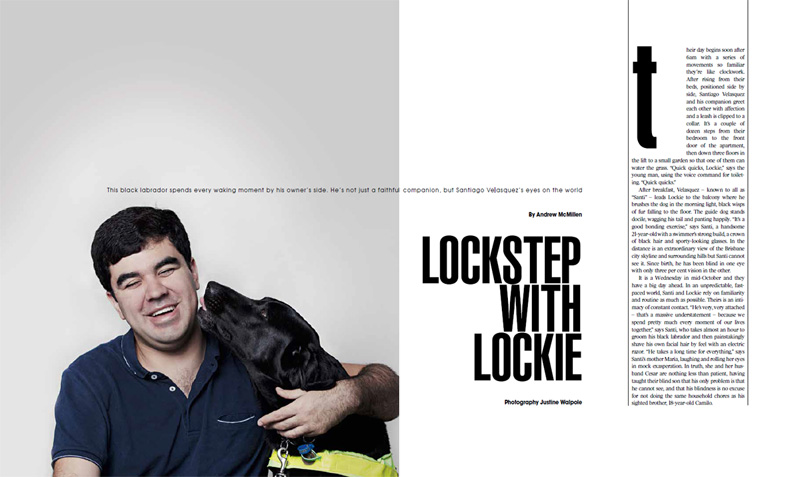
Click the below image for a closer look, or read the article text underneath. Photograph taken by the wonderful Stephen Booth.

Under The Bridge: The John Steel Singers

Brisbane-based six-piece The John Steel Singers release their debut album, Tangalooma, on November 5 through Dew Process. Produced by Queensland’s pop statesman, Robert Forster – co-founder of The Go-Betweens, the widely-loved pop group after whom Brisbane’s Go Between Bridge was named – Tangalooma showcases The John Steel Singers’ lively, colourful take on indie pop. We asked Robert to interview three of the band members for triple j magazine and sent Andrew McMillen along to a pub in Brisbane’s West End as the, um, go-between.

Robert Forster: What was the ambition of the band at the start?
Tim Morrissey (guitar/vocals): We always wanted to go overseas. Not necessarily to be ‘successful’ overseas, but to go overseas as an experience. Which we’ve since done a little bit of, but my goals at the start were just to play with certain bands and do certain shows.

Robert: When you started the band, was playing Splendour one of the things you wanted to achieve? [The band played there this year.]
Tim: I don’t know that Splendour was necessarily on my radar at that point, but a festival of that stature, for sure. I remember going to the early Valley Fiestas, though [Brisbane’s annual street music festival, held in Fortitude Valley], and thought it’d be really nice to play a Valley Fiesta in a good slot. Which we did, on the weekend! That felt a little bit surreal.

Robert: The John Steel Singers: realising dreams. What are the next couple of dreams?
Tim: A bridge!
Robert: Okay. I know the Lord Mayor. I’ll put the word in. So between playing Valley Fiesta and the magic heights of having a bridge named after you, what are the other steps in between?
Scott Bromiley (trumpet/keys/vocals): The healthy evolution of our music.
Robert: Oh, that’s good.
Scott: No radical left turns, or anything like that.

triple j mag: Is touring overseas still a goal?
Tim: Definitely. Go overseas, sell three albums, live in squalor for six months, then come back with egg on our faces.
Robert: Where overseas?
Tim: Anywhere that will have us, I guess. I’d love to go to the US, Berlin, UK…

Robert: Thinking about the band’s sound, where can you hear that being best received at the moment?
Scott: Ballarat.
Tim: Geelong.
Scott: Bendigo, perhaps. Albury. Wodonga.

Robert: Okay. Let’s get Tame Impala out of the way. Great album. What’s the vibe about going on tour with them in October?
Scott: We’re good friends with those guys.
Pete Bernoth (trombone/keys): We’ve known them since Southbound 2008. We hung out backstage and stole Faker’s rider together. We were young and stupid; we’re not like that anymore.
Robert: Are you scared that the next couple of songs you write are going to be guitar-oriented psychedelia?
Scott: Yeah. We constantly try to avoid that.

Robert: But playing with them, won’t that only bring it out more?
Scott: Perhaps. But maybe they’ll take in some of our influences, and start writing keyboard-flavoured pop gems.

Robert: You get the call to play Big Day Out. What do you say?
Scott: “I’ll be there in a jiffy.”
Tim: After hearing those stories about Grant [McLennan, Go-Betweens co-founder, who died in 2006] – definitely there in a jiffy. I want to play cricket with Coldplay, and stuff.

triple j mag: What are these Grant stories?

Robert: I got bowled by Coldplay’s drummer [Will Champion]. They are very good cricket players; they’re probably better cricket players then they are as a band. (Everyone laughs) Really! Chris Martin’s very good, and Champion bowled me on an off-cutter. Unbelievable!
Scott: I just thought of a montage: Chris Martin training in a tracksuit, with Brian Eno holding a whistle.

Robert: Okay, this is an imagined scenario. You’re in Adelaide one afternoon. You’ve soundchecked. You come out of the building, and there’s a young three-piece band on the street. They ask, “What advice can you give us – a) musically, and b) career-wise?”
Scott: a) Get yourself a disgruntled redhead trombone player. [referring to Pete]
Pete: Hook your claws into some stupidly talented dude who can play everything, like Scott.
Tim: b) If you’re in Adelaide, use the free bike paths. When you ride your bike, that’s a good time to think of songs.

Robert: Do you find cycling conducive to songwriting?
Tim: Damn straight. I’d say I write 70% of my melody ideas on the bike; 30% in the jam room.
Pete: My advice is that even if you’re playing to no-one, don’t treat it as a joke. Try to take every show seriously. It’s hard, and sometimes you fail miserably, but every show’s a show. Do your best.

Robert: Let’s say I’m from a record company called Dew Process. I’m an A&R rep, and I’m going to give The John Steel Singers $100,000 to record their next album. Spend it as you will. What are you going to do, what would I hear, where would it be done?
Scott: Well, you’d probably hear it about five years later!
Robert: Good! Brilliant!
Tim: We’d definitely stay in Australia. We’d go either Darling Downs, or the Sunshine Coast Hinterland. We’d hire a house out for six months, and we’d deck it out with some nice studio gear. We’d fly Nicholas [Vernhes, the Brooklyn-based engineer who mixed Tangalooma] out, and we’d spend six months recording. That’s it.

triple j mag: What did The John Steel Singers learn from their debut album producer?
Robert: You can’t ask that in front of me! I’ll go to the toilet. (He leaves)
Scott: Everything, really. There wasn’t much that we didn’t [learn]. Just what a fantastic presence he is in any given situation.
Pete: He took our songs back to basics.
Scott: That’s right. Robert’s got a way of distilling everything down to its purest form so that you can see what the true value of a song is, without it being hidden by production.
Tim: And he’s a very competitive ping-pong player.

Needless to say, this was a fun conversation to observe. Forster really got into the interviewer role, which really comes across in the article.

Elsewhere: an extended interview with Robert Forster earlier this year for the Mess+Noise ‘Icons’ series; a review of The John Steel Singers’ debut album, Tangalooma, for The Vine.

The Vine album review: The John Steel Singers

November 30th, 2010

An album review for The Vine. Excerpt below.

The John Steel SingersTangalooma

Less a particular colour than a whole rainbow, Tangalooma is the debut album from Brisbane six-piece The John Steel Singers, whose invigorating take on indie pop is distinguished by their ample use of brass instruments. But despite their pomp and bluster, it’s the subtleties that JSS inject into their sound which makesTangalooma a truly great record – and importantly, not just a ‘great debut’.

Check out the banjo counter-melody in ‘Once I’. The whirligig of subtle guitar effects that close out ‘Dying Tree’, and then lead into the grinding bassline of ‘Rainbow Kraut’. The unexpected percussion throughout ‘Toes And Fingers’, which sounds like drummer Ross Chandler is tapping on glasses filled with different water levels. Chandler is an integral force within the band, and not for the obvious reason that he provides the backbeat: his mind seems to work unlike the average drummer, seemingly obsessed as it is with eschewing the obvious in favour of the peculiar. His stuttering beat ushers in ‘Masochist’, while Pete Bernoth’s trombone and Damien Hammond’s bass place emphasis on a three-note flourish. Chandler isn’t beyond playing it straight, though, as in ‘You’ve Got Nothing To Be Proud Of’, a bass-heavy pop jam that sounds unlike anything the band have done before. Bernoth’s trombone and Scott Bromiley’s trumpet team-ups could easily be shrugged off as a gimmick if they weren’t interwoven into each track’s narrative, but they compute. Take, for instance, the assured trombone tones of ‘Cause Of Self’, which lends the song a regal, military vibe. (It reminds me of the Streets level in GoldenEye 007, which is awesome.)

Full album review on The Vine. More of The John Steel Singers on MySpace. The music video for their song ‘Overpass‘ is embedded below.

A Conversation With Trent Dalton, 2010 News Award-winning Features Journalist Of The Year

November 17th, 2010

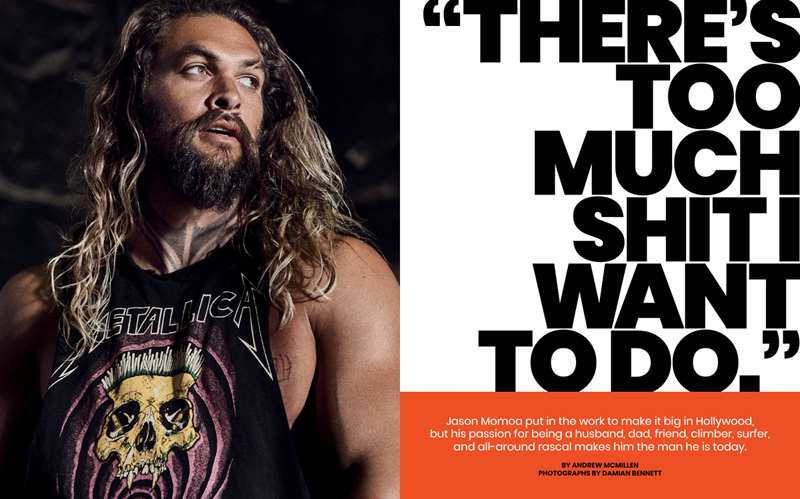
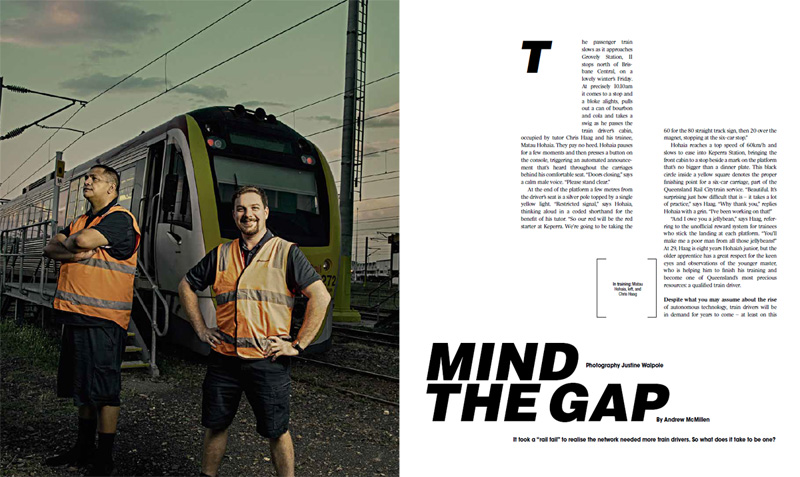
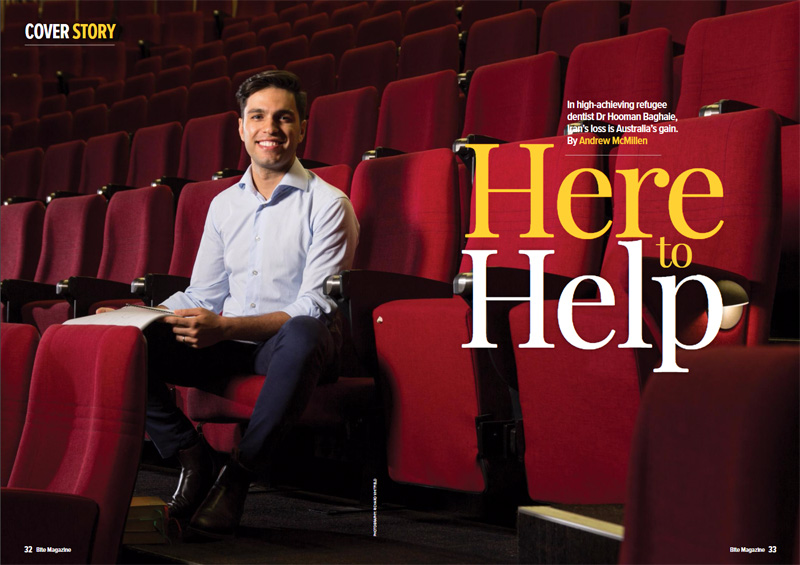
Trent Dalton [pictured right] is the best feature journalist in Australia. I first had this realisation sometime in 2005, during my final year of high school. That year, Queensland newspaper The Courier-Mail launched its new glossy magazine, Qweekend, which was included in the Saturday paper. Each week, the magazine ran three feature stories written by journalists in Queensland, as well as the occasional piece syndicated from overseas publications. From the beginning, the magazine’s editorial policy divided its attention between big, complex issues, and profiles of remarkable people doing worthwhile things with their lives.

Qweekend has since built a reputation for exhibiting the state’s best feature journalism, and, by extension, its best feature journalists. Like Trent Dalton, who has been at the magazine since the beginning. Over the years, I’ve found myself continually drawn to Trent’s distinctive style of storytelling. It’s a habit I’ve been unable – and unwilling – to kick. The man has a freakish knack for crafting engaging, long-form narratives. I covet and cherish his words more than those written by any other Australian journalist. If I can become half as good a writer as Trent, I’ll die happy.

Last month, Trent Dalton won the News Award for 2010 Features Journalist of the Year for the second time, having previously won the award in 2008. This time around, judges paid special attention to two interrelated stories named Story of a Man and Story of a Woman. You can read them both by clicking on the story names, or by clicking on the images below. (Both links open the stories as PDFs in a new window.)

Last week, I interviewed Trent specifically about these two award-winning stories. I highly recommend reading both stories before reading my interview.

++

Andrew: Tell me about the process behind the News Awards. Did you nominate your own stories?

Trent: Yeah. So what happens is every year News Limited runs their national big news awards for all their publications, and so in the feature writing category you submit what you consider to be your five best stories, written throughout the year. I submitted what I thought my five best were. One was an interview with a child pornographer. Another one was an interview with a guy who was imprisoned in Brisbane for 20 years, and believed he was innocent. There was another one on euthanasia, and another one called Home Truths, which was about these boys out at Riverview Boys Home who were chronically abused when they were children. But now they’re 60 years old, and they had a reunion out there which they invited me to, and it was an incredible moment.

The other one was a combined, two-part story, Story of a Man / Story of a Woman, which got great feedback. And that was the one that the judges highlighted.

You write a lot of stories. Do you find it hard to pick favourites?

It definitely wasn’t hard to put in the pair that the judges responded to, Story of a Man / Story of a Woman, because that was also my favourite thing that I’ve done this year. It was probably the first pitch that I gave to my editor that’s come out exactly as I’d hoped it would in the genesis of the actual idea.

The pitch to my editor was: let’s do a story on a woman and a man, a completely ordinary woman and completely ordinary man, but tell their entire life story. Go up to them and say, “I want to know every last thought that is in your head, and I need you to be as honest as humanly possible.” I asked about hundred strangers in the street if they would be willing enough to share their stories, and everybody said “that’s a wonderful story but I’m not going to be the volunteer who gives you my entire life story, warts and all”.

Luckily, there was this extraordinary woman called Liz Parr. She got the ball rolling. She said “yep, that’s a great story and I really want to do this, I think it’s going to be great.” She wanted to do it for womanhood, and she took it in the spirit that I was trying to do it. It was an amazing trust exercise, because she totally told me everything, from her hopes and fears and dreams, to literally her sex life and some of the misfortunes she’s had in her life. It was amazing. It turned out to be a really great journalistic experience. It wasn’t hard choosing those ones.

All Qweekend stories have headings at the top of the page; the heading for these stories was ‘real life’. Did Christine [Middap, Qweekend editor] go for it immediately? It seems like going for this story might have been a bit of a risk for her.

Yeah, she did go for it immediately, but only because she knew what Qweekend has been thriving on. This is where I think we’ve developed an audience; we’ve thrived on the stories of ordinary people. We have this column called Ordinary People which we started five years ago, and without a doubt, we get the biggest response from that column, more than any other regular feature in the magazine.

It’s really connected with readers, so if it wasn’t for that column being successful, I think she might have balked at the idea. But given the success of that, she was like “Yeah, I can see the power of this,” and she knew where I wanted to go with it. She knew too that it would take finding the right people; it could have failed abysmally if we didn’t get that right people. It totally taught me the power of finding the right subject in any story that one might be writing. The right person, not just the right topic, but the right human being to actually be the conduit for the reader.

Qweekend has been around for five years now. When did you first come up with the story idea?

Around three years into it. I had the idea for a long time and I mentioned it once before to Christine, and then I got put on a really big story. It was a difficult story that took up a long time, and then I came back to it. Then I was chasing down someone to interview and that person couldn’t do the interview for a certain amount of time, so I needed a stop-gap and said, “Christine, what about this idea I had, about a man and a woman?” She said, “Yeah, let’s do that.”

The man and the woman stories ended up being way more interesting than the story about the guy that I was chasing down, who was holding off on the interview. You never know what’s going to work. It was something I’ve definitely always wanted to do; an epic about just an ordinary person’s life, because I honestly think the person walking past you, any given day, is just as interesting as Tom Cruise… well, not anyone is as crazy as Tom Cruise, but that idea that every human being has an amazing story to tell; it’s just about how much they want to share with you to get to that amazing story.

Where did you find Tony and Liz?

Liz was in Indooroopilly Shopping Centre, and I found Tony [Mitchell] in the western suburbs, out where I live, near Darra. He lived out at Richlands, so I was just walking around the shops there and I stopped him and said “Mate, how do you feel about this idea: I want to tell every last bit about your whole life story?” He laughed. And he was a completely courageous guy as well. He’s a normal, blokey type guy and he just said “Yep, I want to do it.”

He wanted to do it because it was a document for his kids, that idea of: where else do you get someone to write 4,000 words about your life? He was like, “why not?”. And it was totally his life up until that point in time, for better or worse. In his case, it was a completely, amazingly beautiful life, but with moments of such tragedy for him, and moments of doubt. But he was such a brilliant man. I admire him so much because he was willing to share that stuff. I couldn’t tell you how many readers wrote in saying “Tony inspired me to no end because it reminded me of my dad,” or “it reminded me of my brother,” or “it completely reflected my life story.” Seemingly an ordinary guy from Richlands turns out to inspire people; that’s pretty amazing. That was really something great to come out of it.

Did you censor anything?

I censored some elements about Tony’s relationships and things, but not to protect Tony, because Tony was more than willing to share aspects of his life. But having a sense of the people that he’s talking about. That was it, which is something we’re always running across, and I’m always getting in trouble with our lawyers because I’m inadvertently defaming someone through a quote that someone has said something about someone, perhaps an ex-wife, or cousin, or anything.

It’s not saying that Liz or Tony said horrible things about anyone, but as a general thing, this happens to me all the time when someone might be bagging a relative or something, but the relative will be able to identify themselves in that. All the person’s other relatives will be able to identify that person, therefore I am defaming them, and I could get in massive amounts of trouble. There is always so much censoring that goes on, and a lot of times it’s to get me out of trouble. Which is great.

Both stories centred around the home. Did you spend a lot of time in their homes?

Yeah, totally. I spoke for a long time on the phone with both of them, preparing ourselves, readying for this one day. The idea was building up a relationship of trust with them for a couple of weeks, and in the event that I would be able to focus on one day in their home, in their ordinary lives, and it would be sharing every aspect, crystallised within one day. It was definitely that idea of home life: what goes on behind the closed doors? Any story I’ve ever written has been, like: the person’s out doing something, and you never really find out about what is actually happening in the person’s home, because it’s such a personal place.

That was the concept. It was like: what happens in the home? And then: can we describe that in an exciting way or some sort of way that might be interesting, just the minutiae of life in the home. Can that be interesting? Can that be enlightening, and have bigger repercussions, or add bigger meaning to something?

It really did get down to the more routine, mundane aspects of life. I remember the moment in Liz’s story where there’s a hole in a strawberry, and all the kids crowded around looking at it. It’s such a tiny aspect of the story, but it’s interesting and fascinating.

Thanks for the observation! I love that stuff, from the writing perspective, that you can capture in a factual piece something truly beautiful and eloquent, just this little moment in time. I love little moments in time, that’s my big thing. I’m writing to moments of time this year; I’ve just been writing a lot of moments in time, and it’s been cool because I love that concept that life is just a series of wonderful little moments in time. That strawberry moment was this beautiful moment; the cutest little kids marvelling over a hole in the strawberry.

Have you re-read the stories recently?

I have, because to go in the awards entries, you re-read it and write about your thoughts on it and give insight into how it developed, and all that. I have re-read it and I really enjoyed it. Whenever I re-read anything with a certain amount of time in between… actually, it doesn’t even have to take time. It could be from the time I submit it to my editors to the time it’s actually printed on the page. I shudder when I read it on the printed page. You feel like, “that sounds a bit too strong” or it’s a bit too ham-fisted, because at the time you’re writing it, you’re getting swept up in the freight-train vibe of the story, and you’re not detached enough. All it takes for me to get detached is about a week’s time of not thinking about the story, and then you go back to it and you go “Oh no! I shouldn’t have written that. That sentence doesn’t work at all,” but you’re probably overly critical.

Those two stories were one of the few times I’ve gone, “I’m really quite proud of how that stands up,” in hindsight, whereas some of the other stories that I entered into those awards I thought, “I probably could have done that a bit better”. The other ones were a little bit more complicated in the sense they all had a million different sources and all that; the complexity of a normal big feature article. The beauty of those two stories, Story of a Man and Story of a Woman, though, was that there was only one person that was really driving the story. That made it much clearer, and it was a joy to write. It was a real joy to write those.

When those days of observation were taking place, were you framing the stories in your head? Did you see certain moments that would fit well, in the structure of the story?

Absolutely, yeah. That stands for anything I write. They’re the ones that I write in my notepad and I put massive asterisks next to them, saying ‘this was key’; ‘this was some amazing key moment’. That day in Story of a Woman, Liz’s children mapped out the day. By focusing on a day, already you had a natural structure to a story, because it could start very early in the morning. I got around there at about 6am and it went until about 6pm. It had a great, natural structure to it, and then you could blend in Liz’s life story among all those daily things.

Along there, there’s that idea of narrative payoffs. There are these in-built narrative payoffs. For example, she makes lunch in the morning and then you know that that lunch is going to come back into the story later on, because it naturally will; either the kids won’t eat their lunch, or she won’t ever get to eat her lunch, or a fly’s going to land on the lunch. You just know, so you make sure you take notes that the sandwich is going to come back into it. Take note of what’s on the sandwich, because it’s going to logically have a good, narrative payoff later on! [laughs]

Did you show drafts to your subjects before you submitted?

That is a great question, because if ever there was a story that probably the subject did deserve to see, because they were giving so much of themselves, it was this one. But it’s a really strict policy where I work at The Courier-Mail and on Qweekend; you can’t show the story to the subject. Oftentimes I call them and go through it with them. Maybe there’s flexibility there, or maybe there should be, because it’s kind of a nice… people want to have that access. If they’re giving so much of themselves, maybe they deserve to see and protect themselves.

I called them up and said on the difficult areas, “This is where it’s going,” but they were really good in the sense that they said “Just write it.” They knew what it was about, and they said, “this is my life”. Even during the interview, if they were talking about a delicate thing, you might stop and say, “Do you mind if we talk about that for the story,” and they might think about it and go, “Yeah, right, let’s talk about it, let’s go there.” To answer your question, no, I didn’t show them beforehand.

Liz told me that when she picked it up, it was really confronting for her. It was really hard for her [to be] picking it up; she was like “Wow! It’s really out there.” She knew it was going to be real, but it was really real. She was like “wow”. And it’s hard on her husband too; the really lovely husband she has. It’s hard to share that much of yourself, but Liz has since said she totally feels like it was really worthwhile because she’s got so much wonderful feedback from other women, and it tapped into something out there.

She still stands by it, she’s really glad she did it, and I’m so glad that she feels that way. I’m so glad she doesn’t regret doing it, because so often as a journalist you feel so bad. That’s the great dilemma that keeps me up at night. I really lose sleep over the idea that you’re telling someone’s story; that you’re taking the stories and putting them out there. You’re exposing their vulnerabilities. It’s one of the harder aspects of the job.

Anyway, I’m sounding like a tosser; it’s not all that… you’re being very indulgent! But that is a real concern, that side of things.

What about Tony? Was he happy with it?

He’s right down the line, in the sense of “it is what it is”. His wife had to read it – she sent me an email afterwards. She said “Trent, thank you for the story.” She hated it the first time she read it, and then she said “I really liked it on the second time.” So I’m so grateful she gave it a second reading, because I’m sure that first reading would have been “Oh no!”. It would have been all bad, because he shared too much. But I’m happy that on the second reading, she felt some of the power of it.

Was it harder to write than some of your other work?

Probably one of the easiest to write, and that’s a great indication of the power of the story for me. Sometimes the stories that I don’t quite hit a home run on…  I should change that. I hate using American terms.  I’m going to say ‘hit a six’;  we use too many American terms now, just in general parlance.

What I’m trying to say is, the ones that you struggle writing often turn out to be the ones that a reader struggles reading. So often the ones that are easy to write just flow. That saying – ‘they write themselves’. Both of those stories did, because the subjects just gave such wonderful material.

You nominated your five stories, and then you were shortlisted. And then on the night you were given the award.

Yeah.

There’s a photo of you holding a statue and proclaiming something from the platform [pictured below right]. What were you saying?

Probably saying how amazing my fellow finalists were. There were three finalists from Qweekend, which is fantastic. It was a great coup for Queensland writers out there. It was really wonderful. Basically I’m saying “I can’t believe I’ve got this!”, because those two writers I was nominated with – Matt Condon and Amanda Watt – are absolute inspirations, and heroes of mine.

I was saying something along the lines of that, and then following it up with saying how amazing my wife Fiona is, because she’s the one at home looking after the kids for the past three years, and indulging me all those times at midnight, when you should be saying romantic things, and I’m saying “What do you think about this for an introduction?” She’s like: “Stop talking about writing!”

Would you say you’re becoming more obsessive about writing as your career progresses?

Yeah, definitely. It’s gotten to the point now where, when my wife and I go on holiday, I’m not allowed to bring a notepad and I’m not allowed to bring my laptop.

Wow. Where do you keep your ideas?!

I know; you have to write then down on serviettes and things, and secretly stash them into your pockets! It’s getting really bad! Really embarrassing. And it’s become a massive issue in our home. I’ve been really conscious of it because that idea of being present for your partner, and not thinking about a story or some sort of storyline, some way of saying a sentence or something, some little gem of an idea. You just go, “this is ridiculous – my family life is way more important than this”.

As much as I love writing for Qweekend and writing stories and stuff, it’s nowhere near as important as having a really great relationship with your partner, and with your kids. So I’ve been really conscious. I’ve got countless notepads of just scribbles, to the point where you wake up in the middle of the night and you’re reaching for a notepad. It’s embarrassing, ridiculous. But it’s all good.

Well, you’re well aware of how inspirational you are to me as a writer, and I’m sure I’m not the only one in Brisbane – let alone in Queensland – who feels that way. So congratulations on the award, Trent.

Man, thank you so much Andrew. People like you inspire me. I’m not just backslapping; people like you inspire me because it reminds me of the fire. It keeps the fire alive and I think it’s wonderful that there’s a community out there, particularly in Brisbane. If there’s one thing that comes from awards like this, it’s to show that yes, great writing is happening here in this state, and it’s going to continue. That all those people look up from Melbourne and Sydney and go, “yeah, there’s some great stuff going on”.

Cool. I’ll leave it there.

Thanks for indulging me!

++

To keep track of Trent’s feature writing, pick up The Courier-Mail each Saturday for the Qweekend magazine, or keep an eye on the Qweekend website, which is updated each Monday with feature stories from the latest issue. You can also follow Qweekend on Twitter.

Rolling Stone album reviews, November 2010: My Disco, Shihad, Passenger

November 16th, 2010

Three album reviews for the December 2010 issue of Rolling Stone.

++

My Disco
Little Joy (Shock)

Melbourne noise trio ease off on the throttle, but retain their edge

“There are others / Others just like me” deadpans My Disco’s bassist, Liam Andrews, in “Rivers”, over and over. He’s taking the piss. Since forming in 2003 this Melbourne trio have prided themselves on sounding unlike anyone else in Australia. Again they’ve opted to record with Steve Albini (Shellac, Big Black), and again their minimalist sound reaches a creative apex. Like on previous albums Cancer and Paradise, Andrews, his brother Benjamin (guitar) and Rohan Rebeiro (drums) describe a sonic wasteland that’s bleak, confronting, yet wholly compelling. Their largely instrumental approach has always relied upon repetition, endurance and sheer force. By those measures, Little Joy is no different; only better. Taken as a whole, these nine tracks convey a sense of propulsive moment; of evolution. Album closer “A Turreted Berg” – characterised by a subterranean bass hum, a simple backbeat and screaming guitar squalls – is the single best song they’ve released. Studious without being stuffy, Little Joy is My Disco’s finest yet.

Key tracks: “A Turreted Berg”, “Young”, “Turn”

Elsewhere: an interview with My Disco’s Ben Andrews for The Vine

++

Shihad
Ignite (Roadrunner)

Wellington’s finest deliver an underwhelming eighth album

Eight albums in, Melbourne-via-Wellington rock quartet Shihad are still struggling to reclaim their mojo with a consistent full-length effort. It was back in 1999 that they released their last all-class LP, The General Electric; 2008’s Beautiful Machine, Shihad’s last effort, was bogged down by melancholy pop. Balancing heavy and soft songwriting modes has always been a concern for the band, and Ignite doesn’t buck the trend. Its best tracks are led by either sledgehammer riffs (“Sleepeater”, “Lead Or Follow”) or anthemic vocal melodies (“Ignite”); although such peaks are underwritten by the unremarkable (“I’m A Void”, “Engage”) and the plain forgettable (“In The Future”). The most disappointing part of this LP is that there’s nothing here we haven’t heard before from Shihad. A stylistic reinvention we need not; instead, it’d be nice to hear some songs that can outlast the album cycle. Admirable though it is that they’ve maintained a 22 year-old career – and that they’re still attempting to better their distinguished past – in whole, Ignite just doesn’t measure up.

Key tracks: “Sleepeater”, “Lead Or Follow”, “Ignite”

Elsewhere: an interview with Shihad’s Tom Larkin for The Vine

++

Passenger
Flight Of The Crow (Inertia)

Local luminaries lend a hand to much-loved U.K. songwriter

Plucky Brit Mike Rosenberg brought his Passenger project to Australia in 2009 and hung around long enough to busk our streets, earn some cash and endear himself to an all-star cast. Funded entirely through his busking sojourn – if we’re to believe the marketing – Flight Of The Crow features the likes of Josh Pyke, Boy & Bear, Lior and Kate Miller-Heidke lending voices and instruments to Rosenberg’s 11 songs of loneliness and longing. His guests are consistently impressive without stealing the show; instead, the spotlight remains firmly upon Rosenberg, whose distinctive voice shimmers with just the right amount of pathos to induce repeat listens. In the title track, he sings of waking up alone and unhappy, questioning the worth of “living widescreen”, and missing birthdays and New Years in a convincing manner, which crystallises the self-doubt of solo travellers the world over. Rosenberg’s hustle alone is worthy of respect; that the man can write credible acoustic pop tunes is a bonus.

Key tracks: “Golden Thread”, “Flight Of The Crow”, “Shape Of Love”

The Vine interview: My Disco

November 16th, 2010

An interview for The Vine. Excerpt below.

Interview – My Disco

Now three albums into a career, Melbourne-based trio My Disco have managed to cultivate huge respect among independent music communities both locally and internationally, for their take on droning, repetitive, abstract noise-rock. They’ve never been radio-friendly, and Little Joy does little to shrug the trend – the first single, ‘Young’, for example, is a near nine-minute-long epic. After a spate of EPs and vinyl splits throughout the mid ’00s, the band pared down their post-rock leanings and established a more minimal aesthetic on their 2006 debut LPCancer. 2008’s Paradise further pushed the hypnotic sonic template, and was recorded by the legendary Steve Albini in the US, a tack they’ve returned to with their most recent album, Little Joy.

This time however, My Disco made the perplexing decision to mix with Scott Horscroft, whose recent production credits include commercial fare such as Silverchair, The Panics and The Presets. TheVine broaches this subject with the band’s guitarist, Ben Andrews, but first we revisit My Disco’s last performance in Brisbane, at the Sounds Of Spring festival.

The last time I saw you play in Brisbane was in the middle of a dust storm at Sounds Of Spring about this time last year.

I remember, that was crazy. The weather was really weird.

It was sweet, because your music can be somewhat apocalyptic and it really did feel like world was ending at the time.

We really enjoyed that. We were in Sydney for a one-off show and then we had that show and kind of flew up…did the fly in on the day, checked into the hotel, played the show, ate some food, and flew out early in the morning. It was pretty funny.

You headlined that stage, yet I’m not sure if many people knew who you were.

Especially at that kind of festival. It was pretty random. There were so many bands. I think there were a bunch of stages and they had different names and stuff, and it was just a bit of weird a call for us to headline. Considering there were some bigger names and shit in the day. We were along for the ride, really.

Read the full interview at The Vine. More My Disco on MySpace.

During the conversation, Ben and I spoke about a photo shoot they did in the South Australian outback. I asked about it because I have a framed print from that session hanging on my bedroom wall. I ordered it directly from the photographer, Warwick Baker. It cost me, in Warwick’s words, “a copy of the best novel you have ever read, and a bottle of Johnny Walker”. A photo of the hung print is below.

IGN Australia feature: Krome Studios: Things Fall Apart

November 10th, 2010

My first feature for IGN Australia. Excerpt below.

Krome Studios: Things Fall Apart

It’s the question that’s been reverberating around the corridors of the Australian game industry for three weeks: what causes Australia’s largest video game development studio to close its doors? Andrew McMillen investigates, and discovers that Krome’s current situation isn’t as clear-cut as first reported.

The Precursor

“Too often, game companies can fall into a production line mentality, and I think that hurts the morale of the employees who are naturally creative people – and in turn the creativity of the company, as a whole.” –Ex-Krome Employee

As the annual Game Connect Asia Pacific (GCAP) event drew to a close on Friday, October 15, the local games industry’s mood of inspiration, optimism and enthusiasm was given a brutal reality check via whisperings that Brisbane-based Krome Studios was shutting its doors. Word spread among the industry quickly, and reports began appearing on sites like Tsumea that the developer – established in 1999 – was conducting a round of staff lay-offs.

Such events were not unfamiliar to the Australian gaming industry, as the studio had been through regular rounds of employee redundancy in parallel to a decrease in development contracts. At its peak in July 2009, Krome employed over 400 staff across studios in Brisbane, Melbourne and Adelaide; four months later, 60 staff were let go, followed by another 50 in April 2010, and then an estimated 100 in August, which brought Krome Studios Adelaide to an end. The company was co-founded in 1999 by CEO Robert Walsh, creative director Steve Stamatiadis, and design director John Passfield, who left Krome in 2005.

Read the full story – which runs to three pages, and around 3,000 words – on IGN Australia.

This is the biggest story I’ve written, both in length and in terms of its scope. For three weeks, the Australian gaming industry had been assuming that Krome was dead. I looked closer, and found something different.

Thanks to the editors at IGN AU, Cam Shea and Narayan Pattison, for taking a chance on this story. As a sidenote, working with Cam on this story closed a nice little circle: as a teenager, I was a big fan of Hyper Magazine, which Cam edited between 2005 and 2007. Thanks also to the ex-Krome employees and gaming industry contacts I spoke with for this story, both on and off the record, as well as Krome CEO Robert Walsh.

16 November edit: IGN have also published my full interview with Robert Walsh. Read it here.

A Conversation With George Sotiropoulos, Australian UFC fighter

November 7th, 2010

In August 2010, I interviewed Australian UFC fighter George Sotiropoulos for a story in Australian Penthouse ['Caged Fury', pictured right]. You can read an edited version of that interview here.

Below is the full transcript of our conversation, including a couple of touch-ups by George via email afterwards.

Andrew: My research tells me that you had a history in amateur boxing in Australia before you decided to start travelling the world to learn other styles of fighting. I’m interesting to know what you found attractive about mixed martial arts (MMA) in the first place.

George: Boxing was the last type of amateur competition I did before fighting mixed martial arts. I already had an extensive background in Jiu-Jitsu, Submission Grappling, and Freestyle Wrestling before I started Boxing. Boxing was the last stop that I made to round off my skills in preparation for Mixed Martial Arts (MMA). I started with Jiu-Jitsu to develop skills in ground fighting. Then I added wresting to learn takedowns. Finally, I implemented boxing to add striking to my skill set which got me ready for MMA.

Why did you decide to stick with MMA?

I decided to do MMA before I decided on anything else. I saw UFC back in ’97 at a friend’s place one night before heading out, and I basically decided then that’s what I wanted to do. So I set off on an expedition to get myself trained as a mixed martial artist. I had no formal training or skill in mixed martial arts. I was attracted to MMA by the display of Jiu-Jitsu by the Gracie family, and that’s basically what I wanted to learn. I started with Brazilian Jiu-Jitsu. MMA was evolving, and other styles were becoming effective, so I added wrestling.

It was the grapplers/Jiu-Jitsu artists that were the most effective in the beginning, then the wrestlers followed by the strikers. Therefore, I added the boxing last as the sport and I evolved.

I trained and competed in all the styles I practiced. My total experience in Jiu-Jitsu is about 130 grappling / Jiu-Jitsu bouts, 15-20 bouts in freestyle wrestling, 10 amateur boxing matches and one professional. My MMA record is now 13-2, plus the three exhibitions bouts I had when I was on The Ultimate Fighter. That totals 18 MMA fights.

I developed the skills and experience by training and competing in the individual sports. It would be very hard to go out there and become a mixed martial arts fighter without the specific experience. So I trained specifically to acquire those skills.

Congratulations on your 9-0 record so far in the UFC, by the way. I watched your last couple of fights in preparation for this. I’m interested to know where you think you’re strongest as a fighter.

I train Jiu-Jitsu, wrestling, boxing and Muay Thai. But I’m mostly known for my Jiu-Jitsu skills because that’s where I have given the greatest display. However, I address and work on everything equally.

What does your average week of training look like?

It’s a very gruelling and intense training schedule. I train three times a day from Monday to Friday, and I usually train once or twice on the weekends.

Does that amount of training increase in the lead up to a fight or do you keep it steady, even up to the day before the fight?

Training is usually six to eight hours a day, which remains constant right up to fight week.

That seems to be working for you. You’ve been with guys like Eddie Bravo and Leonard Gabriel since November 2008. How important do you feel your team is to your success so far?

Very important. They believe in me and I have faith in them. They’re guiding the ship. They’re as much a part of it as I am.

I’ve seen you say that by the time you’re fighting, when you’re in the ring, you’re calm and there’s nothing frightening or surreal about it. Is there any difference between training in a gym with your team and fighting in front of 20,000 people? Is there a different kind of mindset required or do you feel it’s the same?

No, you train day in and day out for that moment. All scenarios, possibilities, techniques and strategies are covered in training that will be executed in the fight. On fight day the work has already been done – the training is harder than the fight because so much was done in preparation for the fight.

What happens after a UFC match, George? As the winner, do you now meet with the officials and they decide your next match, and who you’re fighting next?

I’ll be informed of who and when I will fight next. My team and I will study the opponent, run strategies, scenarios and address his strengths and weaknesses.

There’s some chatter about trying to get your next UFC fight to happen in Melbourne, but MMA events are currently banned in Victoria. Do you know why?

Not sure why they’re banned, but I have been present at several sanctioned MMA events in Melbourne which were held in a boxing ring, not a cage. So it might be a technicality.

There’s too many reasons why MMA and the UFC will be held in Melbourne. First, it is a legitimate, credible and regulated sport. Secondly, the boost which it will give the local economy is too substantial to be ignored; our economy needs everything it can get, along with the international exposure that comes from the events.

Why do you think that some people have a problem with mixed martial arts fighting?

There’s a misconception from some journalists, writers, politicians and other public groups. The sport has comes a long way since it started back in 1993. The sport now has weight classes, time limits and is strictly regulated, supervised and judged by professionals.

Rules have been introduced, there’s structured ways of competition, fighter safety is paramount, and it’s a professional sport. MMA combines all the elements of the Olympic stadium events; amateur boxing, taekwondo, freestyle wrestling, Greco roman wrestling and judo. These styles are the make up and blueprint of MMA.

MMA should be accepted and regulated because it is a bi-product of Olympic sports. Furthermore, MMA was in the ancient Olympics, originally named Pankration. There is a long history; we are witnessing the rebirth of true combat sports.

To me, it’s one of the purest forms of professional athletic endurance. It’s just two guys in a ring using their training to take the other one down. There’s not much more to it.

That is part of it. In a street fight, anything goes. People can utilise any object as a weapon; they can literally take a person’s life. MMA is a sport with technique. The only way you’re going to win is utilising real skills and technique, from boxing, taekwondo, muay thai, wrestling, judo, jiu jitsu and any other martial art style out there. Skill is effective, not brutality. There is no such martial art or style called ‘street fighting’, only the wild imaginations of thugs and misinformed politicians and writers.

That’s the big misconception; people don’t understand. It’s a new sport which only been around for 20 years. People are not fully informed about the facts, so that’s why people jump the gun. But that’s going to change. UFC is the fourth most viewed sport in the U.S.A. It’s huge. Pay-per-view’s in the millions, and up to 20,000 in attendance at events. It’s mainstream now. Australia follows the same trends as the western world whether it be sports or any other professional field.

Your Sydney fight in February at the Acer Arena (UFC 110) was huge. It set the merch record for the venue, beating out Iron Maiden. The fact that obviously it sold out quickly indicates that there’s obviously an audience for it, and it’s turned mainstream. Do you see yourself as an ambassador for MMA in Australia?

Definitely, I’m one of Australia’s leading competitors representing my country. It’s also my responsibility to educate the Australian community and provide insight about the sport. It’s a safe and regulated sport. Safer than the boxing, muay thai, or kick boxing which have been around for decades. MMA is safer because of the wrestling and grappling components. Consequently, resulting in less striking during bouts and training which means less head trauma.

Why do you think people are attracted to watching UFC, and MMA in general?

To quote Dana White, the president of the UFC: fighting is in our genes. People are naturally attracted to fighting. This is the ultimate form of fighting, so naturally people are going to be attracted to it. Fighting has been a part of human evolution; we evolved fighting, dating back to caveman. That’s why it’s in our instincts. Finally, it’s definitely the most exciting sport and it sells itself. The presence of striking, grappling, and wrestling makes for exciting action.

Can you describe the feeling once a fight begins?

You must prepare for all scenarios; standing, ground, the clinch, submissions, striking with your hands, elbows, knees and feet. You’ve got to be prepared for everything. All bases must be covered.

It’s exciting. The offense can come from just about anywhere. The only way I can describe mixed martial arts is navigating through an asteroid field, asteroids coming from any direction. You’ve got to be ready for everything.

Outside of fighting, George, do you have any vices? Do you drink, smoke, play video games?

I do not drink. But I will have a glass of wine after my fight. Mostly, I just like training and fighting, and not much else. It’s a full-time commitment. When I’m not training I’m preparing to train or getting ready for a week of training, which it leaves little time for anything else.

One last thing. There’s a bit of a misconception that anyone who pursues professional fighting generally isn’t an educated person, but when researching you I was interested to find that you had a business degree. You’re clearly very articulate and well spoken.

A lot of the fighters who are in this sport have college degrees. So you can’t stereotype people because of the misconception of fighting being done by the poorer or underprivileged classes in society.

In my case, I went to school, graduated, have a degree and associate diploma. I worked in finance, shipping and various other professions growing up. I chose MMA because it’s what I enjoy and love doing. It’s also my obligation and duty to represent it professionally since I am representing my country.

Congratulations on your success so far, George. I wish you more of it.

Thank you.

++

For more on George Sotiropoulos, visit his website.

The above transcript appeared in edited form for a story in the September 2010 issue of Australian Penthouse – read it here.

I’ve embedded a video of George’s UFC highlights below, but since UFC generally aren’t too keen on allowing their footage to appear on YouTube, I can’t guarantee it’ll stay up for long.

Readings book review: ‘Real Wild Child’ by Narelle Gee

November 5th, 2010

A book review for Readings. Excerpt below.

Real Wild Child: An Insider’s Tales From The rage Couch by Narelle Gee

As head programmer of rage – ABC TV’s late-night music video fixture since April 1987 – for nearly 14 years (1995-2008), Narelle Gee is well-placed to report from behind the camera lens trained upon some of music’s best-known names, while they hold forth from ‘Australia’s most famous couch’ as rage guest programmers.

In Real Wild Child, Gee – a former print journalist – paints herself as more of a music fan than a professional television programmer. It’s a style that suits the book, whose study of artists’ off-stage personalities is frustratingly shallow. Too often, the author glosses over important information that would otherwise form unique insights into world-famous artists. The book seems skewed toward the casual music fan – or in rage terms, those viewers who stumble upon the television program.

Judging by the brevity of most chapters, Gee didn’t apply her journalistic background during her rage tenure by taking notes or keeping a journal, as much of Real Wild Child’s content focuses upon the artists’ music video selections and the resultant conversations. Such observations could be gleaned by watching archive footage of each band’s to-camera footage and glancing at their playlist; in short, hardly the ‘insider’s tales’ stated on the cover.

Visit Readings for the full review. For more on Real Wild Child, visit its Facebook page.

Native Digital blog project: One Movement For Music 2010

November 1st, 2010

A couple of months ago I undertook a blog project for One Movement For Music 2010, a Perth-based event whose five days (Oct 6-10) consisted of daily MUSEXPO panel discussions, nightly industry showcases at live music venues throughout Perth’s inner city, as well as a three-day music festival. I first blogged for One Movement during its first year, in 2009.

On behalf of my employer, Native Digital, I coordinated blog content on One Movement Word and operated the event’s social media accounts – Facebook and Twitter – from the beginning of August. On the ground in Perth, I live-tweeted it and blogged daily highlights of the conference, as well covering the festival and showcase acts in photo form – links included at the bottom of this post.

The difference between last year’s traffic and 2010 was significant. Whereas in 2009 we were starting from a literal blank slate – zero Twitter or Facebook followers, and thus no traction – this time around, we had 300 followers on Twitter and 600 Facebook fans, which meant that our blog content instantly had an audience. These numbers grew as the blog campaign continued: as of 1 November, we have 945 Twitter followers, and nearly 2,500 on Facebook.

The growth in overall blog traffic speaks for itself – compare 2010 (top image, 17,000+ visits) to 2009 (bottom image, 6,700+ visits).

August – October 2010:

July – October 2009:

This year, One Movement Word’s blog content was split into the following categories – click for further info:

Posts in the latter category included:

I want to give a special mention to the ‘State Of Global Independence’ panel, moderated by Nick O’Byrne of AIR, as it was an incredibly inspiring discussion, and by far the best music industry panel I’ve witnessed. Which doesn’t sound that impressive, really, but trust me: Nick and his panelists touched on some brilliant, universally-understood topics, like pursuing your passion, the nature of independence, and being kind to others without expectation of repayment. I’ll say no more; you’ll have to read my transcript of the panel at One Movement Word. It’s totally worth it. I promise.

Thanks to Sunset Events and Native Digital for again allowing me to be a part of the One Movement online campaign.

Mess+Noise album review: The Holidays

November 1st, 2010

An album review for Mess+Noise. Excerpt below.

The HolidaysPost Paradise

Somewhere between Cut Copy’s electro wonderland, Gypsy And The Cat’s soft rock, and Empire Of The Sun’s delusions of pop grandeur sits Post Paradise, the debut from Sydney’s The Holidays. Despite such reference points, the album somehow remains interesting. Put it down to the strength of the songs, which unerringly achieve that rare pop trifecta: accessibility, originality and memorability. Tony Espie, who’s worked with The Avalanches, Midnight Juggernauts and Cut Copy, has mixed the album, which may account for its overall slickness and sheen.

Favourite moments? The way the guitars intercut the vocal melody in ‘Broken Bones’; the ethereal introduction to ‘6AM’, which dissipates upon meeting the sound of an alarm clock and takes a right turn into tropical pop-land; the double-tracked phaser effect applied to the guitars in ‘2 Days’, and the joyous, nonsensical vocal hook in its chorus; and the seemingly effortless chillwave upon which ‘Conga’ rides (accompanied by bongos, widdly-widdly guitars and an incessant, sensual bass throb).

Full review at Mess+Noise. More of The Holidays on MySpace. The music video for ‘Golden Sky‘ is embedded below.