Archive for March, 2010

  • A Conversation With Blair Hughes, Brisbane Sounds founder

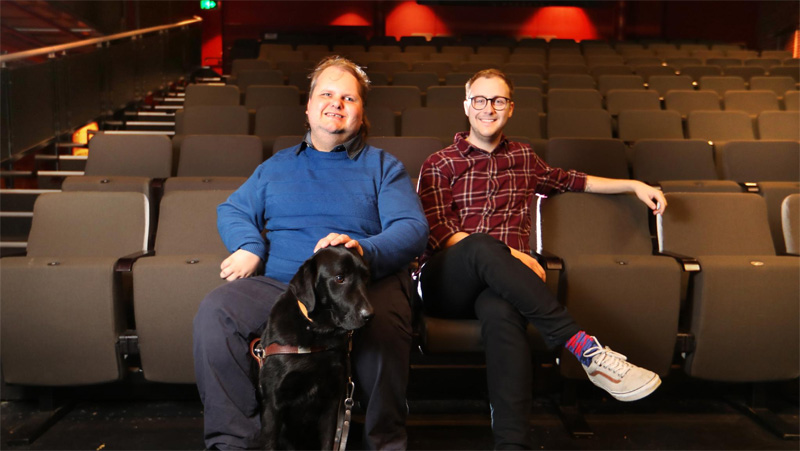
    Blair Hughes, Brisbane Sounds founder. Photo by Elleni ToumpasI first met Blair Hughes when he began working the door at The Zoo, one of my favourite live music venues, sometime in 2008. We’ve since struck up a friendship around Brisbane Sounds, an annual compilation CD he started producing in 2007 to promote the city’s independent music scene.

    This year I helped Blair out by MCing the Brisbane Sounds 2010 media launch at The Zoo, and writing about the project in my first story for The Big Issue. What follows is the email interview I used as the basis for that story. [The first two photos are via Elleni Toumpas.]

    Andrew: As you see it, what’s your role among the Brisbane music scene?

    Blair: I view myself and the role which I have created with Brisbane Sounds as an educator or ambassador for Brisbane music. That obviously comes from my previous role working as a middle year’s school teacher and the fact that I’m very passionate about the Brisbane music scene and the diversity of genres and talent in Brisbane and want other people to hear that message. At another level I also see myself as an emerging music promoter that has created something important for Brisbane but knows that I still have a lot to learn in the music industry.

    Was starting Brisbane Sounds one of those ‘ no-one else is doing it, so I’ll give it a shot’-type situations?

    To an extent it was very much like that and it really just started out as a hobby. When I get behind an idea, I see it through to the end and I really had no idea at the start where this was going to lead. Brisbane music has been a part of my life since adolescence but I never imagined that I would end up becoming a promoter, let alone producing a compilation album.

    Brisbane Sounds started in October 2006 when I was finishing up a degree in Education and Behavioural Studies at UQ and I had decided to head off to England to commence the first year of my teaching career. I produced Brisbane Sounds 2007 as a way to showcase Brisbane music to new people on the road and had a little success throughout the year, but on a coach trip from Cambridge to London towards the end of 2007, I wrote inside the cover of the book “How to succeed in the music business” a few goals for the following year. Those goals were to find a job in a music venue in Australia, promote a gig, make a professional CD release with Brisbane Sounds, and work at a music venue in England. A week later back in Australia I got a job at The Zoo nightclub in Brisbane, put on the first Brisbane Sounds gig in February 2008, have since produced three professional releases in Brisbane sounds 2008-2010 and worked at the Hammersmith Apollo in London.

    How did your previous career in education help your work with this initiative?

    I have always wanted to work with young people and after high school, education was an obvious choice but I also did a degree in Behavioural Studies which was also useful for understanding human behaviour. In the future I would like to find a positive way that I can combine both Brisbane Sounds and working with at-risk young people to improve their lives.

    I was bullied every day throughout primary school and that made me want to become a teacher and never see the stuff that happened to me, happen to any of the students under my care. When I was transitioning from the school setting to the music setting, I found the transition quite easy to be honest as there were a lot of elements in the music industry that I found I was already skilled in from working with school students, such as planning, time and behaviour management.

    From my experience, the parallels between working with children and working with musicians are that they both need guidance and counselling from time to time, they need a leader or role model with the knowledge and expertise in their area to then guide them forward, they need a lot of help getting organised and management of their behaviour and they also need someone who will help them harness their creative and hungry minds.

    Blair Hughes speaking at the Brisbane Sounds 2010 media launch. Photo by Elleni ToumpasSixfthick, The Gin Club, Hungry Kids of Hungary, DZ and one to watch, The Honey Month.

    Of the 24 acts on this year’s compilation, which single band or artist would you recommend to the head of a major label?

    If I only had time to name one band from the Brisbane Sounds 2010 compilation, I would probably go with Hungry Kids of Hungary who have a good management team, have a sound that would work for both the US and the UK music scenes and have the work ethic to make it happen. Apart from that, they have a handsome lead singer and girls just love that and it brings them to the gigs!

    Is ‘getting signed’ at the top of the list of goals you’d like for Brisbane Sounds-associated acts to achieve? If it’s not, what is at the top?

    No certainly not, the idea of an artist getting ‘signed’ is probably more like second or third down the batting order because Brisbane Sounds is more about promoting the Brisbane music scene as a whole and creating a movement to draw awareness to the quality and diversity of artists in Brisbane. It’s not just about promoting the artists on the compilation as Brisbane Sounds is inclusive for every band in Brisbane. The main goal is to actively promote how good the Brisbane music scene is and that more people of all ages should be coming out to gigs, purchasing local music and really supporting the artists that are part of their own backyard. I just feel that in Australia, people view ‘local music’ as being substandard and unprofessional when in fact our country has thriving local music scenes with artists creating quality music.

    You’ve created this compilation to promote Brisbane music. Which is more important: the industry introduction aspect, where you’re trying to put the disc into the hands of labels, agents etc. Or is it aimed more at music fans, those who might find some new bands they love, and show all their friends?

    Overall, the compilation is about putting together an item which serves three purposes. The first being that it can be used as a marketing tool for the promotion of Brisbane, the second that it can get into the hands of A&R and radio reps and the third and best point is that anyone can purchase Brisbane Sounds 2010 and play it front to back because there is something there for everyone. The way I structure the Brisbane Sounds compilations enables me to tap into those three groups by producing a CD that has all of them in mind. For example, Brisbane Marketing have been right behind the project since last year and have been distributing copies to international delegates to Brisbane, I’ve had meetings with A&R reps from Sony and Live Nation in London and the CD has been selling well through independent record stores across Australia. Red Eye Records in Sydney even sold out of stock before Rockinghorse Records in Brisbane did!

    Are you able to comment on the factors that, in your mind, have contributed to Brisbane bands like Powderfinger, The Grates, Regurgitator, and more recently Yves Klein Blue and The John Steel Singers attracting attention from outside Queensland?

    Overall it’s that they have hard working management and creative marketing systems and teams in place. I also believe that if an artist is to be successful then they have to have something that people want and will go out of their way to get. Ultimately the music has to stand out and be above average, but at the end of the day, it is great management and hard working people which get those artists to higher levels in the music world. There are very passionate and intelligent people who are behind the artists you have mentioned.

    Brisbane Sounds 2010 posterHave you approached triple j with the compilation? What kind of response have you seen from them?

    Triple J has played the compilation which is great, but I’ve never had any direct contact or support from them as such. On the other hand, Brisbane independent radio station 4ZzZ has gone out of their way to support Brisbane Sounds. I hope that down the track Triple J becomes like the BBC in England where there are a few Triple J stations and perhaps a Triple J2 or something like that which has a main focus on local artists throughout Australia. In saying that I’m open to talks with the Jay’s so maybe Richard Kingsmill needs to give me a call.

    How did the partnership with Bandtag come about?

    I first heard about Bandtag through my boss at The Zoo in Brisbane. I was looking at creative and interesting ways to use new forms of technology to promote Brisbane Sounds and Bandtag was one of those exciting new opportunities. I contacted Erin who runs Bandtag on the Gold Coast and we struck up a partnership to take Bandtag to the QLD music conference Big Sound where we could promote both of our businesses at the same time. The benefits of Bandtag are that you can have the artist’s music tracks and artwork on a glossy card which has a code on the back that you enter into the Bandtag website. It means that for touring or going to conferences, it becomes a lot easier to carry and hand out then a CD. The ones which I have got for SXSW and Great Escape serve as a business card as well with my details on the back, artwork on the front and 15 tracks from the compilation embedded into the card.

    What are your plans to promote the compilation in Brisbane throughout 2010?

    There are many new elements that will form part of Brisbane Sounds over the next few months and leading into 2011. I’m organising a number of Brisbane Sounds spin-off gigs this year such as “Brisbane Sounds Presents….Hip-hop, Alt-Country, Rock, Indie” etc which will use artists from Brisbane Sounds 2010 as well as other Brisbane artists to create a night of that genre of music. I’ve set myself the goal of 20 gigs this year and I’m working hard to achieve that. I also now run a Brisbane Sounds stall at the West End markets focusing on what’s happening in the Brisbane music scene.

    I’m also looking at starting a management side to Brisbane Sounds and down the track I would also like to develop Brisbane Sounds into an outside festival.

    What about on a national level?

    At the national level I want to continue to network with people in the music industry and increase the profile of Brisbane Sounds across Australia. I want to form more business partnerships and solidify my place as a promoter and producer in Australia. I’d like to do some interstate tours or rural tours with Brisbane artists as well as apply for a few national grants such as the JB Seed because like anyone in the arts, I could use a bit of extra funding. I also set myself the goal of meeting and getting some advice from all seven music industry leaders from Christie Eliezer’s book “High Voltage Rock ‘N’ Roll: The Movers and Shakers in the Australian Rock Industry” in 2010.

    On an international level?

    The next few months are pretty crazy with international travel to music conferences in Austin, Texas and Brighton, England for South By South West (SXSW) and The Great Escape respectively. I’m focused on networking and meeting people who work in the music industry outside of Australia to be able to increase their knowledge and educate them more about Brisbane music. I always envisaged going to these conferences as a punter, but it’s very exciting and rewarding to be able to take my business to them.

    Brisbane Sounds 2010 album coverWho do you plan to meet while at these conferences, and why? What’s your networking plan of attack?

    I have two goals for the music conferences that I will attend this year. The first goal is that I plan to meet radio and A&R reps as well as music supervisors who place music in films and advertisements. I have already started making contact with some of these people for both SXSW and The Great Escape in order to have meetings while I’m in the US and England.

    The second goal is that I want to meet promoters, managers and artists to continue to get more skills and improve my professional development in the music industry. Overall, my plan of attack is to talk to everyone. I’m taking 500 of the Brisbane Sounds bandtags to these conferences and I’m going to try my hardest to meet music supervisors and promoters down to volunteers and local people. I’m very much the type of person who likes to talk and has the time to listen to anyone. You never know who you could be talking too and at these types of conferences that’s very exciting.

    Alright then, what’s your elevator pitch at those kind of events?

    G’day, I’m Blair and I work as a music promoter and cultural producer in Brisbane, Australia. I promote gigs involving Brisbane artists and produce the only annual compilation CD featuring a diverse selection of Brisbane bands called Brisbane Sounds the aim of which is to increase the visibility of the Brisbane music scene in Brisbane, Australia and across the globe.

    Cheers Blair. Visit brisbanesounds.com for more information on the Brisbane Sounds compilations. Check out my related story for The Big Issue here.

  • A Conversation With Claes Loberg, CEO of Australian music service Guvera

    An interview originally conducted for The Vine that I published in full at Waycooljnr, the Australian music and marketing blog which I recently began editing in place of founder Nick Crocker:

    A Guvera advertisement suggesting intercourse with piratesQ+A with Claes Loberg, CEO of Australian music service Guvera

    Australia-based online service Guvera (http://guvera.com) has been making waves among the music industry recently. It offers free high quality (256kbps) downloads to consumers, which are paid for by advertisers who can match particular artists to their brand’s ‘personality’. As you can see by the image to the right, Guvera is not particularly subtle when it comes to marketing.

    Waycooljnr editor Andrew McMillen spoke with Guvera CEO Claes Loberg a few days ahead of its worldwide public launch on March 30, 2010.

    Andrew: Hey Claes. Can you summarise what Guvera’s all about?

    Claes: Here’s the gist of it: advertisers paying for downloads. There’s nothing new about the idea of advertisers actually paying for content. That’s how we’ve been receiving TV for free for all these years. What’s wrong with television at the moment, is that advertising is actually starting to lose value year, on year. People have got the power to click past it, sort of get around the advertising. That’s a reflection of all advertising across the board.

    Now that the people are in control, Guvera’s business model is a reversal of the advertising process. Instead of advertisers being the annoying thing they used to be years ago, now they can be a channel that people will want to go to, to get content. It’s trying to change the value proposition away from ads-as-disruptors. It actually pays the artists for the content it’s created, and the people still get it for free.

    Full interview over at Waycooljnr.

  • The Music Network story: ‘Brisbane’s Live Tempo Escalates’, March 2010

    A story for The Music Network about a new initiative for emerging Brisbane bands.

    Click the image for a full-size version, or read it below.

    'Brisbane's Live Tempo Escalates' story for The Music Network by Andrew McMillenBrisbane’s Live Tempo Escalates

    A rebranded Brisbane venue seeks to provide emerging live artists with opportunities to build their fanbase from the grassroots up.

    Situated at the corner of Brunswick and McLachlan streets in Brisbane’s Fortitude Valley is The Tempo Hotel, the newly-rebranded venue better known to locals as Dooley’s or, in recent years, Bar 388. Last month it was purchased by hotel operator – and avowed live music fan – Steve Hammond, who also owns another high profile property in the Queensland capital: Chalk in Woolloongabba, and previously, The Regatta in Toowong.

    In 2008, Chalk became the new home of acoustic showcase fRETfEST, which was established in 1997 by Alan Buchan. Based on the strength of that relationship and Buchan’s unwavering passion for providing young musicians with the chance to strut their stuff onstage, Hammond offered the fRETfEST founder the chance to curate ‘Escalate’, a weekly platform for emerging bands and artists to play in a public venue before both Brisbane’s live music fans, and industry tastemakers with an interest in scoping out local talent.

    Held on Tuesday afternoons from 3pm onwards, Buchan’s role as ‘Escalate’ musical curator and general artist go-between is to inform young Brisbane musos about the opportunity: a big stage, a hefty PA, professional sound and lighting, and cheap food and drinks. Though the bands who play ‘Escalate’ won’t be paid at this stage, Buchan points out that the venue is a block from the heart of The Valley, where public opportunities for performing artists are often stifled by accessibility and venue policies.

    The new event is a platform upon which to build an audience, in addition to the bar’s existing live entertainment on other nights of the week. At the event’s pre-launch last Tuesday, Buchan told The Music Network: “If we discover enough bands through this avenue, then we’ll look to expand this onto other nights.” In line with the curator’s goals of connecting young Brisbane performers regardless of their style of playing, ‘Escalate’ is not genre-specific: in his words, everyone from “metal to Irish folk” is invited to play.

    “With ‘Escalate’, we simply want to provide the opportunity for good bands to play,” Buchan suggests. “If you’re bringing your mates, if you’re easy to work with, and you’ve got a great sound – we’ll include you. Ultimately, what we’re aiming to do is provide more opportunities the most reliable bands with the best sound and attitude.”

    Tempo owner Steve Hammond had music on his mind when purchasing the venue. “I thought, ‘where can young bands these days get a start these days?” he says. “[They] can’t get a spot on a Friday or Saturday because that’s the Valley venues’ best times, when the public want to come in. I went to Alan Buchan and asked how we could get this off the ground, and here we are. This is the pre-launch event; we haven’t hit [‘Escalate’] with much advertising just yet, but we’ll get it right. It’s all ‘suck and see’ at the moment.”

    Beginning at 3pm Tuesday and allocating up to 90 minutes per act, ‘Escalate’ is aimed at showcasing ‘entry level bands’; as defined by Buchan, “those who haven’t got a record deal yet”. The event is inclusive for bands of all ages; both covers and original are favoured, though the curator states a preference for original acts.

    While the whole initiative is still very much “in start-up mode”, as Buchan puts it, Hammond hints at a longview for the new initiative which should be attractive to local acts: “Every month we’d like to pick a couple of the best bands from ‘Escalate’ and stick them into a paid weekend support slot.”

    The Tempo Hotel, Fortitude Valley, BrisbaneBeyond fRETfEST, Buchan is a stage manager at the annual Woodford Folk Festival, which now allocates a few hours per year to the curator’s hottest fRETfEST picks. He understands that the music industry is built upon relationships and communication. “My role with ‘Escalate’ is to connect young bands with Steve and his facility here, to open the doors for them to come in and play.”

    As the first performer at ‘Escalate’ prepares to take the stage, Buchan concludes: “It’s exciting to be part of a grassroots movement that supports original live music. I’m looking forward to escalating Brisbane’s best new bands, and giving them the opportunity to take their music and their experience to the next level.”

    Web: ‘Escalate’ on FacebookFretfest.com

    This story was published in The Music Network issue 779 on 22 March 2010.

  • The Vine interview: Daddy G of Massive Attack, March 2010

    An interview with Massive Attack for The Vine ahead of their Australian tour in March 2010.

    Grant Marshall and Robert Del Naja of Massive AttackAs chief trip-hop genre-definers, Massive Attack exist in 2010 as production duo Robert del Naja [stage name: 3D] and Grant Marshall [Daddy G], who work alongside co-producers, session musicians, and guest vocalists to skilfully mesh elements of electronica, hip-hop, drum-and-bass and house. Following the February release of their highly anticipated – and frequently postponed – fifth album, Heligoland, Massive Attack are touring Australia for the first time since 2003.

    On the eve of their performance at Perth’s Kings Park, Andrew McMillen connected with Daddy G [pictured above left] to discuss controversial artwork, digital downloading, and Massive Attack’s two appearances in Triple J’s Hottest 100 Of All Time.

    Full interview at The Vine, published March 18, 2010.

    I didn’t realise it until after the fact, but this was my ‘biggest’ interview thus far, when considered in terms of Massive Attack’s widely celebrated career and lasting impact on contemporary music. Thereby pushing Neil Strauss to #2.

    The interview was conducted from the back seat of a friend’s car on a sunny Friday afternoon.. only because I couldn’t attain a quiet place to record our conversation elsewhere at the office. The interview had been rescheduled five times in 10 days, and was originally supposed to be with Robert del Naja / 3D. Oh well.

    On a personal note, it was rewarding to tip Grant off about Massive Attack’s presence in triple j’s Hottest 100 Of All Time, and how their songs ‘Unfinished Sympathy‘ and ‘Teardrop‘ were the only tracks in the countdown to feature female vocals. The scoop was significant enough to warrant a news story the day before publication. Juicy. Props to my friend Josh Donellan for raising it when I crowdsourced potential interview questions via Facebook in early March.

  • Mess+Noise story: ‘Hundreds Protest To ‘Reclaim’ Brisbane’s Nightlife’, March 2010

    On March 11, concerned members of Brisbane’s music community turned out in force to protest a proposed 2am shutdown on all live music venues and nightclubs. I reported for Mess+Noise.

    Photo of the 'Reclaim The Nightlife' protest in Brisbane, March 2010, by Elleni ToumpasMelbourne had its march for the ages last month, though it was too late to save The Tote. Yesterday, it was Brisbane’s turn to take to the streets in response to proposed legislation that threatens to undermine its vibrant nightlife and culture.

    While the Victorian SLAM rally was triggered by a “senseless and arbitrary” liquor licensing regime that tarred all live music venues with the same high-risk brush, the situation up north is a little different. The Anna Bligh-led Labor Government and Police Department Union last year launched an inquiry to curb alcohol-fuelled violence across the state. A proposed response is to close licensed venues at 2am, and enforce a “lockout” at 12am, thereby overruling the existing 3am lockout.

    Ahead of the inquiry’s findings – to be released on March 18 – concerned punters gathered outside Queensland Parliament House, a kilometre south of the CBD and located on the edge of the Botanic Gardens. Pitched as a peaceful, strictly drug- and alcohol-free protest named “Reclaim The Nightlife”, the organisers’ expectations for 2000 attendees seemed ambitious as the clock struck 4pm.

    Full story (and more photos) at Mess+Noise, published March 12 2010; above photo by Elleni Toumpas.

    This was the first organised protest I’d attended. It wasn’t a particularly well-organised or memorable occasion. On the ground, I made the decision to report purely on the proceedings, instead of conducting interviews and collaborating those results into my story. I probably wouldn’t use that same approach on similar events in the future, but for this time, at least, I felt it was worthwhile.

  • The Big Issue story: ‘Sounds Of Our Town’, March 2010

    The Big Issue #350 coverHere’s my first story for The Big Issue, which is published fortnightly and distributed by a network of Australians experiencing homelessness and/or long-term unemployment. Half its $5 cover price goes into the pocket of vendors, who sell the magazine in capital cities across the country. Coincidentally, this is issue #350 of the magazine [pictured right], which has been published since June 1996.

    ‘Sounds Of Our Town’ is about an initiative called Brisbane Sounds, whose goal is to promote my city’s best independent music on the world stage. It was founded in 2007 by 25 year-old Blair Hughes, who is travelling to music conferences SXSW in Austin, Texas (this month) and The Great Escape in Bristol, England (in May) to promote a compilation CD of the best two dozen tracks chosen among 140+ submissions.

    I’m passionate about the Brisbane independent music scene, so it was a joy to describe Blair’s goals and ambitions to a national audience.  I look forward to many more stories for The Big Issue.

    Click the image below for a preview of the story.

    The Big Issue story, 'Sounds Of Our Town' in issue 350, by Andrew McMillen

    If you live in an Australian city, I urge you to buy a copy of The Big Issue from vendors on a fortnightly basis. It’s filled with compelling stories of real Australians. It’s fast becoming a favourite publication of mine, and it’s an honour to be involved.

  • A Conversation With Barry Hogan, All Tomorrow’s Parties founder

    All Tomorrow's Parties founder Barry HoganIn late 2009, my girlfriend and I went to England for three weeks. All Tomorrow’s Parties was the main reason. It’s an independently-operated festival that celebrated its 10th anniversary with a weekend-long concert series held at Butlins holiday camp, in the town of Minehead near England’s west coast. We stayed on-site for 10 days all up – including the Nightmare Before Christmas weekend curated by My Bloody Valentine, the ‘in between days‘ series of weeknight shows, and the 10 Years Of ATP weekend – and saw a ridiculous amount of good music. Which was the intended outcome.

    While on-site, I interviewed ATP founder Barry Hogan [pictured right] for a Rolling Stone story. [I also reviewed Dirty Three playing 'Horse Stories' to around 100 people, for Mess+Noise.] Late on the Sunday night of the 10 Years event – after sacrificing my barrier spot for The Mars Volta – we sat down in the production office to discuss the festival’s history and his motivations for creating what has become an internationally successful event.

    Andrew: Barry, broadly speaking, what do you think has contributed to ATP’s success as a festival?

    Barry: When ATP started 10 years ago, there weren’t any alternative festivals. It was only big corporate festivals and I think a lot of people who are into bands like Low, Will Oldham, and so on, the only place you could see them was at Reading Festival and that sort of thing, and they’d be kind of sandwiched in with piles of shit like Carter The Unstoppable Sex Machine and fuckin’ Chumbawumba. It just felt like you paid whatever it was at the time, £80-90 to go for the day, but you’d have to wait all day to see something [worthwhile].

    I just thought, “Wouldn’t it be great if we could design something where you could have constant bands, all day long, you’re wanting to go and see things, like killing yourself that you’re missing something because something else is on that the same time,” and just do it in a more intimate environment. Glastonbury, for example, was one of the reasons why we wanted to hold it here in the [Butlins] holiday camp, because of the conditions there. I think the toilets in Guantanamo Bay are probably healthier than there. Glastonbury is an abomination. It’s like the way it’s designed is for too many people in too small a space, and I thought, “this isn’t fun”. But here, people have got their own apartments, their own space. Going back to your question; what’s contributed to it, is we’ve designed it so we want to treat people like we want to be treated, and we want people to be into really good music, have a good time, enjoy themselves, and feel like they got value for money.

    I feel that because we’ve been true to the concept of keeping it sponsorship-free, and also keeping the idea of the curator and being sort of focused on that, I think that’s definitely one of the reasons why it’s remained as strong as it has over the years. We’ve just got a loyal fan base that continually comes back. It’s good.

    Is it difficult to stay true to the concept, to keep focused?

    It is if the curator doesn’t go mental with trying to suggest stupid bands. The thing is; it’s hard; it gets harder as you go on, to kind of get curators to make you kind of fresh each time. I think because it’s a different curator each time, in a way, it’s a different person’s interpretation of a mixtape. If you get similar artists doing it, then you’re going to get the same sort of bands. We’re always striving to look for new and different ways to present it, to get different curators. It does get harder as you go on, but we’ve been pretty fortunate to be able to present some great things over the last 10 years.

    Did you expect to reach your 10th birthday?

    No. I’ve been waiting for the call to get a real job for quite a while now. When we did Bowlie Weekender with Belle & Sebastian [in 1999], they called it the first annual Bowlie Weekender and the idea was to do it year in, and year out. I don’t know why but they felt they wanted to keep the event unique and I said with their blessing, could I continue it and rename it, All Tomorrow’s Parties. I never thought it would go this long.

    I think we’ve been fortunate that it is still strong and people still want to go to it, but I think we spend so much time laboring over things like artwork design, the programs to present, and the lineup and where bands play. We’re conscious of what the fans want, as well. We’re trying to make people happy so that they keep coming back. So far, I think we’re doing a good job.

    I saw in an interview you said, “The way forward for festivals is to keep it boutique.”

    Yeah, totally. You get some festivals like Bestival and they have the audacity to call themselves boutique when they started at 10,000 [capacity]. That’s not boutique for starters, and also I don’t understand why Rob Da Bank puts “Curated by” on each event. If it’s the same person doing it, surely, isn’t he the festival booker and that’s his job? You don’t need to wear a badge and put it on the top of the poster.

    You’re talking about British festivals here, which I’m not too familiar with…

    Oh, sorry – okay. Talking about boutique festivals, there’s one here called Bestival. It’s run by a [BBC] Radio 1 DJ called Rob Da Bank. The thing is, a lot of these festivals start at 3,000-4,000 capacity and then they start expanding. Because it’s only one event, they get bigger and bigger. Most of them have gone from 5,000 up to 45,000 or 50,000. It loses its intimacy and it loses track of where it started and why it started.

    I think with us, it’s that we are keeping it sort of personal to people. It’s not overcrowded and you can walk around between stages and see lots of really great bands. I’d rather do more ATPs and keep it small, than do one big one and do it once a year because I just feel like it will lose its charm.

    So the events here at Butlins are capped?

    Yeah, the place only holds just over 6,000 so we sell 5,500 and the rest is made up of guests and production. It’s capped because that’s the legal capacity.

    Nick Cave and ATP founder Barry HoganI see. As I mentioned earlier, I also went to the Mount Buller event [the first Australian ATP event, curated by Nick Cave (pictured left) & The Bad Seeds].

    That was really great. There was some view up there, wasn’t it?

    Yeah. And I went to the Riverstage one in Brisbane, which is where I live, as well as one of the Brisbane Powerhouse shows.

    Okay. Those were good events, Buller especially. In hindsight I think I would love to have just done Buller. Those other events that we did… They were All Tomorrow’s Parties in the mindset but they weren’t like the All Tomorrow’s Parties because it wasn’t like a residential thing where people stayed, hanging out like they did at Buller. They were good, but I think it was a bit misrepresented in a way.

    Now that you mention it, it’s quite odd that you did those Sydney and Brisbane events because like you mentioned, there was no accommodation. Do you put on many of those here in Britain?

    No, to be honest; we’ve talked about doing a sister event called ‘I’ll Be Your Mirror’, which is the b-side to The Velvet Undergrounds single ‘All Tomorrow’s Parties’. The idea is that it’s like a sister event to ATP. It has the concept of the curator and stuff, but it doesn’t have the holiday camp. The idea of it is that it’s not trying to compete with ATP, it’s kind of designed for people to see great music but at a lower price because they don’t have to pay for their accommodation. There are a lot of people that would love to come to this but can’t necessarily afford it. It’s not that we’re too expensive; we’re providing value for money, but it’s a rising cost because Butlins is not a cheap place to hire.

    I can imagine. As well as the festival aspect of ATP, it’s also a label. Again, what factors do you think have contributed to the success of ATP as a brand?

    Someone said to me the other day, “oh, Fuck Buttons must be doing really well because the festival is doing well”. It’s not like that. There are a lot of records that we put out, and they’re releases that don’t necessarily sell a great deal. They’re great records, but the festival helps in the way that we can showcase the bands as another outlet for people to discover them. But bands like Fuck Buttons have done really well because they’ve made great records. Whether it’s on ATP or another label, I don’t think it makes any difference.

    We’ve got a brand, not in the sense of Coca Cola or McDonalds, but I think a kind of brand of quality. I wanted it to be where you used to buy Sub Pop singles and you didn’t know some of the bands but you bought them because – I’m not saying you, here – but when Sub Pop was in its Nirvana and Mudhoney heyday – not that it doesn’t put great records out now – but there was a period when Sub Pop was releasing something you’d buy it because it’s like “Fuck, it’s on Sub Pop.”

    Or Def Jam [Recordings] There were all those great early hip hop records like LL Cool J and Public Enemy, and Beastie Boys, and Run DMC. You knew that Def Jam and Sub Pop put out great things so you kind of bought into that. I feel like ATP is getting a bit like that in a way that people are sort of willing to take a chance because they know we’re not going to put out Coldplay or Miley Cyrus records.

    You like ripping on Coldplay.

    There are worse bands than Coldplay. [laughs] They’ve got a couple of good songs. I don’t think they’re for me.

    Neither me. An aspect of the festival that I really liked, and I’m sure you do too, is the discovery aspect. As you say, it’s associated with quality. You walk into a room and at least respect a band, if not find it really damn good and want to go and buy all their shit.

    Yeah. The reason we say it’s like a mix tape is you know, if you’ve got a friend and – I don’t know if you’ve ever had friends who give you mixtapes – but you put it on and you’re like, “Jesus, what’s this? This is great.” You have to look up the track list and you go, “This is amazing” but because you’re here at the festival and you’ve bought your ticket for the weekend, you can go in and out of rooms; there’s going to be something on you’ve never heard of, or you’ve been curious to know what it’s about.

    It forces you to go and check stuff out, and it opens you up to loads of stuff. I think bands like Deerhoof, their success in Europe has benefited from playing at ATP. They said this themselves; they’ve been playing at an event and people have never heard of them before just a few years ago, and then they’ll see them and go, “My God, they’re great.” They’ll want to keep going back and seeing them. They’ve discovered it in that mixtape fashion, where it’s like a pleasant surprise.

    Kevin Shields of My Bloody ValentineI saw in an interview that you mentioned Kevin Shields [of My Bloody Valentine, pictured right] is fond of ATP because you kind of sidestep the whole music industry game.

    Kevin’s been very supportive of us, and I think it would be fair to say we’ve done things in a different way. It’s good having a curator because it means we have to pick the bands the curator wants instead of agents, magazines, and labels all going, “You must put this band on because they’re the hot new thing”. It bypasses all that and we’ve just done things on our own terms.

    To have a festival with no sponsorship, there is another promoter who asked me about doing an event in a holiday camp, and he said, “How the fuck do you do it without sponsorship?” We know how to do it because we’ve fine-tuned it over the years. We know how much it costs, how much we spend on bands, and it does make money but probably not the sort of money that some of the people out there think it does. Anything we have done goes back into the business.

    I just feel like I want to keep doing this sort of thing until we lose interest in it. When we do lose interest, I think that’s the time to stop and end it on a high rather than fizzle out. The music industry is changing constantly, and I think it would be fair to say we never really played the games that a lot of people do. I’m not into that, so we just do our own thing, really. I guess we have sidestepped a lot of it, which is good.

    You began as a promoter at Dingwalls [in Camden], and you got tired of having to play the game. Did you find it difficult to step outside of that and say, “Fuck it, I’ll do my own thing”?

    Yeah, it was really hard because in those days, if a band like Tortoise came along, it was once every 6 months or something and it was a real big deal. Nowadays, if you open up Time Out in London or anything else, it’s like there are 100 bands on par with Tortoise that are playing constantly. There wasn’t really an outlet for that type of music I wanted to work with.

    I found it was really hard because you would take punts on shows and the attendance would be down. You’d lose money and then it would be ages before another band that was worth doing comes through. It was difficult and also, it was tempting to try and go outside of that and start playing the game, but we rode out the rough times and kept it true to the original thing.

    I’m supposing a big part of that is having the connections you made through ATP, such as Sonic Youth and the credibility that having guys like that playing in your festival lends you as a promoter.

    That’s definitely helped, but the thing with us is that the roster of bands that we do outside of the festival are all bands that we actually like. I’ve been offered some bands that are huge and I’m like “I can’t do that.” I got begged to do Snow Patrol in 2003, and I remember their agent at the time was like, “I really want you to do it. They’re going to be great. They’re going to be massive.” I was like, “There is no way they’re going to be massive,” but the thing is; I didn’t know they changed their sound from sounding like Sebadoh to Coldplay. I think it’s good that we haven’t sold out in that way.

    How do you go about goal setting for ATP? When you began, did you imagine 5 years down the track, 10 years down the track?

    No, I have to be honest with you; every time I do the next one, I’m thinking about how it has to be better than the last one. We have to finally think of a curator that no one else is going for, and I want each one to be better than the last one. Some of them are fantastic and some aren’t as good as the others and it can be a bit disappointing, but I think we’re always striving.

    Someone said to me today, “Do you think you’ll get to 20 years?” I’m like, “I don’t know, maybe.” I don’t know if I can think that far ahead, but as I said to you; I want to keep doing this as long as it’s still fresh and exciting, and the minute it stops being that, that’s the time to pull the plug.

    When’s the next Australian ATP event planned?

    Main stage at ATP Mt Buller, January 2009That’s a good question. I don’t know the answer to that. To be honest with you; I really loved the Mt. Buller event [pictured left]. It was really special, really great. The lineup that was up there and that setting, especially that second stage where you could see all the mountains behind it, through the stage. That was amazing, but it was just the spirit of people that were up there because I think a lot of people have gone to things like Big Day Out and Homebake and that. Those things are good for what they’re designed for. They seem like a breath of fresh air for a lot of people. That’s how ATP was when it started in England 10 years ago. People were like, “Fuck, great, we can go see 20 bands all at one weekend instead of having to wait all day for someone to come on at Reading, or something like that.”

    ATP Australia – would it happen again? Yeah, we’d like to think so. We’re taking a step back because we’ve just got some venue issues and stuff. Once we resolve them we’d definitely like to pursue Buller again if we could.

    Everyone I spoke to at Buller was just having a great time. Everything I read about it afterwards was extremely positive. Do you ever receive bad reports about ATP?

    Yeah, for example I know some people came last weekend. We had My Bloody Valentine curating. Some people thought it was great but some felt the people there, the atmosphere wasn’t like it was at this one. I think each one changes by the crowd. There seemed to be quite a lot of middle-aged men last weekend, but there are lots of young girls at this one, which is always definitely more encouraging.

    We do get some people who don’t think it’s – they’re not into it, but I think ATP – it’s what you make of it as well. You can be into the media but you’ve got to go there with a right mindset. You have to go there and want to enjoy yourself and let go and jump away from your job for 3 days and just embrace all the music and film, and the art, and hanging out with friends. It can be a really great thing to go to. Someone said to me, “Would you go to it yourself if you weren’t putting it on?” I’m like, “Yeah, I probably would.”

    Probably?

    Yeah, well I would, of course I would. I would. Sorry!

    You mentioned events like Glastonbury and Reading and so forth, when comparing ATP. When was the last time you went to Reading and Glastonbury? Do you ever go to those events just to remind yourself?

    I don’t compare ourselves. I use that as a reason why I started this. I went to Glastonbury in 2002. I will never go back to that thing. I just don’t understand how people could enjoy being there with too many people, too short of a space of time, and I’ve seen people – we were talking to Keith Cameron just now from Mojo. He was saying he saw someone get their head kicked in, in broad daylight there. There is a horrible vibe there, really.

    It’s been a while since I’ve been to those; too busy running this. That was the only thing you could go to if you wanted to go see some of the bands. If the Pixies were over [playing shows], if you couldn’t see them in shows you went and saw them in Reading or Glastonbury and it was kind of like that was where you could see some of the rare bands you wanted to check out. It was more a case of using that as an example of where you would see that music and why we started this.

    You mentioned that self control is important when booking bands, or when the curator asks to book bands. I’m taking it since the capacity is capped here, so is the budget for booking bands?

    Yeah.

    Is it difficult to manage?

    If you gave me a wish list and you put AC/DC, Leonard Cohen, and Motorhead on there, then if you took one of those bands, it would just wipe out the budget. You need to kind of tailor the lineup to the size of the event. It’s always good to have a couple of big names and stuff, but I think the real beauty of ATP is having all those kind of midrange bands, the sort of ones that would fill up Center Stage and have – it’s better to have more of those midrange than all big hitters.

    There have been a couple of events where we’ve had some really big names, and then it’s all been small bands, and it hasn’t felt balanced. You get lots of people at one show and then it’s kind of half empty at other ones. With the curators, I have to kind of say as much as we’d love to have Neil Young, as much as we’d love to have Bob Dylan, it’s probably unrealistic that we could afford it. We just kind of need to guide them, really. I try to give everyone as much freedom as possible. I’m just hoping no one puts Blur on their list. [laughs]

    Is your favourite ATP still the Dirty Three-curated one?

    Yes, definitely.

    Warren Ellis of Dirty Three, by Justin EdwardsDo you thank [Dirty Three frontman, pictured right] Warren Ellis often for that?

    All the time. He’s just been so amazing to work with over the years, so supportive. There are other curators as well. There are so many of them I think of that was as well, but their whole take on it and the way they approached it and the actual weekend itself was just magical; it really was. I just was walking around and everyone was having the time of their life. I also thought that ATP that Nick Cave did in Mt. Buller was one of my favorite ones as well. Definitely, that was a highlight.

    This one might be difficult to answer, but when you think of the average ATP fan or concertgoer, what image do you have in mind?

    Someone who is into music, who probably is the sort of person that when they buy records, they want to know where the band recorded it, what studio, and stuff like that. Someone said to me, “record nerd” but I think it’s people who actually give a shit about music. They don’t buy their CDs or vinyl in supermarkets, which seems to be one of the few places you can buy music these days like that. Most of the record shops are closing.

    So you’d say it’s for the more discerning music enthusiast?

    Definitely. It’s for people who went to see bands that blew their mind and wanted to even start a band or get into music, where music is really special to them and they listen to it all the time, checking out new stuff and they’ve got memories of old things. I think ATP appeals to them because it crosses a lot of those things, really.

    Do you try to avoid associating ATP with indie rock, in particular?

    I guess I’m an indie kid at heart. I guess we’ve been described as an indie festival, but indie is a bit of a weird term these days. You get some people who are on indie labels but they have the mindset of a corporate sort of thing. We have had a lot of indie guitar stuff over the course of time, but the curators we pick, it’s the music they’re into. Each one is different.

    For example, that Mike Patton one we did with The Melvins, that was pretty eclectic because it had Taraf de Haidouks and then you had White Noise and Stockhausen and those sort of things, but you also had Mastodon and The Melvins. It was very different. I guess most of the best music around is coming from indie labels. That’s why we focus on it really, but we get criticized for having too many American bands. Someone said that but I just think a lot of the bands that come right out of England aren’t very good. There are some good ones, but on the whole, I think a lot of the best stuff around has been coming out of the States for a while.

    What’s your favorite ATP festival moment, ever, stepping outside of the office and just walking around, watching the bands?

    There are way too many to remember…

    Lightning Bolt live. Mayhem.I know you’re a big fan of Lightning Bolt [pictured left].

    I remember the first time that Lightning Bolt came and played ATP. There were a lot of people that didn’t know who they were and then when they played on the floor and the actual great thing was seeing the reaction on peoples’ faces. They were like, “What the fuck is this?” That was really good. There are so many.

    I think some of the best things I’ve seen, music wise, is Sleep performed ‘Holy Mountain’ earlier this year. The Boredoms did ‘Boardrum’ in New York. That’s some of the best things I’ve ever seen at the festival but I think highlights for me are things like Slint, because ‘Spiderland’ is probably one of my favorite records of all time. Getting to see them perform that live was… I had to move a few mountains to get those guys back together.

    I was saying to David Pajo today that when I met them, Slint had never been in a room together, the 4 of them, for 13 years. I’m a huge Slint fan and I said to them – we went to Britt [Walford]’s house for this meeting. I was so excited I was there and I said to them, “Can I go to the toilet?” They were like, “Yeah” and I was in there – I didn’t actually need to go to the toilet. I was in behind the toilet door going like this, “Yes!!!” just freaking out. I told David today and he’s like, “Really?” and I’m like “Yeah!” [laughs]

    It meant the world to me. As I’ve said to some people, it’s like – the way [music magazine] Mojo think about The Beatles, I think about Slint. It was really special to see that and to see them perform because they were someone I always wanted to see and never thought I would because they weren’t together. That always sticks in my mind as a real special thing. I feel proud that we’ve done them, really.

    The same kind of thing with My Bloody Valentine, too. You were kind of one of the forces behind them getting back together.

    Yeah, they hadn’t been together for 16 years and the thing is; a lot of people have made them offers over the years, but it’s like trying to lift an old truck from a swamp, trying to get it back into motion. It was possible but it needed help. I think we were able to present them the setup they needed to do it. Kevin was really kind to trust us to do that. We did it. The shows were fantastic and it worked really well.

    I just think we look at things in a different way. Some people promote like, “You’ll make this much money,” but you need to sort of show the artist what they’re going to get from it, not just the money. It’s got to be the actual performance and what benefit they get from it too. I think that’s important and that gets overlooked by some people. That’s probably why we’ve got to work with so many great artists over the years because of our attention to detail. We put care into it.

    I saw them all three nights, last weekend. I’m so glad I did. It was one of the most amazing things I’ve seen.

    Had you seen them before?

    No. It was cool to see ‘You Made Me Realise‘ three times. [Notably, because the band end the song with a 15ish minute noise jam known as the 'holocaust section'. It's fucking intense.]

    Did you have ear plugs in?

    Of course.

    I don’t know how they felt about the first show they did for us as warm-up show, at the ICA. I don’t think they were too into it, but the first time seeing those tracks being played live for a long time was like, “Whoa, this is going to be a joke.” When they went into a bigger room like the Round House and had the full PA, it was like a jet plane taking off.

    What’s next for ATP? How do you go about planning for the next couple of years?

    All Tomorrow's Parties founder Barry HoganI’m in the process, I’m still booking Pavement, which is next year, and [The Simpsons creator] Matt Groening in May. Then I’m pursuing two curators for Christmas next year. I can’t say who they are just yet, but once I get them in place I’ve kind of got an idea of – we’ve had at least talks and I’ve got an idea of who they would want. I think it will surprise people because if both of them come off it will be things that people won’t be expecting. Again, we want to make is special because it’s the 10th year and we want to do the year-long celebrations and stuff.

    You had the ATP film for the 10th anniversary, which I saw in my chalet the other day. Any plans for a book?

    There has been talk of it. We were talking about maybe doing a kind of book, incorporating the artwork and stuff. Yeah, we’ve been approached by people to do it, so you never know… “You bought the t-shirt, you watched the film, now read the book!”

    I’m sure there’s a market for it. ATP fans are pretty hardcore.

    They are, but the thing is they’re not stupid. I couldn’t just put on a crap lineup because then people won’t come. It needs to be quality and people actually sit on the fence saying, “I’m thinking of going to this one but if they announce a couple of more bands” and then they do, but my favorite thing is watching kids on message boards, and I’ll be looking at various things because it’s always good to see what people are up to or saying. They’re always like, “Why the fuck did they get them to curate? They’re going to pick a load of shit!” and I remember when they did that with Mars Volta and Explosions In The Sky and then the same people 6 months later were going, “This is the best lineup ever. I’m totally going.” During all this time it was like, have patience. You need to see it unravel itself and I think it’s kind of good doing that because we know what’s coming and seeing the reaction from people is good.

    Do you keep an eye on the feedback and reviews from attendees afterwards?

    We do, we take things on board. If someone says I had a really shit time in this venue because of something like the lights might be wrong or the PA was in the wrong place, we don’t ignore that sort of thing. We take it on board and try and make each one better than the last one, like a new and improved formula each time we do it.

    There are a few people here that haven’t been here since 2007 and the Pavilion Stage, which is the big room, we didn’t have those drapes down the side, and we didn’t have the star cloth. They make a massive difference to that room. We also changed the PA in the Center Stage where you were for My Bloody Valentine. Just lighting configurations and things like that but it’s all – we use feedback and we exploit it and make put it to use in a beneficial sense so that each time someone comes back they go, “Oh, this is fixed up.”

    Better and better.

    Yeah, if you rest on your laurels and go, “Oh yeah, we’ve got this great thing now and got the curator in, that’s it. You’ll fucking like it or lump it” then it won’t last another 10 years. Whether I’m still doing it in 10 years is another thing but I only want to keep doing it until I lose the fire inside me that started it. Ten Years of All Tomorrow's Parties Rolling Stone story, by Andrew McMillenThere are times when it goes out, but this weekend has definitely been a great one for us, just so many bands – they’re all old curators and people who have recorded for us, but also friends. Every time you walk around it’s like, “Hey, how are you doing?” The spirit here has been really good.

    You went to last weekend. I didn’t feel that same atmosphere last weekend as I did at this one. Again, it’s like a different mix tape and a different interpretation. It was quite abrasive last weekend, the music and stuff. It was all that heavy guitar stuff. It was good, and it worked really well, but I think this one seemed to be a bit more eclectic.

    Thanks for your time, Barry.

    This interview was conducted for a story on behalf of Rolling Stone Australia, pictured left. Read that story here.

  • Mess+Noise story: ‘Covering Brisbane’s Sound’, March 2010

    This story originally appeared on Mess+Noise on 2 March 2010. View it there with a couple of dozen photos by Elleni Toumpas; a selection of her images from the night are embedded throughout this blog post.

    Covering Brisbane’s Sound

    ANDREW MCMILLEN reviews six Brisbane bands playing six Brisbane covers at the launch of local indie music compilation Brisbane Sounds on Saturday (February 27). Photos by ELLENI TOUMPAS.

    For Brisbane indie music fans, few dates on the calendar are more highly regarded than the annual Brisbane Sounds launch. What began as a hobby for 25-year-old founder Blair Hughes in 2007 has since evolved into a full-time passion that’ll take him to international music industry conferences SxSW and The Great Escape in the coming months. Hughes – the recent recipient of a much-needed Brisbane City Council “microgrant” – otherwise self-funds the not-for-profit project, whose dual goals are to highlight the quality of independent music being produced within the “River City”, and to promote it on the world’s stage.

    The former schoolteacher [pictured below] has proudly taken on the role of local music ambassador. “People of all ages should be coming out to gigs, purchasing local music and really supporting the artists that are part of their own backyard,” he told me ahead of the launch. “I just feel that in Australia, people view ‘local music’ as being substandard and unprofessional, when in fact our country has thriving local music scenes with artists creating quality music.”

    Blair Hughes at Brisbane Sounds 2010 launch, The Zoo, February 27. Photo by Elleni Toumpas

    Twenty-four such artists appear on Brisbane Sounds 2010 – a compilation disc sold online – and six of them performed at Saturday’s launch at The Zoo in the Fortitude Valley venue, where Hughes works the door several nights per week. Besides venturing overseas to spruik Brisbane’s diverse range of indie talent, he plans to promote the project throughout the year via a series of spin-off shows, a “pop-up music shop” in conjunction with Brisbane Marketing and a weekly stall at the popular West End markets to foster community awareness.

    Between bands, a selection of choice cuts by notable local artists such as Powderfinger, The Go-Betweens, The Grates, An Horse and I Heart Hiroshima were played over the PA, while the hundreds in attendance inspected a portrait series by Brisbane music photography group Underexposed. In the spirit of the event, Hughes asked the bands – whose musical styles range from folk and grunge, to hip-hop and indie-rock – to each cover a song written by a Brisbane act during their set.

    Lion Island

    ‘Birds & Elephants’ by Bigstrongbrute [listen to the original here]

    Lion Island at Brisbane Sounds 2010 launch, The Zoo, February 27. Photo by Elleni Toumpas

    Australian audiences are more receptive to contemporary folk instrumentation than ever, owing to a recent obsession with the likes of Fleet Foxes, The Middle East and Mumford & Sons. As a result, Lion Island are a surefire crowd-pleaser, and one of the brighter hopes of wider industry recognition to appear on the Brisbane Sounds 2010 compilation. Their robust sound encompasses banjo, trumpet, violin and six-strong sing-a-longs atop acoustic guitars and songwriting smarts. The band tip their hats to indie-pop act Bigstrongbrute – formed by Paul Donoughue as a solo project in 2006 – with a cover of ‘Birds & Elephants’. Instrumentally sparse but vocally strong, the band members’ appreciation for their friend’s creation is evident, as they recreate a song whose original recording gradually devolves into a joyous, off-kilter chorus of voices and clinking bottles.

    Dirtybird

    ‘Notice’ by Pink Services [listen to the original here]

    Dirtybird at Brisbane Sounds 2010 launch, The Zoo, February 27. Photo by Elleni Toumpas

    With an appetite for distortion, grunge and teenage angst, Dirtybird – heir apparents to lauded locals Violent Soho – fulfil the garage rock quotient on tonight’s bill. Bassist/singer Dylan Briscoe’s wails are studious replicas of Bleach-era you-know-who, while guitarist Jordan Mengel exhibits an understanding of the instrument that ventures far beyond the genre’s stylistic simplicities. Dirtybird continue the trend of covering current-era Brisbane acts. In a reference that flies over the heads of most in attendance – myself included – the trio opt to play ‘Notice’ by fellow young-grunge purveyors Pink Services. In a final act of slightly-overdone rebellion, Briscoe rugby-tackles Mengel and drummer Harley Brown to end the set.

    The Coalition Crew

    ‘Know Your Product’ by The Saints [listen to the original here]

    The Coalition Crew at Brisbane Sounds 2010 launch, The Zoo, February 27. Photo by Elleni Toumpas

    The Coalition Crew’s inclusion on the bill is a ballsy move by Hughes, whose diverse tastes are seemingly not shared by the majority of tonight’s crowd. Nevertheless, a vocal minority appreciate the band’s lively take on Aussie hip-hop with live instrumentation. Their cover choice is the most controversial of the night, and the band know it; the six-piece opt to play it straight down the line, with minimal stylistic embellishments. A trumpeter and saxophonist are drafted in to blow the signature melody, though their unfamiliarity with the source material is evident in their silence during the verses. Chris Bailey’s anti-consumerism screed is tonight delivered by bassist Toxic Al, while MC Yuin Huz hesitantly backs up the chorus. They’re out of their comfort zone – this much is clear – but they rise to a Brisbane classic with aplomb and respect. A shame that they’re met with minimal applause, however.

    Grand Atlantic

    ‘Alone’ by Custard [listen to the original here]

    Grand Atlantic at Brisbane Sounds 2010 launch, The Zoo, February 27. Photo by Elleni Toumpas

    It’s telling that tonight’s crowd numbers peak with a performance by Grand Atlantic, the purest rock ‘n’ roll band on the bill. Telling of their influences, too, that they choose to cover ‘Alone’ by Brisbane pop geniuses Custard. Built around a killer vocal hook and a surging chord progression during the chorus, the quartet recreates the 1994 Wahooti Fandango cut with style and integrity. Situated among a selection of the band’s own creations, their uncomplicated approach to the genre suddenly make a whole lot more sense. In the context of Custard – led by David McCormack, who rates among the city’s finest pop songwriters – Grand Atlantic’s vision to follow in the footsteps of the greats (not to be mistaken with The Grates) is admirable.

    The Cairos

    ‘Black Bugs’ by Regurgitator [listen to the original here]

    The Cairos at Brisbane Sounds 2010 launch, The Zoo, February 27. Photo by Elleni Toumpas

    A few shows shy of their 100th performance, The Cairos fly the flag of youthful exuberance alongside Dirtybird (minus the on-stage tackling). Their maturity as performers and songwriters continues to grow, though their songbook is not yet filled with enough reasons to distinguish them from other indie-rock luminaries on the national and world stage. For their cover, they ask a question that’s remained unanswered since it was first posed in 1997: “What’s at the end of Satan’s rainbow?.” The band’s suggestion that the Unit-era, Ben Ely-penned song is close to their hearts hints at a video game fascination, to which most in attendance can relate. Like many of the singles from Regurgitator’s triple-platinum classic, ‘Black Bugs’ is a stylish blend of synthesised pop music and alternative rock. The Cairos’ absence of a keyboardist prompts some amusing synchronised vocals to mimic the song’s final ascending melody.

    The Gin Club

    ‘Sich Öffnen’ by Not From There [listen to the original here]

    The Gin Club at Brisbane Sounds 2010 launch, The Zoo, February 27. Photo by Elleni Toumpas

    It’s midnight by the time tonight’s headliners appear, and the crowd has thinned considerably – more likely due to their late slot, than any disrespect. It’s well-known that The Gin Club comprise some of the city’s finest current songwriters, including Ben Salter, whose ‘You, Me And The Sea’ was awarded the best folk song/ballad of 2008 at local industry body QMusic’s annual awards. The Club’s numbers vary from show-to-show. Tonight, they consist of five core members who trade instruments and vocal duties throughout the hour onstage.

    All but Salter file off for their cover choice. “I don’t usually rely on cheat sheets for lyrics,” he warns, “but you’ll see why in a moment.” Then he launches into Not From There’s ‘Sich Öffnen’, a song written almost entirely in German, but for the bridge (“Watched you laugh/Watched you cry/Watched you fade away”). Once we get past the hilarity, it’s an endearing performance of a local classic by Salter, whose only misstep is a temporary inability to hit the required “awoo-woo-ooo-ooo-oohs” in the chorus. It’s a beautiful moment, and an apt cover with which to close a memorable night whose soundtrack stretches from the 1970s to today.

    This story originally appeared on Mess+Noise on 2 March 2010. Photos by Elleni Toumpas.