The Vine interview: Mike Patton
An interview for The Vine.
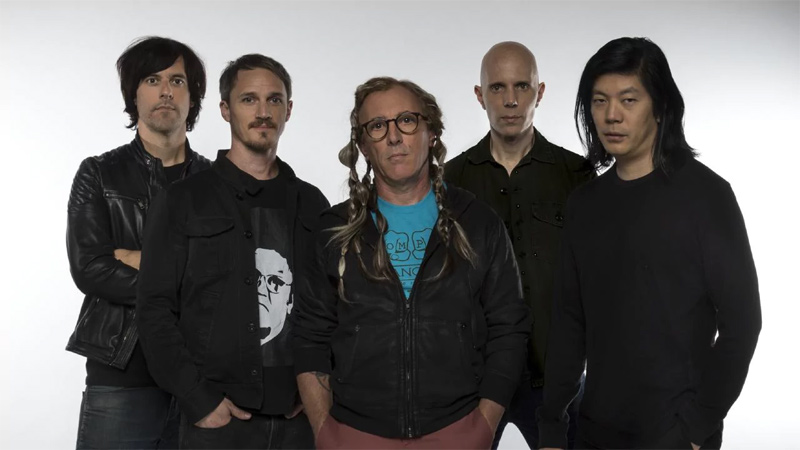
Mike Patton has a reputation for restless innovation. He’s best known as singer of Faith No More – who toured Australia with the Soundwave Festival earlier this year – as well as his other experiment rock acts Fantomas, Peeping Tom, Tomahawk and Mr Bungle. Patton’s voice is one of the most distinctive of this era, and he’s also lent it to collaborations with artists like Dillinger Escape Plan, Dangermouse, Dan The Automator and Rahzel.
His latest project is named Mondo Cane (pronounced ‘Carn-ay’). The newly-released album sees Patton singing 1950s- and 60s-era Italian pop songs before a 65-piece orchestra. It’s effectively a love letter to his time spent living in Italy a decade ago. The Vine discussed this concept with Patton during our half-hour conversation, in addition to touching upon his fascination with Italian composer Ennio Morricone and whether his record label, Ipecac Recordings, could be considered a tastemaker among alternative and indie music fans.
Full interview at The Vine, which includes a couple of Mondo Cane video embeds. I can’t recommend this stuff highly enough.
On a personal note, this was an immensely satisfying interview to research and conduct. I have a lot of respect for Mike Patton; I remember being enchanted by his voice when I first heard it via my brother Stuart‘s copy of their greatest hits record, Who Cares A Lot?, which even my parents dug. So it was a thrill to speak with the man and uncover some aspects of his latest projects that other interviews hadn’t considered.
Sidenote: I put the call out for interview questions on Twitter and Facebook, and was contacted by a Chilean guy named José Ignacio Vidal, who runs a Mike Patton fansite. He emailed me several questions that I ended up using, including those related to Mondo Cane’s musical arranger, Daniele Luppi and the album art designer, Martin Kvamme. José translated and republished my interview on his blog (!!) alongside a couple of kind introductory paragraphs, which I’ve translated (from Spanish, via Google, to amusing effect) below. Thanks, José!
Exactly two weeks ago I read online that a guy named Andrew McMillen was looking for people, “x” to send him questions and Mike Patton Mondo Cane and specific about was how to send you a simple question of entry, which I’m liking very grateful and asked me if it was possible to send him more. Blindly I did send him seven questions of which one of them Pogo gave me the lights for one of the funniest questions regarding this interview Daniele Luppi and another involving a female question and thinking in those days who had the disc their hands? I went to Sofi ^ ^ who enlightened me to ask about the cover art and oddities, like a butterfly because the pole.
Addition and continues with the romantic effect Patton’s Mondo Cane and some subtleties that are seen in this most entertaining interviews in recent days, if not more than five years. Mike Patton talking a lot, reveals the most intimate nuances of the new album from Mondo Cane, full of surprises that really had not read before. Patton was very comfortable and it shows because they are about 8 sheets of non-stop interview.
Without further ado and especially thanking Andrew, all the best for you buddy, thanks a lot! I leave this great interview, in our view the best of 2010 ;)
Visit José Ignacio Vidal’s Chilean Mike Patton fansite here.
The Big Issue story: Changing Resolution
A story for The Big Issue #355 about Brisbane-based publisher Interactive Publications and one of its young authors, Josh Donellan.
Click the below image for a closer look, or read the article text underneath.
Changing Resolution
Brisbane-based publisher Interactive Publications has leapt aboard the digital revolution – to find a world wide web of opportunities stretching far beyond the printed page.
David Reiter is well aware that his industry is in flux. The director of a Brisbane-based independent publishing company, Interactive Publications (IP), is referring to the book industry’s transition from print to electronic publishing – and with the Australian launch of the iPad imminent, discussion on this topic has reached fever pitch.
Publishers’ attitudes are split between those praying that consumers’ love for the physical book will endure, and those embracing the electronic format as a more profitable, and arguably more environmentally friendly, medium. (Something covered at length in the cover story of our Ed#352, ‘Read All About It’.)
While still valuing conventional books, Reiter [pictured right] believes publishers need to embrace emerging digital technology. In his mind, the biggest problems facing Australian independent publishers are market access and international promotion. Yet, he argues, these concerns are largely side-stepped through digital media. “We’ve have been able to bypass some of the traditional channels – overseas agents, overseas distributors, selling rights to overseas publishers – by having a significant online presence.”
Reiter estimates it will take just “six to eight years” for digital sales to catch up with those of traditional books – and that’s being conservative. Overseas, digital publications already comprise 15–20% of the market. “When you consider the volume of titles being published these days, it’s actually a phenomenal growth figure relative to print books,” Reiter says.
His company’s first major digital title came out in 2000; digital sales now account for approximately 5–10% of their total. “That’s not a remarkably low amount, given what’s happening elsewhere,” Reiter says. “I think that even the major publishers are in that situation at this point.”
IP also recently launched the Digital Publishing Centre, as a one-stop-shop for businesses, or individuals, interested in going digital. Manuscripts that are run through the centre are assessed and edited, then mastered for print-on-demand formats, as well as e-books.
But Reiter acknowledges that e-readers remain a rare commodity in 2010 – and, despite the availability of the Kindle and the coming of the iPad, he is wary of the assumption that people will start buying e-books in vast quantities. “I still talk to younger people, in their twenties and thirties, who trot out the view that ‘I love my book, my regular book and I’m not too keen about reading on screen’.”
And, Reiter says, publishers could be an even harder nut to crack than the readers. This, he argues, is “because many of the big publishers in Australia are tied to the apron strings of multinationals. Even if they wanted to change, they couldn’t, because they have to get approval from head-office overseas.”
But, he continues, “It’s good news for us because we’ve been leading the pack; we’ve been able to put some distance between us and the mainstream publishers who still seem to be sitting in the corner, twiddling their thumbs while all of this is happening, wondering what they need to do.”
Despite their significant investment in digital media, IP haven’t abandoned the traditional format. One of the publisher’s most recent print edition books is A Beginner’s Guide to Dying in India. Reiter discovered its author, Josh Donellan [pictured left], after the Brisbane local entered IP Picks – the company’s annual national writing competition for unpublished manuscripts – in 2009. Donellan was given the nod for Best Fiction, which led to the offer of a publishing contract.
A Beginner’s Guide opens with a bang: its protagonist, Levi, watches his house and all of his possessions going up in smoke. Earlier that morning, he’d been fired from his job. Racing to seek comfort from his fiancée, Levi discovers that she’s leaving the country to become a nun – and all this happens within the first six pages. Emotionally drained, Levi flies to India, where he’s greeted by his older brother, who’s in the midst of planning for his last-ever farewell party (read: funeral).
The novel – which features a devilish sense of humour, well-formed characters and whip-smart pop culture references – has found a strong audience among young adults, almost selling out of its first print run. But the book is also one of IP’s strongest sellers in the digital realm. It is available for Kindle on Amazon.com. And readers can buy a copy through ‘print on demand’ – which is the sort of technology that, for a young Australian author like D0nellan, offers exciting prospects for overseas sales. With this format a reader in, say, New York could order a freshly printed copy of Donellan’s book in just a few days – rather than waiting weeks and paying costly international delivery fees.
That’s all well and good. But, as Donellan himself argues, in all this talk about print versus digital, the most fundamental element of book publishing seems to be missing. “I think there’s a danger that sometimes the focus on the packaging outweighs the matter itself,” says Donellan. “I think [digital publishing is] an important change, but it still really matters how good the material is.”
by Andrew McMillen
A Beginner’s Guide To Dying In India is available now – in print and digital formats.
Learn more about Interactive Publications at ipoz.biz, and click here to visit the homepage for Josh Donellan’s book, A Beginner’s Guide To Dying In India. I don’t read much fiction, but I enjoyed the hell out of this story and would recommend it to anyone.
Mess+Noise ‘Icons’ feature: Robert Forster
My first feature for the Mess+Noise ‘Icons’ series, wherein Australian musicians of cultural significance are profiled at length. In this case, it’s a three-part story that consists of two hours in conversation with Robert Forster.
Icons: Robert Forster
In the first of a three-part interview with Robert Forster – spanning his years in The Go-Betweens, his solo career and his new life as a producer and rock critic – ANDREW MCMILLEN chats to the Brisbane icon about his early years in The Gap, the Bjelke-Peterson regime and meeting longtime collaborator Grant McLennan.
A group called The Go-Betweens emerged from Brisbane in the late 1970s. One half of its songwriting core was an arts student at the University Of Queensland named Robert Forster. With a head full of ambition, a desire for glamour and a hard-earned talent for writing pop songs, Forster would – alongside his best friend, Grant McLennan – eventually lead the band to cultivate a significant, yet disparate following across the world. While there was a decade-long gap in the band’s history during the 1990s, when both songwriters pursued solo careers, critical applause was loudest following the release of what would become The Go-Betweens’ ninth and final album, 2005’s Oceans Apart. A year later, McLennan passed away in his sleep, aged 48. Forster knew immediately that the band’s career was over.
Since The Go-Betweens’ demise, Forster has occupied himself with an ongoing solo career – 2008’sThe Evangelist, his first solo effort in 12 years, was widely noted as among his best work – and an unexpected entrance into music journalism via an invite from The Monthly. That regular album review column led to the publication of his first book The Ten Rules Of Rock And Roll (2009, Black Inc Publications), a collection of his best reviews, and some additional prose, both fiction and non-fiction.
On a rainy morning in May, I meet with Forster at a bakery nearby his home in The Gap, a suburb to the west of Brisbane. He had been briefed by his manager that I intended to discuss his career at length for this piece, and he more than played his part, proving an amicable conversationalist and answering my many questions thoughtfully and at length. Midway through our conversation, he pauses the interview and asks about the reliability of my digital voice recorder, as he’s looking to purchase one for future journalistic endeavours.
As we talk, I come to realise that – although he denies as much during our interview – Forster’s exaggerated, livewire stage manner is very near to the off-stage persona he presents. Both sides of the man are informed by a relentless undercurrent of dry humour, deeply rooted in a sense of irony. He often responds in triplets – “Yeah yeah yeah”, or “No no no” – before confirming or clarifying my research. We speak for more than 90 minutes at the bakery, before he realises he’s late for a meeting. Three days later, Forster again slips into interview mode over the telephone with the ease of a man who has spent the majority of his adult life in the public eye.
Full interview at Mess+Noise in three parts: part one here, part two here, part three here.
Researching, conducting and editing this interview is the highlight of my journalistic career thus far, as I alluded to in my interview with Plus One. Speaking with Robert was a true pleasure.
[Further reading: Forster in conversation with John Willsteed at Brisbane bookstore Avid Reader in November 2009.]
Mess+Noise EP review: The Chemist
An EP review for Mess+Noise.
The Chemist - The Wolves’ Howls Shatter The Old Glass Moon
Your appreciation of falsetto is the primary determinant in whether or not you’ll dig Perth quartet The Chemist. Singer Ben Witt – lead guitarist in Bob Evans’ band – possesses one of those enviably wide vocal ranges. Throughout their debut EP, The Wolves’ Howls Shatter The Old Glass Moon, Witt’s delivery tilts toward the upper register. You’ll either love it or hate it. I fall into the first camp; Witt’s voice is extraordinary, and should be celebrated. Wisely, his vocals ride high atop The Chemist’s pleasant take on bar-room rock’n'roll, sans pomposity.
Don’t let their allegiances with Perth pop’s big names colour your judgment here. Just because the EP was produced by Eskimo Joe’s Joel Quartermain and ‘Stars’ was originally recorded with Luke Steele doesn’t mean you should tar them with the same brush. They have more in common with Lovers-era Sleepy Jackson than Empire Of The Sun’s glossy pop or Eskimo Joe’s aspirant stadium-rock. That Quartermain and Steele have lent their time to The Chemist should hint at their potential for greatness, not just their capacity to appeal to triple j’s programming team.
Full review at Mess+Noise, which also contains a track to stream. I highly recommend checking The Chemist out on MySpace, and live when you next get the chance.
Embedded below is a video I filmed of the band performing at a One Movement industry showcase in Perth last year. It was my introduction to the band, and it made a hell of a first impression.
The Vine album review: Foals
An album review for The Vine.
Foals – Total Life Forever
There’s an elephant in the room, and it’s named ‘Spanish Sahara‘. This is the name of the first single released from the second Foals album, Total Life Forever, and it’s a heart-melter. It’s all the more remarkable considering that this British quintet’s first release, 2008′s Antidotes, was characterised by dancefloor-ready beats, an abundance of needly hammer-on, pull-off riffs and an affinity with the sub-genre of ‘math rock’.
‘Spanish Sahara’ sits in the album’s centre; in turn, it forms the beating heart of Foals’ revised artistic direction. In stark contrast to their previously-accessible singles, the epic song’s payoff occurs over halfway into its seven minutes. Singer Yannis Philippakis urges listeners – and himself, perhaps – to “Forget the horror here / Leave it all down, here / It’s future rust, and then it’s future dust”, as the song slowly builds upon a sparse introduction to climax amid an ethereal lead guitar melody, thundering tom rolls and, ultimately, a somber, circular synth pattern. Though I’m loathe to draw parallels to a younger, less accomplished act, the song’s ascending arrangement can be charted in a similar manner to The Temper Trap’s ‘Sweet Disposition‘. Whether this song will scale those same dizzying heights of ubiquity – yes, unlikely – remains to be seen. But as an artistic statement, ‘Spanish Sahara’ is peerless among indie pop circa 2010.
Full review at The Vine.
This is only just behind Crystal Castles in album-of-the-year-so-far terms. I love it. Please watch ‘Spanish Sahara’ below.
A Conversation With Mikey Young, Eddy Current Suppression Ring guitarist
Eddy Current Suppression Ring are a Melbourne garage rock band. I spoke with their guitarist, Mikey Young [pictured right], for a story in The Big Issue (‘Keeping Current‘) that was published in late April 2010. Our conversation took place on March 17, ahead of a national tour in support of their third album, Rush To Relax. What follows is a transcript of our whole conversation.
Andrew: Mikey, my first question is more of a statement than a question. It’s something that I’ve noticed. Eddy Current seem to be one of the best bands in Australia at deflecting any and all praise thrown your way.
Mikey: Well I appreciate praise, but it makes me really uncomfortable. I’m glad people like us, for sure, but I’m very wary of not letting praise go to our heads or thinking about it much.
So it’s not a matter of when you’re nominated for a new award or critical accolade, you don’t sit down together and go, “Right, what’s the best way to downplay this?”
No, not at all. I’m usually the one doing the interviews and so it’s probably my reactions that appear [in the media]. I don’t want to come across… I’m sure that quietly in my head I’m stoked and we’re proud of ourselves, but we definitely don’t sit around and say “let’s downplay it”. And the opposite of that, we don’t sit around going “how good are we?!”, slapping ourselves on the back. Awards and stuff are funny anyway, they’re a strange concept. We try not to think about it, and just make some tunes.
A broad question: why do you think people like your band?
That’s another thing I’ve briefly thought about in the past and I realised the more I think about it, actually I don’t really want to think about it. I don’t really want to know why people… I don’t want to be conscious of that. I feel it might sort of affect how we make music. If I’m oblivious to it and we just do it, for ourselves, then I figure it will be easier on my head.
I have thought about it, though. I think we’re a good live band, which helps. I think there is a fair simplicity to the music, and honesty in Brendan’s delivery and lyrics. I guess when things are really simple and honest upfront, then maybe they appeal to a larger range of people. I don’t know. I think to keep things pretty simple, then a lot of people can get into it. That’s not why we make simple music. I guess that’s just the way it turned out, but if I had to think about why people like us, hopefully it’s because we’re an okay band.
Do you think a band’s talent is reflected in their number of fans or number of records sold?
Are you asking whether popularity is representative of talent? Not always, I would think not. Seeing as I can barely listen to the radio these days, but that’s just my opinion. I just can’t stand a lot of popular music. That doesn’t really mean they’re talentless. I’m sure there is talent in making songs that I consider horrible to my ears; it just doesn’t work for me. I feel out of the loop when it comes to popular music at the moment. I’m probably not the best person to ask that question. Popularity and talent aren’t always on the same page.
Reading your past interviews, I did notice that the recurring theme of refusing to self-promote…
I have to stop doing all these interviews. I have all the same answers. [laughs]
There’s a quote of yours that I like: “I think if you don’t shove yourself in peoples’ faces, they’ll end up liking you more in the long run.”
I guess that was – maybe not from the start because we probably didn’t think that far ahead, but when we realised things were starting to have some sort of groundswell of popularity, that was something I was pretty aware of, just from being a music fan, reading magazines over the years, that if a band is shoved in your face publicity-wise; if they’re on the front cover and have ads everywhere and you can’t escape them, they don’t really feel like [they’re] yours. If you let someone go out and find it in their own time, it probably feels more special to them. It’s like they’ve made the groundwork, and it might feel more like their band rather than everybody’s band.
The self-discovery aspect is always more interesting to indie music fans. Those kinds of artists don’t have a big marketing budget behind them, and it’s generally the fans and critics that propel them forward, instead of the band themselves.
Hopefully it attracts people to your band that actually like your band for the right reasons; they like the music you do and that’s the reason they’re into your band, not for any other reason. It’s more enjoyable, rather than being told to like something.
Reading those interviews, there are lots of mentions of ‘finding yourself in certain situations’, as if you’re indicating that your success is entirely accidental.
It’s not entirely accidental. It’s definitely not the goal. We haven’t done anything to further our career. If we tour overseas, it’s not to ‘crack a market’ or anything like that, or if we put a record out at a certain time, or anything like that. The only thing that is on purpose in this band is the making of the records and playing of shows. I guess everything else is a by-product of that. Maybe accidental is the wrong word. There have been a lot of funny accidents, but we’ve had a ridiculously good run. I guess success has never been our goal. None of us are anti-success; if that happens, that’s awesome, but it’s all a by-product of what we want to do, which is to make the best records that we can.
You’re heavily involved in the Melbourne indie scene with the label and your time at the vinyl pressing plant [Corduroy]. Surely you must have had some idea that the music you were making would appeal to people.
Not really. I don’t work at the plant anymore. I’m not even involved in the label anymore. That’s only a recent development. I guess I’m involved now. When I started, I didn’t really know that many people within that scene. I knew a small group of people from the record plant, but when we had that first jam I really didn’t think that it would appeal to that many people at all. I knew we could probably press 200 7-inches and get away with it, and then our friends and family would probably buy enough of them to make our money back. Beyond that, I thought I’d have them sitting under my bed for a year, then I’ll get rid of them when we play a show, and that will be fine. That’s all we wanted to do, was usually play one show, just to show our friends, “Look what we’ve got.”
I think after the first show I did realise people did really like this. I was sort of surprised and I could see that there were bands before that I felt didn’t really have anything special about them, and when I did play with this band I did feel like there was that special thing that I’ve been looking for in other bands. I noticed that other people noticed that too. There’s no way that I thought that many people would like us. I sort of think if I hear us on triple j or something, I think we stick out really weirdly and don’t sound like a real band or something. I’m actually slightly flummoxed that we’re as popular as we are.
Is it uncomfortable feeling when you hear your songs on the radio?
I don’t listen to the radio that much anymore so I don’t have to bother about it. It’s sort of nice; because I’m so heavily involved with the making of the music and the recording of the music, when I hear it accidentally on the radio or when I’m out somewhere in a shop, I can be a bit objective about it for a second. I can sort of go, “Actually, this is pretty good.” The only way I can hear it as an outsider for a brief second.
Then you think, “Wait a second, I actually recorded and mixed that.”
Yeah, it takes about three seconds before it processes that it’s actually me playing. In those three seconds, I can have this weird brief moment of “Ah, I like this” and sort of feel different about it.
I want to clarify your role within the band. You’re the guitarist, keyboardist, and you mix the albums?
I record and mix them, yeah.
Is the band still self-managed?
Yes, for the first time – for our whole career I’ve just booked the shows and I guess managed the band, just out of accident. We got bigger, and someone needed to do it and I had more time on my hands, so I kept doing it. This coming album tour is the first time I’ve ever handed over any of the responsibility to an outsider; we’ve got a tour manager this time. It’s gotten to the stage where the shows, especially for the album launches, are quite big. I wanted to sit back for once and just enjoy myself and just play. Sometimes, on the bigger shows, I get a bit stressed out with the responsibility of it all, and I’m more waiting for the relief of it to be over, rather than enjoying the show. I thought I just want to go out there and relax for a tour, just let someone do all the other stuff, like booking flights and everything.
Did you find it difficult to hand over the reins?
Yeah. Well, it’s still happening. The tour’s about to start. I think I found it weird. In a way, it’s no less work. You’re still [included] in the same emails, there’s just a middleman now, but I do feel a distance from responsibility, like I don’t feel like, “God, it’s my fault if this tour goes wrong” or something like that. I feel like just a band member and I feel good about it. I think we have gone so far with it being totally insular and doing it all ourselves. I did feel pretty weird to sort finally let go of something. It’s been good so far.
You might be aware that there’s a bit of a backlash about the last album, which tends to happen with almost any band who ‘outgrows their roots’.
I read one or two reviews. I think it was a Tom Hawking review [on The Vine] and then a response to that review that someone alerted me to. To be honest, I think for a band in our position we’ve gotten amazingly far without really having a strong backlash. Even if there is a backlash on the new record, it’s sort of been pretty minute. You put out three records; someone is going to like your first record better than the new one. Plenty of people whose opinion I totally trust think this is our best record. I should just be happy that anyone likes any of our records; I don’t think the backlash is for any other reason despite the music. I don’t care. I don’t like some records. Is that all that the backlash is about? You’re probably more aware of it than I am.
For example, there’s a topic on the Mess+Noise discussion boards called “Eddy Current Backlash” which was mostly about that Tom Hawking review. It currently has 178 responses.
Okay. I’m probably just guilty of Googling my own band and reviews as anyone else. I do realise it’s not the healthiest of habits. [laughs]. I’m not taking it to heart anyway, but I don’t know; that’s fine. It wasn’t a bad review. It seemed pretty genuinely thought-out, smartly written and stuff. It’s just weird for me. People think more about our records than we actually do. That’s the only thing that’s weird to me: I don’t think we’re the type of band you need to dissect that much. “We wrote ten songs in the last year, and we recorded them. Here they are.” That’s sort of how much we think about it. It’s funny to see other people analyse it when there is – it’s like other people care about it more than we do.
I read a quote about your live shows where you said the bigger the band gets, the harder it is to please everyone, and you probably took it to heart a bit at first and you’re trying to make sure everyone is having a good time.
That could equally apply to the records we put out. There was a stage when the shows got a bit bigger and the people that were there at the start weren’t enjoying it as much as the crowds got a bit rowdier. They got pushed to the back and there were jerks there. It would really affect me to find out after the show that so-and-so had a bad time because some dude was being a wanker. Not that I really want to tolerate jerks at any of our shows, but I’ve also got to realise that I can’t control everything and have to do everything I can and then just play a show and enjoy it, rather than stress about every person in the audience. It is a bit harder to control a thousand people compared to fifty.
A Mess+Noise writer asked you in 2006 whether violence at a rock and roll show is ever justifiable. I’d like to put that question to you again, now that you’re quite a bit bigger than you were in 2006.
I don’t think violence at shows is ever justifiable. I don’t think violence anywhere can be justified. I don’t see a place for it, for sure, and I definitely don’t see a place for it at our gigs. I’ve never really understood that kind of reaction to our kind of music. It seems to me sort of fairly good-time music in my head. Maybe I’m wrong.
You mentioned in another interview that Eddy Current can offer support slots to bands that you really like, to help or to expose them to other people. Was this because other bands extended that same courtesy to you when you were starting out?
Yeah definitely, and it’s just more from being a fan of records. For instance, those overseas bands that we’ve played with; I’m sure Thee Oh Sees would have done fine without us, but if we can do a couple of shows and 500 or 1,000 people seeing them that maybe hadn’t heard of them, you know, then that’s awesome. It’s good when overseas bands come out and you’re in a position where you can do that. It’s the same with local bands, friends’ bands, and stuff like that. You just want to play with bands you love and you want to expose. I guess people come to our shows, there are a lot of people now that maybe don’t go to smaller gigs and stuff like that. If we can just expose some good bands, then you feel like you’ve done a good deed.
You’re paying forward what you felt in the past couple of years, when you were growing your fanbase.
Totally, and also like all the bands I grew up watching when I was first turned 18, 19 – bands like The Exotics and The Breadmakers – to be able to now put them on shows in front of younger dudes who wouldn’t have seen them before. It’s repaying that favor to those bands that have entertained us a heap over the years.
I want to ask you about the live music scene in Melbourne at the moment, because I saw that Eddy Current were involved with The Tote’s final show. Did you attend the SLAM rally?
I didn’t, actually. I’m glad it went really well. I had a mixing session to help a dude finish a record that day. I thought of cancelling, but then I thought “what’s the point?”. I thought it would be more proactive to sit there and help someone finish making music than actually go protest about not being able to make music.
I’m not trying to guilt trip you for not being there, you know.
Not at all, I was just explaining. [laughs]
Following The Tote’s closure, how do you feel about the live music scene in Melbourne? Do you think it’s healthier, or really struggling because of those liquor licensing laws?
I always say the wrong answer to these kinds of questions. I don’t think I said the things that people wanted to hear when The Tote closed. But The Tote was great, The Tote was awesome to my band and it was a good place for years. In that time, I know a lot of venues have closed down, but a lot of venues are still open. It seems to me – I guess I’ve been in the city for 11 years or so – like Melbourne has more venues [now] than it did 10 years ago. There seems to be more bands.
Shit’s gotta die off and get fresh again. I think good things will happen, and good things will continue to happen, and even though it seems sad now, it’s probably good in a way. Things might get stale and younger dudes will start new venues and we’ll all think of different ways of doing things. I think Melbourne is strong enough to survive with one less venue.
To change topics entirely, I want to ask about the masks on the cover of Rush To Relax, even though probably every other music journalist you’ve spoken to has asked the same question.
No-one has actually asked about the masks.
What inspired you to use them?
I don’t know. Nothing, really. I think we just had the idea for the film clip before we had the cover. We wanted the film clip to look a bit creepy. We just wanted a creepy-looking film clip and then we had the idea of shooting the cover on the same day because we didn’t want to hire a plane twice. Maybe we were just scared of our own faces on the covers, but there is no symbolic meaning behind the masks. They were cool, so we put them on.
It’s the first release of yours where the band actually appear on the cover.
I know, I think people were getting a bit sick of our other covers. [laughs]
So the masks weren’t a matter of trying to protect your anonymity?
Not really. We’re pretty conscious of never wanting to be the ‘four dudes in leather jackets down an alleyway’ type of band. It happened because of the film clip. We had an idea for the film clip and we didn’t really want to – we wanted a different look for the film clip. That shot [the album cover] just happened to be a shot from the day of the film clip. That’s all there is to the masks.
How much attention to you guys pay to the band’s image?
Not much. There’s not really much difference between the way we look or act on stage or in the band than how we do in normal life. I guess the only attention we’re paying is just giving accurate representation of ourselves. That’s about it.
You actually hired a plane for the album shot and the video clip?
Yes.
Which company did you go with? Did they dig the concept of what you were doing?
It was pretty hard to find a company that still does those old plane banners. I think it was a guy called Sky Surfers down in some town in country Victoria. I always used to like those banners as a kid and I always wanted one. Our album cost nothin’, and our friends film our videos, and I guess we won some money last year [the AMP] and I felt like we should show that we spent it on something. So we might as well get a stupid big plane. When it came flying over, while were waiting to film the clip, it was seriously the most exciting event. We were just jumping up and down going “yes!”
“We’ve made it. We have a banner!”
Totally, man! It was like “box ticked – I can retire now”.
Do you still have the banner?
Unfortunately, they just recycle the letters and you can’t keep the banner.
Drag.
It would have been excellent to put it up at the back of our gigs or something.
It would. With each album you’ve kind of gone backwards. I read that Rush To Relax was recorded even cheaper and more quickly than the last one. Do you see a logical conclusion to this pattern? Will you end up recording an hour-long album in an hour?
I always thought about it but I think probably not. I can’t see how we can do it much more quickly and cheaper than this one. Definitely not any cheaper. Too much attention is paid to how long it takes for us to record albums. It’s not like we’re trying to prove a point. I have the recording gear so it doesn’t cost us anything. We’re comfortable with doing it that way, and that it sounds okay for what we’re trying to do. Unlike some bands maybe, who go into a recording session to write songs or something, we have 12 – 15 songs written and ready to go. It’s basically just setting up.
The album is only 40 minutes of music, so I always thought if you can’t play the songs you’re trying to record well after three takes, you shouldn’t be recording it. We try a song a couple of times and hopefully it’s done. It doesn’t have to be perfect. Brendan always seems to be quirky and out of time, and there’s plenty of room for bum notes and stuff like that. I like that kind of thing about this kind of music. We’re not trying to achieve any kind of perfection. Six hours [to record an album] is plenty of time.
On the other end of the spectrum, do you ever see yourselves being victims or locking yourselves in the studio for a week to really nail it out properly, with a big name producer and all that sort of music industry bullshit?
I’m not against that kind of thing. I don’t think it suits our band. I just don’t think it would work. I’m pretty sure that this way is the correct way for this band. It’s not necessarily how I’d do it for any other band or any other band I’d record. I don’t think it’s definitely the way to do it, I just think that it works for this band.
Having said that, I don’t walk out at the end of the day with a finished product. I still bring it home and mix it, and spend some time making it sound okay. There is other time beyond those 6 hours, but I just guess we have the luxury of having our own gear and I relatively know what I’m doing. I can just mix the record in my bedroom. It’s nice to be in the position where you don’t have to rely on producers and studios.
Are you happy to keep doing that for the next few Eddy Current releases?
Yeah, I think so. For a new song we just wrote, I’ve got a very different idea that I wouldn’t mind trying a different way. I think I’m happy with, if anything, I can see us doing it sort of rougher. Like, I think we can experiment with some 4-track cassette recordings rather than 8-track, and I think I’d really like the drum sound we’re getting on that, so if we do some more stuff I wouldn’t be surprised if we regress even further.
That sounds like the ultimate way to make money: to be completely DIY indie, to release the album for nothing, and just to tour on the back of it and make money.
I guess it’s a way of keeping costs down, that’s for sure.
Eddy Current are credited with having a large impact on the Australian punk and garage revival scene. What are your thoughts on that?
I think there have actually been a couple of bands that have sprung up since that I feel some sort of kinship with, but I think if it wasn’t us that did that, it would have been someone else. I think it was one of those things that were going to happen anyway. We just happened to get in first.
I read that you’re fond of playing house parties and small gigs to ‘keep it real’ for the old fans.
I think it’s mainly for our sanity. If we play the big shows in Perth all the time, we just go nuts. I guess just to do an occasional really small show and house party is just really to keep us sane and to remember that type of show and enjoy the show. I guess it keeps things as diverse as possible.
The upcoming tour you’re playing mid-sized kind of venues. In Brisbane, you’re playing The Zoo.
Which is pretty big for us. I think we’ve only played The Step Inn in Brisbane, so I guess The Zoo seems like the logical step up, up there. Brisbane hasn’t got a lot of options.
No, it really doesn’t. Between The Zoo, which is 450, I think the next step up is the Hi-Fi, which is 1,000+.
I don’t think we’re ready to go to that, not in Brisbane anyway. I don’t think our following is that strong up there.
I read a quote where you said you’ve done a good job with distancing yourself from the music biz. I saw that you turned down SXSW, which a lot of other Australian bands probably wouldn’t do. They’d probably view that as a massive opportunity.
It was probably bad timing, but I’d just rather go over there and play a lot of shows and not really worry about that kind of stuff. I think SXSW is probably really enjoyable for a local because you get to see a lot of bands, but unless you’re going there for a reason and trying to become something, it’s probably not the best time to play a show. I’d rather wait until things die down and do a normal tour.
Considering there are 1,500 or 1,800 bands playing in a week or something.
Totally. It almost sounds like it’s working against its purpose.
I’ve read that you’ve got quite a broad taste in music, Mikey. I want to know what inspired you to play guitar in that Eddy Current style.
I don’t know; I’m sure it’s a bunch of things. Definitely my time at Corduroy [Records, a vinyl pressing plant], being surrounded by those type of bands and musicians and stuff, had an influence on the type of music I play and how I play. I spent three years listening to teenage garage records from the ‘60s or something, and I realised that that’s the sound of guitar I like and I’m going to try my best to rip it off.
I have one last question. It’s about the Australian Music Prize. It’s gone from Eddy Current’s indie garage sound to the current winner, which is a major label-distributed album by a former Australian Idol contestant.
This is a loaded question, isn’t it? [laughs]
I just want to gauge your take on that.
That’s fine. I think it’s definitely reactionary. I think it was pretty obvious the day after we won it that they were going to give it to a chick this year. I haven’t heard Lisa Mitchell’s records so I’m not in a position to say if it’s a good record or bad record. I think I heard one of the songs on the radio and quite liked it. I guess if they’re doing it for why I say they’re doing it, it shouldn’t really matter if it’s on a major or indie or if it’s an Australian Idol winner or not. If they honestly think it’s the best record then so be it.
That’s a very diplomatic response.
I’m so out of the loop that I probably haven’t heard any of the records on the damn thing anyway. I don’t think I’m really the best person qualified. I have no ill feeling towards that.
That’s all I’ve got for you, Mikey.
Hopefully there’s something there. I rambled.
++
Check out Eddy Current Suppression Ring on MySpace, and view the video for ‘Rush To Relax’ below.
Mess+Noise album review: Hits
An album review for Mess+Noise.
Hits – Living With You Is Killing Me
Pay no attention to the cover, which overlays the band name in all-caps so the eye’s tricked into reading “shit” ad nauseum. Ignore the band name, for they have no hits. Though this is music born from the Sunshine State, its content is better suited to nighttime debauchery. Which is why a comparison between Brisbane five-piece Hits’ debut and Fun House is apt for two reasons: Hits once covered that Stooges classic in its entirety, and I’m loathe to use anyone other than Iggy Pop as the reference point for frontman Evil Dick’s throaty, whiskey-tinged holler.
This is a big, dumb rock record done well. It sees the band offset masculine overtones by placing guitars in the hands of two capable women – Butcher Birds’ Stacey Coleman and former Gazoonga Attack member Tamara Bell – who double as back-up singers at opportune moments as well. Take the opener, ‘Fuck The Needy’, for example, where the pair erupt with an unexpected, hair-raising call of, “Nothing succeeds like success!”
Full review on Mess+Noise. Check out the band on MySpace. They’re good.
The Big Issue story: Henry Rollins, ‘Still Angry, Still Curious’
A story for The Big Issue #354. Click below image for a closer look, or read the story text underneath.
Henry Rollins: Still Angry, Still Curious
Shooting the breeze with punk pioneer turned spoken-world celeb and broadcaster, Henry Rollins.
Henry Rollins is a true Renaissance man. The 49-year old (born Henry Garfield in Washington, DC) has appeared in music (he fronted iconic hardcore punk act Black Flag, before establishing the Rollins Band), film (he’s appeared in Heat, Bad Boys II and The Alibi), television (he hosted The Henry Rollins Show for two seasons), radio (he hosts a live talk show on Californian station KCRW), and print (he blogs for Vanity Fair each week, and established his own publishing company, 2.13.61, named for his birthdate).
Exhausted yet? Rollins is also known for campaigning on behalf of the Iraq and Afghanistan Veterans of America (IAVA), and appearing in public speaking gigs before US troops stationed in Iraq. Rollins was in Australia in April and May for a spoken-word tour entitled Frequent Flyer. It was the 27th time he’d toured here
Rollins took the time to share some of his acquired wisdom with The Big Issue.
You’re a true multimedia figure, Henry. Which medium is most gratifying for you?
The talking shows are perhaps the most fulfilling. I like being on the radio, it’s only two hours a week but it’s really fun and a much lower pressure than the other things that I do.
Of your career so far, is there a single release, event or achievement that you’re most proud of?
I am not a proud person, really… I have a sense of right and wrong and that’s about it. I don’t think anything I have released is particularly good. I will say that I give it my best shot every time.
What’s your take on broad societal problems like homelessness and obesity?
Homelessness is a hard issue to deal with because on its face it is sad and tough but there are a lot of different ways someone ends up that way, so the cure and preventative measures are complex, political and broad-ranging. Obesity, especially in children has as much to do with marketing, concepts of self-esteem and how technology has shaped how people live as it does anything else. Many sit still in front of a screen and and don’t always get out and move around. Also, the West is very well fed, relative to other places. I don’t know how sustainable that is or how healthy that is in the long term.
Are you comfortable with the notion of celebrity?
Sure, if people want to be famous, they should go ahead. It’s nothing I would waste my time with but for some, it’s what they want.
Although you didn’t seek fame, you’ve found it, seemingly without compromising your values or your message. What advice do you have for those who wish to follow in your footsteps – that is, to be become known and respected, but without resorting to selling dog food or glad-handing politicians?
I just do my work and am respectful as possible to those I meet. Not everyone’s going to dig you, so you have to deal with that but you can’t let it stop you. It’s not always easy. I work very hard and put myself through a lot to keep things happening.
You’re known for speaking out in support of gay rights. What compelled you to do that?
Because homophobia is ugly, hopelessly ignorant, and dangerous, and it’s about time that sane people stand in the face of it and say “no more”.
You’re no stranger to using your profile to promote initiatives that you feel strongly about, like the Iraq and Afghanistan Veterans of America (IAVA). Did this activist streak emerge naturally, or do you hesitate before becoming involved with such projects?
There’s no hesitation. IAVA helps veterans and I am honoured to be a part of it. I would like to think myself part of a solution rather than the problem.
Why did you tour with the United Services Organisation to speak for troops in Iraq and Afghanistan, even though you were opposed to the US involvement in the war?
Because soldiers don’t start wars. I have no argument with the military, just those who ordered them into the illegal war in Iraq.
Do you have a particular approach for exploring cities you’ve never visited before?
I walk down streets, alleys, slums, along rivers, in cemeteries and see what happens.
When you’re recognised while travelling, do you find that people expect you to live up to your role as a performer?
People are usually very cool to me. I am cool back. It’s fairly constant, but I am used to it.
With each successive Australian tour, your popularity increases. Do you prepare differently for different-sized audiences?
No. Every audience gets the best show I can do. They are all equally nerve-wracking.
What do you get up to during your downtime between shows?
Sleep, reading, answering letters, gym, writing.
Finally – what motivates you?
Anger, curiosity.
By Andrew McMillen / Photograph by Maura Lanahan
This was a pretty painless interview to source. I had the story pitch approved in late March ahead of his Australian tour, and set about attempting to contact Rollins by emailing the address listed on the website of his publishing company, 21.3.61.
One minute later, Henry himself replied, saying that he’d be happy to conduct the interview via email. What a pleasant surprise.
Interviewed: Plus One Brisbane
Sarah McVeigh of Brisbane music blog Plus One asked me some questions, mostly about music writing and my work habits. I answered them. Excerpts below.
Is Brisbane as good a place as any to be a music writer?
Without doubt. There are loads of great stories within the local scene waiting to be told, and there are always nationals and internationals visiting. Anyone who argues otherwise isn’t trying hard enough.
You seem to be getting alot of work – what’s your work routine like? How much time is spent chained to the desk? How do you deal with all the distractions of being constantly online?
I pitch at least ten story ideas to various publications each week. Those that are approved, I write. Those that are rejected, I shop elsewhere if appropriate; if not, I let them go. I use an application called RescueTime to track the time that I spend on the computer each week, and how my time is split between different kinds of software usage. (It’s free and it’s pretty ace, you should check it out.) Looking back through my personal history, I spend 40-45 hours per week in front of a computer. I split my time between working from my bedroom, and from an office with friends just outside of the Brisbane CBD.
Distractions are tough. Really fucking tough. If I told you that I had the discipline to work all day without checking in on Facebook, Twitter, Google Reader, Mess+Noise, The Vine, ABC News and email, I’d be lying. But I am improving. Slowly.
That’s the beauty and burden of working in and around the internet: it’s both my workplace and playground. It is a pleasure and a curse. But all things considered, I get by. I don’t miss deadlines. Those are the biggest motivator to quit screwing around and get to work: the reality that if you miss a deadline, you’re fucked. So the goal is to consistently create deadlines for myself (published articles, reviews, blog stories, Waycooljnr entries, etc) to ensure that I’m constantly on deadline. That’s the mentality I aim to inhabit.
On a related note, the website that I use to plan my week is TeuxDeux. It’ll probably change your life, like it did mine.
What (in your view) is the likelihood of you sustaining a career in music writing? Do you know many young writers who are managing to earn a wage?
I don’t know many my age who are earning a wage, no. But my skills aren’t based entirely around around writing. I’m doing copywriting and digital strategy on the side. I just tend not to blog about these side gigs, though, because they’re less interesting. In time, though, all will be revealed. It’s all contributing to my path as a writer, in the end, so I’m grateful for every opportunity I receive.
As to the first question, it’s a case of ‘we’ll see’. Ask me the same question at the end of the year. Right now, it’s fun and it’s profitable, so I see no reason to give it up.
Full interview at Plus One Brisbane. Thanks Sarah.
The Vine album review: The Optimen
An album review for The Vine.
The Optimen – The Out Of Money Experience
I tend to let most Australian hip-hop go through to the keeper. Not through a particular aversion to the genre, but because when I wrap my ears around a hip-hop release, I want to be inspired. Motivated. Energised. Put simply, I want to hear something great. Which is why I paid attention when I saw that The Optimen had a new release due. Their first album, Boomtown – a term of endearment for their native city of Brisbane – was a class act. It stayed with me throughout the entirety of 2005; five years later, it remains a stellar effort. And though The Optimen did produce beats and record a couple of songs for some of their labelmates’ best work on 2007′s Red Tape Renegade Vol 1, this is Boomtown‘s true successor.
Full review at The Vine. If you have any interest in Australian hip-hop, check out The Optimen on MySpace.
It’s true that I don’t pay Australian hip-hop too much attention. If you’re involved with a hip-hop act, drop me a line to try and convince me.


While still valuing conventional books, Reiter [pictured right] believes publishers need to embrace emerging digital technology. In his mind, the biggest problems facing Australian independent publishers are market access and international promotion. Yet, he argues, these concerns are largely side-stepped through digital media. “We’ve have been able to bypass some of the traditional channels – overseas agents, overseas distributors, selling rights to overseas publishers – by having a significant online presence.”
Despite their significant investment in digital media, IP haven’t abandoned the traditional format. One of the publisher’s most recent print edition books is A Beginner’s Guide to Dying in India. Reiter discovered its author, Josh Donellan [pictured left], after the Brisbane local entered
That’s all well and good. But, as Donellan himself argues, in all this talk about print versus digital, the most fundamental element of book publishing seems to be missing. “I think there’s a danger that sometimes the focus on the packaging outweighs the matter itself,” says Donellan. “I think [digital publishing is] an important change, but it still really matters how good the material is.”
Icons: Robert Forster
The Chemist - The Wolves’ Howls Shatter The Old Glass Moon
Foals – Total Life Forever
Hits – Living With You Is Killing Me