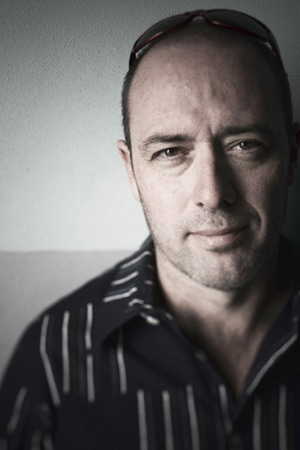
 I met with Brisbane-based author, journalist and blogger John Birmingham in late June 2010, to discuss his newest book, After America, for a story in The Big Issue. You can read that story here.
Full transcript of our conversation is below. It begins in the middle of discussing the book – which I’d only finished half an hour before we met – and ranges from discussing the characters and writing process to the merits of genre fiction, time management, and his social media usage.
Beware: for those who haven’t read After America, there are spoilers.
Andrew: I’m sure it was no coincidence that much of the descriptions [in the book] are quite cinematic. [note: John’s publisher, Pan Macmillan, also commissioned a teaser trailer for After America ahead of the book’s release]
John: Yeah. I mean partly, yeah – I’d like it to be a movie. There are guys in the U.S. at the moment arguing with each other over the rights to do the previous series [Axis Of Time] as a movie, but this one would be so much easier to do. Partly because I’m writing it easier, but also the more I get into the thriller headspace… It’s a cinematic form of storytelling. It’s got lots of colour, lots of movement, you’ve got that whole Bruckheimer accelerated narrative thing going – every seven minutes something has to happen! Yeah, so I guess it’s not surprising that people start seeing it in terms of movies.
One of the things I like doing when a book comes out, any book comes out like this, is I wait a couple of weeks and then I put a blog up and run a discussion on who everybody would cast in the various roles. It’s always interesting, because I have very strong ideas about who should be there. The problem is no one agrees with me.
I must admit I haven’t read any of your other fiction work. This is the first one.
That’s actually not a bad thing, because the books are all so are fucking different. It doesn’t strike me as an odd thing but it does put the zap on some peoples’ head that I’m writing something like Leviathan one year, and then I turn around and do Weapons Of Choice the next year. You’re not necessarily coming with a disadvantage for not having seen the other books.
I found myself more drawn to Miguel and Sofia’s side of the story, instead of the military stuff.
I really like Miguel’s character. I really liked his relationship with Sophia. It almost didn’t happen. In the first draft of the book, he’s alone. The deal with Miguel was to be almost a biblical burden that he had to carry, and his family… [spoilers]. In the first draft, his family wasn’t killed. They were just kicked off the farm and driven away. He decides he’s got to get to Kansas City to tell Kipper because he has this naïve faith in Kipper to save him.
I wrote the entire book where he was just travelling with his two dogs; the dogs were basically to give him something to talk to, and emote to. But it just didn’t fucking work. We just kept asking ourselves, “why is this guy off on his own when his family are travelling on their own through the badlands that he himself says are fucking badlands?” And also it didn’t emotionally justify how fucked up he was in the story.
So having sort of gone through it, we agreed in the end that the family had to die. But then of course to kill them all off, he was just going to ride down there and go out guns blazing, and so that’s why he has Sophia with him, to give him one last thing to live for.
And as a storyline, I loved this Caitlin storyline. I love just inverting all of the old action thriller tropes; you know, how the two most dangerous characters in the book are both chicks. One is not pregnant, but breastfeeding, and just recovering from pregnancy.
But I gotta say, writing the book, the most satisfying story to dwell on – and you do dwell on it, it’s so fucking long you live inside the story after a while – was the Miguel story. I’ve always liked cowboy movies, and again the nice thing about his was it’s a very traditional, a really fucking traditional cowboy story. It could be any of the Steve McQueen or John Wayne movies, you could easily lay that template over and it would match, millimetre perfect. It’s not because, of course, Miguel is a Mexican; it’s actually his ethnic background which gets him into trouble and kicks the story off.
 You really did heap it upon him though, even at the end. He didn’t get a break.
No, he doesn’t. I’m not a religious person at all but I do like the idea of the story of Job where some poor average prick just gets pounded and pounded and pounded to see whether or not he’s going to break. That is Miguel’s role, to just see how much one person can take. In the third and final installation of the series, there will be the whole idea of biblical vengeance that I’m going to work through as well. I’m with you; as a storyline, it’s probably my fave, despite the fact that as a character, I think Caitlin’s my actual favourite.
This was always going to be a three book series. I wonder if your feelings toward the arc of the series have changed as you’ve been writing it.
Yeah, the first one for me worked just as a standalone book. I was very much aware and remained aware that a lot of people like the idea of a series. They like the idea of being able to go back in another book with the same characters. If they enjoyed the first one, they’ll enjoy the second one. They also hate fucking series because you have to wait a long time for the big questions to be resolved.
I agree with them. I’m a huge fan of Peter F. Hamilton’s work: he writes these huge arcing space operas that just go on and on and on. I love them, I’m addicted to them, but it just drove me nuts to have to wait 18 months to two years between each of them.
I wrote Without Warning so that you could read it, close it, and if you wanted to, you could walk away from it. It’s got a dénouement at the end where you obviously set up another story, but it didn’t have to go on. And I found After America really fucking difficult to kick off because I was really happy with the first book as a novel, as a book really. I haven’t written any others that I’ve been as happy as I was with that.
Having written what, to me, was the perfect book – although others would disagree vehemently – I just thought “Fuck, how do I top that?” And I had about six months where I just sat around. I know what I have to do in this second book because I’d already plotted it out, but it was just really difficult firing up.
And then when I finally did fire up, I broke my arm. I’d written the first draft and I was just about to sit down and edit that. That is actually where I did most of the work, in editing the first draft. I busted this arm in a training accident in Jujitsu and I had a plate inserted here [he shows me]. Although I was in plaster and then in a splint for only about seven or eight weeks, I didn’t get range of movement back in the arm for months. It threw everything out by about a year, which compounded the initial difficulties I had coming at this story because it was a perfect excuse not to engage with it. “Sorry, I have a broken arm – I’m not doing anything on this fucking book for a while now.”
The funny thing is I reckon it was, in a sense, a left-handed gift. The enforced break allowed me to sit back and actually spend about two months in my Relaxo lounge chair thinking about the characters, thinking about the stories. When I could literally lay fingers on a keyboard, I came back much more charged up. Miguel was actually part of that because I had changed his story completely. I really liked the idea of working in a very old fashioned western narrative under the guise of what’s virtually a military techno thriller. It changed a lot. Doubtless, the third one will be the same.
Did you do much storyboarding for this one?
No. I knew there were certain things I wanted to do. I knew I wanted to have a cattle drive, which is afflicted by a giant flood. Originally it was just an image I had. I saw these guys driving a big herd of cattle through a dead city and a flood comes through. So again, it was a cinematic vision – how fucking cool would that be?
When I was doing my very rough outline I just had this note, “Must have cattle drive and flood together. It will be awesome.” I also knew that, with Caitlin, I wanted her to parachute into New York at night with a battle going on. Again, I just thought that would be a great scene for her as a character, because the essence of Caitlin is isolation, and you don’t get any more isolated than freefalling through sub-freezing air into a dead city. So I knew that was coming, but in terms of structuring the entire narrative, as you do with a movie, I didn’t. I learned that lesson with Designated Targets; I did storyboard that out scene by scene.
I could tell you before I’d written the first word what this chapter would be about and what that character would be doing in that scene, hundreds of pages before they were written. And although it was a really efficient way to turn a book out, I wrote that book much more quickly than the other books I’ve done. It was also incredibly frustrating because the thing about characters is once they take off, once a character comes alive, which takes about 30 or 40 pages, they start doing their own thing and talking and speaking their own dialog. You actually don’t need to think stuff up.
Someone tweeted [at me] earlier today, they had a review copy and they said their favourite line in the book was on page 453, where Caitlin talks about the definition of disingenuous. I thought “What the fuck are you talking about?” I went and got the book, and it was really good. I had no memory of writing that at all because I really didn’t write it. That was just Caitlin speaking.
What you lose with really rigid storyboarding is that spark where the characters just do what they want to do. So although I block out the story and I know where I effectively want people to go, I don’t do it in the minute detail that I had in the past.
I follow you on Twitter, and I’ve subscribed to your blog [Cheeseburger Gothic] for a couple of years. I’m intrigued by how often you call upon your followers and your fanbase for motivation, for inspiration, for the little facts that crop up. I wonder; do you know of many other authors that are doing that? It seems really obvious.
It works for me, but I’m a bit unusual because I worked in journalism for 10 years before I wrote Felafel, for instance. I like people. I love literary festivals. I love going on tour. I just love this [gestures between us]; sitting in these bizarre, shitty little cafes in back streets, talking to people who I’ve never fucking met. I love all that stuff. Twitter is almost the perfection of that way of dealing with people. So it works for me. Other people would just die of horror.
I know publishers – all publishers, but mine in particular – are trying to get their authors to take up social media in the same way, for exactly the same reasons; to reach out and talk to their readership, to create bonds. They’re all coming at it from a commercial point of view: you create that bond and the next time you put a book out they run out and buy it. That is the core of their thinking; it’s quite cynical.
And yet, I’ve got great friendships out of Twitter. As you can see from reading the blog – when I travel now, I say I’m going to be in Melbourne next week and they all sort of gather in one spot, and we go out drinking and we have a good time. So there is a real personal bonus to doing it.
Other writers? I know Nancy Kress, who is an American sci-fi author, runs a blog. Peter Temple runs one, I think. Who else? There’s half a dozen or so, usually mid-list authors. If Stephen King or, God forbid, J.K. Rowling, was on Twitter, it simply wouldn’t work. You know exactly why it wouldn’t work.
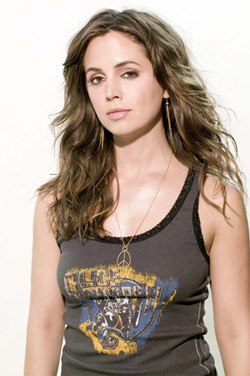
I follow Eliza Dushku [pictured right]; me and 100,000 people follow Eliza Dushku [on Twitter], and we’re all firing our little tweets off. She was in Sydney the other week, and I just said she was shopping and I sent this tweet off to her. I said “You’re shopping around QVB, you should go to Pendalino for lunch,” because I went the other day and it was beautiful. That would have been one of maybe 600 tweets that came in the previous minute. There is no fucking way that somebody like that can afford to pay any attention at all to what’s happening in the tweet stream.
But for someone like me, who’s much more of a microcelebrity, it works really well. Having said that, most authors I know are social cripples, and they just would not have the wherewithal to pull it off.
It’s funny that you made these realisations yourself because you are a people person, whereas the publishers are looking at it from a commercial perspective. I’m not sure that Twitter would work if you had to hit them with a stick, saying “You must do this.”
No, a lot of [authors] don’t even like touring. I can think of some very big names who won’t sign books. If you’re getting that close to a reader, it’s such a horror to them that they just refuse to do it. It’s madness, but a lot of them are the same way.
I wonder if you have any thoughts on the divide between literary fiction and popular fiction.
I do. There was a very funny piece by Tony Martin on Scrivener’s Fancy. There was a panel discussion on Jennifer Byrne’s TV show with Matt Reilly, Di Morrissey, Bryce Courtney, and Lee Child, and the interviewer was asking this very question.
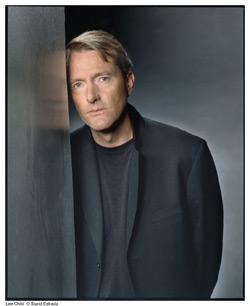 Lee Child [pictured left] is an interesting guy. He’s really fucking smart. But he writes thrillers. He’s not writing literature and I suspect that he decided he was going to play with this interview and so he just acted like a pompous git saying his books were every bit as good as literature. And anyway, Tony Martin wrote this fucking hilarious tear down of the interview. It’s totally worth going and Googling it up this afternoon, if only for your own benefit. Your life will improve having read it. [note: it’s here]
He just pointed out there’s no way what Child’s does is literature, with this brutal demonstration. He took apart a couple of pages from one of Child’s books. I would never ever be so fucking foolish as to make that claim. I do entertainment. That’s it. Not completely low-brow, but upper middle-brow… not even that, lower middle-brow entertainment with a lot of explosions is what I do in the thrillers. And they’re great fun. They’re read by people who are not going to read literature and they’re read by people who like literature.
But [the books] aren’t literature themselves. There’s not a lot of point trying to compare and contrast because it’s like trying to compare and contrast first person shooters with traditional theatre. They’re both mediums for telling stories but they do very different things in very different ways; both are enjoyable and they both have validity.
One is not necessarily worth more than the other. They’re just very different things. I’ve had a lot of fun over the years making fun of literature, but I read it and at times I love it. I think the best writer working in Australia at the moment is Matthew Condon. Everything he’s written since The Pillow Fight has been absolutely fucking stunning, and it’s all ‘big L’ literature. Matt doesn’t do mere entertainment. He’s a really great fucking writer.
But he doesn’t sell a lot of copies at Woolworths and Kmart, and I guess the thing that energises this debate is that people, particularly literary critics and some literary authors, get themselves really worked up because they perceive, quite rightly, that literary authors are working really hard to not get the rewards they deserve.
And they do deserve the rewards, because they do work every bit as hard as the rest of us and their craft is honed to a much finer point than ours is. And yet they’re selling 1,500 and 2,000 copies of their books sometimes. Their writing is usually their second job. And their first job, if they’re lucky, is in something like journalism where it’s at least a related field. If not, some are in advertising, which is slowly losing their fucking soul from being sold day in and day out. It upsets people. There was a great review of After America in The Australian by their chief literary critic (Geordie Wilkinson) a couple of weeks ago who –
I didn’t read the review, as I didn’t want to spoil the book.
Well, you’ve read the book. Go read the review now. It’s fucking fascinating because this guy, he hates doing it but he admits the book is well written “for a thriller” – and you have to capitalise FOR A THRILLER. But he finds the politics of it, and the business of thrillers so fucking poisonous that it just fills him with hate.
I emailed one of the eds at The Oz and said “Everyone thinks I hate that review. Could you just pass on the word to Geordie, that I actually really liked it.” I enjoyed reading it as a review, and as a piece of advertising for the book… it worked. But I did enjoy it. And then the reviewer sent me an email back and said “Thank you very much”. I can’t publish it because it’s private correspondence, but one thing I can reveal is that for most of the time he was reading that book, he was seething, absolutely seething because he thinks I’m writing beneath myself. Which in one sense, I guess you could say I am. In the other sense he’s talking through his fucking arse, because thrillers are really fucking difficult to get right.
There are so many things that can go wrong and you do need to actually bring some skill and consideration for your audience to the business of putting them together.
I read an article in The Australian that was written when Without Warning came out. At the time, you said that you feel your primary audience is “security guys, military, ex-military and gun bunnies”. Do you think that’s still true?
 I’m constantly surprised by my audience. Before I wrote thrillers I was surprised to discover I even had a geek audience. I was doing research for Dopeland [pictured right], where I travel around the country smoking dope and writing about it, and I ended up at a science fiction convention in Perth with these utter fucking freaks. And every one of them had read my books, every fucking one of them and most of them could quote slabs at me. It was a disturbing revelation, but a revelation nonetheless.
I try not to make suppositions about people who read my books, and it’s a good thing because I’m constantly surprised. A lot of chicks read them. They’re certainly not in the majority and they’re not half of my readers, but they’re probably about 35-40% of the readership, and they’re not the sort of chick you’d necessarily expect to read the explodey thrillers.
You do have strong female characters.
Exactly. My publisher Kate explains it that way. She says, “You write great female characters.” My old agent, Annette, who was a fiery, fiery fucking woman, emailed me about an hour or so ago to curse me because she’s supposed to be putting together a festival up in Noosa or something and she hasn’t been able to get to it because she’s been stuck in After America. And the reason is she loves the female characters; they’re tough.
I guess the sort of gun bunny thing comes from the fact that my blog regulars, there’s a preponderance of ex-military, ex-serving cops and security guys who hang out at Cheeseburger [Gothic, JB’s blog]. So they set the tone of the place. Having said that, they’re a fraction of the people who pull through. I have lots and lots of lurkers… like you. You don’t strike me as a gun bunny. But they’re happy just to drop in. And some of those guys are very fucking funny. Boylan is just a comedic genius. I will scan my own blog looking for a Paul Boylan comment because I know there’s always going to be a big payoff.
I couldn’t tell you who reads them now. I know it’s 60% male, mostly over the ages of 18 which is reasonable enough. I don’t think they’re appropriate books for school kids. They’re incredibly violent. Beyond that, I couldn’t say. As an example, my friend, my blog buddy MonsterYuppie, who lives down the road here – he’s a monster yuppie. He owns his own medical technology company, he’s someone that flies all over the world first class, spends 200 days a year running it.
When Without Warning came out, I actually ran into him on his way to the airport. I had a box of Warning on me and said, “Here, take this for your flight.” “Thanks,” he said. He popped on the flight and texted me later on. He was in first class. There were five businessmen in there and three of them were reading Without Warning. [laughs] I would never have imagined that.
I’m interested to know how you balance fiction writing for this book with your regular journalistic work. I know you have two blogs [for Brisbane Times: Blunt Instrument, and The Geek].
Sometimes I don’t. Sometimes I fuck up. Sometimes I take too much on and I fuck it up. Particularly with feature writing, because to do features properly, they’re hard work. And I get paid well for them, but I get paid much better for the books, and it’s always tempting to go where the money is and to just – because I’ve written so many features, it’s really tempting to me to just go “I’ll throw this together at the last moment.” Of course, you fucking can’t. So you know, I could point to half a dozen stories, cover stories for big magazines I’ve written that… they’re not shit, because I’ve had enough experience that I know how to put a feature together, but they could have been a lot fucking better than the published version, because I just wasn’t very good at juggling my time.
I try and assign different parts of the work day and the work week to different things. Blogs for instance take nothing to write. I did a blog about ninjas last week. Twelve minutes, I think it took to write. Hugely popular.
The thing with blogs, however, is the work is all at the backend. It’s in the comments, managing the comments. A lot of gallery journos, for instance: they’re not writing blogs, they’re still writing their own columns but they’ve been opened up for comments. Those guys never, ever reply. Probably a good idea, because unless you’re willing to get down to the same level as your nutty fucking blog followers, you’re on a hiding to nothing.
I got hired as a blogger by Fairfax and I work as a blogger, which means I read every comment and I reply to as many to them as I can. That can chew up a lot of fucking time. I did one, which I knew was going to go off the other day, about the World Cup. I did it purely to piss off soccer fans. It’s one of my shameful joys in life. And it did; it went off. Like, 400 comments in an afternoon or something, and I’m fuckin’ sitting there reading every one. Which would have an ego cost if I didn’t have such a massive ego, because these guys just were fucking hammering me, from one end of the day to the other.
That sort of thing can be really addictive and distracting because although it is work, I’m sort of doing my job, even though my contract at Fairfax doesn’t actually require me to do anything other than file cop, I’m compelled to. Also, I think blogs suck if you don’t get in there and engage. But it can be incredibly distracting. So once I’ve written the thing [a blog], I tend to have set times a day when I’ll go in to read comments and answer them, because otherwise I’ll sit there waiting for them to pop up, responding to each one.
With books, I try and have one book that I’m working on full-time, which means it gets four hours a day, and then I’ll have another one which I’m bringing up to speed that gets maybe an hour or so a day. And then once that one is done, it gets shunted off into production and the other one comes up. It’s a very unromantic, production line way of putting out the words, but it means I can work as a writer.

It also means you get the day-to-day interaction with people rather than being lost in your own mind.
That’s exactly right. My friend Peter Robb, who I fucking haven’t spoken to in years – he wrote Midnight In Sicily, a great book, one of the great books of the 1990s. Peter is a funny dude. He loves the fine life, he loves a meal, he loves wine, and he likes going out to lunch with friends, but he is prone to locking himself away in his apartment for years at a time. He told me once that when he was writing his biography of Caravaggio, he went so long without human contact of any kind, that the first time he stepped outside of the apartment he had a moment of panic, that he had forgotten how to speak. It’s not good.
I avoid that. [laughs] Facebook is my friend.
Even if it’s typing, it’s still interaction.
That’s right.
I’ll leave it there. Thanks, John.
After America is available now via Pan Macmillan. Follow John Birmingham on Twitter, and/or subscribe to his personal blog, Cheeseburger Gothic.
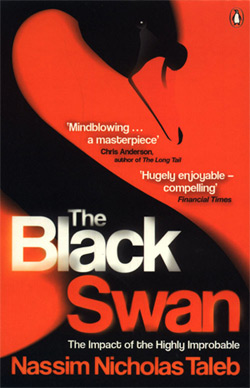 For the last couple months, I’ve been reading a book by
  I’ve been online for like 10 years, and I’m only just beginning to consciously pay attention to this stuff. Cumulative advantage dictates that the more time you spend online building meaningful relationships and contributing to the internet, the easier it’ll be to get what you want.
 I sort of evade the question when I meet new people. For most people, what they do to pay the bills and what they’re really passionate about are two separate things. I like to get right at what they’re passionate about, because that’s always more interesting than the sort of small talk that surrounds “so what do you do?”.
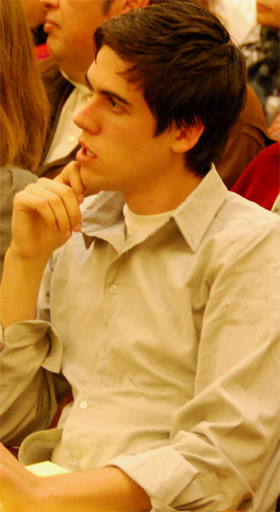 Nope. But Tucker has this amazing library that I’ve borrowed more of my fair share of books from. For a while I was reading like a book a week out of it. And he has this habit of ordering books twice, so I’ve been able to get a number of free books that way.
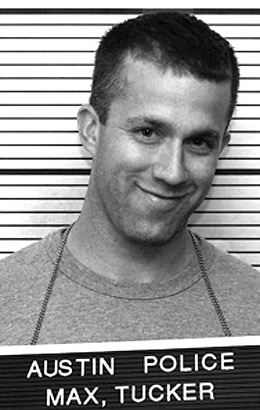 He’s my boss and the owner of Rudius Media.
 I wish I had goals for the site. A few months ago, when I was having trouble writing post-
 It just so happens that Jess is Digital Strategy Director at a mysterious Sydney advertising agency. She won’t say which, and she also won’t let me publish her surname. Or at leaIt’s not because she’s scared or nothin’, but on the internets, Jess is best known as the curator of a rather excellent blog called
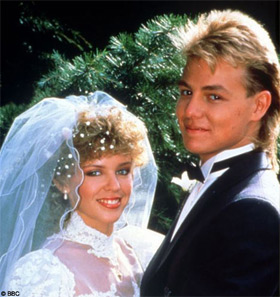 The career path to Digital Strategy Director was not an obvious one. I was a journalist, then moved to Melbourne and could not immediately get a journalism job so I got a job doing the overseas publicity for Neighbours [pictured right *snigger*]. I only got the job because at the interview I told the producer, “You know it’s not too late to make Izzie’s baby Jack’s,” or something. Since I was spending my days trying to get freelance writing work I had had plenty of time to watch Neighbours fortunately.
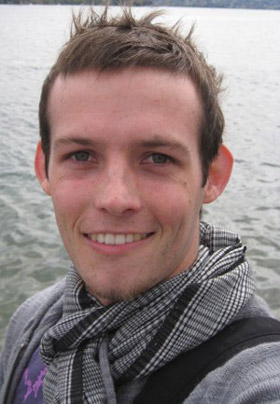 Meet James Drewe, Digital Planner at
 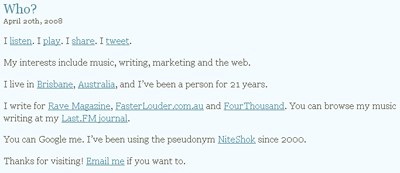 This is the reason why my current bio [pictured right] makes me look like an asshole, although when I wrote it last year, I thought I was being clever.