GQ Australia story: ‘Shock To The System: Electroconvulsive therapy’, March 2012

April 3rd, 2012

My first story for GQ Australia magazine: a 4,200 word feature about the psychiatric treatment electroconvulsive therapy, otherwise known as ECT or ‘electroshock’. This story appeared in the Feb-March 2012 issue of GQ.

Click the below image to read the story in PDF form (link will open in a new window), or scroll down to read the article text underneath.

Shock To The System

Electroconvulsive therapy has long been the stuff of cinematic nightmares. But after nearly four decades since One Flew Over The Cuckoo’s Nest, many are arguing it does much more good than harm.

Words: Andrew McMillen

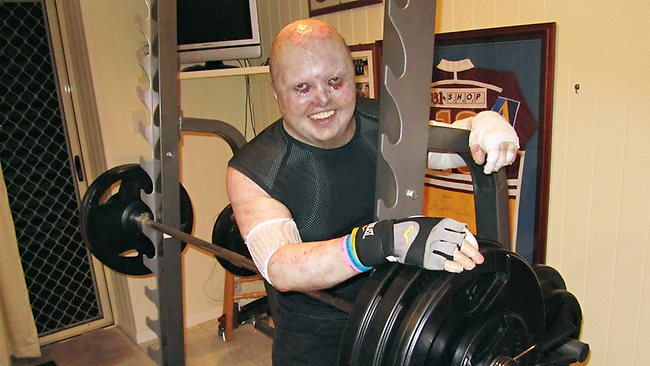
As the young man is led into the operating theatre, the smell of salt water and sterilisation fluid hangs in the air. The room is unremarkable; all greys, blues and whites, just like any other theatre in hospitals across the country, except for a couple of innocuous-looking machines stacked on a bench. Twenty-five-year-old John Vincent doesn’t know it yet, but those machines would soon change his life.

Helped onto a gurney, Vincent lies flat on his back as a clamp is placed on his index finger to monitor his oxygen levels. He feels the cold wipe of saline solution on his collarbone, biceps and forehead, before a nurse applies several electroencephalography (EEG) electrodes to trace his brainwave activities. Moments later, a general anaesthetic makes its way up his arm, and he drifts out of consciousness.

Having been sedated, he doesn’t remember what happened next, but it goes like this. A specialist affixes an electrode to the middle of his forehead, and another one above his left temple, then switches on the Thymatrons – those machines in the corner – sending a series of short electric shocks coursing through his brain, bringing on a grand mal seizure. Fifteen seconds later, it’s all over. The current is switched off, the electrodes removed, and Vincent is wheeled into an adjacent recovery room.

It might sound like a scene from a ’70s movie, from the days of roguishly experimental medical procedures, but this was Boxing Day 2010, and Vincent had just received his first course of electroconvulsive therapy (ECT) at Toowong Private Hospital in Brisbane. A psychiatric treatment most commonly used on those with severe depression, ECT – better known by its outdated term, electroshock – is also called upon to treat patients suffering from acute mania or, in Vincent’s case, bipolar disorder. And despite the popular public perception of ECT as a barbaric, archaic practice, the treatment is administered on a daily basis at both public and private hospitals all over Australia.

Growing up, Vincent was a happy kid. He had lots of friends, enjoyed playing soccer, and loved going fishing with his younger brother while on regular camping holidays with the family. Then, aged 17, in his final year of high school, Vincent was diagnosed with bipolar disorder.

As he got older, his mental illness became harder to manage. “John was existing, but he wasn’t happy,” recalls his mother, Tina, a kind woman in her early fifties with a fair complexion and green eyes who runs a small business alongside her husband. “He wasn’t right, and at some stage he decided to go off his medication. Unfortunately, with his type of bipolar – type one – when he goes off medication, he goes into a state of catatonia. Everything shuts down; no communication, nothing happens.”

Things worsened as the years passed, and by late 2010, Vincent was living a life of isolation in Townsville, north Queensland. He’d withdrawn from the people around him: friends, family, even the younger brother he lived with. “You know those wildlife documentaries on TV, where they record the animals’ every move, behaviours and moods, and all that?” he asks, his hazel eyes burning with intensity. “I felt like I was an animal; like I was being surveyed.”

This was a dark time for Vincent, who says he spent a lot of time in his room “trying to hide away”. He constantly felt as though there was someone outside looking through the windows at him, recording his behaviour.

One Friday in December, his parents went to Mackay for their first trip away together in a year. The next morning, Tina and her husband received a call from their youngest son. “He didn’t think John was all that well,” she says. “We jumped on the first plane and came home. We spent all Saturday with John. He continued to decline into a catatonic state; not eating, not talking. It was almost like he was in a coma.”

By 5pm, Vincent’s movements had become “robot-like”, with his body barely responding to the signals sent by his brain, and the famil rushed him to the emergency ward at Townsville General Hospital, before he was transferred to the mental health hospital. “It’s pretty sad, because there just aren’t enough facilities,” says Tina, remembering how they how desperate they were for a solution to their son’s illness. “We turned to friends in the medical profession, who gave us a great deal of support and help.”

A man named Dr Josh Geffen was mentioned, who specialised in ECT at Toowong Private Hospital. Vincent had never heard of ECT before his parents brought it up, but since he was in such a low mental state at the time, he didn’t argue. “I just went with it,” he shrugs. “I cooperated, and followed my parents’ advice. I did what I was told.”

He hardly remembers a thing about the journey. His mother continues: “We got John down to Brisbane straightaway, and when Dr Geffen saw the state John was in, the first thing he recommended was ECT,” she says. “We were pretty horrified; we’d heard stories from the olden days of ‘shock treatment’ and that sort of stuff. We hadn’t really given ECT a lot of thought. It’s a little bit frightening, because you really don’t know what’s involved. But Dr Geffen explained everything to us, showed us a DVD, and put our minds at ease. We consented to John having the ECT, and he agreed to it, too.”

They got to work immediately. Doctors warned Vincent that the muscles in his arms, legs and shoulders might feel sore once he came to, after receiving the electric shocks. And indeed, he did feel uncomfortable for a couple of hours – he likens the muscle soreness to the day after a big gym workout – but says, “Afterwards, I felt fine. It took a while for the anaesthetic to wear off, but after that I was OK.”

Vincent’s story is more common than you might think. Statistics from the Australian Institute of Health and Welfare show that in the 2009-2010 financial year, 26,848 individual ECT sessions were administered throughout Australia – although the exact number of people treated is unclear, as patients tend to have multiple sessions. “A typical course of ECT involves between six and 12 treatments,” explains Dr Aaron Groves, the director of mental health in Queensland, adding that, while ECT can be used on people of all ages, since depression is more common in adults than in children, around 80 per cent of treatments are on patients aged 30 to 80.

Based on those figures, on any given day here in Australia, 73 people get hooked up to a machine and jolted with electricity in the name of medicine. What’s more, far from being a curiosity from the past that hasn’t quite died out, it’s actually on the rise. Why? Well, because it works.

++

Electroconvulsive therapy has its roots in early schizophrenia research. In 1934, Hungarian neuropsychiatrist Ladislas Meduna saw improvements in schizophrenic patients after seizures were induced with chemicals such as camphor and Metrazol. Three years later, Italian neuropsychiatrists Ugo Cerletti and Lucio Bini discovered that these seizures could be more easily induced by electricity. In a TED.com presentation uploaded in October 2007, an American surgeon and author named Dr Sherwin Nuland relayed an eyewitness account of the first time ECT was performed on a human in 1937.

“They thought, ‘Well, we’ll try 55 volts, two-tenths of a second. That’s not going to do anything terrible to him.’ So they did that… This fellow – remember, he wasn’t even put to sleep – after this major grand mal convulsion, sat right up, looked at these three fellows and said, ‘What the fuck are you assholes trying to do?’ Well, they were happy as could be, because he hadn’t said a rational word in the weeks of observation. They plugged him in again, and this time they used 110 volts for half a second, and to their amazement, after it was over, he began speaking like he was perfectly well.”

“It eventually became apparent that it was a much better treatment for depression than schizophrenia,” says Dr Jacinta Powell, clinical director of mental health at the Prince Charles Hospital in Brisbane. “This is how these things develop: psychiatrists make leaps of logic, they try them out, and see whether it works.”

What they hope for with any treatment is remission. So, how does ECT stack up against other methods of treating depression?

According to statistics presented in May 2011 at the American Psychiatric Association Conference in Hawaii, 34 per cent of ECT patients were in remission after two weeks of treatment. Four weeks later, that had risen to 65 per cent; and after a full course of ECT, that figure reached a 75 per cent remission rate. Those success rates aren’t just good; they’re remarkable.

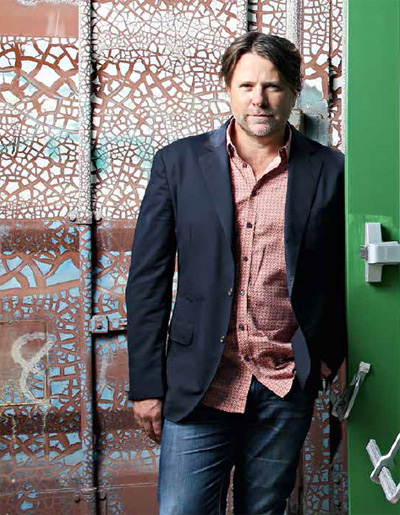
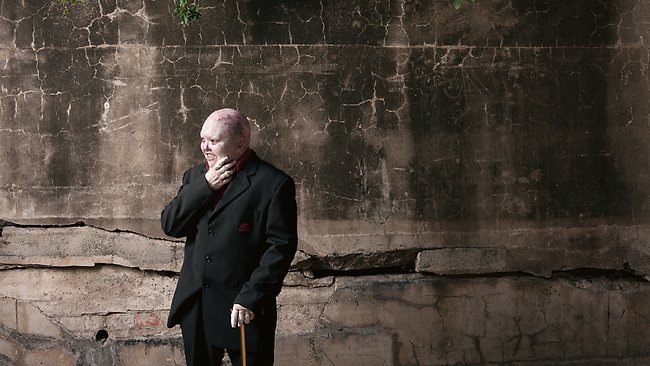
So, why are we still so scared? Perhaps Dr Geffen [pictured right] – the man who treated John Vincent – would have some answers. A stocky, silver-haired man in a dark suit, he leads me into the theatre where John was first treated on Boxing Day. He drags in a couple of chairs from the waiting room, which is adorned with intricate paintings of wildflowers and a poster entitled ‘Understanding Depression’. We sit in the middle of the theatre and begin talking ECT. “Intuitively, it does seem like a worrying thing to do,” he admits, “to pass a dose of electricity through somebody’s brain in order to treat them.”

And he’s right. A seizure-inducing electrical current sent through the brain, where all our memories, emotions, likes, dislikes, fears and secrets are stored; where our very personality is kept? The mind recoils in horror at the thought alone.

That’s partly because, for the majority of us, who haven’t had any first-hand experience of ECT, our knowledge is mostly based on what we’ve seen in movies. Take One Flew Over the Cuckoo’s Nest – the 1975 Miloš Forman adaption of Ken Kesey’s 1962 novel.

You’ll remember the scene when the main character, Patrick McMurphy, played by Jack Nicholson, is judged to be so disruptive to the daily routine of his fellow psychiatric ward patients that doctors see no alternative but to treat him with ECT.

McMurphy is led to a bed, his hairline coated with a conductive gel and a piece of leather placed between his teeth. Electrodes are applied to each temple, and his brain is exposed to a current of electricity. There’s no anaesthetic, nor is the patient forewarned of what’s about to happen. McMurphy appears to be in severe pain, with several men restraining his wildly convulsing body. It’s unclear whether McMurphy’s treatment is an attempt to ‘fix’ him psychologically, or simply to punish him for being a trouble-maker, but it was a very convincing performance that won Nicholson an Oscar, a Golden Globe, and a BAFTA for Best Actor.

“It’s a great movie. I love Jack Nicholson; he’s fantastic,” says Dr Geffen, with a grin. “It’s also nothing like modern ECT. It was set during a time when anaesthesia was already involved, so a bit of creative licence has cost us quite a lot of bad press.” He continues with his list of ways the film misrepresents modern ECT. “No treatment electrodes are placed on people until they’re asleep, because it’s not a very pleasant feeling if you’re coming in for your first treatment,” he says. “It’s much kinder for the person who’s anxious about what’s going on.”

It’s also worth noting that the vast majority of treatments do not induce enormous, full-body convulsions like the reaction portrayed by Nicholson. In most cases, the only physical sign of the electrical current is a slight twitching of the patients’ fingers and toes.

At the Prince Charles Hospital, Dr Powell shows me a segment from the 1990s-era television program Good Medicine, in which a greying man in his mid-forties is treated with ECT. The footage of his treatment is so incredibly mundane and unremarkable that I can’t help wondering what all the fuss and controversy is about. Particularly given the guidelines adopted by the Royal Australian and New Zealand College of Psychiatrists in 1982, which note that it’s “among the least risky of medical procedures carried out under general anaesthesia, and substantially less risky than childbirth.”

“It’s a very effective treatment for very ill people,” agrees Geffen. “It’s more likely to get you into remission than any other treatment.” Success rates with medication when used as a first-line therapy are only 30 per cent, he says. After a year of trying different strategies, this may rise to around 60 per cent in a best-case scenario.

And what about therapy for depression – you know, the kind where you lay on a couch and talk things through?

“The type of depression we see here, people are too sick to be having much talking therapy. Not that talking’s unimportant, but that’s part of the post-recovery.”

Yet somehow, even though lying on the therapist’s couch isn’t the right thing, and months of antidepressants aren’t very effective, people are instinctively more keen to stick to those methods than to volunteer to be subjected to a series of electric shocks.

“A few things soften that,” says Geffen, ever the salesman. “The dose of electricity is quite small; 0.8 to 1 amp. I was treating an electrician, and I asked him, ‘How can I explain it to people?’ He said, ‘Well, it’s about 10 per cent of what a toaster puts out.’ Now I always tell people, ‘Don’t stick forks in toasters, please!’”

Geffen breaks into a wide smile and continues, “Another way to put it is that the current is enough to light up a 25 watt bulb for about one second. Once or twice in the process, I’ll pass the electricity across my hand, and feel a little jolt. But it doesn’t throw me to the ground.”

And of course, ECT isn’t the only instance of doctors using electricity to reset an organ that’s not operating properly; cardioversion, for example, applies the same theory to correct a malunctioning heart. “I do wonder, sometimes, why the person who cardioversed Tony Blair is the ‘cardiologist hero’,” Geffen says, “but I can be painted as a ghoul for trying to treat people’s depression.”

++

Part of our reluctance to embrace ECT, though, may well be because, despite years of research, it’s still a bit of a mystery. We know it works best when used to treat severe depression, but when it comes down to it, we don’t really know why. “At one level, that’s true,” agrees Geffen. “We don’t fully understand all of the mechanisms of its action. However, that’s true of many treatments in medicine. We do know how damaging severe depression is to people’s brains and their lives. At another level, we’re understanding a lot more about how it works, as well as the key chemicals involved in depression: serotonin, adrenaline, dopamine, and this – being a powerful treatment – influences all of them. Most antidepressants work on one, or – at most – two of those. ECT is a potent stimulus for brain cell growth.”

His sentiments are echoed by Dr Daniel Varghese, a Brisbane-based psychiatrist in both the private and public health fields. “I think it’s true to say we don’t really know why or how it works,” Dr Varghese says.

“But then again, we don’t know why or how people get severe mental illness either, because the brain is clearly an inherently complex thing. That’s something that psychiatrists and people with mental illness have to deal with in a range of illnesses: we don’t really know why, but we do know some strategies and treatments that we’ve found to be helpful.”

++

Of course, it’s important to make it clear that ECT is not a catch-all miracle cure for depression, and some of the fears surrounding its usage are real. It certainly has its fair share of detractors.

On a chilly morning in the Brisbane suburb of Highgate Hill, I meet with Brenda McLaren, a spritely woman who loves to talk. Her face is riddled with deep wrinkles, which make her appear far older than her 57 years. Her memory is shot, however, and she has prepared notes in an A5 notebook ahead of my visit. Her relationship with ECT has not been an altogether pleasant one. She was first treated in 1988, as a severely depressed 34-year-old. At first she consented, as she wanted to get better and believed that the doctors at Prince Charles Hospital were acting in her best interests. Over 20 years later, she’s not so sure.

Brenda smokes a cigarette on the sun-soaked front balcony of the Brook Red Community Centre where she works as a peer support worker, and reads her handwritten notes. In 1988, her youngest son was six. “I can’t remember him between the ages of six to 15,” she says. “In some ways, [ECT] must cause some sort of brain injury for that to occur. He talks to me about things, and I honestly don’t remember.”

“My other children would come up to visit me at that time,” she says, “and I wouldn’t know who they were. This would happen quite regularly after ECT. This made them hate the whole system, which is still a big thing with them. It created relationship problems within the family. I’m not saying there weren’t already problems, but it didn’t help. Because… how can a mother forget her children?”

She looks up with sadness in her eyes, and it’s clear the memory loss still hits her hard. “It made me feel very guilty. When you really think about it, in some ways you lose your identity,” she says. “You lose who you are.”

“I would be the most forgetful person here,” she says of her peers at the Centre, which supports people living with mental illness. “I put things down constantly, and never know where they are. I lose things. I believe it’s affected that part of the brain that makes you remember things, long-term. I find it hard to retain information. I find it hard to bring information out. That’s why I’m reading this.” She points at her notebook.

McLaren says she received “dozens” of courses of ECT in her life, the last of which took place around 13 years ago. “I know they do it as humanely as possible,” she says, “but I think it’s barbaric, and in some ways, it’s a form of torture. If I was told I needed ECT today, they would have to take me screaming. Because I will never sign to have ECT again. Ever.”

++

In an adjoining room to the ECT theatre at Toowong Private Hospital, Dr Geffen and his colleagues have written some literary quotes on a whiteboard to keep them focused on the job at hand. “Diseases desperate grown by desperate appliance are relieved, or not at all” – William Shakespeare. “Diseases of the mind impair the bodily powers” – Ovid. “When you treat a disease, first treat the mind” – Chen Jen.

I tell Brenda McLaren’s story to Geffen, interested to hear his thoughts. “I feel sorry for her,” he says, after listening carefully. “I believe her when she says that ECT has damaged her memory, and that this affects her sense of identity. Recurrent ECT of this nature is a difficult scenario; if she was severely suicidal or malnourished from depression it may have saved her life, although obviously at some cost.”

What Brenda described is, he says, a mixture of the common side effect of peri-treatment amnesia – loss of memory of the period around treatment – as well as the rarer retrograde amnesia, which is the loss of memory for “weeks, months, even years” before being treated. “With modern techniques, the peri-treatment amnesia is less severe and retrograde amnesia is even rarer,” he says.

That’s partly thanks to the more recent side-lining of a variation of the treatment, called bitemporal ECT, in which an electrode is placed above each temple (as seen in One Flew Over the Cuckoo’s Nest). ECT guidelines note that “bitemporal ECT is associated with greater cognitive impairment, but these effects vary from patient to patient. Any memory impairment is usually resolved by 4-6 weeks following ECT, but a number of patients report persistent difficulty with retrograde memory.” The other, now more popular, method is unilateral ECT, where one electrode goes above the temple on the non-dominant side of the brain, while the other sits in the middle of the forehead.

We return to Brenda McLaren’s experiences. “The issue of difficulty learning new information some 13 years later is more problematic,” says Dr Geffen. “It’s not generally described in the literature, and may be contributed to by age, depression, and the impact of lifestyle factors like smoking. But,” he admits, “it is hard to rule out ECT as a factor.”

Geffen has been immersed in this world of ECT for more than 15 years. “We start at 6.30am every Monday, Wednesday and Friday, and we’re done by 9am; 10am if we’ve got a long list,” he says. “It’s generally done in the morning; it’s a lot kinder to do it then, as our patients fast from midnight.”

As he said earlier, it’s a treatment for the very ill, and here in this room, Geffen only sees those closest to the brink. I wonder whether the constant exposure to the severely depressed takes a mental toll on him. “When you see patients who are distressed coming in, or patients who have a really good response, you take that home with you and think about it a little bit,” he says, and then smiles. “My wife works in mental health, so it allows for a bit of pillow talk. She’s very familiar with all of this.”

What does he say when asked what he does for a living? “I talk quite openly and freely to my children about what my job is, and explain to them about this,” he says, gesturing at his workspace, with a hint of pride. “Although it’s a stigmatised area, there’s nothing terrible that we do here. We help people who haven’t done anything wrong; they have a brain illness. In that sense, in my social life, I do carry on that view that you can de-stigmatise this.”

++

John Vincent isn’t sure whether he received eight or nine treatments of ECT in total, as he, too, experienced peri-treatment amnesia. “I can’t remember a lot of things that happened when we were back at school,” he says with a shrug. “Birthdays, big events, I can’t remember so much. Things close to me I still remember, though.” Childhood camping and fishing trips, for example, take a while to recall, but his foggy mind does eventually reach back to find the details.

It can be difficult, but he’s philosophical. “I’d rather feel happy, and more myself, than have memories,” he says with a tone of finality. “My health is worth more than having memories.”

Vincent says his course of ECT made him feel more lively. “I’m not so anxious anymore. I’m not short-fused or jumpy. Now I feel more cooperative; I get along a lot more with people.” Not that ECT was a quick fix. “It was a gradual recovery. It wasn’t as though, when I got out, I was right as rain again. It took a while to slowly get to that stage where I felt comfortable.”

His parents stayed at John’s bedside for 12 hours a day through his month-long stay at Toowong Private Hospital. His mother remembers that, within 24 hours of John receiving his first treatment of ECT, she and her husband could see a “definite improvement”.

“John’s had very good results with it. It’s been really quite incredible,” she says. “It’s almost like having a flat battery in a car. You put the jumper leads on and give it a bit of a boost, and it comes back again.”

She doesn’t really understand how it works, and she doesn’t care: she’s just glad to have her eldest son back again. It’s been two months since his last treatment. “He’s on track, and everything is going well. Geffen says, ‘If you go for three months and you don’t need any more ECT, and the drugs are keeping you level, everything’s good,’” Tina says.

“We had no knowledge about ECT until John went into this meltdown and went into hospital,” she continues. “I think the more people talk about it, the better it’ll be. The more I can tell people, and the more open you are about it, the more it will become accepted.”

As for Vincent, now that things are on the up, he’s looking forward to returning to work at his parents’ small business in Townsville. He’d like to settle down with a girl and he can see himself – one day – getting married and having kids, “but they’re a while away yet,” he says with a grin. Vincent isn’t sure what career path he’ll take – something to do with machinery, perhaps, as he’s always had an interest in that area – but he knows that, thanks to ECT, he’s in a better mental state to confront the future than ever before.

*Names have been changed.

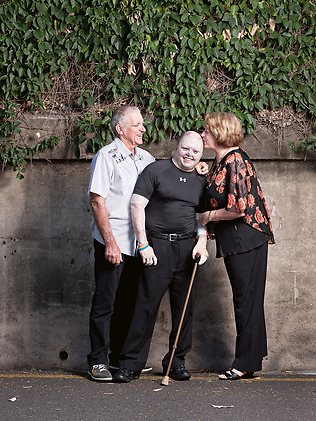
Note: due to an error in the production process, a photograph of Dr Josh Geffen’s father, Laurence, appeared in the original article, rather than Josh himself. This error has been corrected in this blog entry.

For more on electroconvulsive therapy, visit Wikipedia. If you are feeling depressed or suicidal, please contact Lifeline on 13 11 14, which is available 24 hours a day.

Rolling Stone story: ‘The Discovery Channel: triple j’s power over Australian music’, January 2012

January 6th, 2012

A feature story published in the January 2012 issue of Rolling Stone Australia, under the ‘National Affairs’ banner.

Click the below image for a closer look, or read the article text underneath.

National Affairs: The Discovery Channel
Is triple j’s power over Australian music being used for good, or evil?

by Andrew McMillen. Illustration by Andrea Innocent

In many ways, triple j studios – located on the third level of the cavernous ABC building on Harris Street, in inner Sydney – also functions as the central nervous system of the Australian music industry. On any given day, hundreds of thousands of listeners across the country are tuned in. Label owners, promoters, publicists and musicians follow the station with relentless fascination, as its playlist and musical preferences can literally make, delay, or break careers in the notoriously fickle music business.

For decades, since the national broadcaster’s inception in August 1980, triple j has continued to grow: in terms of staff numbers, audience popularity and, as a direct result, cultural influence. With great power comes great responsibility. As triple j continues to slowly evolve into a gangly octopus whose arms now extend far beyond its initial radio habitat into print media, significant online networking, year-round event promotion, and – with the October launch of a standalone Unearthed station – digital radio, it’s worth taking a magnifying glass to the station’s many activities to examine whether their great power is being used for good or evil.

Two senses are immediately pricked entering triple j studios: the eyes are met with bloody red walls contrasting against innocuous whites, and the ears latch onto the sounds of triple j being piped through the station’s corridors, while Zan Rowe broadcasts her morning show live to air just a few metres away. Station manager Chris Scaddan strolls past their huge music library to his corner office. His coffee table is stacked with months’ worth of printed music media: street press, monthlies, international imports. A recent issue of triple j magazine sits conspicuously atop the pile.

He turns down the live broadcast to a quiet gurgle as he considers a question: how would he describe triple j to someone who’d never heard it before?

“It’s uniquely Australian,” Scaddan says. “We’re about new music; mainly, new Australian music. We’re targeted at 18-24 year-olds, so we’re here for young Australians. We play diverse styles of music; we’re independent and non-commercial, which is important. At this point, we’re a brand that reaches across quite a few different platforms. We’re our audience as much as anything, as well. We’re really in touch with our listeners, and we hope that what we’re doing is reflecting and inspiring what they want, and what they want to listen to, and what they want to know about.”

Eight minutes into the interview, in response to a question about whether triple j’s support is crucial to the success of Australian bands on a national scale, he cites a recently discovered statistic that he’s clearly very proud of: in October 2011, the station posted audience figures of 1.5 million in the five capital cities (Sydney, Melbourne, Brisbane, Perth, Adelaide).

“At the moment, we’ve got as many people listening as we ever have. But are we crucial to a band’s success? I don’t think so,” Scaddan says. “Certainly we’re a national broadcaster, and we’ve got a really strong audience. I wouldn’t say it’s crucial to whether you make it or don’t. There are so many different ways that you can find a career or an audience through the Australian music industry. There’s so many examples of bands who may not have been played by triple j who are doing just fine.”

“Just fine” is a relative term, of course. For every Art Vs Science, Boy & Bear or Washington playing to thousands-strong crowds on the national stage, there are dozens – perhaps hundreds – of acts across Australia who enjoy strong support within their hometowns or capital cities, but struggle to make the jump to national notoriety without the nod from triple j. Does Scaddan find that bands get pissed off when they get told, ‘thanks, but no thanks’ in response to their latest release?

“That does happen,” he replies. “That’s the nature of the business we’re all in. Just like artists who are pitching for articles in Rolling Stone and don’t get a mention get pissed off, and can’t understand it sometimes. It is really, really difficult. We’re always looking to try and find a really good balance of genres, of locations – nationwide, so we’re not just picking bands from Sydney, Melbourne and Brisbane all the time.”

“It’s difficult, and sometimes bands who want to get triple j airplay might not crack it on the playlist. That doesn’t mean they’re still not getting played in other ways on the station. They tune in and they’re not getting played as often as Gotye, or Florence + The Machine, and they think they should be. You just hope they can understand that there’s a limit to how much music can fit on the station and make it work.”

Such programming decisions lie not with Scaddan, nor with music director Richard Kingsmill, but with the entire triple j staff. When Kingsmill is questioned – in jest – about whether he’s the most powerful man in Australian music, he practically explodes in exasperation from a couch positioned nearby the station’s carefully stacked CD collection.

“It is not anywhere near the truth. It is just such a misconception to think this place isn’t a team of people,” Kingsmill says. “I have said this time and time again, and if people still think that I sit there and basically call all the shots, they are wrong. I can’t say it enough. This station is built on teamwork. It always has been. If you’ve got a bad framework, or teamwork vibe happening in this place, it shows on the other end of the radio. When we all work together, we get the results. It’s as simple as that.”

++

What happens when your band wins the musical equivalent of the lottery, the triple j Unearthed slot to open the main stage of Splendour In The Grass? In 2011, the competition was won by Brisbane indie pop band Millions. Twenty-two-year-old drummer James Wright is being a little humble by equating the contest to a lottery: those rely on luck alone, not songwriting talent.

Still, it’s curious to hear Wright honestly state Millions’ intentions upon forming in December 2010. “The entire objective of the band was using triple j to get where we want to go,” he says. A four-piece comprised of members from three Brisbane bands you’ve never heard of, Millions realised during their initial rehearsals that their sound might appeal to the national broadcaster.

“There was the fleeting chance that, if we maybe more deliberately went towards the triple j sort of sound, in terms of being more accessible than our previous bands, then we might have a shot at actually doing some good, and getting played,” Wright says. “We didn’t exactly have high aspirations for it, but we were really happy with the two songs we’d written [at the time].”

He says that Millions are “the exact opposite” of their previous bands, in that their path was “extremely thought through, to the point of calculating exactly how many shows it would take us to get where we wanted to go, and to who we should play these shows with and why we should do them and where we should play them.” The Splendour 2011 slot was unexpected for the band, and “pretty much blew everyone’s mind” according to Wright, but not unsurprising given their ambitions.

Stephen Green is well acquainted with this kind of mindset among artists. Since beginning as a radio “plugger” – a guy who pitches new music to stations across the country – he now runs his own publicity consulting business, SGC Media.

“The problem of triple j being so dominant is that it artistically skews what some bands are coming out with,” he says. “If you’ve got the opportunity to do the song that’s in your head that’s not very ‘triple j’, or you tweak it somewhat and make it sound like bands that are getting airplay… I think a lot of bands are going down [the second] path a little more.”

“The tracks that I think work least are the ones that the band have gone, ‘right, we’ve got to get on triple j’, and they’ve tried to write a ‘triple j song’,” Green adds. “If it just happened like that, then – great. But I think too many bands push down that path. Being generic so that you sound like every other band is not usually the way to stand out and have a particularly successful career.”

When Green works on publicity with Australian artists, he never plans a campaign assuming that the act will get triple j airplay. “If you do that, you’re setting yourself up for a big disappointment,” he says. “I don’t think you can make assumptions that anybody’s going to play anything.” So what happens when triple j rejects the song or record you’re pitching them? “Well, you kick the wall, the client gets shitty and says, ‘you didn’t rep it properly’. You break up, and that’s the end of that!” he laughs, clearly joking.

Like Green, Megan Reeder Hope places a high value on including triple j in her marketing plans. As general manager at Secret Service Public Relations, Reeder Hope works regularly with the Brisbane-based record label Dew Process, whose roster includes Mumford & Sons, The Grates and Seeker Lover Keeper. “triple j is essential,” she says. “It’s probably the crux of my plans of how we work at Dew Process.”

“That’s not to say that we don’t value the rest of the media: community radio is really important, as is commercial radio when you get to a certain point,” Reeder Hope says. “But I think triple j is that centrepiece that needs to be in place to be able to do all of the other ones, as well. From our perspective, triple j has a high level of integrity. They really do things in a way that’s uncompromising of their own editorial policy, while still always putting the music first. It really is all about the music for them. They support artists, and they support them throughout their careers.”

Back at the station’s Sydney studios, music director Richard Kingsmill is clearly proud of the station’s success, and unapologetic to its critics. “If anyone’s got any complaints and arguments against us, or thinks that we’re in some ways trying to monopolise the Australian industry….” He pauses. “You get damned if you do and damned if you don’t. If we sat back and went, ‘Well, we shouldn’t monopolise the Australian music industry, we should sit in this corner and do our little job and not try to do anything,’ we’d get criticised for being negligent and not proactive. If you’re proactive, then you tread on toes a little bit, I guess, but we’re not meaning to tread on toes.”

“It’s not supposed to be 100 per cent,” Kingsmill continues. “No one can be 100 per cent, and no one should expect triple j to be 100%. We do what we do to the best of our abilities, and we try as hard as we possibly can, with the best of intentions. But at the end of the day, we’re all humans. So we’ll take chances and we’ll take risks, and sure, we’ll piss people off, but we wouldn’t do it if we didn’t think there was a section of the community out there who was actually enjoying it.”

Further reading and discussion:

triple j mag ‘We Salute You!’ party-starter profiles: Jaddan Comerford, James Wright, Zoe Barrett, June 2011

June 5th, 2011

A couple of short profiles of young Australian party-starters for triple j mag, as part of their party-themed issue (#50, May 2011).

Click the images below for a closer look, or just read the accompanying text.

++

Who: Jaddan Comerford

Where: Melbourne

weareunified.com

Although it wasn’t a party in the traditional sense, 2010′s No Sleep Til festival put thousands of music fans in a celebratory mood. According to promoter Jaddan Comerford, the mission statement was simply “to put on a punk rock event”. Headlined by Megadeth, NOFX and Dropkick Murphys, No Sleep took in five Australian capitals, as well as Auckland.

“There was a bit of stress involved,” 27 year-old Jaddan admits. The Brisbane event was most memorable, as it rained all day.

Jaddan says he love “organisation and making sure the ‘product’ is good”. That means ensuring people are enjoying themselves at the festival, and that there’s enough food, drinks, and toilets.

Though No Sleep Til 2011 is unconfirmed, Jaddan is busy as the owner of UNFD, a ‘music services’ company he founded. Part label, part manangement/marketing/booking agency, UNFD recently announced a deal with Warner Music.

Festival models Jaddan digs: “I love Laneway. It’s small, it books new acts and actually breaks them in the market. I also love the way they use venues not everyone else uses.”

++

Who: James Wright

Where: Brisbane

thefansgroup.com

For 22-year old James Wright, becoming booking and event manager of Brisbane’s most popular club night was a result of performing at similar events. As drummer in indie punk band Stature::Statue , James played a show put on by the Fans Group in 2008 and was intrigued to see its inner workings. “Fans is a party-throwing company started by four guys who wanted to do cool things with their love of music, girls and alcohol,” James says. “Their sole purpose on this earth is to effect that end.”

After asking Fans’ directors if he could learn more, James now sees Lambda Lambda Lambda – held each Thursday at Fortitude Valley’s Alhambra Lounge – closer than anyone: he books bands and DJs, coordinates worksheets, organises fees and makes sure that the night runs smoothly.

A recent highlight of James’ career was when most of the bands playing Laneway Festival crashed the party. Warpaint and Les Savy Fav were booked to DJ, but Yeasayer, Ariel Pink’s Haunted Graffiti and !!! turned up, too.

Qualities a good event manager should have: “Patience; ability to listen and comprehend carefully; be organised and open to ideas, even from unlikely sources. You also need to have a professional attitude and a penchant for late nights and drunken conversation.”

++

Who: Zoe Barrett

Where: Fremantle

thenewport.com

According to Zoe Barrett, four ingredients comprise a great party: being organised, creating the right atmosphere, social networking ads, and bubble machines. As Events and Marketing Manager at the Newport Hotel in Fremantle, Zoe loves the fact that she gets to see “loads of great live music for free”. With her help, the Newport has a growing reputation for putting on quality original bands each week; recent headliners include the John Steel Singers, Illy and Philadelphia Grand Jury.

Zoe recently launched a new club night, Bass Culture, which is “all about heavy, heavy bass music. It’s nerve-racking starting a brand new night,” Zoe says, “but when the place fills up and the new idea takes shape and kicks ass, it’s an awesome feeling.” If Zoe could’ve attended one legendary event, she’d pick the club party in London after The Beatles finished recording Magical Mystery Tour. “I would love to go back in time for that,” she says. “That’d be genius!”

Zoe’s CV: “I just moved to Freo and I was working at the bar [at the Newport] but I have a degree in Creative Industries majoring in Advertising, so when the Newport marketing manager left, I applied for that job.”

A Conversation With Yannis Philippakis of Foals, 2010

March 21st, 2011

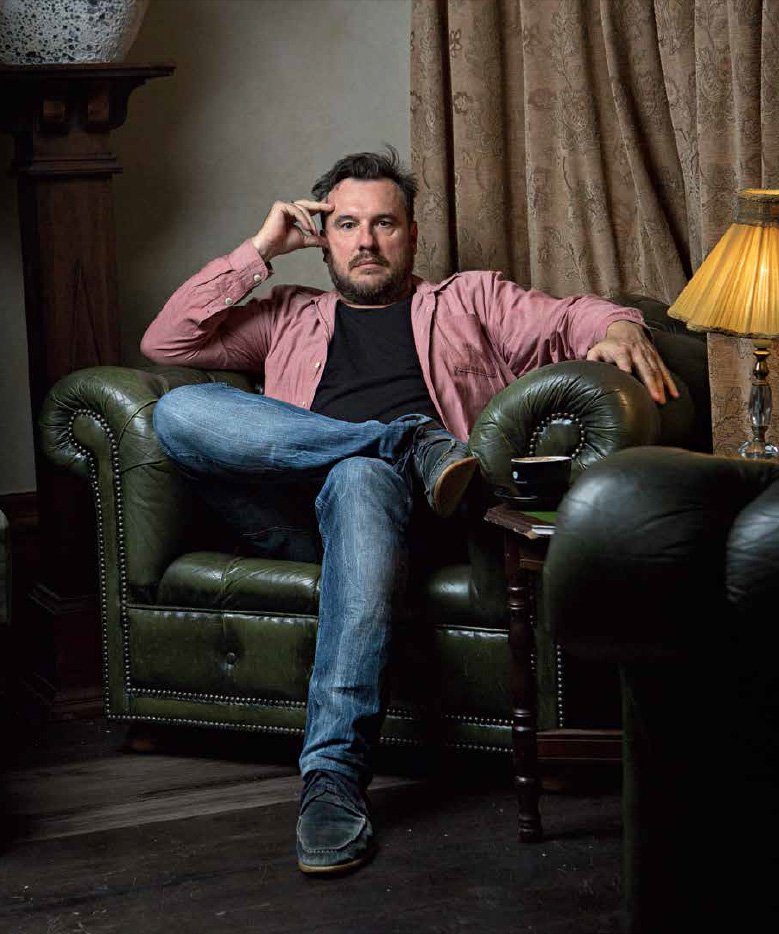
I interviewed Yannis Philippakis [pictured right], singer/guitarist of the British pop act Foals, for Scene Magazine in late December 2010, ahead of their Australian tour as part of Laneway Festival 2011 (which I reviewed for The Vine).

Our interview originally ran in condensed form as the cover story of Scene Magazine #811. Here’s the full interview transcript.

Andrew: I’ve got a confession to make. [Foals' second album] Total Life Forever is one of my favourite albums of 2010.

Oh, thank you very much.

I discovered [Foals' 2008 debut album] Antidotes a couple of years ago, but Total Life Forever sounds like an entirely different band. I like this band more. Do you?

Yannis: It’s not a different band…

I know it’s not, but the sound definitely has changed quite a lot.

Yeah. I mean, I don’t really like the idea of making albums adversary to each other. I find the whole ranking, hierarchy that happens every year kind of repellent and equally… I don’t really have the same perspective on it, obviously, as an externalist, but to us in the band it’s a very linear progression. It never really felt like we had a break, even after we finished Antidotes. I think the production is a hell of a lot more fully realised on Total Life Forever. At least to me, I still have a fondness for a lot of the songs on Antidotes, but I don’t listen to that record largely because of the production. I think that it’s great that people are acknowledging the progression, but to us it is one linear thing. We want to make a body of work. It’s not us trying to eradicate our past, as such.

Was there any self-doubt within the band, when your style of song writing started shifting after Antidotes?

There’s self-doubt every day. Of course. Not to do with writing new things, but there’s just… most of them comes from a wish to complete something that isn’t whole. Self-doubt is part of the game. It’s been there always and unless we write ‘Symphony No. 3’ by Gorecki – which we can’t, because it’s already been written – I don’t think we’re ever going to feel sated or complete. It’s just part of the fun as well, the masochistic element of it.

The moment we stopped recording Antidotes, we started doing b-sides for Antidotes, it started to change a lot, and there was much more experimentation. We started to implement a lot of the things that we learned from Dave Sitek, and make stuff that I think actually bridges the two albums quite closely. There are some b-sides; one in particular called ‘Gold Gold Gold‘, and another two called ‘Titan Arum‘ and ‘Glaciers‘. That’s what I mean; it felt linear. It didn’t feel like we ever stopped, we just always worked on stuff.

All that really happened was that, at the beginning when we started the band, there was a very definite and conscious process. It was a conscious aesthetic, that we wanted, and it was to do with techno, it was to do with a style of guitar playing, a visual aesthetic. Everything was very conscious and we wanted to have parameters on it. We were in love with the idea of bands like Devo that had a distinct world that they occupied.

Everything since then, once we felt like we attained that, everything now is about undoing that process and getting to a point which is kind of the reverse of that, where nothing is conscious and if I had the choice, I’d have a lobotomy and cut out the conscious part of my mind, so that I could just make music direct from the gut. I don’t know. Did that answer your question?

For sure. You mentioned the style of guitar playing the band has. I’ve always been fascinated by those little needly, palm-muted riffs that you guys come up with. Were there any particular artists that inspired that style of playing?

I think it was just something that we heard. I think there are a lot of bands, a lot of styles of guitar or even just playing strings [instruments], everything from string players in a classical piece, to ['math rock'] bands like OXES and Don Caballero, and African Senegalese guitar. I think the main thing, at least personally for me, there was something about that way of guitar playing that just attracted me. I was never that fascinated by chords, and I actually neglected to learn how to work chord sequences and stuff. Instead, everything became about these ‘guitar tattoos’. It was more I had a lot of different types of music and different types of bands and wanted to cannibalise it and make it our own.

That’s always been a main bit of the band. We start playing stuff lower down the guitar. We play with chords sometimes now, but I think that will always be part of the sound because that is just the way that I play, naturally. It’s become muscle memory, now.

It’s certainly one of the band’s most distinctive elements. Did you always intend that to be the case, or did it arise when you started playing together?

You kind of progress, but yeah, it’s always been there, it predates the band. It’s how I learned how to play the guitar. I used to mimic and ape the guitar lines I liked, and they usually were like staccato, tight little phrases, that’s how I liked it. As I said, I was never really attracted to chords, or distortion pedals. I like the idea of a transparent guitar sound; a guitar sound that’s unashamed to be a clean guitar. I think that you can get as much power out of a clean guitar as you can out of a distorted guitar.

You’ve been touring pretty heavily this year, as we discussed. You’ve played a lot of shows. I’m interested to know how you keep it sounding fresh and feeling fresh night after night.

Just do loads of drugs, basically. That’s pretty much it. [laughs] Do you mean like the shows, or the actual lifestyle, or my body odour? What do you mean?

The music. If you’re playing the same songs each night, does it feel like you’re doing the same thing over and over?

It depends. I definitely think there’s a point at which bands stop touring and sometimes you can’t tell when that point is going to be, and you have to keep on playing for a bit longer. But that rarely happens. Each show is different, and we don’t play exactly the same set every night. Even if we were playing a similar set, we have quite a lot of room to improvise… well not improvisation, exactly, but we have negative space that we’re allowed to do different things. We allow space for chaos in the set, so that it’s not so tightly rehearsed, that it’s mechanical. It’s not choreographed, in that way.

I think that helps keep it fresh. I get tired of touring sometimes, but it’s not really often to do with the shows, more to do with the kind of… I don’t know, I’d probably be able to answer that question later on in the year because we’ve still got two more tours [note: this interview was conducted in mid-December 2010]. At the moment I feel pretty good about playing. I’m starting to feel restless about writing new things. I’ve been writing so many things and I think the more that appetite opens, the more pedestrian touring seems in comparison. The further we get away from the completion of the last record, the more difficult touring becomes, I think. Not because of playing the same stuff, just because there’s a new appetite that emerges, of wanting to do things.

When I was researching for this interview, I was surprised to discover your age. You’re two years older than I am. Was it a challenge to get people to take a bunch of teenagers seriously when the band first started?

How old are you?

22.

What do you mean? For who to take us seriously?

People in the music industry, as you were getting introduced to labels, and so forth.

I don’t know. I think that for a lot of young bands, that’s when the prime is, sometimes. I think people are savvy to that in the music industry. They kind of want to feed off young blood. You have a naivety. You’re not jaded in any sort of way. I think, if anything, it wasn’t an issue of persuading them, it was more like trying to have them not suck our blood. I’m the youngest, but I wasn’t that young. We’ve all been playing in bands for a long time. I don’t know, I didn’t really feel that. I don’t feel as young as I used to, though.

Do you feel that as you get older you’re being taken more seriously?

It depends on what you mean. Are we talking about people that listen to records, are you talking about critics?

All of the above.

Yeah, I think so, in some way. I think the critics, there is something that make critics recoil if you seem like a young, cocky upstart. When we started doing interviews and stuff, I really didn’t have that much of a filter on my brain. A lot of time I really didn’t know where I was, in terms of how things would be relayed in the press. I think that with time comes an understanding. I understand myself better now. I think as you get older – what were you like when you were 19?

I was a dumbass.

[laughs] Things change. I think it’s not just to do with age. It’s to do with the fact that we made the second record, and hopefully it didn’t stink, and the people believe in you that little bit more because you’re not just putting out a hype record that, in theory, is a one-hit wonder, and also a compilation of songs that you spent 10 years to write. I think that we’ve conducted ourselves, at least since the beginning, in a way that we feel proud of, and hopefully people have a belief in a certain type of integrity – or an attempt at integrity – which will mean that we gain some respect in that field.

Yeah, sure. Before we finish up, I wanted to ask you about Oxford briefly. Earlier this year I came across a documentary called Anyone Can Play Guitar, which I note you’re involved with. I’m particularly interested in Oxford because I love both Ride and Swervedriver.

Right.

When you were growing up in the city, was there a sense of wanting to follow in the footsteps of other Oxford bands like those two perhaps?

Yeah, it wasn’t those two, but there were other ones. There was a band that was pretty much our contemporaries, but a little bit older: Youthmovies. Oxford definitely was like a big factor in the way we started to think about music. I obviously knew about Radiohead and Supergrass, but Ride and Swervedriver in particular, I wasn’t that aware of. When I was growing up I paid attention to local fledgling bands. Those bands [Ride and Swervedriver], I don’t think they were really playing Oxford when I was growing up, so I wasn’t that aware of them. A band called Youthmovies had pretty much the biggest influence on Oxford in general and people my age, and it’s still being felt now. I think it’s a very interesting place to live, if you’re not an academic.

Is there a sense of being able to give something back to the scene that helped foster Foals, now that you’ve got some attention?

Yeah, we take bands that we like on tour with us, and I try to talk about them in interviews. But not really out of a sense of… there’s nothing magnanimous about it, it’s just that we like the bands and a lot of them are our friends. I’d rather talk about my friends, because it’s more personal to me.

Last question. A friend asked me to say “pretty please, will you leak the Dave Sitek mix of Antidotes?”

[laughs] Ehh, maybe.

Okay, good. Thanks for your time mate.

A pleasure. Thank you.

++

For more Foals, visit their website. The music video for their song ‘Blue Blood‘‘ is embedded below.

Elsewhere: a review of their 2010 album, Total Life Forever, for The Vine.


Junior story: Cut Copy’s ‘Zonoscope’, track-by-track

February 8th, 2011

A story for Junior. Excerpt below.

Cut Copy: Track-by-track

Tim Hoey – the guitarist and sampler of Melbourne-based synthpop quartet Cut Copy – walks us through Zonoscope, the band’s third album, and their first since 2008′s chart-topping In Ghost Colours.

1. ‘Need You Now’: This is the most personal song on the record, for me. We loved the idea of having this really epic song, like Bruce Springsteen’s ‘On Fire’; a stadium [sized], really emotional song, without it sounding too emo. It’s certainly my favourite, and it’s a perfect way for us to begin the record.

2. ‘Take Me Over’: This one is our straight-up AM radio pop song. It’s pop in its purest form, as far as Cut Copy knows it. There’s a heavy emphasis on percussion, and that song very much is representative of that. It’s certainly one of the more pure pop moments on the record.

3. ‘Where I’m Going’: It’s one of my favourite tracks, because it’s quite different: it’s quite ‘chanty’ and there’s no real chorus. We really like those old Beach Boys records that deal with subject matter that’s quite depressing; the songs are about heartbreak, but the music’s quite uplifting. We always found that really interesting, to see people singing along and smiling to these songs about alienation and heartbreak.

4. ‘Pharoahs + Pyramids’: This track is straight-up house music, boiled down to its simplest [form]. We were listening to a lot of Chicago house at the time; Adonis, and stuff like that. We added live percussion over the top of it, along with sequenced, synthetic percussions, so it helps tie in with the rest of the tracks on the record. It’s quite a pop song as well; it was our intention for it to exist within a club, but you can also listen to it at home.

5. ‘Blink And You’ll Miss A Revolution’: This one surprised the hell out of us. The verses were built on this rhythmic groove that referenced stuff like Moodymann; Chicago and Detroit techno stuff. The choruses burst out into this mysterious ‘Cities Of Gold’ type of thing, which was quite unexpected. We wrote this very strange-sounding chorus that we felt people wouldn’t have expected [to see] coming. It felt like a bit of a stylistic triumph for us.

For the full story, visit Junior. For more Cut Copy, visit their website.  Part 1 of a 3-part ‘making of Zonoscope video series embedded below.

Elsewhere: a ‘first listen’ review of Zonoscope, for The Vine.

Scene Magazine cover story: Foals

February 4th, 2011

The cover story for issue 881 of Brisbane street press Scene Magazine – an interview with Yannis Phillippakis of Foals. Click the below image for a closer look, or read the article text underneath.

Foals – Lobotimising Consciousness

Oxford-born quintet Foals had a spectacular 2010. In May, they released their second album, ‘Total Life Forever’, which followed their 2008 debut, ‘Antidotes’. They toured the world, including extensive treks through North American and Europe, before playing Australia for the first time as part of the mammoth Splendour In The Grass line-up. Anyone who witnessed their set that weekend would testify it was one of the festival’s best sets.

Over the years, the band’s sound has morphed from a danceable form of math rock, to a more refined style of indie pop best exemplified on ‘Spanish Sahara‘, ‘Total Life Forever’s beautiful centrepiece. Ahead of their appearance at the 2011 Laneway Festival, Scene connected with Foals’ singer, guitarist and lyricist, Yannis Philippakis.

When I compare ‘Total Life Forever’ to what I first heard on ‘Antidotes’ a couple of years ago, the two sound like entirely different bands.

I don’t really like the idea of making albums adversary to each other. I find the whole ranking, hierarchy thing that happens every year repellent. I don’t really have the same perspective on it, obviously, as an externalist, but to us in the band, it’s been a very linear progression. It never really felt like we had a break, even after we finished ‘Antidotes’. I think the production is a hell of a lot more fully realised on ‘Total Life Forever’. I still have a fondness for a lot of the songs on ‘Antidotes’, but I don’t listen to that record largely because of the production. I think that it’s great that people are acknowledging the progression, but to us it is one linear thing. We want to make a body of work. It’s not us trying to eradicate our past, as such.

Was there any self doubt within the band when the band’s style of songwriting started shifting, after ‘Antidotes’?

There’s self doubt every day; it’s part of the game. It’s been there always and unless we write ‘Symphony No. 3′ by Gorecki – which we can’t, because it’s already been written – I don’t think we’re ever going to feel sated or complete. It’s just part of the fun as well, the masochistic element of it. The moment we stopped recording ‘Antidotes’, we started doing b-sides for ‘Antidotes’, it started to change a lot, and there was much more experimentation. We started to implement a lot of the things that we learned from [TV On The Radio guitarist/’Antidotes’ producer] Dave Sitek, and make stuff that I think actually bridges the two albums quite closely.There are some b-sides; one in particular called ‘Gold Gold Gold‘, and another two called ‘Titan Arum‘ and ‘Glaciers‘. That’s what I mean; it felt linear. It didn’t feel like we ever stopped.

When we started the band, it was a very definite and conscious process. We wanted a conscious aesthetic: it was to do with techno, with a style of guitar playing, and with a visual aesthetic. Everything was very conscious, and we wanted to have parameters on it. We were in love with the idea of bands like Devo, who occupied a distinct world. Once we felt like we attained that, everything is now about undoing that process, and getting to a point that’s almost the reverse of that: where nothing is conscious. If I had the choice, I’d have a lobotomy and cut out the conscious part of my mind, so that I could just make music direct from the gut.

You mentioned your style of guitar playing. I’ve always been fascinated by Foals’ needly, palm-muted riffs. Were there any particular artists that inspired that style of playing?

It was just something that we heard. There are a lot of styles of playing stringed instruments; everything from string players in a classical piece, to [math rock] bands like OXES and Don Caballero, and African Senegalese guitar. I think the main thing, at least personally for me, there was something about that way of guitar playing that just attracted me. I was never that fascinated by chords, and I actually neglected to learn how to work chord sequences and stuff. Instead, everything became about these ‘guitar tattoos’. I heard a lot of different types of music and different types of bands; I wanted to cannibalise [them] and make it our own. We start playing stuff lower down the guitar. We play with chords sometimes now, but I think that will always be part of the sound because that is just the way that I play, naturally. It’s become muscle memory, now.

It’s certainly one of the band’s most distinctive elements. Did you always intend that to be the case, or did it arise when you started playing together?

Yeah, it’s always been there, it pre-dates the band. It’s how I learned how to play the guitar. I used to mimic and ape the guitar lines I liked, and they usually were like staccato, tight little phrases. That’s how I liked it. As I said, I was never really attracted to chords, or distortion pedals. I like the idea of a transparent guitar sound; a guitar sound that’s unashamed to be a clean guitar. I think that you can get as much power out of a clean guitar as you can out of a distorted guitar.

Foals play Laneway Festival, at Alexandria St off St Paul’s Terrace, this Friday February 4.

For more Foals, visit their website. For the full transcript of my conversation with Yannis, click here.. The music video for Foals’ song ‘Miami‘ is embedded below.

Elsewhere: a review of their 2010 album, Total Life Forever, for The Vine.

Rolling Stone Q+A: Rob Swire of Pendulum

December 23rd, 2010

A Q+A published in the January 2011 issue of Rolling Stone, which featured in the ‘Sounds of Summer’ music festival guide. Click the below image for a closer look, or read the article text underneath.

Pendulum – Heavy Dance

Leading the Perth-born, U.K.-based drum-and-bass act Pendulum isn’t all Rob Swire has been doing recently: he also co-wrote and co-produced Rihanna’s “Rude Boy”, which meant double platinum in Australia. Pendulum have just wrapped up an Aussie tour ahead of their appearance at the Future Music Festival tour in March, and we caught up with Swire on the eve of their show in his hometown, Perth.

Onstage you rely on around a dozen computers – that’s a lot of trust in technology.

Well,  the point of having 12 computers is so that if one of them goes down, the rest are relatively alright. We do get the central computer resetting sometimes, because that thing’s being raped, to be honest.

When you were younger, do you remember watching particular artists or bands and thinking, “that’s what I want to do”?

I was fairly heavy into electronic music, so I never really saw that many bands. I think the first band I saw was Spiderbait and the second was The Prodigy. We were in a band before, a sort of metal band and that was just sort of inspired by death metal bands, but I think watching Strapping Young Lad and Muse pretty much inspired us to get a band together.

Your background is in metal, yet you’re now in the biggest electronic rock act in the world. You’ve also co-written with Rihanna. Do you get bored easily?

I do, yes. I’m totally ADD in terms of writing music. I just get bored of whatever I last did, and if I do something too long I get bored and do something else. The Rihanna thing is something different and it’s far, far removed from the Pendulum stuff. It’s good.

Do you see yourself pursuing more co-writing in the future?

I can, yeah, but it’s such a different thing to the way we’ve done things in the past. With Pendulum, we have 100 percent creative control. With the stuff like Rihanna, you pretty much do what they say. If they don’t like a bit of a verse, they fuckin’ take it out. If they don’t like a vocal, that’s not the vocal they use.

With Pendulum, you’ve been performing your ABC News remix as the encore of the current tour. That song’s become something else entirely for you, hasn’t it?

Yeah, in fact, it’s a very scary thing. I think the slight weirdness of the Sydney show might have been a lot of people were solely there to see that tune. They’d heard it on the radio and thought we might be a sort of electro, DJ group or some shit like that, and they came along and there’s a band playing metal-infused drum and bass. There was a lot of chanting of “ABC!” throughout the set. It was a bit weird.

For more Pendulum, visit their website. The music video for their track ‘The Island‘ is embedded below.

Junior ‘Issues’ story: Concert ticket scalping in Australia

October 25th, 2010

Junior is a new street press started by the folks behind Scene Magazine here in Brisbane. 115,000 copies are distributed monthly throughout QLD, NSW and VIC.

I was commissioned to write a feature for their first issue on the topic of concert ticket scalping. Click the image below for a closer look, or read the article text underneath.

Issues: To Scalp Or Not To Scalp?

No discussion associated with live music is as emotionally-charged as ticket scalping. Junior spoke to several key players within the live music industry to gauge their opinions on the issue.

“It’s a difficult issue, as in some ways it is a free economy and the laws of supply and demand apply,” begins Chugg Entertainment managing director, Matthew Lazarus-Hall, whose company is currently touring acts like Gorillaz and Rufus Wainwright. “The greater challenge is: would the general public accept dynamic pricing from the start? Do people really care that someone paid more or less than the person they’re sitting beside?”

Lazarus-Hall refers to the practice of changing prices at regular intervals – every few minutes, hours or days – based on actual consumer demand. Introducing dynamic pricing would mean that the quality of a seat directly correlates to the ticket price. In real world terms, it’d mean that those sitting closest to the stage opt to pay more, while those poor souls stuck in the nosebleed section would likely pay substantially less.

This differs from the existing systems offered by Ticketek and Ticketmaster, wherein a flat rate is applied to all seats within particular sections, regardless of their distance from the stage. For example, ticket holders Row AA in section 42 of the Brisbane Entertainment Centre pay the same as those in row ZZ, despite the spatial difference.

“There are about 20 different price types on a plane trip from Sydney to Melbourne,” Lazarus-Hall continues. “Same destination, same experience, and people do not care. Whereas at concerts, people are far more emotional and there’s a perception that the person sitting next to you should pay the same – except when scalping is involved.

“Our preference is that scalping didn’t happen, as the artist misses out on the revenue. We do the best we can [to avoid scalping], but we do not need more legislation,” he concludes.

National ticketing company Moshtix – who provide service for a wide range of music events, like Splendour In The Grass – welcomed a June 2010 Commonwealth Consumer Affairs Advisory Council (CCAAC) review into ticket scalping by conducting their own survey, which garnered responses from around 750 Australian gig-goers. Over half of respondents (54%) had purchased a ticket through an onseller; around a third (35%) had paid more than the market price.

According to Adam McArthur, Moshtix general manager, there’s simply no need for scalping. “We’re against it, because we’ve found that, with the use of some technology tools, you can eradicate scalping without penalising the original ticket purchaser.” These tools include limiting paper ticket delivery by issuing tickets electronically; collecting the names and birthdates of attendees and verifying these details at the point of entry; and a resale facility, which allows ticket holders who can no longer attend events to securely return their ticket to the market.

No such measures have been adopted by Australia’s two biggest ticketing companies, Ticketek and Ticketmaster.

“If they’re not being pushed to do it, then why bother?” asks McArthur. “Both Ticketek and Ticketmaster haven’t been challenged in that large arena market for some time. They just keep offering the same services, because they don’t need to change.” Despite these frustrations, he disagrees with the notion of Government intervention. “Legislation is really difficult to enforce in this industry, so the best thing the Government could do is put some broad guidelines in place.” McArthur notes secure ticket delivery and resale facilities as his top two concerns.

“The government question is hard,” admits the man behind Andrew McManus Presents, whose company is presenting forthcoming tours from Brian Wilson and Guns N’ Roses. For him, it’s more about “the need to make people aware of the risks of buying a scalped ticket, rather than trying to stop scalping.” McManus does point out, however, that he’s against the act of scalping for profit. “On a personal level, it’s unfair for those who line up, wait for hours and miss out on tickets due to some loser buying 50 and selling them on eBay for three times the price, just because he knows the fans will buy it. We put on shows for the fans, not for scalpers to make a buck.”

Andrew McManus Presents always set a per-transaction ticket limit for their shows in an attempt to curb scalping. The ticket limit “varies from show to show, but is always in place. We also monitor eBay and other similar auction sites,” the promoter says. “Anyone found selling our tickets for profit runs the risk of being reported and having their listing removed, or even having their tickets cancelled. I don’t think sites like eBay should intervene on their own, but if a promoter tells them to take something down, they should. And for the most part, they’re pretty good at doing that for you.”

“We do get the odd request from venue owners and promoters, but it’s very rare,” admits eBay Australia‘s Head Of Corporate Communications, Daniel Feiler. “Generally though, unless it’s legislated, we don’t remove the tickets. In Australia, there are laws in Victoria and Queensland around resale of certain types of tickets.”

At present, the only Victorian event impacted is the AFL Grand Final, to which tickets cannot be sold above their face value. In Queensland, it’s unlawful to sell tickets for events held at eight venues – including the Brisbane Entertainment Centre and Suncorp Stadium – for above 10% of their face value.

“If someone does sell a ticket that’s above 10% for an event where the legislation applies, it’s up to the Queensland Police,” says Feiler. “If they want information about either the buyer or seller of that particular trade, then we’ll provide them with the registration details of those people. Then it’s up to them to choose to make an arrest or issue a fine.”

Feiler points out that, for a “blockbuster” event held at Suncorp Stadium – which holds around 52,000 people – typically, only a few hundred will end up on eBay.

“That’s the story that people don’t necessarily hear about,” he says. “There’s an assumption that just because the tickets are being sold on eBay, they’re being sold above face value. Our experience has always been that if you put the tickets in the hands of genuine fans, they’re unlikely to sell them, as they desperately want to go to an event. It really comes down to the promoter, and whether they want to put the systems in place to make sure that genuine fans get tickets first. We don’t see it as eBay’s role to fix up an issue that may or may not be created by poor original distribution in the primary market.”

Enough philosophising about this issue. Junior went straight to the source, and spoke with a pair of ticket resellers (or scalpers, depending on whether you consider it to be a pejorative term): one who operates on eBay, and one who doesn’t.

Stuart Hamilton runs a full-time ticketing business under several eBay usernames , including Chilli Entertainment, though eBay accounts for only “a small part” of his customers; most of his business comes from corporate clients. At the time of writing, Hamilton has over 100 ‘buy it now or make an offer’ listings for events which range from concerts like U2, The Wiggles and Iron Maiden, to non-music events like the AFL Grand Final, The Footy Show and Robin Williams. Is the business profitable?

“Yes and no. At the end of the day, I cover the over heads and make a good wage similar to a middle manager’s wage at any major company,” says Hamilton, who started the four-year old business after leaving his role as senior sales manager. His decision came at a cost: “I often do 10 hours a day on the computer, doing the shit that needs to be done. It’s high stress and high risk: you can lose thousands on a concert if you get it wrong. The trick to this game is to know when to cut your losses, quick. To be honest, I wonder if it’s all worth it at times, and I do have my eye open to new opportunities away from reselling.

“Sometimes we get a big premium for an outstanding located seat,” he continues. “These are usually purchased by a wealthy person who just wants the best. But we don’t get many of the best tickets – maybe four or six per concert if we’re lucky – so we have to make the most of the ‘big hits’, as it’s not always roses.”

To illustrate, he points to his tickets to Powderfinger in Perth, which he’s currently selling for half price ($49 each), thereby losing about $70 a ticket. “With 30 of them, that hurts,” he admits. Some of his customers are happy to pay $60-$120 more for a good ticket simply because they “don’t have the time to go through all the stress and headaches of purchasing from Ticketek, whose internet systems often crash during a big-event sale.”

Hamilton seems content with his role as reseller. “We provide a good service for those who want convenience of purchase, and we’ll often get a better ticket than they could get themselves anyway. If it’s through a safe marketplace like eBay, 99% of the time, no-one will get ripped off. Let the fans have a choice: they don’t have to buy off a reseller, but they then have to make sure they make the effort to get their tickets early.”

Several independent ticket brokers operate outside of the eBay realm, three of whom were publicly dissed by Suncorp Stadium general manager Alan Graham on brisbanetimes.com.au in mid-September: Red Circle, worldticketshop.com, and ticketfinders.com.au. Simon Williams, manager of the latter website, was none too pleased by being tagged by Graham as an “unscrupulous operator”.

“We’re not a fake website,” he tells Junior. “We source and supply tickets to hundreds of clients every year, and fulfil our obligations every time. We do not rip anyone off.”

At time of writing, Ticket Finders’ prices for access to the ‘sold out’ 8 December U2 concert in Brisbane range from $175 (general admission) to $950 (‘Red Zone’ area); face value for these tickets were $99 and $350, respectively. Their web form allows customers to request up to 50 tickets per section.

“Call it scalping if you want, but ticket broking has been around as long as there’s been tickets for events. We operate in a free market based on capitalist ideals. What’s the difference between buying and selling houses and cars, and pieces of paper?” Williams asks. “I think it’s hysterical that people get so worked up about it. Of course, a ticket’s got more of an emotional attachment to it.”

“We provide a service: people can’t find a ticket, then we’ll find it. We pay a premium ourselves to find it, and we charge a premium on top of that. It’s not any different to people buying and selling cars or houses, or any commodity. It’s not like we’re selling drugs or weapons.”

For more information on Junior, visit their website – which, at the time of publishing this blog entry, is still under construction.

triple j mag story: ‘Music Counts For Something’

September 22nd, 2010

A feature for the September 2010 issue of the recently-renamed triple j mag, which discusses what Australian musicians make from selling music as a proportion of their overall income. The full article text is underneath.

triple j mag story, September 2010: 'Music Counts For Something' by Andrew McMillen

Music Counts For Something

by Andrew McMillen

We asked some top independent artists to speak specifics on the art of selling music in the digital age – and to advise up-and-comers on how not to get rorted.

Throughout the history of recorded music, album sales were a strong indicator as to artists’ personal wealth. The equation used to go: gold and platinum record sales + sold out tours = money in the bank. But in 2010, people are less and less likely to pay for recorded music, with the equation continuing to shift away from sales toward touring.

The Presets

The Presets’ Julian Hamilton is blunt when discussing musical economics, as an ambassador for APRA – the Australasian Performing Right Association – might well be. “These days, if you want to be a working musician can’t just rely on record sales to make money,” he says.

According to Julian, music sales through publishing account for “around a third or a quarter” of The Presets’ overall income. “But it’s tricky because the way that musicians earn money is so varied, through so many different revenue streams that come in at different times. Some months, you might make no money.”

His advice to aspiring musos: “Try to keep the creative and business sides of the bands different: don’t talk about money when you’re rehearsing, and don’t talk about lyrics when you’re in a business meeting. Set up a group account under the band’s name, where all members can see where the money’s going.”

“If you can sort the shitty business side out, so that you don’t worry about it, that’s gonna make the fun stuff even more fun.”

Gotye

Under the pseudonym Gotye, Wally de Backer put himself $30,000 in debt to fund his ARIA Award-winning album Like Drawing Blood in 2006. That risk paid off: following mainstream interest in his independently released second LP, Wally eventually made over $100,000 in album sales and royalty payments.

At the release of the first Gotye album, 2003’s Boardface, de Backer got the feeling that “making music wouldn’t ever be more than something I could produce and finance in my spare time from ‘real work’. Having been a full-time musician for a couple of years now, I’m amazed at how much time can be spent dealing with accounting, chasing and checking royalty statements, managing budgets, and basically financial planning so you don’t end up in a bus in middle of Eastern Europe with a maxed out credit card and the bank foreclosing on your mortgage back at home. I’d rather be on top of everything and organise my music-making time accordingly, rather than remain oblivious and potentially have tax and income issues down the track.”

His advice for young musos: “If you can cover all or most bases and get your career off the ground yourself, then you’re in a strong position to negotiate good deals later on, rather than being at the mercy of ‘industry standards’.”

Eddy Current Suppression Ring

Melbourne rock band Eddy Current Suppression Ring’s third album, Rush To Relax, debuted in the ARIA top 20 earlier this year.

Despite their popularity, the band’s guitarist (and manager) Mikey Young is frank about how he and his bandmates treat the project.

“We all have other ways of making money. We treat this band like a hobby. Outside of shows, we get a random few grand every so often from record sales, APRA and publishing, but once it’s split between the four of us and we put a bit back towards the band, it’s really just bonus pocket money.”

“None of us could solely live off [the band’s income]”, he continues, “But that’s our fault and not due to the state of the music industry or anything. We choose to keep our band a thing we do for fun when we feel like it, so we’ve never made that leap into having a crack and living off it.”

Urthboy

Tim Levinson – better known as MC Urthboy, in addition to being a founding member of The Herd and head of Sydney independent label Elefant Traks – reveals that royalties from album sales comprised 14% of his overall income in 2009. The majority of his earnings came from touring and label-related revenue.

“If a musician has only ever had a part time job to sustain their real passion of playing music for a living, you can understand how vulnerable they become,” says Tim. “It’s important to take this into account when understanding the significance of how much sacrifice artists make to pursue their music.”

For all but the biggest fish in the Australian musical pond, Tim confirms: “If you’re a musician, you can never piece together anything resembling an income without including some sort of regular or fall back job. But if you’re instinctively passionate about it, you have no choice. You are compelled to do it. It’s art that is created out of just a necessity to express yourself, and that’s a great thing.”

Philadelphia Grand Jury

Philadelphia Grand Jury’s manager, Martin Novosel, runs us through the economics of a popular, self-released indie band. “Once a quarter, the band will see approximately $8-9,000, minus 25 per cent in distribution, minus pressing costs for the albums (if more needed to be pressed), minus any marketing costs, minus mechanical costs, and finally, minus management commission on profit. In real money terms, this equates to something in the vicinity of a couple of thousand dollars per quarter for the band members.

“However it does go up if you are a commercial act,” he continues. “The reason for this is because bands are kept in consumers’ minds through media presence.”

Martin acknowledges that the indie market is very live-driven; “An act needs to be playing often to keep its currency with media to get that exposure. And an act can really only tour Australia twice or three times in an album cycle before it has overplayed and needs to provide new material”.

Compared with their income from touring, publishing and merchandise, Novosel estimates that the Philly Jays’ music sales comprise only 5-10 per cent of the band’s overall income.

The Butterfly Effect

The Butterfly Effect’s bassist, Glenn Esmond, suggests that about 25 per cent of the band’s yearly revenue is from album sales.

Though he grew up idolising the glam rock model of luxury and privilege – private jets and the like – as he got older and started playing in cover bands at local pubs, Esmond realised that “it’s just enough to be able to pay your rent, and have a bit of money left over at the end of the day to buy a beer.”

He suggests reading the book Music Business, by Shane Simpson. “You might decide to be independent or you might go with a label, but at least you’re informed about how the industry works, and how deals are recouped. I’ve read about some bands who signed deals where the label makes 85% of the band’s income while retaining the rights to the masters. It’s insane, man. How does anyone ever make any money? Sometimes people don’t, and that’s the reality.”

With a laugh, he concludes: “You’ve gotta do it for love until you get too old, or your missus goes, ‘Sorry mate, you’ve been doing this for ten years and you’ve made no money – you need a real job!’”

A Conversation With Craig Mathieson, Australian music journalist

December 28th, 2009

Craig Mathieson, Australian music journalistI wrote recently that Craig Mathieson wears the crown of Australian rock journalism. Allow me to elaborate. He’s recently released Playlisted: Everything You Need To Know About Australian Music Right Now, his third music-related book, and his byline has regularly appeared in Rolling Stone, Juice, Mess+Noise, and Fairfax news publications. He’s even got a Wikipedia entry.

Craig, at this point in your career, which writers do you view as your contemporaries?

My contemporaries are simply the good writers, those who have a voice and critical faculties. In terms of age that group is all over the place. Most are younger ; I named Shaun Prescott, Tim Finney and Emmy Hennings as talented examples on my blog. A few are older – I’m 38 years old. And I’m still flummoxed that someone decided to knock up a Wikipedia entry for me.

You stand as an example that it’s possible to earn a decent living as a full-time freelance music journalist in this country. Am I right, or do you have another job on the side to supplement your writing?

I’ve freelanced full-time for twenty years, but it’s been divided between music and film. In the music scene I’m a veteran, in film I’m still something of a kid. My career to date comes in two parts: 1989 to 1999, which was very music-orientated, mainly in Sydney; burn out and a corporate sojourn at Sony Music during 2000 and the first half of 2001; back to Melbourne and dividing my time between film and music ever since.

The way film and music writers/critics are considered is chalk and cheese. Everyone has a film critic, but the idea of a music critic – as opposed to the music writer who might pen the odd review – being on staff is anathema. I was the film critic for The Bulletin, the ACP-owned news weekly, from 2002 until it closed in January of 2008, and that was an absolute pleasure.

Having two disciplines to write about has also made me a stronger critic – it gets you thinking about the work you’re appraising in different ways.

Do you think it’s still possible for freelance writers to earn a decent living in 2009?

I’m sure it would still be possible today for freelance writers to swim upstream as it were, but there’s the question of what they’re striving for? There are very few secure full-time jobs at the end of the rainbow and not everyone is comfortable doing the freelance shuffle, because there’s not a safety net present.

Playlisted by Craig Mathieson, featuring Gareth Liddiard of The Drones on the cover

Though you mostly focus on how the musicians profiled in Playlisted sound and appear, I noticed the occasional comment about demographics and marketability. Is the marketing/promotion side of the industry of particular interest to you?

It does interest me, because it impacts on how music is perceived and sometimes, to the artist’s detriment, it can be the defining element of someone’s career, as opposed to the actual music they produce.

Before playlisted.com.au, a blog created when Playlisted was released, you’d not blogged elsewhere. Why?

I didn’t have the time or the inclination. I knock out a fair few words every week and I’m focused on maintaining a decent standard of living for my family – marriage/mortgage/offspring tends to refocus a lot of younger freelancers and move them onwards; I have a stubborn streak. Even now, doing the blog for Playlisted, I’m sporadic at best.

Aside from Mess+Noise, you seem to write exclusively for print. Aside from the fact that its publications pay better, what do you enjoy about writing for print?

As a freelancer, you can’t underestimate how important “pay better” is, but aside from that I’m attracted to the audience size, which is pretty sizable when you file for The Age or the Sydney Morning Herald. I’m also a traditionalist, in that almost every day of my life since the age of 12 I’ve read one of those two Fairfax titles, so to be a part of them now is very satisfying.

Which are you favourite music blogs, both Australian and otherwise?

Mainly the online voices of writers whose work I already enjoy, be it Simon Reynolds or Anwyn Crawford. I don’t have much time for the blogs that are focused on being first – first review, first streaming – with something. “First-ism” grows dull quickly.

You wrote most of Playlisted in the summer of 2008. How much editing and revision was required between then and its November publication?

There was a sturdy editing process, then proofing, for a solid period between April and June. I’m not the cleanest writer and I’ve never been much of a sub myself, so I’m sure it needed work (“needs more,” I’m sure someone will snort). But after that it entered a kind of publishing limbo until November, when finished copies appeared and the whole release/promotion rigmarole kicked off.

Craig Mathieson

When writing, are you much of a procrastinator?

It can take me a while to start, but once I do I tend to find a groove very easily and I work quickly, until finishing, after that. It’s rare that I junk a draft – most pieces come together reasonably smoothly.

As for procrastinating at the start, unless I’m under extreme deadline pressure then I actually try to take the time to enjoy it. Sometimes it’s worth letting your mind wander a little, you might have a far better lede than that intricate one you’ve been obsessively plotting just come to you.

Finally, what’s thrilling your ears lately?

I’ve been compiling end of year lists for various publications, so this week’s scope has been a little wider than an ordinary week, but in terms of recent releases I’m enjoying Fuck Buttons, Whitley, Denim Owl and Rihanna.

I genuinely like pop music and I write about commercial releases quite frequently – to me that’s part of a critic’s job, to try and take everything in and see what may or may connect the mainstream and the alternative scenes. I get frustrated that some younger critics are almost specialists, they can become completely niche-orientated. I’d love to read them taking on something completely outside the aesthetic they’re drawn to.

Thanks Craig. I highly recommend Playlisted; buy a copy here. Keep an eye on Craig’s blog here.