SMH IT Pro story: “‘Larger technical issue’ in Facebook ad system”, December 2011

December 22nd, 2011

A short feature for the Sydney Morning Herald’s IT Pro section. It’s my first work published under the SMH masthead. Excerpt below.

‘Larger technical issue’ in Facebook ad system

Self-service ad platform gives advertiser grief.

A Facebook employee has suggested the dramatic shifts in advertising rates on the company’s self-serve ad platform may be due to a “larger technical issue”, in an email to an Australian customer.

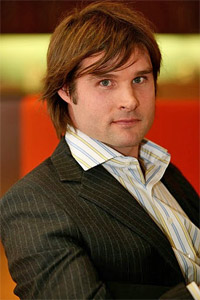
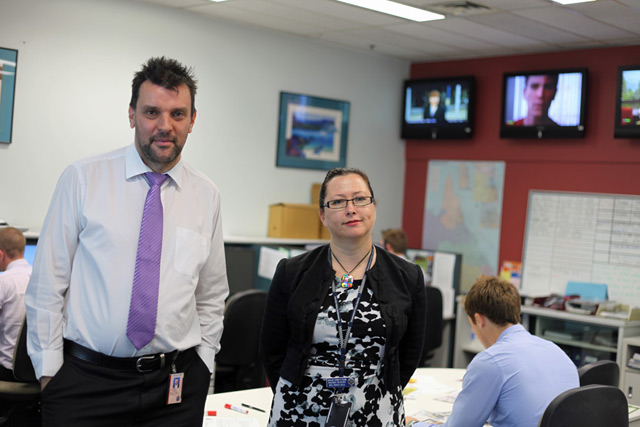
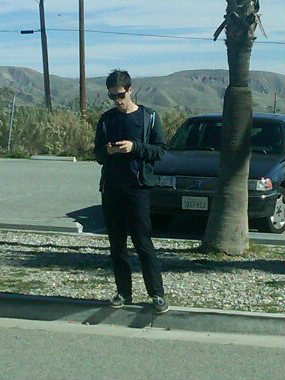
The customer, Tim Levinson [pictured], manager of Sydney-based hip-hop music label Elefant Traks, claims to have experienced price hikes of up to 1000 per cent on the social network’s self-serve ad platform.

Levinson has spent around $10,000 on Facebook advertisements in the last two years; roughly $100 per week, using the site’s pay-per-click model.

In late July, he wrote a concerned email to Facebook’s ad sales team, noting that the pay-per-click rates had gone “inexplicably through the roof” – from $0.50 per click to as much as $5. The Elefant Traks manager – who performs under the MC name Urthboy, and is also a founding member of popular Sydney hip-hop group The Herd – noticed in July that the estimated cost-per-click suggested by Facebook’s self-serve ad system wouldn’t budge on its ‘suggested bid’ amount, regardless of whether he was bidding on popular – and therefore, more competitive and expensive – keywords such as ‘triple j’ and ‘bliss n eso’, or significantly less popular terms such as ‘sydney underground rap’.

“I run a music business where a click results in an actual ‘sale’ only a certain percentage of the time,” he wrote in the email. “This is consistent across the board. The art is increasing that percentage through clever targeting. There is no way that $2 per click is value for money, let alone $3 or $4. There is no way that I gain useful information about the best keywords for targeting people who actually buy our product when the fee per click is the same, regardless of the targeted groups.”

It took two weeks for a Facebook employee to respond. In the month of July, Levinson had been charged between $25 and $71 each day. On August 5, “Josie” from Facebook’s ‘Online Sales Operations’ team wrote back and explained how the pay-per-click system worked, despite Levinson having used the ad platform without problems for two years. His concerns remained, so the email conversation continued.

For the full story, visit SMH IT Pro.

The Australian story: Hillsong Music Australia, October 2011

November 1st, 2011

A short feature for The Australian’s arts section about Hillsong Music Australia, the record label arm of the Hillsong Church. Excerpt below.

The power in grooving for God

[Photo above: Hillsong Live plays at the Sydney Entertainment Centre in December. Thousands of fans attend Hillsong's conferences and live album recordings each year. Picture: Trigger Happy Images Source: Supplied]

The crowd roars as the lights dim. All eyes are focused on the stage, where smoke obscures the silhouetted figures. Four guitarists, four singers, two keyboardists, a drummer and a dozen-strong choir break into song. The sound is loud and clear. A boom operator swings a camera across the front rows; its images are fed on to three screens, which also list the song’s lyrics in a huge white font.

The visual aids seem superfluous, though, as most know these songs by heart. Once the strobe lights disperse at song’s end, one of the singers asks: “Does anybody love Jesus here tonight?”

It’s Friday night at the Brisbane campus of the Hillsong Church, yet the production values wouldn’t be out of place at the Brisbane Entertainment Centre, about 25km away. About 3500 worshippers surge through these doors each weekend for services on Friday nights and Sunday mornings. The first third of this 90-minute service is more rock show than sermon: there are about 600 people in attendance tonight, all grooving on the spot to the rhythm section, hands held aloft in praise, voices singing, “Our God is greater than all”.

All the musicians on stage are volunteers, as are the sound and lighting technicians. But unlike other live music venues across Brisbane, there’s no pursuit of a pay cheque. Instead, we’re witnessing musical expression in search of divine approval.

After the band leaves the stage, an advertisement for Hillsong’s annual live album recording appears. This year, the recording takes place at Allphones Arena in Sydney, where 15,000 people are expected to attend. Hillsong Music Australia manager Tim Whincop calls the recording — to be held this Sunday — “an extension of our church services”.

“With so many services across a weekend, we don’t often get chance for our whole church to worship together at the same time,” Whincop says. “Our gathering at Allphones Arena will allow us to achieve this, and we will take this opportunity to record our next worship album.”

Since its first album in 1988, Hillsong Music has become one of the most successful independent record labels in Australia. According to Whincop, the label has sold more than 12 million records worldwide, and more than one million records in Australia. It has 21 ARIA-certified gold records to its name, 11 certified gold DVDs and one platinum CD: the 1994 live album People Just Like Us, which sold more than 70,000 copies. Yet, apart from when it pops up in the charts a handful of times each year, the label exists outside the nation’s mainstream music industry.

Hillsong Music emerged in 1983 out of the congregation at the Hills Christian Life Centre in Baulkham Hills, Sydney. Whincop says its music interests have grown from “a small team of passionate people to a group of hundreds of singers, musicians, songwriters and production volunteers” based at three campuses in Sydney, one in Brisbane and 12 extension services held in venues including bowling clubs, universities and cinemas.

Hillsong Music Australia — a department of the church — employs 17 full-time staff.

Its artists and repertoire have little in common with other labels. Where a company such as Dew Process in Brisbane has a diverse roster of artists, such as Sarah Blasko, the Panics, Mumford & Sons and Bernard Fanning, Hillsong has just three bands on its roster: Hillsong Live, Hillsong Kids and United, the church’s best known “praise and worship band”, which was founded in 1998 and has 13 albums under its belt. Like the Hillsong Live series, United releases an album each year. The label’s next release has a Christmas theme.

For the full story, visit The Australian. [Note: you may have to register for an account to read the full article, as News Limited has imposed a paywall as of October 2011]

Interviewed by Bianca Valentino about freelance journalism, October 2011

October 31st, 2011

Brisbane-based music journalist and zine maker Bianca Valentino has posted a long interview with me on her blog, Conversations With Bianca.  Here we speak about freelance journalism, interviewing, and goal-setting. Excerpt below.

Interview: Andrew McMillen on Freelance Journalism In Australia, Writing & Interviewing

To me Australian journalist Andrew McMillen is without a doubt a success. His work has been published in/for Rolling Stone Australia, The Weekend Australian, QWeekend, Mess + Noise, The Vine, Triple J Mag, The Courier-Mail, Australian Penthouse, Gamespot, BrisbaneTimes.com.au and Junior. Andrew has managed to make freelance journalism in Australia pay the bills, not an easy task! Here Andrew and I discuss interviewing, challenges facing freelance journalists in Australia, his career goals and aspirations as well an insight into how he’s made writing a full-time gig. I give you a chat with two writers that deeply care about their craft…
I get a little nervous before my interviews, just a little. Good nerves though I think.
ANDREW MCMILLEN: Ha, you know Neil Strauss told me the same thing which I think is fascinating because he’s pretty much at the top of his game yet he still feels that way. He told me it is because of the expectations that he puts on himself to do the best interview that that person has ever done. Obviously if you are talking to some of the most famous people in the world then that is a pretty tough ask most of the time.

Do you get that way yourself?
AM: Yeah, in the moments leading up to an interview. On the phone it’s usually worse because of that anticipation – you’re walking around in the morning or whenever it is and you know it’s coming up ’cause it’s in your schedule and you know you’ll be fine once you start doing it but it’s just the planning and waiting that increases my anticipation for it. Once you’re actually in the moment I find that you’re fine.

There have been moments in my interviewing career where I have had almost a constant anxiety attack throughout the whole interview and then because I wasn’t in the moment when I got off the phone I was like, damn! I wish I hadn’t been so worked up I didn’t see the opportunity to ask an awesome question.
AM: Do you think that came down to a lack of preparation on your part?

No – I was suffering from panic attacks and anxiety at the time – I do more research than anyone else that I know for my interviews and with a lot of people I interview I have long-standing relationships and friendships I’ve built up with them over our careers, sometimes a decade or more. At times when I’ve done interviews I get an almost out of body experience or it’s almost a trance like state. I can’t quite explain it. I’ve had some amazing experiences and connections interviewing. I really, really care about what I do.
AM: Yeah, wow! For me a big part of it for me is being present in the moment. You’ve got your list of questions in front of you that you want to get through but you should be willing to go with what they want to say and change in direction if need be. I’ve done interviews where I have lots of stuff prepared but then I only get to ask three or four questions and the rest of it is made up on the spot because they go off on some tangent which interests me and then I push them on that and go down an entirely different path. Some of those interviews have been some of the most enjoyable interviews I think, the ones which don’t go how you planned at all. I think that comes down to being versatile and being able to change it up on the spot.

I’ve had some interviews where I’ve had a list of 50 questions and pretty much not even asked one of them. I also have notes on hand as well as questions. I did an interview with Dr Know from the Bad Brains – I’d loved that band for so long – once and when I started talking to him I felt it kind of fell apart. It was a really interesting interview for me where I learnt a lot from.
AM: It turned out good in the end though didn’t it?

Yeah in the end it did but at the time when I got off the phone to him I burst into tears – it’s the first and only interview that’s ever happened with. I thought I’d really failed. It meant so much to me because they were one of the first overtly spiritual hardcore punk bands and those two things mean the world to me. Reading the interview back though I realised it was awesome!
AM: I love that reflection of how you might not realise it in the moment but then you type it up afterwards and awesome stuff comes out, it speaks a lot about the person, it speaks a lot about your talent to get that kind of thing out of them. I like when people say ‘I’ve never told anyone else before but…’ and then they tell you.

That makes your heart stop a little and you’re like ‘hell yeah!’
AM: [laughs].

I wanted to clarify, is writing your sole work that you do?
AM: Yeah I’ve done it full-time since June 2009. Up until October 2010 I was doing a bunch of copywriting and web project management, client management stuff for a small business called Native Digital. I was doing that as well as journalism so I wasn’t fully concentrating on journalism. Since October last year my full energy has gone into pitching, researching, interviewing and writing – it was a real shift in my mindset because it wasn’t just me plugging away trying to get my name out someone else [Nick Crocker] was investing time, energy and to a certain extent their reputation in introducing me to other people. We’d have weekly updates and they’d really just push me with each passing day to make sure that I was getting better—more connecting, pitching harder and pushing harder. That was the real shift for me in 2009.

Since the start of last year Nick and I started this pitching spreadsheet where every time I pitched any kind of article to anyone – it could be an album review or a feature story – I’d track it in a Google Docs spread sheet so we could both see what was going on and what the response was and what stories were worth to me in a money sense. That was a business management strategy that Nick employed to get me to be more accountable for my actions so that I could see on a daily basis what I have on, what I’ve earned and I can see how it’s changed between now and six months ago. If I look back from now to Feb 2010 the changes are just ridiculous. I was totally green back then in terms of the stories I was pitching and the relationship I had with editors. Now it’s at a much more advanced level because I have those systems in place and I’m accountable and keep pushing harder. That relationship with Nick has been a massive part of why I am where I am.

I’ve had a few conversations with Nick where he has encouraged me. I remember our first chat he asked me why I hadn’t started a blog yet. I told him I was waiting for this or for that and he told me there will never be a perfect time and to just start doing it.
AM: He is incredible in that way. He’s started several businesses, he has that entrepreneurial spirit in him obviously but he even applies all that stuff to non-business things. He had this blog called Way Cool Jnr for a couple of years that he used to push his ideas about the music industry just for the hell of it. He wasn’t getting paid for it, it was for free. It became one of the most popular music blogs in Australia for some time. I took over editing it last year and I did it for a while but I stopped that recently because I can’t give it the time it needs which is a shame. That brand, that blog called Way Cool Jnr had a good name for itself and it just shows you can start a blog and it can have an impact even if it’s not for a business purpose. I have my own blog which I’ve had for a couple of years and it was cool to have that inbuilt audience from Way Cool Jnr.

For the full interview, visit Bianca’s blog. You can find her on Twitter at @BiancaValentino, too. Thanks for the interview, Bianca.

A conversation with Ryan Holiday: blogger, former marketing director of American Apparel, soon-to-be author; October 2011

October 24th, 2011

Ryan Holiday is one of the most influential people in my life.

His blog, RyanHoliday.net, is one of the most valuable online resources I know of. This is a statement that I know will make him blush, because Ryan is a modest guy. I know this because when I first approached him for an interview in January 2010, he deflected my questions – which were extremely detailed, potentially to the point of exhibiting stalker-like behaviour. He wrote that when he felt he deserved an interview, he’d give it to me; he also said that mine was “the most in depth, investigative email I’ve ever gotten”.

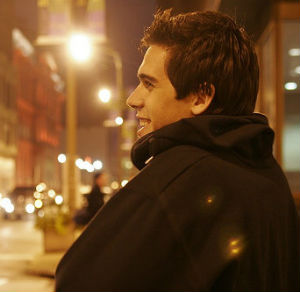
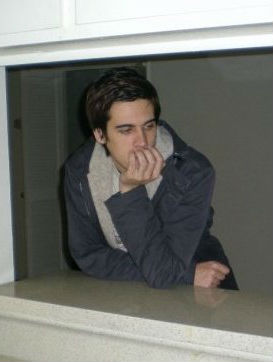
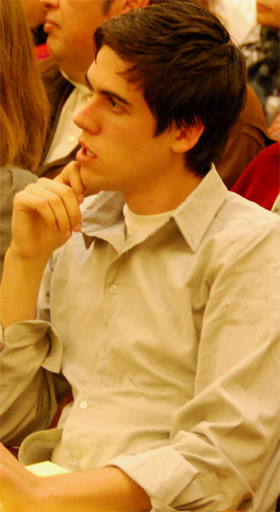
At 24, Ryan [pictured right] is a year older than me. I’ve viewed his blog as a kind of counsel since I first became aware of his work. His thinking and writing has, in turn, shaped my thinking and writing. It is fair to say that I wouldn’t be on the path I am now if I hadn’t been closely studying another young male on the other side of the world, fearlessly kicking down doors in search and pursuit of his goals. For a couple of years, Ryan’s ambition, persistence and confidence all directly influenced my day-to-day thoughts and actions. Which is another statement that will make Ryan blush, because it’s a pretty fucking weird thing to type, let alone think.

Ryan first attracted my attention by attracting the attention of someone who I was closely studying at the time: Tucker Max, the American blogger-turned-author who is best known for his 2006 book I Hope They Serve Beer In Hell and the 2009 film adaptation of the same name.

Ryan wrote a review of Tucker’s website – which, at the time, was a collection of stories about Max’s drinking and sexual exploits – for his college newspaper, and sent the link to the author. Soon after, Max posted the review on his message board, which was a fairly popular corner of the web; it was deleted a couple of years ago. I immediately became interested in figuring out who Holiday was.

That review led Tucker to hire Ryan as an intern at his company, Rudius Media (now defunct). It led Ryan to work with the acclaimed author Robert Greene as a research assistant on the strategy book The 50th Law, co-written with rapper 50 Cent and released in 2009. And it led Ryan to be hired by the clothing manufacturer American Apparel, where he worked as Director of Marketing for a couple of years. He still works as an advisor to American Apparel, but moved from Los Angeles to New Orleans in mid 2011 to work on a book project of his own.

Since January 2007, Ryan has consistently used his blog as a platform for discussions about writing, running, online PR, media, philosophy, and stoicism, among other topics. I’ve consumed every word that he has written since his first post, ‘The Business Of Running‘. I often re-read his posts multiple times, which is something I rarely do online. That first post remains a valid starting point for understanding Ryan’s way of thinking and writing. I’ll quote the opening paragraph below.

“I run 5 miles every night. It’s where I go to digest my day, hash out the multitude of information that’s been poured into me in the last wild six months or so, and to try and condense it down to some sort of cohesive strategy to live my life by.” – Ryan Holiday, January 31 2007

When I visited the United States for the first time with my girlfriend Rachael in September 2010, I asked to meet up with Ryan in Los Angeles. We met at a burger joint on Melrose Avenue and talked for an hour or so. It was a huge thrill for me to meet a guy who’s been something of an internet hero to me for nearly five years. Rachael didn’t really understand why it was so important to me at the time.

Neither did I, really, now that I think about it. All I knew then, and know now, is that Ryan Holiday is one of the most influential people in my life. It’s an honour for me to publish the below email interview.

Andrew: When you wrote that review of Tucker’s website, what was the intended outcome?

Ryan: I’m not sure if I ever told anyone this, but I’d noticed that Tucker tended to link to or write about any press he got (at least back then) and so I thought, “I’m a writer for a college newspaper, why don’t I try it”? It didn’t really go much further than thinking about it at that time. Then a couple weeks later I had the opening line of that piece floating around in my head: “If Hunter S Thompson had read this site, he probably wouldn’t have killed himself.” I figured I had something and eventually sat down and wrote it.

So the intended outcome was that I’d send it to him and he’d link to it (I reposted the article on my blog) and that would be it. But the reaction totally blew my mind. Within about 20 minutes he’d responded and… I went back to my Gmail and found it:

From: Tucker Max

[November 28th, 2005]

“Jesus Christ. Dude, that is fantastic. Seriously, I am awed by your grasp of me and my material. I am going to post this as THE example of a great review of me and my work.”

It’s funny to me now because that reaction has become a pretty routine occurrence for me since then. I obviously thought I wrote a pretty good article but I was still reluctant to send it off. Is he going to like it? Did I go overboard? What are the chances of it getting a response? Turns out I had nailed the target and didn’t quite understand the extent. That seems to happen a lot to me. You’d think I’d anticipate it by now, but still other peoples’ reaction (positively, anyway) tends to catch me by surprise.

What did that response change for you? Was that one of those ‘Fight Club moments‘ I remember you writing about years ago?

I think it was the opposite of one of those moments. I think of a Fight Club Moment as something that breaks you down and demolishes the pretense and bullshit entitlement you have in your life. This wasn’t that. It instilled a lot of confidence in me. It was like, “ok, I am better than I knew. That’s awesome, maybe I can build on this.”
What happened next between you and Tucker?

I think after he had the publisher send me a copy of his book to review, which I did, and after it was published I asked for his thoughts on the writing. He went over it on the phone with me about ways I could improve my voice and tone.

I stayed in touch—I think in my post about advice a couple weeks ago I called this ‘staying on the radar’, and that’s basically what I did. I would pop in and ask questions, for advice, send links etc. Any excuse I could think of to keep that connection alive. Only an idiot would waste that chance.

A year or so later I was in New York, where he was living and I told him I wasn’t looking for a job, or a salary or a handout but I had some thoughts on ways I could contribute to his company, Rudius Media. After the meeting, he offered me an internship, which 6-8 months later become a job. But it was all a very fluid thing, like I was saying.

[Andrew's note: that post he mentioned'Advice to a Young Man Hoping to Go Somewhere (Or Get Something From Someone Successful)'is an absolute must-read.]

To me, the act of writing the review and showing Tucker is a pretty solid example of figuring out what you want, and pursuing it accordingly. Correct me if I’m wrong, but didn’t that lead to him offering you a job, you quitting college and moving to LA, and then working for American Apparel?

Haha, I mean you pretty much figured out exactly what I was doing or trying to do with the last question, probably with a better sense of clarity than I really had at the time. But yeah, it was the door that ultimately led to the opening of all the other doors. I have him to thank for all of it. When I see a path to an opportunity–like a lane in basketball–I sort of put my head down and the next thing I know I’m through it and it took me somewhere I didn’t totally anticipate.

With the Tucker thing, I knew I wanted to one day be a writer like the kind of writers he was working with at the time – I’d known this since I first saw his sites in high school – so I did that article, and then I was working for him, and then I was working for the people he was working with, and then the people they were working with, and so on. I don’t think any of them every solicited me for a job either so much; it was just that I was around all the time, doing stuff and offering to do stuff, and then it eventually became official.

How did you come across Robert Greene’s work? Was it Tucker who first showed you?

Yeah, I’d heard of the books obviously but I think Tucker recommended The 48 Laws of Power so I read it. I marked up my copy so much and had a million questions to ask Tucker.* Then the first time I met him, Tucker walked me to a bookstore and bought me The 33 Strategies of War and said, “if you’re going to work for me, you’ll need to have read this.” I think that’s how I found out I got the job. All I took from that exchange was: “I better read this book on the plane ride home and know it backwards and forwards.”
* Ryan’s sidenote: that copy of The 48 Laws is priceless to me. Someone stole it out of my office at American Apparel. I was fucking distraught. It makes no sense because Dov [Charney, AA chairman and CEO] has a million copies laying around. Why would they want my marked-up personal copy?

How did the opportunity to work for Greene arise?

The three of us – Tucker, Robert, and I – had lunch in L.A. a few years ago and it kind of arose from that meeting. Although it almost didn’t, because I was so nervous I accidentally messed up when I gave Robert my phone number.

I have a suspicion that working on The 50th Law might have inspired a sense of validation, given your regular documentation on your life via the blog, and your personal reading and research via your Delicious account. Am I right, or way off?

I mean, it was very cool to have the privilege to be allowed to peek inside of project like that. But I don’t think validating is the right work. What it was was educational, from top to bottom. Researching for someone–particularly someone like Robert–crazy because you get pointed in all these directions that you’d never have gone by yourself, given a very firm objective to gather from that direction, and a tight deadline with which to do so. When you read or research for yourself, it is kind of this wandering, directionless thing. For the book, it was like getting a crash course in a million different subjects. I was interested in all of them so I would mark down the stuff I would want to go back and look at later.

So it’s funny, when I see the book, it reminds me of loose ends I still need to tie up for myself and am interested in looking into.

Your stoicism guest blog for Tim Ferriss in April 2009 attracted a lot of attention. What did you get out of it? What did you learn from the experience?

More than anything, it helped me clarify my thoughts. Tim is awesome and he’s got a very impressive commitment to expanding the scope of blog all the time. He starting writing about productivity and got all these people hooked and the next thing you know he’s totally revolutionized how they think about health and science. I was lucky that he gave me the microphone for one of those digressions.

I got quite a few new readers out of it and he also was gracious enough to give me two more chances to write about similar topics. ['The Experimental Life: An Introduction to Michel de Montaigne', October 2010; 'Looking to the Dietary Gods: Eating Well According to the Ancients', July 2011]

What you learn in a setting like that is how to tailor your message to different mediums. When I write for my site, I can be as self-indulgent as I want. When you write for someone else or on a bigger platform, you have to be much clearer and you have to catch them right from the beginning. They’re not YOUR readers, so you have to meet them where they are if you’d like to bother listening to your message. At the same time, it taught me that I don’t want to have to perform like that all the time which kind of freed me up to not have to chase acquiring that audience for myself. If didn’t learn that, I’d be spend all my time working to build something that at the end of the day, would make me miserable to have.

Could you tell me about your working space?

When I was in LA, I had a big office with 5-10 employees at any given time at the American Apparel factory. I had an office at my house at well.

Now, in New Orleans, I sort of went in the completely opposite direction. I’m in a studio apartment so I don’t work much there. I like working and reading and writing out of the library at Tulane or, I belong to an old school athletic club in the French Quarter that has like a library/parlor work space that I use.

On Mondays, I try to do all my administrative stuff—conference calls with employees, meetings, paperwork and then during the rest of the week I respond to AA emails in the morning and again at night. The middle of the day is mine. I try to write, go to the gym (run, box or swim), and read—in that order.

I still have the same quote, the one from Marcus [Aurelius], above my desk:

“When you wake up in the morning, tell yourself: The people I deal with today will be meddling, ungrateful, arrogant, dishonest, jealous and surly. They are like this because they can’t tell good from evil. But I have seen the beauty of good, and the ugliness of evil, and have recognized that the wrongdoer has a nature related to my own – not of the same blood or birth, but the same mind, and possessing a share of the divine. And so none of them can hurt me.”

The other quote above my desk is from Seneca:

“Some lack the fickleness to live as they wish and just live as they have begun.”

In November 2007 , you wrote that “you have to be happy with you”. I understand it’s a work in progress, but are you happy with you in October 2011, nearly four years later?

Happier for sure. It’s not so much that it’s a work in progress as it is a process. I forget who said it, but someone smarter than me said that “happiness ensues, it cannot be pursued”. And I think it was Aristotle who said that happiness was the result of excellence.

Either way, I take that to mean that you’re happy when you are doing whatever it is that you’re doing, well. So: are you doing well at your career? Is your relationship the best it can be? Are you handling adversity or a difficult experience with excellence? Are you behaving honorably? Etc etc.

These are all opportunities to excel in the moment and cumulatively these moments create a sense of happiness. I’m fucking 24, there’s no way I’m doing well all the time at everything but I do feel I am getting better and more consistent.

I want to close on a cliched question, which I hope you’ll humour me on. What advice would you give to yourself five years ago, when all you really knew about yourself was that you ‘wanted to one day be a writer like the kind of writers Tucker was working with at the time’?

Fucking breathe. It’s not as precarious as you think it is. There’s no need to be anxious. See, it’s really easy when you’re that young and you don’t have a safety net to thing you have to cling to everything for dear life, everything is a crisis, everything is mission critical, nothing else can be the priority.

When you’re in that space, it’s really hard to have the patience and compassion or even empathy for the other people in your life because you’re fucking fight or flight all the time. In reality, it’s not as dramatic as all that. Taking a more relaxed and accepting approach might mean losing a couple opportunities here and there but down the road, you end up turning down plenty of those anyway, so what does it matter if a couple never arrive?

If I told myself this and really listened, I feel like I’d have been happier along the way and be able to be prouder of how I behaved and the decisions I made.

++

For more on Ryan Holiday, visit his blog. Hopefully he’ll soon post some news about the publication and release of his first book.

[Edited on November 18: the first news of Ryan Holiday's book has been announced.]

GameSpy story: ‘The Health of the PC Gaming Industry’, October 2011

October 24th, 2011

A story for GameSpy.com; my first for them. It’s a feature split into two parts: one to discuss the retail side of PC gaming, and one for digital.

Excerpts from both halves included below.


The Health of the PC Gaming Industry Part 1: Retail

Dying or developing – just how is the PC doing?

If you want to make a hardcore gamer roll their eyes in exasperation, tell them that the PC gaming industry is dead and/or dying. Variations on this well-worn statement have been circulating for years, and it’s never been particularly true. In 2011, it’s less true than ever: thanks to digital distribution, more people are buying and playing PC games, so it’s no surprise that developers and publishers continue to invest heavily in the space. Their efforts don’t necessarily have the goal of extracting gamers’ wallets from pockets, either: the burgeoning ‘free to play’ model is being taken seriously by publishers like EA and Activision. And though the hardcore among you might be loath to admit it, those who choose to while away their hours playing Facebook games are technically PC gamers, too.

All told, PC game sales accounted for $16 billion in revenue worldwide last year, according to research conducted by DFC Intelligence on behalf of Nvidia. If DFC’s forecasts are to be believed, PC games will eclipse console game sales in 2014, and incur a sense of deja vu among those gamers old enough to remember a pre-console period where the PC ruled the emerging market for home video games.

In this two-part feature, GameSpy will examine the health of the PC gaming industry across two fronts – retail and digital – in an effort to dispel those pesky death rumours once and for all.

Bricks and Mortar
When compared to the reams of laudatory material that have been dedicated to praising the virtues of digital distribution platforms, it’s easy to overlook the roots of PC gaming: the humble bricks-and-mortar retailer, a place where chunky, colourful cardboard boxes containing CD-ROMs once received pride of place on shelves a few short years ago. Though the cardboard boxes have been downsized and the CD-ROM technologically superseded, Steve Nix counters that there’s still a significant market for over-the-counter sales of PC titles.

As general manager of digital distribution at GameStop, the world’s largest video game retailer – who employ some 17,000 full-time staff, and whose annual earnings in 2010 were $9.47 billion – Nix is well-placed to survey the PC gaming landscape. It also helps that he spent four and a half years at id Software, as director of business development and later, director of digital platforms. He’s been with GameStop since February 2011. “Many years ago, PC games were the largest category for GameStop,” he says. “But PC retail sales didn’t look good over the last ten years. There’s been a steady decline. As a PC gamer first and foremost, that always was very concerning. In the early 2000s, I was wondering, ‘What’s going to happen to the PC? Is it going to become completely extinct at some point, as a gaming platform?’”

We now know that the answer to this question is a firm ‘no’. At the time, Nix reflects, “my strong belief was that we were seeing a user experience problem with PC games in a retail box, versus console games. Really, if you think about the fastest, easiest way for people to get a game and start enjoying it, it’s the consoles. They offer a really nice experience: you get your game disc, you pop it in, and you’re playing in under a minute. Whereas, by the mid-2000s, for PC gamers, games had gotten quite a bit larger. Before the DVD, you’d have nine CDs for some games. And then you might have to search the web for the latest patches. If you’d done everything correctly, maybe a couple of hours later, you’d actually be playing the game after all this work. Really, I think that a lot of customers who were PC gamers started transferring to the consoles just because the user experience on the PC was poorer at that point,” he reflects.

According to Nix, all GameStop saw at that point was “the decline of the physical PC box sales, so they decided to focus on the console business. But fortunately, in the last few years, some of the leaders in the PC digital space have been more public about going out with their numbers. They’re seeing amazing growth. That information started to get back to GameStop, who did some extensive research and said, ‘the PC market is thriving, but it’s just shifted online. It makes sense for us to be a major player in the PC digital space’.” The company will invest $100 million in digital initiatives in 2011, according to a report in March. We’ll return to Nix and GameStop’s recent forays into the online marketplace in the second part of this feature, which focuses on the digital market.

To read the rest of part 1, visit GameSpy. An excerpt from part 2 follows.

The Health Of The PC Gaming Industry Part 2: Digital
There’s money to be made in them thar online hills.

In part one of this feature, we examined the boxed-retail past that many gamers have abandoned. Now we take a microscope to the digital-driven future of PC game distribution, which many gamers have already embraced. Like downloading music, downloading games for your PC makes a shitload of sense: it’s fast, convenient, better for the environment, and you can do it in your underwear and no-one will ever know. Sneaky and classy.

Where did all the money go?
Half to 70% of the $4 billion market for downloaded PC games are purchased through a platform named Steam [pictured below right], according to an article published by Forbes earlier in 2011. (Steam operator Valve refused to comment on the accuracy of this claim.) Though Steam was a right royal pain in the ass when it launched in 2002 during the beta period of Counter-Strike 1.6 – any gamer who recalls that frustrating time will no doubt concur – using the software is now as akin to the average PC gamer as breathing and circle-strafing. It’s the gaming equivalent of iTunes. Both are clear market leaders; both maintain an enormous brand loyalty worldwide.

That same Forbes article quotes North American market research firm NPD Group as stating that, in 2010, “sales of PC games via download outstripped sales of boxed games in stores for the first time”. When I question Valve VP of marketing Doug Lombardi on the significance of this outcome – was this always a goal on the agenda, or happy coincidence? – he cryptically replies, “Our goal has always been to deliver a higher quality of service to the customer, regardless of where or how they purchase the product.” Perhaps enormous consumer uptake and financial success was always going to be a consequence of aiming to develop the market’s best digital distribution platform.

Lombardi makes it clear that Valve still values traditional retail and healthy competition in the digital distribution market. “We don’t advise folks to skip retail, or other digital outlets,” he says. “Every publisher and developer should consider the widest possible distribution possible.” I’m curious as to how he pitches the service to prospective Steam clients – from indie developers, to the world’s biggest publishers. “We start with the 30 million-plus gamers connected to the service, the instant access to data on their Steam sales, and the increasing number of Steamworks features we offer free of charge such as matchmaking, anti-piracy, support for in-game DLC, and more.” Also of note is Lombardi’s eyebrow-raising claim that “Steam has grown over 100% year-over-year for the past six years.” A userbase of 30 million is a fairly compelling reasoning for both developers and publishers to do a deal with Steam, I’d imagine.

Game developers such as Tripwire Interactive are among the legions of Steam supporters. The Roswell, Georgia-based studio – creators of Red Orchestra 2 and Killing Floor – have been fans since they signed up in 2005. “And we still are”, says vice president Alan Wilson. “They still have that Valve sense for what the people buying the games actually want, will give it to them at a good price, good customer service – and they treat the developers/publishers right as well. They’re always easy to work with. There are other good services out there – D2D, GamersGate and so on. But until Steam either starts getting it all wrong, or the others find some miracle formula, Steam will stay king of the pile.”

To read the rest of part 2, visit GameSpy.

AusIndies.com.au guest post: ‘Artist patronage’, September 2011

September 30th, 2011

A guest post for AusIndies.com.au, the online home of the Australian Independent Record Labels Association (AIR). Excerpt below.

Artist patronage: What does it mean to be a fan in 2011?

If you tell me you’re a fan of The Jezabels or Kanye West in 2011, what might you mean by that?

Let’s assume that you mean that, at a base level, you enjoy listening to music written, recorded and performed by a particular artist or band. You identify with their music, or lyrics, or image, for whatever reason. And so you elect to align yourself with this artist or band by listening to their music, ‘liking’ them on Facebook, telling your friends about their music, following them on Twitter, buying a ticket to their nearby shows, buying a t-shirt advertising their name, and perhaps, buying their music.

The latter three are optional, nowadays; the last one, especially so. In 2011, buying music is like the ‘maybe’ you select on a Facebook event invite so as to not offend your friend, even though you immediately know you don’t want to attend. You know that you can buy an artist’s music, but you know that you can just as easily hear their music without making a transaction. You know that YouTube, streaming services and torrents are the most efficient methods of listening to music without having to pay for it.

In 2011, it’s easier than ever to be a fan of an artist without ever parting with your money.

This is a problematic situation for all but the biggest artists, many of who were already established before Napster smashed the piñata with a sledgehammer and left the entire music industry scrambling on the ground for pennies.

It’s a bizarre situation where you can know all the words to your new favourite band’s debut album and catch their buzz-driven set during summer festival season without ever making an explicit donation into their wallets. They’ll get a performance fee from the tour promoter, of course, but generally speaking, the road to the Big Day Out is paved with poverty and hardship for every artist without wealthy benefactors supporting their art.

Historically, this role has been inhabited by the record label: the wealthy benefactor who provided cash for talented musicians so that they might grow and mature as songwriters and performers. So that they might sell more records, play larger venues, and eventually provide a return on the record label’s initial investment. Labels were banks, signing mortgages to artists who might someday be able to own the house outright.

Labels are banks, still, but they’re no longer the only service provider. Canny media platforms and service providers like Bandcamp and Topspin can become surrogate record labels for artists by distributing and marketing their music on a worldwide basis. Canny artists, too, can manage their own affairs, if they’re willing to invest significant attention into the business side of creativity. A third – and often overlooked – option exists: fans as artist patrons.

We Are Hunted co-founder Nick Crocker defines patronage as, “One that supports, protects, or champions someone or something, such as an institution, event, or cause; a sponsor or benefactor: a patron of the arts.

This notion of artist patronage is what we need to foster among the next generation of music fans. That music is valuable, because talent isn’t free.

To read the full article, visit AusIndies.com.au.

NYWM 2011: A conversation about freelance journalism with John Birmingham and Benjamin Law, May 2011

May 27th, 2011

Embedded below is footage of my first live Q+A event as Queensland ambassador for National Young Writers’ Month 2011: a conversation about freelance journalism with John Birmingham and Benjamin Law.

The 90 minute conversation took place on May 17, 2011 before around 100 young writers at the Metro Arts studio in Brisbane City. I’ve included some background information about the event below. Scroll down to watch the conversation via the embedded Vimeo clip, or read the transcript underneath. All photos taken by Christopher Wright. Visit Facebook to see the full set of photos.

From left to right: Andrew McMillen, Benjamin Law, and John Birmingham.

May 17: Talking freelance journalism with John Birmingham and Benjamin Law

Under 25 and interested in a career in freelance journalism? Ahead of National Young Writers’ Month (NYWM) 2011 – which runs from June 1-30 – two of Brisbane’s best-known (and best-regarded) freelance journalists will discuss how they’ve built their lives and careers around writing and publishing words. Given the focus of NYWM, this free 90 minute session will be targeted toward aspiring (and current) writers and journalists under the age of 25.

John Birmingham (@JohnBirmingham) is the author of the cult classic He Died With a Felafel in His Hand and, more recently, thrillers such as Without WarningAfter America, and the Axis Of Time trilogy. He also wrote the award-winning history of Sydney, Leviathan. He began his writing career as a freelancer for national magazines like Rolling Stone and Australian Penthouse. He currently freelances for The Monthly and The Weekend Australian, among others. He also maintains several weekly columns for Fairfax Media and his own blog, Cheeseburger Gothic, where he has a built-in audience of Birmingham-fanatics affectionately nicknamed ‘Burgers’.

Benjamin Law (@MrBenjaminLaw) is a Brisbane-based freelance writer. He is a senior contributor to frankie magazine and has also written for The Monthly, The Courier Mail, Qweekend, Sunday Life, Cleo, Crikey, The Big Issue, New Matilda, Kill Your Darlings, ABC Unleashed and the Australian Associated Press. His debut book, The Family Law, was released in 2010 via Black Inc. Books. He’s currently working on his second book, a collection of non-fiction looking at queer people and communities throughout Asia. It has the working title of Gaysia. For more on Benjamin, visit his website.

Andrew McMillen (@NiteShok) – the Queensland ambassador for NYWM 2011 – will facilitate the session. He’s a freelance journalist whose work has been published in Rolling Stone, The Weekend Australian, The Courier-Mail, triple j mag, Mess+Noise, TheVine.com.au and IGN Australia. He has been a fan of both Birmingham and Law for quite a long time, and was thrilled to interview them both in 2010 for The Big Issue and The Courier-Mail, respectively. For more on Andrew – who will do his best to contain his excitement at being seated on the same stage as these towering literary giants of Brisbane – visit his website.

Embedded footage below. Please note that the vision does drop out a few times throughout the video due to battery changes and camera file size restrictions. Besides one small section (1-2 minutes long), the audio from the sound desk remains consistent throughout, however.

Q+A transcript as follows. Andrew + audience questions and comments are bolded; John and Ben’s comments as labelled.

Thank you for coming. My name’s Andrew. This, as you know, is the first Queensland National Young Writer’s Month event. And the purpose is to get young people writing throughout the month of June. These events are to get people thinking about writing, maybe to think about start setting goals, and registering in the National Young Writer’s website. And then throughout June, start writing and talking about writing with the people who have joined that community.

Tonight, we’ve got two guests. To my left is Ben and to my far left is John. The median age for this room tonight is about 20 years; 20.38 I think is the actual figure. I wanted to begin by asking these two gentlemen: what were you doing when you were 20?

Ben: It’s a good question. My math is pretty munted, or at least my capacity to do math is pretty messed up. So I actually did the math and I figured out that I was between 20 and 21 from the years 2003 to 2004. I hope most of you were born back then. At that stage I was freelancing. Frankie Magazine didn’t exist at that stage. I was doing an honours project, the funding for the honours project actually fell through so it was a good year. The honours project was supposed to develop the magazine in conjunction with QUT, and that didn’t happen. So I had to come up with another honours project very quickly.

I was balancing Centrelink, tutoring work at QUT. I was doing some freelance articles for The Courier-Mail, and I was doing graphic design work for the street press Scene Magazine, and I just started working at a bookstore as well. So I was doing a few odd things.

John, what were you doing at 20?

John: At 20 I had made the decision to write for a living, so I started doing that. I wasn’t making a lot. My first year as a freelancer I raked in… I think it was $134. Second year, $235, but I had decided I was going to do it and I would stick with it. I gave myself five years to make enough to feed myself, and keep a roof over my head.

And 20-21 was about the first year that I just blew everything else off and said ‘I’m going to sit down and write my way to a meal’. So my very first year of doing that, I worked out at UQ at Semper [student magazine]. I don’t know whether, with VSU, Semper is still out there, or whether it still pays.

Can a UQ student confirm if it’s still out?

[Audience] It’s still there, but no one reads it.

John: It’s a pity. It used to be really cool. And they paid $15, $20 a story; and occasionally drugs. So it was great. It was a really good way to start because it taught me how to make a deadline, usually with drugs.

Do you remember the first time you saw your name in print?

John: Yeah, it was really cool. It was supposed to be the first issue of that year’s Semper. I had tried to be a cartoonist and hit the brick wall of not knowing how to draw stuff but I did know how to do jokes. So I went into the mag and told the editors in early January or something, when they’d just taken over; ‘I’ll write you funny stories’. And the first story I pitched to them was about late night greasy-eating joints in Brisbane. This is in the days before the internet. That’s how long ago it was. There were three late night greasy spoons in Brissy at that point; late night being after 9pm. And these were the only places that were open.

There was Kadoo’s Belly Button up on George Street, which tasted as though everything had been lightly broiled within Kadoo’s belly button. Lady Di’s, which was a taxi joint, and which, like Lady Di, is sadly no longer with us. And the Windmill [Café], which I think still is. I went to the Windmill to try their wares, and got a big hot squirt of grease in my mouth from a veal and cheese. But I wrote that up, and I put it in.

In fact, it was… I didn’t write up the exact story that they wanted, because the night I was supposed to go out and do it, we had a party and one of my flatmates ended up spending six grand on hookers and blow. So I wrote that up instead. I got paid $15 for it, so I came out ahead. I thought, “Geez mate, that’s money for jam. I’m doing this the rest of my life”.

Do you remember the first time you saw your name in print, Ben?

Ben: There’s probably two stories to tell. The first story I was 16 years old and I had a subscription to Rolling Stone magazine and I thought it was just the best publication out there. It was either that or Juice, which doesn’t exist anymore. And there was an article about the upcoming referendum for Australian Republic and being a very, very earnest 16 year old, I wrote this impassioned letter to the editors of Rolling Stone about how unfair it was that I wasn’t able to vote about this issue that was very dear to my heart. And they took this letter and maybe out of charity, they made it letter of the month. So I saw my name in print and it was the very first time I’d written to a magazine. And I won a stereo. So it was my first byline, and it was a paid one as well. And it’s still the stereo I’ve got now. It actually works quite well.

The second story, when I actually wanted my byline out there, was for street press. It was for Rave Magazine, a music review. And I still remember that. That was so long ago now but I can still remember that jubilation of walking down the street and seeing my name.

John: It’s a big deal. The first time you see your byline, you might have been paid $10 for it, but it stays with you forever.

Ben: Totally, yeah.

Mine was in Rave, too. To backtrack a bit; when I was 20, which was three years ago, the only places I was writing for were Rave Magazine, and FasterLouder, the national music website. The first time I was published was in Rave. It was an indie [CD] review, probably for a local band who probably don’t exist anymore. I can’t remember their name.

My next question; how do people react when you say you’re a freelance writer, Ben?

Ben: It’s funny. I actually had this experience recently at my 10 year reunion. So I went to my 10 year high school reunion and the reactions were quite interesting, because you had to walk around with your name and your job underneath your name. I had ‘Benjamin – freelancer’. The opinion was basically split. Half the people asked me what I actually did, and were excited. “A freelance writer; you get to make your own hours, you get to chase stories that you want!” And the other half just looked at me with abject pity. They were like, “that’s not a job!” They didn’t say it, but their eyes totally did. And to be honest, I oscillate between those reactions myself.

John: Just let me say, Benjamin Freelancer is an awesome name.

Ben: Thanks, John! [laughs]

John: I’ve had the same thing. My writing, particularly the freelance work divides up into two eras: before Falafel, and afterwards. And afterwards my name, my byline became a commodity, and that was what people ended up buying rather than the copy. Before then, I was just a freelancer like anybody else.

And it actually shits me that that is the case, but it was just a commercial reality and I used to find exactly the same thing as you. Because I moved pretty quickly from the fringe of the street press towards the mainstream… you probably had this too. [I] ran up hard into the brick wall of this real belief within mainstream media that freelancers are the bottom of the food chain. They’re all fucking dilettantes. They can’t hold down a proper job. They can’t file. They’re really not good for much other than providing spack filler copy to fill up the holes in whatever publication the hardworking mainstream journalist is there for.

I used to resent that, and I still resent it. Even though now the situation is reversed. I’m still a freelancer but rather than be contemptuous, the mainstream writers that I know tend to be envious because they’ve now been there for 30 years. Their spirits are completely broken, and you know, they’ve got mortgages and kids and would rather actually have the freedom of freelancing, but with the ability to pay for those mortgages and children.

You both have the distinction of being published authors as well as freelance journalists. Do you identify with one more than the other?

Ben: I think they’re all part of the same thing for me. I see writing books… I wrote a memoir [The Family Law] and I’m currently working on a book of journalism at the moment. I see all of that as my job and certainly when I look at my schedule from day-to-day which is all colour coded so I know what I’m doing at any given moment. I’ve got ‘book’ in one colour. I’ve got ‘magazine work’ in another. I’ve got ‘planning for this upcoming chapter in my book’ in another colour. It all bleeds into each other for me. It’s all work.

John: Socially, the worlds are very different. When I mix with journalists – which I don’t do very often because they’ve got cooties – it’s a very different experience from mixing with people in publishing, which you tend to do at literary festivals and after contract signings and so on. That’s a very old-world way of doing business. It tends to involve long lunches and cocktail parties and late drinks, whereas journalists not so much. They are two very different worlds and yet in the course of a day, you might move between either one of them.

One of the things I mentioned is true of both these guys [gestures at Ben and Andrew], is that as a freelancer you need to be an absolutely ruthless time management freak. You need to divide your days up into little ice cube trays of time into which you pop one project or another. You might pop five cubes onto a book and four onto a feature article and two on a blog; save one for tweeting away, or something like that.

Within the course of the day it’s easy to move between those. There’s no real gear changes psychologically between writing a novel, writing a magazine piece or writing a column, because often the techniques are very similar. But once you actually engage with those guys on the coalface of the industry, they are quite different. Publishing is very social. It’s more like a cottage industry than anything else, even though it’s huge.

I should point out that if, at any point, you have a question, just put your hand in the air and I’ll try to notice. We have a mic hanging from the ceiling, but this is a very small room so that will also help your voice get projected.

Can I get a show of hands how many people here are studying journalism? [the majority of the audience raises their hands] Did either of you study journalism?

John: I stalked a girl into a journalism class once for a couple of lectures, and then they called security. But no, I didn’t. I did just the plain old classical arts degree. And I wouldn’t write off a journalism degree, because in my early years as a freelancer – particularly working for Rolling Stone, about whom I will tell you some stories downstairs when the microphones are off – I made some terrible mistakes because I hadn’t been trained properly. One of which ended up with us being sued successfully by neo-Nazis for defamation. How do you defame a neo-Nazi? Let me tell you all about it downstairs.

So I sort of wish I had had some instruction in a degree. But on the other hand; as a writer, a classical arts degree – a bit of ancient history, a bit of literature, bit a politics in my case – it was a great degree.

Ben, you did creative writing, I believe?

Ben: I did creative writing, or as a lot of my peers call it, creative shiting. And it’s funny; when I started doing creative writing over at QUT I think I was the third generation through. It was still a very new course. Creative writing courses in general were very new then. And I had the choice then in my mind between creative writing and a pure journalism degree. I just didn’t think I had the discipline to be a daily news journalist, so I backed off from that path.

The great thing about the course at the time for creative writing – which isn’t in place nowadays – is that because it was a course that was still embryonic and they needed to fill some gaps in terms of what it actually was, it borrowed a lot of units from journalism. So we had this really great balance between reading a lot of novels, learning about poetry, reading books, looking at narratives — long form, non-fiction – and also having to do incredibly rough news writing subjects that a lot of my fellow creative writing students hated.

“Here, write a novel; here, write a collection of poems”. Learning skills like newsworthiness, learning grammar… one of the best ways of learning spelling, grammar and syntax is through a journalism degree because they will not tolerate anything; just not tolerate sloppiness or bullshit, which is really great. And that really put us through the ringer and I’ve always appreciated those subjects that they don’t study anymore.

John: That’s a pity. I’ve done a few graduation nights at QUT and a lot of old-school writers are quite dismissive of those courses. “How do you teach this stuff in a classroom, it comes from the soul.” That’s bullshit. I was really impressed by the quality of the graduates coming out of those things, a little scary actually to an old dinosaur like me.

Ben: Even journalism degrees themselves; you talk to people [who grew up] in the mid-fifties onwards, and that was the time when journalism degrees didn’t even exist. So even a lot of them are sceptical of those degrees, but of course a lot of them end up becoming those journalism academics teaching anyway. So they buy into it too.

I studied Communication at UQ. I graduated in 2009. While it didn’t specifically help me with what I do now [freelance journalism] I guess it was more about writing on a regular basis. Writing assignments – and, like John said earlier, deadlines – are the lifeblood of what we do. Deadlines are really helpful.

Of those people who put their hands in the air before, could I get a show of how many are happy with what they’re learning so far in their course? [about half of those students raise their hands] About half, is that right?

Ben: You’re all going to the same university? Is there one university that isn’t represented by those hands? We’ll know later.

Were you setting goals when you were 20? John, you mentioned that you gave yourself five years with writing.

John: That was my main goal. It was a very long-term one and as a freelancer you need long-term to concentrate on because in the short-term, you’re very hungry and uncomfortable. I just thought if I gave myself five years to be able to pay my rent and my groceries from writing, that would be a reasonable timeframe. In the end it took only three years, which is still a fair amount of time to go hungry, but one of the things that you will find is that there’s a huge attrition rate.

I think there’s 120 of you here tonight. Three years from now, maybe 30 of you will actually be freelancing and five years after that, it’ll be less, because it’s a tough gig in the first couple of years. It doesn’t mean that it’s impossible to do. People who tell you it’s impossible and don’t do it should be ignored, if it’s really what you want to do.

But you need to go into it knowing that it’s going to be tough and you are going to have to survive the attrition. At times, that is going to mean going hungry or skipping out on rent, or sitting up until three in the morning to file copy that you really don’t feel like filing.

[Audience] Not doing a course in journalism or anything like that, how did you find your way? Particularly as a freelancer, not having an employer to guide you, not having a professor to guide you, or any guidance whatsoever?

John: I read a lot, which you all should do. There are fantastic long-form journalism sites now. I think givemesomethingtoread.com and there’s another one I came across today, Longreads. They’re actually worth checking those sites out and obsessively reading them because by reading and studying the stuff that’s published on that site, Longreads, and givemesomethingtoread.com, you can see how it’s done.

I spent a lot of time studying — when I started out there weren’t that many texts. There was Tom Wolfe’s The New Journalism. He’s got like an 80-90 page essay at the start about how feature journalism should be done, and about how it evolved. I read that again and again, and in fact years later on when I started working for Inside Sport, when you signed on with them the first thing they did was give you a copy of that essay and said, ‘read it. Make sure you know what’s happening’.

[Audience] Sorry, who was that?

John: Tom Wolfe, it’s an essay collection called The New Journalism.

Ben: Which I think is out of print now, last time I checked.

John: That’s a pity, but you’ll get it out of a library. The essay at the front is the thing you should be reading. It basically tells you how to do it. When you are a freelancer, you are working for these people, you are filing for them; you can ring them up and ask some questions. They’re busy but they will… if they have taken you on, if they trusted you enough to put your copy inside the mag, they will give you a hand. There was a mag called the Independent Monthly which is very similar, or was similar to The Monthly, which was run by a very crusty old guy called Max Suich. The old school journalists there were fantastic. They would take you aside and give you any kind of instruction that they thought you needed, or you thought that you needed. So you shouldn’t be afraid to ask people for help or for guidance. Most journos are pretty friendly and pretty approachable, particularly after a few drinks.

How did you go about making those first connections – in reference to that question – when you didn’t know anybody? How did you start writing for people?

John: You’ve actually just got to front them. Not actually having done a degree, I’m not going to come up through a cadetship. I was kind of naïve, which helped in a way, because as an example… again, another collapsed magazine. You’ll notice this theme recurring again and again; a great mag in the 80s and early 90s called HQ, which really put a lot of effort into its features.

A friend of mine who was also a freelancer – who’s now not – said, ‘look at these guys. They’re great’. And a friend, Pete McAllister and I said, ‘we’re going to write for these guys’. That meant road trips. [Pete’s now an anthropologist, and writes occasional op-ed pieces.]

We were living in Brisbane at that point. We borrowed Pete’s mum’s car. We drove to the coast and turned right, and we just kept the ocean on that side of the car [gestures to his left]. Eventually we hit Sydney, found ACP [Magazines], which was where HQ was being published at that point. Somehow we got past the security guards. We went up and saw Shayna Martin, who was the editor. We said, “we’re Pete and JB. We’d like to write for you.” And she was pretty cool. She didn’t have us thrown out or beaten, and she said, “okay, send us your stories”, as she edged towards the door…

And I actually wouldn’t send whole stories. As a tidbit; if you want to do something for a mag, don’t bother writing the whole story first, because maybe it’s not going to work out for them. Just send the ideas. Send a 100 word pitch to the editor, or if they have a deputy editor, even better, because the deputies tend to be people who do the grunt work of commissioning and seeing all copy. But you should not be afraid to approach people with your ideas.

The thing that you need to understand – about mags in particular, but most publications – is that most of the stuff is turned out by outsiders. It’s either bought in from other services, or it’s bought off freelancers. Most magazines, I’m sorry to say, have a staff of about three or four people. They don’t employ a lot of fulltime writers. Even places like the weekend glossies, Good Weekend or the thing that comes out with The Australian [The Weekend Australian Magazine]; they’ve been cutting back on their fulltime staff and taking more and more freelancers. Why wouldn’t you? A fulltime staffer will cost you $160,000 a year. Maybe they turn out four stories. You’re going to be a lot better off as a business paying someone like Ben or I to turn in those four bits of copy.

Ben: And they’re hungry as well, because [those magazines] come out every week, and have got a blank slate of pages. You talk to those editors. They want quality writers.

John: And they want the ideas too. It’s really hard coming up with ideas as an editor week after week after week.

Ben: Especially if you’re surrounded by the same staff writers. You generate very similar ideas over and over, so they do look for freelancers to generate a lot of that content. They’re looking for it.

You mentioned earlier, Ben, that one of the first places you were published was The Courier Mail. How did that come about?

Ben: How did that come about? It’s funny. It takes me a while to figure out how stuff like that came about. I started writing for Rosemary Sorensen, who I think was the Books editor at the time. And she moved to The Australian, and she was sort of feared in a lot of quarters as well.

John: I have a long-running, very famous feud with Rosemary.

Ben: A tempestuous relationship?

John: It’s good fun, but it gets violent at times.

Ben: [laughs] You learn about these peoples’ reputations. If you don’t know them personally, you hear about them from afar, and they scare you. I did know Stuart Glover – one of the people I was very close to in university, one of my mentors and lecturers – he knew Rosemary and then she came in for a guest lecture. I’m like, “I’d really like to write for that Books column”.

Then what I realised was that she actually moved across the road from me, so we had this sort of relationship where we’d wave to each other, having seen each other at the lecture. It’s like, “I know who you are!” Then Stuart had some words and gave me her contact details with her consent, and I just passed some ideas by her. That’s how I started writing for the Courier Mail. It’s a little nice ‘in’ to my opposite-road neighbour.

I think that every single place that I’ve started writing for the last couple of years has been because I’ve asked someone who I know knows an editor, to email-intro me to that person so that I’m not just some random guy pitching a story. It’s kind of that social proof, where someone else says, “this guy’s okay, listen to him”.

John: It is true. You can find someone – not necessarily me – who will contact an editor for you and say, “this Ben prick, he’s not bad. Have a look at his stuff”. It means that they will go straight through to the top of the pile.

Every new editor… you’re essentially applying for a new job every time. They don’t know you from a bucket of shit. You could be anyone off the street and to be honest you are literally anyone off the street. Any sort of help you can get into convincing them that you’re okay; that’s almost enough just to convince them that you’re not nuts. Because they deal enough with those people. They do.

Were you setting goals when you were 20 or 21, Ben?

Ben: I don’t think it was goals as such. I knew what I wanted the next step to be. I didn’t have sort of a long-term plan. I didn’t think I wanted to write for ‘this particular magazine’ or have a book published by a certain date but I just knew that I wanted to get better, as a writer. To get better as a writer, I think a lot of proof of that is what publications you’re writing for, or what skills you’re extending.

Once I’d written for one publication for a while, I’d say, “okay I’ve got the hang of this. What haven’t I got the hang of?” And try to do the next thing that sort of scared me a little. That was going maybe from street press to writing for a metro; going from a metro newspaper to writing for the glossy magazine that commissioned 4,000 word pieces. Just doing the next logical thing, that’s sort of how I worked.

John: That is the beauty of freelancing: you shouldn’t get bored. You should have a constant buffet of interesting gear to hop into in front of you, whereas people who are on staff, they’re dead in the eyes.

Ben: That’s the thing. It’s good if you are the type of person who gets bored easily as well. If you come from a certain generation like mine that is slightly ADHD and you’re like, “oh well, this idea’s great! Okay, I’m really bored of it now. What’s the next idea I need?” You hold up this ideas reservoir and you can’t wait to go through them, and it keeps replenishing itself. If you’re that type of person… I know there’s this backlog of stories that I’ll probably never write, but they’re ideas that I’m really intrigued by, often fuelled by drunken conversations. Like those sort of Seinfeld moments; ‘why is that?’ or ‘what’s up with that?’ You’re like, ‘that’s actually a story idea’, and you file it away.

I’m going to ask a question that’s on most peoples’ minds in this room; how did you start writing for Frankie, Ben?

Ben: I do know this story, because it’s been asked before. Frankie was a magazine that didn’t exist. I was doing stuff with the Courier and Scene, and still studying at university. I ran into an old friend at a Belle and Sebastian concert; very Frankie when you think about it, a lot of pigeon toes and spectacles and cardigans there. Over the din… there isn’t much din at a Belle and Sebastian concert, but I was like, “what are you up to nowadays?” She was working for a publishing house called Morrison Media, that specialised in youth titles out of the Gold Coast, like surfing and skating magazines, and a new competitor to Dolly called Chick, which doesn’t exist anymore. She’s like, “Oh, you know, and they publish Chick,” and I’m like, “Oh I love chick! I could write for Chick! I’ve basically got the mind of a teenage girl!” She was like, “Actually we’re starting up a new magazine,” and then when she started raising some names involved in the magazine. I said, “I know that person” or “I know of that person”; she said “well, you should come into the Gold Coast and have a meeting with the editor”.

They’d already wrapped up issue one, and I didn’t have my license then so I caught various trains and buses to this obscure location in the Gold Coast, and had a meeting. I realised the editor – Louse Bannister, the founding editor – she wasn’t too much older than me. She was maybe five years older than me. She had a lot of ideas about magazines that we liked or had liked that had expired. HQ was actually one of the titles that came up as well. I was really excited by the idea. I took it home and pitched between 10 to 20 ideas for the next issue. We just took it from there, so I’ve been with them since issue two and it all started with a concert.

You started in issue two; how soon did it become apparent that… I’m sure that soon, the editors were getting letters saying “I love Benjamin Law, he’s the best!”. How soon did you become a ‘brand name’, as a senior contributor?

Ben: It’s funny, if you look at Frankie now, there are no ‘senior contributors’ because we decided to do away with the myth that any of us actually work in an office. Like John was saying before, Frankie is a magazine that runs on skeleton staff. In terms of the editorial department, there are two people. The publishing house provides some sub-editors and stuff but it’s really quite small.

Your question was also “when did people start saying ‘I like you Benjamin Law’, ‘I like you Daniel Evans’, or ‘Marieke Hardy, you’re like my dreamboat’” – which we all think. It’s funny, our editor, what she explicitly encouraged all of us to do was write from our personalities and to write with a very distinct voice. She brought out an American men’s magazine called Details magazine, which is a great magazine. It’s got writers like Michael Chabon and Augusten Burroughs writing for Details. It’s a really well-crafted men’s mag. And she said “Augusten Burroughs in this piece has a very strong voice”, and “Michael Chabon in this piece has a very strong voice. I don’t feel like that comes up much in magazines targeted towards certain age-readership. I want you to start writing about yourself and your experiences”.

And you’ll find throughout Frankie… I was asked the other day “who do you write for?” and Frankie came up. They’re like, “Oh, are you Daniel Evans?” “No I’m not Daniel Evans…” but everyone has the different writer that they attach themselves to, because all the voices are so distinct. I think that’s something that Frankie’s really fostered that’s quite unique out there. You don’t find that much with other mags.

It’s really worked for them, because they’re rare in publishing. Their readership is growing, whereas most are falling apart.

Ben: That’s right; they were on The 7:30 Report about that very phenomenon.

It’s interesting because they’re publishing against the flow. How much of it do you think comes down to nurturing each writer’s individual voice, as opposed to – like John said earlier – how most freelancers could be anyone off the street; anyone who can just ‘fill in the gaps’?

Ben: I think I agree with a lot of what my current editor talked about in that 7:30 Report segment, which is Frankie’s an unusual magazine in that it’s not intimidating. I used to read The Face magazine when I was younger. This magazine that came out of the U.K., very edgy. I thought that was so awesome but I could never ever be a contributor to Face magazine because they sort of scare the shit out of you.

John: I always wanted to do a cover, with just plain type, “Are You Cool Enough to Buy Our Magazine?” “Step Away from the Stand!”

Ben: Totally. I find a lot of magazines I like, I am a little bit afraid of. Like Vice magazine is really cool but I’m not really sure I could cut it with the cool people of Vice. I think with Frankie, it does have models, it does have fashion, but at the same time they’re short-sighted or they’re implied to be myopic. They’re wearing glasses, and they’re wearing cardies, and we’ve got knitting patterns. We’ve got knitting patterns! It’s not that intimidating. There’s this sense of community that’s banded around the magazine that’s made it strong because people feel like they know me, or they feel like they know Rowena Grant-Frost or Marieke or Justin Heazlewood. And I think it’s that intimacy that’s built up the strength of the magazine.

[Audience] I know you talked about self branding. How important do you think social media is in self branding? I know that it shits you how your byline is a commodity, but how important do you think it is?

John: It doesn’t shit me knowing my byline is a commodity. What shits me is before Falafel came out, I was getting probably 25-30 cents a word, which was the Rolling Stone standard. I hope it’s not anymore; it could well be, though. After Falafel came out I was writing exactly the same stories but I was getting $1.00 a word, or $1.50 a word. The only thing that had changed is that I’d sold a lot of copies of Falafel, so they wanted to see if they could access that readership.

I don’t object to it because it pays my Playboy Bunnies and gold-plated hovercraft, but it sort of shits me on your behalf because there’s nothing fair about it. As to go to your question, how important is it, It’s actually more complex than you’d imagine. There’s a lot of journalists in particular who do social media really poorly, who see it as either a broadcast medium, particularly those who work in broadcast media, or just a sort of celebrity channel they can sort of dip into and read Warney’s tweets and see that he and Liz are back on. They see it as a one-way thing, or just something they can dip into and pull out of, not something to be contributed to, which is really the heart of social media. You have to contribute, and you’ve got to do it properly.

With all those caveats however, if you do it properly and if you have built up an audience it’s a fantastic way of staying in contact with them. I do a couple of blogs and columns each week ,and Facebook and Twitter are a great way of telling people that they’re up, and keeping interest going through the day, but also it sets up more conversations outside of the structure of Fairfax where these things get published. The conversations outside are often more interesting than the ones inside. Fairfax doesn’t get that traffic, so they can’t then sell ads on the page impressions. But over time, it does draw more traffic to their site, I think, because people who were interested in having those conversations again do get drawn back the next time I write something they’re interested in.

But there are a lot of traps. I quite like a drink and a tweet, as people who follow me will know. [laughs] I haven’t yet disgraced myself and I don’t think I will because I think I’m across it, but a lot of people would have got themselves into deep trouble drunk tweeting. It can feel so intimate. You can forget that you’re not just talking to the people who are your followers. You’re talking to the entire world.

The Australian at the moment is running an absolutely disgraceful campaign against an Aboriginal activist based on some tweet she put out about [the TV Show] Deadwood. And her account is locked but you have to actually be one of her followers to have seen that bloody tweet in the first place. Actually, not just hers, but the person she was following. In the whole world, there’s probably 200 people who saw the tweet. Is it Marcia Langton that they’re kicking at the moment?

Ben: Larissa Behrendt.

John: Larissa Behrendt, yeah. You’d have to be following both Larissa and the person that sent the message to, to have seen the tweet in question. It is just an abysmal thing that they’re doing. They have just been pounding her about it for some political agenda for weeks now.

Ben: The Australian has a terrible relationship with Twitter in general. I mean, Chris Mitchell, the editor, he’s currently suing a journalism academic –

John: Julie Posetti, yeah.

Ben: Exactly, about a tweet that she put out there. And I think they’ve got a very… not the writers. I think a lot of their writers have been exceptionally great understanding how the medium works and use it really well, but I think there is this guard of certain journalists who resent it deeply, and are outraged that people can broadcast such reprehensible things so quickly.

John: And also I think… Actually, you touched on it there. One of the things they really hate in the old school media is this sort of idea that an actual new media has arisen which is drawing power away from them. It worries them deeply.

To address your question in practical terms though: it can be great. An example: I got a very late stage commission from The Monthly 18 months ago; maybe two years ago.  They lost one editor, which was bad luck. They lost another editor which was bad management… And they needed a cover story so they wanted to do something about the recession which at that stage the GFC was looming like the 1930s. And they needed it really quickly.

The quickest way to deal with that was for me to just go onto Twitter and say, “if someone has been arse-fucked by this recession and feels like talking about it, could you get in contact with me?”. I got about a half dozen people who said, “I wouldn’t mind telling you my story”. They were following me, but I didn’t know them from the next person. Some of these stories were heartbreaking, but in narrative terms they were fantastic. [Note: you can read John’s piece ‘The Coming Storm’ here]

[Twitter] can be very, very useful for that [kind of crowdsourcing], and I would encourage you to think of it more in those terms of being able to reach out with people, rather than to bombard them with links to your latest blog.

[Audience] Talking about The Australian, have you ever dealt with any sort of media bias? Journalists are meant to be impartial…

John: I’ve never been directed to write anything, although I was doing very regular book reviews for The Australian up until I wrote a review recently about some global warming books and somewhere in the middle of it, I managed to sneak the line past their subs, “global warming is real”. Never again have I been commissioned.

Ben: Someone is live-tweeting you right now. You’re going to get sued!

John: The facts stack up that, up until that point, I was getting commissioned. After that – nothin’. But I’ve never actually been told, “please write in this fashion”.

Ben: I’m more of a ‘colour’ writer, which is a nice way of saying that I write stories about weird things. I don’t really have that problem.

That’s not true. You did a political piece on Pauline Hanson recently.

Ben: Yeah, I said weird things…

John: Having said that, though… and because there is a bit of live tweeting – and I can see we’re being recorded here – I’m obviously not going to give any identifying details, but I do know of instances… not so much in politics but in cultural coverage where review sections get framed in particular ways and reviews are commissioned in such a fashion that someone’s going to get their arses kicked in print because for whatever reason the commissioning editor decides that they would prefer to see that arse kicked rather than kissed, which I think is disgraceful. It does happen.

The alternative is, for example in music journalism, when a band isn’t reviewed as well as the record label had hoped. The label’s response is to pull ads.

Ben: Or you can just get someone involved in the label to write the review, as recently happened.

Yeah. Have you come across anything of that nature, John, where something you’ve written caused advertisers of a particular publication to get upset?

John: No, the closest one would be years ago. And this is years ago… I wrote a story about the Institute of Sport in Canberra. It was a puff piece, a colour piece. But it did mention the problems they had with drugs in the 90s. We all had problems with drugs, those of us who were born in the eighties or before then; but the editor, Greg Hunter, who was a fantastic editor, he had the AIS on the phone absolutely monstering him about the fact that he published the thing and saying, “you’re never getting access to our people again”. Greg had been around for a while and he knew that was all bullshit, that eventually the people who had been pissed off would move on and other people would come in and he’d get access. You will find people will try and muscle you out of stories and stop you from writing them.

Ben: The opposite happens as well, I find, when you think you’ve written something quite vicious and strange about someone and they call you up later congratulating you and thanking you for the lovely portrait that you wrote about them. I have that experience a lot.

John: I do that to people actually, when they give me really shocking reviews of my books. I will call them and just say sweet nothings to them. It freaks them out.

You mentioned earlier that the freedom is the part that you really enjoy, being a freelancer not tied down to having a staff role and being ‘dead behind the eyes’. What else do you like about freelancing, John? Why have you pursued it for so long?

John: The hovercraft and the Playboy Bunnies are good. The freedom is actually worth… even before Falafel came out, I wasn’t making that much money, but I think the freedom of being in the role that I was in was worth about $40-50,000 a year, just in terms of mental health. You get up, you want to go for a surf that day; you just go do it. You might even get a surf story out of it.

The constant change is one of the great things about freelancing. You can end up almost anywhere, doing almost anything as a freelancer, as long as you’re willing to push yourself into that. It’s nice actually, once you get a bunch of outlets in your stable, it’s actually just nice working two different people, because Frankie will have a different house style from sort of the Chechnyan brothel chaos of Rolling Stone, for instance. It’s never the same and you do not get bored.

The downsides to it are chasing invoices. I hate it, but you’re constantly doing it. Some of the biggest publishers are some of the worst in terms of the way that they run their finance sections. There was a publisher in Sydney; very large, huge marquee mastheads, and they had a policy in house of not paying freelancers until they brought into their lawyers into it, which of course they couldn’t afford, being freelancers. Or the HAA has it was in those days – the Media Alliance as it is now – which is a pro tip to you, even though it seems to be a lot of money. You might want to think about joining the Media Alliance, because at some stage you will be seeing them after an unpaid invoice.

Do you want to pick up on those questions, Ben? Best and worst bits about being a freelancer?

Ben: Yeah, I agree with the freedom and I think it depends for all of you how you define freedom as well. I mean when you look at if I showed you my iCal, I think my sister screamed when I first started using iCal because it looked like a deformed ice cube tray from hell.

If I average it out, I’m working seven days a week. At least I am in some way or another. Freedom for me is being able to roll out of bed and start work. That also means I start work at 7am every morning and I probably finish around 7pm every evening, but on top of that – like John talking about being able to go for a surf – I can do laps in the pool whenever I want, when there’s no people there. I really enjoy that. Having a pool to yourself is great.

It’s hard. The chasing invoices stuff keeps coming up. At any given time, you’re probably owed thousands and thousands of dollars. I’m not even kidding.

John: At this very moment in time I’m owed eleven thousand dollars by probably four or five different outlets.

Ben: I’m [owed] close to seven thousand. But at the same time, it also means you have a very warped sense of time after a while with freelancing, but you have to adapt to it. You might be working super hard in one week and you’re churning out stories, and the weekend arrives and you’re actually quite poor. Then a week where you’re actually quite relaxed, not doing much work, you just get flushed with cash from all these invoices that you’re chasing. You don’t really have that sort of luxury of knowing when you’re going to get paid and hard work being rewarded immediately.

Andrew: Just on that cash flow bit, for the first two years of my freelance career, I was regularly borrowing money from my parents and my brother. You have awesome weeks or months, and then hit rock bottom, where you’re scraping the bottom of the barrel.


[Audience] With the Fairfax changes with outsourcing subs at the moment, do you think there will be a time where really great freelancers will literally pack up and leave because they can’t survive on the wages they’re being paid to them? Or do you think that won’t happen, where freelancers are not being paid adequately because they’re saying they can’t afford to pay them?

John: No. As I said, there are certain costs involved in having full-time staff on [a magazine or publication]. From the commercial point of view, it’s cheaper to take copy in from freelancers than it is to have a staff writer who might turn out half a dozen pieces a year. They’ll be great pieces, because you don’t get those jobs just by turning up. But in terms of the bean counters running the business, they look at this as: “we’re paying this person $20,000 a story, why are we doing that?”

At the moment, a lot of the doom and fear surrounding the collapse of the mainstream media model actually doesn’t apply here. They’re still making profits and they’re still doing okay. Brisbane Times, who I file, for turned profitable three years ahead of schedule and still are, as far as I know. They will pay you eventually, but their systems are a bit ramshackle. The ones you have to watch out for are the smaller magazine companies.

[Audience] Do you think freelancing is more keyed to feature and magazine-type writing as opposed to something like The Courier-Mail, where obviously they do use freelancers but having staff who turn ten stories a day…

John: I’m not sure what their staffing level, is but they have a lot of journalists there turning out a lot of stuff which never ever gets published, never sees the light of day, and the same problem exists at Fairfax. They have hundreds of journalists filing copy, never published. The chance of a freelancer making it through that is pretty slim. The stuff that they’re going to commission from outside is going to tend to be specialist. I very rarely write for The Courier Mail. I don’t have a great relationship with them. The only occasions I’ve ever really written for them is… for some inexplicable reason, they come and ask me to do something and it has always been a specialist feature. Never any kind of generalist writing.

[Audience] Do you think that if you could do it again, you’d still become a freelancer, or you would go into the paid profession?

John: I wouldn’t go into paid profession. It would be nice to not have had those weeks where I had to go eat the two dollar Hare Krishna meal again and again, but even though the structure of the industry has changed so much and media itself has been wrenched apart by its business model being eaten by Google, I would still work as a freelancer, because that freedom… ‘Free’ is the most important part of that word. It’s fantastic. It becomes your life, rather than just your job.

[Audience] Do you think that online bylines are becoming less credible, and do you think that there’s still a career opportunity for online freelancers?

John: How do you mean, online bylines?

There are so many ways to get your work published online now. Do you think –

Ben: Personally speaking, I would see that as a part of the portfolio for what you should be writing for. I do a lot of online writing for stuff like Crikey, or ABC’s The Drum. But I don’t see myself as just being that online writer. It’s a part of all the whole suite of things that I write for at the moment. I don’t think it diminishes the other work I do, and I don’t necessarily think that people see it as less than. I think they read it and understand that it was probably written in a day because you’re writing about something that’s just happened, and they understand what the medium is, that it’s online. It’s supposed to be more snappy and immediate.

John: It’s an interesting question. It comes down to there’s different types of online. Wall Street Journal publishes online. Your byline there is going to count more with editors than the byline at your personal blog.

But then again, if your personal blog builds up a huge following, like Mama Mia for instance, or some of the food bloggers… about two years ago I got invited as a Fairfax writer to Sydney to the food festival down there, to do a few features. It was a significant year because it was the first time that the festival had ever invited food bloggers. These were people who do not write reviews for the mainstream press. They just have their personal blogs, but they built up their own audiences – and, more importantly, their credibility – to a point where they had to be brought inside the tent. In that sense, the fact that they were independently publishing blogs counted for nothing. What counted was the traffic rushing through.

Ben: Can I say quickly if you are going to start a blog – and I’m not a great blogger myself at all – but you can’t start it in a vacuum. I know so many people have tried starting a blog and are like, “why is no one reading my work?”. The answer I provide for that it’s because you’re not reading other blogs. You have to connect with people to say “that was a great post” and for them to start reading your stuff, or to link back to work. Blogging is a community. It’s not the same model as: you write, and expect the readers to come.

Certainly one of the biggest bloggers over the last few years – who’s stopped for the moment – but Marieke Hardy when she was doing her blog, ‘Reasons You’ll Hate Me’, one of the ways she got so many readers is because she was this voracious blog reader herself. It is a community. If you do start a blog tonight or next week – a cooking blog, because you might get invited to a food festival – make sure that you’re reading a lot of others as well.

[Audience] Talking about building your audience, do you think it would be better to work at Rolling Stone or something, would it be better to come with a big portfolio or a big audience? If you rock and say, “I’ve got this many people who follow my blog, but I’ve only ever written on one blog and never been published anywhere else…”

Andrew: I would tend to say the idea is almost more important than your history. If you come at them with a story idea that no one’s ever pitched to them, and that you can deliver… that’s the hard part. They have to know that you can deliver it, but if the idea is good enough, theoretically at least, they’ll give you a reply and say ‘look into that for us’.

John: The audience, not so much. The idea is almost all-important. When I started out in the Jurassic area of the media, the mission I gave myself was to do stuff other people wouldn’t do. An example of that was going and living in the streets for about a month to live with street kids, because back in the early 90s, street kids were flavour of the month. For about a week.

I went and lived under bridges and on the footpath at King’s Cross and wrote it up for Rolling Stone. The reason I did that was because I knew no one else would do it, [something] that crazy. Some prick from The Courier Mail, I hope it wasn’t you [gestures to Ben]. He got like a baby Walkley once for spending the night in the [Brunswick Street] mall. How dangerous was that? The mall dude, all night! I couldn’t believe that because I’d done the month out there, but the fact… committing yourself to doing stuff that other people will not do means you’ve got that field clear to yourself.

If you have an idea, then you hit them up with an idea. If you have previously published stuff that looks cool, take it in. A colour photocopy of it is always good. They’re not necessarily going to read it. What they want to see is the masthead that it came from because they go, “oh I know the guy that runs that magazine, that’s cool. If you got in there then you must be okay”.

[Audience] Do you have any advice on the business side of things, like once you start earning money it gets a bit technical. When you first make it, you really don’t know what you should be doing. You really need to know in advance….

Ben: Get an accountant, get an accountant, get an accountant. I thought I didn’t need an accountant because I’m in my 20s; who needs an accountant? You need an accountant. You really learn the hard way, and you need an arts accountant. One of the things about joining the Media and Entertainment Arts Alliance, the union is that they do provide you with a very comprehensive list of arts accountants that you can access. The reason you need an arts accountant is because a lot of regular accountants who are not used to the bizarre ways in which you earn money, which is completely multi-stream and weird.

John: One of the beautiful things about being a freelancer is your entire life is deductible. Everything you do can be written about, and should be written about, and therefore can be deducted. You need somebody who works in that field who understands that because it will freak most accountants out.

Ben: A lot of accountants don’t know about tax ruling 2005/1, which is great.

John: I love 2005/1!

Ben: What it means is that you do not even have needed to have earned money in that financial year for those expenses to count towards being tax deductible items. Most accountants don’t know that, but arts accountants do and especially in the case where you’re a screenwriter, you might be working on a screenplay that takes three years, not earning any money off that screenplay in those three years, and in the third year it gets sold to Hollywood and you get douched with cash. That provides tax problems.

John: Let me just talk a bit about tax problems. You will at some point need an ABN, so just go get it.

Ben: You can get it now; tonight.

John: You need it. Once you have your ABN, every time you invoice, you invoice as the entity that has that ABN. Once you’ve done that though, you also need to get yourself a bank account that has net banking. This is really hard, but you totally need to do it. You need to set up a regular transfer from that account to your tax account. The ATO will give you a number for being paid transfers. It doesn’t need to be that much when you kick off. It might only be $20 a week, or $50 a week. Figure out how much you think you’re going to earn in that first year and put a bit aside a month, because I’ve had tax bills that would turn your shit white. The only way to do it is the way that an average punter does it, which is bit by bit, week by week. Do not let these things build up. It’s the curse of our industry.

Ben: You need to talk to your accountant about stuff like super, because you don’t get superannuation as a freelancer. You have to contribute to it yourself and it’s not something you want to think about in your 20s, but I’ve met a lot of older bastards who say “this is exactly the time you need to think about it,” and it’s true.

[Audience] Is the Media Alliance a good place to go advice on those sorts of things?

John: Yeah they’re great, but they do charge you a fee to join, which is fair enough because being great costs money. When I was a young freelancer I used to find it difficult to justify the $180 a year or something, because you might have a year that goes by where nothing happens and you don’t need them. But when you need them, you need them.

[Audience] Just on more technical stuff, how do you pitch and query? No one uses the stamped, self-addressed envelope anymore. Do you still structure it in the traditional kind of way of laying out a query? Or do you just email them an idea?

Ben: Well in my experience, I’ve worked alongside editors in different magazines and I’ve seen the way that they deal with pitches and all editors are different. I think the one thing they have in common is that they’re all time-strapped. They immediately know whether a pitch is for them or not. My advice to my students is: don’t pitch one thing at a time, pitch five to seven things at a time.

In terms of how you structure it or how long they should be, I think one pitch is a ‘par’ [paragraph]; maybe 70-100 words. Within that par, they might suspect that they like that idea or story. The others they’ll discard pretty quickly. They know how to discard quickly, but the other ones, they’ll have suspicions it might be a good story. If they do then what you should be doing within that link is highlighting the text, turning it into a link with some background information so they can do their own sniffing around themselves. You can have a short bullet point list of links after that, see also this, this, and this for background.  Everyone’s got a different technique, but that’s what I do.

John: When you think about magazines in particular, you open the masthead, open the mag; three or four pages in, the masthead’s there. Who are the actual full timers working in the office? Get the name of the editor, or the deputy editor. If they have a chief of staff, take that name down as well. You’ll find a phone number, which is a general number. It almost always sends you to a switchboard for the publishing company, not for the magazine. It doesn’t matter. You’ve got the name, and say “can I speak to so-and-so?”. You’ll probably go through to a secretary and say “I’ve got an idea I want to pitch; have you got a fax number or email I can send it to?”

If nothing’s happening, if they’ve actually filed for that month and are sitting around pulling their puds for a day, they might even talk to you right then. Pitch it then and there, but if you can get the whole thing down to one or two lines for the initial hit on them, that’s what you want. Then if they’re interested, you can possibly parlay into an email or fax that will run for 100-150 words, but no more.

I want to go back to something Ben said. He was referring to ‘one idea per par’ – that’s short for ‘paragraph’. And you mentioned your students. You should point out that you tutor.

Ben: I sometimes tutor over at QUT as well, so I delivered some of these tips in an end-of-semester ‘bonus tute.’ It’s very exciting. And I talk about the tax thing as well.

In terms of pitching, what I do is in direct conflict to what you said. I generally have one idea per email, and I tend to flesh it out into a few paragraphs to show that I actually know what the fuck I’m talking about. That’s worked for me pretty well.

Ben: It depends on the magazine as well. If it’s a magazine that publishes a lot of shorter pieces, like Frankie does, then that sort of rapid fire idea, list of ideas, every issue I probably pitch about 25 ideas to my editor. Some of them will be saved for the next issue, some will go ahead, but she needs that much going on for each issue.

John: It’s always tougher at the start because you don’t know the editor. Once you have a working relationship and you’ve got their phone number, then as the idea pops into your head you ring them up. What you all want to do is get yourself a stable of about eight or nine income streams that you’re drawing on. Half of them are going to collapse in two or three years. You’re going to have to replenish them with other sources.

Once you have that eight or nine, it’s [a matter of] doing the rounds. Once a month, when I lived in Sydney, I would physically walk around from magazine to magazine, have a cup of coffee with the editor and say “this is what I want to do”. Once they know you and they trust you, it’s like easy money for them. “I don’t need to think about that issue anymore, I’ve got that feature”. The hard part is building that trust originally and getting them to look at your stuff.

Ben: One more tip about trust as well, which is a big thing. You are a stranger coming off the street asking these people for work. You need to know the magazine as well, and one of the easiest ways of doing this – and this is a great cheating tip – is that most magazines will have sections, and they’ll have names for those sections. It’ll basically say “culture and style section” [for example] and what the editors have in their room is the layout of the magazine, and four pages for each issue will be that section.

They want those pages filled, and if you can refer to those sections by name, and even sort of know the rough size of it, it demonstrates to them that you know their magazine really well and you know why it’s a Frankie piece and not a Yen piece. Or you know why it’s a Marie Claire piece and not a Cleo piece. Those sorts of things help gain trust, too.

Just on pitching quickly; John, how do you pitch these days? Are you in a position where the editors come to you?

John: They pitch to me. I don’t [pitch]. I’m in the happy position of being too busy. I try and work on two books a year. I may not publish two books in a year but I try to be working on them. I have three columns a week and then two a month for the ABC, and maybe one feature a month after that. I actually don’t have time to think about pitches and sell.

But sometimes if an idea really appeals to me… for instance, [the video game] L.A. Noire is out this week. I love video games. So I rang Rockstar the other day and said “please send me a disc”… That’s the other great thing about freelancing – freebies. They sent me that disc, because I’ve written about games over the years and we’ve had some drinks. They know me. Knowing people is really important in this gig.

At some stage, I’ve got to send a [book] manuscript off. I should be at home working at it right now. I hope you appreciate me being here! Once I send this fucker off on Friday, next week it’s all about the Xbox and I’m going to play my way through L.A. Noire. When I finish it, I’m going to write an essay. When I’ve finished writing the essay I’ll sell it, which means I’ll actually have to pitch it to someone. But I’ve already figured out how to do that.

Ben: I think the great thing that John does – and I think all of you should think about as freelancers or budding potential freelancers – is identifying what you’re really interested in, because everything becomes a story. Every trip you make, or hunches you have, or things you want to explore can be things that are written about. If you’re already interested in it, you’re halfway towards becoming an expert anyway; if you’re already obsessed with a particular game on Xbox, you already have that bank of knowledge.

You’re essentially getting paid to learn. That’s what I think of this job sometimes.

Ben: We’re all in nerds!

In a way, yeah. You figure out something you want to learn more about. You sell the idea and then you work it out. You learn all about it. It’s amazing.


[Audience] Does it pay to be annoying when pitching? [in terms with contacting editors]

Ben: I don’t think it ever pays to be annoying.

John: Niceness is its own reward. I do know what you mean. To be persistent is what you’re asking. Yes, up to the point where you’re annoying, and then no.

Ben: How do you know when you’re annoying, John?

John: When they start avoiding your calls. One of the things you probably need to find out if you have a particular publication outlet you want to pitch to, their publishing schedule. At what point in the month do they just refuse to talk to anybody because they are on deadline and they’re not fucking around anymore. If they’re sitting at the desk for 18 hours today peeing into a Coke bottle or this thing is not going to hit the stand, you don’t call them that week. You don’t call them the day after. The day after that, however, is the sweet spot. That’s where they’re vulnerable. That’s when you get them, so find that out. You’re not going to need to be persistent or annoying on the vulnerability day. You just have to turn up.

Ben: John’s right. Schedules are really invaluable. I’m about to start writing for a new magazine and one of the editors there, one of the section editors sent me these incredibly detailed submission guidelines. I’ve never seen a document so detailed for its contributors, but it’s really great because it shows me the lead time of the magazine so from when they file all the stories, they don’t release those stories until three months later. That’s a sort of rough lead time that Frankie has as well, so stuff we’re writing three months before will show up three months later.

They also have times and dates of when to pitch as well, so again, a monthly magazine will have that one week in the month where they do not want to hear from anyone. Your pitch will be buried because they’re stressed. The week after it comes out, that’s when they’re open to ideas. You need to know that information so you’re not getting them at a weird time and if they do have submission guidelines, read them thoroughly.

I have a horror story from a friend who used to be an editor of a youth writing magazine and they did make an effort to have a very comprehensive contributors’ guidelines. There was this one girl who rang up and was very upset because she had submitted a pitch for a story, or perhaps the story itself, and a week later she still had not heard from the editor and she’s like “I’m going to take you to Media Watch. I’m so upset.” On the contributors’ guidelines it was very clearly stated – and not a lot of magazines do this – but it was stated that “we will contact you within a month of you submitting your work and get in touch with you to tell you whether we accept it or reject it”. Most magazines don’t even pay you that courtesy of telling you that they have rejected an idea. If that’s available, get it; and if it’s not available, see if you can get it.

Picking up on that question again, following up is hugely important. I mentioned my tactic earlier of being introduced to an editor. Even so, as we’ve discussed, editors are super busy and they’re not going to get back to you straight away. There’s nothing wrong with sending a polite follow up saying, “Hey, just following up on this. Can you get back to me? Let me know if you’ll accept freelance submissions, or pitches.” Once a week, every week.

Ben: I’ll follow up and I realise one of my editor’s daughters ended up in hospital and she’s been away from the job the entire week. That’s why she hasn’t responded.

John: That can happen when you file copy. You can write a 2,000 or 3,000 word story, stick it in, and then hear nothing. “What happened to that? It must be bad. I killed you with a story it was so bad!” It’s just they’re busy. Something else has happened.

[Audience] Do you think it’s necessarily a danger to have a niche, or write specifically one thing and to that a lot, or do you think it’s better to cover a few different areas…?

John: It depends on how good you are at your niche. A friend of mine, Simon Thomsen’s a food writer. It’s what Simon does, writes about food. But he’s great. People from all over the world want him to write about food. So for him the niche thing works. For me, I’m not that good at anything really, so I’ve got to spread myself a bit thinner. It’s really if you have something that you’re really good at and you actually have some expertise in it, then you could seriously think about making it your niche, as long as you think there’s enough of a market there to keep a turnover going.

Ben: I agree. Just identify what your strengths are, what your interests are. Like John, I’m not too great at anything. I’m interested in politics, but I’m not like a political animal. I’m not Latika Bourke. But I am interested enough to write some things about it, but not in-depth analysis. I’m interested in music, but I’m not completely obsessed by it, so I’ll write some stuff that I am interested in. If you’re completely obsessed by horses… I had one student who knew so much about trucks. Write about trucks!

John: I worked at the Independent Monthly, the magazine across the hall from us was Truck and Bus Monthly. I so wanted to file for them, but I don’t know shit about trucks.

[Audience] Some staff reporter jobs allow you to freelance on the side.

John: It’s pretty rare.

Do you think it’s possible to even do it?

Ben: I don’t know. I’m thinking of my friends who work full time for The Courier Mail. They come home buggered. They don’t have the energy for it, and the last thing they want to think about on the weekend is what else they can write about. They want to chill out.

John: Even having another job that’s not connected at all with the media drains it out of you. One of the reasons that I, at the age of 20 or something, decided I was going to suck up the poverty and write, was because I previously tried to work and write in the evenings. It was just too hard. You get home and you just wanted to destroy yourself with a couple of cones and some shitty TV, not sit down and have a second bite of the cherry that day. You might well be a machine, and you can pull that act off, but most people can’t.

Ben: It’s hard. I know some writers who were writing a play towards a competition deadline and one of them that I know is a mum of two kids. They’re at the age where the kids need a lot of attention and she looked at her schedule. She’s a working mum as well, and she looked at her schedule and she’s like “you know what? When I take the kids to school, that’s when I go to work. That’s when I do x, y, and z. Where do I find time to write?” What she did for half a year leading up to the competition deadline was simply sleep two hours less and get up two hours earlier and write.

I know another friend who had a full-time job for a law firm, but she also had a book contract. She looked at her schedule and she didn’t see any time that she could write. She needed to retain a day off for her mental health; Sunday was off-limits. She did exactly the same. She woke up two hours earlier, and she wrote the book.

[Audience] On that, how did you make the switch into freelancing?

Ben: I was constantly studying, so I’ve been freelancing in some way, shape, or form since I was 17. I started off with some street press work or rags that were lying around, but I was studying at the same time. The thing is, especially when you’re an undergrad — oh God, I miss undergrad — I just felt like I had a lot of time. I was working but I also got whatever you call it now, youth allowance, and I identified a window I could devote to freelance work, or work experience.

I finished my degree, did honours, and I was still getting youth allowance. I was picking up some more freelance work and then I picked up tutoring. Then I started doing a doctorate and that gives you a scholarship, so I could pay my rent. I was doing my doctorate with some more freelance work, and I got to a stage where I realised my scholarship was about to run out and “I think I can actually hop over to freelancing full-time”.

I did something called the NEIS scheme. The NEIS scheme is for when small businesses start out. Because I was working [under] my own ABN, I’m technically a business. I’d never done freelance writing full-time, so when I was about to make that change, suddenly that actually technically qualified as a new small business. ‘Benjamin Law’ is my business, and writing is my small business. They give you the equivalent of the dole over a year, with which I’m intimately acquainted; they give you that exact amount and they give you business training as well. That’s good because at least your rent and food is covered. I gradually made the change. I don’t think I would have survived just doing it your way [gestures at John]. I don’t think I’ve got the chutzpah.

John: I rorted the dole somethin’ fierce for a couple of years. I didn’t go onto the NEIS scheme. I’m very familiar with it, because the guys who did the Falafel play in Sydney for five years were doing it originally on NEIS. I don’t know that the dole would be an option now because the work tests they impose are really fierce and it was the tightening up of that system that forced me into… working harder.

Ben: Yeah, wow! It worked.

John: When I started out I did have some part-time jobs and what I tried to do was choose work that would either not clash intellectually, like office jobs for instance, you are using your head so the last thing you want to do is come back and think about work at the end of the day. I tended to take manual labour jobs, which I loved. One of my first ones was throwing boxes on the back of a truck in the basement of Rolling Stone. I loved that job. It was just great. Another one I had was at a press clipping agency, in the days before the internet. They used to pay people to sit around reading the newspapers, putting little x’s next to them, and maybe cut it out and put it into files. I was ‘the guy who read the paper’. That was complementary work to freelancing because it was constantly building up your knowledge. As far as possible – and it may not be very far possible – you want to find work that either doesn’t clash with what you want to write, or complements. It’s tough.

I want to talk about the writing itself. When did it first become apparent that you had some talent at this; that what you were submitting was making editors happy, and they were asking you to write more? When was that point?

John: You should actually know that before you start submitting. A couple of years ago, I did a tour with writers, rather than freelance journalists; actual writers, Nick Earl, Sue Gough, young Sam Watson, the poet. We did a tour through western Queensland. A lot of small country towns with audiences of half a dozen people turning up. We would tell our stories. Because we did this tour together, we told our stories to each other. One of the things that was really interesting was that every single one of the writers on this tour had had the experience at some point; somebody had told them, “that’s not going to work for you. That’s not going to happen.”

The reaction to that, in every case, was “fuck you; I’m going to make it happen”. That’s not the reaction that naturally comes to people. Most people being told that they can’t write, they’re not going to make it; they actually fold up like a cheap Chinese umbrella, and give up.

Kate Forsythe, who is a great fantasy writer now, went to a writing seminar with some crazy Canadian author…

Ben: Margaret Attwood?

John: Yep. Anyway they had to submit pieces to this and Atwood reads them, and in a very Atwood fashion, tears them up in front of the class and says “you’re all fucked!” Kate just bristles with fury and thinks, “fuckin’ crazy Canadian…slag!” Years later on, she’s a successful fantasy author. The girlfriend she went with: cheap Chinese umbrella. Collapsed. Put her manuscript in the bottom drawer and never took it out again, never wrote again.

You need to have some confidence in yourself before you start, and you’re really going to fucking need it once you start, because you are going to get rejected. You are going to get knocked back and you’re constantly going to have people telling you that you can’t do it. You need to actually, before you put your fingers on the keyboard or your pen to paper, you need to think “I’m good enough to do this”. You will either have that knowledge now, or you won’t.

Ben: And you will write some pretty shithouse things that you’re not proud of either, but I think the difference is you need to be able to identify that it was bad and to move on from it, as well.

John: ‘Rent payers’, I call them.

Ben: That’s right. You can’t completely collapse. You have to remind yourself that you are capable of good writing and if you do have some pieces that you’re very pleased with and people have told you it is good writing. Put that aside as a reminder that you can keep doing it. This is the literary equivalent of being an actor and constantly auditioning and constantly getting knock-backs as well. You do have to have some sort of internal fortitude about this.

John: Do not listen to people who tell you it’s not going to work.

Ben: They’re all fucked.

John: They are. They’re dead behind the eyes.

[Audience] Ben, if you don’t mind me asking, would you say your ethnicity, or your sexuality actually enriches your writing?

Ben: Totally. It makes it so sellable as well. Everyone’s after an ethnic or gay perspective and I’m happy to give it to them. I mean, the thing about heterosexual white male perspective is that people –

John: Let me tell you how tough that is… White, middle-class male…

Ben: That is a very unique perspective, but so are all these other perspectives, and you do sort of package yourself in that way, to an extent. That lends you something that informs your work. I know that a lot of my stories are based around that stuff because no one else can write certain things and no one can… there are fewer gay people and there are fewer gay writers, and there are fewer gay perspectives, so I can provide that and I’m happy to. It’s one of many, many out there. The same goes for the Asian thing. ‘The Asian thing’; I should put that on my business car. That is a unique and valid perspective, just as all of you have a very particular background and focus in terms of what you can bring into your work as well.

I feel almost lucky that I’ve got that ammo, or background, or a background that’s a little bit different, just as all of you have, by the way. All of you are a bit different [laughs] And I think you all know deep inside yourselves what that is. You can actually use that, especially if you write first-person stories.

[Audience] What’s something that appeals to you in articles or stories that you read?

Ben: I like things that surprise me; things that upend your expectations. It’s why I like Malcolm Gladwell, for instance. You read something like his book Outliers; it’s a book about the story of success. It looks actually like this hideous business book you wouldn’t touch with a barge pole, but it’s all about how people get successful. When you look at it from an American perspective, you think about ‘the myth of the self-made man’ and stuff like that. Bill Gates got successful because he’s super smart, and he’s very savvy. No; [the book] looks at Bill Gates and interviews Bill Gates and talks about the fact that he came into high school at a very particular time in history and this particular high school had access to this particular technology, and Bill Gates had this amount of time to access that technology. All these things conspired towards him becoming the Microsoft founder. Those sorts of things interest me. Stories about people that I’d never meet in my lifetime interest me, as well. I’m very people-interested; people-focused.

John: I like people who do interesting things with language. I like to see the English language made new again. One of the first books that I picked up and read again and again was a bunch of magazine stories by a Vietnam war correspondent called Michael Herr, collected in a book called Dispatches and you read this book and it felt like your brain was being turned inside out like a sock because he did such weird stuff to the language that, viewed in isolation, would almost be incomprehensible but viewed in the flow of what Herr was saying it made perfect sense. I’ve always loved that.

Occasionally, you don’t need to do complete gymnastics with the language. Sometimes you just see people present things in really interesting ways. A line from an Esquire piece about professional gamblers stood out to me once. They gave their staff writers $100,000 and said, “go find me some card counters and do good with them”. He said, “I stood there in the lobby of the magazine with a hundred thousand dollars in a briefcase. That’s a lot of money. It had heft. It had possibilities.” That was just a beautiful line, because everything just unfolded from that. So a well-turned line is a thing of beauty.

Ben: One more thing, if you want some reading homework – which I’m sure you all do – one of my favourite pieces of narrative journalism from the last few years is a piece that was published in GQ magazine and is available online for free. It’s called “Will You Be My Black Friend?” What I love about that is what I love about a lot of other pieces as well, is it does have a great premise. It follows on from it. It was this piece that was written just before Barack Obama got in. It looked at why in America, which is supposedly this great melting pot of different ethnicities, why so many of us keep to our own. The writing is so punchy. When you were talking about language; the way [the writer] plays with language and jokes is quite astonishing. That’s good homework. The New Journalism by Tom Wolfe is really great homework. If you want more modern update on The New Journalism by Tom Wolfe there’s a great anthology called The New Kings of Non-Fiction. It’s edited by Ira Glass, who hosts a radio show called This American Life. It’s got people like Susan Orlean, and Chuck Klosterman in it, and it’s sublime writing. It’s really a great anthology.

[Audience] What does it take to be a great freelancer?

Andrew: What kinds of talents or traits are required?

Ben: A lack of hygiene.

John: Obviously the very first thing, you do have to be able to put words in a row, one after the other, in a way that makes people want to keep reading it. That’s number one. You’ve got to make your deadlines. You can’t blow deadlines. Once you’ve been around for a while you can blow one or two, like I have, because you’ve got the momentum of the previously published work to carry you through that embarrassment. It’s very embarrassing, but you must make your deadlines.

You’ve got to be a bit tough about stuff. You might have to actually sit up until three or four o’clock in the morning watching this weird thing that happens at about 1am, as everybody in the Australian Twitter feed goes to bed. All of a sudden your American followers come online. The screen fills up with avatars you’ve never ever seen before. Who the fuck are these people? You’ve got to find out, because you’re going to sit up until that fucking story is finished. You’re not going to be. You’re not knocking off, but you’re sitting there arse to chair, fingers on the keyboard and you are not fucking moving until it’s done. That’s what it takes to be a freelancer.

Ben: Total tenacity and endurance, and a lack of desire for conventional hours. You need to be a really great time manager. If you can’t manage your time you’re fucked. You really do need to segment your life in very disciplined chunks and in those chunks you need to know what you have needed to achieve by that time.

Today I’m writing a story that’s going to be a large story; it’s about nudists, actually. I’ve done so many interviews, but I really needed to have those interviews and all those notes down on the page and ready for me to structure into a story by the end of today so that tomorrow I can actually block out the structure of the story and draft it over the next two days, and then file it. I need to know that story’s filed by then because if it’s not, all that carryover work will bleed into my next assignment and really screw me up. You have to be super disciplined.

John: On that I will give you some take-away. Google up the Pomodoro Technique. It’s a time management technique. It breaks your day up into 25 minute blocks, divided by five minute segments where you can get up, do some exercise, take a break. It’s Italian for ‘tomato’, based on the tomato timers you see in peoples’ kitchen. It’s a time management technique I use, and it is brutally effective. [Andrew’s note: there’s also an iPhone app, which I use.]

Long story short: you set your 25 minute timer, you’re working. You’re not answering phones, you’re not checking emails. An email comes in, “you’ve won the Pulitzer Prize!” – the fucker can wait for 25 minutes because you’re in your Pomodoro. You set how many of these things you’re going to assign to a project in the course of a day. You’ve got eight Pomodoro on that book, you knock them over one after the other.

The other thing you might want to think about: I was forced, about two years ago, to use dictation software. I broke my arm when I was in the middle of a book and the only way I could get copy down was by a program called Dragon Dictate based on the Nuance engine, which you will see a lot of in IOS 5. It’s brilliant. It’s got an incredibly steep learning curve, but I have found combined with the Pomodoro Technique, a standing desk… I don’t sit down when I work anymore. I actually stand, Star Trek-style in front of my computer and I talk to it with my dictation software.

Ben: That is bizarre.

John: It sounds bizarre. Before I did this, I would average about 2,000 words a day, which sounds pretty Conan-like. My average now since I have taken these three things – standing up, dictation, Pomodoro, and combine then – I now do four and a half to 5,000 words a day. I invoice at a buck a word. So, think about it.

Ben: That’s really good.

If you have any final questions, these guys will be going downstairs where John will tell you some stories that he referred to earlier… maybe. There are a couple of things I wanted to mention. In this room next Tuesday night at the same time, I have staff from the Courier Mail’s Q Weekend magazine here to talk about feature journalism. That’s Matthew Condon, Trent Dalton, and Amanda Watt.

Let’s not forget this is part of National Young Writers’ Month. If you want to pick up a postcard on the way out, my girlfriend will be handing them out from up the back. It would be great if you could join the website, start talking about writing, and start setting some goals for next month. Could you please thank my guests, John Birmingham and Benjamin Law.


++

For more on National Young Writers’ Month 2011, visit the website. For more on Andrew’s involvement as Queensland ambassador, click here. For the full set of photos taken on the night by Christopher Wright, click here.

For more John Birmingham (@JohnBirmingham), visit his website, Cheeseburger Gothic. For the transcript of a conversation between John and Andrew in June 2010 about John’s most recent book, After America, click here.

For more Benjamin Law (@MrBenjaminLaw), visit his website. For the transcript of a conversation between Benjamin and Andrew in April 2010 about Ben’s first novel, The Family Law, click here.

The Weekend Australian feature: ‘Independent bookshops: Holding the line’

March 15th, 2011

A feature story for The Weekend Australian Review. Excerpt below.

Independent bookshops: Holding the line

Some of the big boys may be in trouble, but independent bookshop owners are stubbornly hanging on, writes Andrew McMillen

“We’re all a little bit crazy. We’re all a little bit obsessive. We all work far too hard. We’re really passionate about what we do. We all do a huge amount of unpaid work in the community. We’re all literary award judges. We talk to schools. We’re passionate about literacy.”

Fiona Stager, co-founder of Avid Reader in Brisbane’s inner south, is describing the sort of people who own and operate independent bookstores across the country.

Suzy Wilson, owner of Riverbend Books in Bulimba, an inner-east suburb of the Queensland capital, wouldn’t argue with that assessment. There’s “a certain addiction to doing this”, she says. “I love it and believe in it. I believe in how important bookshops are in communities, to the extent that I’m not prepared to disappear.” With a laugh, she adds an afterthought, “Which my accountant thinks would be a really good idea.”

Entrance to Riverbend Books is gained by passing through the bustling Teahouse, Riverbend’s cafe. Monday morning business is brisk and walk-ins are hard-pressed to find empty seats. Inside, dozens browse the shelves; among them, young professionals and mothers with babes in arms. The sound of children laughing and playing echoes throughout the space. Handwritten staff recommendations hang from every other shelf. Overhead, a jazz soundtrack is played at just the right volume.

A former schoolteacher, Wilson knows “a lot about literacy and the ways of leading children towards books”, but had “less than zero” business knowledge when she decided to open the store in 1998. Based on what she gleaned from books on the subject — and what other medium would a prospective bookshop owner use to increase her knowledge? — it became clear that since her business would not be based in a shopping centre or an area with a high passing trade, Wilson needed “some other thing to make it a destination”.

Hence the Teahouse. Initially, a relaxation of Bulimba’s town planning laws allowed her to sell coffee, sushi and sandwiches, but not hot food. Since then, the overall store space has doubled and the Teahouse is now a restaurant in its own right, serving breakfast and lunch daily. Its earnings account for about 30 per cent of Riverbend’s overall business, but Wilson hopes the books and food split will return to 50-50, as it was in recent years. The two operations “complement each other really nicely”, she says.

Visiting authors have commented on the bookstore’s atmosphere. Children’s author James Maloney regards it as the “community church”, and another writer compared it with an English pub, referring to the store’s power as a social space. “I really like that role,” says Wilson, eloquent and generous in conversation, and with her praise of others.

For the full story, visit The Australian’s website. Thanks to all of the helpful independent bookshop owners I spoke with for this story, many of whom I had to omit. Please note that the above photo was taken by Lyndon Mechielsen.


brisbanetimes.com.au story: Online scalpers bad medicine for music fans

December 23rd, 2010

My first story for brisbanetimes.com.au. Excerpt below.

Online scalpers bad medicine for music fans

A ticket scalping website continues to operate in defiance of Queensland law, a week after 100 music fans were left stranded when their tickets to Bon Jovi’s Brisbane concert were cancelled.

Suncorp Stadium staff cancelled all tickets purchased by TicketFinders.com.au to last week’s sold out Bon Jovi concert after being alerted by two customers claiming to be ripped off by the company.

The Sydney-based website’s operators continued to list tickets for sale on the day of the concert, despite being notified by customers that their tickets had been cancelled.

While the band’s fans are understood to be out of pocket for the tickets, both Queensland Police and the Office of Fair Trading say they remain powerless to investigate the company without official complaints.

Meanwhile, TicketFinders.com.au continues to flout the law.

Queesland legislation passed in 2001 as part of the Major Sports Facilities Act states that it’s unlawful to sell tickets for events held at eight Queensland venues – including Suncorp Stadium and the Brisbane Entertainment Centre – for above 10% of their face value.

Last night, TicketFinders was listing ‘category A’ tickets to April’s Justin Bieber concert at Brisbane Entertainment Centre for $300, despite their $95 face value.

Bad medicine

Two disgruntled TicketFinders customers, Steve Taylor and Julia Foster, discovered the website in early July after Googling “Bon Jovi Brisbane tickets”.

The Palm Beach couple said they ordered two $299 ‘diamond class’ tickets from the website, the day after tickets went on sale through the concert’s official ticketing partner, Ticketmaster.

Initially wary, Mr Taylor said he rang and spoke with representatives from the website on several occasions before paying, “just to reassure ourselves that we weren’t throwing $600 away”.

But when their tickets arrived four months later, their face valued was clearly labelled at $99 each, and the location of the seats was much further away than the ‘diamond class’ they’d requested.

Mr Taylor said he called TicketFinders, assuming he’d been sent the wrong tickets.

“They virtually laughed in my face and told me to get stuffed,” he said.

Mr Taylor’s next step was to contact Suncorp Stadium and report the situation. The venue’s response was to ask for the tickets’ barcode, and soon after, all tickets purchased by that seller – around 100 in total – were cancelled.

For the full story, visit brisbanetimes.com.au.

This story came about after the couple quoted, Steve and Julia, commented on my last blog entry about ticket scalping, for my Junior ‘issues’ story in October. Thanks for your help, guys.

Also of interest: this was also the first time I was told by an attempted interview source to “go fuck myself” and that, as a journalist, I’m “the lowest of the low”. Read the story, and see if you can work out who might have said that to me.

A Conversation With Claes Loberg, CEO of Australian music service Guvera

March 29th, 2010

An interview originally conducted for The Vine that I published in full at Waycooljnr, the Australian music and marketing blog which I recently began editing in place of founder Nick Crocker:

A Guvera advertisement suggesting intercourse with piratesQ+A with Claes Loberg, CEO of Australian music service Guvera

Australia-based online service Guvera (http://guvera.com) has been making waves among the music industry recently. It offers free high quality (256kbps) downloads to consumers, which are paid for by advertisers who can match particular artists to their brand’s ‘personality’. As you can see by the image to the right, Guvera is not particularly subtle when it comes to marketing.

Waycooljnr editor Andrew McMillen spoke with Guvera CEO Claes Loberg a few days ahead of its worldwide public launch on March 30, 2010.

Andrew: Hey Claes. Can you summarise what Guvera’s all about?

Claes: Here’s the gist of it: advertisers paying for downloads. There’s nothing new about the idea of advertisers actually paying for content. That’s how we’ve been receiving TV for free for all these years. What’s wrong with television at the moment, is that advertising is actually starting to lose value year, on year. People have got the power to click past it, sort of get around the advertising. That’s a reflection of all advertising across the board.

Now that the people are in control, Guvera’s business model is a reversal of the advertising process. Instead of advertisers being the annoying thing they used to be years ago, now they can be a channel that people will want to go to, to get content. It’s trying to change the value proposition away from ads-as-disruptors. It actually pays the artists for the content it’s created, and the people still get it for free.

Full interview over at Waycooljnr.