Archive for April, 2011

  • IGN Australia story: ‘Blockbuster or Bust: The New Face of Development?’, April 2011

    A feature story for IGN Australia. Excerpt below.

    Blockbuster or Bust: The New Face of Development?

    Triple A or the highway?

    In February, IGN Australia took a magnifying glass to the state of the Australian game development industry. We found that locally, trends pointed toward bigger development studios – whose bread and butter was console game development, often for overseas publishers – closing down. In their absence, smaller businesses – who focus on developing games for mobile and social platforms – are where the real growth is happening. However, one of our interviewees suggested that it’s a “distraction” to talk in terms of geographically-specific industries. “It isn’t helpful to talk in local terms,” he said. “It’s a global industry.”

    With that in mind, we substituted our magnifying glass for a telescope, and peered across the Pacific Ocean toward the United States of America, where many of the world’s largest video game publishers reside. With the inferences from Activision’s most recent earnings call – that, increasingly, console game development is becoming “blockbuster or bust” – rattling around our brains, we asked a couple of triple-A-scale publishers for their take on this topic, as well as questions like: is basing your business exclusively around triple-A level development a sustainable approach? Is it riskier than ever to be debuting new IPs [intellectual property; ie, new games] in a crowded marketplace, where a handful of household names earn the lion’s share of revenue? And finally, does it take a huge set of balls to launch new shooters that directly compete with Call of Duty’s current market dominance?

    Bethesda Knows Best

    We’ll deal with that last question first, since it’s the most provocative. The company best-positioned to answer it is named Bethesda Softworks, whose headquarters – and its in-house game studios – are located in Rockville, Maryland. Bethesda also has offices in London, Paris, Frankfurt, Benelux and Tokyo. We can’t be sure, since they’re a privately held company – “we don’t ever release sales figures, annual reports, or employee numbers,” says Pete Hines, VP PR & Marketing – but we believe they’re among the biggest privately-held publishers in the world. Hines responds cautiously when asked about the size of Bethesda’s balls in relation to its propensity for launching new IPs.

    “The size of the balls it takes probably varies from [game to game],” he says “You could do a new IP that isn’t a big $30-50 million project. Look at Tiny Wings on the iPhone; that’s new IP. But if you’re going to try and put out a brand new shooter on the [Xbox] 360 and go head to head with Brink, Rage, CoD, Battlefield and the others, then certainly, it’s a bigger risk, and it takes some guts to say, ‘Yeah, we know what we’re up against, but we believe in this project and feel strongly enough about it that we’re going to do it.’”

    As avid IGN readers would know, the first two titles Hines mentioned are Bethesda releases. Brink is being developed by British studio Splash Damage, and will be released in May 2011; while Rage is the new shooter from the legendary id Software, the team behind Doom, Quake and Wolfenstein. It’s due in September. Bethesda is publishing both games, and they also have another IP – a third-person action game for PS3, 360 and PC – called Hunted: The Demon’s Forge due in June. While Hines won’t discuss development budgets – “I wouldn’t want to give you ballpark [figures]; big games and big ideas cost a lot of money to make,” he responds – it’s clear that there’s a lot riding on these three titles.

    To read the full story, visit IGN Australia.

  • The Vine interview: Rohin Jones of The Middle East, April 2011

    An interview for The Vine. Excerpt below.

    Interview – The Middle East

    A sense of mystery has shrouded The Middle East’s musical career to this point. What we do know is that the indie-folk collective formed in Townsville, Queensland in around 2005, after the members found themselves constantly playing in each others’ bands. Core songwriters Rohin Jones and Jordan Ireland were drawn together out of a mutual desire to better themselves as writers; they assembled a team of collaborators around them to record their self-released debut, The Recordings of The Middle East, in 2008.

    Though containing eight songs and running to 52 minutes, the band soon shied away from calling it their debut album. After releasing those eight tracks locally, the band amicably parted ways due to Ireland traveling to Europe. In the meantime, word escaped Townsville that The Middle East were worth hearing. Their debut landed on a desk at Spunk Records and – after the track ‘Blood’ was added to a Spunk singles comp, was deemed worthy of a 2009 re-release under the Spunk banner. After Ireland returned home, it seemed like a good decision to get the band back together.

    Three songs were cut from the initial album for the EP, which (confusingly) retained the same name. But one, in particular, would reach ears across the world. A slow-burner in both musical nature and popularity, ‘Blood‘ (and its ethereal, fingerpicked cousin in ‘The Darkest Side’), soon attracted the ears of the nations broadcasters and wider music industry. Fans started flocking and soon ‘Blood’ was being heard on films, American television shows and TV commercials for European banks; it also polled at #64 in the triple j Hottest 100 of 2009. The Middle East then spent the majority of 2009 and 2010 touring Australia and the wider world, playing at the SXSW festival and picking up shows with the likes of Grizzly Bear, Mumford & Sons, and Doves. Despite their relative ubiquity among indie-folk circles, still little was known about the band.

    April 2011 sees the release of their proper debut album, I Want That You Are Always Happy. Containing 13 new songs, it’s the sound of a young band pushing the boundaries of what they want their music to represent, as well as exploring their bands ability to create a united front. Three days after the album’s release, TheVine connected with a humble but semi-reluctant co-frontman Rohin Jones (he and Jordan Ireland are credited as the eight-piece band’s sole songwriters in the LP liner notes); a man whose answers are somewhat guarded and circumspect. Throughout our interview, “I don’t know” is a recurring response; he also has the curious habit of giving a sharp whistle when confronted with a question that prompts him to search his long-term memory.

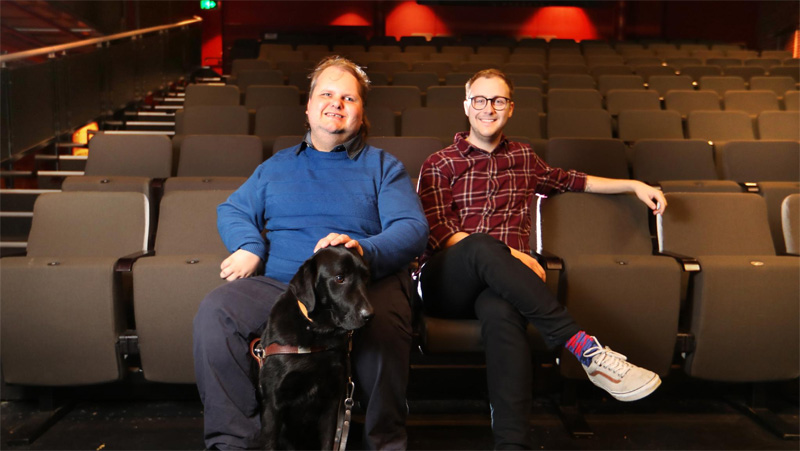
    We discuss the band’s mystery, democracy, religious undertones, their hometown of Townsville, an uncertain future and Jones’ (above right, second from right) secret hardcore past.

    Rohin, you’ve been in this position before, where you’ve just released a collection of your music out into the world. What’s different this time around?

    Umm… [laughs] Well I guess the first time we released, it was giving it out to 30 or 40 of our friends. It was a whole lot less vulnerable experience. That’s one big difference.

    Is there a greater pressure or expectation placed upon the band this time around, or do you try to put that out of your mind?

    I don’t think there’s any industry pressure; to ‘conquer the industry’, or be some big, successful act. I think the pressure of the last two years came from trying to produce something that we thought was credible, and up to our potential.

    The first time I saw you was in March 2009, when you supported The Devoted Few at The Troubadour in Brisbane. I think that was right before you hit triple j airplay, and everything else that went with that. What do you recall of that time in the band’s career?

    It was kind of fun. Jord had just come back from Germany, and we picked up where we left off; just playing around. It was nice to play music with old friends again, after having a bit of time off. It was a good time.

    Was there a sense among the band that you could become bigger?

    Not really, hey. I don’t know how to explain it, but… I didn’t expect that EP to [do anything beyond] just hearing it when I went home, because my parents were playing it. That’s about as much as I was thinking at the time. I don’t think we anticipated anything, to be honest.

    That original LP release in 2008 is 52 minutes long. Do you consider it an EP, or an album?

    I definitely don’t consider it an album. It’s definitely not good enough [laughs]. I guess we wrote a lot longer songs back then.

    When you listen to that first release, what do you hear?

    [Whistles] To be honest, I haven’t listened to it in years [laughs]. Usually I get super-close to projects when I’m working on them, so instead of hearing a song, I’ll just hear the mix between the two stereo guitars, or something like that. I’ll be like, “Ehh, we didn’t really get that right”. Or I’ll forget about a part, and go, “Oh, that’s right, that part’s in there.”

    For the full interview, visit The Vine. For more on The Middle East, visit their website. The audio for their song ‘Jesus Came To My Birthday Party‘ is embedded below.

  • Mess+Noise album review: ‘Lostworks’ by Faux Pas, April 2011

    An album review for Mess+Noise. Excerpt below.

    Faux PasLostworks

    Less cohesive than last year’s Noiseworks, but no less compelling, Lostworks is a collection of “lost songs” and b-sides created by Melbourne musician Tim Shiel between 2008 and 2010. Crucially, these aren’t half-formed ideas mashed together just for the sake of pumping out a follow-up; after all, he’s charging zero dollars for it, so it’s hardly an attempt to cash in on the success of Noiseworks, his second full-length release. Instead, Shiel appears to have invested a similar amount of time and effort into polishing these tracks for public consumption: he calls this release a “companion piece to Noiseworks” on his website.

    Lostworks’ production isn’t as immediately attention-grabbing as what we heard on his 2010 effort – to my ears, there’s a little less depth in the bass, and fewer gaudy synth sounds filling out the high-end – but the result is still more than serviceable, considering it was assembled, produced and probably mastered by Shiel himself.

    As ever, it’s difficult to judge just how much of Faux Pas’ output is sampled and how much is original, as these songs betray very little about their origins. Even when Shiel teases listeners with familiar musical phrases, they’re skewed almost beyond recognition. He re-appropriates Carole King’s vocals from ‘Where You Lead’ – a song made famous by Barbra Streisand – throughout ‘I Will Follow’. In album closer ‘Don’t Go’, he hints at ‘Waterfalls’ by TLC. (The latter inclusion is a titular nod to Noiseworks’lead single ‘Chasing Waterfalls’.)

    For the full review, visit Mess+Noise. For more Faux Pas, visit his website (where you can – and should – download the album for free). An audio sample of Lostworks is embedded below.

    Lostworks (free album download) by Faux Pas

  • A Conversation With Dave Graney, Australian musician, performer, and author of ’1001 Australian Nights’, 2011

    I recently profiled Australian musician, performer and author Dave Graney [pictured right] for The Courier-Mail. His first book, 1001 Australian Nights, was released via Affirm Press in April 2011. You can read my 1,000 word profile of Graney here.

    Or if you’d prefer to cast your eyes across the text of our full, 40 minute-long conversation, you may do so by reading the following words. This conversation took place on 11 March, 2011.

    ++

    We’re here to talk about the book. I really enjoyed reading it, Dave.

    Thank you.

    The thing that probably most intrigued me was how you’ve always positioned yourself as the outcast; the underdog. Is that a fair observation?

    I’ve been thinking that. I’ve surprised myself. It’s juvenile. I must change that.

    Why is it juvenile?

    I don’t know whether it’s juvenile or not, but it’s been my kind of reality, coming from a regional area. Often people in music I find have come from out-of-central things; say, in English music, there’s very few acts from London. Say The Rolling Stones in the 60s, they’re often from outer places; say, Manchester, Liverpool, Leeds, Sheffield. From other places that have informed their perspective, because they’re outside of the biggest city and they’re also in a place that informs their own perspective. David Bowie’s urban; kind of London. I guess that was the reality for me coming from regional South Australia. And I never got over it. [laughs] You can’t fight City Hall.

    Not too many artists come from Mount Gambier, do they?

    Robert Helpmann… Max Harris, the poet, had something to do with it. Maybe he drove past one day.

    So, you’re following in the footsteps of a long line of Mount Gambier artists?

    Freaks. [laughs]

    At what point did you begin writing this memoir, Dave? Because your observations and memories from your earlier life seem quite well-formed, like you wrote them down almost at the time or soon after.

    No, I’ve got a shocking memory, and I always run into people and they think I’m quite rude because they say “You don’t remember me do you?” And I don’t, and I wish I did have a bit of memory, but I’m told in later life that comes back to you in a terrible way; you can’t remember what you did five minutes ago, but memories of childhood are very vivid. I started to write it down in a book when I was in Brisbane, doing a gig at the Old Museum in late 2009, or something.

    Some people have that feeling you have to get out of your normal routine of something to provoke good writing. I tried that. The book’s kind of in two parts; you’re talking about this kind of reflection on my earlier life [in the first part], and then the second part, “There’ll be no coming home,” has a more recent focus. It’s kind of “what I thought I was doing, and what I think I’m doing” type of aspect. I started to write it long hand in a book that I got from my parents’ home; a big old 1950s-like ledger. It sounds very prosaic, but it’s like a dramatic kind of book to be scratching in. I started doing it in that, because I spoke to Mick Molloy, the comic, and he said he never writes anything on a computer. He said “everything looks good, and then you go and edit it”. He always writes on a notebook.

    Was there a benefit to doing that for you?

    I think you kind of think things out a bit more, and then of course you have to type it in eventually, and do the editing like that, but initially you’re thinking probably in a different way in the old-school, the way people have written things for centuries.

    Going back to what you said about having a bad memory, does that mean that the first half of the book is made-up?

    [laughs] That’s very evil of you Andrew, twisting my words. No, I focused on that trip I took when I finished school and worked in a factory and then drove up eastern Australia, because that sort of thing was a very intense, solitary experience and that’s always been with me. But at other times when I’ve been in the social world, I’ve maybe been a bit less.. they’re the sort of things I’ve found hard to remember. Sort of intense experiences I guess, and in the first band I was in [The Moodists], I guess a lot of that part of the book is how I couldn’t engage with the world, like many people.

    Many of the things I’m writing about, I’m conscious and was conscious that they’re not particularly special. They’re common things, and so I tried to write it in a mythological, mythic kind of way, especially my first band. I’m not trying to be, and I hope I’m not being rude to anybody. I’m just… it was an intense, interior experience, and dealing with forces that are kind of uncontrollable, as you are when you’re a teenager, or in your twenties. You can’t articulate things, but you’re doing things in the heat of action. That’s the way I wrote, in that style.

    I remember those things and that’s what I was writing about, mythic things in my life that my life has turned around. And also, I’m not really a huge household name, so I don’t think the book I wanted to write is really a linear kind of – “I did this, I did that, I got drunk with this very impressive person. I thought this, I thought that”. I wanted to write it in a different way.

    Had you found that approach when you were reading other music biographies, and therefore you wanted to avoid that sort of thing?

    Well, I love to read books written by musician. Wreckless Eric, a British musician wrote a really great one. His name is Eric Goulden. Zodiac Mindwarp has written a couple of great ones. His book I liked is called Fucked By Rock. He’s a great writer. One by a guy called Mezz Mezzrow,  who is a white jazz guy who was a dope dealer for Louis Armstrong. He wrote a really great book called Really The Blues. Charles Mingus’ Beneath The Underdog I really love and Miles Davis of course, with Miles.

    I love the autobiographies and I’ve read some books by writers but often they don’t have empathy for the players, and especially nowadays because in every aspect of culture it’s about the audience nowadays, and I’m not happy with that. I think the audience is up itself. The audience needs to lift its game. [laughs] It needs to reinvent itself. Anyway, I’m just being stupid, but I love the writing of Nick Tosches, a New York writer about country music. I love the way he writes, especially about Jerry Lee Lewis. He wrote one about Sonny Liston that I love. There’s a writer – I just read a book about Howlin’ Wolf, which is quite academic, but I fucking loved it because he deserves that really academic, “he did this, he did that with that person” type [writing]. He’s a towering figure.

    You mentioned you want to avoid that kind of chronological account of what happened. Were there other stylistic things you wanted to avoid with your book?

    No, I wasn’t trying to avoid anything. It has these outlandish kinds of chapter or headings for different pieces, and that’s kind of just my style. A lot of the book is about my style and tone. My music is all about style and content, and the content of style. It’s high-fallutin’ stuff, and it’s loaded, seething with ideas and references. My music’s always been like that, and I just wanted to write in a way, that the flow of my music as well and that came from my life.  I’m talking about the flow in a hip-hop style, because I’ve been writing and talking about things in a non-stop way, and all my songs are quite real and alive to me.

    It has these kind of headings that are very much in a declamatory way, they’re kind of silly sometimes and other times not, but I love that kind of talk from 19th Century newspapers that William Randolph Hurst taught his writers. They always have those little headings, just the old newspapers. So I wasn’t really thinking in a negative way about “not doing this, not doing that”. I just wanted to have the flow, and I found it quite exciting. My book is like a lot of my music, kind of the way I operate, generally it’s quite positive in a way. I’m not, like Father Ted when he won that best priest award, out to settle the scores with anybody. [laughs] It’s more of like invincible, artistic kind of inner juice. That’s what I wanted.

    One of the things that I love about your writing is how self-assured you are. One of my favourite quotes is “I think of how consistently great I have been for such a long time and am warmed by my own regard.” It’s fucking great.

    [laughs] That’s just making myself laugh, really.

    But even if you are taking the piss…

    I was being kind of funny at the beginning of the book, where I said that Australians don’t know how to talk about serious things, and I’ve always enjoyed transgressing and saying the wrong things. I think that’s just a case of me doing that again. Because I know that upsets people.

    Yeah, and also because it is so rare to hear artists say they believe in what they’re doing, and that they think they’re good. They’re always downplaying their achievements, and what they sound like, and “oh, this happened by accident”. Yet here you are saying “fuck that, I’ve actually worked at this for a long time, and I believe in what I’m doing”.

    [laughs] Well I enjoy creativity and playing music. I’ve worked with Clare Moore. I’m very lucky we’ve had a real tight unit playing music. I love playing with my band. [laughs] Playing music is quite enjoyable.

    That’s good to hear. Moving on; what do you think Dave Graney means to people? What do you think people think when they see or hear your name?

    I don’t know. I don’t know really. There’s a small number of people that really like my music, and that communicate with me. I’m glad they find my stuff and they get a kick out of different aspects of what I’m doing. Sometimes I see… I was just doing video for a song, we’re putting out an album called Rock and Roll is Where I Hide at the same time too. It’s on Liberation and I was looking at myself singing this song and I do do terrible mugging, acting out and being stupid. My vocal style is full of little cries and gasps, and weird noises and yelps and screams. I guess some people must think it’s kind of fucking weird or something, because most indie rock is so – I don’t know – and I do like some indie rock, but a lot of it’s so uptight that there’s no physicality in a lot of it. We just do it. That’s what’s missing in a lot of… so I’ve got an idea what people think, yeah.

    If I was to go on, I’d probably hear pretty negative things [laughs] but not much I can do about that.

    Okay, we’ll give that a rest. Getting this book published, was that a hard sell?

    I sent the book to a few people. Affirm Press publisher Martin Hughes responded pretty immediately. I’ve liked some of the books he’s put out, like an American writer who lives in Melbourne called Emmett Stinson who did this short story, Ground Zero. And also the comedian Bob Franklin put out a book of almost horror [themed] short stories, which are quite fantastic. It’s a small publisher and very keen in what they’re doing, like a small indie publisher. They’ve been great to work with. I was pretty lucky to find them. I don’t know, I wouldn’t have known who else to approach after them.

    What made Martin say yes, do you think?

    I don’t know. Maybe he thinks I’m more well-known than I am. I don’t know. [laughs]

    Maybe he saw “ARIA Award-winning” and was like “yes, I’ve got to get in on that!”

    That could have been it. [laughs] No; a little bit of this, a little bit of that.

    Had you always planned to intercut your stories with your song lyrics?

    Yeah, I’ve always wanted to do that, to have that flow there. I’ve always wanted to because they both come out of the same thing. I’m glad I had that opportunity.

    Those lyrical bits, do they cover the same kind of chronological period?

    Yeah, pretty much. I’ve been writing about the same kind of experience [for a long time], and like you were asking, ‘what do people think of me?’; people probably don’t think of me as a songwriter or anything, more than anything else, and in a way that’s been my way I present myself. I’ve always been interested in being a performer, not just being a writer, but you can’t really… I think you’ve got to be one or the other. You have to hold the pose of being a serious songwriter. Like Paul Kelly or Bernard Fanning… [laughs] Those kinds of serious-looking dudes. I’ve never been that sort of person, so I guess to answer your previous question, most people probably think I’m dodgy and that’s something that I prefer, actually. I’d rather be dodgy than worthy. [laughs]

    That’s a fucking great quote, Dave! [laughs] I’m intrigued to know why you always call Clare by her full name?

    Sometimes when we do things and increasingly people always refer to Clare as my wife. You’ll find, say, Kim Gordon from Sonic Youth is never referred to as “Thurston Moore’s wife”, or Poison Ivy from The Cramps is never referred to as “Lux Interior’s wife”. It’s giving Clare her formal address.

    Cool. Does she call you Dave Graney?

    [laughs] If she writes a book, she might well do that. [laughs]

    I saw your interview with Australian Bookseller where you said “A lot of the book is about where I copped my tone. Tone is everything in music and writing.” I’m interested to know when you had that realisation.

    Pretty early on. I loved the tone, but I couldn’t get it. I couldn’t get the remove that a lot of my favourite American artists had, like Jim Morrison, Jerry Lee Lewis, George Jones, Hank Willams, Alan Vega and all of them; they just had this easy tone. I discovered that, like anything, it takes a bit of living to get perspective, to find your own voice and that kind of thing, which is annoying to a teen or twenty-something; your gaze at the world is intense and narrow. You want to say things, but it just comes out in a squeaky kind of way, which makes you even more uptight. But I love that kind of thing.

    Rappers, I love. I love different kinds of feel that rappers have, the things they can talk about, and I guess that’s the setting of the music. I love rap music when they just disrespect each other and that, but it never happens in rock music. I wish it did but – it’d probably make rock music go a bit faster if the guy from Jet would come out and call the guy from Wolfmother a dick, in their songs, and they’d have to answer each other. It’d make it go a bit faster. Rock music has pretty much been dead for years, but it’s fuckin’ slow. I mean, they’re still going on about Eric Clapton, and Leonard Fucking Cohen. Christ.

    I’m probably not the first to admit surprise at the fact that you are a big hip-hop fan. That really comes across in the book, which I think is cool.

    Oh, good. Most really good rock music is informed by hip-hop. When The Black Keys programmed rage, it was all hip-hop.

    In that same interview with Australian Bookseller, I saw you say that the upcoming greatest hits re-recorded is your “third debut album”. What did you mean by that; third time lucky?

    No, when you do your first record of songs, playing for a long time, you know it inside out, you just go in, they turn on the tapes, and you just yell it onto there. That’s it. There’s no second guessing or worrying, or anything. This record for Liberation is songs that we’ve been playing in our live set because we had the idea for years, the idea that people wanted to hear them, or that come, or ‘we haven’t been to this place for a while – we should play this. People expect us to do this’. Other songs that we just enjoy playing, and songs that we’ve only started playing recently.

    So in a way they’re remixes inside a different band, and over time, and so we just talked with Liberation. They do albums for artists’ back catalogue material. We’ve always had a band. I’ve never done many… I do some acoustic guitar gigs, but I don’t enjoy them as much as playing with my band. We said, ‘we’ll record with our band but we’ll just make a rock and roll record’, and we go in and record it all together and it was just like doing a first record. I did one with The Moodists, and one with The Coral Snakes. This is the third one.

    I’m looking at the book’s cover [pictured right]. Who did the cover art?

    Tony Mahoney, who’s done all of our record covers going back to 1989.

    It’s an interesting style. It looks like it’s cut and pasted it all together.

    He doesn’t do it in Photoshop. It’s all hand-done.

    I found it interesting in the book, how there are very few mentions of you in solitude writing lyrics or practicing guitar – the activities which are fundamentals for any working musician. Did you leave that out on purpose?

    Yeah, it would have been pretty boring. If I talk about writing lyrics or whatever, yeah. I did do it pretty quickly. I’m always just sitting around goofing around on a guitar anyway, so that’s what I do most of the time. Writing lyrics or putting songs together is pretty quick for me and generally I don’t sweat over it too much, not like… who were the worthy types who wrote for days? [laughs]. I’m not like that. I like to have a bit of an immediate flash, it’s what I go for.

    It sounds stupid, like if it sounds familiar it must be good, if somebody else has done it. [laughs] I had to do this thing about clothes here in Melbourne. I was involved in this art exhibition of men’s clothes for some reason, and I had to get my picture taken. I said, “I only wear shit that other people have already worn.” [laughs] And they’ve taken the flak for it. I realised in a way my approach to music’s been a bit like that too. I know people can’t hear things that they aren’t already aware of, and they can’t see things that they don’t know they’re looking for, if you know what I mean. So you have to work in forms or words that people are familiar with in a way. That’s my great revelation of recent weeks. [laughs] My approach to music is the way I dress.

    There’s a quote in the book where you say you’re talking about the present, you say it’s “a time where the most successful musical acts have no individual definition or focus or personality. People want what they know.” Is that tied to the same kind of thing you’re just talking about?

    Yeah, people will try to disappear into generic forms, so they have no individuality. I’m dealing with the same thing like any musician. You have to be recognisably something as well as recognisably yourself. One or the other perhaps, I don’t know, but yeah. Say if I do a gig with an acoustic guitar, acoustic guitar means you’re going to tell the truth. If you wear an electric guitar, it means you’re a liar. [laughs]

    Really? Did you just come up with that on the spot?

    No, I generally think that. And I do like to play electric guitar [laughs].

    That’s great. With the tour diary bits, was it the intention to give a glimpse inside the life of a touring musician?

    With the Nick Cave ones?

    And the Henry Wagons ones.

    A little bit of that, I like the writing I did with Henry Wagons, because I could portray him as kind of my ‘straight man’ in a way, and I really get on well with Henry and I love his music and his ambition. I hope that Wagons really kick it with this album they’re putting out. The Bad Seeds are old friends in a way but in such a different… Nick Cave’s in such a different kind of universe to one I work in. I just thought it was interesting. We were opening for them in Europe and were playing a delicate kind of vibraphone-based, 12 string set to these fucking mad Spaniards. Spanish only like… they’re not very lyrical types, but they just love the flash and the loud noises and everything. Even Nick was breathing a sigh of relief when they got to an English-speaking country. So we have many different relations with people within Nick Cave and the Bad Seeds, going back to the beginnings of our kind of work in music. I thought there might be some interesting parts to it, including the deluded bits of my own bullshit.

    You’re right, it is interesting. It’s good stuff. I like Nick’s quote on the front cover of the book.

    That was very generous of him.

    Very generous, yes. “Pure genius,” he said. To which you replied, “thank you, Nick.”

    [laughs] Yeah.

    So what really surprised me was how the narrative accelerates in the last five pages. Everything up until then had been pretty slow; you talking about your life from an almost emotionally detached perspective, and then it all kind of fell out of you in the most gripping way. It really took me by surprise, and I liked that because I had you pinned down as this too-cool-for-school cat, always making sardonic remarks and dry observations, and then you collapsed that perception in a few hundred words.

    Oh, thank you. Well, that was very real. [It was a] full stop to a couple of lines. Yes, it was a very difficult period.

    Is that why you were so brief in your description of it, because you didn’t want to dwell on it?

    Of my parents and that, do you mean?

    Yes.

    Yeah, well in a way they’re also intensely private people, too. They’re from that generation [where] if you got your name in the paper it meant you were in trouble with the law. Living in the country, too; country people fucking love their privacy. I would never write anything, would never write anything personal about them [laughs]. I could imagine if they were alive reading something like that, they would hate it.

    You’re going to be in the paper with this interview and you’re not going to be in trouble with the law, so that’s positive.

    [laughs] Good.

    One of my favourite quotes about your early career is that “everything asked should be poor, dirty, and ugly.” Does that still ring true, Dave?

    [laughs] Poor, dirty, and ugly – yeah, I’m getting uglier yeah. Poor, yeah. That was someone else [saying] that everything an artist should be – poor, dirty, and ugly.

    Ah, that’s right. My apologies.

    That’s alright. [laughs]

    Do you relate to that concept?

    That’s from the song Night Of The Wolverine, a character is talking to someone who thinks that’s what an artist should be, poor, dirty, and ugly. No, I think artists should be sometimes lucky, as well [laughs] You know, rewarded for the hell of it occasionally. I don’t like artists, rock and roll people going on about how miserable they are most of the time, and talking about how stoned they are, and how hungover they are. I find all that stuff pretty boring, and always have.

    I mean, I used to be a big drinker. I was a great drinker. I was one of the best! [laughs] But it got a bit boring and I moved to a place where I had to do lots of driving so I just got out of the habit. But there’s some people who write about music are always cheering on rock and roll types. I call them rock and roll dopes really; rock and roll chumps. I’m not really interested. I love the company of musicians, but I don’t like those types that are very unfocused, the kind who need to be standing on the table, shouting, and dancing all the time. I’m not that type. I feel like they’re a bit boring to hang around.

    What keeps you going, Dave?

    What keeps me going? I’m very interested in… I really like to play music, and it’s quite simple. I’m very involved in different things. I used to be just a stand up singer, and I used to enjoy that gladiatorial type thing and then just standing there with the band behind me and singing and being a wise guy, then I started to play guitar as a performer and increasingly started to enjoy that. The two players we have, me and Clare, we play with Stu Thomas and Stu Perera. I love their company and playing with them. They’re really great musicians. I do enjoy that a lot.

    I guess presenting things like records to the world; somebody described it as a leap into the void, that an artist is compelled to take. Eventually artists get tired of doing that. They get exhausted, but I’m still quite excited by doing that kind of thing. I must say putting a book out is quite a different thing because it’s much more of a static thing that people can approach, and that’s different to a recording. I don’t know whether… I think that’s a new thing for me, so this is a bit of a leaping into the void that I’ve never experienced before. It’ll probably be the only kind autobiographical thing I’ll ever be doing! [laughs]

    I hope it’s a successful leap into the void, Dave.

    Yeah. [laughs]

    Based on what I’ve read, I can confirm it is good. Hopefully other people feel that way too.

    Oh, thanks Andrew, I appreciate that.

    ++

    For more Dave Graney, follow him on Twitter or visit his website. The music video for his song ‘Knock Yourself Out‘ is embedded below.

  • Interviewed: Meg White on interviewing, 2011

    The lovely Meg White – staff writer at Australian Penthouse – asked me some questions about interviewing. The results are published on her blog, uberwensch.com. Excerpt below.

    Andrew McMillen on Interviews

    Andrew McMillen is one of the best journalists around. He’s also one of the best resources, one of the best hustlers, and one of the nicest guys in the biz. I know this because I am a weary old hag, and I’ve watched McMillen go from one success to the next with nary a stitch or strain. Earnest, reliable, skilled and ubiquitous—my praise could carry itself far, far away.

    So back when I proposed an interview series, I immediately thought of Andrew. Though his city had just become submerged in floodwater, he agreed to answer my questions and did so in a timely fashion. Then I moved out of my house and found myself stranded, for actual months, in a world of no Internet, so those answers were hidden in the musty dungeon of my inbox. I’ve freed them this morning. Here’s what he had to say:

    What were the circumstances behind your best interview?

    I’d wanted to interview Robert Forster – he of the Brisbane pop band The Go-Betweens, who were active between 1977 and 2006 – for a long time. I didn’t have a particular ‘hook’ or currency peg, though. Except that the man is a total fucking legend, and not just for his music: he’s also one of the highest-paid music critics in Australia through his monthly column for The Monthly (note: highest-paid is not to be confused with best). So since Mess+Noise, a website dedicated to Australian music, have an irregular section named Icons, where significant contributors to the Australian music scene are interviewed at length, I eventually figured out that Forster would be perfect for it.

    I pitched the story to my editor, and he was keen on it, so I asked Forster’s manager for the interview – on the condition that we’d speak at length, about his whole career. We sorted out a time to meet at a bakery near his house. I spent many hours reading and watching everything I could find about Forster and The Go-Betweens online. I arrived with three double-spaced pages of questions. Forster answered them all, thoughtfully and at great length. By the two hour mark, he was late for a meeting, so he gave me a lift across town in his old Volvo. (The interview was over at that point, and we chatted casually.) I called him two days later and we spoke for another half-hour. So around 2.5 hours all up, and around 15,000 words on paper. Not once did he give me anything less than his full attention, or act impatient, or attempt to avoid a question. It was brilliant.

    I was paid $100 for the article, which ran in three parts on Mess+Noise. I generally outsource my interview transcriptions. It cost me around $140 for the transcription, so I was effectively operating at a loss. Which is not something I tend to do. But it was such a great opportunity – to ask a hugely influential artist many questions about his whole career – that I was happy to wear the cost.

    Another interview of note was a five-minute conversation with the American hip-hop artist Big Boi for The Vine, in a crowded ‘green room’, upstairs at the Hordern Pavilion in Sydney. In no way was this interview representative of my ‘best’ work, but it is an example of how certain situations require the interviewer to think on their feet, and adapt to the mood of the room. I wrote the interview up in a way that blends my inner monologue with Boi’s answers to my questions. It’s here.

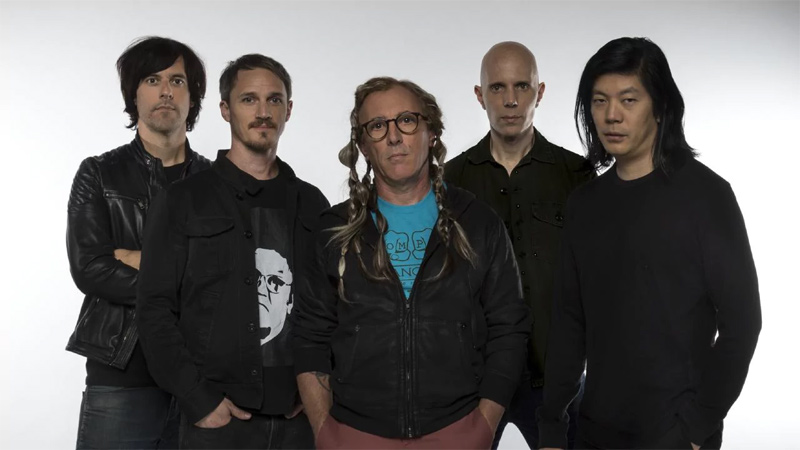
    Also: I am reasonably proud of my interview with Tool singer Maynard James Keenan. I think I did as well as I could have possibly done, considering I had 15 minutes on the phone with one of the least talkative guys in rock music.

    I liked your Big Boi interview. When I read it my first thought was, “I wonder if any of his prepared questions got in there?”

    How about I just open up Google Docs and show you the questions I had prepared to ask? (These were then written, in note form, on a small piece of paper, which I carried into the interview.

    Big Boi Questions

    • How did this gig come about?
    • Are you a gamer?
    • Fave game of all time?
    • Of 2010?
    • Frustration that it took three years for Shutterbugg to come out?
    • Ever hear The Vines’ version of Ms Jackson?
    • Feelings on radio edits? Yelawolf’s verse in ‘You Ain’t No DJ’
    • Cee-Lo’s ‘Forget You’
    • You seem to put more effort into your videos than most artists. Do you see video as a big part of album process?
    • Censorship / logos in videos
    • What’s the next material we’ll hear from you?
    • Consider yourself more of a performer, producer, songwriter? Actor? Label boss?
    • Touring with Vonnegutt this time? If not, who you got singing ‘Follow Us’?
    • What other outrageous demands were you able to make for this one-off show?
    • Is this the first video game launch you’ve played?
    • The key to this album’s thrilling ride lies within this approach: by taking advantage of the freedom to flit between several personas, the rapper can both shrink and exaggerate his true self. It’s less a schizophrenic episode than a tactic to unlock new songwriting ideas and it’s one that works beautifully.” [note: this is a quote from my review of Big Boi's album for The Vine, July 2010]

    Interesting. And on to Maynard: The interview looks shorter than 15 minutes.

    During the Maynard interview, there was a minute or two when he was speaking with someone else nearby. ‘Off camera’, if you will. I think it was a plumbing contractor asking him what needed to be fixed. Evidently he didn’t know, and said a couple of times, “I’m on the phone to Australia.” (Also: how do you think I felt, having my already-brief interview cut down even further due to an external distraction? Yeah.)

    How much of your interviews do you throw away?

    The answer is, it depends. If it is a relatively well-known/famous person who a lot of people will be interested in reading an interview with, I am a firm believer that the absolute entirety of your conversation (on the record) should be published. Why? Longevity. So that when someone’s Googling “(person’s name) interview” in 10 years’ time, your interview will show up. And not necessarily on the first page of results, or anything like that; just that it exists is very important to me.

    If I’m conducting a bunch of interviews with several different people for a feature story, those individual interviews probably don’t deserved to be published beyond the quotes I pull to include in a story. There is a reason why journalists pull quotes, and it usually comes down to two things: a) word/space restrictions, or b) the majority of the interview was unremarkable, irrelevant, or otherwise not worth publishing.

    The rule of thumb is: if it’s a famous person, I keep it all. If it’s not, I toss the unusable/uninteresting stuff.

    For the full interview, visit Meg’s blog. A big thanks to Meg for the interview.

    Elsewhere: Meg White asks, ‘How do I approach pitching as a freelancer?’, April 2010.


  • The Vine column: ‘Group Therapy’ #1 – ‘What is the value of recorded music?’, April 2011

    A new column for The Vine. Excerpt below.

    Group Therapy #1 – ‘What is the value of recorded music?’

    This week we here at TheVine are positing a new column. The idea is that Group Therapy will operate as a semi-random music industry related Q&A, a missive we send out to a great many artists in order to gauge their feedback on any particular issue.

    This maiden edition is a good way to start: back in October last year, journalist Andrew McMillen was intimately involved in the One Movement festival in Perth (a festival which, incidentally, has just been deferred pending a review of the event). McMillen was well placed to engage with a wide array of artists attending the five-day event. Whilst there, he saw fit to ask them all this question:

    “Your recorded music is an advertisement for your live show. You should not expect that people will buy your music. Agree/disagree?”

    Responses below.

    Agree:

    The Jezabels [pictured above, left]

    “I guess so. You can’t stop downloads, and I’d rather people have the music than not. Also I think it’s a pretty healthy thing for a band to view touring as their livelihood. It’s when you contact most of the people who might become real fans.”

    The Great Spy Experiment (Singapore)

    “Do you mean it the other way? That is, if our live show – as an advertisement for our recorded music – sucks then we should not expect people to buy our music? Either way, I probably agree. The best thing about our live sets is our dancing. And you can’t get that on our records. So we understand if you don’t want to buy our CD.”

    Big Scary (Melbourne)

    “I agree. I started realising this switch in the industry a few years back. For most musicians – I don’t think this necessarily applies to super famous and successful artists like Lady Gaga etc – firstly, the live stuff is usually band’s bread and butter. Secondly, people can get their hands on so much free music from downloading and blogs and all the streaming on Myspace that it’s not easy to encourage them to spend on what they can easily get for free. We’ve been giving away our singles all year because we know it’s better to get people to our shows.”

    Richard In Your Mind (Sydney)

    “I agree that recorded music is an advertisement, but it’s a product too. That’s the great thing about music: it comes in different forms to be enjoyed in different ways. Some people don’t like going out to shows, they prefer to sit in their lounge room listening with a cup of tea. Less people are actually buying music because of the internet, I guess, but there will always be those who still pay for it.”

    For the full column – which includes artists who disagree with the statement, as well as a few fence-sitters – visit The Vine.

  • The Vine interview: Brett Mitchell of Jebediah, April 2011

    An interview for The Vine. Excerpt below.

    Interview – Jebediah

    “Jebediah’s apparent strategy is simple,” I wrote in December last year; “Take to the stage and kick several shades of shit from any lingering doubts about their ongoing aptitude.”

    At the time, it’d been a while between drinks for Perth quartet, who rose to national prominence off the back of their 1997 debut, Slightly Odway. During the ensuing years, their high-energy alternative rock – occasionally intercut with slower, ballad-like singles, in ‘Harpoon’ and ‘Feet Touch The Ground’ – was on a par with Silverchair, Spiderbait, You Am I et al in terms of both triple j airplay and frequent festival appearances. The foursome – frontman Kevin Mitchell, his older brother and drummer Brett, bassist Vanessa Thornton, and guitarist Chris Daymond – took a breather after the so-so chart performance of their independently-released fourth album, Braxton Hicks (2004), Kevin Mitchell pursued (and found) success with his solo project Bob Evans. Jebediah would continue to play sporadically, but by and large, it seemed as though the group weren’t in any hurry to return to the studio.

    Now their fifth album is being released on April 15 via Brisbane-based independent label Dew Process. Kosciuszko was recorded on-and-off over several years with Dave Parkin (Snowman, Sugar Army) in a Perth studio, whenever the four members could find the time. Bar now-Melbournite Kevin Mitchell – the only member able to support himself as a full-time musician – the other three still live in Perth. Mitchell senior works for a logistics company, Daymond works at 78 Records, and Thornton recently completed a Bachelor of Science, between playing with Felicity Groom & The Black Black Smoke.

    I spent a couple of days with the band in early December last year, while they played a short run of shows and shot the video for ‘She’s Like A Comet’ – their current single, which is receiving heavy airplay on both alternative and commercial radio – in Sydney. With those experiences still fresh in mind, TheVine connected with drummer Brett Mitchell.

    You’ve been in this situation before, where you sit down and do a bunch of phone interviews to promote the new record. How does it feel this time around?

    It’s coming back to me. Promo is one of those things which – as I’m sure you know – ranges from genuinely painful to genuinely enjoyable. So it’s a bit of a mixed bag for me. It’s always nice to have the chance to talk about things in a meaningful way, or in a way that you think is going to be relevant to people. But that doesn’t always happen. What can I say? I’m just kind of going with the flow, and trying not to be too cynical about it.

    At this stage, which sensation is more accurate: painful, or enjoyable?

    I have to say, it probably has been more enjoyable than I would’ve anticipated. Maybe that’s because the commercial [success] is happening with the single (‘She’s Like A Comet’). Plus there’s that [band] history there, which a lot of people seem to be familiar with. I guess people have got a couple of different angles to approach us from, and maybe that’s helping me smooth it over.

    The single has been doing well, hasn’t it?

    Yeah. I’m certainly spun out. It’s very strange to me, that after all this time, we get this song pretty much across the board on radio. It’s certainly never happened before. It’s awesome because it’s giving us a springboard, which I’m sure we did need. But it’s still a shock. It probably doesn’t bear anything, really; it’s one of those things that’s just happened, and perhaps it’s a random event. We just have to capitalise on it.

    I have to ask about the album title, Kosciuszko. Is there a significance behind it? Can we draw some parallels between it being the summit of Jebediah’s musical career so far, or some such?

    I was actually a bit worried about the symbolism that people might interpret in that. It seemed like it might be a little bit grand, or arrogant, or something. But in actual fact, that doesn’t exist at all, and I’m still at the point now – speaking of promo – where I’m actually telling the truth about most things. So the truth with [the album title] is that it was Kevin’s baby.

    Apparently The Beatles were going to call The White Album Everest. He must have read something about it. Obviously it never happened, and I don’t know if anyone else has ever gone down that path. But the appealing thing to me about it, is that it’s essentially a nonsense word. It doesn’t even look like a word, when you see it written on the page. We’ve always had a lean in that direction, so I think it kind of fits. As for the symbolism – I don’t know. People can make of it what they will.

    For the full interview, visit The Vine. For more Jebediah, visit their website. The music video for their song ‘She’s Like A Comet‘ is embedded below.

    Elsewhere: ‘Jebediah Return From Hiatus’ news story for Rolling Stone, February 2011

  • A Conversation With Neil Strauss, New York Times bestselling author, 2011

    Almost two years ago, I traveled from Brisbane to Sydney to meet Neil Strauss – my favourite writer [pictured right] – for a face-to-face interview. It was a life-changing experience, and that’s no exaggeration: being in his presence solidified my decision to seriously pursue journalism. (Up until that point, I’d only dabbled; the interview was ostensibly for FourThousand.com.au, a Brisbane-focused online publication). That meeting, and our resultant conversation, is documented in full here.

    This time around, when Neil’s new book Everyone Loves You When You’re Dead – a collection of enlightening and revealing moments taken from his 3000+ interviews with cultural figures for Rolling Stone and The New York Times – appeared on Text Publishing’s Australian release schedule, I was in the position to get paid to interview my favourite writer, rather than spending a few hundred dollars on travel for the same opportunity. Which is nice.

    I interviewed Neil over the phone from his home in California for The Courier-Mail in early March 2011, before the book was released. I published a 800 word article here, which summarised our 45 minute conversation.

    Our full interview transcript is included below.

    Beware: throughout our interview, there are many references to the content of …When You’re Dead, so if you haven’t read it yet, you might want to avoid reading this interview. Maybe not.

    ++

    Firstly, I want to talk about the final chapter of the book, and the epilogue. I thought it was a very touching note to end on; it wrapped everything up nicely. It made me wonder; was that section about [American rock and folk music critic] Paul Nelson always going to close the book? [Note: Nelson died in 2006 due to apparent starvation. Strauss wrote a feature for Rolling Stone about his death, called "The Man Who Disappeared"; in When You're Dead, he says it was the hardest article he's ever had to write.]

    No. I don’t think any book is ever planned. It always sort of just happens. I guess I knew I wanted the last section to be about family and mortality, and I felt I put so much heart and time into the Paul Nelson piece, it seems like a fitting epilogue for the book. And it rolled so nicely into the actual epilogue. I knew that each section was going to have a theme, and the last section was really going to look at mortality around different angles, in a parallex way. That got more appropriate there. It just sort of landed there.

    When I’m writing, I never think in advance. I just keep hammering and hammering. They’re like puzzles. You’re putting everything together and you keep rearranging until you feel that it’s right.

    Something that Paul’s ex-wife said made me think of you, Neil. She said, “I found out more about him by reading what he wrote.” I wondered if you’d ever heard the same thing from those close to you.

    [laughs] You know what? That’s such a good comment. I’ve never heard that, but I know it’s 100% true. One hundred per cent true.There are things that I can’t tell people face-to-face, whether they’re just friends of mine, or people I love who are close to my life, yet for some reason I’m not afraid to write about them, even though I know they’ll see ‘em.

    Even the stuff in The Game, I’ve never told people because I was worried they would judge me. The stuff in Rules Of The Game, in that first story about that really, really old woman. My friends would have just ripped… it would have been publicly humiliating. But I guess I feel if I can write it I can really explain it fully, all the dimensions to it and I can make sure it’s said right, and comes out right.

    That way I can say it the best way I can possibly say it. It’s so true. It’s interesting. It might be something… I just interviewed Howard Stern for Rolling Stone, and I realised what we have in common. It’s hard sometimes to communicate the truth, as a guy like me, because it’s hard to deal with peoples’ emotions. If you say something that affects someone you have to deal with their emotional reaction to it. And maybe in a book, as horrible as this sounds, no-one is talking back to you, to that idea. No-one is saying that it’s wrong or that it hurts them, or is an unhealthy way to think, or it’s a judgmental thing to say, or whatever. It’s a semi-one-way conversation. I’m speaking to a bunch of people, but they’re sort of a faceless, invisible mob.

    I see what you mean. Most journalists I know admit to feeling guilty for drilling into peoples’ minds to make their stories public. I’d like to know your take on that.

    I never feel guilty, because I never try to hurt anybody with a story. I’ve never been a gossip reporter. I’ve never sat outside somebody’s house chasing them. Everything I’ve ever written, at least in journalism, is in the context of, you know, “I’m here to write a story, and anything you say or do can end up in that story”. So they’re making the choices. I’ve never tried to assassinate anyone. I’m always trying to show them as they are.

    Sometimes I feel guilty in the sense of after we did this interview; say I spent a long time with this musician, and I’m leaving with four hours of recordings of them spilling their soul to me, and all of a sudden it’s like, “thank you very much, good-bye”, and I’m just walking away with their soul on a tape, to some degree. They have nothing. That part always feels strange to me, like having sex with someone, then pulling out and running away.

    The fact that you’re working with ‘household names’ most of the time, does that increase the guilt, knowing that you’re exposing them even further?

    No. I would feel that with anyone. If I’d just interviewed a guy off the street for four hours, or for a day or a week, about their inner most thoughts and fears; their life, their insecurities, and their hopes and dreams and ambitions, and then I just walked away… I’d still feel horrible, because they have nothing. I’ve got this tape recorder that has everything. It’s a feeling of: I’ve taken something and I’ve walked away with it, and what do they have? Nothing.

    Even though that’s not how it works – obviously they have the promotion and the press and whatever the article is [about] – but it’s still a way where they’re bereft, and here I am with everything. You try and shape it as honestly as you can, but there’s also a trust element, where you could shape it any way you want.

    Speaking broadly, have you thought much about why people are so interested to read about the lives of famous people?

    I don’t believe that. I didn’t put the most famous people I interviewed in the book. A lot of the people I interviewed, whose heart and fame I adore, whether it’s Stevie Wonder, Iggy Pop… who I didn’t put in the book, because the interviews weren’t revelatory. I think if anything, what makes it look unique is: there are a lot of people who spend their lives interviewing famous people, but just as interesting as Lady Gaga and Justin Timberlake and Bruce Springsteen are Von Lmo, and Patrick Miller, and Lucia Pamela, who probably 99.9% of readers never heard of. And yet they’re going to find those just as interesting as the big stars.

    I just think people are interesting if you get them at the right moment, you know? [laughs] I do think that on some level, celebrities are being used to sell the book, and that’s a lot of what I’ve written about, but to me the Ernie K-Doe experience – the 50s R&B star who tried to have me arrested, or again, Patrick Miller who’s smoking crack and doing heroin in his basement and fighting off hallucinations – they’re even more interesting than reading about… for example, Led Zeppelin just being assholes. [laughs]

    To talk about the book in broader terms; this book is not directly about you, it’s about revealing other people. It’s been a while since you’ve done a project like that.

    Right. But I think in a lot of ways the book is about me. I really made a conscious effort to keep myself out of it but I think between the lines, the book really is an element of my… I think each book is little elements of my autobiography. Whether it’s The Game, which covers a couple of years; Emergency covers a couple years. This, to me, is like the prequel in some ways, [laughs] because this is all I did for 20 years. This is my life for that time, and I think if you look at the pieces, you can see my own evolution as a person. Whether it’s Led Zeppelin making fun of me [for being inexperienced], to learning The Game and trying to seduce people into these interviews, to much later, meeting Lady Gaga and Chuck Berry and giving them life advice. I can see my own evolution in the book. It’s just not explicit.

    When you began putting this book together, at what point did you decide to do that concept of the threaded narratives, or ‘open loops’?

    I think what I did was, I broke down all those interviews to those little clips, and each clip was a standalone clip. Then I collected the most interesting [clips]. Some people were interesting for only one clip, for one little vignette. Other people maybe had three or four vignettes in which they were interesting. Then I sort of sequenced them together, so that everything matched together. The vignettes were really standalone stories about an idea, so I thought that it’d be nice where, “Hey, we get this idea, now here’s a couple ideas from someone else, now let’s return to a new idea for that person we just met”.

    I kind of saw each piece as almost a standalone piece. Even when they continue from scene one to scene two to scene three, sometimes the story continues. Sometimes they’re just completely separate ideas. Other times, which I kind of like, you see artists at different times in their career. Maybe a couple years later, they feel bad about what they said earlier.

    It’s interesting that a lot of the segues between the vignettes are artists mentioning other artists. That shows the breadth of the 20 years that you’ve spent doing this.

    Yeah, it’s really funny. I’d probably say, with one or two notable exceptions, almost every artist someone mentions is interviewed elsewhere in the book, so it’s like the book itself; it’s kind of a closed loop. It is funny, there really were points where Trent Reznor mentions Beck, Gwen Stefani, Marilyn Manson and Oasis and I’ve got all four of those people interviewed elsewhere in the book. It’s like: which one do I put next?

    I think there’s one section where all the artists are always talking about each other, Billy Corgan, Marilyn Manson, I think Courtney Love, Dave Navarro, And they’re all kind of referencing each other.

    You state in the intro that “you can tell a lot about a person in a minute, if you pick the right minute”. Was that always the premise of the book?

    No, the original idea was because Emergency – as you know from when we talkedEmergency was so much work. I basically had to learn how to rebuild the entirety of civilisation all by myself, you know? [laughs] It was so intense, so much work, I thought I’d give myself a break and do an anthology because anyone who’s been writing articles and features for 20 years feels like, “why not collect my favourite pieces and put them in a book?”

    I started collecting [my] pieces and reading them, but… I like telling stories. There were no through lines. I bought a bunch of anthologies from writers I liked. Half of them I didn’t finish, because I got bored. With the other half, after I was done, I was bored of the writer, and bored of the voice, because it’s not a book if it’s just articles bound together.

    Although it literally is my dream project, as for over 10 years I’d been collecting all my favourite articles in a file to put into an essay book. Then I realised it doesn’t work. Every book one does, or every film, or every record should be good enough that if anybody starts with any single one, they’ll then want to read the rest of what you’ve done. I felt if somebody read [a straight anthology] first, and it was the first book of mine [that they’d read], they might not be be intrigued enough to want to read the others.

    I wrestled with it for a while. I thought I’d write a story about being a down-and-out writer in New York, and merge some of the articles that happened during that time, and tried a couple of other formats. Gradually I realised that essentially, these articles were moments when you saw the real person behind the mask.

    I started collecting those. That two month quickie book became fuckin’ two years of intense work. Unlike Emergency, which was fun, I got to go live off in the wild and learn how to pick locks and go to junkyards and hotwire cars. The Game was fun because I got to run around the world and meet women. This time, I was stuck in a room with my own past, sorting through thousands of pages of transcriptions.

    The way I think of it, this book is the journalistic opposite of taking the easy way out. Like you said, rather than putting together your best, or favourite published work, you’ve really gone through and mined your past for the best material.

    Yeah, and it’s funny because I even had most of the interviews re-transcribed. I had somebody go back to the tapes. I said, “I want every time someone coughs, every time they paused, every time there’s an interruption, I want you to write it out like it’s a play and tell me everything going on”. Even though that’s time consuming and expensive and laborious, I was pretty adamant about getting everything from those tapes and looking for those little moments.

    I was going to ask: how much of this book existed on your hard drive already?

    I think only about 10% were on the hard drive as they were.  A lot were already transcribed, but just not well enough. Sometimes, for example, if it’s someone transcribing something, they might not take the part where the guy just asked me as an off-hand thing, “Hey, do you know now to make beans?” The truth is; the guy who’s talking about his album and why he wrote songs, it’s really more revealing to me that he asks the journalist “How do you make beans?,” because he’s trying to cook for his son. That tells me more about the person than some long story about his album. I tried to get most of them transcribed, and the only ones that didn’t were when I couldn’t find the original tapes. I literally called people who transcribed tapes 10 years ago, and had them find the tapes and bring them back to me.

    Was this the first time in your career that you’d really sat down and gone through all your old stuff?

    For sure. Absolutely.

    What were some of the personal highlights when you were going through that material?

    To me, the highlight for sure was finding all these all pitch letters I’d written to people, trying to write articles for different magazines, different newspapers; finding letters I’d written to my family about how excited I was that this article was out, because you forget how much you struggled sometimes. You forget how excited you are at those first-floor victories. That was kinda moving. It’s really easy to forget the past, because we get so caught up in the present. It was cool to see that. Everyone has a passion and a dream, and it was cool to see that I somehow was lucky enough to live that passionate dream, and even overshot, somewhat, my goal. My only goal was to write a weekly column for Village Voice. I did that by the time I was 22, so everything since then has been gravy.

    That’s awesome. Let’s talk about interviewing. What is an interview to you, now? Has it changed since you started doing interviews back then?

    No. I think I’m better at it. The interview’s still the same thing. An interview is still me trying to get as close to someone I can and write an article that somehow captures who they are, and that says something new about the person that hasn’t been written before. It’s always been the same thing, and I’ve always been really hard on myself about them. They’re never easy, and they need a lot of preparation.

    What makes a good interview?

    In the end, it’s about how you write it. I could say to me there are three kinds of good interviews. I’m just thinking of this out loud as we’re talking. One is where someone really examines themselves in a very honest way and is really emotionally vulnerable, and open, and honest with you. Another kind of good interview is where crazy shit happens, like the first time I’m going to interview Motley Crue, and the police are literally arresting Nikki and Tommy, and in the meantime Vince Neil is blow-drying his hair the whole time. That’s a great interview. They haven’t said a word, and it’s already the fucking best interview ever. The third kind is where the subject sucks, where they’ve got fucking nothing to say. They’re really closed off, not giving you anything, and then that’s an opportunity for me to be a creative writer. [laughs] One thing is the material. The other thing is what you make of it.

    I saw a recent press interview for this book, with Cleveland.com, where you told them that when you do an interview you’re petrified with fear and you’re stressed out. I’m surprised that you still feel this way, after doing it for over 20 years.

    For sure, man. My last interview was with Howard Stern… I’m definitely doing fewer and fewer [interviews] over time. I really only want to do one or two a year. But yeah, of course [I’m stressed], because you have to somehow go in, you have a limited amount of time with someone, and you have to walk away and leave with something they’ve never told to anyone else before, or at least any other writer before. That’s a lot of pressure. You’re not in control of it, they’re in control of it.

    My last interview with Howard Stern, who spills his whole life on the radio every day. How do you get that guy to say something new? There’s a burden. I think the better you get at something, the more intimidating it gets. For example, the better I got at pickup during The Game, the harder the approach was because my expectations and everyone else’s expectations were so high of me. To make the parallel, when I approached a girl in the past, if I didn’t get slapped or laughed at, it was a success. In other words, if some crazy wild adventure didn’t happen with this woman, then I failed.

    It’s the same with an interview. In the past, just to get the interview was enough. I succeeded by getting to be in the same room as this great artist who I looked up to. Now it’s not enough. I’ve got to get the best interview this person has ever given in their life. So the better you get at something, the harder and more intimidating it gets. I’m sure that’s true for you. When we had that interview before, I would say the success was fucking even getting it [in the first place].

    Definitely. I know what you mean. You said when we first met that your goal was to get the best possible material out of someone, and like you said; if it’s someone who speaks for a living it’s hard to find some new truth in that. But it’s still the goal. It’s my goal every time, regardless whether it’s a 15 minute phoner or a couple of days with someone, you still want to get the best. You want to be the best. It’s your standards you’ve got to live up to and you want to put them as high as you can.

    Yeah. And as an interviewer, you’re not in control of that. If you’re just writing an article you can make it the best if it’s all up to you, and how well you write, but in an interview you’re not in control of that. I agree.

    Is it a matter of the bigger the star you interview the more nervous you are beforehand, or is it similar across the board?

    I think it all depends on the situation. I’m more nervous if the star has only given us one hour in a room together. Unless I’m going to be going on tour with them for a week because I know I’ll get time to get what I need. I guess it’s not how famous they are, it’s how short of a time I have to get to connect with them.

    When we first met, I think the first thing you told me when you walked over and looked at my sheet of paper, was: “Ready for all 15 questions,” and then you said what you do to prepare for an interview is brainwash yourself with the person’s career and write down every single question that comes to mind. Now besides those two elements, researching and writing down questions, is there something more? Is there a routine to preparing for interviews beyond just research?

    I think it’s kind of what I said before, that brainwashing which is reading all the books, reading every article about them, reading any books if they’ve written any, listening to every album, watching every movie they’re in, and then as I’m doing these things writing down every question that I can possibly ever thing of. Then studying those questions and arranging those questions in a sequence I kind of want to ask them, and then studying those questions like I’m preparing for an exam, where I don’t know what the questions are going to be on the test. [laughs] There’s a lot of big interviews I turned down, because I really didn’t want to get that deep. I wasn’t that interested enough in the artist to get that deep in their life, and their work.

    When you’re meeting face-to-face with your subjects, do you pick clothes to make you appear a certain way?

    No, in fact I’ll usually dress more down than I would if I was going out myself because I want them to know they’re they star, I’m not trying to say… I think if someone walked into the interview saying “hey, we’re equals! Hey, look at me, I’m one of you too!” the star’s already like “no you’re not.” [laughs] So if anything, I try to play myself down. Even the Howard Stern interview I did today ended up on the air and it’s on TV and you see it, I’m dressed in a sweatshirt and jeans. I really try to be like, “you’re the star. I’m not going to be so embarrassing you can’t be seen with me, but I’m not going to be dressed like I think I’m a star too”. I think that’s the wrong attitude to go into an interview with. In fact, going into any situation whether it’s pickup, survival, or an interview trying to impress someone is the exact wrong attitude to have.

    The way you say that makes me think that you’ve made that mistake in the past and you learned not to act that way. Is that correct?

    No, I never did because when I started out, I really was super, super humbled by these amazing people I got to be in the same room with. And I really was kind of young and innocent. I did it before, but it wasn’t a mistake, when I did that Ludicris interview. There was an idea that we had the ‘Ho’lympics’, a contest where it was me against Ludicris doing all these crazy things, like the one-hand bra unhooking contest. I brought one of my peacocking outfits from The Game, like this snakeskin suit. It was funny. He loved it. He thought it was fucking hilarious. It hasn’t been a mistake when I’ve done it in the past and I think it’s less about dress and more about attitude. But I know my place, I know the role. They’re the star and I’m the person who’s translating that message to the world.

    Out of interest, Neil, do you have a musical background?

    No, I can play a little bit of music and I’ve even been in bands and stuff, but my goal was never to be a musician. If anything, if I was to end up anywhere in the musical side of things it would have been as a producer, because I think in a way it’s similar to being a critic. There’s a sense of saying “what can we do?”. It’s being a critic, but earlier on in the process, where you can actually have some effect on the music.

    True, I see that. The reason I asked is: that bit of musical knowledge that you have beyond being a critic – you actually know how to play some music – do you think that’s been advantageous for you to help relate to musicians?

    Not always. Sometimes it’s been fun, because I did piece on this band Sebadoh, and we went and recorded a punk rock single together. There were a lot of cool things that didn’t make it in the book, but I had to select what was most interesting. But [musical knowledge] has helped in a couple of cases. I also find that musical dialogue won’t be interesting to the general audience of Rolling Stone or The New York Times. If I wrote for Musician or Guitar World it would, but I think that would have hurt the interviews. Because maybe [the interview subject and I] would have bonded over it, but it’s not going to create any kind of dialogue that’s going to be appropriate for that kind of article.

    I think there might be an element, too, of if you cover musicians, then I think you need to come in as a journalist, and not as a fellow musician. To me, the best asset one has in an interview is curiosity. It’s better than an outfit; better than musical knowledge. And even having brushed up and having prepared, I think genuine, sincere curiosity is the best tool you have.

    I find that simply listening and responding to a person is just as important as background research. A good example of that in the book – of you just listening and going with the flow – is when you tell Britney Spears that you know exactly what she’s talking about, even though you have no idea.

    [laughs] Yeah, exactly. I think there are a lot of points in a lot of interviews where you’re saying ‘yes’. We’re agreeing just so you don’t stop the roll they’re on. I think there’s definitely some crazy things I’ve fucking agreed with in interviews. I think it’s important not to judge the person in an interview, and not to judge whether they’re right or wrong, or if it makes sense. The job is to let them speak. Often, some of them I don’t even know… it isn’t until I look at the transcripts that I know what someone was really saying, or trying to say, because I can slow it down.

    To talk about some more specific sections of the book, my favourite band of all time is Led Zeppelin, so I thoroughly enjoyed that section. [Neil interviewed Jimmy Page and Robert Plant for The New York Times. It was their first interview together since Zeppelin broke up 14 years earlier.]

    That’s awesome.

    I want to know what was going through your mind when you discovered that you hadn’t recorded those first 40 minutes of your interview.

    One, was that I was so fucking mad at myself. There are two interviews… I also love Ray Davies of The Kinks, and I missed that interview, too. I was just furious. After that, I started bringing two tape recorders to every interview and I’d have them recorded on two audio recorders just in case one failed, or goes wrong. I was thinking: “how do I re-ask these same questions and get those answers without them catching on?”

    The other funny thing about that interview was that I was so young, and they were these icons. I think I’d read [Zeppelin biography] Hammer of the Gods and was obsessed about their… I was a guy who’d maybe slept with one or two women my whole life, so I think I was more obsessed with their sex life than their music. [laughs] And I wanted to know the story. I think at one point Jimmy Page asked me, “Do you have any questions that don’t involve sex?” [laughs] To me, they were legends not just for their music, but the lifestyle around it.

    That bit about how you missed the first 40 minutes, it’s funny because it’s such a rookie error, and yet it was one of your first assignments for The New York Times.

    Yeah! And that happens. Sometimes it’s unavoidable. There are so many things that could go wrong, especially with cassette decks. You can plug the microphone in the headphone jack, the batteries can die in the middle of the interview and you don’t notice it. The pause button can be on, and you’re recording. I think every one of these errors has happened to me, and that’s my biggest paranoia. I’m almost OCD about checking to make sure that it’s recording. Especially now, I get really paranoid with digital recorders because after you stop it, it has to store the information after you stop it, and what if it doesn’t store… I get so paranoid, man, because you can’t recreate what just happened.

    That’s true. But you’ve got to have faith in technology, Neil.

    You can have faith in technology, but if it goes wrong… like, you don’t know what’s left on your computer if it shuts down, and you lose your work.

    I see where you’re coming from. I’ll remain blissfully naïve until that happens to me.

    You can have faith in technology, and technology has things that are operated on electricity. Batteries can die. You can be working there and the power can go; anything can happen, especially when one has more faith in technology than one has in one’s self. One can rely on one’s self, you can’t rely on technology.

    Some of my favourite parts in the book were when you revealed part of yourself, like right near the start when you’re talking with Madonna about drugs. You said that you didn’t like pills because “it’s a control thing”, and by making a statement and not asking a question, you encouraged her to go off on her little tangent about how she feels about that, which is an interesting tactic.

    I do find that… I put those parts in this book less, but I’ll tell you something interesting, which is that as I was compiling the book, I was going back through a lot of parts in the book. You have to give a little to get something, so the parts of Madonna in the book – I saved these. I’ve got about 100 pages of it, I kind of collected my own personal biography through these interviews with these artists because at some point I’m telling them about my life. I’m telling Bruce Springsteen about how I got a job at The New York Times. I’m telling Lady Gaga about how I came to write The Game. I’m telling Tom Cruise about, I think about The Game also. I’m talking to Christine Aguilera about my childhood. I collected those parts of the interviews because I thought it would be fun if I ever do a straight-up biography, to mix in those interviews.

    I was impressed by a few sections where you revealed your ability to form a bond with some of your subjects, like Shawn [Crahan] from Slipknot, and Chuck Berry.

    Going back to what you were saying before, I do think I was very conscious to leave myself out of this as much as possible because I felt like you can see the book is showing who these other people are, and the less I’m in it, the better. In all my books, even though I might be a central character in The Game and Emergency, I still tried to put myself in as little, only in there as much as necessary to understand the subject being written about. I’m not in The Game and Emergency, I’m not giving my whole biography. I think I did the same thing in here, I just tried to give myself as little as possible, as was necessary to get to know the subject. But you like when those special bonds happen, you were saying?

    Yeah, it’s cool, because the only time that most fans see these musicians is when they’re performing on stage, or in a music video, or they’re being interviewed on TV. But when you break outside of that… like how Shawn from Slipknot took the second cup from the top of a cup pyramid; this tiny little detail tells you a lot about a person.

    Yeah, and I loved that. That’s one of my favourite things about this [book] is when you come back and check in with someone later and see how they’ve grown, how they’ve changed, how maybe they take back what they said then, whether they’re sober or whether they’re on drugs. Whether they’re talking rehab speak – it’s a really cool barometer of watching someone grow in these little snapshots. They tell you about your own life too, because you can see how you’ve changed in those interviews as well.

    But my favourite time to talk to artists is when they’re in the creative process, versus when they’re in the promotional process. I love talking to them when they’re in the midst of creation because then they’re really wrestling, they’re really raw. When you get them in the promotion process, they’re closed.

    I think an example in the book was Trent Reznor; you made that comment about how he was unpacking some games consoles; which would be upsetting to his listeners, because he’s obviously procrastinating, and not creating music.

    Yeah. And I loved that interview, because it was so honest.

    The idea of revealing a bit of yourself to the reader, there was a bit more of that when you asked Brian Wilson whether he’s a nervous person. Then you went on to state that having a very domineering, critical father can make people nervous and hesitant later in life, which I believe is a reflection of your own life.

    It wasn’t that case, I think it was just from observation. I do have critical parents, probably more so on my mother’s side, but I think that was more like a general observation from a number of interviews, [as opposed to] saying that about myself. Though of course in interviews, I will often talk about myself. Again, I think if someone tries to suck all the information out, you’re kind of an asshole if you’re out to do that. There should be reciprocity. But I definitely wasn’t referring to myself in that case. Though now that you mention it, I definitely grew up in a household where nothing was ever good enough, and that definitely probably did contribute to the hesitancy and lack of confidence later in life, for sure.

    After The Game came out and you started to get noticed, were there many instances during interviews of your reputation preceding you? Were some of your subjects were already aware of your work, even beyond music journalism?

    Yeah, and it usually helped if they were aware of my work. I think it’s definitely true, versus some random name coming in to interview them, or a guy whose stories they’ve read in Rolling Stone. If they’ve sat there with a book, and read a book. It definitely helped.

    Are you concerned that journalists like myself are going to read the book and steal your best material?

    No, because that material is already out there. I mean, to me it’s like if somebody steals it… I’m scared until it’s out, like before I put the book out, I’m scared someone else is going to do an anthology like this, when it hasn’t been done before, and some other journalist is going to think about creating something like this. But once it’s out, I look forward to people… let’s not say stealing, but being inspired by it. [laughs] I think that’s the most awesome thing ever. If someone likes it enough to do something similar or use that material in their own way, that’s cool. Otherwise you’d never do anything, because otherwise you’d just be frozen.

    There were two questions you asked in the book that totally blew me away, because I would never even considered asking them. Do you want to know what they are?

    Yeah, go ahead. Wait, I know your first one’s going to be: “could you made the best album ever, then bury it and never listen to it, but still be content?”

    Yeah, that’s one.

    And is the other one about “what’s more important, music or children”?

    No.

    I liked that one. “What’s the thing you felt you’ve given to the world most, music or children? What’s benefitted the world more?”

    The other one was what you asked [the rapper] The Game – “what was the first money you ever made?” It’s such a simple question, but his answer reveals so much about him.

    Oh yeah, “the first money I made wasn’t made, it was stolen”. [laughs] I don’t have stock questions I ask everybody. I really should have a list of questions I ask everybody, but I don’t.  I usually ask that if I’m curious about it for that particular person. There are a couple that have been themes in my life because I’m always curious about family, and curious about artistic stuff.

    So, my last question: have you sent this book out to any of the people who you interviewed?

    Umm… no. [laughs]

    Are you intending to?

    No, I’m not planning to. I’ll just think I’ll let them find it. I don’t know why. It seems to me something where… for some reason, it seems boastful to send it to them. I don’t know why. I probably should. I think that would be a good idea to do. Even, like, Russell Brand, who I’m friends with, he told me I was in his book, and I didn’t tell him he was in my book. So I should probably do that.

    Totally. Alright Neil, I’ll leave it there.

    I look forward to catching up with you at a more calm point, and seeing you when I’m in Australia.

    For sure man. Thanks for your time.

    Thanks man. It’s been fun watching your evolution. Bye Andrew.

    ++

    For more Neil Strauss, visit his website or follow him or Twitter.

  • The Courier-Mail author profile: Neil Strauss – ‘Everyone Loves You When You’re Dead’, April 2011

    An author profile for The Courier-Mail. This isn’t available on their website (at time of publishing), so you can either click the below image to view a bigger version, or read the full article underneath.

    Neil Strauss: Choosing the right minute

    To American writer Neil Strauss, the traditional format of the cultural journalism anthology was tired and predictable.

    After his 2009 book, Emergency – wherein Strauss switched into survivalist mode and learned a raft of new skills so he’d be prepared in the event of an apocalyptic catastrophe – the accomplished Rolling Stone and The New York Times writer thought he’d give himself a break.

    “I thought I’d do an anthology,” he says, “because anyone who’s been writing articles and feature stories for 20 years feels like, ‘why not collect my favourite pieces and put them in a book?’”.

    The problem with this formulaic approach became evident once Strauss started sifting through thousands of published interviews with some of the world’s most famous musicians and actors.

    “I like telling stories,” he explains – as evidenced in Emergency, and in the 2005 bestselling exposé of the then-hidden pick-up artist community, The Game – but in this instance, “there were no through lines”.

    He spent some time with anthologies by some of his favourite writers.

    “Half of them I didn’t finish, because I got bored. With the other half, after I was done, I was bored of the writer, and bored of the voice, because it’s not a book if it’s just articles bound together, he says.

    Eventually, Strauss realised that his best published work simply showed moments where readers were allowed to see “the real person behind the mask”.

    So he began collecting those moments. The final product is a 500-plus-page tome named Everyone Loves You When You’re Dead, which features 228 such moments.

    In the book’s preamble, Strauss writes that you can learn a lot about a person or a situation in a minute – but only if you choose the right minute.

    Strauss is known for his ability to get closer to his interview subjects than most writers.

    Some of the book’s best moments are when he’s far from the regular interview locales, like hotel rooms or cafes.

    Instead, far more revelatory material is gained when he’s lying in bed interviewing Jewel, or driving with Snoop Dogg to pick up diapers for his kid, or being flown in a private jet by licensed pilot and jazz saxophonist Kenny G, or riding motorcycles and going to the Church of Scientology with Tom Cruise and his mother.

    Reporting from these extraordinary situations comes at a cost, though. For Strauss – who says he only does one or two interviews per year, now – these outlandish experiences have raised the journalistic bar considerably.

    “In the past, I succeeded by getting to be in the same room as this great artist who I looked up to,” he says.

    “Now it’s not enough. I’ve got to get the best interview this person has ever given in their life. You have to somehow go in, with a limited amount of time with someone, and you have to walk away and leave with something they’ve never told to any other writer before. That’s a lot of pressure. The better you get at something, the harder and more intimidating it gets.”

    Does he ever feel guilty for relentlessly extracting information from his subjects? “Sometimes I feel guilty. Say I’m leaving with four hours of recordings of one person spilling their soul to me, and all of a sudden it’s like, ‘thank you very much, goodbye’. I’m walking away with their soul on a tape, to some degree. They have nothing. That part always feels strange to me. It’s like having sex with someone, then running away.”

    Aspiring and existing journalists will be pleased to learn that Strauss is human after all, though. He doesn’t shy away from including one of his most embarrassing moments in the book.

    Forty minutes into an interview with Jimmy Page and Robert Plant – guitarist and singer for legendary British rockers Led Zeppelin – Strauss realised that he’d plugged his microphone into the headphone jack. The result: blank tape.

    To make matters worse, it was the pair’s first in-depth interview together since Zeppelin broke up fourteen years earlier, and it was one of Strauss’ first assignments for The New York Times.

    When he later attempted to surreptitiously backtrack over some of his questions, Page and Plant gleefully discovered his mistake.

    Strauss can laugh about it now, but at the time, he was  ”so mad” at himself.

    “After that, I started bringing two recorders to every interview, just in case one failed, or something went wrong.”

    Everyone Loves You When You’re Dead is out now in Australia via Text Publishing. For more Neil Strauss, visit his website or follow him or Twitter.

    Bonus material: for the full transcript of my 45 minute interview with Neil Strauss in early March 2011, click here.


  • The Vine interview: Kenny Sabir of The Herd, April 2011

    An interview for The Vine. Excerpt below.

    Interview – The Herd

    After spending ten years at the forefront of Australian hip-hop, you could forgive The Herd if they became complacent. Ten years in anything is a long time, let alone the music business. Yet complacency is the furthest thing from the minds of this Sydney collective, whose eight members have earned a reputation for both their energetic live shows – owing equally to the live instrumentation and sheer number of bodies on stage – and their want to challenge Australian society and politics thereof. See: ’77%’, whose chorus call of “These cunts need a shake-up” was directed at the ’77%’ of Australians who (according to a poll) supported the then-Howard government’s response to refusing to allow a distressed fishing vessel, the Tampa, to enter Australian waters. See also: ‘The King Is Dead’, which celebrated Howard’s removal from office.

    This overt politicisation wasn’t always apparent in The Herd’s musical output, though. Their first single to achieve triple j attention, for instance, was an ode to ordering food at a take-away store (‘Scallops’). During their career, they’ve released four albums; over time, the quality of songwriting and production has steadily increased. Though they’ve got their eyes on release #5 later this year, The Herd are currently embarking on a short run of shows to celebrate their 10th anniversary (or birthday, depending on which way you look at it).

    The morning after the tour’s first show in Newcastle, TheVine connected with Kenny Sabir (a.k.a. Traksewt, who plays accordion, clarinet, and beats), a founding member of both The Herd and their associated label Elefant Traks.

    First things first, Kenny. How’d last night go?

    Last night was great. After not playing for two years, there was that nervous excitement of, “Oh, do the crowd still remember us?” But when you’re up on stage, it comes back to you about how it feels to be playing. The crowd were into it. We got to try out the new single (‘The Sum Of It All’; TheVine review here). It went down well.

    I take it you’re playing something similar to a ‘greatest hits’ set for these shows, since you don’t have a new record to promote.

    Yeah. We’ve got the new single, and we’ve got lots of new tracks, but we’re not thinking about [playing them] on this tour. We’re doing a new beat, but we might use it as an instrumental for freestyles. There’s a lot of stuff we’d love to play, but they’re not fully finished yet.

    I’m interested to know some of the differences between touring Australia now, versus when the band started in 2001.

    One thing is that, when we started, we were very Sydney-centric. The label wasn’t purely hip-hop back then; we were doing electronic stuff as well. Back then, a lot of the focus was on the label itself, The Herd were more unknown. We started to get dedicated fans. You’d see the same faces quite often. Once we started getting more radio play, we started venturing [outside Sydney]. The first gigs in other cities were hard. We started gigging around before the radio [play] really took off, too. But after that, it was a constant groundswell. We’d get a lot of love from Brisbane and Melbourne, and it kept ramping up. Some of our craziest shows have been in the other cities.

    It’s changed a lot. Getting into the festival circuit was very hard initially, as we were independent and we didn’t have the arrays of contacts that you need to get into that circuit. But it’s always been fun, and they’re great guys to be touring with. We still have the same problems that we had 10 years ago, of trying to organise eight or nine people to leave somewhere for breakfast [laughs].

    I’m guessing you take better care of your physical health nowadays, too.

    [Laughs] Yeah. It’s pretty diverse in the band, you could say. There are more things we’re aware of, that we have to worry about now. We’d like to think that we take better care of ourselves now, but when you’re in the mode of touring, you switch on your ‘touring brain’ and you start living how you used to live.

    For the full interview, visit The Vine. For more of The Herd, visit their label’s website. The audio for their new single, ‘The Sum Of It All‘, is embedded below.