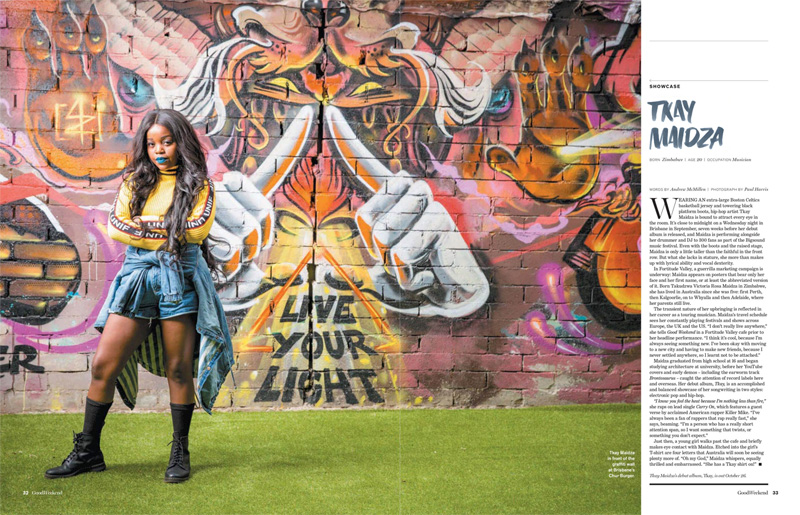
Wearing an extra-large Boston Celtics basketball jersey and towering black platform boots, hip-hop artist Tkay Maidza is bound to attract every eye in the room. It’s close to midnight on a Wednesday night in Brisbane in September, seven weeks before her debut album is released, and Maidza is performing alongside her drummer and DJ to 300 fans as part of the Bigsound music festival. Even with the boots and the raised stage, Maidza is only a little taller than the faithful in the front row. But what she lacks in stature, she more than makes up with lyrical ability and vocal dexterity.
In Fortitude Valley, a guerrilla marketing campaign is underway: Maidza, 20, appears on posters that bear only her face and her first name, or at least the abbreviated version of it. Born Takudzwa Victoria Rosa Maidza in Zimbabwe, she has lived in Australia since she was five: first Perth, then Kalgoorlie, on to Whyalla and then Adelaide, where her parents still live.
The transient nature of her upbringing is reflected in her career as a touring musician. Maidza’s travel schedule sees her constantly playing festivals and shows across Europe, the UK and the US. “I don’t really live anywhere,” she tells Good Weekend in a Fortitude Valley cafe prior to her headline performance. “I think it’s cool, because I’m always seeing something new. I’ve been okay with moving to a new city and having to make new friends, because I never settled anywhere, so I learnt not to be attached.”
Maidza graduated from high school at 16 and began studying architecture at university, before her YouTube covers and early demos – including the earworm track Brontosaurus – caught the attention of record labels here and overseas. Her debut album, Tkay, is an accomplished and balanced showcase of her songwriting in two styles: electronic pop and hip-hop.
“I know you feel the heat because I’m nothing less than fire,” she raps on lead single Carry On, which features a guest verse by acclaimed American rapper Killer Mike. “I’ve always been a fan of rappers that rap really fast,” she says, beaming. “I’m a person who has a really short attention span, so I want something that twists, or something you don’t expect.”
Just then, a young girl walks past the cafe and briefly makes eye contact with Maidza. Etched into the girl’s T-shirt are four letters that Australia will soon be seeing plenty more of. “Oh my God,” Maidza whispers, equally thrilled and embarrassed. “She has a Tkay shirt on!”
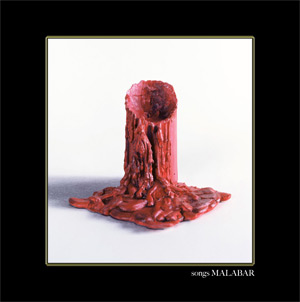
The second album by one of the least Google-friendly bands is short in duration – 39 minutes all up – but long on quality ideas.
A quartet based in Sydney, Songs were impressive on their self-titled 2009 debut: an eclectic set that centred on taut, jangle-pop numbers, but also found room for a couple of sprawling noise-rock epics. Malabar is a more focused collection than the first that favours the former style over the latter.
The duelling male-female vocals of songwriters Max Doyle and Ela Stiles are just as complementary as before. If anything, this is their defining trait, and the band uses it to stunning effect on this album’s sixth track, ‘Ringing Bells’. Late in the piece,
Stiles’s wordless melody weaves between sparkling guitar notes and the driving rhythm section: the result is one of the finest songs in their young career. Fans of veteran American indie trio Yo La Tengo will enjoy Songs’ approach, as the two bands have a few stylistic tropes in common.
Never is the mix any more complicated than a handful of instruments working together; all in all, Malabar represents a remarkable command of songwriting dynamics and sonics. ‘Looking Without Seeing’ is another highlight, built on a hypnotic bassline, featuring Stiles’s soaring vocals and the unexpected appearance of a flute.
The core duo clearly made the right decision in introducing Cameron Emerson-Elliot (guitar, formerly Youth Group) and Ben James (drums, Talons) into the fold, as the eight ideas here, plus the abbreviated ninth track, ‘Reprise’, a return to the haunting melody of ‘Ringing Bells’, are all winners.
A story that was published in the March 2013 issue of Rolling Stone Australia. Click the below image for a closer look, or read the article text underneath.
Hungry Kids Of Hungary Get Serious
Personal tragedies and isolation inform the Brisbane band’s second album
A band that writes a debut album brimming with sunny indie pop songs can be reasonably expected to write more of the same for their follow-up. Such was the situation in which Brisbane’s Hungry Kids of Hungary expected to find themselves following 2010’s Escapades, which hit a sweet-spot between classic Sixties-era pop and their modern take on the form. Real life has a habit of intervening, though.
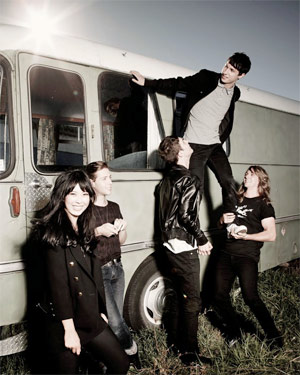
In March 2011, the four-piece – Dean McGrath (lead vocals, guitar), Kane Mazlin (lead vocals, keys), Ben Dalton (bass) and Ryan Strathie (drums) – were booked for a three-week tour in North America, including showcases at South By South West and Canadian Music Week – great opportunities to extend the band’s growing reputation overseas. Then, suddenly, all shows were cancelled and the band was homeward bound.
“2011 was a pretty full-on year for me,” says McGrath, whose experience triggered the return journey. “A lot went down. Naturally, that really coloured the songs I was writing.” He won’t be drawn on specifics, but notes that a “personal tragedy that affected someone I was close to” meant that he had to catch the next flight home.
“That incident echoed throughout the whole year for me,” the singer/guitarist continues. “It was an ongoing ordeal. It’s funny; writing songs for this band, we’ve always been fairly carefree, but after that [experience], these songs started coming out that were fairly intimate and personal. I was like, ‘shit, how are people going to react to this when they hear it?’”
The result is You’re A Shadow, a collection of songs somewhat divorced from Escapades’ brimming optimism. Kane Mazlin’s contributions were coloured by a sense of isolation and melancholy, too, in part influenced by a stint in Denmark while his girlfriend took an internship. “She was busy during the day. I was by myself: I didn’t speak Danish, didn’t know anyone,” he says, over a beer in late December. “That had a huge impact on two or three of the songs that I wrote.”
It wasn’t all bad news internationally, though: footage filmed at the Dutch festival Pinkpop in May 2012 shows the band performing before a crowd of thousands. “The Netherlands seems to be the area where it’s taken off, which is weird,” says McGrath. “When we started talking about doing overseas stuff, that’s not really the area that we imagined we’d be delving into.” Mazlin chimes in: “I think Nirvana started there, didn’t they? It’s a goldmine!”
After the rush of Pinkpop, though, it was an abrupt comedown in Belgium. The band played that show – “a giant blur of fun” is how Mazlin describes it – and then drove half a day to Antwerp. “We played a tiny show there, where no-one knew who we were,” says McGrath. “We were like, ‘what the hell? We only drove for a few hours, why don’t people know us here if they know us there?’ You forget that it’s a different country! We crossed a border, and they don’t get the same radio [stations]. Touring Australia has conditioned us to think that it’s natural to drive a few hours to get to the next big city!”
When it came time to choose which tracks made the new album, the four tended not to argue too much about what made it past the rehearsal room. “We do try to keep it to four equal votes, but if two of us feel really passionately about something, then the other two will probably either give it a go, or scrap it,” says McGrath. “Song-wise, we haven’t had to do that a lot leading up to this record, because we’ve seen eye-to-eye on most things without any need for debate – which makes life easier.”
Five things that influenced You’re A Shadow
Classic pop
Kane Mazlin: “I listened to a lot of Camera Obscura, The New Pornographers and The Shins; really nice, classic-sounding pop records with great guitar sounds.”
Live quintet
Dean McGrath: “Knowing that there’s a second guitarist during live shows drastically affected the way that I write my parts – it’s not so chordal, busy and strummy.”
Debut co-write
Mazlin: “We were on the same wavelength this time, to the point where we were able to co-write a song, ‘When Yesterday’s Gone’ – something we’d never done before.”
Deerhunter
McGrath: “I listened to Halcyon Digest on repeat for months, and it heavily influenced how we recorded a few songs in the studio: that ‘lo-fi pop songs, washed out’ approach.”
Producer Wayne Connolly
Mazlin: “He had great ideas from the very first email: he told [bassist] Ben Dalton, ‘you need a hollow-body bass and flatwound strings’. It sounded awesome!”
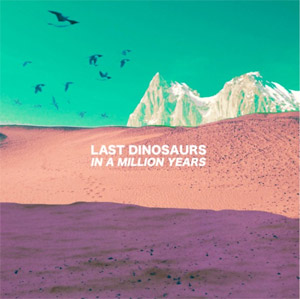
Does the world really need another guitar-pop band? Brisbane has proved fertile ground for the genre of late: the Grates, the John Steel Singers and Yves Klein Blue all achieved national notoriety in recent years mining this rich vein.
Funnily enough, all three are labelmates with newcomers Last Dinosaurs, suggesting that Dew Process has something of a local monopoly.
The young quartet’s debut LP practically radiates with neon intensity, so smooth, shiny and punchy is the production on these 11 tracks. Every frantic guitar strum and finicky hi-hat hit rings clean, and Sean Caskey’s vocal melodies are strong without becoming overbearing – though he does fall into the pop musician’s trap of writing instantly forgettable lyrics.
It’s either confidence or arrogance that convinces a band to open an album with its best track. I’m leaning toward the former, though Zoom is such a perfect example of guitar-pop done right that the rest of the album pales a little in comparison.
Earlier single Honolulu almost scales the same heights. The steel drums in Andy suit the track, but come off a little outdated in the wake of Sydney band the Holidays nailing the use of that instrument on its 2010 debut, Post Paradise. Spacey mid-album instrumental Satellites is the only unnecessary track here; its presence makes no sense amid an otherwise impressive, tight collection.
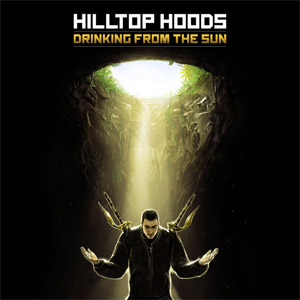
The best track on Hilltop Hoods’ sixth album, ‘Rattling the Keys to the Kingdom’, is built on the familiar lyrical trope of rap group pitting itself against its many competitors.
Yet here the narrative rings true: this Adelaide trio genuinely owns the Australian hip-hop throne, so when they rap “We came and we conquered” while a chant of “Hill-top! Hill-top!” repeats in the background, they’re being both arrogant and honest.
Their last release, 2009’s State of the Art, was the genre’s bestselling album yet. Fans and rivals alike look to these three to see where they’ll take the art form next; likely, more than a few hope they’ll falter and cede control to another crew.
To their disappointment, this offering is another jewel in the crown. The meaning of its title is made clear in the second of three interludes entitled ‘The Thirst’, when a voice explains “It’s a metaphor that we’re from an underground culture that’s risen up into the limelight; we’re down below, drinking from what’s coming above.”
Since the overwhelming success of the Hoods’ breakthrough 2003 release The Calling, Australian hip-hop has joined the mainstream. Where cultural cringe once confined the genre to the margins, the nation’s biggest music festivals are now just as likely to book hip-hop acts as they are pop and rock artists.
Drinking from the Sun represents the trio’s first real attempt at penetrating the North American market. It’s impossible to view this album through any other lens: all signs point to a concerted effort to impress newcomers.
At a touch over 41 minutes, it’s also their shortest album to date. While MCs Pressure and Suffa certainly can’t hide their distinctive accents, DJ Debris turns in perhaps his most impressive effort to date. The beats and instrumentation are uniformly world-class, and will give the trio its best shot yet at turning foreign ears.
They’ve also enlisted a pair of instantly recognisable American voices – Black Thought (of The Roots) and Chali 2na (Jurassic 5) – to lay down tidy, if unspectacular verses; another guest is Australian singer Sia Furler, who has written and sung for mega-sellers David Guetta and Flo Rida.
Lyrically, the two MCs discuss death (‘Lights Out’), break-ups (‘Now You’re Gone’), self-doubt (‘Good for Nothing’) and Suffa’s new-found sobriety (‘Shredding the Balloon’), while brass, strings, guitar and Debris’ beats fill out their now-signature sound.
In their May 2011 issue, Rolling Stone named 11 ‘artists to watch’ in 2011: Kimbra, Kids At Risk, Gold Fields, Tim & Jean, Zowie, Bleeding Knees Club, Metals, Royal Headache, Guineafowl, Miracle, and Nova Scotia.
I wrote short profiles of the latter three artists. Scanned images and text below.
Solo artist gets collaborative with the release of debut EP
Who: What began as a solo project in bandleader Sam Yeldham’s bedroom has since blossomed into a full-fledged indie pop band. Guineafowl released their first EP, Hello Anxiety, and Yeldham sees the concept progressing in a way that “strengthens that duality” between the band and the solo act. There’s always the possibility that a Guineafowl show could be Yeldham solo, or it could be with all six members. “It’s a matter of trying to marry the band with what I can do on my own,” he says.
Back Story: Hello Anxiety was recorded with pop whiz Scott Horscroft (Silverchair, The Presets) over two days. Owing to the mixture of full-band and solo recordings, Yeldham, 24, says the live shows are “quite different beasts”.
What’s Next: Yeldham plans to be a career artist. “I try to make it my day job. I work in a bar on the weekend, and spend my days recording and writing. Treating it like an occupation doesn’t zap the spontaneity out of it.
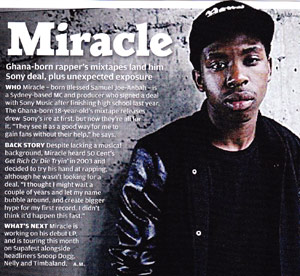
Ghana-born rapper’s mixtapes land him Sony deal, plus unexpected exposure
Who: Miracle – born Blessed Samuel Joe-Anbah – is a Sydney-based MC and producer who signed a record deal with Sony Music after finishing high school last year. The Ghana-born 18 year-old also has a production deal with Sony publishing imprint Nufirm. His ‘s mixtape releases drew Sony’s ire at first, but now they’re all for it. “They see it as a good way for me to gain fans without their help,” he says.
Back Story: Despite lacking a musical background, Miracle heard 50 Cent’s Get Rich Or Die Trying in 2003 and decided to try his hand at rapping, although he wasn’t looking for a deal. “I thought that I might wait a couple of years and let my name bubble around, and create bigger hype for my first record. I didn’t think it’d happen this fast.”
What’s Next? Miracle is currently working on his debut LP, and is touring this month on Supafest alongside headliners Snoop Dogg, Nelly and Timbaland.
Indie rockers weigh up their options after success of debut LP
Who: Brisbane-based indie quintet Nova Scotia’s self-titled debut album was released in February. “We’d like to make a career out of it,” says singer/guitarist Scott Brique, “but Australia’s such a big country, and we’re all working. It’s a bit hard to throw away what’s potentially a lot of money in pursuit of a funny little thing. But we all love it.”
Back Story: When Brique’s last band, Toadracer, folded while recording an album, he put the call out so that he could finish what he’s started. He’d found four local musicians to record their debut EP, 2007’s Bear Smashes Photocopier, within “a few weeks”.
What’s Next?: Besides returning to the studio to “belt out the next one,” Brique says, he also hints at the possibility of their first interstate tour in June or July.
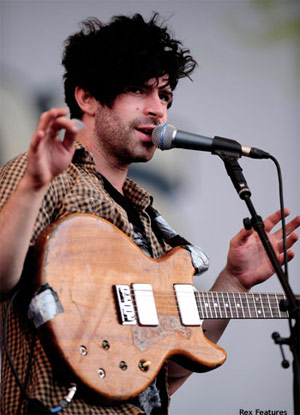
I interviewed Yannis Philippakis [pictured right], singer/guitarist of the British pop act Foals, for Scene Magazine in late December 2010, ahead of their Australian tour as part of Laneway Festival 2011 (which I reviewed for The Vine).
Andrew: I’ve got a confession to make. [Foals’ second album] Total Life Forever is one of my favourite albums of 2010.
Oh, thank you very much.
I discovered [Foals’ 2008 debut album] Antidotes a couple of years ago, but Total Life Forever sounds like an entirely different band. I like this band more. Do you?
Yannis: It’s not a different band…
I know it’s not, but the sound definitely has changed quite a lot.
Yeah. I mean, I don’t really like the idea of making albums adversary to each other. I find the whole ranking, hierarchy that happens every year kind of repellent and equally… I don’t really have the same perspective on it, obviously, as an externalist, but to us in the band it’s a very linear progression. It never really felt like we had a break, even after we finished Antidotes. I think the production is a hell of a lot more fully realised on Total Life Forever. At least to me, I still have a fondness for a lot of the songs on Antidotes, but I don’t listen to that record largely because of the production. I think that it’s great that people are acknowledging the progression, but to us it is one linear thing. We want to make a body of work. It’s not us trying to eradicate our past, as such.
Was there any self-doubt within the band, when your style of song writing started shifting after Antidotes?
There’s self-doubt every day. Of course. Not to do with writing new things, but there’s just… most of them comes from a wish to complete something that isn’t whole. Self-doubt is part of the game. It’s been there always and unless we write ‘Symphony No. 3’ by Gorecki – which we can’t, because it’s already been written – I don’t think we’re ever going to feel sated or complete. It’s just part of the fun as well, the masochistic element of it.
The moment we stopped recording Antidotes, we started doing b-sides for Antidotes, it started to change a lot, and there was much more experimentation. We started to implement a lot of the things that we learned from Dave Sitek, and make stuff that I think actually bridges the two albums quite closely. There are some b-sides; one in particular called ‘Gold Gold Gold‘, and another two called ‘Titan Arum‘ and ‘Glaciers‘. That’s what I mean; it felt linear. It didn’t feel like we ever stopped, we just always worked on stuff.
All that really happened was that, at the beginning when we started the band, there was a very definite and conscious process. It was a conscious aesthetic, that we wanted, and it was to do with techno, it was to do with a style of guitar playing, a visual aesthetic. Everything was very conscious and we wanted to have parameters on it. We were in love with the idea of bands like Devo that had a distinct world that they occupied.
Everything since then, once we felt like we attained that, everything now is about undoing that process and getting to a point which is kind of the reverse of that, where nothing is conscious and if I had the choice, I’d have a lobotomy and cut out the conscious part of my mind, so that I could just make music direct from the gut. I don’t know. Did that answer your question?
For sure. You mentioned the style of guitar playing the band has. I’ve always been fascinated by those little needly, palm-muted riffs that you guys come up with. Were there any particular artists that inspired that style of playing?
I think it was just something that we heard. I think there are a lot of bands, a lot of styles of guitar or even just playing strings [instruments], everything from string players in a classical piece, to [‘math rock’] bands like OXES and Don Caballero, and African Senegalese guitar. I think the main thing, at least personally for me, there was something about that way of guitar playing that just attracted me. I was never that fascinated by chords, and I actually neglected to learn how to work chord sequences and stuff. Instead, everything became about these ‘guitar tattoos’. It was more I had a lot of different types of music and different types of bands and wanted to cannibalise it and make it our own.
That’s always been a main bit of the band. We start playing stuff lower down the guitar. We play with chords sometimes now, but I think that will always be part of the sound because that is just the way that I play, naturally. It’s become muscle memory, now.
It’s certainly one of the band’s most distinctive elements. Did you always intend that to be the case, or did it arise when you started playing together?
You kind of progress, but yeah, it’s always been there, it predates the band. It’s how I learned how to play the guitar. I used to mimic and ape the guitar lines I liked, and they usually were like staccato, tight little phrases, that’s how I liked it. As I said, I was never really attracted to chords, or distortion pedals. I like the idea of a transparent guitar sound; a guitar sound that’s unashamed to be a clean guitar. I think that you can get as much power out of a clean guitar as you can out of a distorted guitar.
You’ve been touring pretty heavily this year, as we discussed. You’ve played a lot of shows. I’m interested to know how you keep it sounding fresh and feeling fresh night after night.
Just do loads of drugs, basically. That’s pretty much it. [laughs] Do you mean like the shows, or the actual lifestyle, or my body odour? What do you mean?
The music. If you’re playing the same songs each night, does it feel like you’re doing the same thing over and over?
It depends. I definitely think there’s a point at which bands stop touring and sometimes you can’t tell when that point is going to be, and you have to keep on playing for a bit longer. But that rarely happens. Each show is different, and we don’t play exactly the same set every night. Even if we were playing a similar set, we have quite a lot of room to improvise… well not improvisation, exactly, but we have negative space that we’re allowed to do different things. We allow space for chaos in the set, so that it’s not so tightly rehearsed, that it’s mechanical. It’s not choreographed, in that way.
I think that helps keep it fresh. I get tired of touring sometimes, but it’s not really often to do with the shows, more to do with the kind of… I don’t know, I’d probably be able to answer that question later on in the year because we’ve still got two more tours [note: this interview was conducted in mid-December 2010]. At the moment I feel pretty good about playing. I’m starting to feel restless about writing new things. I’ve been writing so many things and I think the more that appetite opens, the more pedestrian touring seems in comparison. The further we get away from the completion of the last record, the more difficult touring becomes, I think. Not because of playing the same stuff, just because there’s a new appetite that emerges, of wanting to do things.
When I was researching for this interview, I was surprised to discover your age. You’re two years older than I am. Was it a challenge to get people to take a bunch of teenagers seriously when the band first started?
How old are you?
22.
What do you mean? For who to take us seriously?
People in the music industry, as you were getting introduced to labels, and so forth.
I don’t know. I think that for a lot of young bands, that’s when the prime is, sometimes. I think people are savvy to that in the music industry. They kind of want to feed off young blood. You have a naivety. You’re not jaded in any sort of way. I think, if anything, it wasn’t an issue of persuading them, it was more like trying to have them not suck our blood. I’m the youngest, but I wasn’t that young. We’ve all been playing in bands for a long time. I don’t know, I didn’t really feel that. I don’t feel as young as I used to, though.
Do you feel that as you get older you’re being taken more seriously?
It depends on what you mean. Are we talking about people that listen to records, are you talking about critics?
All of the above.
Yeah, I think so, in some way. I think the critics, there is something that make critics recoil if you seem like a young, cocky upstart. When we started doing interviews and stuff, I really didn’t have that much of a filter on my brain. A lot of time I really didn’t know where I was, in terms of how things would be relayed in the press. I think that with time comes an understanding. I understand myself better now. I think as you get older – what were you like when you were 19?
I was a dumbass.
[laughs] Things change. I think it’s not just to do with age. It’s to do with the fact that we made the second record, and hopefully it didn’t stink, and the people believe in you that little bit more because you’re not just putting out a hype record that, in theory, is a one-hit wonder, and also a compilation of songs that you spent 10 years to write. I think that we’ve conducted ourselves, at least since the beginning, in a way that we feel proud of, and hopefully people have a belief in a certain type of integrity – or an attempt at integrity – which will mean that we gain some respect in that field.
Yeah, sure. Before we finish up, I wanted to ask you about Oxford briefly. Earlier this year I came across a documentary called Anyone Can Play Guitar, which I note you’re involved with. I’m particularly interested in Oxford because I love both Ride and Swervedriver.
Right.
When you were growing up in the city, was there a sense of wanting to follow in the footsteps of other Oxford bands like those two perhaps?
Yeah, it wasn’t those two, but there were other ones. There was a band that was pretty much our contemporaries, but a little bit older: Youthmovies. Oxford definitely was like a big factor in the way we started to think about music. I obviously knew about Radiohead and Supergrass, but Ride and Swervedriver in particular, I wasn’t that aware of. When I was growing up I paid attention to local fledgling bands. Those bands [Ride and Swervedriver], I don’t think they were really playing Oxford when I was growing up, so I wasn’t that aware of them. A band called Youthmovies had pretty much the biggest influence on Oxford in general and people my age, and it’s still being felt now. I think it’s a very interesting place to live, if you’re not an academic.
Is there a sense of being able to give something back to the scene that helped foster Foals, now that you’ve got some attention?
Yeah, we take bands that we like on tour with us, and I try to talk about them in interviews. But not really out of a sense of… there’s nothing magnanimous about it, it’s just that we like the bands and a lot of them are our friends. I’d rather talk about my friends, because it’s more personal to me.
Last question. A friend asked me to say “pretty please, will you leak the Dave Sitek mix of Antidotes?”
[laughs] Ehh, maybe.
Okay, good. Thanks for your time mate.
A pleasure. Thank you.
++
For more Foals, visit their website. The music video for their song ‘Blue Blood‘‘ is embedded below.
On debut album ‘The Experiment’, Art Vs. Science understand that repetition is the foundation of dance music – but it’s a trick that wears thin, writes ANDREW MCMILLEN.
Popular culture generally exists to meet demand. Most artists spend their lives attempting to offer works that resonate with as wide an audience as possible. By tapping into popular sentiments, savvy artists can short-circuit the often lengthy process of artistic acceptance. Case in point: Art Vs. Science, who – legend has it – formed on the spot while its three members stood watching Daft Punk playing in Sydney some years ago. The crowd was going bonkers for two dudes in robot suits atop a glowing pyramid. They probably stood and wondered aloud: “Why not us?”
Following on from a high-profile spot at Splendour In The Grass in 2008, thanks largely to debut single ‘Flippers’ – whose goofy chorus was comprised entirely of “Hey! Ho! Use your flippers to get down!” – and nearly topping the 2009 triple j Hottest 100 with ‘Parlez Vous Francais?’, Art Vs. Science have emerged with their first album, The Experiment. True to form, it’s packed from top to tail with brash electronica, delivered with their now-trademark dance-punk attitude. Here, we hear guitars furiously tapping away at fretboards during oh-so obvious breakdowns that lead into slamming synth-led choruses; all custom-made for hands-in-the-air dance festival sets. (By the by, this is a band who’s known for performing live covers of ‘Where’s Your Head At?’ and ‘Boom! Shake The Room’ to tents full of peaking munters).
In isolation, The Experiment is a dull record, because these songs won’t come to life until they’re heard and felt in a live environment. A five-minute instrumental rave-up like ‘Meteor (I Feel Fine)’ sounds foolish playing on your home stereo (though interestingly, it’s the closest they’ve gotten to sounding like Daft Punk). Several songs here are based around single words or short phrases – ‘Higher’, ‘Bumblebee’, ‘Sledgehammer’ – which seem to be included for the sole purpose of giving crowds something nonsensical to shout amid the pulsing synth din.
For the full review, visit Mess+Noise. For more Art Vs. Science, visit their website. The music video for their song ‘Finally See Our Way‘ is embedded below.
Throughout their long musical history, the island nation of New Zealand couldn’t lay claim to a single blog-worthy buzz band. Split Enz? Pre-internet, by a long shot. Shihad? They’ve been mining the same hard rock territory for 20-plus years, and they’re unlikely to extend their influence beyond anyone who’s not already a fan. Cut Off Your Hands? A contender, sure, but they’ve not released new music since 2008. Die! Die! Die!? Amazing band, but probably too punk-niche to be retweetable. Flight Of The Conchords? More of a comedy act than musical, I’d argue.
Formed around the creative partnership of Thom Powers and Alisa Xayalith, The Naked and Famous took their name from a Tricky song. Soon joined by electronic whiz Aaron Short and then David Beadle and Jesse Wood, The Naked and Famous’ fortunes took off with the release of ‘Young Blood’ in May 2010, much to the delight of music fans with an urge to scratch the same itch first disturbed by Passion Pit (and earlier, by MGMT’s debut). A divine slice of electro indie-pop, ‘Young Blood’ – 900,000 views and counting – is a monster single that taps right into the vein of naïve adolescence (for real: its first line is “We’re only young and naïve still”). The September-released album, Passive Me, Aggressive You, shot to #1 on the New Zealand off the back of that single and its equally addictive follow-up, ‘Punching In A Dream’. (Interestingly, first single ‘All Of This’ was released in November 2009, nearly a year before the album’s release. It failed to chart.)
Despite their neon-glow, both singles betray the band’s true sound. Influenced by acts like Nine Inch Nails and Tool, Passive Me, Aggressive You’s non-singles exhibit more of a fascination with walls of shoegaze-like guitars and electronic sequencing than bright synth-pop. This is promising; it suggests that The Naked And Famous have a plan that extends much further than a couple of hypeworthy singles. Ahead of their appearance on the 2011 Big Day Out tour, TheVine connected with the band’s co-founder, singer, guitarist and producer, Thom Powers, to talk hype, remaining independent, and Reznor.
—
I’ve seen the word ‘hipster’ getting thrown in the band’s direction a bit lately. How do you respond to that?
Dissing us, are they?
Sometimes it’s positive, sometimes it’s negative. The connotation of ‘hipster’ tends to shift a bit.
I don’t know. Hipsters are always going to exist, I think, and then they move out of home and grow up I guess. [laughs] I’m not sure, I don’t know. I don’t really know what to do about it. I’m not one of them, so I can’t really relate.
Good answer. Do you read your own press?
Sometimes, yeah. I skim through it. I try not to take it all too seriously. But it’s really hard unless you’re some sort of Zen Buddhist to actually detach and not become emotional about things, so it’s more to protect yourself. Don’t read the good ones, and don’t read the bad ones either. I do skim through them. I take it at face value, really.
Do you care about what people think about the band?
It’s a weird question. Yeah, I think I do, but at the same time if all I cared about was what people thought about [us], it would be superficial. I think that’s a pretty complicated question to ask, because I would care about what people thought if they thought it was destroying the world. But if some hipster thinks that I’m not cool enough, and he wants to call me a ‘faggot’ on the Internet, then I don’t really care about that. I can’t quite answer that question because there are too many social levels to answer it on.
Fact: The Stooges are one of the most influential rock bands of all time.
Fact: Raw Power is one of the most influential rock albums of all time.
Released in 1973 to sparse acclaim and an underwhelming commercial performance – Raw Power peaked at #182 on the Billboard charts – the album eventually spread like a virus throughout the next generation of rock musicians, many of whom would introduce their own fans to The Stooges. Among them: Kurt Cobain, who named Raw Power his all-time favourite; Johnny Marr of The Smiths (and, more recently, Modest Mouse and The Cribs); Henry Rollins (who has the words ‘Search And Destroy’ tattooed across his shoulder blades); and Steve Jones of The Sex Pistols, who says he learned to play guitar by taking speed and playing along to Raw Power.
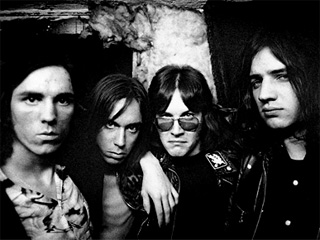
Of the album’s guitarist, James Williamson (main pic, far left – 1972), Johnny Marr said: “I’m his biggest fan. He has the technical ability of Jimmy Page without being as studious, and the swagger of Keith Richards without being sloppy. He’s both demonic and intellectual, almost how you would imagine Darth Vader to sound if he was in a band.” Williamson first joined The Stooges in 1971 as second guitarist, but the band was dissolving before his eyes. Only a recording offer from David Bowie to Williamson and vocalist Iggy Pop got them back together for one last stab at rock stardom as The Stooges. With the Asheton brothers in tow – Scott (drums) and Ron (bass at the time, but he’d later play guitar during more recent incarnations of the band, up until his death in 2009) – Williamson co-wrote Raw Power with Iggy and played all of the guitar parts. Despite Bowie’s involvement, though, the record didn’t perform commercially, and the band again split. Williamson went on to collaborate with Iggy as a writer and producer for a couple of Pop’s solo ventures (1977’s Kill City and 1979’s New Values), but after falling out with the singer over Soldier’s recording methods, the pair remained estranged for 16 years.
What happened next is one of rock music’s strangest tales: James Williamson gave up on music entirely, graduated from California State Polytechnic University with a degree in electrical engineering, and went on to work for Sony Electronics for 25 years. Most of his colleagues had no idea of Williamson’s involvement with The Stooges, despite Iggy Pop doggedly working himself into a position of international notoriety as one of rock’s most outlandish performers. The Raw Power guitarist wanted nothing to do with it. It took a university essay written by Williamson’s son, entitled ‘Coffins In The Corner’ – in reference to his father’s guitar cases sitting up against the wall, unopened all throughout his childhood and adolescence – to provoke the guitarist to finally accept Iggy’s offer to reform the band in the wake of Ron Asheton’s death last year. It also helped that Sony offered him a generous early retirement package from his role as Vice President of Technology Standards. Now Williamson, aged 61, is touring the world, playing The Stooges’ celebrated catalogue to a new generation. The Vine connected with the guitarist ahead of the band’s appearance on the Big Day Out tour in January and February 2011.
—
Andrew, how are you doing?
I’m very well, thanks. It’s 7 a.m.
7a.m.? [laughs] I’m sorry to put you through that, but I guess we could find the time we could both do it.
Absolutely. It’s an honour, mate. I found your website while I was researching for this interview. I was intrigued by a couple of things. First, what’s the origin of your nickname?
Oh, Straight James? After The Stooges had split up, Iggy came out with an album called The Idiot, and he had a song on there called ‘The Dum Dum Boys’ (link). In that song he talks about “Ron did this,” and “Scott, he did that”, and then “What about James? He’s gone straight”. So after that, I tongue-in-cheek named my publishing company ‘Straight James Music’ and it kinda stuck from there. I’ve had it ever since.
For more of The Stooges, visit your local record store / online outlet and immediately buy/download their three albums: The Stooges,Fun House, and Raw Power. Thank me later.
At its heart, Escapades – the debut full-length by Brisbane quartet Hungry Kids Of Hungary – is unashamedly a pop record. ‘Coming Around’ is as brash an album opener as you could get, and whether intentional or not, it immediately sets the tone for whether you’ll find this band palatable or sickening. Boosted by Matt Redlich’s crisp pop production, wherein the vocals and harmonies are pushed high in the mix, the track shimmers with a tangible sense of tension – and not just of the sexual variety, though double entendres abound (“Everything was so hard … for us”, “I don’t want you coming around/ But I’ll think you’ll come”). The song sparkles with instrumental embellishment – a distorted lead guitar here, a shifting piano chord progression there – which doens’t obscure the band’s vocal strengths. Put simply, ‘Coming Around’ sounds massive, and belongs up there with the best “side one, track ones” of the year.
With two songwriters in the mix – singer/keyboardist Kane Mazlin, and singer/guitarist Dean McGrath – things could easily get a little cluttered, yet Hungry Kids sidestep this by configuring a balanced tracklist (seven credits to McGrath, five to Mazlin) and exhibiting an unwillingness to over-complicate things. A barely-there overdub in ‘Closer Apart’ – you hear someone clear their throat, light a cigarette, then exhale – adds a sense of intimacy to a track that’s probably the most wholly demonstrative of their songwriting abilities. The subdued rhythm section soon blossoms into an expansive suite, which benefits greatly from the subtle inclusion of a string section. Mazlin’s ‘You Ain’t Always There’ mines a similar vein; so too McGrath’s ‘Eat Your Heart Out’.
Full review at Mess+Noise. More Hungry Kids Of Hungary on MySpace. The music video for their song ‘Coming Around‘ is embedded below.
 The second album by one of the least Google-friendly bands is short in duration – 39 minutes all up – but long on quality ideas.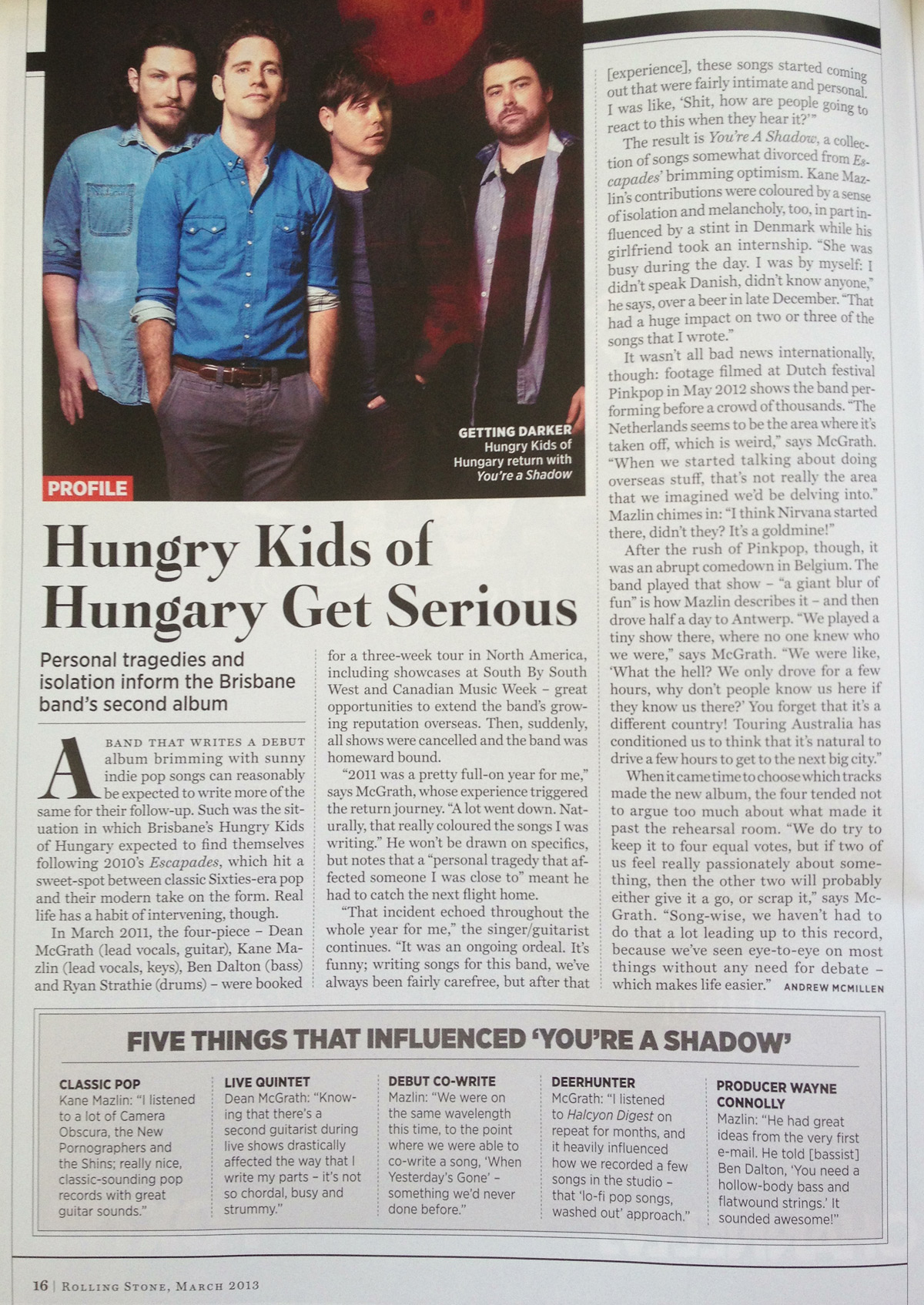
 Does the world really need another guitar-pop band? Brisbane has proved fertile ground for the genre of late: the Grates, the John Steel Singers and Yves Klein Blue all achieved national notoriety in recent years mining this rich vein.
 The best track on Hilltop Hoods’ sixth album, ‘Rattling the Keys to the Kingdom’, is built on the familiar lyrical trope of rap group pitting itself against its many competitors.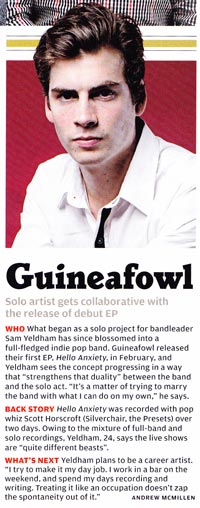
 Who: Miracle – born Blessed Samuel Joe-Anbah – is a Sydney-based MC and producer who signed a record deal with Sony Music after finishing high school last year. The Ghana-born 18 year-old also has a production deal with Sony publishing imprint Nufirm. His ‘s mixtape releases drew Sony’s ire at first, but now they’re all for it. “They see it as a good way for me to gain fans without their help,” he says.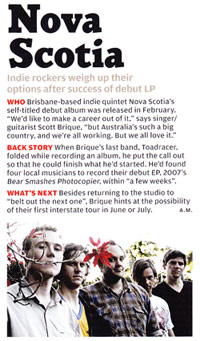
 I interviewed Yannis Philippakis [pictured right], singer/guitarist of the British pop act
  You kind of progress, but yeah, it’s always been there, it predates the band. It’s how I learned how to play the guitar. I used to mimic and ape the guitar lines I liked, and they usually were like staccato, tight little phrases, that’s how I liked it. As I said, I was never really attracted to chords, or distortion pedals. I like the idea of a transparent guitar sound; a guitar sound that’s unashamed to be a clean guitar. I think that you can get as much power out of a clean guitar as you can out of a distorted guitar.
 Yeah, I think so, in some way. I think the critics, there is something that make critics recoil if you seem like a young, cocky upstart. When we started doing interviews and stuff, I really didn’t have that much of a filter on my brain. A lot of time I really didn’t know where I was, in terms of how things would be relayed in the press. I think that with time comes an understanding. I understand myself better now. I think as you get older – what were you like when you were 19?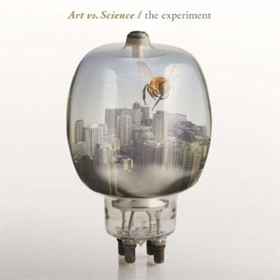
 What happened next is one of rock music’s strangest tales: James Williamson gave up on music entirely, graduated from California State Polytechnic University with a degree in electrical engineering, and went on to work for Sony Electronics for 25 years. Most of his colleagues had no idea of Williamson’s involvement with The Stooges, despite Iggy Pop doggedly working himself into a position of international notoriety as one of rock’s most outlandish performers. The Raw Power guitarist wanted nothing to do with it. It took a university essay written by Williamson’s son, entitled ‘Coffins In The Corner’ – in reference to his father’s guitar cases sitting up against the wall, unopened all throughout his childhood and adolescence – to provoke the guitarist to finally accept Iggy’s offer to reform the band in the wake of Ron Asheton’s death last year. It also helped that Sony offered him a generous early retirement package from his role as Vice President of Technology Standards. Now Williamson, aged 61, is touring the world, playing The Stooges’ celebrated catalogue to a new generation. The Vine connected with the guitarist ahead of the band’s appearance on the Big Day Out tour in January and February 2011.
 Hungry Kids Of Hungary – Escapades