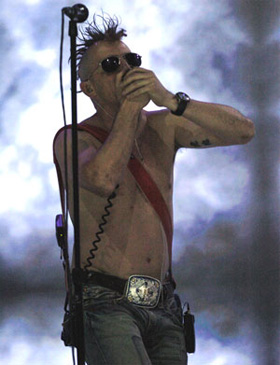
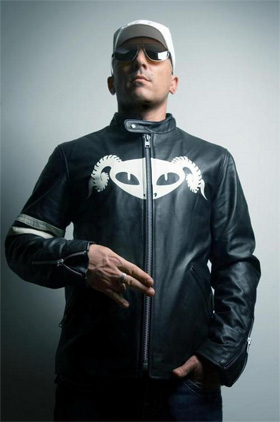
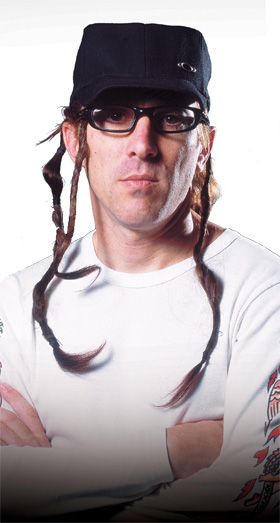
Don’t ask about Tool. Don’t ask about A Perfect Circle. Definitely don’t ask when Tool’s next album – their first since 2006’s 10,000 Days – is due. These are the publicist-stated rules of engagement when interviewing Maynard James Keenan, frontman of those two bands and also Puscifer, a “multimedia project” that encompasses music, film, performance, wine and clothing, and has released two albums so far: 2007’s V Is For Vagina and 2011’s Conditions Of My Parole. Keenan is touring the Puscifer show outside of North America for the first time in February 2013, with three Australian theatre shows booked around his commitments with A Perfect Circle at Soundwave Festival.
These interview restrictions open up lines of questioning largely outside of Keenan’s music, which has enthralled millions of hard rock fans since Tool’s first LP, Undertow, was released nearly 20 years ago. The singer owns and operates Merkin Vineyards and Caduceus Cellars in Arizona, where he’s lived for 17 years. Winemaking would be a gimmick – a distraction from his enormously popular musical outlets – if only Keenan wasn’t so damn serious about it. Multi-million dollar start-up costs aside, the business was built with a view to be sustainable, and Keenan says he has met this goal. A remarkable achievement, considering that Arizona had no wine reputation to speak of prior to Keenan’s involvement. Such is the pulling power of the man, perhaps, but it also helps that the wine is fantastic.
—
Hello Maynard.Where are you calling from?
The bunker. [At the Caduceus winery]
Australia was the first country to import your wine: I’ve met the two guys behind [Caduceus wine importers] Sip & Listen here in Brisbane. I’m guessing that exporting was always on your list of goals, but were you surprised the Australian opportunity came up as soon as it did?
I guess so. We don’t really have a lot of volume, so that we had enough to actually export was a surprise. It was good timing; we had a little extra.
Australians will also be the first outside of North America to see Puscifer tour. Why is that?
The opportunity came up. It’s a tough project to get out of the country because of all the extra stuff we put into the performance. It had to be the right scenario, the right situation for us to be able to afford to do it.
You said in [2010 documentary] Blood Into Wine that touring becomes more gruelling on your body as you get older. How do you take care of yourself, and your voice, while on the road these days?
Just like anybody else would: just pace yourself, get good sleep.
Is that different to what you were doing when you were touring in your 20s and 30s?
Well, you know, back then you have a little more resilience, and you can kinda push it a little harder, move a little faster. You don’t necessarily have to pay attention to maintenance much.
I get the impression that all of your musical output these days – touring, releasing music – is done primarily to fund your wine business. Am I way off the mark?
Hmm… no. I think the touring is just because we like to play music and we like to perform. The wine business – it takes care of itself. Of course, there’s a lot of initial investment, from prior touring. I used a lot of that money to get it going, but that was instead of buying a Ferrari.
So after the initial start-up cost, the ongoing costs aren’t so great?
Yeah, I mean, it’s barely paying for itself, but it is sustaining itself. The point of even doing it was to establish a sustainable endeavour.
Do you feel that reorganising your life around the wine business has had a positive effect on your art so far?
I would think so, yeah. It’s in tune with where I am. So if your art is, in theory, you expressing your take on the world, or your place in it, or your interaction with it, then I guess, yeah, it’s more in tune.
Do you find it freeing to create music around the wine season, or restrictive?
I haven’t really found anything that was restrictive. I kinda schedule things as I schedule ‘em. There’s a timing involved with harvest, so a lot of stuff has to take a backseat during that period of time, but it’s not like I’m writing every day.
Which is more satisfying: completing a recording session, or finishing a wine harvest?
It sounds like a set-up to a bad joke. What happens when you combine Californian progressive metal band Tool, a couple of entrepreneurial Brisbane men in their mid-30s, and wine made high in the Arizona desert?
While the punchline mightn’t make you laugh, the fruit of their labour is likely to prick your tastebuds. This weekend, Brisbane locals Matt Irwin and Trent Allen will conduct the first public tasting event for their wine import company, sip&listen. The pair has imported more than 5000 bottles directly from Tool singer Maynard James Keenan’s Arizona Stronghold Vineyards.
Keenan’s deal with sip&listen marks the first time these wines have been exported outside of North America. The germ of the idea came about when Irwin, who has worked in the Canadian wine industry for the last five years, played host to his long-time friend Allen on an annual ski trip to Alberta in early 2011.
“I’d saved this one bottle of [2006 red wine] Chupacabra for Trent, because I knew he was a massive music guy,” Irwin says.
“We put [the Tool album] Salival on the stereo, downed the bottle together, and the ideas just started flowing. Trent said to me, ‘there’s no reason why this isn’t in Australia. This is amazing wine, there’s a great story – why don’t we do it?’ I said, ‘you’re out of your mind! There’s got to be a reason why this wine hasn’t come to Australia yet. Why is it going to come through two dudes like us?’.”
A couple of days before Allen flew to Canada, Irwin set his friend some homework.
“Matt told me to track down this documentary called Blood Into Wine,” Allen says.
“It hasn’t been released in Australia yet, so I found a really terrible internet stream, which was buffering every 30 seconds, and watched it. It’s an amazing story, and a fantastic film.”
The 2010 documentary follows the tumultuous first years of Keenan’s venture into the vineyard alongside his winemaking mentor, Eric Glomski [both pictured above].
“We’re doing everything we can to try and secure an Australian release, because after anyone watches it, the first thing they want to do is grab a bottle of the wine,” Allen says.
The day after consuming that life-changing bottle of Chupacabra, the two friends sat down and soberly nutted out a business plan. Irwin made the initial approach to Arizona Stronghold; national sales manager Paula Woolsey received his email. Her first priority was to ascertain that the two Australians weren’t simply Tool fanboys trying to sneak a meeting with the notoriously private Keenan.
“That kind of thing comes with the territory,” Woolsey tells brisbanetimes.com.au. “It’s my job to whittle out the extreme ‘stalker fans’. The point is to sell wine from Arizona, not ‘Tool wine’. Maynard does not mix wine with Tool; he is a member of Tool, but it is not his band.”
(Woolsey points out that, when Keenan is touring with his side project band Puscifer, “we do the wine thing all over the place: on stage, before the show, during the show!”)
Woolsey had a three-month dialogue with Irwin before she allowed sip&listen to take the first shipment of 5000 bottles.
“Having been in the wine business for over 20 years, I can honestly say that Australia has always held a special place in my wine heart,” Woolsey says.
“We are all up [to date] on the trials and tribulations of the Aussie wine market; from too many vines in the ground and animal labels, to droughts and lost market share. All wine markets run in cycles.”
Keenan, who has performed with the multi-platinum selling Tool since 1990 and last toured here in January 2011 as Big Day Out headliner, has been quietly working away at winemaking in Arizona since the mid-2000s.
The region isn’t exactly renowned for its grape fertility; the Stronghold’s business motto reads, “Redefining the desert with high elevation wine”.
True to his evasive reputation, the sip&listen pair have had little direct contact with the singer.
“He’s so busy with all of his other projects,” Irwin says.
“He signed off on it around a month into the process. We got an email from him saying, ‘Let’s do it. I love Australia, let’s move ahead with this’. But from that point onwards, he’s left it with his team in Arizona to manage his business.”
Allen is by far the bigger fan, having seen Tool perform live 10 times throughout the world, including at a bullring in Madrid in 2006.
Irwin is less enthusiastic: “I am a fan, but it really was the wine that spoke to me,” he says.
“It’s really, really good juice.”
Their VIP tasting event will take place at Wine Experience in Rosalie on Sunday 27 May 2012.
The $170 cost includes four Arizona Stronghold wines: Tazi (white), Dayden (rosé), Nachise (red), and the 2006 Chupacabra which set the wheels in motion last year.
As the business name indicates, sip&listen are intent on marrying the wine-tasting experience with music, Tool or otherwise.
“We’ve always seen that beer and music goes together; all the beer and spirit companies promote concerts, festivals or clubs,” Irwin says.
“Wine’s never been taken to that degree, because so many people have made it into an ‘exclusive’ drink. ‘Oh, you don’t like that wine? You mustn’t understand it.’ Wine’s been taken to a level that isn’t inclusive of people.”
“We’re hoping to turn that around,” he says, “so that it’s not a bad thing to stand in front of a live band with a glass of wine in your hand.”
For more on sip&listen, visit their website. The trailer for the Blood Into Winedocumentary is embedded below.
Although it wasn’t a party in the traditional sense, 2010’s No Sleep Til festival put thousands of music fans in a celebratory mood. According to promoter Jaddan Comerford, the mission statement was simply “to put on a punk rock event”. Headlined by Megadeth, NOFX and Dropkick Murphys, No Sleep took in five Australian capitals, as well as Auckland.
“There was a bit of stress involved,” 27 year-old Jaddan admits. The Brisbane event was most memorable, as it rained all day.
Jaddan says he love “organisation and making sure the ‘product’ is good”. That means ensuring people are enjoying themselves at the festival, and that there’s enough food, drinks, and toilets.
Though No Sleep Til 2011 is unconfirmed, Jaddan is busy as the owner of UNFD, a ‘music services’ company he founded. Part label, part manangement/marketing/booking agency, UNFD recently announced a deal with Warner Music.
Festival models Jaddan digs: “I love Laneway. It’s small, it books new acts and actually breaks them in the market. I also love the way they use venues not everyone else uses.”
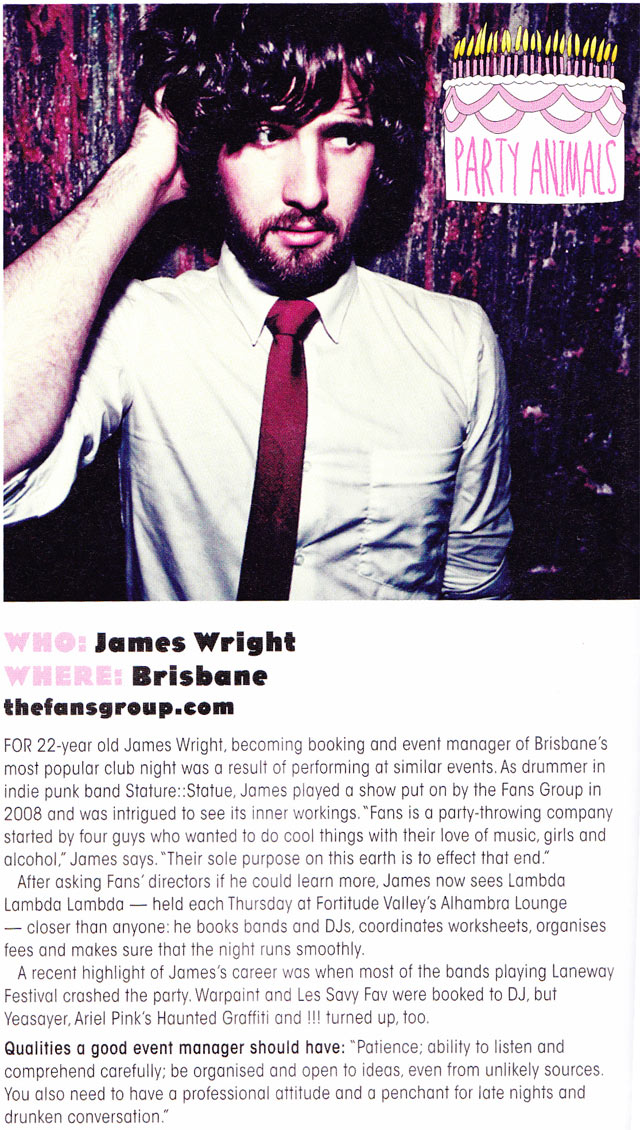
For 22-year old James Wright, becoming booking and event manager of Brisbane’s most popular club night was a result of performing at similar events. As drummer in indie punk band Stature::Statue , James played a show put on by the Fans Group in 2008 and was intrigued to see its inner workings. “Fans is a party-throwing company started by four guys who wanted to do cool things with their love of music, girls and alcohol,” James says. “Their sole purpose on this earth is to effect that end.”
After asking Fans’ directors if he could learn more, James now sees Lambda Lambda Lambda – held each Thursday at Fortitude Valley’s Alhambra Lounge – closer than anyone: he books bands and DJs, coordinates worksheets, organises fees and makes sure that the night runs smoothly.
A recent highlight of James’ career was when most of the bands playing Laneway Festival crashed the party. Warpaint and Les Savy Fav were booked to DJ, but Yeasayer, Ariel Pink’s Haunted Graffiti and !!! turned up, too.
Qualities a good event manager should have: “Patience; ability to listen and comprehend carefully; be organised and open to ideas, even from unlikely sources. You also need to have a professional attitude and a penchant for late nights and drunken conversation.”
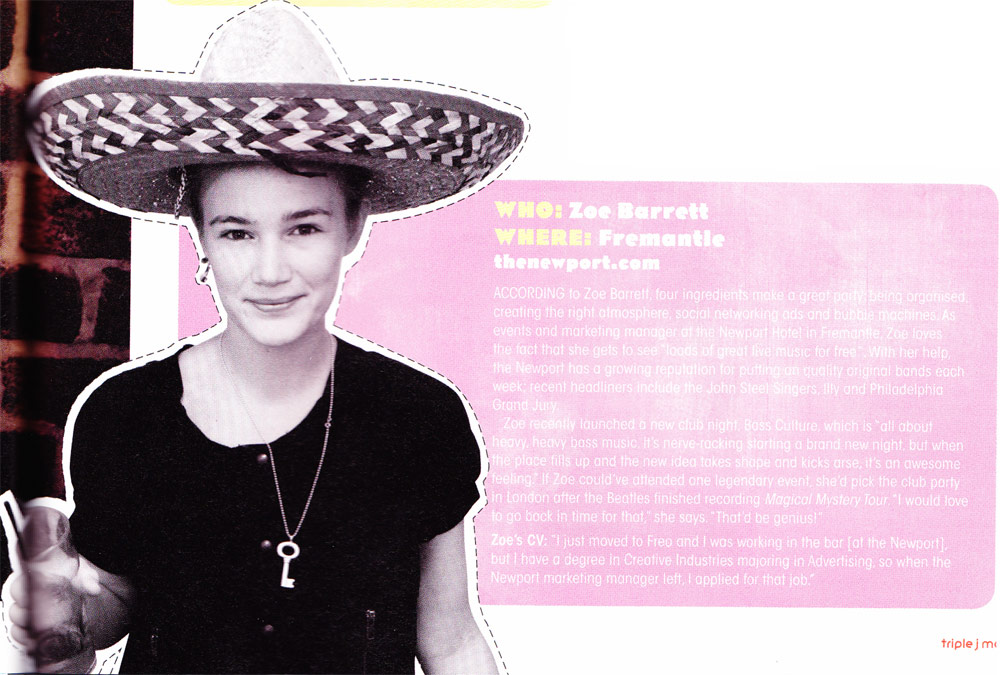
According to Zoe Barrett, four ingredients comprise a great party: being organised, creating the right atmosphere, social networking ads, and bubble machines. As Events and Marketing Manager at the Newport Hotel in Fremantle, Zoe loves the fact that she gets to see “loads of great live music for free”. With her help, the Newport has a growing reputation for putting on quality original bands each week; recent headliners include the John Steel Singers, Illy and Philadelphia Grand Jury.
Zoe recently launched a new club night, Bass Culture, which is “all about heavy, heavy bass music. It’s nerve-racking starting a brand new night,” Zoe says, “but when the place fills up and the new idea takes shape and kicks ass, it’s an awesome feeling.” If Zoe could’ve attended one legendary event, she’d pick the club party in London after The Beatles finished recording Magical Mystery Tour. “I would love to go back in time for that,” she says. “That’d be genius!”
Zoe’s CV: “I just moved to Freo and I was working at the bar [at the Newport] but I have a degree in Creative Industries majoring in Advertising, so when the Newport marketing manager left, I applied for that job.”
Tool Brisbane Entertainment Centre
Monday 24 January 2011
First, a confession: I am guilty of taking Tool too seriously. Throughout my adolescence, they were my one and only; my idea of modern music’s apex. I took the ride, I swallowed the pill. I bought the shirts. I’ve listened to Tool’s music more than that of any other band. Theirs was the first proper live show I saw, in 2002, aged 14. It blew my tiny mind.
So it’s with a continuous sense of melancholy that I look upon tonight’s proceedings, and with fresh eyes and broader musical experiences, realise that there’s not a whole lot about Tool that’s remarkable. Having bought into their idea of reality – the anti-image, the mystique, the overwrought psychoanalytical component of it all – so heavily in my formative years, to step back into their world is to question past allegiances. Theirs is a musical rabbit hole deeper than most bands are able to conceive, let alone dig; sift through the smoke and smug, though, and you’re left with a handful of unwieldy hard rock songs that mean a lot to a lot of people.
The band play ten songs in nearly two hours, beginning with the last track from 1996’s Aenima and ending with the same album’s first track. Timothy Leary’s“Think for yourself, question authority” spiel resonates around the room at the beginning of ‘Third Eye’, a 15 minute-long trek through some of Tool’s weightiest subject matter, and heaviest musicianship. It’s intended to be an eye-opening beginning, no doubt, and it succeeds: yellow lights flash into the audience during the song’s chorus-of-sorts (“In / Out”, sings Maynard Keenan, over and over), while the screens behind the band swirl with violent colour and movement. It is the longest, and probably most difficult song in their repertoire, comprising many different suites which require complete attention from each player. They nail it, though, and thus set the bar high for the set’s remainder. To their credit, nothing they play tonight is met with anything less than their best, and when they’re in lockstep – as in the thunderous midsection of ‘Jambi’ – they’re pretty much untouchable. Adam Jones’ talkbox guitar solo in this song is one of their most inspired musical decisions. It takes me back to the first time I heard it, having bought the album – 10,000 Days – at a midnight launch in 2006. (Remember when people used to line up to buy music? Jesus.)
I am mainly posting this review because of the amazing comments attached to that article. Please click the above link to read all of them; 30+, at time of publishing this blog. I got this amazing hatemail from a Tool fan in a private message on The Vine, which I just have to share with you verbatim. Thanks to ‘DR-HAZE666’ for the feedback.
WHITE NOISE! MELANCHOLY? TOOL REVIEW GONE WRONG!!!
Your review is a Joke my friend….. Good for a laugh, and an exceptional insight to your intelligence & taste in music. But, i guess thats why your a journalist & not a musician. AND THANK GOD FOR THAT!!!
WHITE NOISE”- For future reference,white noise is the sound an old analog T.V makes when turning it to a channel that has not been tuned in to a particular frequency. You know, like continuously moving sand paper, “SSSSHSHHHHHHHHHH” What u heard was 3 “Access Virus” synth’s, in unison. Being utilised to create a trance like,state of concsiousness, & show casing new CGI art, created by Adam Jones. Leaving the band to have a well earned 5minute breather. Also, adjustments to Danny’s kit were done, snare changes etc, whilst this was happening. And tracks ‘ Jimmy’ & ‘H’ (2 tracks played @ Aenima tour) are well beyond 5 minutes in there duration. Which is gives us another insight to your attention span. But hey, each to there own. I was stoked to hear them play tracks like right in two, & intension, as they haven’t played these tunes in previous tours. And intension did not have ANY sequenced parts at all. THEY PLAY EVERYTHING LIVE!!! Stop with the sweeping assumptions, and do some research you fool!!!
You just saw the smartest, most innovative rock band of this generation, on the biggest stage & light production they’ve brought out here for any previous tour, and you missed it completely. Congratulations bro!!! You may be only a freelance journalist, but you certainly have the ‘BULLSHITTING’ gift of a professional journalist. And yr another reason why bands such as TOOL, & majority of the rest world, detest the media, and the uneducated opinion’s spread to the “TINY MINDS” of the general public.
So let me get this right…Your a TOOL nerd that has no appreciation for the composition,musicality & musicianship of “SCHISM”. Your high point of the gig was when Justin wallowed a slightly out of tune vocal part, over the chorus of a song, thats originally by “Peach”. A song that consists of 2, maybe 3 chords and a chorus riff, & travels at a tempo of around 60-BPM. And whilst Adam Jones varied the intro notes of ‘Lateralus’, & into an extended version, that proceeded to a world class drum solo, that is virtually impossible to replicate by almost every other drummer on planet earth, YOU FELT NOTHING??? YOU FELT NOTHING???? WHAT THE FUCK DO YOU GET INTO BRO????
No wonder you had a feeling of melancholy. What you experienced was something similar to say, a 3 year old child, sitting in on a university chemistry lecture.Your in the wrong class buddy!!! The “WOLFMOTHER” workshop is being held down the road, next door to the generic,banality,regurgitation workshop. Put your pen down, and do the world a favour…. kill yourself!!!
You can read the Junior cover story based around this interview here.
At the time we spoke, Maynard was touring with A Perfect Circle for that band’s reformation shows. This is the full transcription of our conversation.
++
Andrew: How are you today?
Maynard: I’m sick.
Sick?
Bit of a head cold or something. I’ve had it for the last seven days.
In the middle of a tour?
Yeah, isn’t it great?
Oh man, I feel bad for you. How have those shows been going for you, besides the sickness?
They’ve been a struggle. It’s difficult enough to go out and do a regular tour and have the same or similar set, but to do three completely different sets and some of the songs you’ve never played live, and some of them you haven’t played in six or 10 years, and then have a cold on top of it… Jesus, some of these songs I had a difficult time singing 10 years ago, let alone 10 years later and being sick. So it’s definitely been a challenge. I’m up for it, but it’s been a challenge.
Are you cursing your younger self for his vocal range?
Yeah, I’m kind of pissed off at myself for having written songs that were pushing the envelope 10 years ago. And when I say pushing the envelope, I mean pushing my range, what I’m capable of. It’s definitely taking a toll.
Since you’ve had a few years away from that band, are you able to look at those albums with fresh eyes and ears?
That’s a tough one. I think it’s really difficult to do that, because I’m always going to hear the flaws. All I hear is the production flaws, or what I would have done differently performance-wise, so it’s hard to be objective with those. I never judge them too harshly; they just are what they are.
Yeah. I think it should be compulsory viewing for all Tool and APC fans, new and old, to see where you are right now.
Uh, how so?
I’ve followed your work closely for around a decade, and I thought the film gave a great insight into a side of you that I couldn’t have imagined seeing 10 years ago. It seems like you drop your guard more often. Or at least, you’re more willing to entertain the thought.
Yeah. It wasn’t an easy film to be involved in. It’s hard to have people follow you around with cameras for a year.
Did you enjoy the process, though?
Oh, no. I was more concerned about… I wanted to be more concerned about what we were doing in the vineyard, and with the business in general. Building the winery was a lot of work and it was still in its infant stages. But it might not have been as interesting a movie if this was 10 years into the winery already being established. But you know, our chaotic first couple of years probably made the film more interesting.
Are you able to look at a film like that objectively and judge your past actions?
No. [laughs] I don’t know.
Tool’s early identity was defined by this unwillingness to play the same image-driven game that every other band did. Am I right to believe that you’ve moved on a little since then?
Well, I don’t think that there was a master plan in place, like a manifesto that we came up with that said “we’re not going to do these things”. It might have been that, as individuals and collectively, we were just dysfunctional enough to where we were incapable of playing along. And so it just managed to work in our favour when it could very well have worked against us.
I think just the timing, and all the stuff that went on with Nirvana at that point in time; I think that opened the doors for A&R people who didn’t have a clue about what they were really getting into. They didn’t understand it. They figured they better sign it, because they didn’t understand Nirvana. “Sign ‘em, hurry up!”, and then look for the next big thing. That just worked in our favour as Tool, because they definitely didn’t understand us. We got to dig our heels in and do what we wanted.
Did you know what you were doing at that point? All four of you saying “no we’re not going to do that shit, we’re not going to do a bunch of interviews, we’re not going to pose for photos…”
We just didn’t know how to, so we just said no. We weren’t really sure how it affected us, but we just weren’t capable of saying yes, so we just kept saying no, and it kept working so we just continued to keep saying no.
These days you say yes to a few more things, maybe not everything. Would you call that maturity or just a realisation that sometimes it’s okay to share some things?
Yeah, I think once you understand something a little more, then you can discern what makes sense and what doesn’t make sense. I think it’s still difficult for some of us to say yes to anything, because we’re so used to saying no. We just think about it too much and then at some point you start tricking yourself into thinking that you actually knew why you said no. And you have to get involved in everything to dissect it and think about it.
It’s kind of like when you’re working on your house, or something, and have some kind of inspector coming by to look at what you’ve done. He has to say something is wrong. Otherwise you’re not justifying his existence if he doesn’t find something wrong with what you did. So by presenting the question to a band with them saying ‘no’ all the time, to get their permission. You’ve heard ‘it’s better to ask forgiveness than to ask for permission’?
Yes.
Yeah. That’s kind of how, at some point, people are just going to start treating you that way.
Do you give much thought to why people are interested in Maynard James Keenan?
No. I just kind of do what I do, and I try my best with whatever I’m doing, but I don’t know if it’s good or not; I just do what I do and people tend to show up for it. I’m thankful for that. I do my part, keep doing things, so at the end of the day I kind of get to stick to what makes sense for you to do, and hopefully at the end of the day you can sleep at night.
Can you sleep at night, Maynard?
Oh yeah, absolutely!
In a similar vein, and a similar question, do you reflect much on your influence as an artist in the last 20 years?
I don’t… Influence… What do you mean?
The fact that you’ve inspired singers to sing, performers to perform, musicians to start bands.
We have?
I’m sure you have.
Oh. I don’t know, I just assume people… really?
Are you playing with me, Maynard?
No, I – I thought it was a hypothetical.
No, not at all.
I have no idea. I guess the answer is no, I haven’t really reflected on that because I haven’t really… That’s nice to know that we’ve inspired people to do stuff.
To turn the question around, which artists have been influencing and inspiring you recently in a musical sense?
Well just in the artistic sense, people like Penfolds’ wine. Max Schubert. His dedication to following his heart. People like Lance Armstrong, people like Joni Mitchell, who just do what they do and everybody else be damned. Not that they don’t like people, but they have to do what they do.
You have that quote at the end of the film [Blood Into Wine] where you say “As artists, it’s our job to observe, interpret, and report.” That seems to read as a kind of mission statement for you. I’m interested to know when and how you decided upon this role of the artist?
I guess it was more hindsight, when you look back and see what you’ve done and you go, ‘Okay, what the fuck have I been doing?’ You kind of have to fill out an outline of what it is you’re doing and the best explanation I could come up with was between making wine and handmade pasta, and painting and sculpting, and architecture and music. Then you just like look at the thing, digest it, and then re-present it.
Has your belief in art strengthened over time?
I don’t know if I understand that statement. Believing in art?
As an artist, you value art. Has that feeling become stronger?
If you have any success with your interpretations, the hardest part is staying fresh and not falling into a rut, and thinking that you know all the answers. That somewhat chaotic state, that confused, vulnerable state I think is important to at least have a finger on. You don’t have to beat yourself up, you don’t have to suffer for your art but you definitely have to be a little confused to understand where to move.
If you’re a chef and you’re trying to use fresh vegetables, the weather is going to affect your menu, and you can’t just rely – if you’re a good chef and you present something that’s alive and vibrant, you have to embrace the fact that it’s not going to be consistent. You have to be able to roll with the changes.
I watched an interview you did with Patton Oswalt, where he asked you about performing live. You said “It’s safer to act than to really be it anymore.” By that, did you mean you can no longer relate to what you’ve written in the past?
No, I think I’m not quite sure – is that… that was in the film?
No, that seemed to be like an outtake from around the same time. It was on YouTube.
I don’t know. I’d have to see the clip to see in context what we were talking about.
Fair enough.
I would answer that but I would need to see it in context to really comment. Sorry. [clip embedded below]
Sure. For example, what would you get out of performing a song like ‘Stinkfist’ nowadays?
There’s always something I can improve in it. There’s parts of that song that I never quite get right, so I’m always looking for those spots to see how I can do them better but everything else is… At some point, some of it becomes autopilot. I don’t have to think about those pieces, I feel like I’ve got those down.
I saw the Smashing Pumpkins recently. It felt like Billy [Corgan] was rushing to get some of his more well-known songs out of the way so he could play the new stuff. Can you relate to that kind of feeling?
No, no. I mean, especially since James Iha’s not in the band, I can’t really relate to the fact that Smashing Pumpkins are out there.
I see. Well, since you don’t necessarily have an album to promote this time around, will you be constructing a set list a little different to last time?
Yeah, I’m hoping. We’re trying to re-present things in a different way, or pick different tracks that people haven’t heard. Which isn’t hard to do, since some of the songs that we perform, most people won’t have been born when we actually wrote them. It’ll be fun, regardless.
Have you given much thought to the fact that you’re headlining Australia’s biggest national tour, which sold out in record time despite the fact that Tool hasn’t released anything in four years?
Well in a way, it’s inspiring because it means people are still paying attention to what we’re doing and that’s good. We’ve definitely made a mark.
I’d agree. I first saw you play live in 2002, when ‘Lateralus’ was really the pivotal moment of the set, where you gave that speech about going out and doing something positive and creating something. I want to ask; what did you get out of that little social experiment, of pausing to ask people to reflect on themselves, to go out there and do something that inspires them?
Oh, I just took my own advice and started a winery.
Thanks for your time, Maynard.
Thank you very much.
++
For more Maynard James Keenan, follow him on Twitter.
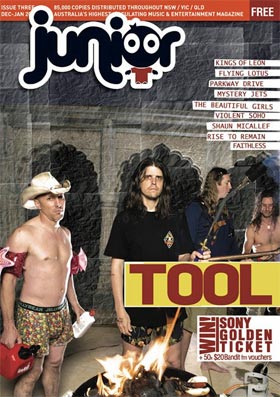
The cover story for the Dec 2010-Jan 2011 issue of Junior: an interview with Tool vocalist Maynard James Keenan. Click the below image for a closer look, or read the article text underneath.
At first glance, Tool might seem an odd choice as a headline act for Australia’s biggest national touring festival.
However, their level-headed approach to crafting immersive, long-lasting works has resonated with a hard-core of devotees who number in the millions worldwide. Although they’ve not released any new music since 2006’s 10,000 Days – which debuted at #1 on the ARIA charts, and remained in the top 50 for nine months – come January 2011, they’ll close each Big Day Out with a powerful selection of their best material (if their 2007 appearance on the same festival circuit is anything to go by).
Examining just how and why Tool inspire such passionate devotion among so many progressive metal fans is a topic more suited to a book than a magazine article – and if you’re so inclined, one already exists (2009’s Unleashed: The Story Of Tool, by Joel McIver). A brief summary of the facts, then.
After forming in Los Angeles in 1990, the quartet established themselves as an act diametrically opposed to the fame game pursued by many of their musical peers. Surprisingly, their preference for anonymity in the golden age of MTV earned them credibility in an era which decidedly lacked such merits. As a result, Tool aren’t the kind of band you can ‘sort of’ like. There’s no such thing as a casual Tool fan.
With their potent combination of distinctive, heavy instrumentation and singer Maynard James Keenan’s singular voice, they’re perhaps the only rock band who were able to push back against a crumbling record industry and opt for quality over quantity. Including their 1993 debut full-length, Undertow, they’ve released just four studio albums; they’ve also maintained the same line-up, bar one bassist changeover in 1995.
In mid-November, Junior had a rare opportunity to speak with Tool’s vocalist, Maynard James Keenan. Keenan is also known for holding the microphone in A Perfect Circle (APC), a less threatening – but no less remarkable – American rock act who released three albums between 2000 and 2004. After a five-year hiatus, APC are in the midst of shaking out the cobwebs on a short reformation tour, wherein they performed each of their three LPs in full, on successive nights in four American cities. Keenan is halfway through the short tour when Junior connects with him; we soon discover that the singer is suffering from a cold.
How have the APC reformation shows been going for you, besides the sickness?
Maynard: They’ve been a struggle. It’s difficult enough to go out and do a regular tour and have the same or similar set, but to do three completely different sets and some of the songs you’ve never played live, and some of them you haven’t played in six or 10 years, and then have a cold on top of it… Jesus. Some of these songs I had a difficult time singing 10 years ago, let alone 10 years later and being sick. So it’s definitely been a challenge. I’m up for it, but it’s been a challenge.
Are you cursing your younger self for his vocal range?
Yeah, I’m kind of pissed off at myself for having written songs that were pushing the envelope 10 years ago. And when I say pushing the envelope, I mean pushing my range, what I’m capable of. It’s definitely taking a toll.
Since you’ve had a few years away from that band, are you able to look at those albums with fresh eyes and ears?
That’s a tough one. I think it’s really difficult to do that, because I’m always going to hear the flaws. All I hear is the production flaws, or what I would have done differently performance-wise, so it’s hard to be objective with those. I never judge them too harshly; they just are what they are.
Tool’s early identity was defined by an unwillingness to play the same image-driven game as every other band. Am I right to believe that you’ve moved on a little since then?
Well, I don’t think that there was a master plan in place, like a manifesto that we came up with that said “we’re not going to do these things”. It might have been that, as individuals and collectively, we were just dysfunctional enough to where we were incapable of playing along. And so it just managed to work in our favour when it could very well have worked against us. The timing, and all the stuff that went on with Nirvana at that point in time; I think that opened the doors for A&R people who didn’t have a clue about what they were really getting into. They didn’t understand it. They figured they better sign it, because they didn’t understand Nirvana. ‘Sign ‘em, hurry up!’ – and then look for the next big thing. That just worked in our favour as Tool, because they definitely didn’t understand us. We got to dig our heels in and do what we wanted.
Did you know what you were doing at that point? All four of you saying “no we’re not going to do that shit, we’re not going to do a bunch of interviews, we’re not going to pose for photos…”
We just didn’t know how to [do it], so we just said ‘no’. We weren’t really sure how it affected us, but we just weren’t capable of saying ‘yes’, so we just kept saying ‘no’, and it kept working so we just continued to keep saying ‘no’.
These days you say ‘yes’ to a few more things, though maybe not everything. Would you call that maturity, or just a realisation that sometimes it’s okay to share some things?
I think once you understand something a little more, then you can discern what makes sense and what doesn’t make sense. I think it’s still difficult for some of us to say ‘yes’ to anything, because we’re so used to saying ‘no’. We just think about it too much and then at some point you start tricking yourself into thinking that you actually knew why you said ‘no’. And you have to get involved in everything to dissect it and think about it. It’s kind of like when you’re working on your house or something and have some kind of inspector coming by to look at what you’ve done. He has to say something is wrong. Otherwise you’re not justifying his existence if he doesn’t find something wrong with what you did. So by presenting the question to a band with them saying ‘no’ all the time, to get their permission… you’ve heard the saying “it’s better to ask forgiveness than to ask for permission”? At some point, people are just going to start treating you that way.
Do you give much thought to why people are interested in Maynard James Keenan?
No. I just kind of do what I do, and I try my best with whatever I’m doing, but I don’t know if it’s good or not; I just do what I do and people tend to show up for it. I’m thankful for that. I do my part, keep doing things, so at the end of the day I kind of get to stick to what makes sense for you to do, and hopefully at the end of the day you can sleep at night.
Can you sleep at night, Maynard?
Oh yeah, absolutely!
Has your belief in art strengthened over time?
If you have any success with your interpretations, the hardest part is staying fresh and not falling into a rut, and thinking that you know all the answers. That somewhat chaotic state, that confused, vulnerable state I think is important to at least have a finger on. You don’t have to beat yourself up, you don’t have to suffer for your art but you definitely have to be a little confused to understand where to move. If you’re a chef and you’re trying to use fresh vegetables, the weather is going to affect your menu, and you can’t just rely – if you’re a good chef and you present something that’s alive and vibrant, you have to embrace the fact that it’s not going to be consistent. You have to be able to roll with the changes.
What do you get out of performing a song like ‘Stinkfist’ nowadays?
There’s always something I can improve in it. There’s parts of that song that I never quite get right, so I’m always looking for those spots to see how I can do them better but everything else is… At some point some of it becomes autopilot. I don’t have to think about those pieces, I feel like I’ve got those down.
Since you don’t necessarily have an album to promote this time around, will you be constructing the set list differently to your last Australian tour?
Yeah, I’m hoping. We’re trying to re-present things in a different way, or pick different tracks that people haven’t heard. Which isn’t hard to do, since some of the songs that we perform, most people won’t have been born when we actually wrote them. It’ll be fun, regardless.
Tool were my favourite band all throughout my teenage years, so being offered the chance to speak with Maynard was a pretty big deal for me. Thanks to the staff at Junior for making it happen.
If you’re interested in reading the full transcript of my conversation with Maynard, you can read it here.
Fact: The Stooges are one of the most influential rock bands of all time.
Fact: Raw Power is one of the most influential rock albums of all time.
Released in 1973 to sparse acclaim and an underwhelming commercial performance – Raw Power peaked at #182 on the Billboard charts – the album eventually spread like a virus throughout the next generation of rock musicians, many of whom would introduce their own fans to The Stooges. Among them: Kurt Cobain, who named Raw Power his all-time favourite; Johnny Marr of The Smiths (and, more recently, Modest Mouse and The Cribs); Henry Rollins (who has the words ‘Search And Destroy’ tattooed across his shoulder blades); and Steve Jones of The Sex Pistols, who says he learned to play guitar by taking speed and playing along to Raw Power.
Of the album’s guitarist, James Williamson (main pic, far left – 1972), Johnny Marr said: “I’m his biggest fan. He has the technical ability of Jimmy Page without being as studious, and the swagger of Keith Richards without being sloppy. He’s both demonic and intellectual, almost how you would imagine Darth Vader to sound if he was in a band.” Williamson first joined The Stooges in 1971 as second guitarist, but the band was dissolving before his eyes. Only a recording offer from David Bowie to Williamson and vocalist Iggy Pop got them back together for one last stab at rock stardom as The Stooges. With the Asheton brothers in tow – Scott (drums) and Ron (bass at the time, but he’d later play guitar during more recent incarnations of the band, up until his death in 2009) – Williamson co-wrote Raw Power with Iggy and played all of the guitar parts. Despite Bowie’s involvement, though, the record didn’t perform commercially, and the band again split. Williamson went on to collaborate with Iggy as a writer and producer for a couple of Pop’s solo ventures (1977’s Kill City and 1979’s New Values), but after falling out with the singer over Soldier’s recording methods, the pair remained estranged for 16 years.
What happened next is one of rock music’s strangest tales: James Williamson gave up on music entirely, graduated from California State Polytechnic University with a degree in electrical engineering, and went on to work for Sony Electronics for 25 years. Most of his colleagues had no idea of Williamson’s involvement with The Stooges, despite Iggy Pop doggedly working himself into a position of international notoriety as one of rock’s most outlandish performers. The Raw Power guitarist wanted nothing to do with it. It took a university essay written by Williamson’s son, entitled ‘Coffins In The Corner’ – in reference to his father’s guitar cases sitting up against the wall, unopened all throughout his childhood and adolescence – to provoke the guitarist to finally accept Iggy’s offer to reform the band in the wake of Ron Asheton’s death last year. It also helped that Sony offered him a generous early retirement package from his role as Vice President of Technology Standards. Now Williamson, aged 61, is touring the world, playing The Stooges’ celebrated catalogue to a new generation. The Vine connected with the guitarist ahead of the band’s appearance on the Big Day Out tour in January and February 2011.
—
Andrew, how are you doing?
I’m very well, thanks. It’s 7 a.m.
7a.m.? [laughs] I’m sorry to put you through that, but I guess we could find the time we could both do it.
Absolutely. It’s an honour, mate. I found your website while I was researching for this interview. I was intrigued by a couple of things. First, what’s the origin of your nickname?
Oh, Straight James? After The Stooges had split up, Iggy came out with an album called The Idiot, and he had a song on there called ‘The Dum Dum Boys’ (link). In that song he talks about “Ron did this,” and “Scott, he did that”, and then “What about James? He’s gone straight”. So after that, I tongue-in-cheek named my publishing company ‘Straight James Music’ and it kinda stuck from there. I’ve had it ever since.
For more of The Stooges, visit your local record store / online outlet and immediately buy/download their three albums: The Stooges,Fun House, and Raw Power. Thank me later.
Don’t ask about Tool. Don’t ask about A Perfect Circle. Definitely don’t ask when Tool’s next album – their first since 2006’s 10,000 Days – is due. These are the publicist-stated rules of engagement when interviewing Maynard James Keenan, frontman of those two bands and also Puscifer, a “multimedia project” that encompasses music, film, performance, wine and clothing, and has released two albums so far: 2007’s V Is For Vagina and 2011’s Conditions Of My Parole. Keenan is touring the Puscifer show outside of North America for the first time in February 2013, with three Australian theatre shows booked around his commitments with A Perfect Circle at Soundwave Festival.
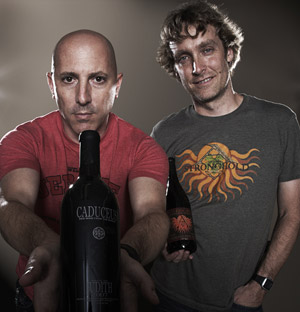 It sounds like a set-up to a bad joke. What happens when you combine Californian progressive metal band Tool, a couple of entrepreneurial Brisbane men in their mid-30s, and wine made high in the Arizona desert?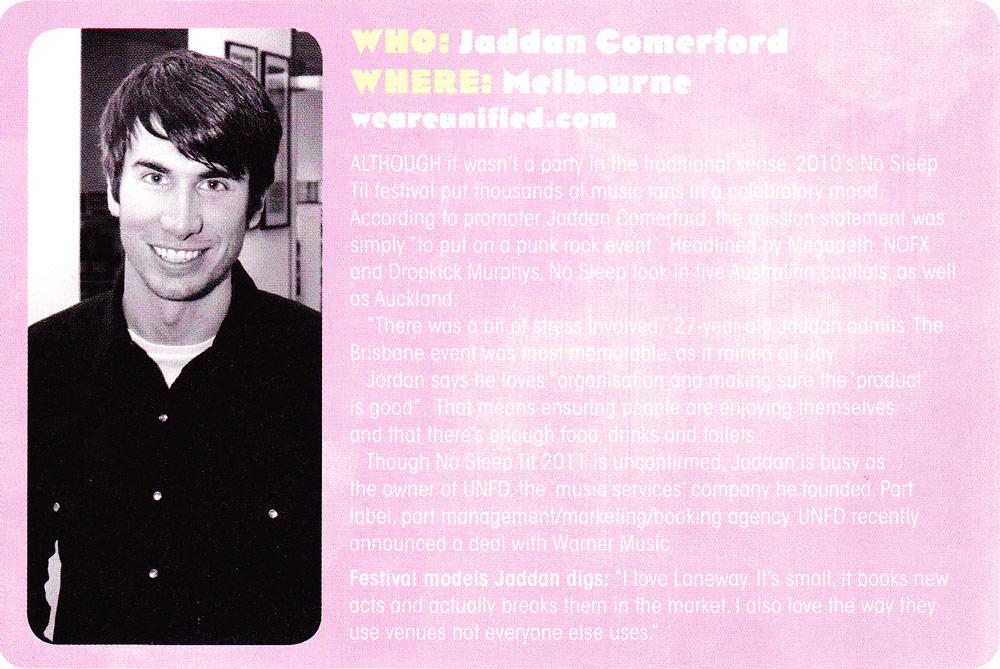
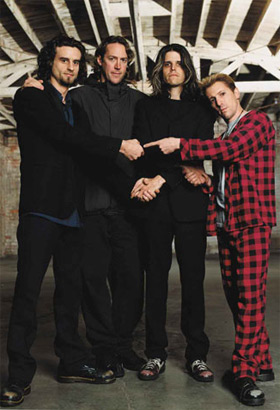
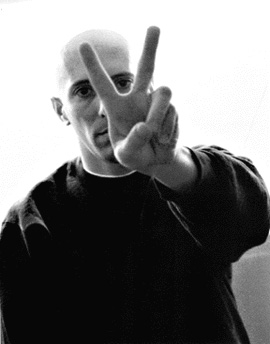 An interview with
 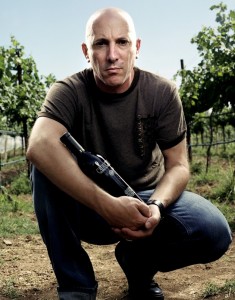 Did you enjoy the process, though?
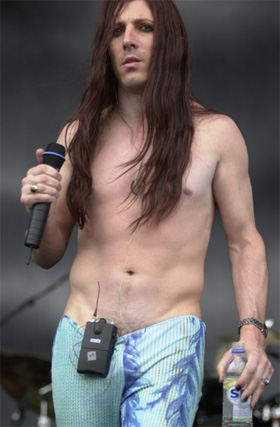 These days you say yes to a few more things, maybe not everything. Would you call that maturity or just a realisation that sometimes it’s okay to share some things?
 We have?
 As an artist, you value art. Has that feeling become stronger?
 I see. Well, since you don’t necessarily have an album to promote this time around, will you be constructing a set list a little different to last time?
 With their potent combination of distinctive, heavy instrumentation and singer Maynard James Keenan’s singular voice, they’re perhaps the only rock band who were able to push back against a crumbling record industry and opt for quality over quantity. Including their 1993 debut full-length,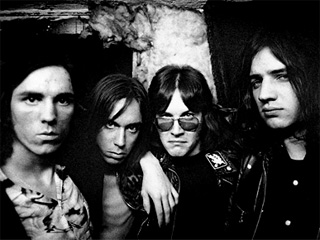
 What happened next is one of rock music’s strangest tales: James Williamson gave up on music entirely, graduated from California State Polytechnic University with a degree in electrical engineering, and went on to work for Sony Electronics for 25 years. Most of his colleagues had no idea of Williamson’s involvement with The Stooges, despite Iggy Pop doggedly working himself into a position of international notoriety as one of rock’s most outlandish performers. The Raw Power guitarist wanted nothing to do with it. It took a university essay written by Williamson’s son, entitled ‘Coffins In The Corner’ – in reference to his father’s guitar cases sitting up against the wall, unopened all throughout his childhood and adolescence – to provoke the guitarist to finally accept Iggy’s offer to reform the band in the wake of Ron Asheton’s death last year. It also helped that Sony offered him a generous early retirement package from his role as Vice President of Technology Standards. Now Williamson, aged 61, is touring the world, playing The Stooges’ celebrated catalogue to a new generation. The Vine connected with the guitarist ahead of the band’s appearance on the Big Day Out tour in January and February 2011.