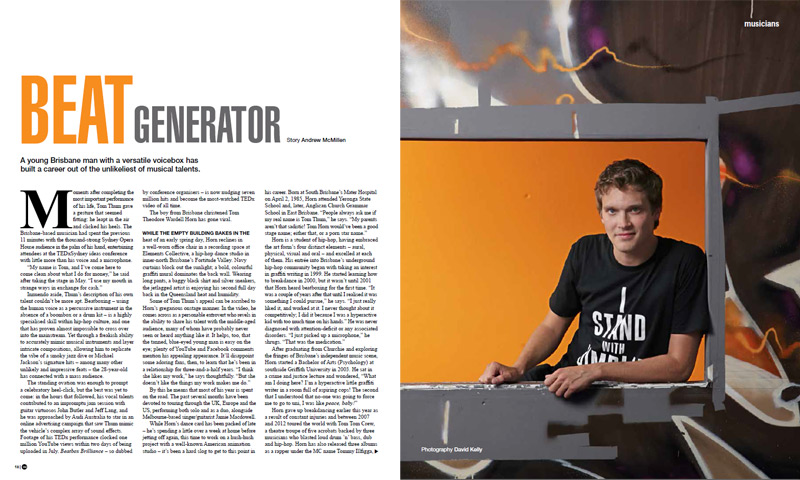
A Conversation With Trent Dalton, 2011 News Award-winning Features Journalist Of The Year, November 2011
A year ago, I wrote the words, “Trent Dalton is the best feature journalist in Australia.”
Absolutely nothing has changed.

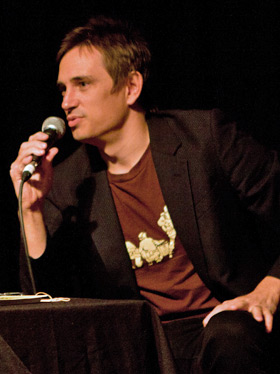
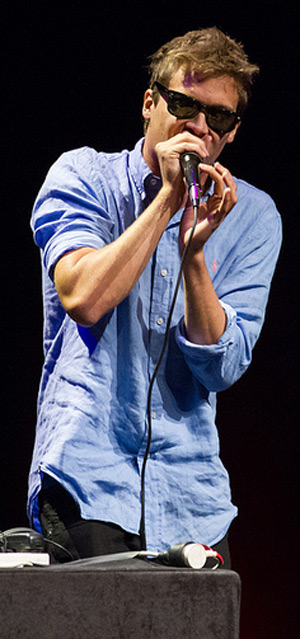
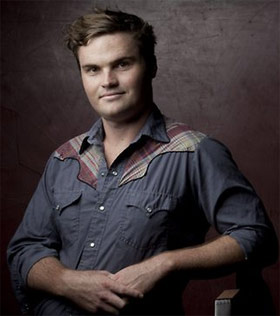
Last Friday, 4 November 2011, Dalton [pictured right] was awarded Features Journalist of the Year at the 2011 News Awards for the second year in a row. (He won the same award in 2008, and was a finalist in 2009 and 2007, too.)
Two months earlier, he was awarded Queensland Journalist of the Year at the Clarion Awards. These accolades are a result of his feature writing for The Courier-Mail‘s Qweekend magazine, where Dalton is a staff writer. He’s also an assistant editor of the newspaper.
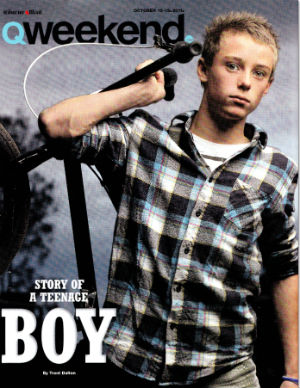
Earlier this week, Dalton and I met to discuss a recent pair of Qweekend cover stories over sushi and green tea. Simply named “Story of a Teenage Boy” and “Story of a Teenage Girl“, these features delve deep into the lives of two children who live in Queensland: Casey Tunks, 15, and Chloee Gwynne, 16.
In a way, they’re companion pieces to the last pair of stories I interviewed Dalton about in 2010: “Story of a Man” and “Story of a Woman“.
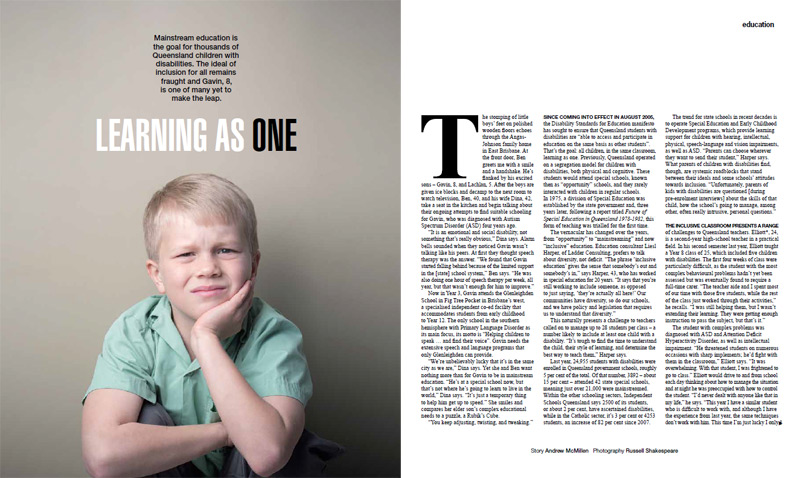
I highly recommend clicking the below images to read both stories, before moving onto our extensive interview, which was 90 minutes long and runs to 13,000 words. (Clicking the images will open the stories as PDFs in a new window.)
++
Andrew: When we last spoke a year ago, it was just after you were awarded the 2010 News Features Journalist of the Year. This is not really part of why I wanted to interview you today, but – which stories did you put forward this year? I believe “Home is Where the Hurt Is” is one of them.
Trent: Yeah, and also a story called “The Longest Night,” where I spent 24 hours alongside [Queensland premier] Anna Bligh, when Cyclone Yasi was coming in. And then “The Long Goodbye”; lots of longs in this year. “The Long Goodbye” was about a guy, Scott Sullivan, who is dying of motor neurone disease.
Then five Queensland flood stories, which was where I tracked the up and downs of one particular street n Rosalie [suburb of Brisbane], throughout the whole Brisbane floods; in the days preceding the flood, during the flood, and also afterwards.
And then a story all about kindness, a story where I went around and asked people to share random stories about kind acts they’ve done, or people have done to them.
You were just putting together that kindness story when I interviewed you last time.
That’s right! I had just interviewed a girl who dresses objects in wool. So yeah mate, they’re the ones, those five. They responded mostly to the “Home Is Where the Hurt Is,” the domestic violence one. And Anna Bligh. Oh, they said kind things about all of them but probably mainly that one that really broke through this year, which is great. It’s such an important topic and really close to my heart. It’s a great thing.
Anyway – yeah. I feel like such a dick…
I don’t want to talk about any of those stories. I want to talk about “Story of a Teenage Boy” and “Story of a Teenage Girl”. I want to talk about the mechanics of how you write things, as well as how the stories came to be. We’ll start with – how did you find Casey?
Here’s the brilliance of always hanging out with work-experience people, because they make you seem like you’re a bit nicer than you probably are. It was really a handy thing, that we had this wonderful work-experience girl with us, Rose, who’s just out of high school or university, or something. She was with me on the day and we were just walking around talking to potential people who could be the teenager. We were walking through Queen Street Mall.
It was very difficult to find in the sense that I had to find someone who… maybe a lot of kids might be up for it, but then you had to convince their parents. Basically I said, “I want to do this story where I spend time with you, and you share with me every last thing that’s on your mind, your hopes and fears, your dreams and your worries, and what drives you, and where you want to be, and what’s it like to be a teenager.”
Eventually, after asking several people, this amazing guy Casey said, “Yeah, I’ll do it,” and I said, “I’ve got to ask your mum,” because he was 15. Then he said, “No worries. Here’s my number.” I called his mum and thankfully she had read “Story of A Man” and “Story of a Woman” and she knew I wasn’t a complete crackpot, and that I was trying to do something worthwhile and something that would hopefully give some insight to people, and be done in the sort of way that won’t be exploitative or going to be a horrible experience for the family.
She said “yes”, and so from there we spent all this time together. The mum welcomed me into her home, basically, and said, “Yeah, you can come around at 6am and watch as our family has breakfast, and be there just documenting in the corner what people do.” [laughs]
Is that weird?
Well yes, it is, but I’ll tell you about my next big… I’m very excited… no, I won’t let it out of the bag. What I just said leads into that idea of the anthropological study really driving where I want to… hopefully, the story I want to do next, which is going to be really exciting.
We’ll talk about Casey to start with. You start the story by saying “he’s afraid of two things”, and then you list a bunch of his traits and characteristics. Was that the first intro you came up with, or did you try a few things?
No, these sorts of stories in particular have always been riffing on a whole bunch of intros. I don’t normally spend that much time but these ones I really spent a lot of time on. I don’t think that was my first. I knew I wanted to get in there something about his fears, so hopefully the reader would be mums and dads; looking at the readership going, “Well, the readership is going to be these certain types of people.” You want to get them in, hopefully, by saying something like, “here is an insight into what fear a teenage kid in Queensland might be feeling”.
But I think I was going to go with more of a “here we are”-type thing; something that detailed, gave context, some contextual sort of introduction. Something about the smell of his room; everyone can connect with the smell of a teenager’s room, and that sort of thing, and the fact that it was 6am so we’re basically waking up with this kid. Then I thought, “no, let’s get to the heart of it really quickly.”
And that whole line was just all about the livewire brains of a teenager. “Man, I’m really scared of spiders, but I’m also really scared about my future,” this big thing. “I’m only scared of spiders and my future” – yeah, right. Fucking massive, ‘the future’, that’s what it was all about. It was also trying to be empathetic as well, sort of saying, “I’m with you man, because the future scares me as well, it scares everybody.” It probably scares a teenager even more.
That’s why I chose that. Then that leads into all those traits, a throwback to the style of “Story of a Man,” “Story of a Woman” which was all just… these ones were much more “this happened, and then this happened”. But the “Story of a Man” and “Story of a Woman” were really just all about their character. I was really trying to tap into, or get a bit of the guy’s character.
That’s classic screenwriting sort of stuff. The first 15 minutes of the film will offer you a little insight into your character so you know either you’re really rooting for this character, or you’ve already worked out their… you don’t like the character or you do, but either way you’ve invested some sort of emotion in him pretty early. That was the idea about writing all those traits.
I sound like a wanker. I feel like a dick talking about my stupid magazine story.
You’re not allowed to say that anymore, because this whole thing is about you. Relax! I’m not sure if it happened this way, but the way this story appears, you’re spending a Saturday with Casey. Why a Saturday, as opposed to a school day?
As you know, getting access to schools is really difficult. It could have been done, but I just knew I wasn’t going to get the access to him that I needed for the piece if I had done it on a Monday, Tuesday, Wednesday, Thursday, or Friday because it was just going to be… “okay, he gets up, goes to school.” It would have been great if I could have sat in the classes right with him and been right next door to him every time, but I think that would have made him a bit uncomfortable, as well as I couldn’t imagine the Queensland Government giving me the okay. I would have had to have written probably 300 emails that would have gone back and forth to allow that to happen.
In the end, it was a matter of speaking to his mum and saying, “Look, can I just hang out on a Saturday?” when a kid actually does do stuff. Like you know the school day goes from… school’s very interesting. That’s another whole world I’d love to explore one day, but that Saturday; all I said was, “is there a time in the near future when you’re doing something with your friends?” He just went “Yeah, two Saturdays from now we’re all going to the mall.” I went “Okay great, that’ll be perfect,” and then we’ll just track that from start to finish.
Then also one or two catch-ups around that, so you get to know him as well, but then focusing on that day, if that makes sense, using a couple of different days, and sort of knowing the guy. We had a good discussion when we first caught up, but then I realised this was going to be the day; ‘showtime day’. As it turned out, he had a fairly interesting day, for him, coming from Wamuran [a town near Caboolture].
He doesn’t always go into the city, certainly not as much as the girl did. It was a pretty big thing him and his mates going to the city… well, not a big thing, but maybe a once-in-a-month thing. That’s how it came to be on a Saturday. And just the given thing that his parents would be home as well. His dad usually worked, but it just worked out pretty well on a Saturday. People are a bit freer and fun. Weekend work is always really good because everyone is appreciative of the fact that everyone’s out on their weekend, and just a bit more relaxed.
You’ve got a few good lines about his mum in there. “She lets him know she loves him by telling him she loves him.” That’s a fucking great line. There’s also a line about, “she loves him so much that whenever she thinks of seeing his face for the first time, she bursts into tears”. That’s really nice.
Yeah, and I guess that all just comes from, again, the beauty of arriving somewhere at 6am, and you’re there. Can you imagine a kitchen in those early hours? A mum in a kitchen; it’s just a really safe space. It’s a beautiful spot to have a chat to any mum. So you’re there and she’s just in her own kitchen. She’s thinking about her boy. It’s a really wonderful place, and then she gets teary when she mentions him.
A question I’ll often ask people, “Do you remember the first time you saw his face?” That’s always an emotional space to go to. It’s a beautiful thing to talk about. I remember the first time I saw my kids’ faces. I’m sure it was going to be the same for her, and then that was a beautiful moment.
Then you’re just getting the insight into the deep, deep love that she has for this boy. Then he comes out [of his room], and he’s just this 15, 16-year old boy who’s just a knockabout sort of guy. She’s in this space of “he’s an angel,” so it’s a really great thing to see. That wonderful thing that a teenager has no idea how much their parents are just totally in love with them, and just worship them. They have no concept of that. I mean, they have a concept of it but it was just perfect. In this kitchen she had tears in her eyes, and he’s just going “Oh, they’re all right.” It was just great juxtaposition.
His father Warren gave you and Casey a lift to the train station. You glossed over that a bit in the story. Was there a reason behind that?
There just wasn’t much happening, for one thing. It was probably a lot more talk about practicalities, like, “Have you got my number in your phone?” and all that sort of stuff. I guess it’s also timeframes. [pause] A lot happened in that conversation that maybe came out later on in the piece. You go with trying to take the most important things.
It was partly on that trip that Casey started talking about this time he came home drunk, and I think it was sort of a sensitive area. I was consciously trying not to make his parents look like they’d ever done anything wrong. I can’t even remember what was exactly said in that conversation, but it was more riffing on their sort of fear, their terror, at seeing their son come home pissed, and then he passed out.
It was glossed over, and you could write about a 4,000 word story on any father and son, taking a trip somewhere. I think I probably should have, but it was more I wanted to get to those friends pretty quickly, and really keep it about Casey, not so much be a father-and-son relationship. I don’t know, but Warren was cool.
He didn’t really know what I was about, just going, “What? Why the hell are you following my son around?” I’m sitting in the backseat of my car taking notes. [laughs] He’s this earthmover, sort of ‘tough dad’ type guy. He’s driving his son, this really great loving father, just trying to get the best for his son. He was constantly befuddled at why this journo would want to do it.
The mum really understood and was like, “Yeah, I can see,” because she had read those pieces she was like, “I know exactly where you’re coming from.” As has been the case with these, there’s great trepidation there, but they always say, “I think what you’re trying to do is probably worthy, or worth it if it adds national insight into our teenagers”. I think that’s where the mum and dad were coming from, and God bless them. They were so wonderful. He was cool, the dad.
In the end, after a while he sort of ignored me, forgpt I was there, which was really cool. That was the whole idea, that he’d just be going “All right, back by 2pm,” and he’d go “Yeah, yeah,” and pops out of the car. He maybe gave him a “yes Dad,” and that was it. It was a funny dynamic to see that. There’s probably another great story in there between fathers and sons that I probably should have dwelled on a bit more. Anyway. [laughs]
There’s a lot of Casey’s language in this story. Is that important to you?
Totally. That was the big thing I love about teenagers now, and I’ve always loved about teenagers – they’re creating their own words, and creating their own dialogue, and having their own little language. I think that’s such a special part of being youthful. I think it’s so brilliant and something that we all… I feel like I’m so far removed from, even though I’m 32, but I feel so far removed from all the things that he was saying. I had my own language with my friends at that age, but I thought that was brilliant.
From my anthropological journalism style stuff, this is magic. I kept going, “what does that mean? What’s that?” And also – I couldn’t keep up. My notepad couldn’t keep up. I was just going, “Man, gotta get all this stuff.” It was gold firing out of their lips and I only got probably half of the great stuff. You speak to any teenager, and they’re just invigorated.
Casey and all his friends were just amazing. There were some classic moments I had to leave out because I didn’t want to bring myself into it. But for example, when I turned up at the train station… one of the girls looks me up and down and goes, “Ugh, you soooo need some Vans.” [laughs] It was just stuff like that. Then one of the boys told me that he was going to meet these two girls, Danielle and Beth, so when he introduced me I said, “You must be Beth.” It wasn’t Beth, it was Danielle. She goes, “Are you kidding me? I would never, in my life be called Beth.” I said, “Oh, that’s funny, because that’s my daughter’s name.” [laughs] She was mortified, but it was a great little ice breaker.
No one quite knew what I was doing hanging around this guy. But Casey knew where I was at, and he thought it was kind of cool that he had this guy following around documenting and asking him about every aspect of his life as well. Then in the end the girls found it cool as well, so they were going, “Casey does this,” and, “you’ve got to know this about Casey,” and all that sort of stuff.
On that train trip, you’ve got the old ladies, Bev and Shirley, who are “staring at the group like they might regard a Reeperbahn burlesque show”. Did you consider speaking to them, or were you happy to let them sit in their own world?
Maybe in a different story… like, I’ve been following around Campbell Newman a lot lately for a story I’m doing down the track. Everywhere you go, you have periphery people that you’re constantly asking, “What do you make of Campbell Newman? What do you think about this policy?” With Casey, this was telling his story. Casey doesn’t care what Bev and Shirley think. They’re not even on his radar, and that was partly the point of me not going there. These people, you see them on the train, and they don’t even know, or care.
That’s what I love about it. In the girl’s story in particular… I love her so much in the fact that she does not give a shit. All four kids on that train didn’t give a shit either. They’re just talking loud and they have no concept of, “Gee, I better not talk too loud because Bev and Shirley might …” They were just curious. I kept on looking at them. It was priceless. They had the name tags “Bev,” “Shirley.” Even their names were clichéd. It was brilliant.
They had these amazing outfits like they were going to the races. [laughs] Casey and his friends represented the complete opposite to where they were heading on that train, but yet Casey was in this exciting place, heading into the future. The world’s going past outside, and it was such a great little moment. I just loved that.
[quoting the story] “A look of bewilderment on Bev’s face, as this alien world rushes by in blurs of green and gun-metal grey.”
Cool, man. [laughs] Thanks man! That’s great. Just that whole concept of: Casey’s going one way and not really realising that he’s heading somewhere, he doesn’t know where it’s going. That was the thing about the whole piece, too. A teenager is going somewhere really, really fast, but not really knowing where. That’s really exciting.
Bev and Shirley know exactly where they’re at. That’s beautiful, too, but it was this great thing to have them side by side, these two generations. And Casey and his friends were being so oblivious, to the point where they’d be dancing and singing songs, and throwing out F-bombs, not even realising there were two women over there going, “God, who are these creatures?” That classic generational difference, it was right there.
Where were you? If they were sitting in the four train seats, the four teenagers, where were you sitting?
Where you hop onto a train, turn right, and the first place you sit down; you know, the two-seaters? That one there. Bev and Shirley were diagonally across from them. Casey probably could’ve seen them. Casey had his back turned, but his mate Jade could’ve seen them. He was aware of them, but I guess the two friends, Casey and one of the girls, they were just… it was them probably most of all who were completely oblivious.
That’s what I was doing. I was just there and I was taking notes. They were having the most amazing conversation over an hour’s journey from Caboolture to the city. It was a really great get-to-know-you period, really cover a lot of territory, and get a lot of chatting out of the way, and get to know why they were going into town and who Casey was, and stuff about their teachers, and all that.
The whole point was just being fly-on-the-wall as well, and not probing them too much because, in the end, they are 15-year olds. You don’t want to be going too weird, too in-depth, or giving them a hard time. It was more presenting the reader with this moment, taking it and going, “This is what I saw.” It’s classic, “this is it; this is all I saw. I’m not even commenting. This is just what I saw.”
At different points they do discuss drugs, divorce, and cyber-bullying. Casey said, “I’m not sure why any 15-year old would want to kill themselves”. Did they just come naturally, or were they prompted by you?
No, those were prompted by me. Those sorts of topics aren’t even on their radar. I asked those questions because I knew somewhere along the line, in any sort of conversation with a teenager or in-depth piece on teenage life, you probably should ask those questions. Though I guess parents worry about it more. Honestly, they were almost like, “Man, why are you even asking that?” They’re that cool with themselves, they’re that together, that they were like, “yeah, whatever, drugs.” They were so savvy that it was like yesterday’s news. And the whole suicide thing too, which terrifies me, and cyber-bullying and all that stuff is wrapped up in that whole horrifying end of suicide.
I remember getting all serious and tense, like “Let’s talk about some issues.” And they glossed over the heavier stuff in a matter of 30 seconds. It was like, the stuff that mattered to them was actual grief. Then Casey brought up his mate who died. I guess the whole heaviness of a topic like that led to another interesting place; here’s a young man dealing with the total weirdness of losing a friend. I found that fascinating, how he was dealing with that.
That went to a whole different place as well. It was cool, that whole side of it. All those things were prompted by me. Particularly drugs and suicide; they weren’t even going there. They’re just interesting. They had this complete need for entertainment, in many forms. “Look, there’s a guy there picking his nose with a straw! Great!” And then that filled them up for a bit. [laughs] Then they were bored, then… “Oh man, look at this freakin’ King Kong outfit!” That fills them up for a bit. It was this constant need, like those computer game energy bars of excitement. It would go down, something would happen, and it’d be back up. It was really great to see that.
There’s this line where Casey says, “I just wish mum and dad knew that I was going to be okay.” Was that prompted by you?
No. I thought that was such a great line. That was when we were talking with his mate. It’s so great to have a mate of his around to make him feel comfortable about talking, so he’s not just… it was almost said towards his mate, almost like “Don’t you just wish they knew we were all okay?” I thought that was so great and such a meaningful thing for any parent. You know how we worry. You put so much pressure on them, and so much stuff. You bring so much of your own stuff to [parenting]. I think that’s what he was sort of talking about.
He’s got this super-loving mum who’s constantly telling him, “I love you,” and constantly asking all about his life. But he was just saying, “I just wish she knew I’d be okay, and that everything’s going to be all right.” Basically he was saying, “I’m not going to do anything stupid.” He was almost saying, “I’m not planning on doing anything crazy.” I thought that was a great little moment I wanted to definitely get in there somewhere.
It came up in a conversation about… I remember asking a few times this question, like, “what do you wish your parents knew?”, and maybe that’s where it came out. That sounds like it was prompted. But I think it was in an overall discussion, like, “Sometimes they don’t get you, but what do you wish they knew?” Maybe it’s easier, sometimes, telling a guy with a recorder than it is to tell mum. I don’t know. It was cool, that one.
It’s at this point, where you’re at the photo booth with them, that I first realised that you’re invisible in the piece. You’re not there at all. Now that I think about it, I think that’s the case for “Story of a Man” and “Story of a Woman”, as well – you were invisible.
Yeah.
So that was a conscious choice?
Definitely. I’m the first person to put myself in the piece; I’m the biggest egomaniac frickin’ idiot journo. I don’t know, I hate it about myself that sometimes I go, “I’m going to put myself in here.” But I only do that when I feel like it’s necessary and that it adds something to the piece. This was totally all about them and it as all about being, as you say, invisible, and just seeing these magic moments, going “I’m not here,” and hopefully getting to the point where they feel like I’m not here.
At that photo booth, maybe four hours had passed by that time, and then they really felt like I wasn’t there. I’d gotten boring. “We’re over that, there’s other things, let’s go to photo booth and get some pictures.”
Then this incredible moment happens where they’re talking about, “should we put ‘best friends’ on the caption?” You’re documenting these interactions, and this wonderful moment in any teenager’s life where you’re weighing up your friends. Beth had asked, “should we put ‘best friends?’” I remember that feeling. “Am I your best friend?” I remember that whole concept, that beautiful thing between relationships between teenagers. You never quite know where you stand.
Then Casey, that beautiful kid, I just love that kid so much, he made her feel so good and goes, “hells yeah!” or whatever he said. It was just an amazing response, like “yeah, of course.” Just a brilliant… the wisdom of him knowing what she was trying to ask. But to be so cool about it. It was such a great moment and such a rare thing to see those little moments.
If you just passed by that moment, you’d have no idea what was going on, but the journalist has that… this is the great thing about feature writing. You spend time with these people and understand what’s going on. One little moment becomes huge and can be significant. I thought it was so beautiful. Probably my favourite part of the whole piece, that there.
So you spent that Saturday with him, and there was about a month gap between that time and the school holidays, I think.
Yeah, and that was purely because I felt I wanted to get even just a little bit more insight, just a bit more. I didn’t want to end it in the mall again because I knew the girl one was going to be very mall-centred. I called his mum up again…[laughs] And asked them to go through it all again and we did it. We went back and I went over in the early hours of the morning and spent more time with him.
That’s always the best thing you could ever do – go back. I strongly recommend that. Leisa Scott, who writes for Qweekend, told me that years ago: “always keep going back”. You learn more and more, and then by the time you come back next time they know you even more. Then you see even more insights.
It was great; the best thing I ever did. One of his other best friends had been there, so I was getting even more insights. Even in the meantime, all these things had happened to him. He’d got a girlfriend and he’d had a party. All these things had happened, and it was getting closer towards the end of the year so he’s sort of… I remember in high school, any end-of-year time… he wasn’t even in his senior year, but you’re thinking about where you’re going, or even in grade 11 you might have to start making those decisions about what you’re going to do, and all that sort of stuff.
When I came back, he was a different sort of guy, almost. He was a little bit more weighed down by a few more worries, bizarrely, even in that short timeframe. I really got that feeling. He was answering really honestly. It was so cool to do that, he was going, “I’m worried about…” And then he started… that’s probably my favourite bit in the piece, when he starts talking about, “I think I’m really good at English, you know? I think I could do something in English.” I just thought that was so cool, this kid trying to figure out in his head space, “where am I going,” but also trying to work out that inside him, there’s a whole world of possibility, and trying to grapple with that.
What did you advise him when he said he wanted to go into creative writing? You wrote, “Like any writer worth the title, he’s curious about life and the people around him.”
Yeah, well I had said, “Man, you’ll be brilliant. You’d be amazing. You’ve got enthusiasm, you’ve got drive, and you love words. You’ve got a great nature.” I said, “If you’re thinking about it, you should completely do it.” I totally said, “Whenever you decide to, give me a call at The Courier-Mail,” because he was such a great guy. I basically said, “Yeah, come into the office and I’ll show you around,” or something like that. I was really trying to go, “If you’re thinking about that, go for it and chase your dreams.”
I don’t want to sound like too much of a tosser, but he really mirrored my life in many ways. I grew up in Bracken Ridge, which was not far from Caboolture, where he grew up. It was that idea of, in that sort of world you’re knocking around with mates and stuff. No one’s really ever talking about writing, and things like those sorts of ‘cultural pursuits’. A guy like him, he was still thinking, “I think I could do it,” so I wanted to say, “you could do it, and you could do it really well.”
That really inspired me, from a writer’s perspective. I was so pumped that he was into writing. I was going, “Yeah, you’re really good!” That stuff I said in the piece later on about, “It’s the reason why you’re so good with your friends and you’re so good with those girls; they love you so much because you’re a great listener and you care.” I was just watching this kid. He had all this stuff that makes a great writer and he had time for people. I was like “You should do it.”
I really made a point of even writing that, but also that whole… there’s something great about that and I’ve always loved this in teenage movies and stuff, where someone’s battling with their family history. Maybe there’s a long line of Tunkses who used their hands and worked in trades and stuff like that, and done very well, but he’s sort of going, “Maybe I could step out.” I love that.
t was a hard one to put in where he said, “I hope I don’t just become another Tunks,” because I was worried about writing that and saying would that be an insult to his wonderful family. But I still put it in because it was more of an insight into him saying, “I just want to do something different. I want to become my own man.” I thought that was wonderful to hear a 15-year old kid say that sort of stuff, to be there for those sorts of insights. Cool kid. I’ve really got so much time for him. He’s really a wonderful guy.
Did you ever get to see them de-stressing, with the life jackets and the exercise ball [which they referred to in the story]?
Oh no, I didn’t! That was him and his mate. They’re goin,g “Man, we do this thing. Now we’re about to do it.” I think it rained. They went out on the go-kart and it started raining or something, and they decided not to do it. They were going to go do it. They were going to go stand there with those life jackets and then the exercise ball comes down and hits them. It would’ve been hilarious. I decided as far as activities go, the go-kart was a much more symbolic sort of thing, about movement and taking chances. I went with that.
He offered to introduce you to his Nanna. Do you think that was a sign of trust for him at that point?
Yeah, definitely. That was when I came through on the second visit. After spending a couple of hours with him that morning, and then him going, “come meet Nanna,” it was totally natural, like when you’re around a mate’s house – especially when you’re in high school – you end up doing all sorts of crazy stuff. You go around someone’s house, you go meet Uncle Joe and then you find yourself in the back of a ute, or whatever.
It just reminded me of a high school visit to a friend’s house. “Oh, let’s go get a go-kart.” “I’ll just go say g’day to Nanna. I guess that you’re with me, so yeah, you come along too.” That was brilliant too, because you get to peel back more and more layers of this guy’s personality, this guy’s life. Seeing this other wonderful side of him that loves his Nanna dearly and she loves him. It was great, really good moment.
And just texture-wise, you constantly want to have all these different people, whether they’re speaking to or not, but just places to go. That’s great in a feature article, different places.
You’ve got this line about going to Warren’s shed where there’s “a calendar showing 12 months of buxom women in togs.” Why did you use the word ‘togs’? That cracked me up when I read that. You hardly ever see ‘togs’, it’s such a Queensland term.
[laughs] I think it was because that’s how I remembered it. I think it hadn’t been taken down since 1987, back when women were wearing a full one-piece tog. Not even so much like a bikini. I don’t know, I think that’s maybe why I said togs, as opposed to… what would you call it?
Swimsuit?
Swimsuit, yeah! Togs… I dunno. It’s such a hokey term isn’t it? [laughs]
Based on what you’ve told me – with the momentum of the piece, and Casey going somewhere, but he doesn’t know where – it feels like you had to end it on the go-kart jump. A freeze-frame picture.
Totally. And what eventually did happen was, he landed heavily. His mate hops in the thing and then we went and rode some horses or something. He got a horse out. But you’ve got to think, “where’s the best, most lyrical, amazing place that says everything?” I really thought hard about that. I thought, “I can, being the writer, end this anywhere I like.” I thought, “well, let’s just take it right up to there.” I thought “Wow, that’s so Casey.” Everything’s up in the air and everything… I thought, symbolically, that was just magic.
I admired him for even doing it. It was insane, what he was doing. I was going, “I shouldn’t even be around for this.” I was just going, “Nah, this is really bad. If something happens here…” There were no adults around at that time, and I remember just thinking, “Nah, this is probably wrong that I should be party to this, that these guys are doing these crazy jumps on this go-kart.” That’s magic, too, and that’s the balls of a teenage kid that I really wanted to get in there as well. It was all about – “man, don’t lose that.”
I was constantly thinking, all the way through, how I’ve probably lost that. I used to do crazy stuff all the time but sadly, you get married, you have kids, and you go, “No, I better not do that crazy thing.”
The end scene is like the great endings of a million different movies. I just loved that; he’s there, mid-air, and the outcome’s his. The rest of the story is only his, like, “we’ve been looking into it, and now we’ve stopped now. I’ve stopped now. The rest is his journey.” That’s what I’m trying to say.
Did he ask you much about the mechanics of your job, or your approach to the story during the whole process?
No. He totally couldn’t care less. It was so funny and so amazing… the girl was even moreso. Particularly with Chloee, it was like “Of course you want to come!” It was that great Gen-Y or Gen… I don’t know, are they still Gen-Y? I don’t know, they’re probably something earlier… but Gen-Y, that great, “Yeah, fuckin’ oath man, cover my life story, great! It’s fascinating, my world’s awesome!” It was like, “I don’t care how you tell it, or what you need from me.” It was just, “Come along for the ride, man, and strap in.” It was really funny.
Even after the story, it took a long time between the story, me actually doing it and then it actually running. It took a long time. Casey didn’t care. I’d call up every now and then and go, “Mate, that story, it’s going to run, the dates got shifted and all this stuff – but it’s going to run.” He was like, “Yeah, whatever, no worries.” He’s just living his life! It’s this heavy thing on my mind, but he couldn’t give a shit. It was brilliant. It was so them, for both of them, they’re like, “yeah, whatever, no worries.” It was funny.
Were you happy with him as a subject? Did he give you enough; could you have asked more?
No I couldn’t have, in terms of… this is the big thing, and I’ll probably tap into this more about the girl, which got a hammering. It got smashed. It copped a pasting. The intention was, whoever said yes [out of the teenagers], just cover it, and that would be it. That is the idea, similar to the way “Story of a Man” and “Story of a Woman” were just about random people. The big thing was, I never wanted it to be like, “Here’s Qweekend, coming along and telling you, the reader, what it is to be a teenager these days.” But what we’re doing is, “here’s this teenager, this one guy, and this is his story. Take from that what you will.” In that sense, he was brilliant, in terms of showing me his life, his story, and giving me access into his life. He was amazing.
He still gave me everything I’d hoped for and more, he was an amazing kid, but as far as what it is to be a teenager, he didn’t really dwell on because he’s almost too cool for that. He was just like “I’m moving so fast, I don’t even have the time to think about what being a teenager means to me.” So the whole process of him was a snapshot, and it was movement and capturing that.
In answer to the question, he totally gave me that and more. He was amazing, but maybe not what other people wanted, like if you’d come to read the story you might go, “Oh, I wanted to know more about what teenagers think about politics,” or all that sort of stuff. With the girl story, a colleague of mine said, “I love that piece you did on the girl, but I wish you did more insight. I wish you sort of showed more of your own analysis,” she said. I was just going, “Yeah, but that wasn’t my intention.” It wasn’t me bringing my thoughts on teenagers, or commenting or judging, or anything like that.
So – the story ran eventually. What kind of feedback did you get from Casey and his family?
Um… [pause]
Have you spoken to them?
Nah, I haven’t. I’ve sent them massive letters, and magazines, and that’s it. They either were…
Shocked?
Or… it happens all the time. You send them the mags, and go, “Thank you so much, and the family moves on.” You just go – that’s it. It’s an interesting sort of discussion. You go, “Do I keep probing them, and asking ‘how’re you going?’” and all that sort of stuff, and take it to the level, or… yeah. So my thing was, “mate, thank you so much.” I wrote this big letter saying, “Give me a call at The Courier-Mail when you graduate,” and all that sort of stuff. We sent him magazines, and did up a disc of images; every photo that we took. We were like, “Okay, we’ll get out of your lives now.” I tend to leave my card, and say, “If you want to call me, please don’t hesitate to call.” But I don’t want to keep hassling them, you know? It’s always a strange sort of thing.
But I should probably… I’d love to catch up with him again. I basically said to him, if he wants to catch up, come in anytime. I’ve left it up to him. It’s an interesting one.
I called Chloee, because I was a bit more worried about her as she revealed a bit more stuff. I called her, and she was really cool, and tough as nails, which is great. But the whole thing, the whole stories never sit easy with me. You’re putting these people’s lives out into a magazine. With Chloee in particular… Casey’s life was pretty straightforward, but Chloee’s was really an eye-opening insight into her life, so that was a whole different story. And also, you call them up to let them know the feedback. I did that with Casey, too. I sent him a whole bunch of feedback from people, saying, “You’re the most amazing, inspiring kid, and you’re parents should be so proud.” That kind of stuff. We make sure we keep all those letters in there.
With Chloee, it was more like – “We’ve had great letters, and we’ve had really bad letters.” My whole thing with her was more to call her up and say, “You are an amazing teenager, and don’t let anyone ever change or stop your drive, or individuality. Keep being interested, and curious.” It was that sort of conversation. It’s that area of reaction that you always worry about, because when they come to that moment of seeing themselves in a magazine – it’s not easy.
With Chloee, was it the same process of finding her?
Yep, same process. Much quicker, in the sense that, like I said before, she was more like – “Cool, that’ll be awesome!” Sort of sensing something ‘rock and roll’ to it all. She was right into everything that it was about: a raw account of a teenager’s life. She was going, “Yep, this’ll be brilliant.” She gave me her dad’s number. I called him, and explained what it’d be, and asked, “How do you feel about that?” He thought about it, and said, “You know what? I would like her story to be told.” Because, he was saying, he wanted people to get an insight into what it is to be a single dad in charge of a teenager, and what it’s like to be a parent.
That’s brave on his part.
Very brave. I mean, it’s very brave of anyone to put their faith in a journalist, it really is. Jeff is an amazing guy; I take my hat off to that man. He’s an amazing father, and I tried to get that in there. Chloee sort of realises it. There were elements in there of the sacrifices he was making as a dad, and I really tried to get that in there, as well. How much of that came across, I don’t know. It might get overshadowed by the other stuff. It’s tough. It was a really tough one, Chloee’s story, in terms of – what do you write in? What do you keep out? And there was a lot of stuff that I kept out. It was a funny process, that one.
You basically walked into a relationship deteriorating; Angela was in the process of leaving Jeff. Was that awkward for you?
Yeah. She was so good about it. But it was an amazing time to start the morning. It was also a great insight into Chloee. Anglea just went, “Actually, I’m leaving.” You go, “Can I interview you?” She said ‘yeah’, so you sit there interviewing this woman. It was amazing to capture this relationship in a state of flux, and get an insight into the dynamics between Chloee and Angela, but also the dynamics between her home life and her city life, which were completely different things. It was fascinating. Journalistically, it was an interesting moment to turn up at her house.
You open this one with Chloee’s language; “A boring home on a boring street, in a boring suburb”.
Yeah – “douche”, and all that.
“Douche newsreader reading douche morning news.”
Yeah. That was more just language stuff. I love their language. I hope, though, it didn’t seem too cynical, like I was the cynical journo yet again paying out on a nihilistic teenager. That wasn’t the intention. It was more just going – ‘this is the world you’re about to get into’. It was stepping briefly into her mind, going, “This is Mt Gravatt to me.” And it’s true; Mt Gravatt is so anything but where Chloee’s at in her mind, and I loved that. When we were walking down the street, she lights a fag as we walk out of the house. This street is just total Leave It To Beaver. She’s blowing smoke, and I said something like, “What do you make of this place?”. She just goes, [exhales] “It’s fucked.” And then she’s looking around, and there’s nothing about that street that had any connection for her at all. She wasn’t even acknowledging anything around her. She was totally in her mind, or in her phone.
Were you working on the two pieces in tandem?
They were in tandem, because I had to get them done at the same time. They were always going to be back-to-back, so you have to get the ball rolling on one. That helped in terms of where I took the two pieces, too. You go, “I can set this one here, and go over here to keep [Casey] away from the Queen Street Mall.” But they were written in separate chunks. As it turned out, I had to overlap Casey after I’d written Chloee, because I had to go back to Casey and get more. After Chloee, I knew that there was definitely more than enough, to the point where there was so much that I had to leave out. I knew that it’d definitely sustain a full piece, from start to finish, about her day.
They’re wildly different kids; Casey’s clean-cut, and Chloee’s pretty rough. Did you notice any similarities between the two?
Yeah, definitely. They sort of mirrored each other in the key sense of not knowing where they’re going. They’re not conscious of… ah, no, that’s not fair on Casey. Probably just that key factor of not knowing where they’re going, and trying to find their way, and sort out where they fit in 21st century life in Queensland. That was a common thread. And the sheer influence of friends on them, or how much friends play a massive part in their lives. Their whole worlds revolve around their friends. Everyone remembers that. So those were the two big things – the bonds they had with their friends, which were tighter than brotherhood and sisterhood.
You left a fair bit of space for Angela’s views toward Jeff, in particular, but you didn’t really have a rebuttal from him in there. Did you hesitate before doing that?
Oh, that’s only because she was there at the time. These whole pieces were – “this happens, this happens, this happens”. I could’ve had Jeff, but there was nowhere to put him back in, because I had to talk to each person… I was thinking about having Jeff at the end, because at the end of the day, I called Jeff and said, “Listen mate, she’s still in the city, she’s OK,” and I was going to have that conversation, and there it would’ve been OK. But then it’s never… I don’t know. I just don’t like dropping quotes in somewhere, you know what I mean? Taking it out of context, and bringing in some quote that I’ve gotten down the track. I really enjoy just talking about whatever happens there. And that leaves me out of it, again.
I could go, “Jeff, what do you think about that? Angela said this about you…” But I’m just telling what I see. I have a moral issue with the whole process of feature writing anyway, so it makes it a bit easier on my conscious if I go, “This is what happened,” and I leave any judgments or anything from me completely out of it. It is what it is. If people take things from it, they can. If they take a bad thing from it, that’s fine. That’s the only real thing about it; it’s genuine reportage, going, “Here’s this moment – this is what I saw.”
The bit where Chloee is getting ready, and says, “I’m going to cake my face to the shithouse” – did you learn a bit about make-up and piercings?
Oh, totally. I don’t know whether she was intentionally trying to. It was so cool, because I knew that that sort of stuff would come into it. I really want to do that, and god bless that girl, because she was like, “Yeah, of course, come in!” to her bathroom, and watch a teenager getting ready. I totally learned terms that I never knew. I’m so out of date; I’m out of touch. Different piercings, make-up, hairstyles, hair dyes, bandannas… a million different things. Such an insight, you know? That was the stuff that I was most fascinated with, and it probably came through in the piece. Constant references to – “this guy’s got this,” and “this guy’s using his headphones as a belt”, and this other guy who had a shirt saying, “drop dead”. I don’t know whether it was a band, or… it was like, “Are you just telling people to drop dead? Brilliant!”
I loved that whole teenage life. It was that whole emo scene life, but it was also fascinating from a fashion sense, too. The most interesting thing to me, for the whole thing, was that it wasn’t about the foul mouths, and some of the perhaps-horrible things that they do to people, but it was all just the lingo, and the atmosphere, and the way that they interact with each other. That’s beautiful stuff, from a feature-writing perspective.
There’s a bit of you in this one. You ask questions, like: “I ask.”
That’s true. I’m always puzzled by this: how do you get to somewhere deep in a story, to bring it somewhere, without bringing yourself in there? So that goes against what I said earlier. I tried very hard not to, but there were some places where it had to be in there, where she was talking about her father, or where I had to ask her about her terms. Like ‘FOBS’ – “fresh off the boat” – which I’ve since learned is a fairly common term. But I guess it’s a way, in that sense, to talk about an intimate discussion. I really wanted it to get to that point where I asked, “What was the saddest moment of your life?” I wanted to get to that point where she said, “When my mum left Brisbane,” because that says something about her and I wanted to bring it up. It was hard to get there without going to some discussion… if you want to get there quickly, that’s all that is, actually. A really quick way is to just go, “I ask.” It sucks a bit, and maybe it’s a bit lame, but I don’t mind if it’s a little bit personal.
Or if you can picture the subject and the journalist in the back of a bus, having a little quiet – well, not so quiet, because her radio was blasting out – but having a little discussion between ourselves. It’s personal. Saying, “I ask” is almost like ‘the reader asks’. I don’t know; that’s probably why.
Tell me about that scene, where Chloee is playing the iPod out loud. Was that extremely awkward for you?
Yeah, it was. It really was. There were some really awkward moments on both of these stories, because people are looking over at me, going “Why…” [interrupts himself] Oh, this came into it constantly in this piece, though; the girl, in particular. Later on, awkward wasn’t the word. I’d be hanging out with these kids who were just letting people have it on the street, yelling out, and I’d be standing there next to them… It was just so funny. People would look at me and think, “Why are you standing there, being party to this sort of behaviour?”
On the bus, I could see this woman in a business suit come in and sit down. Chloee was completely oblivious. They just don’t care. It’s not that they’re trying to be smartarses or attention-seekers; they’re just completely oblivious to the fact that their behaviour is being slightly rude, or would be considered inappropriate. I just couldn’t believe it. She had the iPod, and just didn’t worry about it. Don’t worry about earphones. I don’t know whether she didn’t have any, or… maybe she was doing it for me, so I could jive to the song as well? All these classic emo songs ripping out from the back of the bus, and this woman constantly turning around, but Chloee’s just oblivious because she’s texting or on Facebook.
Me, as a traveller, I’d pick up on that woman looking around in a second. Chloee – nup, no way. That woman was going to have to stop, turn around, and say, “Excuse me.” You can’t give subtle hints to our teenagers these days.
After the bus, you get off in the city and she says, “I’m home.” The first quote from the next section is like, “Fuck you cunt, what kind of friend are you!”, when the guy is talking to his drug dealer on the phone.
Yeah – “Fuck your arse then, cunt!”
You had to include that, obviously, because it’s what he said. Although I note the contrast between Casey’s piece, where there is no swearing, and Chloee’s, which is quite vulgar in that way.
Yeah, it probably was. There was a great lesson in that. That really disgusted people, that teenage girl piece. It was a good lesson for me. You can go so far in the name of… “OK, this is the truth, this what was said,” but – are people ready to read that in print over their Saturday morning cornflakes? In the end, probably not, but I still totally believe, and I’m so grateful we did keep them in there. I know Matt [Condon], my editor, would’ve had to probably fight to keep them. I think there were discussions about how many F-bombs we’d keep in there. Funnily enough, originally I had no ‘dot dot dots’ [censorship] in F-words. I thought, “Nah, let’s just put it all out there!”
That was never gonna fly!
Nah, exactly. [laughs] But the whole point was – hey, this is reality. They have incredibly foul mouths. But not in a way that they’re trying to be foulmouthed or anything; that is just the way it is. When they talk, they throw in a bunch of swear words. And that guy’s disappointment; that’s how he showed his disappointment about not being able to get on: “Fuck your arse then, cunt!” I thought that was very strong, interesting language.
But, in hindsight, when I’m dealing with a teenager next… readers simply don’t like that stuff. Maybe I put too much in there. Maybe it was overkill, and people just went, “Nah, I’m just getting a bit more repulsed by this than I am…” Not inspired, because I didn’t want them to be inspired, but enlightened.
So that’s a terrible thing. That’s not working. That’s a real mistake… I don’t know if it’s a mistake. But then again, some people who read it wrote, “That was the most insightful one you’ve done yet,” so you just go… you’ve got to try and weigh that up. I was just trying to keep true to… like I said before, if I just say what happened, then that’s all I hopefully have to do. But there’s probably places where it’s up to me to leave stuff out, too, for the benefit of the reader not getting repulsed.
You had bits like the ‘fresh off boats’ thing, and “every group needs a token black guy”; the kinds of things that would probably offend the 50 year-old mother reading the magazine.
Totally, yeah. And particularly the way they pay out on adults, the business world; successful people, basically. I found that interesting, but I think people took offence at that, more than anything. I found it interesting from a sense of, “This is how we’re viewed, or you’re viewed, by this particular person.” It gets back to that whole thing. I think people were repulsed and appalled by the piece in a sense…anyone who was appalled by it was disappointed that she was chosen out of all the many teenagers. But that was purely by chance. It was a random selection. But to do honesty to the piece, I had to put in all that stuff. “This is what she said.”
You write about how, “The Scene is a cultural and emotional space and state of mind in the Queen Street Mall.” What was your knowledge or experience of The Scene before you were in there, talking to them?
I’d had an indepth interview with an emo guy once. He was a brilliant, wonderful young man, so I’d known a little bit about it, but I didn’t know how it operated, and I didn’t realise anything about this whole concept of The Scene. I didn’t even know it was called The Scene. I found that fascinating, for one thing; so naïve. But also just how… previously I’d only known them as pretty cool kids. Well, I don’t even know if they’re considered cool, but I knew they were into music, and probably into some bands that I used to like back in the day. I still like The Cure; they’re like my favourite band. But they don’t even like The Cure. I was sort of going, “Disintegration, man, that’s my favourite album!” And they were like – “what?!” [laughs] So it’s a whole different world. And that really made me stay.
I’m telling you, that was the longest fucking day. They just sit in that fucking space…
[from the story] “Two hours sitting in the sun, watching people pass by.”
I’m telling you, man! And that was just when nothing was… I could’ve kept writing generic shit they were saying to people that were passing, paying out on them… But I could not keep doing that. I was just going, “When are they going to do something different?” But they just sit there. They just sit. I’d been with Chloee since 6am, and I remember just going, “This is exhausting. You guys sitting around doing nothing is the most exhausting thing I’ve done in a long time.” I’d be sitting in the middle with them…
Dressed like this, I assume? [gestures to Trent’s clothing; he’s wearing a blue, collared long-sleeve shirt, dark slacks and casual shoes]
Well, I dressed down a little. This is my mid-range dressing down [gestures to clothes], because I had a job this morning where I had go do one of my Saturday [column] things; out at a homeless place, actually. On this day [with The Scene], I wore my Docs… I don’t know. I was going, “Is that what the Goths still wear?” They don’t. But there was some cool comments from them, like, “Oh man, I like your shoes.” I was trying to be ‘cool Trent’. But I wasn’t cool at all. [laughs] With Casey, I was trying to be ‘cool Trent’, and that’s when the girl said, “[sighs] You are sooo in need of some Vans.” It made me feel so out of touch with that whole thing. It doesn’t take long between timeframes.. but anyway, I’m rambling. So I had dressed down, and it was fun hanging out with them and being a part of it, but it was so weird. That whole lengthy time that they spent there. I did feel like I became part of them after a while; like I was one of the gang. We really came together when the cops stopped us.
What were you doing at that point?
Well, I was standing there in the line. I wasn’t even going to say anything. I thought, from a journalistic point of view, to see how the cops treat these kids. But I still looked like a dickhead; like some loser who couldn’t find any friends, and had to go and hang out with 16 year olds, and spend his days… This was a weekday, too. This cop is taking the kid’s name, and I’m next. I hand my license to him…
[uncontrollable laughter]
Seriously! It was so funny. But it was only because the guy next to me said, “He’s journalist!” He was sort of going, “Don’t give us any shit because he’s a journalist, man!” Something like that. So funny. I haven’t been… what do they call that, carded by a cop since I was in grade 12 or something. It was cool. I felt a real camaraderie with the group at that stage. I thought, “Yeah, I’ll just give them my ID…” Because they just come around and do routine name-checks. In the end, when the kid said something, I told the cop “Yeah I’m doing a story on a day in the life of this girl over here, Chloee.” And he goes, “Just so you know, we do this because…” And that gave another insight into how the parents are terrified for these kids, and the cops have to get their names and details so when the parents call up and say, “Where’s my kid?” They can actually give them some idea. I thought, “yeah, I can understand where the cop’s coming from.” A great moment in my career, though.
You’ve got this great line where you write, “The only time you’re truly free is when you’re 16 and penniless.”
Yeah, and I totally believe that, too. That’s me putting that in there, but I know they totally believe that. And they don’t even realise that. They don’t realise how good their lives are. You’re not free when you’re… like in my situation: I’ve got a wife, two kids, and a mortgage. That’s not very free. All that line was saying was, “This guy was completely penniless, and maybe even directionless, but she’s happier than any millionaire out there.” Everything comes at some sort of cost, but you haven’t made any sacrifices at that age. Nothing costs anything at that age, in terms of your own personal life costs. That’s wonderful freedom, so that you can just run around, and dance inside shops. There’s a wonderful freedom to it, because there’s no cost. Nothing’s going to happen to you. Even if the cops stop you, and lock you up, you probably won’t even get charged. It’s a glorious time. I was trying to get at that. And hence that whole thing I was saying about Louis XVI and Marie Antoinette; this whole world of, “Let them eat cake.” The reckless abandon that comes with being a queen of Queen Street Mall. I like that whole concept.
‘The Logical Song’ makes an appearance; tell me about that. Was that a pure coincidence?
It was totally bizarre. It started because they were going, “What is this song???” This Triple M sort of song, which has probably been played on Triple M every day for the past… And they’re just like, “What is this?” I thought that was cool, but then it was so poignant in a sense of what it was saying. And it’s such a wonderful song, and what that guy was trying to say. You’re going, “Man, that’s great.” Funnily enough, it came back in the Casey story, too. I don’t know why; it must be on the soundtrack they play in those shops, or something. But at the time, it was so good.
It reminded me of “Story Of A Man”, where you had the Talking Heads song ‘Once In A Lifetime’ flowing through the piece, as well.
Oh, yeah! That’s true. Man, I’m a massive music fan, and I love when music comes into any situation and sort of comments. You might be here doing something, but there happens to be some music playing, and if that music has some sort of connection to something else, I’ll always put that in, because I think it’s great. It’s another contextual thing; the sound of what was going on, and all that sort of stuff.
Going into the Commonwealth Bank with Chloee – was that another awkward moment? I’m guessing you might’ve been mistaken for her dad, or something?
Totally! Oh man, seriously. These moments… I’ll never forget this whole story. It was so wonderful. These are just magic moments as a journalist, when you walk in there and you realise how much journalism is all about having humility, and losing your own ego, and getting amongst it; being part of it. Because this Commonwealth Bank lady is looking at me going, “What the fuck are you doing hanging around these girls?” And they just stagger into the bank. I’m telling you, there were rows of accountants, and Chloee – rough as guts – comes in with her friends, and goes, “Can I get a new card, please?” They go – “do you have some ID?” She goes – “nup. Nothing.” It was just fucking classic. I remember thinking, “that is just amazing.” This ‘16 and penniless’ freedom.
But she knew somehow she would get something. Something would happen, you know? But the only reason she was having to go through this was because she had this $10 note, and had such lack of respect for the money that it just fell out of her pocket or something. Just this piece-of-shit $10 note that, somehow, had fallen apart. She tried to feed it into this machine at Coles. It was just hilarious! I couldn’t believe what I was seeing with my eyes. This girl putting this crappy $10 note into this thing, and it was just spitting back out. And then she’s walking up Queen Street Mall, and she just throws it in her pocket, and it hangs out loosely, and I just knew later on…
I should’ve told her, “Chloee, you should tuck that into your pocket a little bit better ” or something. Then she goes, [pats her pockets], “Oh, that $10 fell out”. So then she has to go through this massive, massive rigmarole to get more money. She calls her Dad, and he says no, but it’s like… wow, this is all part of your journey. She wasn’t even phased. When her Dad says, “Piss off!”, she goes, “Lovely,” and chats to someone and gets distracted for another hour. And then – “are we going to get that money?” Oh man, it was just so funny An amazing time.
They had this guy, Justice, as the paternal guardian of the group. You painted that really well.
[laughs] Yeah, that was funny. He was a funny guy. But the funny part about that was their Justice-worship. This guy, I’m telling you… he was just a classic, because every kid on The Scene worshipped the guy. It would be like if Jeff Buckley turned up at a party, and people would be like [whispering behind their hands], “Oh my god, it’s really him!” It was just unbelievable. He had a black trenchcoat on. He could’ve been a model. He’s a very handsome guy. He’s got this piercing stare. He holds his hand out and is like, [in a deep voice] “Hello, I’m Justice. That’s it; no last name. Just Justice.” And his comments on Chloee were… he’s a wonderful guy, but he has that trait where he feels as though he has some great insights into the world, and his friends. It was wonderful to see the intensity of friendship that he had for Chloee. But it was a funny thing, finally meeting Justice.
I’d heard about him from about 6.30am, and I didn’t get to meet him until about 5pm. It’s like in that movie The Usual Suspects, where they talk about this guy, Keyser Soze. He’s spoken about, but never seen, so you have a whole movie to build up in your mind the majesty of this person that you might one day be fortunate enough to meet… and then he turned up. And he was everything that Chloee said, in terms of his charisma, and everyone was fawning over him. But – that was their world. If anyone else saw Justice, they’d just be like, “Who’s this guy?” But in their world, he was almost like a god. A god-figure. A real leader, guiding them. To be honest, I thought – right now, in Chloee’s life, he’s the best thing to ever happen to her. He really cares about her, and he’s switched on, and thoughtful and wise, and really trying to give of himself and protect her. I really thought his comments about how “she’s a gem”, I thought – that’s great. I really wanted to put that in. People might not understand this girl; someone reading the story is not going to like her much, but she’s very well-liked among this group. She has her own place within this group.
That piece probably should’ve been about The Scene, maybe, in terms of its packaging. It was an interesting one. A fascinating little piece of that series, because she’s probably unlike most teenagers, I’d imagine. I’m sure she shares many similar traits, but still unlike most of them. But yeah – Justice, legend. I’m sure he’s still down there, doing his stuff. There was this great thing with Chloee; she had this other guy, Destry, who was another cool guy. He was the ‘cool happy guy’. I really liked Destry. I was like, “man, he’s a cool kid. If I was that age, I’d be friends with that guy.” I was thinking [from Chloee’s perspective], “This guy’s the guy. You should be asking this guy out, and bringing him home to meet mum and dad. Stick with that guy.” But I think Justice is cool too. Justice was the dark and mysterious, and that always seems to be the one that they go for. But Destry was the wild, open, crazy, interesting, honest and brilliant kid.
You ended it on, “And she won’t be home this afternoon.” Had you tried a few different endings?
Yeah, actually I tried a lot of different endings. The night was about to turn into further debauchery. I was like, “I can’t keep going with this. What’s the point?” And that probably suffered in the piece, too. There was no… I found it incredibly insightful, and enlightening, and alarming, perhaps. But it probably lacked a little bit of insight. That was probably a last-ditch attempt to bring back some insight, just to encapsulate it all. The whole point of Chloee’s story, and the whole point I suggested to the people designing the piece, was: “this is just one girl. She is made up of a million, vastly-moving thoughts. And very quick-moving moments.” That whole piece was like that, and the final paragraph was a shot at trying to show people – “This is who she is. She loves animals, loves her friends, loves Facebook. She’s not good at this. She’s brilliant at this. She’s this, this, this – and she won’t be home this afternoon.” It was sort of tying it back, because right at the start, Angela had said, “Be back this afternoon,” and there was no way that was going to happen. It was riffing back on the end of the Casey piece, which ended sort of ‘up in the air’. It was like – “okay, we’re leaving now. She’s going to go off and do who-knows-what.”
Finally; the criticism of the story that you received. Not a lot of happy readers with this one.
No. I had more bad feedback on that than I’ve ever, ever had on any piece. I can see why. And it’s good. It’s good to ruffle feathers, definitely. I’m so proud that Matt, our editor, went with that piece. It was really courageous of him. The disappointing thing is that some people took the story for what it was intended, and others took it as me saying, “this is what teenagers are today.” If you took it that way, you’d be rightly and justifiably horrified, because not every teenager is by any means like that. I’ve done a million stories on wonderful teenagers, who are… well, I think Chloee is wonderful, inspiring people I’ve met in a long time. I’m sorry that people didn’t see that, or that I didn’t write it in a way that people really saw that. So it was more probably… I think they just found it appalling. Just some horrible insight into one person’s life. But I was really trying to make it insightful and enlightening. But I think it came across as… frightening. And that’s not a good mix.
Some of it was warranted. Some people had brought their own really weird places to it. I think they had to edit some of wording that people were using in the letters. They were using some really bad words on a girl who’s 16 years old. I think that says much more about the person writing that letter than it does about Chloee, or the piece itself. But others were very measured, and insightful, in their disappointments. But again, it’s all a product of telling it like it was. In the spirit of every one of those things that had come before, it had to be the same. It had to be – “OK, this is what it was.” This is life, and that is the reality.
Which is why it was important to check on how Chloee felt about it. When she said to me, “You’ve captured me,” that was all my intention was, and that made me happy. That helped balance out the very strong-worded letters that I received. And that’s what it’s all about. That’s my job. You’ve just gotta be fuckin’ telling it, and if it’s tough, then I’ve got to be willing to take that, but also to realise that was the point, anyway. I knew it was going to be a tough read, but my own disappointment was that some people read it in a different way. Some people said, “Thank you so much. That was the most insightful read. I’ve read that story with my teenagers.” That’s great. But you’ve got to take on board anyone who did a problem with it. You learn from where they’re coming from, and keep trying to write the best piece [possible].
Did Chloee like it?
I don’t think she… no-one tends to really enjoy the process, because it’s strange. She had so many people come up to her – all her friends – and say, “you were wonderful. You came across really well.” That just comforted me so much, because if she was copping heat from people… but no-one her age came up to her and said anything but, “man, that is awesome, I can’t believe you’re…”
So that’s great. Good for her. I really just thank her so much for being a part of it, and for being so brave. But it’s tough. You finish them, and you go… [pause] It was there because that was reported. That’s what it was. I was just reporting that world, and that’s definitely worth doing.
++
For more of Trent Dalton, follow him on Twitter: @TrentDalton.
To keep track of Trent’s feature writing, pick up The Courier-Mail each Saturday for the Qweekend magazine, or keep an eye on the Qweekend website, which is updated each Monday with feature stories from the latest issue. You can also follow Qweekend on Twitter.
The Courier-Mail author profile: Melissa Gregg and ‘Work’s Intimacy’, October 2011
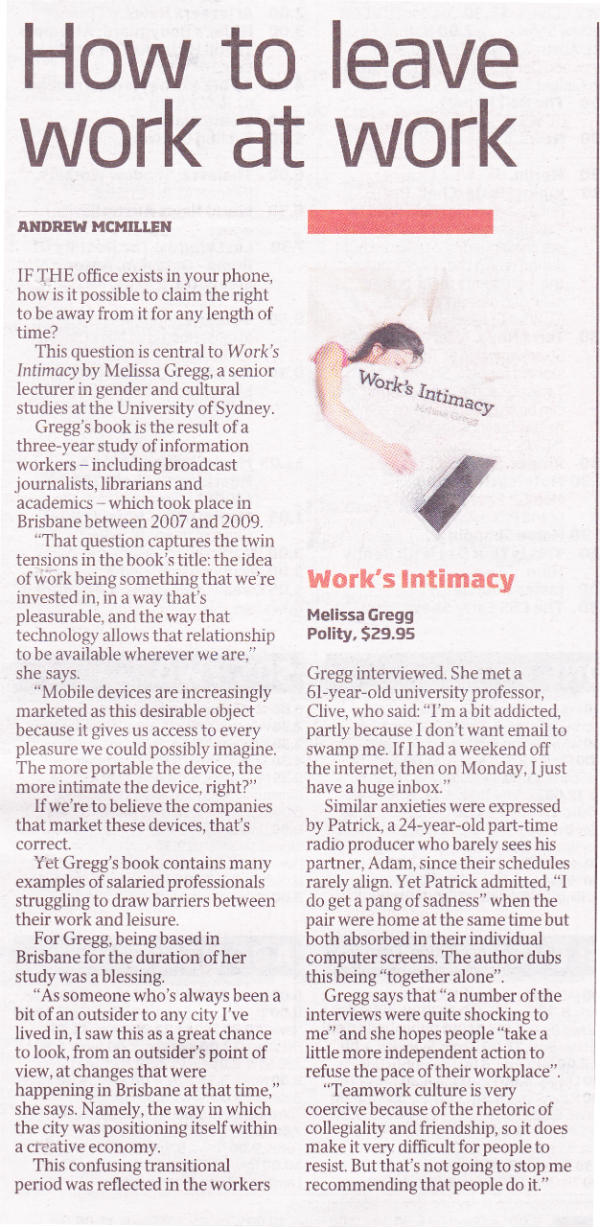
A short author profile for The Courier-Mail’s new Life section, which is included in the Saturday paper. Click the below image to view the version that appeared in print.
The text I’ve supplied underneath is the full article, which was slightly edited in print due to space restrictions.
How to leave work at home: Work’s Intimacy by Melissa Gregg
If the office exists in your phone, how is it possible to claim the right to be away from it for any length of time?
This question is central to Work’s Intimacy by Melissa Gregg, a senior lecturer in gender and cultural studies at the University of Sydney. Gregg’s book is the result of a three-year study of information workers – including broadcast journalists, librarians and academics – which took place in Brisbane between 2007 and 2009.
“That question captures the twin tensions in the book’s title: the idea of work being something that we’re invested in, in a way that’s pleasurable, and the way that technology allows that relationship to be available wherever we are,” she says. “Mobile devices are increasingly marketed as this desirable object because it gives us access to every pleasure we could possibly imagine,” she laughs. “The more portable the device, the more intimate the device, right?”
If we’re to believe the companies that market these devices, that’s absolutely correct. Yet Gregg’s book contains dozens of examples of salaried professionals struggling to draw barriers between their work and leisure. This behaviour extends to checking and replying to emails outside of the workplace, in preparation for the actual workday.
“That was extremely common,” Gregg says. “It seemed to point to a sense of unpredictability in people’s work days. We once thought of the office as a mind-numbing routine of 9-5, of always knowing what’s coming, and that being part of the problem. This tendency to check email outside of the office seemed to suggest that, individually, people did not know how to cope with the pace and the unpredictability of the workplace today.”
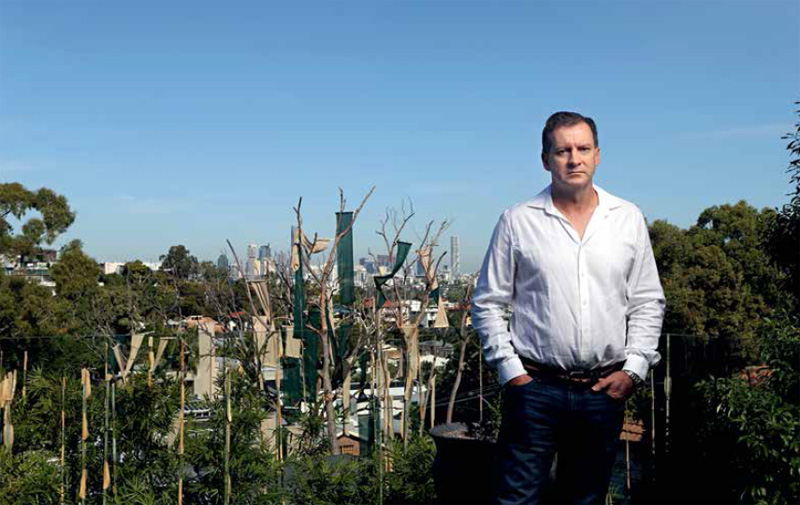
For Gregg [pictured below], being based in Brisbane for the duration of her study was a blessing. “As someone who’s always been a bit of an outsider to any city I’ve lived in, I saw this as a great chance to look, from an outsider’s point of view, at changes that were happening in Brisbane at that time”; namely, the way in which the city was positioning itself within a creative economy.
This confusing transitional period was reflected in the workers Gregg interviewed. She met a 61 year-old university professor, Clive, who said “I worry that I’m going to miss something” if he doesn’t check his email constantly. “I’m a bit addicted,” he said. “Partly because I don’t want email to swamp me. If I had a weekend off the Internet, then on Monday, I just have a huge inbox.”
Similar anxieties were expressed by Patrick, a 24-year old part-time radio producer who barely sees his partner, Adam, since their schedules rarely align. Yet Patrick admitted “I do get a pang of sadness” when the pair were home at the same time, but both absorbed in their individual computer screens. The author dubs this being ‘together alone’.
Gregg says that maintaining an emotional distance in these scenarios is “one of the challenges of this kind of research, because you’re always needing to retain objectivity in the moment of the interview, and to say as little as possible to affect them telling you what’s really going on.”
She says that “a number of the interviews were quite shocking to me, and did make me feel that there was merit in having people talking about these issues, because they could at least become prominent in their minds for a while, to see just how much they could recognise their relationships had changed within the family structure.”
Though Gregg says she’s “no shining example” in contrast to the work/life issues raised by her interviewees, she hopes that people “take a little more independent action to refuse the pace of their workplace. Teamwork culture is very coercive because of the rhetoric of collegiality and friendship, so it does make it very difficult for people to resist. But that’s not going to stop me recommending that people do it.”
Work’s Intimacy can be ordered via Polity Books’ website.
Qweekend story: ‘I went to the drive-in and this is what I saw’, September 2011
A story for Qweekend; my first contribution to their weekly ‘what I saw’ series of observational short stories.
Click the below images for a closer look, or read the article text underneath. Photography by David Kelly.
I went to the drive-in and this is what I saw
Thirty-eight kilometres south-east of Brisbane lies a large, lumpy car park just off the Pacific Motorway. It’s an unremarkable piece of land but for the two enormous white billboards at either end. At half-past five on a Saturday afternoon, a dozen vehicles are queued at the entrance. Relaxed female staff stride out to the central booth and begin letting traffic through.
Two different sessions screen simultaneously at the Yatala Twin Drive-In Theatre – hence the name – and since seeing one costs adults $13 each and two costs $16, it seems wasteful not to commit to the double. “What movie are you watching, darlin’?” the attendant asks. My partner and I opt for the pair showing in field two: fantasy-action film Thor and medieval-themed comedy Your Highness.
The parallels between regular cinemas and the Twin begin with “seating”. As with an indoor theatre, central real estate is snapped up first, while late entrants are relegated to the wings and neck-craning front rows. In the middle of the property, a single-storey building serves the dual purposes of business HQ and food outlet. The decor borrows heavily from the ’50s-era American diner aesthetic, right down to the life-size Elvis Presley and Marilyn Monroe statues in the foyer – “Please don’t touch”, reads a sign on Elvis’s guitar. A formidable wall of sweets makes young eyes water. Attendants serve dagwood dogs, Chiko Rolls, hot chips and popcorn, while an elderly manager potters behind the scenes.
All four films screening tonight are new(ish) releases. Those parked in field one will be privy to Rio and Fast & Furious 5. This ensures that visiting the Yatala Twin isn’t a novelty excursion into yesteryear but an independent alternative to watching films at a megaplex.
Beyond a row of tall trees at the foot of the property, the queue of brake lights on Stapylton-Jacobs Well Road extends into the fading dusk. Most headlights are dimmed once inside the theatre, as drivers heed a sign that reads: “Definitely no lights”. Seated at a table outside the diner, eyeballing the procession of slow-moving vehicles, we’re glad we got here early.
It’s chilly in Yatala tonight. Slippers and ugg boots are common; children, especially, are revelling in the chance to publicly parade their brightly-coloured pyjamas. The painful shriek of low-bodied sports cars scraping their undersides on the bumpy terrain occasionally interrupts a PA soundtrack comprised solely of golden-oldies.
We gaze up at the giant white billboard and attempt to estimate its height. Twenty-five metres? Thirty? (We learn on the theatre’s website later that it’s actually 13.4m.) As we walk back uphill, the diner’s painfully bright fluorescent lights destroy what limited night-sight the human eye can muster. It’s a complaint echoed by a pair of teenage girls, with whom we nearly collide. “We can’t see a bloody thing!” they say, startled.
Dean and Jess, a couple of Yatala regulars, are lounging on a mattress in the back of their station wagon. How does tonight compare to previous outings? “It’s cold,” Dean says. “That’s about it!” We all laugh. His mother once worked for the defunct Richlands Twin Drive-In Theatre. After getting his driver’s licence, Dean and his mates often spent weekend nights within these very grounds. “We like coming here. It’s peaceful. You get to lie back,” he says, gesturing at the mattress.
A strange feeling descends in the calm before Thor. It’s the realisation that we’re sitting in a dark carpark with hundreds of others, listening to a live Elvis album recorded in the 1950s. Parents tell their children to stay within sight. Some have brought fold-up chairs; others make use of ute trays. Blankets are a prerequisite. Many simply sit in warm little bubbles, radios tuned to the relevant frequency. Everyone respects their neighbours’ space. There’s something incredibly romantic about the manner in which this experience brings people together, far more so than an average trip to the cinema. Who knows how many children have been conceived here?
Beside each parking space is a steel pole lit by tiny, candle-like orange bulbs. The poles hold two chunky, steel-encased speakers designed to be hung inside car windows. The units are hefty. They give off the impression that the hardware hasn’t been upgraded since the theatre was opened, in October 1974, with one screen. (It became the Yatala Twin in 2000.)
The speakers buzz with distortion whenever things explode in Thor (which is often), or when starlet Zooey Deschanel breaks into song in Your Highness. Those who possess adequate stereos and generosity toward their fellow man blast the radio at windscreen-rattling volume.
During the interval, the queue for the ladies’ is dozens-deep. Happily, the guys’ queue is non-existent. Most of those parked in field two leave after Thor. Some cars creep forward a few rows.
Fifteen minutes into Your Highness, the yellow glow of the RACQ logo glides by. Three cars over, 32 year-old Alisha and her partner Frank are stranded. They had intended to relocate and watch Fast & Furious 5, only to find that their engine wouldn’t turn over. Theatre staff have a battery pack on hand to assist but it hasn’t helped. Frank’s son, Ryan, is in the back of their white wagon. “We come here every three or four months, just for something different,” says Alisha. “Ryan likes coming. In summertime, it’s awesome.” She butts out her cigarette on the bitumen. “There needs to be more of them,” she adds. “We come all the way from Ipswich. There’s one there, but it just shows old movies.”
As soon as the credits start roll, brake lights pierce the darkness. Our neighbours shoot off a few minutes before the film’s end. They leave in such a hurry that they fail to put their rubbish in a nearby bin. It’s the sole instance of unbecoming behaviour witnessed during nearly six hours spent parked before the giant, white billboard in field two. Our engine starts with the assistance of crossed fingers.
Qweekend story: ‘The Long Dry Spell’; Chris Raine and Hello Sunday Morning, June 2011
This is my first story for Qweekend, The Courier-Mail’s Saturday magazine. It appeared on the cover of the June 4-5 2011 issue.
Click the below image to read the story as a PDF in a new window, or scroll down to read the article text underneath.
The Long Dry Spell
Story: Andrew McMillen. Photography: Russell Shakespeare.
When Chris Raine gave up drinking for 12 months just to see if he could, he started a Gen Y revolution.
++
At just after nine on a Saturday night, Chris Raine greets me at the door of his Fortitude Valley apartment in Brisbane’s inner city and leads me upstairs where he fixes a couple of French martinis (vodka, raspberry liqueur and pineapple juice). It’s my first alcoholic beverage of the night; it’s his sixth. Or seventh. He’s not really sure. On the couch, his friend Tamara, 26, sits in front of an Apple TV streaming photographs, mostly of people and nature scenes. Dance music is playing on the stereo.
Raine’s two housemates – an engaged couple – are downstairs in the jacuzzi, requesting top-ups for their martinis. Plans for the rest of the evening are discussed. Raine and Tamara intend to head to a dance club in the CBD. I have plans to meet friends at a British pub at midnight to watch live soccer games. Some of Raine’s friends arrive at the apartment, already liberally soused and keen to continue drinking.
None of these momentary decisions will have much bearing on any of our wider lives. It’s just another Saturday night in Brisbane and a handful of young people are deciding how they will spend the next few hours. The only difference is that one man in the room – 24-year old Raine – is actively turning the tide of his generation’s unhealthy obsession with binge-drinking. Although he’s wearing a loud shirt and a new haircut, nothing about him screams “revolutionary”. Yet his idea – Hello Sunday Morning (HSM) – could be seen as such, at least by a growing army of Gen Y binge-drinkers.
Raine has spent two years developing, nurturing and disseminating the HSM philosophy. The project began humbly, but is now chipping away at Australia’s imbibing culture, one young drinker at a time. Raine’s idea acknowledges that Australia has a drinking problem, one that is both unhealthy and unsustainable. But it’s here that any resemblance to government-funded, multimillion-dollar anti-bingeing public health campaigns ends.
HSM is not about guilt or scare tactics. While federal taskforces and marketing teams execute plans that admonish and demonise young Australians who drink to excess, HSM prefers to start conversations around alcohol use by challenging those people to give up booze for three, six or 12 months at a time.
Built into this process – known as “doing a HSM” among self-dubbed “HSMers” – is a request that participants publish blog entries on the project’s website (hellosundaymorning.com.au). Many HSMers prefer to write their own blogs; some film and upload video versions. Most choose to share these confessional entries with friends and followers on Facebook and Twitter. You could call it abstinence by social network.
Blogging is a request, not a demand. Some HSMers choose not to blog, in the same way that some partygoers refuse to stop drinking. Instead, they work through their HSM by keeping their cards close to their chests, and telling only their close friends. But those who do blog add to an online resource that – with each additional webpage visit, comment, Facebook “like” and retweet – infiltrates the culture.
As Raine mixes my second cocktail, I ask him if he’s had many doors shut in his face over the past few years. “Constantly. Of course,” he replies. “Even the idea of being abstinent for a short period is confronting [to some people]“.
Then it hits me – isn’t the founder and CEO of Hello Sunday Morning “binge-drinking”, according to the National Health and Medical Research Council definition of the term? He’s had more than four standard drinks in a night.
“All that kind of public policy is important, but it’s not really my cup of tea,” he shrugs. “I’m more interested in individuals working out what works for them. And tonight, having French martinis is working for me.”
Raine’s a realist. And besides, he’s just completed a three-month break from the booze. In fact, since he began waving the HSM flag in January 2009, he has spent 15 of those 29 months stone-cold sober. If anyone deserves a few casual martinis, it’s him.
++
Christopher Keith Raine was born at the Royal Brisbane and Women’s Hospital on November 28, 1986. He has a younger sister, Jess, 22. Their parents, Ellen and David – both GPs – split when Chris was eight years old.
As a child, his first love was tennis. In primary school he would spend his lunch breaks with a ball, a racquet and a brick wall. Nothing else mattered. His father recalls that Chris “had a bit of McEnroe in him at one stage”. He routinely threw tantrums and launched his racquet over fences if he lost even a single game. Like his older half-brothers, Chris later boarded at Brisbane Grammar School in inner-city Spring Hill. Early on, a teacher’s offhand remark earned him the nickname “Nugget”, owing to his adolescent chubbiness.
The first time Chris got drunk was at his father’s third wedding. He was ten years old. “As a parent you hear about these things later on,” David laughs. “It’s amazing what goes on at the time.”
Chris Raine’s next formative experience with alcohol was when he was 13 and in Year 8. It was at a farewell party for his half-brother Andrew, who was leaving for Cambodia where he lived for a year as a junior diplomat. Chris “got written off” and embarrassed himself. He slept it off, then returned to boarding school.
His parents were vehemently opposed to excessive drinking. “Chris wasn’t allowed to drink [without our approval] until he was 18,” Ellen confirms. David was also very much against what he saw as the schoolies tradition “where they try to stuff as much alcohol into their systems as they possibly can”.
For a time, drinking and partying became Raine’s tennis; his obsession. There was no history of alcohol abuse in his immediate family, nor did he consider himself a problem drinker.
Raine’s entrepreneurial flair became apparent in Year 10 when he would smuggle $10 bottles of alcohol into his dorm and sold them for $20 each. This went on for six months, until he and most of his friends in their senior years progressed to obtaining fake IDs so they could drink in pubs. While Raine was never caught drinking on the school campus, his teachers might have been grudgingly impressed by the lengths to which he and his mates would go to sneak out of the dorm at night to attend boozy parties. Raine still relishes the chance to “push the social envelope” to see how far he can take things.
His academic results at school were never exceptional. “He spent 12 years not really knowing why he was at school,” mother Ellen says. “He thought it didn’t relate to his life [beyond school].” It was her idea for Raine to travel through South America for a year as an exchange student when he was 17. He recalls it was a time of “lots of drinking, lots of partying”.
On his return he began a Bachelor of Communication at the University of the Sunshine Coast (USC), also at his mother’s suggestion, and lived in his parents’ Caloundra apartment. He had no career plans, though he knew his talents lay in marketing because he’d always been a good communicator.
Raine hit what he calls “rock bottom” halfway through his degree after he broke up with a girlfriend. His parents were worried about him – he was depressed and drinking heavily, and often. He says he was stuck in a rut where his life had “no real purpose or vision”. Yet getting his heart broken was the impetus for him to climb out of the hole he’d dug for himself.
Simon Maher – a marketing and management student at USC – was Raine’s flatmate at the time. Maher had just gone through a difficult relationship break-up of his own when he first moved in with Raine. He says the pair of them shared a lot of thoughts, experiences and feelings at the time – unusual for two young men. Although there were times when Maher would arrive home and find his flatmate halfway through a bottle of tequila, he’d just as often be woken by a 5am knock on the door by Raine inviting him out on a morning jog.
“I developed a lot as a person, living with Chris. He challenges people in positive ways,” says Maher, who now works as a HR and marketing manager for Telstra and retains a strong friendship with Raine. “Sometimes he doesn’t even know he’s doing it.”
As a budding entrepreneur, Raine booked Mooloolaba’s Wharf Tavern for regular Thursday night alcohol-fuelled events for his fellow students. At 21 he became the venue’s marketing manager but says he found it unconscionable to participate in the exploitation of young drinkers.
Later, he hustled an internship at a Brisbane-based youth advertising agency called Fresh, his first job on graduating. It was here that he made his first pitch to a government client whose brief was to reduce alcohol-related violence among teens. “[But] none of what we were coming up with was going to change the way I drank,” he recalls. At the time Raine was drinking “quite a lot”, which led to another crisis of conscience.
His colleagues challenged him to come up with something better, so he decided to make it personal. Raine swore off alcohol for a year on New Year’s Day, 2009, just a couple of hours after midnight. He decided his findings should be made public, because he’d never heard of anyone sharing such an experience socially.
Naming his blog Hello Sunday Morning, he wanted it to be “something positive, fun, lighthearted, and focused on individuals”. “It was like ’carpe diem‘, you know?” he says. “Hello Sunday Morning, for me, was a call to action. It’s about making the most of every day, not just Sunday. You only have one opportunity to make the most of your life. And it all starts with ’hello’.”
++
Raine was a barely competent blogger at first. His web entries were brief, shallow and gave the impression he wasn’t too keen on teetotalling. But he was just too proud to back down in front of his mates or, more importantly, to reveal the truth about himself.
His first entry, grandly titled “The Odyssey Begins”, reads: “[It's] Sunday morning and I am actually sitting at my desk, typing in a mildly coherent fashion on my laptop … as apposed [sic] to being completely hungover, bedridden and dreading doing absolutely anything except lay [sic] in my bed and eat KFC. This is a blog about what crazy things can happen to a normal, social, 22-year-old when they don’t drink alcohol for an entire year. It is a real-time look into the wonderful Australian pastime of drinking through the eyes of someone who isn’t.” – January 11, 2009
Unexpected challenges soon cropped up. Just a week into his year of sobriety, Raine was dumped by another girlfriend.
“There would be nothing more I would like to do right now than go straight to [a bar] and write myself off on tequila shots,” he wrote. “But I can’t, so I type. It’s a strange place, having to sit in your own emotions.” – January 18, 2009
In the same blog entry, he confessed he had been dependent on the relationship with his ex-girlfriend because it meant he didn’t have to deal with the awkwardness of chatting up other women without the aid of liquid courage…
“I don’t think I ever actually learnt how to socialise with girls, sober. I mean, I’m good at talking to women. I have lots and lots of women friends, but when it comes to putting the moves on – horrible. What I don’t understand is: why aren’t young men taught how to communicate with women? 1. There would be less violence. 2. People would drink less, and 3. Kebab sales would plummet.” – July 28, 2009
Rather than suffering in lonely silence, during his HSM abstinence adventure Raine chose to put himself in social environments on a regular basis. He was going out on most weekends, taking notes and blogging all the while. By April, his new role as a sober observer led to an epiphany – while he was watching his hero Michael Franti, an outspoken 45-year-old American musician and social justice activist, perform at a festival in Byron Bay, northern NSW.
“In the past three months I have gone through a lot of realisations and I feel that Hello Sunday Morning is my life’s purpose. Even if it is small now, I feel like we are making a bit of a difference. I feel so good when people tell me that it makes them think about their own actions around drinking. It makes me believe.” – April 15, 2009
Over the next few months, Raine’s passive observations of drinking culture metamorphosed into deep, detailed essays – on drinking, social interaction, sobriety – which showed how seriously he now took his role. He left Fresh in September that year to give HSM his full attention and by November, five of his close friends had agreed to undertake their own HSMs. Their support strengthened his resolve.
“I’m humbled by the willingness of young people to stand up and make a choice not because they have to, but just because they believe in a better way,” he wrote. “They believe they can challenge those belief systems around alcohol which have been handed to them from one generation to the next. More importantly, they believe they can change it for the generations that will follow them. We are not many. But we have conviction and purpose, which is stronger than any number.”
Against the odds – and in defiance of his peers’ initial disbelief – Raine completed the year-long dry spell, and then decided to postpone that first drink a little longer, despite being out at a bar surrounded by friends…
“I didn’t end up drinking at 2am because I didn’t think it would add any value to the experience I was having. I look forward to giving it a ’yes’ sometime soon, but it will have to be for the right reasons. Wow. One year. One year of change, evolution and freedom. I’m 23 years old and my life has never been more full.” – January 1, 2010
++
Our martinis drained, Raine, Tamara and I catch a taxi to Rosie’s, a club on Edward St in Brisbane’s CBD. We head downstairs where dozens of young adults are dancing to dubstep (a sub-genre of electronic dance music) beneath strobe lights. We sip mixed drinks and take in a few songs. I leave them at the club and meet friends nearby at Brit-themed pub the Pig ‘N’ Whistle. After watching two full games of live English soccer, I walk home to New Farm. It is 4am.
Over the course of the night I’ve consumed two French martinis, a vodka raspberry, a gin and tonic, two pints of full-strength beer, a Coca-Cola, and two pints of water – about eight standard drinks, all up. By government definition, it’s a binge; by mine, an anomaly. I’m usually in bed, sober, by 1am.
On the walk home, my low-level booze buzz has been replaced by overwhelming exhaustion. I think of the parallels between Raine’s experiences with alcohol and my own. Though he’s a year older than me, we’ve both made poor decisions under the influence. He’s lost his licence for drink-driving. I was once taken home in the back of a police car as an underager. But as Raine points out, we’re no better or worse people for having made these decisions.
Since starting Hello Sunday Morning, Raine’s persistent networking – hustling, as he calls it – means he has positively influenced hundreds of young lives while also building a business around his idea. HSM is now primarily funded by The Australian Centre for Social Innovation which, in turn, is funded by the South Australian Government. TACSI’s $200,000 contribution to HSM last year allowed Raine to hire a full-time operations manager, plus a handful of part-timers specialising in research, web creative (programming, design and branding), membership coordination, and university relations. Raine halved his own salary so he could afford those five part-timers, although he says they’re still not paid half what they deserve.
Michael Thorn, CEO of the Canberra-based Alcohol Education & Rehabilitation Foundation (AERF) – who recently awarded HSM $20,000 in funding for a web documentary series – describes HSM as a logical step. “It’s dealing with a demographic where we know there are serious causes for concern,” he says. AERF research published in April this year found that most Generation Y survey respondents drink specifically to get drunk. “Over one-third (35 per cent) of all drinkers consume alcohol for this purpose,” the survey said, “but [it particularly] applies to the majority of Gen Y drinkers (61 per cent).”
HSMer Anthea Flint, 22, fell firmly into that category. She got drunk for the first time at 14 after raiding the liquor cabinet at a mate’s house. After that she drank every weekend until one too many public mistakes under the influence led her to HSM at age 21. During her seven months of sobriety, she saved money, travelled to India, regained her physical fitness and is finishing a degree in PR and advertising at Queensland University of Technology.
Flint remains a strong advocate of HSM. “It’s exciting to be a part of this as it gains momentum and as you see the reactions of other people to what you’ve achieved through not drinking,” she says. “It makes you feel like you’ve achieved something, and you’re a part of something really special.”
More than 800 Australians like Flint have publicly committed to taking a break from drinking through HSM. One of them, Jill Stark, a 35-year-old health reporter for The Age in Melbourne, condensed her blog posts into a feature story run by the newspaper in April. It summarised her own HSM experience, an initial three months without alcohol.
“Politicians, drug and alcohol sector workers, teachers, mental health experts – they’re all wringing their hands about this booze-soaked culture that we have in this country,” she says. ”Everyone talks about changing that culture, but no-one really knows how to do that.
“HSM is about changing a culture. You do that by engaging the people that you’re trying to reach with the problem. I’m not sure why it works, but it does. Possibly because young people can see someone like Chris, who looks like them, is the same age as them, and came from the same background. Even those who haven’t taken up HSM are looking at their own drinking habits and saying, ’Hold on, maybe I could do this a better way’.”
++
Footnote: As of June 4 2011, I’ve undertaken a three-month HSM of my own. You can read about that on my HSM blog.
++
This story in Qweekend was accompanied by a smaller, summarising story inside the main section of The Courier-Mail, on page 18. Article text below.
Social group leaving hangovers behind
ALL across Queensland on New Year’s Day, the words “not drinking again” escape the lips of innumerable hangover sufferers.
Most of them soon back down in the face of both social pressures and a desire to regularly imbibe alcohol that seems practically etched upon the DNA of our national identity.
A beacon of hope in dark, drunken nights is named Chris Raine. He uttered that commitment on January 1, 2009, and kept his word for an entire year.
Then 22 years old, Raine adhered to the straight and narrow through what could be called abstinence by social network. Rather than carry it close to his chest, he opted to create a blog and document his experience online.
Raine’s curiosity toward Australia’s cultural obsession with alcohol – and his desire to subvert that culture – was dubbed ‘Hello Sunday Morning’. Now, two and-a-half years later, Raine’s “HSM” community now numbers more than 800.
Not all of them blog about their experiences on the HSM website, but many do. In turn, its word-of-mouth marketing approach propels Raine’s message deeper into Australian culture with every subsequent blog comment and pageview.
Raine, now 24, and living in Fortitude Valley calls HSM “an opportunity for anyone who is ready to take a three-month break from our drinking culture and find out what life is like without a hangover”.
It’s not a life-long abstinence movement. Many who undertake an HSM a nominal period of three, six or 12 months without alcohol find that, once they return to the drinking scene, their relationship with alcohol has significantly changed … for the better.
Ask 32-year-old Shane Yearbury, who is midway through a six-month break from booze.
Previously, Yearbury business manager at a Motorama car dealership in Moorooka had subscribed to the “weekend warrior” mentality for over half his life.
Since signing on to HSM in March, his perspective has shifted and already the benefits are apparent in his work.
“I noticed an increase in productivity as soon as I stopped (drinking). I wanted to be involved in every process that we have here,” he said.
Raine’s long-term goal is to halve Australia’s cultural dependency on alcohol. If that seems a tall order, consider that, just over two years ago, the concept of HSM was real for just one person: him.
Now, it’s a part of daily life for hundreds of former binge drinkers.
For more on Hello Sunday Morning, visit hellosundaymorning.com.au.
A Conversation With Neil Strauss, New York Times bestselling author, 2011
Almost two years ago, I traveled from Brisbane to Sydney to meet Neil Strauss – my favourite writer [pictured right] – for a face-to-face interview. It was a life-changing experience, and that’s no exaggeration: being in his presence solidified my decision to seriously pursue journalism. (Up until that point, I’d only dabbled; the interview was ostensibly for FourThousand.com.au, a Brisbane-focused online publication). That meeting, and our resultant conversation, is documented in full here.
This time around, when Neil’s new book Everyone Loves You When You’re Dead – a collection of enlightening and revealing moments taken from his 3000+ interviews with cultural figures for Rolling Stone and The New York Times – appeared on Text Publishing’s Australian release schedule, I was in the position to get paid to interview my favourite writer, rather than spending a few hundred dollars on travel for the same opportunity. Which is nice.
I interviewed Neil over the phone from his home in California for The Courier-Mail in early March 2011, before the book was released. I published a 800 word article here, which summarised our 45 minute conversation.
Our full interview transcript is included below.
Beware: throughout our interview, there are many references to the content of …When You’re Dead, so if you haven’t read it yet, you might want to avoid reading this interview. Maybe not.
++
Firstly, I want to talk about the final chapter of the book, and the epilogue. I thought it was a very touching note to end on; it wrapped everything up nicely. It made me wonder; was that section about [American rock and folk music critic] Paul Nelson always going to close the book? [Note: Nelson died in 2006 due to apparent starvation. Strauss wrote a feature for Rolling Stone about his death, called "The Man Who Disappeared"; in When You're Dead, he says it was the hardest article he's ever had to write.]
No. I don’t think any book is ever planned. It always sort of just happens. I guess I knew I wanted the last section to be about family and mortality, and I felt I put so much heart and time into the Paul Nelson piece, it seems like a fitting epilogue for the book. And it rolled so nicely into the actual epilogue. I knew that each section was going to have a theme, and the last section was really going to look at mortality around different angles, in a parallex way. That got more appropriate there. It just sort of landed there.
When I’m writing, I never think in advance. I just keep hammering and hammering. They’re like puzzles. You’re putting everything together and you keep rearranging until you feel that it’s right.
Something that Paul’s ex-wife said made me think of you, Neil. She said, “I found out more about him by reading what he wrote.” I wondered if you’d ever heard the same thing from those close to you.
[laughs] You know what? That’s such a good comment. I’ve never heard that, but I know it’s 100% true. One hundred per cent true.There are things that I can’t tell people face-to-face, whether they’re just friends of mine, or people I love who are close to my life, yet for some reason I’m not afraid to write about them, even though I know they’ll see ‘em.
Even the stuff in The Game, I’ve never told people because I was worried they would judge me. The stuff in Rules Of The Game, in that first story about that really, really old woman. My friends would have just ripped… it would have been publicly humiliating. But I guess I feel if I can write it I can really explain it fully, all the dimensions to it and I can make sure it’s said right, and comes out right.
That way I can say it the best way I can possibly say it. It’s so true. It’s interesting. It might be something… I just interviewed Howard Stern for Rolling Stone, and I realised what we have in common. It’s hard sometimes to communicate the truth, as a guy like me, because it’s hard to deal with peoples’ emotions. If you say something that affects someone you have to deal with their emotional reaction to it. And maybe in a book, as horrible as this sounds, no-one is talking back to you, to that idea. No-one is saying that it’s wrong or that it hurts them, or is an unhealthy way to think, or it’s a judgmental thing to say, or whatever. It’s a semi-one-way conversation. I’m speaking to a bunch of people, but they’re sort of a faceless, invisible mob.
I see what you mean. Most journalists I know admit to feeling guilty for drilling into peoples’ minds to make their stories public. I’d like to know your take on that.
I never feel guilty, because I never try to hurt anybody with a story. I’ve never been a gossip reporter. I’ve never sat outside somebody’s house chasing them. Everything I’ve ever written, at least in journalism, is in the context of, you know, “I’m here to write a story, and anything you say or do can end up in that story”. So they’re making the choices. I’ve never tried to assassinate anyone. I’m always trying to show them as they are.
Sometimes I feel guilty in the sense of after we did this interview; say I spent a long time with this musician, and I’m leaving with four hours of recordings of them spilling their soul to me, and all of a sudden it’s like, “thank you very much, good-bye”, and I’m just walking away with their soul on a tape, to some degree. They have nothing. That part always feels strange to me, like having sex with someone, then pulling out and running away.
The fact that you’re working with ‘household names’ most of the time, does that increase the guilt, knowing that you’re exposing them even further?
No. I would feel that with anyone. If I’d just interviewed a guy off the street for four hours, or for a day or a week, about their inner most thoughts and fears; their life, their insecurities, and their hopes and dreams and ambitions, and then I just walked away… I’d still feel horrible, because they have nothing. I’ve got this tape recorder that has everything. It’s a feeling of: I’ve taken something and I’ve walked away with it, and what do they have? Nothing.
Even though that’s not how it works – obviously they have the promotion and the press and whatever the article is [about] – but it’s still a way where they’re bereft, and here I am with everything. You try and shape it as honestly as you can, but there’s also a trust element, where you could shape it any way you want.
Speaking broadly, have you thought much about why people are so interested to read about the lives of famous people?
I don’t believe that. I didn’t put the most famous people I interviewed in the book. A lot of the people I interviewed, whose heart and fame I adore, whether it’s Stevie Wonder, Iggy Pop… who I didn’t put in the book, because the interviews weren’t revelatory. I think if anything, what makes it look unique is: there are a lot of people who spend their lives interviewing famous people, but just as interesting as Lady Gaga and Justin Timberlake and Bruce Springsteen are Von Lmo, and Patrick Miller, and Lucia Pamela, who probably 99.9% of readers never heard of. And yet they’re going to find those just as interesting as the big stars.
I just think people are interesting if you get them at the right moment, you know? [laughs] I do think that on some level, celebrities are being used to sell the book, and that’s a lot of what I’ve written about, but to me the Ernie K-Doe experience – the 50s R&B star who tried to have me arrested, or again, Patrick Miller who’s smoking crack and doing heroin in his basement and fighting off hallucinations – they’re even more interesting than reading about… for example, Led Zeppelin just being assholes. [laughs]
To talk about the book in broader terms; this book is not directly about you, it’s about revealing other people. It’s been a while since you’ve done a project like that.
Right. But I think in a lot of ways the book is about me. I really made a conscious effort to keep myself out of it but I think between the lines, the book really is an element of my… I think each book is little elements of my autobiography. Whether it’s The Game, which covers a couple of years; Emergency covers a couple years. This, to me, is like the prequel in some ways, [laughs] because this is all I did for 20 years. This is my life for that time, and I think if you look at the pieces, you can see my own evolution as a person. Whether it’s Led Zeppelin making fun of me [for being inexperienced], to learning The Game and trying to seduce people into these interviews, to much later, meeting Lady Gaga and Chuck Berry and giving them life advice. I can see my own evolution in the book. It’s just not explicit.
When you began putting this book together, at what point did you decide to do that concept of the threaded narratives, or ‘open loops’?
I think what I did was, I broke down all those interviews to those little clips, and each clip was a standalone clip. Then I collected the most interesting [clips]. Some people were interesting for only one clip, for one little vignette. Other people maybe had three or four vignettes in which they were interesting. Then I sort of sequenced them together, so that everything matched together. The vignettes were really standalone stories about an idea, so I thought that it’d be nice where, “Hey, we get this idea, now here’s a couple ideas from someone else, now let’s return to a new idea for that person we just met”.
I kind of saw each piece as almost a standalone piece. Even when they continue from scene one to scene two to scene three, sometimes the story continues. Sometimes they’re just completely separate ideas. Other times, which I kind of like, you see artists at different times in their career. Maybe a couple years later, they feel bad about what they said earlier.
It’s interesting that a lot of the segues between the vignettes are artists mentioning other artists. That shows the breadth of the 20 years that you’ve spent doing this.
Yeah, it’s really funny. I’d probably say, with one or two notable exceptions, almost every artist someone mentions is interviewed elsewhere in the book, so it’s like the book itself; it’s kind of a closed loop. It is funny, there really were points where Trent Reznor mentions Beck, Gwen Stefani, Marilyn Manson and Oasis and I’ve got all four of those people interviewed elsewhere in the book. It’s like: which one do I put next?
I think there’s one section where all the artists are always talking about each other, Billy Corgan, Marilyn Manson, I think Courtney Love, Dave Navarro, And they’re all kind of referencing each other.
You state in the intro that “you can tell a lot about a person in a minute, if you pick the right minute”. Was that always the premise of the book?
No, the original idea was because Emergency – as you know from when we talked – Emergency was so much work. I basically had to learn how to rebuild the entirety of civilisation all by myself, you know? [laughs] It was so intense, so much work, I thought I’d give myself a break and do an anthology because anyone who’s been writing articles and features for 20 years feels like, “why not collect my favourite pieces and put them in a book?”
I started collecting [my] pieces and reading them, but… I like telling stories. There were no through lines. I bought a bunch of anthologies from writers I liked. Half of them I didn’t finish, because I got bored. With the other half, after I was done, I was bored of the writer, and bored of the voice, because it’s not a book if it’s just articles bound together.
Although it literally is my dream project, as for over 10 years I’d been collecting all my favourite articles in a file to put into an essay book. Then I realised it doesn’t work. Every book one does, or every film, or every record should be good enough that if anybody starts with any single one, they’ll then want to read the rest of what you’ve done. I felt if somebody read [a straight anthology] first, and it was the first book of mine [that they’d read], they might not be be intrigued enough to want to read the others.
I wrestled with it for a while. I thought I’d write a story about being a down-and-out writer in New York, and merge some of the articles that happened during that time, and tried a couple of other formats. Gradually I realised that essentially, these articles were moments when you saw the real person behind the mask.
I started collecting those. That two month quickie book became fuckin’ two years of intense work. Unlike Emergency, which was fun, I got to go live off in the wild and learn how to pick locks and go to junkyards and hotwire cars. The Game was fun because I got to run around the world and meet women. This time, I was stuck in a room with my own past, sorting through thousands of pages of transcriptions.
The way I think of it, this book is the journalistic opposite of taking the easy way out. Like you said, rather than putting together your best, or favourite published work, you’ve really gone through and mined your past for the best material.
Yeah, and it’s funny because I even had most of the interviews re-transcribed. I had somebody go back to the tapes. I said, “I want every time someone coughs, every time they paused, every time there’s an interruption, I want you to write it out like it’s a play and tell me everything going on”. Even though that’s time consuming and expensive and laborious, I was pretty adamant about getting everything from those tapes and looking for those little moments.
I was going to ask: how much of this book existed on your hard drive already?
I think only about 10% were on the hard drive as they were. A lot were already transcribed, but just not well enough. Sometimes, for example, if it’s someone transcribing something, they might not take the part where the guy just asked me as an off-hand thing, “Hey, do you know now to make beans?” The truth is; the guy who’s talking about his album and why he wrote songs, it’s really more revealing to me that he asks the journalist “How do you make beans?,” because he’s trying to cook for his son. That tells me more about the person than some long story about his album. I tried to get most of them transcribed, and the only ones that didn’t were when I couldn’t find the original tapes. I literally called people who transcribed tapes 10 years ago, and had them find the tapes and bring them back to me.
Was this the first time in your career that you’d really sat down and gone through all your old stuff?
For sure. Absolutely.
What were some of the personal highlights when you were going through that material?
To me, the highlight for sure was finding all these all pitch letters I’d written to people, trying to write articles for different magazines, different newspapers; finding letters I’d written to my family about how excited I was that this article was out, because you forget how much you struggled sometimes. You forget how excited you are at those first-floor victories. That was kinda moving. It’s really easy to forget the past, because we get so caught up in the present. It was cool to see that. Everyone has a passion and a dream, and it was cool to see that I somehow was lucky enough to live that passionate dream, and even overshot, somewhat, my goal. My only goal was to write a weekly column for Village Voice. I did that by the time I was 22, so everything since then has been gravy.
That’s awesome. Let’s talk about interviewing. What is an interview to you, now? Has it changed since you started doing interviews back then?
No. I think I’m better at it. The interview’s still the same thing. An interview is still me trying to get as close to someone I can and write an article that somehow captures who they are, and that says something new about the person that hasn’t been written before. It’s always been the same thing, and I’ve always been really hard on myself about them. They’re never easy, and they need a lot of preparation.
What makes a good interview?
In the end, it’s about how you write it. I could say to me there are three kinds of good interviews. I’m just thinking of this out loud as we’re talking. One is where someone really examines themselves in a very honest way and is really emotionally vulnerable, and open, and honest with you. Another kind of good interview is where crazy shit happens, like the first time I’m going to interview Motley Crue, and the police are literally arresting Nikki and Tommy, and in the meantime Vince Neil is blow-drying his hair the whole time. That’s a great interview. They haven’t said a word, and it’s already the fucking best interview ever. The third kind is where the subject sucks, where they’ve got fucking nothing to say. They’re really closed off, not giving you anything, and then that’s an opportunity for me to be a creative writer. [laughs] One thing is the material. The other thing is what you make of it.
I saw a recent press interview for this book, with Cleveland.com, where you told them that when you do an interview you’re petrified with fear and you’re stressed out. I’m surprised that you still feel this way, after doing it for over 20 years.
For sure, man. My last interview was with Howard Stern… I’m definitely doing fewer and fewer [interviews] over time. I really only want to do one or two a year. But yeah, of course [I’m stressed], because you have to somehow go in, you have a limited amount of time with someone, and you have to walk away and leave with something they’ve never told to anyone else before, or at least any other writer before. That’s a lot of pressure. You’re not in control of it, they’re in control of it.
My last interview with Howard Stern, who spills his whole life on the radio every day. How do you get that guy to say something new? There’s a burden. I think the better you get at something, the more intimidating it gets. For example, the better I got at pickup during The Game, the harder the approach was because my expectations and everyone else’s expectations were so high of me. To make the parallel, when I approached a girl in the past, if I didn’t get slapped or laughed at, it was a success. In other words, if some crazy wild adventure didn’t happen with this woman, then I failed.
It’s the same with an interview. In the past, just to get the interview was enough. I succeeded by getting to be in the same room as this great artist who I looked up to. Now it’s not enough. I’ve got to get the best interview this person has ever given in their life. So the better you get at something, the harder and more intimidating it gets. I’m sure that’s true for you. When we had that interview before, I would say the success was fucking even getting it [in the first place].
Definitely. I know what you mean. You said when we first met that your goal was to get the best possible material out of someone, and like you said; if it’s someone who speaks for a living it’s hard to find some new truth in that. But it’s still the goal. It’s my goal every time, regardless whether it’s a 15 minute phoner or a couple of days with someone, you still want to get the best. You want to be the best. It’s your standards you’ve got to live up to and you want to put them as high as you can.
Yeah. And as an interviewer, you’re not in control of that. If you’re just writing an article you can make it the best if it’s all up to you, and how well you write, but in an interview you’re not in control of that. I agree.
Is it a matter of the bigger the star you interview the more nervous you are beforehand, or is it similar across the board?
I think it all depends on the situation. I’m more nervous if the star has only given us one hour in a room together. Unless I’m going to be going on tour with them for a week because I know I’ll get time to get what I need. I guess it’s not how famous they are, it’s how short of a time I have to get to connect with them.
When we first met, I think the first thing you told me when you walked over and looked at my sheet of paper, was: “Ready for all 15 questions,” and then you said what you do to prepare for an interview is brainwash yourself with the person’s career and write down every single question that comes to mind. Now besides those two elements, researching and writing down questions, is there something more? Is there a routine to preparing for interviews beyond just research?
I think it’s kind of what I said before, that brainwashing which is reading all the books, reading every article about them, reading any books if they’ve written any, listening to every album, watching every movie they’re in, and then as I’m doing these things writing down every question that I can possibly ever thing of. Then studying those questions and arranging those questions in a sequence I kind of want to ask them, and then studying those questions like I’m preparing for an exam, where I don’t know what the questions are going to be on the test. [laughs] There’s a lot of big interviews I turned down, because I really didn’t want to get that deep. I wasn’t that interested enough in the artist to get that deep in their life, and their work.
When you’re meeting face-to-face with your subjects, do you pick clothes to make you appear a certain way?
No, in fact I’ll usually dress more down than I would if I was going out myself because I want them to know they’re they star, I’m not trying to say… I think if someone walked into the interview saying “hey, we’re equals! Hey, look at me, I’m one of you too!” the star’s already like “no you’re not.” [laughs] So if anything, I try to play myself down. Even the Howard Stern interview I did today ended up on the air and it’s on TV and you see it, I’m dressed in a sweatshirt and jeans. I really try to be like, “you’re the star. I’m not going to be so embarrassing you can’t be seen with me, but I’m not going to be dressed like I think I’m a star too”. I think that’s the wrong attitude to go into an interview with. In fact, going into any situation whether it’s pickup, survival, or an interview trying to impress someone is the exact wrong attitude to have.
The way you say that makes me think that you’ve made that mistake in the past and you learned not to act that way. Is that correct?
No, I never did because when I started out, I really was super, super humbled by these amazing people I got to be in the same room with. And I really was kind of young and innocent. I did it before, but it wasn’t a mistake, when I did that Ludicris interview. There was an idea that we had the ‘Ho’lympics’, a contest where it was me against Ludicris doing all these crazy things, like the one-hand bra unhooking contest. I brought one of my peacocking outfits from The Game, like this snakeskin suit. It was funny. He loved it. He thought it was fucking hilarious. It hasn’t been a mistake when I’ve done it in the past and I think it’s less about dress and more about attitude. But I know my place, I know the role. They’re the star and I’m the person who’s translating that message to the world.
Out of interest, Neil, do you have a musical background?
No, I can play a little bit of music and I’ve even been in bands and stuff, but my goal was never to be a musician. If anything, if I was to end up anywhere in the musical side of things it would have been as a producer, because I think in a way it’s similar to being a critic. There’s a sense of saying “what can we do?”. It’s being a critic, but earlier on in the process, where you can actually have some effect on the music.
True, I see that. The reason I asked is: that bit of musical knowledge that you have beyond being a critic – you actually know how to play some music – do you think that’s been advantageous for you to help relate to musicians?
Not always. Sometimes it’s been fun, because I did piece on this band Sebadoh, and we went and recorded a punk rock single together. There were a lot of cool things that didn’t make it in the book, but I had to select what was most interesting. But [musical knowledge] has helped in a couple of cases. I also find that musical dialogue won’t be interesting to the general audience of Rolling Stone or The New York Times. If I wrote for Musician or Guitar World it would, but I think that would have hurt the interviews. Because maybe [the interview subject and I] would have bonded over it, but it’s not going to create any kind of dialogue that’s going to be appropriate for that kind of article.
I think there might be an element, too, of if you cover musicians, then I think you need to come in as a journalist, and not as a fellow musician. To me, the best asset one has in an interview is curiosity. It’s better than an outfit; better than musical knowledge. And even having brushed up and having prepared, I think genuine, sincere curiosity is the best tool you have.
I find that simply listening and responding to a person is just as important as background research. A good example of that in the book – of you just listening and going with the flow – is when you tell Britney Spears that you know exactly what she’s talking about, even though you have no idea.
[laughs] Yeah, exactly. I think there are a lot of points in a lot of interviews where you’re saying ‘yes’. We’re agreeing just so you don’t stop the roll they’re on. I think there’s definitely some crazy things I’ve fucking agreed with in interviews. I think it’s important not to judge the person in an interview, and not to judge whether they’re right or wrong, or if it makes sense. The job is to let them speak. Often, some of them I don’t even know… it isn’t until I look at the transcripts that I know what someone was really saying, or trying to say, because I can slow it down.
To talk about some more specific sections of the book, my favourite band of all time is Led Zeppelin, so I thoroughly enjoyed that section. [Neil interviewed Jimmy Page and Robert Plant for The New York Times. It was their first interview together since Zeppelin broke up 14 years earlier.]
That’s awesome.
I want to know what was going through your mind when you discovered that you hadn’t recorded those first 40 minutes of your interview.

One, was that I was so fucking mad at myself. There are two interviews… I also love Ray Davies of The Kinks, and I missed that interview, too. I was just furious. After that, I started bringing two tape recorders to every interview and I’d have them recorded on two audio recorders just in case one failed, or goes wrong. I was thinking: “how do I re-ask these same questions and get those answers without them catching on?”
The other funny thing about that interview was that I was so young, and they were these icons. I think I’d read [Zeppelin biography] Hammer of the Gods and was obsessed about their… I was a guy who’d maybe slept with one or two women my whole life, so I think I was more obsessed with their sex life than their music. [laughs] And I wanted to know the story. I think at one point Jimmy Page asked me, “Do you have any questions that don’t involve sex?” [laughs] To me, they were legends not just for their music, but the lifestyle around it.
That bit about how you missed the first 40 minutes, it’s funny because it’s such a rookie error, and yet it was one of your first assignments for The New York Times.
Yeah! And that happens. Sometimes it’s unavoidable. There are so many things that could go wrong, especially with cassette decks. You can plug the microphone in the headphone jack, the batteries can die in the middle of the interview and you don’t notice it. The pause button can be on, and you’re recording. I think every one of these errors has happened to me, and that’s my biggest paranoia. I’m almost OCD about checking to make sure that it’s recording. Especially now, I get really paranoid with digital recorders because after you stop it, it has to store the information after you stop it, and what if it doesn’t store… I get so paranoid, man, because you can’t recreate what just happened.
That’s true. But you’ve got to have faith in technology, Neil.
You can have faith in technology, but if it goes wrong… like, you don’t know what’s left on your computer if it shuts down, and you lose your work.
I see where you’re coming from. I’ll remain blissfully naïve until that happens to me.
You can have faith in technology, and technology has things that are operated on electricity. Batteries can die. You can be working there and the power can go; anything can happen, especially when one has more faith in technology than one has in one’s self. One can rely on one’s self, you can’t rely on technology.
Some of my favourite parts in the book were when you revealed part of yourself, like right near the start when you’re talking with Madonna about drugs. You said that you didn’t like pills because “it’s a control thing”, and by making a statement and not asking a question, you encouraged her to go off on her little tangent about how she feels about that, which is an interesting tactic.
I do find that… I put those parts in this book less, but I’ll tell you something interesting, which is that as I was compiling the book, I was going back through a lot of parts in the book. You have to give a little to get something, so the parts of Madonna in the book – I saved these. I’ve got about 100 pages of it, I kind of collected my own personal biography through these interviews with these artists because at some point I’m telling them about my life. I’m telling Bruce Springsteen about how I got a job at The New York Times. I’m telling Lady Gaga about how I came to write The Game. I’m telling Tom Cruise about, I think about The Game also. I’m talking to Christine Aguilera about my childhood. I collected those parts of the interviews because I thought it would be fun if I ever do a straight-up biography, to mix in those interviews.
I was impressed by a few sections where you revealed your ability to form a bond with some of your subjects, like Shawn [Crahan] from Slipknot, and Chuck Berry.
Going back to what you were saying before, I do think I was very conscious to leave myself out of this as much as possible because I felt like you can see the book is showing who these other people are, and the less I’m in it, the better. In all my books, even though I might be a central character in The Game and Emergency, I still tried to put myself in as little, only in there as much as necessary to understand the subject being written about. I’m not in The Game and Emergency, I’m not giving my whole biography. I think I did the same thing in here, I just tried to give myself as little as possible, as was necessary to get to know the subject. But you like when those special bonds happen, you were saying?
Yeah, it’s cool, because the only time that most fans see these musicians is when they’re performing on stage, or in a music video, or they’re being interviewed on TV. But when you break outside of that… like how Shawn from Slipknot took the second cup from the top of a cup pyramid; this tiny little detail tells you a lot about a person.
Yeah, and I loved that. That’s one of my favourite things about this [book] is when you come back and check in with someone later and see how they’ve grown, how they’ve changed, how maybe they take back what they said then, whether they’re sober or whether they’re on drugs. Whether they’re talking rehab speak – it’s a really cool barometer of watching someone grow in these little snapshots. They tell you about your own life too, because you can see how you’ve changed in those interviews as well.
But my favourite time to talk to artists is when they’re in the creative process, versus when they’re in the promotional process. I love talking to them when they’re in the midst of creation because then they’re really wrestling, they’re really raw. When you get them in the promotion process, they’re closed.
I think an example in the book was Trent Reznor; you made that comment about how he was unpacking some games consoles; which would be upsetting to his listeners, because he’s obviously procrastinating, and not creating music.
Yeah. And I loved that interview, because it was so honest.
The idea of revealing a bit of yourself to the reader, there was a bit more of that when you asked Brian Wilson whether he’s a nervous person. Then you went on to state that having a very domineering, critical father can make people nervous and hesitant later in life, which I believe is a reflection of your own life.
It wasn’t that case, I think it was just from observation. I do have critical parents, probably more so on my mother’s side, but I think that was more like a general observation from a number of interviews, [as opposed to] saying that about myself. Though of course in interviews, I will often talk about myself. Again, I think if someone tries to suck all the information out, you’re kind of an asshole if you’re out to do that. There should be reciprocity. But I definitely wasn’t referring to myself in that case. Though now that you mention it, I definitely grew up in a household where nothing was ever good enough, and that definitely probably did contribute to the hesitancy and lack of confidence later in life, for sure.
After The Game came out and you started to get noticed, were there many instances during interviews of your reputation preceding you? Were some of your subjects were already aware of your work, even beyond music journalism?
Yeah, and it usually helped if they were aware of my work. I think it’s definitely true, versus some random name coming in to interview them, or a guy whose stories they’ve read in Rolling Stone. If they’ve sat there with a book, and read a book. It definitely helped.
Are you concerned that journalists like myself are going to read the book and steal your best material?
No, because that material is already out there. I mean, to me it’s like if somebody steals it… I’m scared until it’s out, like before I put the book out, I’m scared someone else is going to do an anthology like this, when it hasn’t been done before, and some other journalist is going to think about creating something like this. But once it’s out, I look forward to people… let’s not say stealing, but being inspired by it. [laughs] I think that’s the most awesome thing ever. If someone likes it enough to do something similar or use that material in their own way, that’s cool. Otherwise you’d never do anything, because otherwise you’d just be frozen.
There were two questions you asked in the book that totally blew me away, because I would never even considered asking them. Do you want to know what they are?
Yeah, go ahead. Wait, I know your first one’s going to be: “could you made the best album ever, then bury it and never listen to it, but still be content?”
Yeah, that’s one.
And is the other one about “what’s more important, music or children”?
No.
I liked that one. “What’s the thing you felt you’ve given to the world most, music or children? What’s benefitted the world more?”
The other one was what you asked [the rapper] The Game – “what was the first money you ever made?” It’s such a simple question, but his answer reveals so much about him.
Oh yeah, “the first money I made wasn’t made, it was stolen”. [laughs] I don’t have stock questions I ask everybody. I really should have a list of questions I ask everybody, but I don’t. I usually ask that if I’m curious about it for that particular person. There are a couple that have been themes in my life because I’m always curious about family, and curious about artistic stuff.
So, my last question: have you sent this book out to any of the people who you interviewed?
Umm… no. [laughs]
Are you intending to?
No, I’m not planning to. I’ll just think I’ll let them find it. I don’t know why. It seems to me something where… for some reason, it seems boastful to send it to them. I don’t know why. I probably should. I think that would be a good idea to do. Even, like, Russell Brand, who I’m friends with, he told me I was in his book, and I didn’t tell him he was in my book. So I should probably do that.
Totally. Alright Neil, I’ll leave it there.
I look forward to catching up with you at a more calm point, and seeing you when I’m in Australia.
For sure man. Thanks for your time.
Thanks man. It’s been fun watching your evolution. Bye Andrew.
++
For more Neil Strauss, visit his website or follow him or Twitter.
The Courier-Mail author profile: Neil Strauss – ‘Everyone Loves You When You’re Dead’, 2011
An author profile for The Courier-Mail. This isn’t available on their website (at time of publishing), so you can either click the below image to view a bigger version, or read the full article underneath.
Neil Strauss: Choosing the right minute
To American writer Neil Strauss, the traditional format of the cultural journalism anthology was tired and predictable.
After his 2009 book, Emergency – wherein Strauss switched into survivalist mode and learned a raft of new skills so he’d be prepared in the event of an apocalyptic catastrophe – the accomplished Rolling Stone and The New York Times writer thought he’d give himself a break.
“I thought I’d do an anthology,” he says, “because anyone who’s been writing articles and feature stories for 20 years feels like, ‘why not collect my favourite pieces and put them in a book?’”.
The problem with this formulaic approach became evident once Strauss started sifting through thousands of published interviews with some of the world’s most famous musicians and actors.
“I like telling stories,” he explains – as evidenced in Emergency, and in the 2005 bestselling exposé of the then-hidden pick-up artist community, The Game – but in this instance, “there were no through lines”.
He spent some time with anthologies by some of his favourite writers.
“Half of them I didn’t finish, because I got bored. With the other half, after I was done, I was bored of the writer, and bored of the voice, because it’s not a book if it’s just articles bound together, he says.
Eventually, Strauss realised that his best published work simply showed moments where readers were allowed to see “the real person behind the mask”.
So he began collecting those moments. The final product is a 500-plus-page tome named Everyone Loves You When You’re Dead, which features 228 such moments.
In the book’s preamble, Strauss writes that you can learn a lot about a person or a situation in a minute – but only if you choose the right minute.
Strauss is known for his ability to get closer to his interview subjects than most writers.
Some of the book’s best moments are when he’s far from the regular interview locales, like hotel rooms or cafes.
Instead, far more revelatory material is gained when he’s lying in bed interviewing Jewel, or driving with Snoop Dogg to pick up diapers for his kid, or being flown in a private jet by licensed pilot and jazz saxophonist Kenny G, or riding motorcycles and going to the Church of Scientology with Tom Cruise and his mother.
Reporting from these extraordinary situations comes at a cost, though. For Strauss – who says he only does one or two interviews per year, now – these outlandish experiences have raised the journalistic bar considerably.
“In the past, I succeeded by getting to be in the same room as this great artist who I looked up to,” he says.
“Now it’s not enough. I’ve got to get the best interview this person has ever given in their life. You have to somehow go in, with a limited amount of time with someone, and you have to walk away and leave with something they’ve never told to any other writer before. That’s a lot of pressure. The better you get at something, the harder and more intimidating it gets.”
Does he ever feel guilty for relentlessly extracting information from his subjects? “Sometimes I feel guilty. Say I’m leaving with four hours of recordings of one person spilling their soul to me, and all of a sudden it’s like, ‘thank you very much, goodbye’. I’m walking away with their soul on a tape, to some degree. They have nothing. That part always feels strange to me. It’s like having sex with someone, then running away.”
Aspiring and existing journalists will be pleased to learn that Strauss is human after all, though. He doesn’t shy away from including one of his most embarrassing moments in the book.
Forty minutes into an interview with Jimmy Page and Robert Plant – guitarist and singer for legendary British rockers Led Zeppelin – Strauss realised that he’d plugged his microphone into the headphone jack. The result: blank tape.
To make matters worse, it was the pair’s first in-depth interview together since Zeppelin broke up fourteen years earlier, and it was one of Strauss’ first assignments for The New York Times.
When he later attempted to surreptitiously backtrack over some of his questions, Page and Plant gleefully discovered his mistake.
Strauss can laugh about it now, but at the time, he was ”so mad” at himself.
“After that, I started bringing two recorders to every interview, just in case one failed, or something went wrong.”
Everyone Loves You When You’re Dead is out now in Australia via Text Publishing. For more Neil Strauss, visit his website or follow him or Twitter.
Bonus material: for the full transcript of my 45 minute interview with Neil Strauss in early March 2011, click here.
The Courier-Mail author profile: Dave Graney – ’1001 Australian Nights’, 2011
An author interview for The Courier-Mail. Excerpt below.
AS ONE of Australia’s most prolific rock musicians, Dave Graney has stood on stages across the world for more than 30 years, wielding guitar, voice and attitude.
His output covers 24 recorded albums his hard-earned musical experience began in Mt Gambier, South Australia.
Yet despite his longevity, vitality and originality, Graney says: “There are only a small number of people who really like my music, and who communicate with me.”
Don’t mistake that for a complaint. Ever the realist, Graney knows that his confrontational, occasionally oddball style isn’t for everyone.
“I’m glad they find my stuff, and get a kick out of different aspects of what I’m doing. My vocal style is full of little cries and gasps, and weird noises and yelps and screams,” he says.
“I guess some people must think it’s kind of weird or something, because most indie rock is so uptight that there’s no physicality in a lot of it. We just do it.”
The “we” refers to Graney, his wife, percussionist and creative partner Clare Moore, and the revolving cast of players who’ve had bit parts over the past 30 years.
Graney admits that he’s always been interested in being a performer, not just being a writer.
“But I think you’ve got to be one or the other,” he says. “You have to hold the pose to be a serious songwriter.”
He cites Paul Kelly and Bernard Fanning as serious-looking dudes, before stating that he’s never been that sort of person.
“So to answer your previous question, most people probably think I’m dodgy, and that’s something that I prefer, actually. I’d rather be dodgy than worthy,” he says.
Now, for the first time, Graney’s wide – if disparate – audience has the chance to absorb his world-weary wisdom in text form, unaccompanied by music.
His memoir, 1001 Australian Nights, traces Graney’s path from Mt Gambier to a consistent creative circuit of writing, recording and touring, both across this country and throughout the world.
Split into two halves, the book first deals with the intense, solitary experience that Graney lived out upon finishing school, driving up the east coast of Australia, and eventually starting his first band, a post-punk act named The Moodists.
With his focused sense of self-awareness, Graney admits that many of the things he writes about in that half are not particularly special.
For the full article, visit The Courier-Mail. For more Dave Graney, visit his website. The music video for his song ‘Knock Yourself Out‘ is embedded below.
The Courier-Mail artist profile: Reggie Watts, 2011
An arts profile for The Courier-Mail. Excerpt below.
Reggie Watts: Unscripted, but well prepared
BEFORE American performer Reggie Watts even opens his mouth, you can’t help but form preconceptions.
Watts is keenly aware of this, which is why he does his best to challenge those who try to pigeonhole him based on his appearance, performance style or surroundings.
Watts’ act is unique; a compelling fusion of comedy, music, vocal prowess and impressionism, all delivered at a whirlwind pace.
“I like it when people are laughing hard,” Watts says, “but I also like it when audiences are confused.”
During his well-attended appearance at the Brisbane Powerhouse in May 2009, a bound-and-gagged Spiderman struggled to break free from his bonds throughout his set; he succeeded during the encore break, to wild cheers from the crowd.
Watts made no reference to the character throughout his act.
“It’s good to have things happening ambiently in the background,” he laughs when reminded of that night.
Much of Watts’ act is improvised. While he has a handful of snippets he can bring into the set at any time, for the most part he prefers to make it up as he goes along.
His inspiration comes from driving around and absorbing the sights and sounds of the city, or listening to his driver, who most likely will be local.
“He’s driving me around and telling me stuff about the city. A lot of this stuff will show up in the show,” Watts says. “I don’t really write down notes. I experience something, find a funny thing about it, and then log it.”
If it’s funny – or important – enough, Watts trusts that his memory won’t fail him while he’s on stage.
For the full article, visit The Courier-Mail. For more Reggie Watts, visit his website. The music video for his skit/song ‘Fuck Shit Stack‘ is embedded below.
Elsewhere: an extended interview with Reggie Watts in May 2009
A Conversation With Trent Dalton, 2010 News Award-winning Features Journalist Of The Year
Trent Dalton [pictured right] is the best feature journalist in Australia. I first had this realisation sometime in 2005, during my final year of high school. That year, Queensland newspaper The Courier-Mail launched its new glossy magazine, Qweekend, which was included in the Saturday paper. Each week, the magazine ran three feature stories written by journalists in Queensland, as well as the occasional piece syndicated from overseas publications. From the beginning, the magazine’s editorial policy divided its attention between big, complex issues, and profiles of remarkable people doing worthwhile things with their lives.
Qweekend has since built a reputation for exhibiting the state’s best feature journalism, and, by extension, its best feature journalists. Like Trent Dalton, who has been at the magazine since the beginning. Over the years, I’ve found myself continually drawn to Trent’s distinctive style of storytelling. It’s a habit I’ve been unable – and unwilling – to kick. The man has a freakish knack for crafting engaging, long-form narratives. I covet and cherish his words more than those written by any other Australian journalist. If I can become half as good a writer as Trent, I’ll die happy.
Last month, Trent Dalton won the News Award for 2010 Features Journalist of the Year for the second time, having previously won the award in 2008. This time around, judges paid special attention to two interrelated stories named Story of a Man and Story of a Woman. You can read them both by clicking on the story names, or by clicking on the images below. (Both links open the stories as PDFs in a new window.)
Last week, I interviewed Trent specifically about these two award-winning stories. I highly recommend reading both stories before reading my interview.
++
Andrew: Tell me about the process behind the News Awards. Did you nominate your own stories?
Trent: Yeah. So what happens is every year News Limited runs their national big news awards for all their publications, and so in the feature writing category you submit what you consider to be your five best stories, written throughout the year. I submitted what I thought my five best were. One was an interview with a child pornographer. Another one was an interview with a guy who was imprisoned in Brisbane for 20 years, and believed he was innocent. There was another one on euthanasia, and another one called Home Truths, which was about these boys out at Riverview Boys Home who were chronically abused when they were children. But now they’re 60 years old, and they had a reunion out there which they invited me to, and it was an incredible moment.
The other one was a combined, two-part story, Story of a Man / Story of a Woman, which got great feedback. And that was the one that the judges highlighted.
You write a lot of stories. Do you find it hard to pick favourites?
It definitely wasn’t hard to put in the pair that the judges responded to, Story of a Man / Story of a Woman, because that was also my favourite thing that I’ve done this year. It was probably the first pitch that I gave to my editor that’s come out exactly as I’d hoped it would in the genesis of the actual idea.
The pitch to my editor was: let’s do a story on a woman and a man, a completely ordinary woman and completely ordinary man, but tell their entire life story. Go up to them and say, “I want to know every last thought that is in your head, and I need you to be as honest as humanly possible.” I asked about hundred strangers in the street if they would be willing enough to share their stories, and everybody said “that’s a wonderful story but I’m not going to be the volunteer who gives you my entire life story, warts and all”.
Luckily, there was this extraordinary woman called Liz Parr. She got the ball rolling. She said “yep, that’s a great story and I really want to do this, I think it’s going to be great.” She wanted to do it for womanhood, and she took it in the spirit that I was trying to do it. It was an amazing trust exercise, because she totally told me everything, from her hopes and fears and dreams, to literally her sex life and some of the misfortunes she’s had in her life. It was amazing. It turned out to be a really great journalistic experience. It wasn’t hard choosing those ones.
All Qweekend stories have headings at the top of the page; the heading for these stories was ‘real life’. Did Christine [Middap, Qweekend editor] go for it immediately? It seems like going for this story might have been a bit of a risk for her.
Yeah, she did go for it immediately, but only because she knew what Qweekend has been thriving on. This is where I think we’ve developed an audience; we’ve thrived on the stories of ordinary people. We have this column called Ordinary People which we started five years ago, and without a doubt, we get the biggest response from that column, more than any other regular feature in the magazine.
It’s really connected with readers, so if it wasn’t for that column being successful, I think she might have balked at the idea. But given the success of that, she was like “Yeah, I can see the power of this,” and she knew where I wanted to go with it. She knew too that it would take finding the right people; it could have failed abysmally if we didn’t get that right people. It totally taught me the power of finding the right subject in any story that one might be writing. The right person, not just the right topic, but the right human being to actually be the conduit for the reader.
Qweekend has been around for five years now. When did you first come up with the story idea?
Around three years into it. I had the idea for a long time and I mentioned it once before to Christine, and then I got put on a really big story. It was a difficult story that took up a long time, and then I came back to it. Then I was chasing down someone to interview and that person couldn’t do the interview for a certain amount of time, so I needed a stop-gap and said, “Christine, what about this idea I had, about a man and a woman?” She said, “Yeah, let’s do that.”
The man and the woman stories ended up being way more interesting than the story about the guy that I was chasing down, who was holding off on the interview. You never know what’s going to work. It was something I’ve definitely always wanted to do; an epic about just an ordinary person’s life, because I honestly think the person walking past you, any given day, is just as interesting as Tom Cruise… well, not anyone is as crazy as Tom Cruise, but that idea that every human being has an amazing story to tell; it’s just about how much they want to share with you to get to that amazing story.
Where did you find Tony and Liz?
Liz was in Indooroopilly Shopping Centre, and I found Tony [Mitchell] in the western suburbs, out where I live, near Darra. He lived out at Richlands, so I was just walking around the shops there and I stopped him and said “Mate, how do you feel about this idea: I want to tell every last bit about your whole life story?” He laughed. And he was a completely courageous guy as well. He’s a normal, blokey type guy and he just said “Yep, I want to do it.”
He wanted to do it because it was a document for his kids, that idea of: where else do you get someone to write 4,000 words about your life? He was like, “why not?”. And it was totally his life up until that point in time, for better or worse. In his case, it was a completely, amazingly beautiful life, but with moments of such tragedy for him, and moments of doubt. But he was such a brilliant man. I admire him so much because he was willing to share that stuff. I couldn’t tell you how many readers wrote in saying “Tony inspired me to no end because it reminded me of my dad,” or “it reminded me of my brother,” or “it completely reflected my life story.” Seemingly an ordinary guy from Richlands turns out to inspire people; that’s pretty amazing. That was really something great to come out of it.

Did you censor anything?
I censored some elements about Tony’s relationships and things, but not to protect Tony, because Tony was more than willing to share aspects of his life. But having a sense of the people that he’s talking about. That was it, which is something we’re always running across, and I’m always getting in trouble with our lawyers because I’m inadvertently defaming someone through a quote that someone has said something about someone, perhaps an ex-wife, or cousin, or anything.
It’s not saying that Liz or Tony said horrible things about anyone, but as a general thing, this happens to me all the time when someone might be bagging a relative or something, but the relative will be able to identify themselves in that. All the person’s other relatives will be able to identify that person, therefore I am defaming them, and I could get in massive amounts of trouble. There is always so much censoring that goes on, and a lot of times it’s to get me out of trouble. Which is great.
Both stories centred around the home. Did you spend a lot of time in their homes?
Yeah, totally. I spoke for a long time on the phone with both of them, preparing ourselves, readying for this one day. The idea was building up a relationship of trust with them for a couple of weeks, and in the event that I would be able to focus on one day in their home, in their ordinary lives, and it would be sharing every aspect, crystallised within one day. It was definitely that idea of home life: what goes on behind the closed doors? Any story I’ve ever written has been, like: the person’s out doing something, and you never really find out about what is actually happening in the person’s home, because it’s such a personal place.
That was the concept. It was like: what happens in the home? And then: can we describe that in an exciting way or some sort of way that might be interesting, just the minutiae of life in the home. Can that be interesting? Can that be enlightening, and have bigger repercussions, or add bigger meaning to something?
It really did get down to the more routine, mundane aspects of life. I remember the moment in Liz’s story where there’s a hole in a strawberry, and all the kids crowded around looking at it. It’s such a tiny aspect of the story, but it’s interesting and fascinating.
Thanks for the observation! I love that stuff, from the writing perspective, that you can capture in a factual piece something truly beautiful and eloquent, just this little moment in time. I love little moments in time, that’s my big thing. I’m writing to moments of time this year; I’ve just been writing a lot of moments in time, and it’s been cool because I love that concept that life is just a series of wonderful little moments in time. That strawberry moment was this beautiful moment; the cutest little kids marvelling over a hole in the strawberry.
Have you re-read the stories recently?
I have, because to go in the awards entries, you re-read it and write about your thoughts on it and give insight into how it developed, and all that. I have re-read it and I really enjoyed it. Whenever I re-read anything with a certain amount of time in between… actually, it doesn’t even have to take time. It could be from the time I submit it to my editors to the time it’s actually printed on the page. I shudder when I read it on the printed page. You feel like, “that sounds a bit too strong” or it’s a bit too ham-fisted, because at the time you’re writing it, you’re getting swept up in the freight-train vibe of the story, and you’re not detached enough. All it takes for me to get detached is about a week’s time of not thinking about the story, and then you go back to it and you go “Oh no! I shouldn’t have written that. That sentence doesn’t work at all,” but you’re probably overly critical.
Those two stories were one of the few times I’ve gone, “I’m really quite proud of how that stands up,” in hindsight, whereas some of the other stories that I entered into those awards I thought, “I probably could have done that a bit better”. The other ones were a little bit more complicated in the sense they all had a million different sources and all that; the complexity of a normal big feature article. The beauty of those two stories, Story of a Man and Story of a Woman, though, was that there was only one person that was really driving the story. That made it much clearer, and it was a joy to write. It was a real joy to write those.
When those days of observation were taking place, were you framing the stories in your head? Did you see certain moments that would fit well, in the structure of the story?
Absolutely, yeah. That stands for anything I write. They’re the ones that I write in my notepad and I put massive asterisks next to them, saying ‘this was key’; ‘this was some amazing key moment’. That day in Story of a Woman, Liz’s children mapped out the day. By focusing on a day, already you had a natural structure to a story, because it could start very early in the morning. I got around there at about 6am and it went until about 6pm. It had a great, natural structure to it, and then you could blend in Liz’s life story among all those daily things.
Along there, there’s that idea of narrative payoffs. There are these in-built narrative payoffs. For example, she makes lunch in the morning and then you know that that lunch is going to come back into the story later on, because it naturally will; either the kids won’t eat their lunch, or she won’t ever get to eat her lunch, or a fly’s going to land on the lunch. You just know, so you make sure you take notes that the sandwich is going to come back into it. Take note of what’s on the sandwich, because it’s going to logically have a good, narrative payoff later on! [laughs]
Did you show drafts to your subjects before you submitted?
That is a great question, because if ever there was a story that probably the subject did deserve to see, because they were giving so much of themselves, it was this one. But it’s a really strict policy where I work at The Courier-Mail and on Qweekend; you can’t show the story to the subject. Oftentimes I call them and go through it with them. Maybe there’s flexibility there, or maybe there should be, because it’s kind of a nice… people want to have that access. If they’re giving so much of themselves, maybe they deserve to see and protect themselves.
I called them up and said on the difficult areas, “This is where it’s going,” but they were really good in the sense that they said “Just write it.” They knew what it was about, and they said, “this is my life”. Even during the interview, if they were talking about a delicate thing, you might stop and say, “Do you mind if we talk about that for the story,” and they might think about it and go, “Yeah, right, let’s talk about it, let’s go there.” To answer your question, no, I didn’t show them beforehand.
Liz told me that when she picked it up, it was really confronting for her. It was really hard for her [to be] picking it up; she was like “Wow! It’s really out there.” She knew it was going to be real, but it was really real. She was like “wow”. And it’s hard on her husband too; the really lovely husband she has. It’s hard to share that much of yourself, but Liz has since said she totally feels like it was really worthwhile because she’s got so much wonderful feedback from other women, and it tapped into something out there.
She still stands by it, she’s really glad she did it, and I’m so glad that she feels that way. I’m so glad she doesn’t regret doing it, because so often as a journalist you feel so bad. That’s the great dilemma that keeps me up at night. I really lose sleep over the idea that you’re telling someone’s story; that you’re taking the stories and putting them out there. You’re exposing their vulnerabilities. It’s one of the harder aspects of the job.
Anyway, I’m sounding like a tosser; it’s not all that… you’re being very indulgent! But that is a real concern, that side of things.
What about Tony? Was he happy with it?
He’s right down the line, in the sense of “it is what it is”. His wife had to read it – she sent me an email afterwards. She said “Trent, thank you for the story.” She hated it the first time she read it, and then she said “I really liked it on the second time.” So I’m so grateful she gave it a second reading, because I’m sure that first reading would have been “Oh no!”. It would have been all bad, because he shared too much. But I’m happy that on the second reading, she felt some of the power of it.
Was it harder to write than some of your other work?
Probably one of the easiest to write, and that’s a great indication of the power of the story for me. Sometimes the stories that I don’t quite hit a home run on… I should change that. I hate using American terms. I’m going to say ‘hit a six’; we use too many American terms now, just in general parlance.
What I’m trying to say is, the ones that you struggle writing often turn out to be the ones that a reader struggles reading. So often the ones that are easy to write just flow. That saying – ‘they write themselves’. Both of those stories did, because the subjects just gave such wonderful material.
You nominated your five stories, and then you were shortlisted. And then on the night you were given the award.
Yeah.
There’s a photo of you holding a statue and proclaiming something from the platform [pictured below right]. What were you saying?
Probably saying how amazing my fellow finalists were. There were three finalists from Qweekend, which is fantastic. It was a great coup for Queensland writers out there. It was really wonderful. Basically I’m saying “I can’t believe I’ve got this!”, because those two writers I was nominated with – Matt Condon and Amanda Watt – are absolute inspirations, and heroes of mine.
I was saying something along the lines of that, and then following it up with saying how amazing my wife Fiona is, because she’s the one at home looking after the kids for the past three years, and indulging me all those times at midnight, when you should be saying romantic things, and I’m saying “What do you think about this for an introduction?” She’s like: “Stop talking about writing!”
Would you say you’re becoming more obsessive about writing as your career progresses?
Yeah, definitely. It’s gotten to the point now where, when my wife and I go on holiday, I’m not allowed to bring a notepad and I’m not allowed to bring my laptop.
Wow. Where do you keep your ideas?!
I know; you have to write then down on serviettes and things, and secretly stash them into your pockets! It’s getting really bad! Really embarrassing. And it’s become a massive issue in our home. I’ve been really conscious of it because that idea of being present for your partner, and not thinking about a story or some sort of storyline, some way of saying a sentence or something, some little gem of an idea. You just go, “this is ridiculous – my family life is way more important than this”.
As much as I love writing for Qweekend and writing stories and stuff, it’s nowhere near as important as having a really great relationship with your partner, and with your kids. So I’ve been really conscious. I’ve got countless notepads of just scribbles, to the point where you wake up in the middle of the night and you’re reaching for a notepad. It’s embarrassing, ridiculous. But it’s all good.
Well, you’re well aware of how inspirational you are to me as a writer, and I’m sure I’m not the only one in Brisbane – let alone in Queensland – who feels that way. So congratulations on the award, Trent.
Man, thank you so much Andrew. People like you inspire me. I’m not just backslapping; people like you inspire me because it reminds me of the fire. It keeps the fire alive and I think it’s wonderful that there’s a community out there, particularly in Brisbane. If there’s one thing that comes from awards like this, it’s to show that yes, great writing is happening here in this state, and it’s going to continue. That all those people look up from Melbourne and Sydney and go, “yeah, there’s some great stuff going on”.
Cool. I’ll leave it there.
Thanks for indulging me!
++
To keep track of Trent’s feature writing, pick up The Courier-Mail each Saturday for the Qweekend magazine, or keep an eye on the Qweekend website, which is updated each Monday with feature stories from the latest issue. You can also follow Qweekend on Twitter.
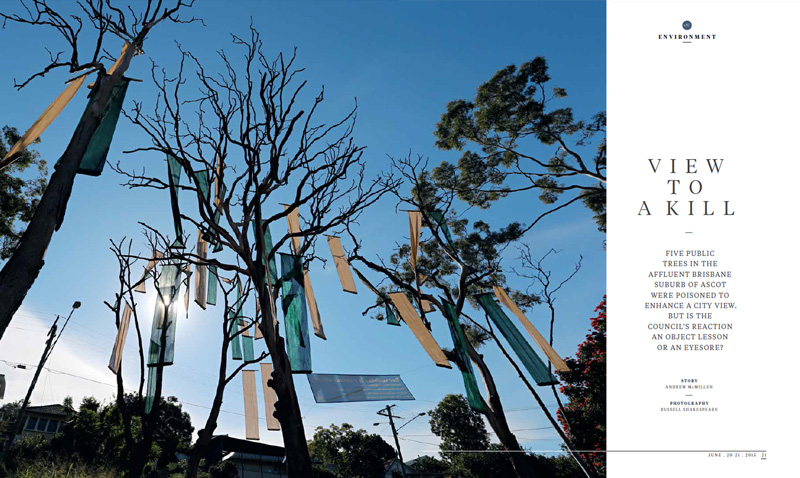
A Conversation With Matthew Condon, Brisbane-based author and journalist
I met with Brisbane-based author and journalist Matthew Condon [pictured right] in late June 2010, to discuss his newest book, Brisbane, for a profile in The Weekend Australian Review. You can read that story here.
Full transcript of our conversation is below. As mentioned elsewhere, this was a particularly enjoyable interview, as Matthew is one of my favourite feature writers – I hold his work for The Courier-Mail’s QWeekend magazine in high regard. Brisbane is a great read, too.
Beware: for those who haven’t read Brisbane, there are spoilers.
++
Andrew: I read your book yesterday.
Matthew: Right.
To give you a bit of my background, I grew up in Bundaberg, then came to Brisbane for university in 2006. Although my father’s from Brisbane, I’ve not paid a lot of attention to Brisbane’s history, so I did find it quite an educational experience. I liked the way that you blended it alongside your stories from growing up in this city.
Obviously, I had to include the history, but I wanted the book to move back and forth in time to try and get that effect of – ‘is the past still in the present?’, and so I structured it in that way, no chapters, that it would just meander, and that the present and past would constantly chafe against each other. There were little thematic links; I tried to stitch it through and run a few parallel narratives so that at least rather than a dreary history of a city, that it would have at least a few narrative lines that would pull people through it.
It definitely had a narrative arc, from your experiences as a child through to you telling your children about the history of Brisbane, and them asking questions.
That was organic, really, as the book grew. It was interesting how that line of it sort of came to the surface. I didn’t have an intention to write a book about children; however, maybe writing about Brisbane and my childhood is looking for the child that I was, and then seeing it perhaps in my children.
So, in a way, that too is the shimmering of the past and the present, which I think is unique. Ironically, even though we have very little historical buildings, my point of the narrative line of F.W.S. Cumbrae-Stewart and the monument was this; what does it say generationally about the people of the city that really aren’t that fussed with historical accuracy? What does it mean, and does it flow through?
Even though we had very few historical monuments left in terms of buildings and treasuring our historical sites, it’s still weirdly a city where the past is always somehow present to me. This is just my view, but is that nostalgia? Maybe it is. I don’t know. It’s a city that I think most Brisbane people who go away and come back, it’s a city that puts its claws into your heart, funnily enough.
The recurring metaphor you use, a ‘book without an index’, seems quite apt.
Yeah, a lot of people will get upset with that but I think it’s very true. When I went to look for my relatives in Toowong Cemetery, I’ve since been in touch with them and they’ve said “you can always come to the office and we’ll guide you,” but the point is if you want to wander in and visit your antecedents, it’s a very difficult thing to do. You wouldn’t think it would be that hard.
So to me, the cemetery in the end of the book became a microcosm of this entire city. Funnily enough, topographically, it’s sort of a miniature – it’s the leaders on the hills, the rest of us are down in the valleys, which is very much as Brisbane is now. The ridges are either populated by the church, or the wealthy, and that’s a paradigm that replicates itself in cities across the world. It’s not just Brisbane.
So what was the brief you received for this book? How did Phillipa [McGuinness, New South books’ commissioning editor] bring it to you?
The brief was probably the singular most simplistic, liberating brief that I’ve ever received. She just said “Look, you do Brisbane and approach it the way you wish,” which on one hand is brilliant. On the other, when you come down to practically writing, when you come down to trying to put your arms around an entire city, it was very difficult. It sounded great.
The task was very difficult because I had deliberated for months and months, how does one write and capture a city? How do you go about it? Then I decided it’s impossible, it really is impossible to do it thoroughly. It would be endless. The city is organic. It’s constantly shifting and changing, so I had to not be afraid of giving myself limitations, that it would be my personal view, and after months and months of deliberating and thinking the usual; does one do it by the seasons, or to give yourself this sort of predictable structure?
And then I tossed all of them through my mind and one day I just decided “Look, I’m going to go to where X marks the spot, where Oxley came ashore. That’s the Caucasian history of the city. I’ll start there, and I’ll see where it takes me.” I did that.
One day I just put a notebook in a bag and a camera, and I went down to North Quay, to the dreary granite monument, and I’d never stood before it. I’d seen it a million times, all through my life, and as I wrote. So I stood there with the traffic roaring on both sides, and something about it [laughs] I don’t know what it was, something about it struck me as wrong. The wording was sort of hesitant. It didn’t feel right. So I thought, “Okay, this is where I start. I’ll investigate the monument.” And that kicked the journey off, really.
I liked how you brought your investigative journalism with Qweekend into the mix. That’s probably what influenced Phillipa in asking you to do it, in that you’d been writing in and around Brisbane since you returned.
That’s a really good point, because I only realised halfway through the book how important it had been to be doing that journalism for five years, and how in fact I’d touched on many, many things across the city – both contemporary and historical – and I wasn’t as removed from it as I actually thought that I was.
I looked at this book personally as a way of trying to write my way back into the city. When I came back, I felt I knew it was the city I’d been born in. In those first couple of years, I’d drive past my childhood house several times. It was me trying to reconnect with a city that I’d lost touch with for 18-odd years. And something deep inside of me told me to do this book, because perhaps it would embed me back into Brisbane. In many ways, it did that.
It required me to concentrate on the geography, the landscape, where I was living, and to open my eyes basically. So, it served a very important personal purpose for me. Doing the book made me feel more comfortable and relaxed here now, and at home, in a sense.
And along the way you did touch upon some personal experiences, like finding that film canister in your great grandfather’s darkroom.
Yeah; that’s a story from when I was about 12, and it just fitted into this book, in terms of me searching for evidence of myself and hopefully the wider populace of my generation in particular. You’re of a different generation, but as I’d mentioned in the book; when one leaves a city like Brisbane, the longer you’re away, the more the city that it was to you calcifies in your mind, and becomes fixed as ‘Brisbane the city’, your home city. But cities move on. People grow older, things happen, buildings get torn down, landscapes change, cultures change. Brisbane’s culture is phenomenally, vastly different from when I left.
When you come back you’re shocked. It’s not what you thought it was, because you’ve sort of fairytale’d it in your head. I realised only after I’d written it and read through it that the book is a partial examination of memory and the function of memory.
Indeed as you’ve noted, at the end of the book I test my memories against living contemporary people in my life. They say “No, that didn’t happen, that’s not here, no.” So it’s an examination of memory and how we fictionalise ourselves, so there’s that game playing in the book as well.
When that part came up, it was a real shock because it was almost like breaking the fourth wall, I suppose, to say “So this is what I’ve written, but these parts might be false. These might not have happened.”
Exactly, and it’s sort of a spring that unloads in the book, I think. And, when I wrote that little section, it’s not huge, I was trying to be as honest as I humanly could. Maybe I am wrong. Maybe all of that memory I have has altered, changed, mutated over 20 or 30 years. Maybe that’s what we do with memory, we fit it to suit ourselves, and we reinvent lines of family life and history. How do we do that? Why do we do that? Why does that happen?
Maybe it’s like the monument in that we ultimately end up believing that’s really where Oxley came ashore, even though in the back of our mind we know it’s wrong. So maybe that’s a sort of human trait that is obvious to most people, but it’s just something that grew as part of the investigation, and the journey through the book.
I wanted the book to represent a journey as well, because it was a journey for me. It was while I had young children and all of that was kicking in, and looking at my son; he stars in the book to some degree. There were moments when I’d look at him and go “That’s me. I’m time travelling here.” Some things that he would do, I did that, precisely.
And so there’s a way we can travel through time in that sense and I wanted to try, whether it’s even humanly possible to replicate that in literature I don’t know, but I was trying to do that, as best as I could to enunciate the passage of time, which has always been funnily enough a preoccupation with my work. Now that I’m older and have written several things, I see now, you see a recurrent theme. Now there’s a primary theme.
I like how you dwelled upon the issue of time in Brisbane, centuries ago, when there was no one clock that told the time, and it was driving people crazy.
[laughs] It’s always been a city that has an uncomfortable relationship with time I think. [laughs] I really do think that. To others, for decades, we were always seen as “behind the times” and you know; that’s a part of the fabric of this town, really.
I like the way that you segued into the city hall and the clock tower discussion, how you and your son were sitting in your home and you heard the bell chime from city hall.
Yeah, and that’s happened a few times since. I was just sitting there with my son. I remember my grandmother lives not far, around the corner from where I live now in Pennington, and I remember sitting on the back step of her tiny little old Queenslander and you could hear the clock. Then to hear it again through the business of a modern metropolis raised the hairs on my neck basically. That might seem uninteresting and minor to some people but it was like reaching your arm back in time 40 years. It was creepy.
And little things like that happened. When writers are doing a book they often go “Oh there was an incredible coincidence while I was writing the book, this happened.” I’ve had that for several books, that things – you go “That’s perfect for my book! I can’t believe that just happened.”
But I think when you’re working on a project, your antennae are so sensitised to what you’re doing that things come in and you notice things specific to your project. You’re more attentive to everything, and sensitive to everything. And they’re not coincidences; it’s just that you have a heightened sense of appreciation when you’re embedded in a project like that. That’s sort of what happened with this book when my son and I were down at the park opposite Suncorp [Stadium, Milton], as I wrote in the book.
I’d just been researching how that was the first major cemetery for the city, and that day after it had rained and he said “Daddy, it smells like skeletons,” and that’s a direct quote from him. I thought “Wow, I can use that.” [laughter]
I hope your son appreciates how much of a star he is in the book when he reads it.
At the moment he’s reading about dinosaurs and spiders, but he may. He narrated to me his first short story the other night. He’s almost five. It was called “The Mantis in the Plane by the Sea”. And so I transcribe it and read it out for him so that one day he might look at that and go “Wow, that’s interesting.” I guess I’m quite a sentimental person, human being as well. I’ll keep them; whether he addresses or not is not important but I’ll keep them for him.
Phillipa tells me that the series was pitched as “travel books when no one leaves home,” but you’re a bit of an anomaly to the book process because you did leave for the middle part of your life so far. I don’t necessarily think that’s a bad thing because it allows you to step away and describe and outsider’s perspective of Brisbane and how you felt upon leaving and upon returning.
Exactly. I think I was in a unique position, having been born here, and left for important years of my life to come back and see this demonstrable change. On one level, yes, enormous change, but as I’ve tried to portray in the book, a constancy running underneath as well. The Brisbane light, the feel, the weather, the lushness, the vegetation – that’s the same as when I was a kid. Other things change around it and I think to get that perspective was unique in the sense that I did have that time lapse, came back to it with fresh eye,s I guess, and it may have been a very different book if it had been written by a writer who had stayed here.
I tried to give it justice and to give it fairness. If I’m a critic of the city, I’ve tried to balance it as I would my journalism, or whatever. But there may be some things in there that Brisbane people disagree with or are offended by. That’s great. That’s indicative of a grown up city. We should be debating, questioning ourselves, tilling the soil, and asking these things of each other because that’s what a civilised community is.
I do point out in the book that my supposition is that there are some traits that are in Brisbane people, have been from the start because of the nature of our birth, white birth; it was a very aggressive city, violent. There was death, crime and punishment just over the river there not far from the executive building that the current Premier sits. That’s where the convicts were flogged on the A-frame, the short walk to the Premier’s office 200 years later. Things change enormously but sometimes they don’t change that much at the same time.
So, our relationship with Sydney and the colony of New South Wales is always aggressive and we always felt we were poorly treated by them, and so a chip on our shoulder evolved from that. I think if you look and listen carefully enough, we still have some of that. The ghost of that is still around. While I think we’ve moved into the 21st Century to a large degree, there are those beautiful generational traits that only your place can give you and I think we still have them. I tried to examine that, but that may ruffle some peoples’ feathers and it may not. I just tried to be honest.
It wasn’t overwhelming, but there was I feel a recurring theme of romanticism that you brought to your experiences in Brisbane, how you said you “keep coming back to the light of Brisbane,” and you describe how that tends to bring people in. That’s the first thing they notice when they get off the tram, and so forth. Did you realise that before you started writing it?
I think I did because when I moved away, Brisbane was always my home. It was always where I was born, the place on the planet where I was born. It does have distinct, peculiar characteristics that delineate it from other cities in the world, let alone Australia. And [David] Malouf has written about this, Rodney Hall and others have written about this. They write about it because it’s very true.
The greatest, strongest memories of my childhood are the light, and the pitch blackness of the shadows, and that’s different when you live in other places in the world. It’s distinctively different. The smell, and in summer when a violent storm comes over the ranges, and the steam comes off the bitumen and the plants are breathing out, it’s unique to the city and it strikes you as something new every time. “Oh wow, that’s Brisbane.” And it’s something that you keep very deep inside of you, I think. I’m a lot older than you. The older you get these things sort of are like little drawers inside of your person and nothing will change them.
That may be romantic, that may be nostalgic, but as I said to you earlier; this is a city that from my own experience prompts sort of nostalgia and as a birth place, loss of heritage, mistreatment of the landscape and heritage; as a Brisbane person I feel that very keenly the way the Sydney people probably do about their own environment. This was where I came into the world. Nothing’s going to change that.
This is not so much a question as a comment; when I interviewed John Birmingham the other day, I asked him to comment on the divide between popular fiction and literary fiction. He brought up that he thinks you are one of the finest literary fiction writers in Australia.
God bless him. I’ll have him stuffed and mounted. [laughs]
This was without even mentioning that I was interviewing you for this book. He just came upon that. I thought that was a nice little turnaround.
I’ve known John for years and some of the old dudes are coming back home, artists, painters, writers, musicians, actors. It’s was a very different place when we left. It was very claustrophobic. I won’t say it was parochial, there was an element of parochialism to be honest with you, but the politics was suffocating, all of that. The assumption, right or wrong, was that if I’m going to make it I can’t make it here.
Twenty-five years later you can be in Brisbane and be making it [like you would] in London or New York or Berlin. Everything has changed, and the city has changed too as well, clearly, but the imperative to leave I don’t think any longer exists. We were sort of refugees for a reason that’s no longer here. Why do we come back? It’s a myriad of reasons for that. I just got tired of Sydney and it just became very hard to live daily. I was freelancing and doing all of that. Where do you go in that circumstance? You drift home and see what happens. Then my partner – now wife – fell pregnant, and now I’ve got two children, and it sort of becomes home again.
I wonder whether this project was more gratifying for you than your fiction work.
It’s very different. I found it exhilarating but very difficult in the respect that I’m not an historian. There are some brilliant historians in Brisbane that have combed the soil over, and over, and over; there virtually wasn’t a corner I could look into that hadn’t been effectively and interestingly covered by a gaggle of local historians. The city has been documented quite well, but I don’t know how they do it, historians.
The freedom of fiction, to me, is so much more pleasurable. That element is part of my journalistic work too. Obviously, I deal with fact every day and I wanted a book that was not mired in dreary history and it wasn’t a history book. But I would hope that someone visiting the city would pick it up and go “I didn’t know that about this place,” get a feel for the city, rather than a raft of facts.
I don’t know how you’ll feel about this, but upon finishing the book; I thought it’d be great and very apt to see that book start appearing on high school recommended reading lists.
I’d be very happy for that to happen! [laughs].
Because as you said, it’s not a dry, factual, historical piece. It mires in your personal life as well, which I feel is more important than ever to put a next generation of Brisbane residents to come across.
That’s a really nice idea. Just to elaborate on what I was saying then; I hope the book gives people a sense of what the city has been like, and what it’s like to live here. I would hope that it gives them that deep connection to their heart, rather than just their head. That’s a huge ambition for a little book. That was underplaying everything that I was trying to do with this piece of work. Whether I achieved it or not, it’s a big question, but that was my aim to do that. The other important element, too, is that I was really loathe to actually write about my own life here, because in all honesty it was quite dreary, suburban, unremarkable.
Yet you made it sound remarkable.
I thought, “How am I going to do this?” I didn’t want to be self-indulgent or dull, and then I thought “I’ll employ a fictional technique, and just look at a boy in Brisbane.” That boy is largely based on me. The minute I stood back from that boy, all the details, fine details, the smells, the senses, everything came in. If I’d written just about myself, and I started to do it, it died on the page. When I stood back and looked at myself as a novelist and journalist, and looked back at this separate figure, everything unlocked. All these memories and things that I hadn’t thought about since I was five years old rushed in.

So that’s the liberation of using a fictional technique on fact. It was a really interesting process for me as a writer to do that. I’d played around with it. “Should I try it, should I not?” The minute I started doing it, bang. It just bloomed.
Many elements of this book were a journey for me, in writing, in memory, in trying to get back to what the city meant to me, what it is now. In many ways, when I finished it, I wasn’t quite sure what I actually had. There were so many new paths I was taking in this little book, so in that sense it was a very gratifying project that gave me more than I had imagined when I first agreed to do the commission.
I think [the City series] is a terrific idea, which has been done loosely in the northern hemisphere. Kerry’s book on Sydney, and there have been books on Paris and Evan White. I found it a really interesting and obvious idea. I was surprised no one has actually ever done it, but we would get writers to do the major cities of the country, so as a series project it was very attractive. But yeah, that was the trip.
Phillipa tells me that when she read the book, she was struck by your love for Brisbane. It really shone through, and I agree with her summary, the way it ends from the character as a child through to standing in the cemetery; it’s quite beautiful.
Thank you. It’s a recognition that one is mortal… [laughs] and the next wave [of children] is out there. I’ll always love Brisbane. There are things I hate about it, there are things that annoy me, that frustrate me but that’s like any resident I guess in any city. But since coming back, it’s given me a lot as well, I think. It’s been wonderful to come home with my own kids and I may move from the city; I don’t know. Who knows? I’m not saying I’ll be here forever, but yeah it’s been a very pleasurable reacquaintance.
As an extension of Philipa’s comment, do you think it’s fair to say that it’s a kind of love letter to Brisbane?
Yeah, in the way that some love letters are raw and honest, can be confusing and upsetting, but if it’s a love letter, its heart is in the right place. I agree. It’s a nice phrase. At the end of the book, I pay homage to many writers. Several of them aren’t quoted in the book but I felt it was important to say thank you to all of those others that have written beautiful stuff about this place.
Gerard Lee, when I was young, when I read his novels, what I understood from that was I could write about Brisbane and it’s okay. That was a vital breakthrough for me. When I was at university in my late teens I read him and thought “We can do this.” When I read Thea Astley’s It’s Raining In Mango and all of those, I thought “I can write here. This is going to work. I can do it.” And so they were vitally important to me. The great Peter Porter, [David] Maluof… So I hope this adds another page to that homage to a place, and others will do it again. My son might do it!
That’d be nice.
That’d be interesting. God save him! [laughs]
++
I highly recommend ordering Matthew Condon’s Brisbane through the publisher, NewSouth.


Similar anxieties were expressed by Patrick, a 24-year old part-time radio producer who barely sees his partner, Adam, since their schedules rarely align. Yet Patrick admitted “I do get a pang of sadness” when the pair were home at the same time, but both absorbed in their individual computer screens. The author dubs this being ‘together alone’.
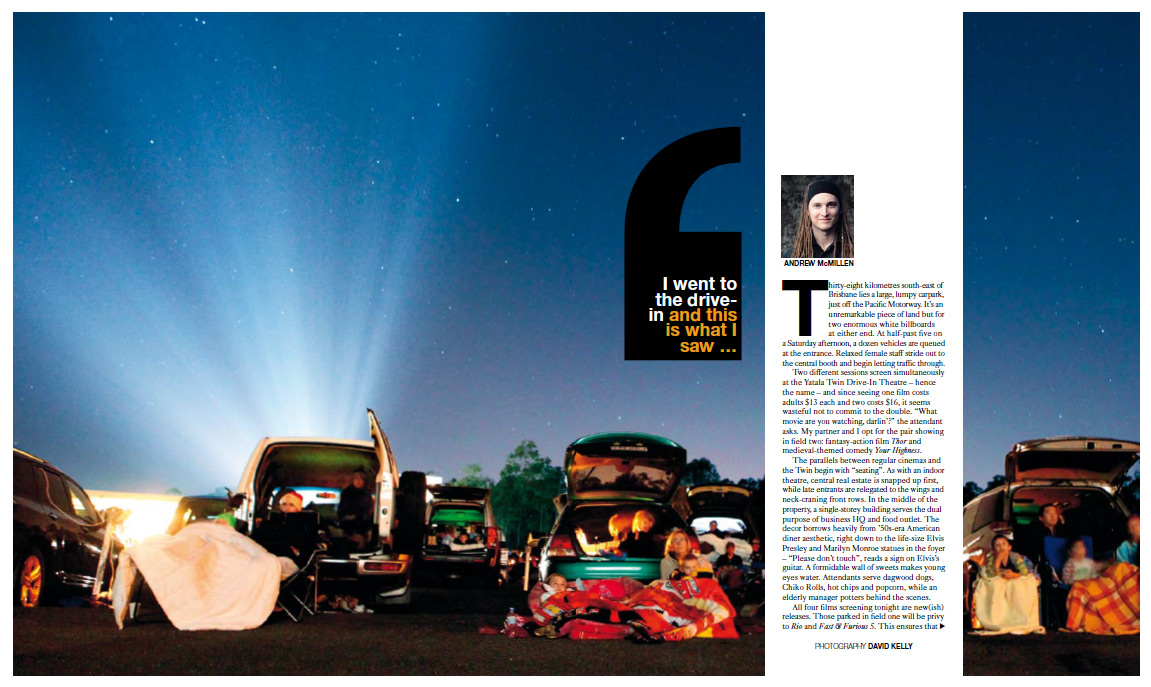
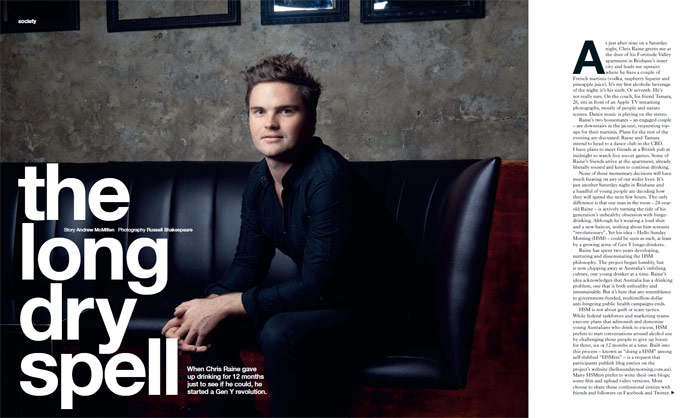
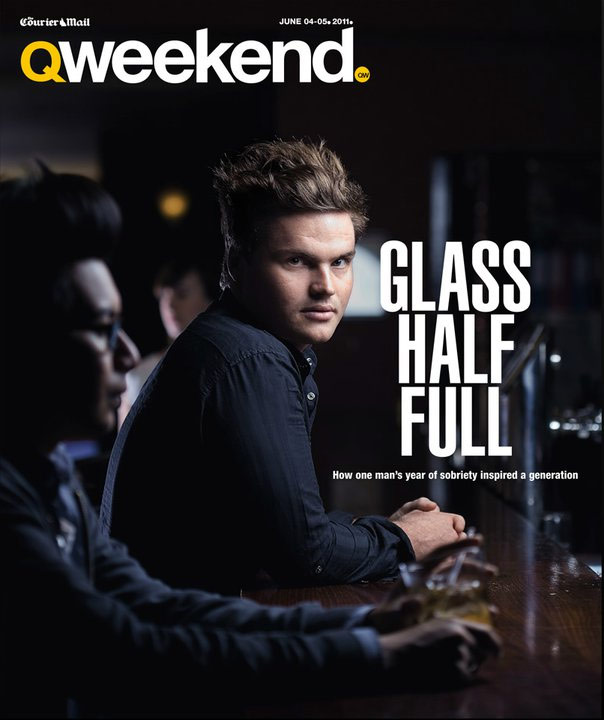
Social group leaving hangovers behind
Proud and dodgy Dave Graney
Reggie Watts: Unscripted, but well prepared