The Australian album review: The Roots – ‘undun’, December 2011
An album review for The Australian, reproduced below in its entirety.
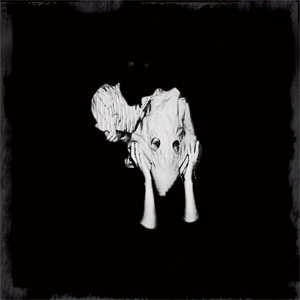
As concept albums go, Philadelphia hip-hop band The Roots’ Undun isn’t too far removed from reality.
Dubbed an “existential retelling” of the life of a fictional American man named Redford Stephens, who lived between 1974 and 1999, Undun “seeks to illustrate the intersection of free will and prescribed destiny as it plays out ‘on the corner”‘.
Drugs, violence, desperation and regret play out in the narrative contained within these 14 tracks.
The tale begins at the end of Stephens’s life: in Sleep, MC Black Thought raps: “All that I am, all that I was, is history / The past unravelled, adding insult to this injury”. In Make My, the protagonist, still in a disoriented state, concludes: “If there’s a heaven, I can’t find the stairway”.
It’s a fascinating and original approach to urban storytelling that remains compelling throughout the album’s 39 minutes.
After 13 albums together, the Roots’ sound has become so distinguished and refined that it’s simply a joy to hear them at the height of their game. In effortlessly smooth track Kool On, each instrument – guitar, bass, drums, keys, vocals – can be clearly identified in the mix. Drummer Ahmir “Questlove” Thompson can be relied on for at least one classic beat an album; on Undun, it’s The OtherSide.
The final four tracks – the “Redford Suite” – consist of a beautiful, elegiac orchestral arrangement. It’s the final surprise on an album that further solidifies the Roots as genre leaders.
LABEL: Universal
RATING: 4 stars
This review was originally published in The Weekend Australian Review on December 31. For more of The Roots, visit their website. The audio for ‘Make My‘ is embedded below.
The Australian album review: Witch Hats – ‘Pleasure Syndrome’, December 2011
An album review for The Australian, reproduced below in its entirety.
Witch Hats – Pleasure Syndrome
Though this Melbourne quartet has been associated with jagged, sneering punk rock on previous releases, a second LP, Pleasure Syndrome, finds Witch Hats in pursuit of something less dark, more beautiful.
The bass-heavy swagger and distorted guitars are still in place, but singer Kris Buscombe has clearly been honing his ear for pop songwriting in the three years since the band’s debut, Cellulite Soul.
This repositioning of the sound has worked: those put off by Buscombe’s wounded howl and his bandmates’ discordant squall in the past will now enjoy songs such as In the Mortuary, a quasi-acoustic ballad featuring pretty lead guitar phrasing and Buscombe’s sweetest voice yet. These 10 songs are more confident than anything the band has released before.
First single Hear Martin – built around a creepy keyboard line and written from the perspective of infamous gunman Martin Bryant – is the most accessible track here. It’s followed by Ashley, whose persistent bassline underscores the album’s most unsettling track. Buscombe revels in exploring the darker side of humanity, as best evidenced in album opener The Bounty, a gritty tale of frontiersmen scalping their peers for “fifty a head”.
Witch Hats has heart, skill and wide appeal, and Pleasure Syndrome gives 10 more reasons descriptors underrated and underground should be associated with this band no longer.
LABEL: Longtime Listener
RATING: 4 ½ stars
This review was originally published in The Weekend Australian Review on December 31. For more Witch Hats, visit their Bandcamp. The video for ‘Hear Martin‘ is embedded below.
The Australian album review: ‘Rewiggled: A Tribute To The Wiggles’, December 2011
An album review for The Australian, reproduced below in its entirety.
Rewiggled: A Tribute To The Wiggles
Once you get past the initial cognitive dissonance of listening to well-known Australian adult bands cover songs written by coloured skivvy-clad adults for children, there’s a lot to like about Rewiggled.
The concept is simple: 20 contemporary artists are given the chance to reinterpret the Wiggles’ songs, with consistently interesting results. Some bands sound right at home: Spiderbait’s Rock-a-Bye Your Bear is a cute, taut rock number, the Snowdroppers inject a bluesy swagger into Wags the Dog and Adalita’s Get Ready to Wiggle is full of hazy, down-strummed chords, true to character.
Megan Washington and her band bring a surf-rock feel to The Monkey Dance, while Architecture in Helsinki’s Wiggly Party becomes a neon-tinged, hyperactive dance number (which, admittedly, is one of few tracks here that grates on repeated listens).
The Living End thrashes out Hot Potato with such vigour one suddenly wishes they’d do a whole album of Wiggles covers. While most tracks are upbeat, there are some calmer moments: Sarah Blasko’s I Love It When It Rains is an earnest, piano-and-voice affair, Angie Hart’s midtempo Our Boat is Rocking on the Sea is drenched in reverb, and under Clare Bowditch’s guidance, Georgia’s Song becomes elegiac.
The musicianship is so solid — and the songs so damn catchy — that Rewiggled could find its way on to the stereo without kids’ prompting.
LABEL: ABC Music
RATING: 3-1/2 stars
This review was originally published in The Weekend Australian Review on December 24.
Rolling Stone album review: Eddy Current Suppression Ring – ‘So Many Things’, December 2011
A short album review, published in the December 2011 issue of Rolling Stone.
Eddy Current Suppression Ring ![]()
So Many Things (Fuse)
Garage rockers collect odds and sods in one place
A collection of this Melbourne band’s out-of-print singles and other rarities, So Many Things is a fine starting point for those who haven’t yet been charmed by Eddy Current’s addictive garage punk rock. Most of the 22 tracks here are so rare they’ll be new to most ears: gritty slow-burner “Demon’s Demands” might be the best ECSR track you’ve never heard; the title track is a hilarious rant about a failed relationship, while “Hey Mum” is a touching tribute to the singer’s mother set against characteristically trebley guitar tones. When they’re on, ECSR are among the best rock bands in Australia.
Andrew McMillen
Key tracks: “Demon’s Demands” [embedded below], “Precious Rose”, “You Let Me Be Honest With You”
The Australian album review: The Necks – ‘Mindset’, November 2011
An album review for The Australian, reproduced below in its entirety.
On their 16th album, this Sydney-based trio opt for two 21-minute long tracks rather than the singular instrumental piece that characterises most of their past releases.
The opener, Rum Jungle, is a claustrophobic jam laced with menacing bass notes, jarring piano chords and insistent cymbal-tapping.
It’s a consuming piece of work; from the initial five-minute mess of noise emerges some flighty piano progressions and, later, a fiercely strummed electric guitar – a rarity among the Necks’ overarching modus operandi, which is best captured in the title of their 1998 live album, Piano Bass Drums.
Rum Jungle is thematically similar to their previous release, 2009′s Silverwater, in that its sustained creepiness invokes a sense in the listener of being constantly on edge.
Track two, Daylights, marks a distinct shift in mood; its gentle, noir-like atmosphere is a breath of fresh air. Its gradual uncoiling has more in common with the soothing perpetual motion of their 2003 release Drive By, which won the trio an ARIA for best jazz album.
This contrast between light and shade works well, and the absence of a narrator invites listeners to fill in the gaps themselves. Mindset is a fine addition to one of the most consistent catalogues in contemporary Australian music.
LABEL: Fuse
RATING: 3 ½ stars
This review was originally published in The Weekend Australian Review on November 26. It’s my first album review for the paper. For more on The Necks, visit their website.
Rolling Stone feature story: ‘The Truth About Jebediah’, 2011
My first artist feature for Rolling Stone, which appeared in the May 2011 issue.
You can click the scanned images below for a closer look, or read the article text underneath.
The Truth About Jebediah
After a decade and a half together, the Perth foursome have discovered a new type of success.
By Andrew McMillen / Photograph by Carine Thevenau
It wasn’t meant to be like this. Our interview was scheduled to take place hours ago in less risky confines, yet here we are in Jebediah’s hotel room; well-fed, and on our collective ways to well-drunk. Sitting on the couch are bassist Vanessa Thornton and singer/guitarist Kevin Mitchell, who places a near-full bottle of red wine on the coffee table and unceremoniously removes his shoes. At the table, drummer Brett Mitchell nurses a bourbon and cola. Across from him, lead guitarist Chris Daymond is chopping a nugget of weed into an egg cup. He rolls a joint, and he and Brett step out onto the balcony to smoke it. All the while, the band’s record company representative sits silently within earshot, wondering just how honest the band will be, now that they’re all stoned, or drunk, or both.
Most of their day was spent filming a video for their single “She’s Like A Comet” at a workshop in Sydney’s inner city. To say that the thrill of watching the band run through countless takes to a backing track had lost its lustre would be an understatement. Earlier, over dinner at an organic restaurant in Newtown, Kevin sneaks in a seemingly innocuous question. “Was the video thing boring?” It’s a shit-test. He’s checking whether they’re here to star in a fluff piece, or whether something deeper is being sought.
“Yeah, it got a bit old after a few hours.”
He and his bandmates laugh, agree, and seem relieved by the response. From that point on, honesty flowed as freely as the booze. Hours later, in the hotel room, we begin the interview with a blunt question: why do they play music? Immediately, Thornton retorts: “Why not?”
It’s a fair, if expected, riposte. These four Perth friends have been playing music together since 1994. It’s been a successful vocation. Their seventh gig won them the 1995 Australian National Campus Band Competition; their thirteenth won the national final in Lismore, N.S.W. Their first single, “Jerks Of Attention”, was a monster: backed by Triple J, the fast-paced tale of youthful excess was hastily embraced by a generation. The band signed to Sony imprint Murmur, whose roster included Silverchair and Something For Kate. To celebrate, they hosted a four-day bender at their house, while friends filmed their first music video. Fitting, for a song whose chorus describes the feeling of knowing it all while “wasted”.
Jebediah arrived at a time when the national fascination with alternative rock was peaking. The band’s debut album, Slightly Odway, was released in September 1997, and went on to achieve double-platinum sales (140,000-plus). Thornton recalls Murmur founder John O’Donnell admitting that he’d “really love for this record to go gold”.
“And we were like, ‘good luck to you!’” laughs Thornton.
“It was all just shits and giggles. We honestly thought he was absolutely dreaming,’” says Kevin Mitchell.
++
A lot has changed since those heady days. The band’s subsequent releases failed to achieve Odway-like success. The band-label relationship became strained after the release of their self-titled third album in 2002, a subject that arises when I ask them to pinpoint the moments where the band came closest to breaking up.
Kevin Mitchell chooses his words carefully. “There have been a couple of times where maybe my level of enjoyment has been at a low point, where perhaps I’ve questioned it. Everybody goes through periods where they question whether what they’re doing is what they’re supposed to be doing. I think that’s healthy.”
“But that’s as far as it gets,” Thornton adds.
“Is it possible to do anything for 15 years, and enjoy it the whole time?” Brett Mitchell asks. “If you’re a vet, you’re going to have to shove your hand up an animal’s bum every once in a while. But that’s not why you got into veterinary school – it’s just part of the deal.”
It seems fitting to ask: what were some of the hand-up-arse moments of the band’s career?
“My time was after the third record, where things turned to shit,” Thornton says. “I probably made it bigger than I should’ve. But my heart was invested in it, and that’s just the way it turned out. And it was my own reality that I’d created, and that got totally shattered. It fucking broke me.”
What happened?
“Just label shit. Pressures. Everything was second-guessed. Our manager at the time couldn’t be fucked fighting the label for anything that we wanted, and he’d made the decision that we were just going to go with whatever the label reckoned. Near the end, it was fucking soul-destroying for me.”
“It just felt like the technicalities overshadowed everything else,” offers Brett.
“All the things that I enjoyed about playing music were no longer relevant,” Thornton adds.“That’s when I thought, ‘Fuck, is this what I’m going to do for the rest of my life, play this fucking game?’”
That game was the business side of music, the bottom-line crunch that elevates the idea of records that sell far above the idea of records that sounds good. “Yeah – singles, videos, radio, tracklisting,” Thornton continues. “Like I said, I probably took it more to heart than I should’ve, and made too much of it in my own mind, but at the same time, it wasn’t about us four anymore. It was about what everyone thought was going to sell a record, which, to me, was not what we were even about. That was what the label did.”
It was at this point that the band severed ties – the 2003 compilation Gleesides & Sparities was their final release on Murmur – and released their fourth album, 2004’s Braxton Hicks, on their own label, Redline Records. Thornton is in two minds about the wisdom of that decision.
“But if it’d gone down the path that you’re talking about…” Brett begins, before his brother finishes his sentence.
“We wouldn’t be here now.”
“Putting it out on our label was an antidote,” Brett says.
“It saved everything for me,” says Thornton.
As it turns out, Braxton Hicks was Kevin’s hand-up-arse moment, and after the release, the band decided to take a break from writing, recording and performing together. “We always had the intention of getting back together, but if ever there was a time we were going to question it, it was then,” says Kevin. “Because that six months did turn into three years.”
++
In the intervening years, Kevin concentrated on his stylistic reinvention as acoustic singer-songwriter Bob Evans, a persona significantly removed from fronting a band like Jebediah. Though they still got together to play a handful of shows per year, the four were living separate lives. With the exception of Kevin, they’re still based in Perth, for the most part: Chris Daymond works at a record store, Brett Mitchell is a manager at a logistics company, and Thornton has just spent four years completing a Bachelor of Science, while still playing bass on the side for Felicity Groom & The Black Black Smoke.
Owing to his success with Bob Evans, Melbourne-based Kevin is the only one able to earn a living from music – “I’ve never had a full-time job in my life,” he reports – but that doesn’t mean team Jebediah aren’t in a good position. There is still enormous goodwill for the band, and having lived through the music business’s attempts to judge their career purely in financial terms, these four old friends have a more balanced understanding of “success” these days.
“My idea of success when the band first started was supporting You Am I or Tumbleweed or Magic Dirt at The Planet Nightclub in Perth,” says Kevin. “If we could support one of favourite bands at one of our favourite venues, that was like, ultimate success. But it changes: now, for me, success is all about longevity. The fact that we’re about to put out our fifth record is a huge source of pride for me. To be able to do it for this long, and still believe in what we’re doing – that to me, is success.”
The desire to make the most of this release is as keen as ever, and some of their intentions with new album Koscuiszko are refreshingly reminiscent of a band just at its beginning. “If I can quit my day job, that’ll mark a success,” replies Brett.
“If we’re still together, that’d be good,” offers Daymond.
“Geez, you’re easy to please!” laughs Thornton, as her bandmate runs around the room high-fiving everyone.
The band recently signed to Brisbane-based indie label Dew Process for Koscuiszko. The label is behind the likes of Sarah Blasko, the Grates and the Living End, and by modern standards it’s a stand-out success in marketing local music. A fact that is apparently lost on Thornton.
“You know what? I don’t care anymore,” says the bass player. “I feel so relaxed about everything. I just want to play songs that I love. I don’t care about the other shit.”
With one eye on the Dew Process rep sitting out on the balcony, Kevin – the most media-experienced of the group, by far – hastily lightens the mood by changing topics. “I think it’s important to note that the way we made this record has been so incredibly different to any other record that we’ve made. For most of it we had no manager, no label – nothing. The first three records were all with Sony, the biggest record label there is. For the fourth record, we were doing it on our own label, but we were still very much part of a process. With this record, absolutely all of that stuff had been completely stripped away.”
“For nearly two years, only five people had heard these songs,” says Thornton, in reference to the band and Dave Parkin, who has worked with Perth groups Sugar Army, Snowman and Karnivool.
“We were only making a record because the four of us wanted to make a record,” Kevin adds. “There wasn’t a single other person involved in the process. We’ve never made a record in those circumstances before. We did it over a long period of time; normally, we go into the studio for a month, bash out the songs, and bang out a record. This one’s easily the most fun I’ve had making a Jebs record since the very first one, and I also think it’s the most playful we’ve been in the studio. It’s the closest thing to the first album, where we made a record without considering anyone except ourselves.”
“We weren’t making a ‘product’,” says Brett.
++
Two days later we meet in Brisbane, ahead of a sold-out gig at The Zoo. Last night, Jebediah played to a capacity Annandale Hotel. Over pizza and milkshakes in the Brunswick Street Mall, Kevin reflects on some of the things that came out last time we met. “There were a couple of moments where things were said, where I was like, “ooh”,’ says Kevin. “Not from me, though. As long as it’s clear who said what,” he adds, throwing a glance at Thornton.
“It was probably a surefire way to be excused from doing interviews in the future. Print it all. Whatever,” she shrugs with a smile.
A few prickly moments aside, it’s clear the vibe in the Jebediah camp these days is a positive one, and that atmosphere is reflected in the lyrical themes on Kosciuszko. “A lot of the lyrics are pretty positive, because it was an exciting stage,” explains Kevin, who is the band’s sole lyricist. “Getting new songs together, and making a new record. Even the angrier lyrics are still about changing for the better. There’s not a lot of self-indulgent negativity going on. There’s no angst.”
No angst? “Well, less angst,” he replies. “And so there bloody should be; I’m fuckin’ 33 years old. There’s nothing worse than a married 33 year-old who lives in the suburbs.”
“What have you got to be angsty about?” his brother asks.
“Everybody’s got something to be angsty about,” Kevin quips, recalling a conversation between the songwriters in his other group, Basement Birds – Josh Pyke, Kav Temperley, and Steve Parkin. “We were talking about how, when you first start writing songs as a teenager, you’re writing about break-ups. You’re full of angst, and writing all these negative things. You get older, you find love; you get married, you get settled in a nice house – basically, you’ve got less and less to be angry about. So in order to write angsty lyrics, you start writing political songs. Because the world is always going to have problems!”
There’s a line in the album’s first track, “Lost My Nerve”, about being “fuckin’ sick of listening to some rich kids playing on their guitars”, which would seem to suggest there are still a few things Kevin can be pissed off about.
“If there’s a young dude that lives at home with his parents, and has all the best gear bought for him; if he’s trying to rock out on stage, I can’t get anything from that,” he says. “It’s not about anyone in particular. I’m still attracted to a lot of romantic ideals about rock & roll.”
Thornton helps him out: “Rock and roll’s gotta come from your guts, not from your parents’ hip pocket.”
Before they head off to soundcheck, I ask the band what Australia should know about Jebediah now. “They already know too much, and that’s what I’m concerned about,” says Kevin. “I’m sure that there’s some people out who would be happy if they never heard the word ‘Jebediah’ ever again.”
“Gee, they must have enjoyed their last few years then, mustn’t they?” replies Thornton.
“Yeah. And I’m going to enjoying thinking about those people when the record comes out, and our songs are on the radio. The people that don’t like your music, in some ways it can be more fun, that antagonising aspect of it.”
“It’s an emotional response. Indifference is way more insulting,” says Brett.
“Absolutely,” Kevin agrees. “Indifference is the ultimate insult for anything creative. If people aren’t going to love it, the next best thing is for them to hate it. The whole idea of art is to move. And if you don’t move someone, you’re not doing your job.”
++
For more Jebediah, visit their website. The music video for ‘She’s Like A Comet‘ is embedded below.
Mess+Noise album review: ‘Lostworks’ by Faux Pas, 2011
An album review for Mess+Noise. Excerpt below.
Faux Pas – Lostworks
Less cohesive than last year’s Noiseworks, but no less compelling, Lostworks is a collection of “lost songs” and b-sides created by Melbourne musician Tim Shiel between 2008 and 2010. Crucially, these aren’t half-formed ideas mashed together just for the sake of pumping out a follow-up; after all, he’s charging zero dollars for it, so it’s hardly an attempt to cash in on the success of Noiseworks, his second full-length release. Instead, Shiel appears to have invested a similar amount of time and effort into polishing these tracks for public consumption: he calls this release a “companion piece to Noiseworks” on his website.
Lostworks’ production isn’t as immediately attention-grabbing as what we heard on his 2010 effort – to my ears, there’s a little less depth in the bass, and fewer gaudy synth sounds filling out the high-end – but the result is still more than serviceable, considering it was assembled, produced and probably mastered by Shiel himself.
As ever, it’s difficult to judge just how much of Faux Pas’ output is sampled and how much is original, as these songs betray very little about their origins. Even when Shiel teases listeners with familiar musical phrases, they’re skewed almost beyond recognition. He re-appropriates Carole King’s vocals from ‘Where You Lead’ – a song made famous by Barbra Streisand – throughout ‘I Will Follow’. In album closer ‘Don’t Go’, he hints at ‘Waterfalls’ by TLC. (The latter inclusion is a titular nod to Noiseworks’lead single ‘Chasing Waterfalls’.)
For the full review, visit Mess+Noise. For more Faux Pas, visit his website (where you can – and should – download the album for free). An audio sample of Lostworks is embedded below.
Lostworks (free album download) by Faux Pas
The Vine album review: Collarbones – ‘Iconography’, 2011
An album review for The Vine. Excerpt below.
Collarbones – Iconography
(Two Bright Lakes)Despite being written and arranged by two dudes living in different cities, Collarbones’ debut record is surprisingly cohesive. The product of the interstate collaborations (or should that be collarborations? *cymbal crash*) between Sydney-based Marcus Whale and Adelaide native Travis Cook, Iconography is the disorienting soundtrack to a ride through multiple sounds and scenes: electronica, pop, R&B and hip-hop all seem to inform the duo’s sound in equal measures. This has been Collarbones’ best asset since Whale and Cook began fooling around together in 2007: they can’t be confused with anyone else, they’re on their own wavelength. Iconography is worthy of your attention if only for its unique individuality.
Describing Collarbones’ music robs the experience of much of its pleasure, so here’s a couple of cliff notes. Most every song is built around an eclectic selection of sampled beats, synths and instrumentation, all of which are chopped and shunted into a shifting mass of sound. The results feel organic and effortless, the effects beguiling. In spite of the disjointed nature of their compositions, the production smooths over most jagged edges to ensure Iconography stays on a fairly even keel. Whale sings on the majority of the album’s 11 tracks; more often than not, his voice is discombobulated just as much as the surrounding instrumentation. Some of the album’s best moments are lyricless; the hook of ‘Id’ – if it can even be called a hook – is essentially a symphony of swelling vocal samples, intercut with staccato beats. Previous singles ‘Beaman Park’ and ‘Kill Off The Vowels’ feature Whale’s voice prominently, though the songs’ moods are vastly disparate. The latter is bent around a dark, almost industrial vibe and lower-register singing; ‘Beaman Park’ pitch-shifts Whale’s voice to improbably lofty heights. Both work incredibly well.
For the full review, visit The Vine. For more Collarbones, visit their Tumblr. Music video their song ‘Don Juan‘ embedded below.
Elsewhere: an interview with Marcus Whale of Collarbones for The Vine
Mess+Noise album review: Art Vs. Science – ‘The Experiment’
An album review for Mess+Noise. Excerpt below.
Art Vs. Science – The Experiment
On debut album ‘The Experiment’, Art Vs. Science understand that repetition is the foundation of dance music – but it’s a trick that wears thin, writes ANDREW MCMILLEN.
Popular culture generally exists to meet demand. Most artists spend their lives attempting to offer works that resonate with as wide an audience as possible. By tapping into popular sentiments, savvy artists can short-circuit the often lengthy process of artistic acceptance. Case in point: Art Vs. Science, who – legend has it – formed on the spot while its three members stood watching Daft Punk playing in Sydney some years ago. The crowd was going bonkers for two dudes in robot suits atop a glowing pyramid. They probably stood and wondered aloud: “Why not us?”
Following on from a high-profile spot at Splendour In The Grass in 2008, thanks largely to debut single ‘Flippers’ – whose goofy chorus was comprised entirely of “Hey! Ho! Use your flippers to get down!” – and nearly topping the 2009 triple j Hottest 100 with ‘Parlez Vous Francais?’, Art Vs. Science have emerged with their first album, The Experiment. True to form, it’s packed from top to tail with brash electronica, delivered with their now-trademark dance-punk attitude. Here, we hear guitars furiously tapping away at fretboards during oh-so obvious breakdowns that lead into slamming synth-led choruses; all custom-made for hands-in-the-air dance festival sets. (By the by, this is a band who’s known for performing live covers of ‘Where’s Your Head At?’ and ‘Boom! Shake The Room’ to tents full of peaking munters).
In isolation, The Experiment is a dull record, because these songs won’t come to life until they’re heard and felt in a live environment. A five-minute instrumental rave-up like ‘Meteor (I Feel Fine)’ sounds foolish playing on your home stereo (though interestingly, it’s the closest they’ve gotten to sounding like Daft Punk). Several songs here are based around single words or short phrases – ‘Higher’, ‘Bumblebee’, ‘Sledgehammer’ – which seem to be included for the sole purpose of giving crowds something nonsensical to shout amid the pulsing synth din.
For the full review, visit Mess+Noise. For more Art Vs. Science, visit their website. The music video for their song ‘Finally See Our Way‘ is embedded below.
Mess+Noise album review: Nova Scotia – ‘Nova Scotia’
An album review for Mess+Noise. Excerpt below.
After two EPs and several years spent gigging at every Brisbane venue imaginable, this self-titled album is indie rock quintet Nova Scotia’s first full-length. Released via Lofly Records and mixed by label co-founder Andrew White (Mr. Maps, restream), Nova Scotia is just as demonstrative of the band’s songwriting abilities as their previous discs (2007′s Bear Smashes Photocopier and 2008′s Maritime Disasters), but the sonic differences here are instantly noticeable.
As great as those EPs were, the recording and production – or lack thereof – left a lot to be desired. Here, the instruments can each be heard clearly in the mix, but they haven’t lost that sense of five dudes jamming in a room, which has always been a big part of Nova Scotia’s charm.
Two re-recorded tracks from Photocopier (‘Second Sun’ and ‘Everything’s Perfect’) appear early in the piece, and while they sound better than ever, here’s where nostalgia ends. There isn’t a bad idea on Nova Scotia; if anything, the songs get better as the record progresses. Instrumental opener ‘Teeming With Voices’ is seemingly intended as the band’s theme song, and they frequently open their live sets with it too. Three different guitar tones sit atop clattering percussion. More than once, you get the feeling that it’s all about to cave in on itself. This sense of tension pervades most of the tracks here, and crucially, it’s an asset, not a distraction.
For the full review, visit Mess+Noise, where you can also stream the album’s final track, ‘The World Is Not Enough’. For more Nova Scotia, visit their Myspace.
The Roots – undun
Witch Hats – Pleasure Syndrome
Rewiggled: A Tribute To The Wiggles


Faux Pas – Lostworks