All posts tagged weekend

  • The Weekend Australian book review: ‘High Sobriety’ by Jill Stark, March 2013

    A book review for The Weekend Australian, republished below in its entirety.

    Frank memoir explores the cost of our drinking culture

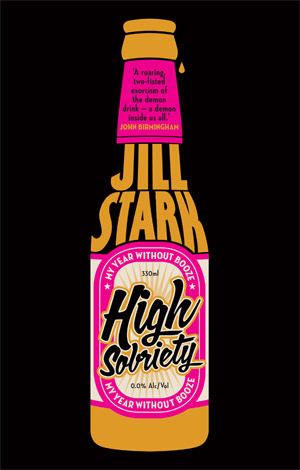
    'High Sobriety: My Year Without Booze' book cover, reviewed by Andrew McMillen in The Weekend Australian, March 2013Scottish-born journalist Jill Stark was a health reporter with a blind spot: despite writing about Australia’s binge-drinking culture for The Age newspaper, she would regularly drink to excess, as she’d done since her teens.
    One too many hangovers, however – the last on New Year’s Day, 2011 – set her, at age 35, on the path of alcohol abstinence for the first time in her adult life. The result is High Sobriety, her first book.

    As the subtitle indicates, this is an account of Stark’s sober 2011, one month per chapter. It’s part memoir, part sociological examination of our national drinking habits, and both aspects work well.

    “Just like Scotland, Australia’s default bonding-ritual is drinking,” she writes near the beginning, noting that her homeland is “a place where whisky outsells milk, and teetotalism is a crime punishable by death”. Stark is being melodramatic, of course, but the narrative makes it clear: to cut booze out of her life is almost as serious as excising a limb.

    On announcing her first period of sobriety – three months, as part of a youth-led health program called Hello Sunday Morning – Stark captures her social isolation vividly. When confronted by her peers about her decision not to drink or smoke, she notes that “my identity was suddenly reduced to the sum of the substances I’d chosen not to ingest”. Her transformation from centre-of-party to self-conscious fringe-dweller makes for a compelling contrast.

    Every aspect of Stark’s life is laid bare: her suspicions that she drinks to dampen the fear of being alone; her troubled love life (she realises in March that she hasn’t been sober during sex in years); her depression and anxiety, perhaps exacerbated by booze; her family’s history of alcoholism, including a grandfather who drank heavily until the day he died. “At the heart of that tragedy: alcohol,” she writes after her mother tells this story for the first time. “A drug I have enjoyed with cavalier abandon simply because it’s legal.”

    Her initial three-month commitment soon turns into 12, thanks in part to a popular feature article about her experience in The Age (and resultant book offers).

    Stark is at pains to point out how difficult not drinking is: she wonders if she’ll be able to navigate various events without booze: her birthday, a return to Scotland, the AFL finals series, a friend’s wedding, Christmas parties and so on. These too-regular instances of self-doubt are the only aspect of her writing that grates a little.

    Wedged between her own confessions are historical passages charting Australia’s history with alcohol, with a focus on the relatively recent, media-defined trend of youth binge drinking; a discussion about journalism’s long, slow dance with alcohol on the job, including war stories from older Fairfax scribes; the role of advertising in the liquor industry; and interviews with public health professionals regarding the effects this drug can have on human brains if consumption is not kept in check. Pertinent observations are plentiful and the author’s tone is never condescending.

    Stark makes it through the year, of course, with more than a few self-discoveries along the way. There is a devastating, unexpected personal tragedy near the end, which pulls the book’s premise into sharp focus. As she puts it: “Life’s too short to be wasted.” This is a conclusion reached without moralising, without judging others. It’s a refreshing approach to the oft-loaded discussion surrounding drug use of all kinds. Near the end, Stark writes:

    As rewarding as my year without booze has been, swimming against the tide has been bloody hard, and at times exhausting. It could be even harder for the next generation of drinkers. As long as laying off the booze leads to claims that you’re a boring, un-Australian loser in an environment set up to convince you alcohol makes you cool and socially functional, young people will continue to get pissed for confidence, comfort, and belonging.

    This isn’t a guide to abstinence, nor is it intended to induce fear in those who drink, to excess or otherwise – though some of the statistics quoted are certainly enough to make any reader consider their consumption. Ultimately, it’s hard not to recommend this book: from teenagers experimenting with their first taste, to those who’ve been imbibing for decades, many will find Stark’s story illuminating, touching, and memorable.

    High Sobriety: My Year Without Booze 
    By Jill Stark
    Scribe, 320pp, $29.95

    Elsewhere: I wrote about the founder of Hello Sunday Morning, Chris Raine, for Qweekend in June 2011

  • The Weekend Australian album reviews, February 2013: PVT, Foals, My Bloody Valentine, Hungry Kids of Hungary

    Four album reviews for The Weekend Australian, published in February 2013.

    ++

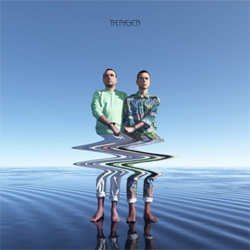
    PVT - Homosapien

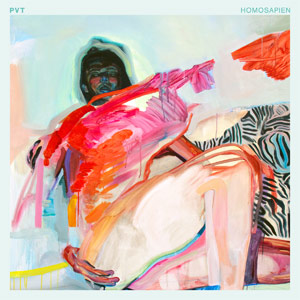
    PVT - 'Homosapien' album cover, reviewed in The Weekend Australian by Andrew McMillen, February 2013Three stylistic decisions have shifted Sydney act PVT – formerly known as Pivot – from a great band to a good one.
    Church with No Magic, from 2010, saw the trio add lyrics for the first time, largely abandoning guitar and bass in favour of synthesisers, and downplaying live drums in favour of electronic beats.

    Their fourth album, Homosapien, extends these three traits even further: the majority of the album is arranged and played electronically. Richard Pike retains the vocal duties he assumed on Church. His voice is powerful and well-suited to this music, but the content is dubious: many choruses consist only of one phrase, repeated.

    There are flashes of lyrical brilliance, as in the evocative first lines of ‘Electric’: “I left my heart on the railroad track, it’s still waiting for the next train/ I didn’t clock into work today, now all my work is in vain”). Pike’s brother, Laurence, is one of the most distinctive drummers in this country, yet his stick work here is either restrained or replaced by a drum machine.

    The band’s strength is in its electronic backbone, arranged by Dave Miller. The songs are clear, without many overdubs, and there are a handful of great moments: ‘Love & Defeat’, with wall-to-wall bass synths offset by a glorious, cutting melody, and the title track, which is the album’s only guitar-led track.

    The 2008 instrumental album O Soundtrack My Heart remains the band’s crowning achievement, a thrilling combination of rock muscle and electronic beauty. Homosapien is the sound of these three men running in the opposite direction, with mixed results.

    Label: Create Control
    Rating: 3 stars

    ++

    Foals - Holy Fire

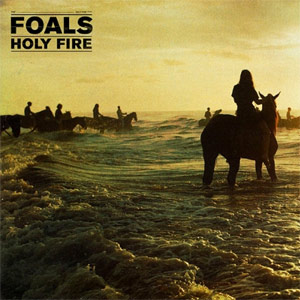
    Foals - 'Holy Fire' album cover, reviewed in The Weekend Australian by Andrew McMillen, February 2013By merging dance-floor beats with finicky guitar theatrics on their 2008 debut album, Antidotes, this British band emerged with a singular vision.

    The result was one of the most compelling recent contributions to the math-rock subgenre. Total Life Forever (2010) saw the quintet leaning more towards indie pop, experimenting with atmospheric tricks, and pushing Yannis Philippakis’s voice higher into the mix; handy, as he has both striking tone and unique phrasing.

    Holy Fire finds the band consolidating this new-found pop aesthetic while accentuating the intricate percussive and guitar interplay that first set them apart. Still in their mid-20s, Foals are almost old hands at this game. Production by British duo Flood (U2, Smashing Pumpkins) and Alan Moulder (Nine Inch Nails, the Killers) certainly works in the band’s favour, as the album sounds a million bucks.

    There’s plenty to like about the first two singles – the metallic chorus riffs of ‘Inhaler’ and the sheer joy of ‘My Number’, their poppiest song yet – but, like Total Life Forever, this is a collection to be enjoyed as a whole.

    Some of the band’s finest work appears on the second half: notably the stirring strings that run through ‘Milk & Black Spiders’ and the staccato bombast of ‘Providence’. Even long-favoured studio techniques, such as double-tracking and adding reverb to Philippakis’s vocals, continue to sound fresh against the innovative ideas laid down by his bandmates.

    Holy Fire opens with a storming, four-minute instrumental, ‘Prelude’, that works well as a statement of intent; the following 10 tracks do nothing to erode that mood. At a touch under 50 minutes, that’s quite an achievement.

    Label: Warner
    Rating: 4 stars

    ++

    my bloody valentine - m b v

    my bloody valentine - 'm b v' album cover, reviewed in The Weekend Australian by Andrew McMillen, February 2013It takes a long time to make music sound as good as m b v does. About 22 years, in fact.
    The last time my bloody valentine released new music was in 1991 and Loveless, the Irish quartet’s second album, remains the high-water mark of the “shoegaze” alternative rock movement.

    A thrilling listen from top to tail, Loveless contained some of the most unbelievable guitar sounds heard then or since. It’s had all sorts of adjectives thrown at it through the years but the most appropriate is “peerless”.

    And so, m b v, a nine-track album sneak-released online in early February, took by surprise many of the band’s fans.

    Topping the last effort is a practically insurmountable feat, yet this collection must inevitably be compared with the band’s last. So, in short: no, m b v isn’t quite as earth-shattering as Loveless, but it’s still very good, and well worth your attention.

    The guitar tone and phrasing are phenomenal: the second track ‘only tomorrow’ (the band insists that their name, album and song titles are all to be written in lower case) is one of the band’s finest creations, a real marvel of layering and repetition.

    As with Loveless, the drums, bass and vocals are all secondary in importance to the guitars, which sound so sharp they might cut you in half if you turn the sound up loud enough. And you should. The band’s entire existence is practically an exercise in volume control. ‘in another way’ is the best song here; a modern update to Loveless‘s classic final track, ‘Soon’, if you will.

    There’s only one disposable track, the synth-led ‘is this and yes’. The rest? Peerless, still.

    Label: Independent
    Rating: 4.5 stars

    ++

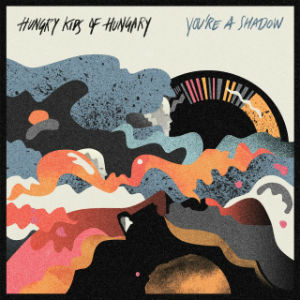
    Hungry Kids Of Hungary - You’re A Shadow

    Hungry Kids Of Hungary - 'You're A Shadow' album cover, reviewed in The Weekend Australian by Andrew McMillen, February 2013Hungry Kids of Hungary’s 2010 debut, Escapades, gave a strong portent of the songwriting and musical ability lurking within.
    To its credit, You’re a Shadow supersedes the Brisbane pop quartet’s debut in every way. The band’s greatest asset is that each member is a master of their instrument. There’s no weak link; no bassist playing tired lines, no drummer tapping out predictable beats. Every note is chosen for the purpose of serving the song.

    That may sound banal but in the context of indie pop it’s rare and remarkable to encounter such consistent innovation in the musicianship. For most bands, it’s enough to hit on a memorable vocal melody or guitar riff, and ride the hook out for three or four minutes. Not Hungry Kids.

    These 11 songs crackle with verve. It’s clear these four have thrown everything they have into You’re a Shadow and the results speak for themselves. There’s not a weak track here. At a touch under 40 minutes, it’s a lean collection but the ideas on display never outlast their welcome. This is another sign of the

    band’s maturity: don’t overplay, don’t overwrite, don’t oversing. Guitarist Dean McGrath and keyboardist Kane Mazlin share vocals and writing duties. Their first co-write, ‘When Yesterday’s Gone’, is the finest song here: a simply beautiful four-minute jam about mourning lost time. ‘Memo’ is a close runner-up; the way it segues flawlessly from the previous track ‘Colours’ is a nice touch, but the interplay between Ben Dalton’s bassline and Mazlin’s delicate key phrasing is spectacular. Indie pop music doesn’t get much better than this. Highly recommended.

    Label: Stop Start
    Rating: 4.5 stars

  • The Weekend Australian album reviews, November 2012: Spencer P. Jones, Crystal Castles

    Two album reviews for The Weekend Australian, published in November.

    ++

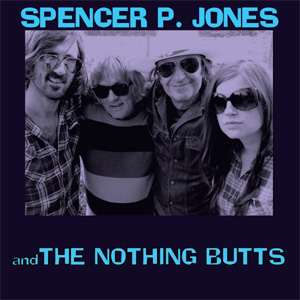
    Spencer P. Jones and The Nothing Butts - Spencer P. Jones and The Nothing Butts

    For Australian rock fans, this supergroup is a match made in heaven: two members from Beasts of Bourbon and two from The Drones combining to make a beautiful racket.
    On the group’s self-titled debut, the best of both bands can be heard: smart lyricism, enviable energy, finely tuned ears for melody and fantastic guitar sounds.

    Drones leader Gareth Liddiard doesn’t sing here, but his sonic fingerprints are all over these nine tracks: spiralling natural harmonics, whammy-bar flexes and overwhelming klaxon-call effects in the coda of ‘Freak Out’. Removed from the context of his masterful songwriting – Jones is the only lyricist here – it’s apparent exactly how exceptional and valuable Liddiard’s guitar playing is: no other rock guitarist in the world sounds like he does. The noise is enthralling.

    ‘When He Finds Out’ is the centrepiece, filled with unsubtle innuendo and stretched across eight gripping minutes: “Blood is thicker than water, your father screams and shouts / I shudder to think what he’ll do when he finds out,” sings Jones, while James Baker’s hi-hat bounces out an uneasy rhythm and Fiona Kitschin’s sparse bass notes add to the mystique. There’s no humour here, just unresolved tension: the extended guitar freak-out is effectively a stand-in for a violent confrontation. Fearsome stuff.

    Elsewhere, titles such as ‘When Friends Turn’ and ‘Duplicity’ hint at the headspace Jones was in while writing. Not a second is wasted: at 39 minutes, the album feels tantalisingly brief and demands repeated listens. This is an absorbing and cathartic collection of songs performed by four accomplished musicians. Not to be missed.

    Label: Shock
    Rating: 4.5 stars

    ++

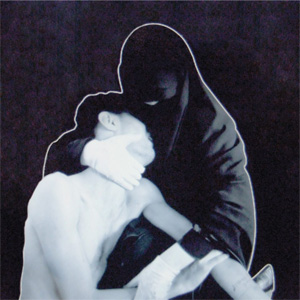
    Crystal Castles - III

    The third full-length album released by this young Canadian electronic duo lacks the immediate sonic punch that made their first two albums such compelling listens.
    It’s their darkest set yet, but that isn’t such a bad thing. It shows that producer Ethan Kath and vocalist Alice Glass seek artistic growth, and that they’re not content to stay within their comfort zone.

    With their 2008 self-titled debut, Crystal Castles emerged with a fully formed sound that merged synth-led pop ideals with ugly, distorted chiptune sounds, born from Kath’s experimentation with bending circuitry. The music they produced was unique four years ago and remains so.

    As with previous releases, the vocals on III often take on an eerie quality, as Glass rarely sings without the aid of pitch-shifting effects. Those few phrases that are allowed to penetrate through the wash of sound are stark and blunt: “Catch a moth, hold it in my hand / Crush it casually,” she sings sweetly on ‘Affection’, yet the song ends with a cold, cyborg-like voice stating: “We drown in pneumonia, not rivers and streams.”

    This merging of man and machine seems to be one of Crystal Castles’ main goals and they’re bloody good at it; most of the time there’s little sense that human beings had a hand in creating this work. They did, of course, and they undoubtedly worked hard, yet III gives off no sense of struggle. This isn’t their most accessible release – that is 2010′s II – but it’s still a fine extension of their effortless sound, at once beautiful and ugly; intentionally flawed, yet polished to near-perfection.

    Label: Shock
    Rating: 3.5 stars

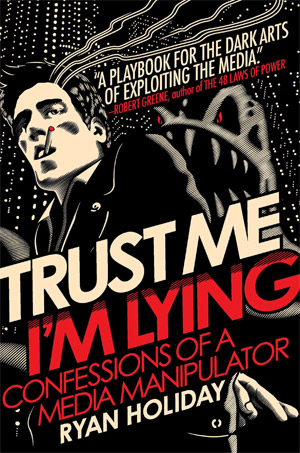
  • The Weekend Australian book review: ‘Trust Me, I’m Lying’ by Ryan Holiday, November 2012

    A book review published in The Weekend Australian on November 3. The full review follows.

    New media’s Machiavellis

    “My job is to lie to the media so they can lie to you,” 25-year-old Ryan Holiday writes on the first page of his first book. “I cheat, bribe, and connive for bestselling authors and billion-dollar brands and abuse my understanding of the internet to do it.”

    It’s a frank admission from the marketing director of Los Angeles-based clothing company American Apparel, and one that sets the tone for an explosive insight into new media manipulation.
    Trust Me, I’m Lying documents Holiday’s consistent exploitation of online publishers – from small-fry blogs to the websites of national media outlets – in the name of publicising his client list, which also includes Tucker Max, a popular American author whose stories centre on binge drinking and sexual debauchery.

    By revealing his tactics and explaining his strategies, Holiday exposes the blog-led model of “pageview journalism” as a vapid and desperate sham.

    Though this book concentrates on American websites such as the Huffington Post and Gawker, its message is relevant to all online publishers. Holiday describes his mission “to rip back the curtain and expose a problem that thus far everyone else has been too intimidated or self-interested to discuss openly”. Namely, the web is “hopelessly broken”:

    The economics of the internet created a twisted set of incentives that make traffic more important – and more profitable – than the truth. With the mass media – and today, mass culture – relying on the web for the next big thing, it is a set of incentives with massive implications.

    This economy – in which websites and blogs simply need traffic to sell advertisements, and where a perusing reader and accidental click are one and the same – leads the incessant hunger for new content. By design, this is a situation ripe for exploitation, as the income of many bloggers depends on their page views.

    “It’s a great time to be a media manipulator when your marks actually love receiving PR pitches,” Holiday notes.

    The first half of this book is devoted to how blogs work or, as Holiday describes it, “feeding the monster”. In an apparent nod to his mentor Robert Greene, author of The 48 Laws of Power, Holiday outlines nine tactics, such as “give them what spreads, not what’s good” and “use the technology against itself”.

    These are all valid tactics that Holiday has used when promoting his clients. However, he notes some readers may be tempted to use them as an instruction manual for manipulation of their own. “So be it,” he writes. “You will come to regret that choice, just as I have. But you will also have fun, and it could make you rich.”

    In the second half of the book, “The monster attacks”, Holiday ruminates on what blogs mean. He takes a blade to press-led online extortion, iterative journalism (one top blogger is quoted as saying “getting it right is expensive, getting it first is cheap”), the sad truths of “snark” writing and “online entertainment tactics that drug you and me”.

    This book is essential reading for anyone working in the media, online or off, and also for those who want to understand how the PR industry influences what appears on screens, in newspapers and magazines, and over airwaves. Marketers and the media are increasingly on the same team; this book is something of a wake-up call.

    “The world is boring, but the news is exciting,” Holiday writes. “It’s a paradox of modern life. Journalists and bloggers are not magicians, but … you must give them some credit. Shit becomes sugar.”

    Similarly, it is a credit to the author’s writing style and analytical abilities that this book never becomes weighed down in media theory. Every point is backed up with penetrating personal anecdotes.

    The narrative is tied to a rich understanding of media history, all the way back to the street vendor “cash and carry” innovation of New York newspaper The Sun in 1833, which is eerily similar to the gaudy, attention-grabbing media model of 2012.

    Holiday is incisive and merciless. It is clear he has the perceptiveness and wherewithal to turn his still-nascent career into a fortune from advising the rich and powerful, yet this book is a step back from that dark art. In the introduction, he writes of his hope that, by exposing these vulnerabilities in the media system, they’ll no longer work as well. We’ll see about that.

    Trust Me, I’m Lying: Confessions of a Media Manipulator 
    By Ryan Holiday
    Portfolio, 272pp, $26.95 (HB)

    Andrew McMillen is a Brisbane-based freelance journalist.

    For more on Trust Me, I’m Lying, visit its website. You might also be interested in my interview with Ryan Holiday from October 2011.

  • The Weekend Australian book review: ‘Gaysia’ by Benjamin Law, September 2012

    A book review for The Weekend Australian, published on 8 September 2012. The full review appears below.

    Revealing journey through gay Asia

    After exploring his upbringing in the 2010 comic memoir The Family Law, Benjamin Law turns to another topic close to his heart. An Australian of Chinese ancestry, he sets out to explore attitudes to homosexuality in seven Asian countries.
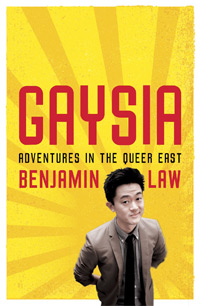
    Gaysia is Brisbane-based Law’s first attempt at book-length journalism and it consolidates him as one of the most surprising and entertaining voices in Australian nonfiction writing.

    On the first page, he writes: “Of all the continents, Asia is the gayest.” Given it’s populated by close to four billion people, he goes on, “doesn’t it stand to reason that most of the world’s queer people – lesbians, gays, bisexuals, transgender and transsexual folk – live in Asia too, sharing one hot, sweaty landmass and filling it with breathtaking examples of exotic faggotry?”.

    This balancing of of blunt humour and interesting information is one of Law’s strengths. Each chapter deftly combines reportage with historical facts.

    For example, Law strips off at a clothing-optional gay resort in Bali while interviewing the owner, who discovered this gap in the tourism market in the 1990s. The result is a strong narrative with one foot in the present, the other in the past.

    Given the topics at hand – nude resorts, prostitution, Thai ladyboy beauty contests, to name three – there’s lots of room for graphic descriptions, and Law revels in it. He’s clearly at home writing about our sexual urges and bodily functions.

    From male hookers in Burma begging him to share his penis size to witnessing an awkward threesome through his neighbours’ curtains, he has masses of material to work with.

    There is a serious side to Law’s investigations. The Burma chapter is particularly affecting. Law interviews widely while exploring the prevalence of HIV. The final anecdote is brutal: a desperate, 22-year-old prostitute – who had no knowledge of the virus until she tested positive – asks Law whether he can help her. To the author’s shameful realisation, his answer is no.

    Gaysia is more a window on to a troubled world than a travelogue. The stories Law tells, the problems he discusses, are ones rarely explored in-depth by the Australian media. Some solutions are simple – cross-cultural sex education and widespread distribution of condoms, for example – yet many are not.

    Much of the tension in this book comes down to differing social mores. In Japan, where drag queens are a constant fixture on television, Law notes that “so much of queerness seemed to be a performance for straight people”.

    Yet he contends few seem to understand that homosexuals exist in reality, away from TV cameras. “As long as they’re invisible, they’ll be tolerated,” a gay bar owner tells him.

    Several chapters highlight those who view homosexuality as a “bad mental habit”, to quote Baba Ramdev, a yoga instructor whose Indian followers number more than 80 million people.

    In recent times in China, homosexuals were prescribed self-flagellation techniques (a rubber band on the wrist, to be snapped whenever a homosexual thought was had) electroconvulsive therapy and even, in one sad case, a cocktail of conflicting psychotropic drugs that resulted in irreversible neurological damage.

    Law presents these instances of misunderstanding, persecution and outright homophobia matter-of-factly, without drawing his own conclusions.

    In Malaysia he meets Christian and Muslim fundamentalists who treat homosexuality as “an affliction that can be cured”. When questioned by them, Law plays the neutral journalist, perhaps a little too well: he doesn’t reveal his sexual identity.

    Yet by keeping quiet and quoting his sources faithfully, Law certainly gives them enough rope.

    Highlights of this book include Law’s account of the madly detailed lengths Chinese lesbians go to when arranging fake marriages, so as to please parents on both sides; his immersion in the hysteria surrounding an annual ladyboy beauty contest watched by 15 million Thais; and a chance meeting with an excitable yet closeted Indian man on a 30-hour cross-country train trip. (Law generously transfers his gay porn stash to his new friend’s laptop.)

    Gaysia is a book of powerful, enlightening stories on a fraught topic, told with care, empathy, grace and good humour.

    Gaysia: Adventures in the Queer East
    By Benjamin Law
    Black Inc, 288pp, $29.95


  • The Weekend Australian album reviews, September 2012: The Presets, We All Want To, Sugar Army

    Three album reviews for The Weekend Australian, published in September. The first is a feature review of 490 words; the other two are regular 260-worders.

    ++

    The Presets - Pacifica

    Four years between albums is plenty of time for younger competitors to snatch the crown from Australia’s electronic music kings.
    The Presets’ top spot was earned after 2008′s Apocalypso, which spawned multi-platinum sales, ARIA awards and one world-conquering single in ‘My People’.

    Now in their mid-30s, Sydney-based Julian Hamilton and Kim Moyes have exchanged nightclubs for parenthood. One may assume they’ve lost touch with the culture that spawned this synth-and-drums duo and their stunning 2005 debut, Beams.

    All doubts are vanquished within the first few bars of the first single, ‘Youth in Trouble’. The six-minute track is built on an insistent bass pattern, on top of which Hamilton – in typical piss-taking vocal style – parodies the media-led hand-wringing on behalf of Australian parents.

    “Up out all night in bright-lit wonderland . . . With a music taste abominable / Man, I’m worried sick for youth in trouble.” The layered irony is wonderful: moments later, the track fills with the kind of electronic noise and subterranean bass that’d piss off parents when played loud. As it should be.

    This track is a departure from the clear, concise vocal hooks that have characterised the Presets’ past hits. It’s a perfect album opener because Pacifica bears little resemblance to their previous two releases. These 10 tracks are more electronica than dance music; to use an obvious party-drug analogy, it’s more 5am comedown than 1am peak. At first, Pacifica‘s incongruity is a tough pill to swallow.

    The lack of obvious singles is troubling — the sea-shanty-like ‘Ghosts’ is the most accessible track here — as is the apparent dearth of vocal and melodic hooks. This jars with popular understanding of who the Presets are, and what they represent. It takes me about six listens to accept this record for what it is, not what it could have been if they had continued to follow their own songwriting formula. Impatient, dismissive fans will miss out on the Presets’ most accomplished and mature album yet.

    Pacifica sees the pair bower-birding from a wide range of aural sources: shades of dance titans Underworld and Sonicanimation are occasionally detectable, as well as more modern electronic acts such as Crystal Castles and the Knife.

    The latter influence is particularly strong in track seven, ‘Adults Only’, which sees Hamilton pitch-shifting his vocals to a deep tone, as if trying to obscure his identity. This song is the album’s emotional and artistic peak; a punishing acid-house pastiche led by stuttering, hornet-swarm synths.

    Inspired by John Birmingham’s Leviathan, Hamilton’s dark lyrics take in Sydney’s murderous past and uncertain future: “Children don’t you know that we’re living in a city that’s built on bones?” he sings in the chorus; later, he mentions frail old ladies dying afraid and alone while surrounded by yuppies, small bars and coke.

    Ultimately, Pacifica is the sound of two men who understand Australian pop culture better than anyone. ‘Zeitgeist’ is a dirty word, but there’s no doubt the Presets have produced a record that sounds simultaneously of-the-moment and futuristic. The crown remains intact.

    LABEL: Modular/UMA
    RATING: 4 stars

    ++

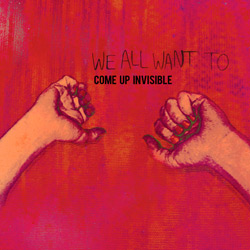
    We All Want To – Come Up Invisible

    This is a messy album in the best way possible. The music created by Brisbane four-piece We All Want To swings back and forth between charming indie pop and rock with jagged edges.

    Led by a pair of singer-guitarists in Tim Steward – who also fronted 90s-era Brisbane noise-pop act Screamfeeder — and Skye Staniford, the interplay between the two is the chief highlight here. Both are accomplished writers with a knack for clever wordplay and memorable melodies.

    They opt for some artistic decisions that simply wouldn’t work in less capable hands – like opening the album with a sprawling, seven-minute track that features an off-key recorder solo — yet these four pull off such curiosities with style. The band’s self-titled debut, released in 2010, was a solid set containing a pair of stand-outs in ‘Japan’ and ‘Back to the Car’.

    It’s a similar story here: special mentions belong to Steward’s compelling, life-spanning narrative in ‘Where Sleeping Ends’; and ‘Shine’ by Staniford, which begins with subdued instrumentation and ends with a whirlwind of beautiful harmonies. There are no ongoing lyrical themes to speak of, nor is there much sense of cohesion between these 11 tracks, but these absences don’t matter: there’s not a weak track here. This collection is accomplished, unpretentious and unassuming.

    We All Want To is no spring chicken. Steward has been playing live for more than two decades and this is the 11th album he has been involved in. Come Up Invisible is a nod to the virtues of banking on earned musical wisdom and experience.

    LABEL: Plus One Records
    RATING: 3 ½ stars

    ++

    Sugar Army - Summertime Heavy

    Through change comes artistic progress. On its second album, Perth-based rock act Sugar Army has streamlined the sound out of necessity: the band’s bassist joined fellow Perth group Birds of Tokyo, reducing the quartet to a trio.
    Yet this departure has helped to hone Summertime Heavy into a set of compact, driving rock songs. Sugar Army’s 2009 debut, The Parallels Amongst Ourselves, was memorable but a touch overlong; half the tracks were great, the others less so.

    Here, the band has scaled back the atmospheric production in favour of muscular songwriting, and the results are impressive. Sugar Army’s sound evokes Los Angeles act Silversun Pickups in that the guitar phrasing, bass lines and drumbeats are all independently interesting.

    This clever musical interplay, coupled with Patrick Mclaughlin’s distinctive voice, ensures they’re a near-perfect unit. Mclaughlin has a unique turn of phrase, too: “Once the mind’s made up / Nothing comes in, and nobody gets out”, he sings in ‘Small Town Charm’, which nails the realities of some regional mentalities.

    In standout album closer ‘Brazen Young’ he continues his fascination with female-led narratives first noted on their debut. These are lean, well-written songs delivered forcefully and urgently.

    The band is versatile, too: the title track is built around a pretty acoustic guitar progression and a chanted motif (“Summertime heavy is taking its toll”), while the appearance of a wood block in ‘Hearts Content’ is both unexpected and welcome. As the Go-Betweens’ Robert Forster has said, the three-piece band is the purest form of rock ‘n’ roll expression. That holds true here.

    LABEL: Permanent Records
    RATING: 3 ½ stars

  • The Weekend Australian album review: Dappled Cities – ‘Lake Air’, August 2012

    An album review for The Weekend Australian, published on August 11.

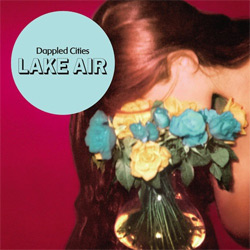
    Dappled Cities - Lake Air

    Four albums into a career that blossomed with the release of second LP Granddance in 2006, Sydney quintet Dappled Cities here present their most accomplished collection. Granddance brought the band into the national consciousness via a string of outstanding singles; Lake Air is a complete work, one so good it deserves to take Dappled Cities much further.
    This is indie pop at its best: an extension of the songwriting heard on 2009′s Zounds, yet twice as remarkable in every way. Dappled Cities opt for a lean 10 tracks, 42 minutes’ worth, and not a moment is wasted. The first six tracks – bookended by singles ‘Run with the Wind’ and ‘Born at the Right Time’ – are of such a high quality that the remaining four sound merely good in comparison.

    Lake Air is the sound of a band at the peak of its creative powers. Instrumentally, lyrically and melodically, this album is one of the best you’ll hear all year. There are many moments of pure pop joy, yet these are tempered by a subtlety and nuance that eludes many of their peers.

    The title track is masterful: underscored by a chorus wherein dual vocalists Tim Derricourt and Dave Rennick sing in uncharacteristically low tones. Both of them usually prefer higher registers. It’s the best single song they’ve recorded. Penultimate track ‘Waves’ is a sparse piano-and-vocals affair that sticks out like a sore thumb yet also acts as a contrasting reminder that Lake Air is, at its heart, a stunning set of songs. It’s an inspired release from one of Australia’s best pop bands. They’re only getting better.

    LABEL: Hub/Inertia
    RATING: 4 ½ stars

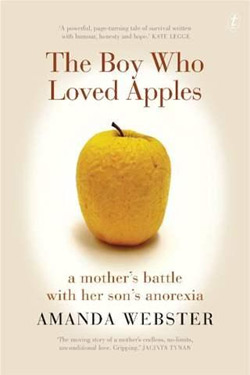
  • The Weekend Australian book review: ‘The Boy Who Loved Apples’ by Amanda Webster, July 2012

    A book review for The Weekend Australian, published on July 28. The full review appears below.

    Why ‘Do I look fat in this?’ is not a comic question

    The eating disorder anorexia nervosa has the highest death rate of any mental illness: up to 20 per cent in the absence of treatment.

    I didn’t know this until I read The Boy Who Loved Apples, in which first-time author Amanda Webster takes on twin challenges: to write a confessional account of the most difficult time of her life and to educate readers about the complexities of an illness few understand intimately, especially as it applies to boys. She succeeds on both counts.

    The events Webster describes took place in 2003, when the eldest of her three children, Riche, was 11. The story is told through the rear-view mirror: in past tense and in a matter-of-fact tone that has the (perhaps unintended) side effect of unnerving the reader, especially in dramatic moments, of which there are many. It’s as if Webster, the narrator, is observing someone else live out her interactions, her mistakes, her omissions. This narrative device works well.

    The psychological reality of living with anorexia is shocking: the battle of the book’s subtitle is no overstatement. Webster describes in painful detail the relentless, punishing routine of feeding Riche protein shakes – practically his only source of nourishment for almost a year – five times a day, while responding to his tired series of calorie-conscious questions. “This won’t make me fat, will it?” asks a boy who weighs a desperately unhealthy 25kg.

    Recrimination is a consistent theme throughout this book, towards Webster’s husband, Kevin, a frequent-flying investment banker who is rarely at home during the week, and the author herself, a self-confessed “corporate wife”. It does help that Kevin is a high-income earner, as the family eventually spends more than $2000 a week to manage Riche’s illness.

    Soon after she moves from Mullumbimby in northern NSW to Brisbane to begin Riche’s treatment, Webster ransacks the bookshops for anything on eating disorders. She notes wryly that such books are shelved alongside sex guides; her own love life has been no great shakes since Riche’s diagnosis. The books solidify her belief that her son’s illness was brought on by parenting mistakes. (She’s wrong, and eventually learns that blame benefits no one.)

    Much of the narrative concerns interactions between the author and her son, though there’s also a recurring cast of doctors, psychiatrists, dieticians and support staff, as well as her two younger children and husband. This one-on-one dynamic works in favour of the story, as it highlights the truly consuming nature of the illness:

    “It was trench warfare, an endless battle with no tea breaks. If I’d thought about it before, I would have assumed anorexia popped up at mealtimes – a fight over food, and then on with the day. I didn’t realise the illness controlled every waking moment, or that it affected every aspect of life.”

    To complicate matters, it becomes clear that throughout those long, lonely months in Brisbane, the author herself is fraught with depression, anxiety and, later, post-traumatic stress disorder as a result of the “skull-shattering tedium” that envelopes her life and the life of her son.

    Alcohol becomes a crutch. She fights on the phone with Kevin, whose work keeps him in Sydney, and longs for the company of her other, attention-starved children.

    Webster never normalises Riche’s behaviour: there is nothing normal about an 11-year-old attempting suicide after coming into contact with a tiny puddle of car oil (“It’s making me fat. Look how fat my arm is.”) or scraping the skin from his hands after an iced bun was eaten in the house (“I had to use my nails. I’m fat.”). Webster shifts between helpless fury towards his irrational, starved-brain behaviour and compassionate self-reminders that it’s the illness at fault.

    That the Websters survived that terrible year is remarkable, as is the frank and humane way in which the author frames the grim realities of their situation. This is an important story delivered with a fantastic eye for detail. It is, ultimately, one focused on love and sacrifice at any cost. And thankfully there is a happy – and healthy – ending.

    The Boy Who Loved Apples: A Mother’s Battle with Her Son’s Anorexia
    By Amanda Webster
    Text Publishing, 291pp, $32.99

  • The Weekend Australian book reviews: ‘Digital Vertigo’ by Andrew Keen and ‘The Blind Giant’ by Nick Harkaway, July 2012

    Two digital-themed non-fiction books rolled into one review, for The Weekend Australian. The full review follows.

    New portals of perception in a digital age

    As cyberspace encroaches ever deeper into our everyday lives, it’s worth pressing the pause button to question how we choose to spend our time in an era of digital distractions. The two books under review present opposing viewpoints on this conundrum.

    In Digital Vertigo [pictured right], Anglo-American entrepreneur Andrew Keen takes a critical stance against the technologists behind social networking tools such as Facebook and Twitter, for reasons exemplified in the book’s subtitle. Keen knows his topic from the inside: on the cover the title is presented as a Twitter hashtag and the author’s name as @ajkeen. He has more than 19,000 followers on that medium, and this book seems to have been written between his frequent pond-hopping to speak at social media conferences.

    The tale begins with Keen staring at the corpse of Jeremy Bentham, the long-dead British philosopher and prison architect best known for his Panopticon design, in which inmates can be watched by outside observers at any time: “a prison premised upon the principle of perpetual peeking”, as Keen writes. Per his wishes, Bentham’s body is permanently exhibited inside a glass-fronted coffin — an “auto-icon” — within University College, London. Keen’s segue is that social media represents the “permanent self-exhibition zone of our digital age”.

    A curious introduction, no doubt. Time and again, Keen revisits the concept of the auto-icon while examining how our culture has become “a transparent love-in, an orgy of over-sharing” and comparing today to George Orwell’s Nineteen Eighty-Four, where “to do anything that suggested a taste for solitude was always slightly dangerous”. Many readers will recognise a kernel of truth in this comparison: to log on to the internet in 2012 is to be inundated with requests (demands?) to share, to socialise with other humans.

    Keen’s title is also a reference to the 1958 Hitchcock film Vertigo, where the protagonist eventually learns that everything he believed to be true was the product of malicious deception by his peers. Keen ties this to social media by describing it as “so ubiquitous, so much the connective tissue of society” that we’re all “victims of a creepy story that we neither understand nor control”.

    The scenic route that Keen takes to arrive at this tenuous point is not particularly interesting. He fills entire chapters by paraphrasing academics and journalists, and attempts to list seemingly every start-up social business making waves in Silicon Valley. As a self-described “super node” of the social network, Keen seems quite proud to tell us that he closed his personal Facebook account in September last year.

    What could have been an original tech-dissident’s tale from the belly of the never sleeping beast is instead convoluted and messy. Keen draws heavily on historical references and too often these miss the mark, though a thorough examination of the creation and fiery destruction of the Crystal Palace in London is a highlight. It’s worth considering whether the meandering and messy nature of Digital Vertigo — including many typographical errors — is a symptom of the author’s inability to avoid the attention-shattering properties of the web.

    At the time of writing, @ajkeen was still tweeting, by the way.

    Conversely, British novelist Nick Harkaway tries his hand at long-form nonfiction for the first time in The Blind Giant [pictured right], and strikes on a narrative that immediately grips the reader. Using tight language and evocative descriptions, Harkaway’s introduction is a nightmare vision of a dystopian, tech-led society where “consciousness itself, abstracted thought and a sense of the individual as separate from the environment” are all withering away. A contrasting vision of a “happy valley” follows, and is just as realistic and compelling.

    Harkaway admits in the afterword that the book had its origins in “unpicking the idea that digital technology was responsible for all our ills”. This late-declared bias aside, The Blind Giant is a measured and thoughtful take on a problem that will concern us all soon, if it doesn’t already.

    Though the author is clearly tech-inclined – he notes on page one that he was born in 1972, the same year as the release of the first video game, Pong – he is not fanatical. He compares attempts to switch off from the internet with refusing to open your mail: “It doesn’t solve the problem, it just leaves you ignorant of what’s happening, and gradually the letters pile up on the mat.”

    His narrative arc is well considered and draws on disparate topics such as neuroplasticity (how the brain alters its make-up to take on new skills and abilities), whether social media helped or hindered the anti-Mubarak revolutions last year (in Cairo’s Tahrir Square and London) and the intriguing idea that we are living in an era of “peak digital”: “the brief and impetuous flowering of digital technology during which we inhabit a fantasy of infinite resources at low market prices”.

    Harkaway is a consistently engaging narrator: his fascinating analogies, elegant word play and occasional use of humour all point to his storytelling skills. True to the subtitle, his book cuts to the core of what it means to be human and how we might go about managing new and emerging technologies.

    It’s no self-help guide to unplugging yourself from the wired world, nor does he encourage us to spend more time with our heads in “the cloud”. Instead, Harkaway urges us to acknowledge our humanness on a regular basis, regardless of whether that human happens to be engaging online or off.

    Digital Vertigo: How Today’s Online Social Revolution is Dividing, Diminishing and Disorienting Us
    By Andrew Keen
    St Martin’s Press, 246pp, $32.95

    The Blind Giant: Being Human in a Digital World
    By Nick Harkaway
    John Murray, 288pp, $21.99

    Andrew McMillen is a Brisbane-based freelance journalist.

  • The Weekend Australian album reviews, June 2012: Silversun Pickups, Joe McKee, Def Wish Cast, Rainman

    Four album reviews for The Weekend Australian, all published in June 2012.

    ++

    Silversun Pickups – Neck Of The Woods

    Where many rock bands fail, Silversun Pickups succeed: through effective use of space, volume, melody and harmony, this Los Angeles quartet conjures unique emotions within the listener that make the timeworn combination of guitars, bass, drums and vocals seem fresh.

    The dream pop and shoegaze elements of their sound are most notable in Brian Aubert’s swirling vocals and the waves of distorted guitars that appear in each of these 11 tracks, yet Chris Guanlao’s drumming deserves special mention.

    Coming up with original and compelling rock drumbeats is equally as hard as the task that lyricists face in search of themes and melodies, yet both Guanlao and Aubert come up trumps on Neck of the Woods.

    Perhaps the most striking aspect of Silversun Pickups, though, is that the quality of their output is improving as they age. This album, their third, follows a good 2006 debut in Carnavas and a stronger follow-up in 2009′s Swoon.

    This is remarkable when you consider how many rock bands sprint out of the blocks with a remarkable debut and watch their credibility and fan base wane with each subsequent release.

    Not these four: they’re versatile enough to do high-BPM, hard-edged tracks such as ‘Mean Spirits’, right after an elegant slow-burner such as ‘Here We Are (Chancer)’, and clever enough to lace both performance styles with drama and a sense of urgency.

    It’s quite a talent that they exhibit. Credit songwriting and production, the latter courtesy of U2 and R.E.M. associate Jacknife Lee, in equal parts.

    Label: Warner
    Rating: 4 stars

    ++

    Joe McKee – Burning Boy

    These 10 sparsely adorned songs represent a significant shift for Perth-based songwriter Joe McKee, who fronted the West Australian quartet Snowman for eight years until their amicable split in 2011.

    Snowman were among the darkest, scariest acts to lurk at the fringes of Australian indie rock: though they crisscrossed the nation dozens of times, garnered occasional Triple J airplay and toured as part of the biggest festivals, their gloomy, confronting style ensured many chose to overlook their three (excellent) albums.

    Burning Boy, McKee’s solo debut, is a much gentler affair. His deep voice, surprisingly, is front and centre: McKee favoured higher-pitched shrieks and yells on most Snowman tracks. It’s a nice change.

    Stylistically, Burning Boy bears similarities to Adalita Srsen’s debut album, Adalita, released last year: Srsen, too, chose to step away from the noise and bluster of her rock band Magic Dirt, and the result was a beautiful collection of songs that featured little more than voice and six-string. Here, McKee opts to linger over syllables in that hypnotising baritone, while finger-picked guitar and atmospheric string arrangements drift in and out of focus.

    These are delicate songs of introspection, marked by occasional bursts of energy: bass, drums and an electric guitar interject toward the end of ‘An Open Mine’, while pulsing standout ‘A Double Life’ could well be a Snowman b-side.

    McKee’s noted fondness for looped vocal motifs appear in ‘Golden Guilt’; his command of clever wordplay is best exemplified in album opener ‘Lunar Sea’ (“Am I sinking deeper / Down into the lunacy?”). An absorbing and accomplished debut.

    Label: Dot Dash/Remote Control
    Rating: 4 stars

    ++

    Def Wish Cast – Evolution Machine

    What we now take for granted once existed only on the fringes of popular music.

    Australian hip-hop has enjoyed a healthy ascent in the past two decades, and a Sydney crew named Def Wish Cast was instrumental in establishing the art form locally with its 1993 debut album, Knights of the Underground Table.

    Almost 20 years later it returns with third LP Evolution Machine. A lot has changed within the genre: hip-hop acts now jostle with rock and pop bands for festival headline slots.

    The stakes are higher; tastes more discerning. Evolution Machine is a good album, but given the popularity of this sound nowadays it’s much tougher to impress the listener. Def Wish Cast — comprising three MCs in Die C, Sereck and Def Wish, plus DJ Murda One — has enlisted a wide range of producers, but the result is an uneven mix.

    Evolution Machine comprises 11 tracks (plus two short interstitials) and almost as many producers, including acclaimed names such as Plutonic Lab, Katalyst and M-Phazes. The Resin Dogs-produced first single ‘Dun Proppa’ is pure fire; so too ‘I Can’t Believe It’, a loving ode to the genre built on the album’s best beat.

    The three MCs exhibit strong wordplay and distinctive voices, particularly Def Wish, whose rapid-fire lyricism is a consistent highlight.

    There’s a wealth of ideas here, and many of them work, but the lack of cohesion gives the impression that these tracks were assembled in disparate home studios. Though the hip-hop crown has been usurped by younger peers, Evolution Machine is a fine addition to Def Wish Cast’s too-short discography.

    Rating: 3 stars
    Label: Creative Vibes

    ++

    Rainman – Bigger Pictures

    Too often, young Australian rappers fall into the same lyrical pitfall: with little life experience to speak of, they instead take the dubious advice of “write what you know” too literally by couching their artistry in recording alcohol and drug-fuelled tales ad nauseam.

    On his second album, Brisbane MC Rainman – real name Ray Bourne – treads a fine line between making those mistakes and breaking new narrative ground.

    ‘Big Night’ is a by-the-numbers take on the aforementioned hedonistic tropes; ‘The Valley’ is centred on the Queensland capital’s nightclub district (“A happy home that you might find violence in/ You might find your future wife in the Night Owl line”).

    Yet, to his credit, Rainman uses ironic distance and sober observation in the latter track rather than glamorising the suburb and its characters.

    It’s a refreshing change and a sign of Bourne’s maturity. His vocal delivery is eerily similar to that of his one-time mentor Urthboy, of Sydney band the Herd. As with that MC, Rainman’s calm, measured tones work well in both chorus and verse.

    The beats on Bigger Pictures‘ 15 tracks are uniformly excellent: credits are split between seven producers, including the MC himself.

    Bourne is superlative when writing about weightier matters: on penultimate track ‘Too Much’ he snipes at his generation’s indifference to the ills of mass media (“They keep it simple so that we can remember/ A little grab that sounds like an ad/ But don’t get apathetic, motherf . . ker, get mad”); in ‘The Bigger Picture’, his introspective narrative ends an impressive album on a high note.

    LABEL: Born Fresh/Obese
    RATING: 4 stars