I was asked to submit a piece for the first issue of a Brisbane literary journal named Stilts. The brief was short: I could write about anything, as long as it began with ‘Home is where…’. I decided to write frankly about what it’s like to work from home, which I’ve been doing on and off for over two years.
I’ve included the full text below; click here to check out the rest of the Stilts issue, which includes an excellent piece from John Birmingham. Illustration by Merilyn Smith.
Business and leisure, both rolled into the one location. This has benefits and costs. Benefit: No early-morning, cross-town commute. Cost: If I don’t have any meetings scheduled, I generally don’t leave the house. There’s a point each day—usually about 2pm—where I become thoroughly disgusted with myself and have to change out of my pyjamas. Benefit: A dedicated, comfortable workspace that’s free from distraction. Theoretically. Cost: Every form of entertainment imaginable is never more than a few footsteps or mouse clicks away from that same workspace.
I am a freelance journalist. I’ve been doing this full time for almost a year. Monday to Friday I research, pitch, interview for, and write stories. I try to adhere to the business hours of the ‘real world’ so that I can interact with people at their workplaces. People, like editors, who determine my weekly income.
I often feel as though I’m living outside the system. I can pinpoint this feeling on my choice to not partake in the work commute. I’ve been there before, and found that the cyclical nature of that process—a joyless hour or two that’s essentially lost to the sands of time—was a massive drain on my creativity and optimism. Occasionally, I feel guilty for living outside this daily ritual. I don’t take my ability to roll out of bed whenever the hell I feel like it for granted; more often than not, I feel like a cheat, a scoundrel, for having arranged my life in this way. If I’m to fully understand the world as a journalist and capture that understanding in my writing, it’s important to be able to relate to my fellow man.
I’ve blocked off Saturday as my ‘PC-free day’. Before I made this decision, the laptop was the biggest source of anxiety in my life. I’m not an anxious person but the laptop is the source of my entire income. My mindset was something like, if I’m not using the laptop, I’m not getting paid. I need to get paid to continue living my life outside of the system. Now that Saturday is my PC-free day, I only feel this anxiety six days a week, not seven.
Ultimately, the fact that I live and work in Brisbane is largely inconsequential. When I’m at home, working, I could be anywhere in the world. All I need is my laptop, a sturdy desk, a strong internet connection, a comfortable chair, and loud speakers. Everything else is a bonus. With those five components in place, I’m content.
Brisbane is convenient. I know a lot of people here. There are a lot of stories to be told here. I don’t have enough experience living elsewhere to compare Brisbane’s creative communities to any another. But I know from experience that Brisbane is a fine place for a freelance journalist to call home.
For more Stilts, visit their website. Thanks to editor Katia Pase for inviting me to write.
Before around 50 journalism students, we each gave a 10 minute presentation and then fielded questions from the audience for the remaining half-hour. I chose to spend my allocated time by giving a brief overview of my path so far, and then speaking about things I’ve learned in the past two years as a freelancer.
My presentation is embedded below. Click here to watch on YouTube. It was filmed by Matt Shea and edited by Henry Stone. I’ve also included it in text form underneath.
Andrew McMillen: Things I’ve learned about freelance journalism, September 2011
The best way to be a freelance journalist is to wake up every day and be a freelance journalist. This means you’ll spend your day researching story ideas, pitching stories to editors, requesting interviews with people you wish to speak to, transcribing interviews, shaping stories until they’re as good as they can be, and then filing them to your editor. I’ve just summed up the entire job in a sentence. That’s what freelance journalism involves. You’ll think of an interesting thing to write about, pitch this interesting thing to an editor, get permission from the editor to write about this interesting thing in exchange for money, and then go out and do just that. Over and over.
In a way, it’s not glamorous at all, but it depends how you look at it. I choose to look at freelance journalism as: getting paid to learn things, and sharing that knowledge with readers. In many cases I know very little about a particular topic when I pitch a story, but through curiosity and initiative in approaching an editor to write about it, I get paid to familiarise myself with an industry, or a culture, or an issue that affects a lot of people. I’m not saying that I become an expert on something after researching it for only a week or two, but I’ll generally know more about it than the average person. And then when the average person reads my story, they too become informed. It’s a beautiful cycle, and it’s a wonderful way to make a living, as long as you have an interest in learning things. If not, freelance journalism probably isn’t for you. But you should still try it anyway, because you never know.
Ideas. You need to have absolute faith and conviction in your ideas, because ideas are your lifeblood as a freelance journalist. Without them, you fail. Without them, you’re nothing to nobody. But to have an idea is not enough: you need to conceptualise an idea in a full enough manner that an editor will read your idea and be willing to part with a few hundred or thousand dollars from their budget in order for you to bring that idea to fruition. When I started freelance journalism, my ideas were terrible. I look back on them now and I’m embarrassed by how lame and elementary they seem in comparison to what I’m pitching now. Like anything though, freelance journalism is a learning experience, and you get better over time. But at the heart of this game is the quality of your ideas, which you need to hone and sharpen and polish on a daily basis if you have any hope of getting anywhere.
Curiosity. Curiosity is currency. As I mentioned earlier, I see this job as being paid to learn, and to teach. Curiosity is key, though, because 95% of my ideas come from reading or watching something and wondering, “why is that?” Or, “how does that work?” Or “why did that person or company make that decision?”. Generally, the question is “why”. The “why” should be a question that you ask yourself constantly. Not out loud, because you’ll probably sound like a lunatic, but as you move through the world, be curious. Story ideas should come easily if you keep listening to the “Why” in the back of your head.
Mentors. This might be the most important thing I’m going to say today. You need to find a mentor. You need to find someone knowledgeable, who believes in you, who you can report to on a weekly basis and whose input you greatly value. I’m not saying it’s impossible to succeed without one, but I’d guess that it would be much harder. I’ve had a mentor for two years and I wouldn’t have achieved anywhere near as much as I have without their help. I don’t quite know how to explain it, or even how it works, but being accountable to someone other than yourself is a massive productivity boost. You need someone who’ll give you a kick up the arse if you have a slack week, or gently pick you up if you’re feeling deflated for whatever reason. This person doesn’t necessarily have to be a writer or a journalist. As long as they understand the freelance lifestyle and have a background in anything creative, they should be a good fit. But you won’t know if they’re a good fit until you try a mentor relationship. So start thinking about mentors, if you’re serious about pursuing freelance journalism.
Always look up. Always keep moving forward. Try to have a couple of projects on the go at any one time. Even if you’ve got a few commissions in hand, always be researching new ideas and thinking of new angles that could work for particular publications. The image I like to think of is Tarzan, swinging from tree to tree, only you’re swinging from idea to idea, and from publication to publication. While you’re a freelancer, you shouldn’t settle, even if you find one or two consistent, well-paying gigs. Always be looking up, for your next opportunity, your next big break. Try not to stand still for too long.
Set goals, but don’t be too hard on yourself. Not every day will bring you closer to your goals. You’ll have days where the thought of pitching and writing stories makes you want to crack your skull open against the wall. This is fine, as long as most days aren’t like that. Try to maintain a generally productive mindset, but pay attention to your mental state. Don’t force yourself to work if your mind is screaming out against the concept. If you do take a break, whether for an hour or a day, try not to feel guilty about it.
Self-motivation. It goes without saying that you have to be self-motivated to have any kind of success in this game. Most of the time, you’ll probably be working alone. If you’ve never worked this way before, it can be a shock to the system. It was for me. It took me over a year to find a rhythm where I could sit at my desk all day and work alone without craving some kind of distraction or human interaction. But I found it, eventually, and it’s a nice place to be. Even if I do mess it up occasionally.
Self-talk. In a similar vein to the last point, self-talk is hugely important in this line of work. You are directly responsible for your income. You can’t just show up at your desk and get paid. You have to research, think, send emails, and maintain relationships with people who might know you only as words on a screen. It is a pretty ludicrous situation to be in, if you really sit down and think about it. So try not to think about it. But you need to believe that you can do this, if you want to have anything resembling a career in freelance journalism. You need to believe in yourself, most days of the week. There isn’t a whole lot of room for self-doubt in this game. I think the best way to avoid self-doubt is to always be busy, so that you don’t have time to doubt yourself.
A to-do list to keep track of your daily tasks is a must. Being a freelancer means you’ll be doing lots of follow-ups with people; chasing invoices, chasing interviews, chasing stories you’ve pitched and never heard back from the editor on. These things are tiny and easy to forget, which is why you need to keep track of them. I use a to-do list called teuxdeux.com, spelt the French way. It’s very simple but clean, and lets you see five days ahead at a time. It also has an iPhone app which allows me to refer to it and cross things off when I’m out of office. There are probably many other sites and apps with the same functions but this one works very well for me.
Set up a blog. This is simple and non-negotiable. Set up a blog to act as your portfolio of published work. It doesn’t have to be flashy, it just has to show your work and be regularly updated. If you can, register yourname.com and set up the blog there. Doing this was one of the best decisions I’ve made as a freelance journalist.
Set boundaries. Since you’re not constricted by a traditional workplace or business hours, it’s quite easy to find yourself working from the moment you wake up, until the moment you go to sleep. I’ve been there. It’s not healthy; it’s how you become burnt-out. It’s important to set boundaries around your workplace as a freelancer, and in this case, your workplace is wherever your PC is. For around nine months I’ve kept Saturday as a ‘PC free day’, where I don’t turn the computer on or do any work-related tasks. I also keep Sunday as a day for catching up on RSS feeds, updating my blog, replying to emails; pretty non-intensive tasks. And Monday to Friday is for work. Structuring your workweek is important. You need to respect boundaries, both for yourself and for those closest to you.
Finally: enjoy yourself. Freelance journalism can be a huge amount of fun if you approach it with the right attitude. It’s a great alternative to the traditional path of cadetships and applying for reporter jobs, and you can start doing it today. With persistence, self-belief and talent, there’s no reason why you can’t make a living from freelance journalism. I highly recommend it.
Note: this presentation also appeared as a guest post on the excellent blog The Renegade Writer, which is edited by Linda Formichelli. If you’re a freelance writer, I highly recommend subscribing to Linda’s blog.
This is a three-way live radio interview conducted by Sky Kirkham, Amy Stevenson, and Alexander Atkinson, the co-hosts of the4ZzZ Book Club, on Thursday 26 May 2011. 4ZzZ is a community radio station in Brisbane.
Our half-hour interview concerned National Young Writers’ Month 2011, my freelance journalism, and my role as co-organiser of UnConvention Brisbane 2011. Their questions are bolded.
If, for some crazy reason, you’d rather listen to the audio of this interview than read the transcript, you can do that here.
Welcome Andrew, and thank you for joining us today.
Thank you.
Andrew is the Queensland ambassador for National Young Writers’ Month. So I suppose to start off, tell us about National Young Writers’ Month.
Sure, National Young Writers’ Month starts next month, funnily enough. So I’ve been organising some events here in Brisbane and up in my home town of Bundaberg in anticipation of next month, to get young people inspired about writing and to start thinking about setting some goals to work towards during the month of June.
I’s really about getting young people talking about writing, and helping them work towards those goals by building a little community around young writers across the country.
How is the event doing that?
It’s online-based, and there’s a website which Express Media have organised. National Young Writers’ Month is promoted by Express Media, who are a Victoria-based arts company. The website is expressmedia.org.au/nywm.
We will put a link to that from our Facebook page at the end of the show. How did you get involved in National Young Writers’ Month?
The coordinator of the event came across my work somehow, I don’t know, through a search engine or something. And she liked what I was doing, so she asked me to be involved because she could see that I was under 25,and the event is targeted towards under 25s. She could see that I’d done a fair few interviews with writers in the past, and hoped that could translate through to helping other people be inspired enough to start writing.
Is there any particular reason for the age 25 limits on it? It seems almost arbitrary.
It does seem arbitrary, doesn’t it? It’s not my decision. I couldn’t answer that question.
I guess you have to cut ‘youth’ off somewhere.
What kind of goals are people going to be setting? Are these all manner of writing, or is it non-fiction and fiction?
It’s all manner of writing. Of the national ambassadors, I’m the only journalist. The rest of the ambassadors are fiction writers, poets, and that kind of thing. So it’s for any kind of writing, whether you want to start a book or get a few chapters down during the month, or start a blog and write every day, or even just write yourself a diary entry every day. It’s just to get the juices flowing.
Whatever achievable goal you think you can do in a month.
Yeah. It’s about making it an achievable goal, too, so not like “I’m going to write a book in a month!” because you’d probably tear your hair out in frustration.
I’m sure some people try.
Are there any physical workshops coming up? I know you’ve just run a couple of seminars or conversations with local authors.
I don’t have anything else planned. In the last 10 days or so I’ve done three events; two here in Brisbane, and one in my hometown of Bundaberg. Last Tuesday I had Benjamin Law and John Birmingham talking about freelance journalism – which is what I do, and what they are both well-known for doing. And this Tuesday just past, I had the Courier Mail’s Qweekend magazine staff talking about feature journalism, which I think was pretty cool because that magazine is regarded as being the best journalism in Queensland. Certainly among the best in Australia too.
So that was Trent Dalton —
Matthew Condon, and Amanda Watt.
Who was your favourite interview?
On stage, you mean?
Yeah.
Andrew: Matthew Condon, because… actually, it’d be a tie between him and John Birmingham, because they both have the rare distinction of being writers who speak as well as they write. Most writers… myself definitely included; I don’t speak as well as I write, because I like to have that time to get my mind focused. But somehow, JB and Matthew Condon have that ability to form whole sentences and witty comments on the fly.
Makes you wonder if their writing comes out that way in one smooth, flowing, fully-formed script.
Yeah.
Yes, we try to do that on the 4ZzZ Book Club. We don’t always succeed. [laughs]
To take a step back; you’re saying you are a freelance journalist. How did you get into that industry in the first place? What was it that drew you to it, and what was your first step in getting involved, as advice to all of our young writers out there who might be interested.
I started… I guess the first time I was published was in mid-2007 and for a couple of years following that, all I did was review live shows here in Brisbane for Rave Magazine and for FasterLouder. So for those two years, it was just purely live reviewing, the occasional CD review. That was my ‘journalism’ for two years, and I was happy to leave it at that was because it was a fun little pastime for me. It meant I got free concert tickets and I could go to see shows that I otherwise would pay for.
So that was cool, but at the same time it gave me the ability to work towards deadlines, and to word counts, and to be concise and to the point. So that was a hobby. I graduated from uni with a Bachelor of Communication in mid 2009. I didn’t really intend to do anything with journalism, but around that time I quit my job in web design, and I was kind of at a crossroads where I could decide to either pursue another full-time offie job or try something else that I knew; which, in that case, was freelance journalism fulltime. So I decided to put my mind to that. And it took many months, in financial terms, before I saw the fruits of that effort, but over those last two or so years, I think I’ve kind of got on top of it.
Is it possible to earn a living from freelance journalism?
It is, but you have to be incredibly dedicated and persistent. You have to get up every day and market yourself to editors, and have ideas, and constantly be thinking weeks or months ahead in terms of publication schedules, and what’s going to be current a few months down the track.
What would you describe as maybe the thrills and perils of freelance journalism?
The thrill is… for the year or so I was working an office job, the morning commute is quite upsetting. You have to get up early, make your lunch, catch a bus or train in… That gets old pretty quickly, as I’m sure everyone can appreciate in some regard. [Andrew’s note: I didn’t get to finish saying it, but the ‘thrill’ I was referring to was setting my own hours, and working from home…]
I suppose in those earlier days you would have been working to finance yourself some other way, as well.
That’s true. I did a bit of copywriting and web account management for a friend’s business, but in the last year or so I’ve given that up and I’ve just been freelance writing full-time. The thrills… and what was the other part?
Perils.
Perils. Well, it comes down to finance, I suppose. I mean, like I said; you have to be marketing yourself every day, and if you’re not doing that, then you’re not getting paid, and you can’t pay your rent or feed yourself.
And become yet another impoverished writer.
Exactly. I didn’t want to become a cliché, which is why I’ve been successful. [laughs]
Or living the stereotype. Is it all about generating a portfolio? Is that how you tend to market yourself once you have volunteered [as a writer] and you’ve got stuff that you haven’t been paid for, and people can see you’re good at what you do, then you can take your portfolio further?
In a way, yes. Those two years when – I was doing the stuff for the street press and FasterLouder – was essentially unpaid. But at the same time, I didn’t expect to get paid, because it was fun for me; free tickets and all that. But after I quit that job and made the distinction that I wanted to be a writer full-time, then I only pursued paying publications. I did that doggedly, for months on end, before I really saw the return.
That’s how you have to think; months down the track, instead of on a day-to-day basis, because you can do excellent work and people can like your work across Australia or across the world, but you don’t see the invoice until a few weeks or months down the track.
We are talking to Andrew McMillen on the Book Club here tonight on 4ZzZ. Andrew, what was your first paid journalism article?
I interviewed the Brisbane band Screamfeeder for a website called messandnoise.com. It was funny, because I’d been doing – in some ways – music journalism for a couple of years, but I’d never actually interviewed a band. So in anticipation of that I bought a little recorder, and I did all my research and preparation and took notes, and all that sort of thing.
It went really well, and it was published online, and it was worth $60 or something like that. It was a breakthrough for me because it was like, “holy shit”; here’s this article which I put a lot of effort into and I could see the results, and it was well received among the [online] community and all that sort of thing. And that first paying success, as it were, I still feel that to this day when I get published in TheWeekend Australian or Rolling Stone.
I mean, obviously I’m a full-time writer. I like to get paid for my work, but it’s also still a thrill to see my name in print and to see people responding to an article, whether through comments on an article or on Twitter or Facebook; that sort of thing.
You’re saying how you write full-time. What was the draw of journalism in particular? Did you ever have any aspirations of pursuing other writing activities?
No, I didn’t. Now that you asked that, I’m not really sure. I’m curious. I guess I’m naturally curious, and the role of the journalist, I think, is to remove curiosity from day-to-day life. A good journalist is asking the questions that you want to know, and putting them into articles or radio programs or TV shows that are answering those questions. I guess I like being rooted in non-fiction, because it’s where I live on a day-to-day basis, rather than being lost in my head with fictional characters.
I suppose in journalism as well, you get to come out of your hidey-hole and interview people.
Yes.
Actually have contact with people.
Exactly, because I know from experience you can spend enough time in your bedroom, or your workspace, and it’s days before you actually go out and see someone. So it’s always a thrill to be out and to meet people, definitely.
As one of the challenges of freelance journalism, you’re talking about the need to market yourself constantly, and to look ahead. Is there this trade-off where, I suppose, you would have some freedom as a freelance journo that you wouldn’t otherwise, that you have to work almost as hard at the marketing side as you do at actually writing your articles?
Definitely, that’s the balance. It’s great to be able to roll out of bed at midday, or stay up late and not have to worry about getting up for work, or whatever, but in terms of why I have been successful is because, from the beginning, when I had that first paying article, I started uploading all of my articles to my own blog, which is andrewmcmillen.com. Every time I would introduce myself to another editor, I would show them my blog and show them my three best articles up to that point.
I’m not sure, because none of my editors have ever said it, but I think that taking that kind of time to build a web presence and keep it updated, and take pride in that; I would hope that has swayed them in some ways to think, “Okay, this guy’s serious about what he does.”
Interviewer 1: You see that with authors and websites as well. There are some authors who have the most fantastic websites and then you have ones which look as though they haven’t been touched for years, and are atrociously formatted. You have to wonder whether they’re actually interested in booking themselves up, because they’re obviously not committed to it.
Interviewer 2: That comes back to the balance again, I guess, of authors who feel they shouldn’t have to do anything other than write. I believe we’ve heard even people on this show talk about that, but definitely I’ve heard other interviews with authors feeling quite indignant that they have to do something other than —
Interviewer 1: “What? I have to market myself?”
Interviewer 2: Exactly.
Interviewer 1:: “Don’t people get paid to do that?”
Interviewer 2: It seems pretty lonely to engage in writing that way, lock yourself up in a little room and just do nothing but write. I think it’s a skill that probably our generation is in grasp of a lot more. We are a generation of bloggers and Facebookers. We have no problem really of announcing our ideas to our community of friends, and taking that on to a larger step as a professional basis. You probably have to be quite good these days, because everyone’s tried their hand at that sort of lifestyle.
I was adept at that kind of social media, or whatever you want to call it, because I’ve grown up with the internet. I’ve been using it hardcore since I was 12, and I don’t see myself stopping.
Didn’t you first start writing on the internet; gaming reviews or something?
Yeah.
See, we’ve done research!
The first time I was published in some way, I suppose, is when I was about 12 or 13, for an online video game community [NINTEN] where I was essentially rewriting press releases. Which is as glamorous as it sounds. But it was cool because I was already a member of this community but it was also helping me to show some talent of mine: that I could write, and that people might want to read about the latest Nintendo game or some other thing that’s coming out. It feels silly to talk about it now, but at the time I loved it because I was passionate about video games, and for years I wanted to be a video game journalist, which I have kind of…
Sounds like a rad job.
Video game journalist?
Yeah; you play the games, you tell people about them. The dream job.
I’ve kind of done some video game journalism, but it’s been nothing to do with playing games; more about looking at the business side of games, which I don’t think many people – either in Australia or in the world – are doing. I got into that because, here in Brisbane a studio called Krome shut down the end of last year. For a week or so, there were rumours floating around that they’d fired all their staff, but no one was confirming it.
Because no one was looking into it I was like, “I’m going to go check it out for myself.” There’s a gaming website called IGN, which I approached the editor of. I said, “Can I do this story for you?” He’s like, “Yeah man, I really want somebody to do it because, like you, I’m curious.”
So I found a bunch of staff who had left the studio recently, and I put together their stories and theories on why the company went out of business. Then I got an interview with the CEO. It was the first time he’d spoken to media since the rumours started, because all the Courier Mail reporters [and the like] and all were calling up to say, “Is this true?!”. They were really confronting him, whereas I came in under the radar and said, “Look, I’ve done this research with some past employees. They’ve told me this; is it true?”
I guess it’s that kind of tenacity that really drives a young journalist. Do you have any writing heroes, or literary heroes that you used as a model for that, or any sort of model for your writing?
Yeah, also around the time I quit that [web design] job, I went down to Sydney to interview my favourite writer, Neil Strauss. He’s an American author who’s best known for writing for Rolling Stone and New York Times for about 20 years, and in 2005 he had a book called The Game: Penetrating the Secret Society of Pickup Artists.
I think I’ve heard of that one.
He had a new book that came out in 2009, and I had an interview lined up with him. He was meant to come to Brisbane for this book tour, but it didn’t come through. He was just going to Sydney and Melbourne instead, because I guess there wasn’t enough media attention up here. So I had resigned myself to just doing a phone interview with him, like any other writer or musician I’ve done before. My friend said, “If this guy means so much to you, why don’t you take a few hundred dollars and take the cost and fly down and see him?” Which I hadn’t considered at all.
So I did that, and I met him. I interviewed him for 45 minutes or so. That was a massive formative experience for me, because here’s this guy who has literally built his life around writing and publishing words. And that made me realise that I can do that; that’s what I wanted to do.
So you’ve clearly gone a few paths as a journalist. You’ve got your musical background and, I guess, more straight stories, things like the current one [‘Krome Studios: Things Fall Apart’]. How do you plan the difference in approaching those, and also, how do the publications you’re dealing with approach your involvement in them as a freelance journalist?
It depends very much on the publication, and what they want from their writers. For example, the majority of music writing I do these days is for a website called TheVine.com.au. And mostly what I do for them is interviews, which are published in a straight Q+A format. So there’s a few hundred word intro and then it’s just the conversation as it happened. Which I’m really big on, because I remember reading street press, before I was writing for it. I would see, “this band’s touring”, or they’ve got an album coming out. There’s this little 300 or 500 word article and there’s a couple of quotes that are plugged in there, but it’s like – “what did the writer and musician talk about for the rest of those 15 minutes?” Because most bands give 15 minute phone interview blocks.
It confused me, because I wanted to see the full story. So both TheVineand Mess+Noiseare quite good at publishing full interviews, but that’s, again, because they are web publications, whereas a magazine like Rolling Stone or triple jmag, they’re constrained by space.
I guess that’s a major thing; the advent of online media to the point where it can actually generate a business model these days and allows that additional space. It also has allowed the rise of a larger group of freelance journalists to get published and get their information out there.
Maybe for less money.
Almost definitely, which is a shame, because I prefer writing for the web. Because like I said; I’ve grown up with it and I spend most of my day online and I like to see what’s new and what’s current. But at the moment, in terms of writers getting paid or journalists getting paid, the scales are definitely still tipped in print’s favour. I like writing more for Rolling Stone or The Australian because they pay really well, as opposed to —
Could you put a figure on it per word?
Yeah. Rolling Stone pays 60 cents per word, and The Weekend Australian pays 70 cents per word.
Online that would be…?
TheVine, for example, pays $150 per interview, or $50 per review. It’s the shift between per word and per article and it’s great; TheVine is run by Fairfax Digital, who had a quite forward-thinking business strategy a few years ago when they launched TheVine and Brisbane Times, and those kind of sites. [Andrew’s note: those two sites launched at different times, however.] They’ve been monetised and profitable for years now. Hopefully that balance between print and web will tip towards web’s favour. I think it will, because more advertisers will be going towards the web, because more people are reading websites.
You are listening to the Book Club on 4ZzZ 102.2 FM. We are joined today by Andrew McMillen, who is the Queensland ambassador for National Young Writers’ Month. Let’s talk a bit more about National Young Writers’ Month. You were saying there’s online workshops. Are you involved with that at all? How does that work? How do you get enrolled?
Not so much online workshops as a community built around the forum, and blogs that are on that website.
How are they going? Have they started yet?
All the ambassadors have written their response to ‘Why I Write,’ which I think is where you got your research from, maybe… maybe not. [laughs] And we’ve had a few guest authors do that, like Benjamin Law put his response in, which was, in typical Ben Law style, quite humorous. There’s forums where you can talk about journalism or blogs or fiction writing or poetry. They’re trying to cover all the bases in terms of writing forms, which I think they’ve done.
How do people get involved with that? They go to the website, subscribe and register and then have access to the activities?
Yeah, you can join the community and make friends and do all those kinds of social networking activities.
Is there any other support groups around? I know Visible Ink which is in the valley which is a government initiative supports young writers and I suppose some of the publishing bodies we’ve talked about today like FasterLouder and stuff sort of support young writers in a way, to their own benefit in a way as well. Are there any other associated organisations involved in this one?
We talked about The Edge as well, in the break and that’s something else that’s quite a beneficial, useful little space.
It is, and they often have workshops, government workshops there. I’m not sure how many of them are writing based.
Andrew: They do have occasional ones. I remember last year – which I wasn’t in town for it – they had a feature journalism chat with Trent Dalton. Young writers could come along and ask questions; much like they could at my events in the past 10 days.
There is also a broad range of things that go on at The Edge, one of which is something else you’re also involved in, which is UnConvention, which is coming up on the 11th and 12th of June. Can you give us a bit of rundown on that, while you’re in the studio?
Sure. I am a co-organiser of UnConvention Brisbane 2011. It’s the sequel of UnConvention Brisbane 2010 funnily enough. It started last year as a grassroots independent music community networking event. It’s much the same format this year, with more of a focus on encouraging discussions during the panel sessions.
As well as that, there’s a networking event at the Boundary Hotel on Saturday night, and a few local artists will be showcasing throughout the weekend at the Edge and at the Boundary Hotel.
How did you get involved with the UnConvention organisation?
It’s based on a concept that started in the U.K. a few years ago and it’s since been replicated around the world, like in Brazil and India and all sorts of places. UnConvention Brisbane last year was the first Australian UnConvention. A co-organiser named Dave Carter who is a lecturer at the Conservatorium and a local musician himself, he saw the idea and thought about bringing it to Brisbane because he felt there was a bit of a gap in terms of strengthening bonds within the independent music community and bringing them together.
That’s what we really aimed to do, and based on feedback from last year we had about 220 people come along to the Edge and hopefully we’ll do the same again this year. The feedback was really positive.
I caught a thread online the other day about Brisbane and the difference — a lot of people say that Brisbane isn’t quite as cultural as our other cities of Australia and whether that was a problem of representation in the music industry, or whether that was a lack of talent in Brisbane. The general consensus was that there’s bits of both but there’s slightly less cohesion I suppose was the general consensus of the thread. I wasn’t a contributor or anything, I just took it off.
It’s an interesting thread. I’ve kept an eye on it too, and I haven’t contributed myself either. It’s one of those discussions that’s been around for a long time and I know the guy who started it, Everett True, who is running a workshop at UnConvention about online publishing or self publishing.
He’s a pretty good writer.
Yeah, he’s amazing. He’s literally been a music journalist his whole adult life; he knows what he’s doing, for sure. But he started it because he wanted to answer the question “Why does Brisbane perceive itself to be a cultural backwater”; those sorts of questions. There are no easy answers for that because… I don’t even know where to start.
Interviewer 1: I was thrown to each side of the argument as I read on. I thought, “Yeah, clearly because everyone leaves Brisbane and goes to Melbourne if you’re a creative person.” And the I read a little bit further and I thought, “No, I know there’s venues in the suburbs and there’s music.”
Interviewer 2: We do have a massively creative scene as well. The number of good local bands coming out is always pretty impressive.
Interviewer 1: I think it’s a stigma that holds around that there’s not much going on in Brisbane. Just the fact that there is a stigma, people keep re-saying it.
It’s funny, because it exists down south. People down south perceive Brisbane to be like that, and somehow, for some reason, Brisbane people believe that, in some cases. That’s why I think it perpetuates.
I think so.
So you’re saying Everett True’s running a workshop on self-publishing.
He’s co-hosting that with Bianca Valentino, who’s done a lot of her own zines called “Conversations With Punx”.
I think I’ve been to a seminar by Everett True a couple of years ago. He was pretty cool.
There we go; a reason to get along to UnConvention in a couple of weeks! You panelled, at the last one, a discussion on music and the media. Is there going to be something similar this time or is that retreading old ground at this point?
We have aimed to start a whole new series of topics, although we have retained a similar kind of one in the music and culture discussion. I think that was really valuable. This year that’s being held by Kellie Lloyd of Screamfeeder, and Q Music. What was the question again? The music and media panel, last year. No, we’re not doing that exact topic this year but we are doing ‘documenting Brisbane’s music scene’, which is run by Justin Edwards, a local music photographer.
Cool. I’d say there’s a lot to get to as well as National Young Writers’ Month, which you can log on. We’ll post up the site.
UnConvention is held at The Edge in South Bank, next to the State Library of Queensland, on June 11 and 12. That’s the Queen’s Birthday long weekend. It’s $30 to get in and that gives you access to both days of panel discussions and networking events, as well as lunch on both days. For more information, you can visit unconventionbrisbane.com
Andrew McMillen, thank you very much for joining us today. Andrew McMillen is a freelance journalist, the Queensland ambassador for National Young Writers’ Month, and one of the co-organisers at UnConvention. So a very busy man, and he also runs a blog, which you heard him mentioning before, which is andrewmcmillen.com.
We’ll also post the link to it on our Facebook page after the show, for those that don’t write at the speed of my voice. It is a quarter-to-eight. You’re listening to the Book Club on 4ZzZ.
Embedded below is footage of my second live Q+A event as Queensland ambassador for National Young Writers’ Month 2011: a conversation about journalism with Christina Ongley and Janette Young.
The 80 minute conversation took place on May 20, 2011 before around 20 young writers – mostly high school students – at the Bundaberg East State School library. I’ve included some background information about the event below. Scroll down to watch the conversation via the embedded Vimeo clip, or read the transcript underneath. All photos taken by Paul McMillen. Visit Facebook to see the full set of photos.
From left to right: Janette Young, Christina Ongley, and Andrew McMillen.
Under 25 and interested in a career in journalism? Ahead of National Young Writers’ Month (NYWM) 2011 – which runs from June 1-30 – two of Bundaberg’s most experienced journalists will discuss how they’ve built their lives and careers around writing and publishing words. Given the focus of NYWM, this free 90 minute session will be targeted toward aspiring (and current) writers and journalists under the age of 25.
Christina Ongley is the editor of the Bundaberg NewsMail and the Isis Town and Country. Her career in journalism began in Bundaberg in 1998, when she worked in the NewsMail’s newsroom for four years. During that time, her roles included reporter, feature writer, sub-editor, chief of staff and news editor. For the following six years, Christina lived and worked in the UK for a three-edition daily paper in Essex named The Echo, where she was soon promoted to news editor. Prior to her reappointment at the NewsMail, she was the media and communications executive for Surf Lifesaving Queensland.
Janette Young is an editor and journalist of more than 30 years’ experience, starting in the newsroom of her local newspaper in the UK at the age of 18. At 26, she became the first woman editor in her newspaper group and from there moved on to work on The Times in London and at the Press Association in Fleet Street during the Gulf War. Since moving to Australia in 1991, Janette has worked within News Limited, West Australian Newspapers and APN News & Media. She was Assistant Editor with The Courier-Mail in Brisbane and subsequently with The Sunday Times in Perth, and in 2009 was a finalist in the Queensland Media Awards for Best Business / Property Report. During her career, Janette has been Launch Editor of a number of magazines and newspapers, and has lectured and tutored Bachelor of Communications students in Print Media, Media Law and Ethics and Online Journalism. For more on Janette, visit her website.
Andrew McMillen (@NiteShok) – the Queensland ambassador for National Young Writers’ Month 2011 – will facilitate the session. A graduate of Bundaberg State High School in 2005, he’s now a Brisbane-based freelance journalist whose work has been published in Rolling Stone, The Weekend Australian, The Courier-Mail, triple j mag, Mess+Noise, TheVine.com.au and IGN Australia. For more on Andrew, visit his website.
Embedded footage below. Please note that the vision does drop out a few times throughout the video due to camera file size restrictions. The audio remains consistent throughout, however.
Q+A transcript as follows. Andrew + audience questions and comments are bolded; Christina and Janette’s comments as labelled.
Andrew: Thank you all for coming. This is the second event I’m running in Queensland for National Young Writer’s Month. I’m the Queensland ambassador for that event. And here we have two women who have spent most of their adult lives in journalism. So I wanted to invite you all to come and talk about that, and what that involves.
I’m a freelance journalist myself, and National Young Writers Month’ is about… the funny thing is that it starts next month. I have to explain to everyone who I meet. So these events are to inspire people to set goals for themselves, register on the website, join the community, start talking about writing, and start meeting those goals during the month of June.
I’ve got some postcards here if you’d like to grab them at the end, which tell you more about it. But today we’re talking about journalism. Most of you in the room are high schoolers, obviously. I wonder if any of you know right now that you want to be a journalist once you graduate?
[no-one raises their hands]
Christina: No work experience candidates?
Andrew: No one? That’s interesting, because I wondered if you two knew that you wanted to be journalists when you were in high school.
Christina: Partly, actually. When I was about seven or eight years old I used to make up my own sort of mock newspapers and show them to my parents and get them to give me marks [for] them. And I was the editor of my school paper as well. But I’ve always had a really strong background in sports, so when I went to uni I actually was going down the human movements and physio sort of path and then it took me about six months to figure out that that wasn’t what I wanted to do after all. So quick smart, went straight back to journalism. So I sort of floated with it for a long time and then decided it was something I wanted to do.
Janette: Well, actually from a very early age I was very determined to become a journalist. I went to a girls’ school and in my day they used to try to push you towards secretarial work. And they set me up for work experience which I cancelled and contacted my local newspaper and at the age of 15, basically started working in newspapers. They used to pay me expenses, which, for me, was huge amounts of money. And I started getting published even when I was 15. I used to work in the local paper on my school holidays, which was great because when I left school I was one of the lucky ones who got taken on direct entry, because I’d already been published and I was obviously passionate about newspapers.
I never particular had a desire to work in radio or TV. It was always about print media, because I love writing. And I qualified at the age of 22, so they put me through university, which was great because I didn’t go broke while I was studying. And I learnt so much on the job. It was so good to have the direct entry because it meant that I could put the theory into practice and it was just wonderful.
Christina: That’s something that was really rare these days now, as well.
Janette: Very rare, and it’s really unfortunate that they don’t do that because my son’s studying journalism and I taught journalism at Edith Cowan University [in Western Australia] for a couple of years in my spare time because I believe that people don’t get taught enough by people who actually know what they’re talking about. And the practical experience of working in newspapers cannot be replaced by any amount of theory. And I’ve seen young people come through who might not necessarily have excelled at school sometimes, but they make fantastic journalists because they’re hungry.
[Audience]: I started journalism at university, but got so disenchanted by the theory that I decided to become a schoolteacher instead.
Christina: I think it’s a real shame the way that journalism degrees are going now. When I studied about 15 years ago, at the time the body of lecturers were people who had really impressive journalism CVs and it wasn’t just about crafting a story. They could tell you about really tough interviews they had to do, or tough situations they had to confront and how they dealt with them. That was really inspiring. Some of these were people who’d been there in the Bjelke-Petersen era and had some really amazing stories to tell. Just as I was leaving, because I’ve still got a couple of good friends who were lecturers back then, there’s been this real shift towards academia in the lecturing body. I think, for me personally, it sort of sucks all the life out of it because you learn, as you say, all the theory. But it’s very hard to get inspired by people who have spent their life in research and not actually at newspapers or at other broadcast media outlets.
[Audience]: One lecturer who my friend and I counted the number of times he would say the word ‘commonsensical’. He said it like 47 times in two hours and then I was like, “Well, maybe this isn’t for me.”
Christina: I guarantee that word would never make it into a newspaper.
Janette: Absolutely not, and never in a headline. Anyway, but it is true and it is a shame. My son, I have had to encourage him to continue to be focused but at the end of the day it is worth it. It is an exciting job and the potential for an individual to make their mark and make a difference in the world is huge. And even now, even though strictly speaking I’m not working in newspapers, I still mentor a lot of young journalists. When I left university for some years after that, I continued to mentor young journalists.
It’s about having a passion. It is a trade if you like, it’s a practical skill. I call myself a wordsmith, and that doesn’t leave you. It’s a great trade to have. I can take you around the world; can take you to all sorts of places that other people can’t get to, and you can meet loads and loads of people that you would never otherwise come across. So if that’s what you like doing, great. If you don’t like talking to people all the time, then don’t do it.
Christina [pictured right]: I think that’s probably one thing that… this is National Young Writers’ Month coming up, and I think it’s great when people have a real passion for writing and I interview a lot of young people for jobs. I’ll say “what is it that you love about journalism, and why do you want to be a journalist?” A lot of them say, “I really love to write”. And that’s really important, because you can’t teach someone to write well. You can sort of hone their skills and get them to a reasonable standard, but if they’re not a born writer, you can’t teach them to be.
But the thing I think that’s almost more important to me is: do they like people? Because everything we do is about people. It’s telling peoples’ stories; it’s telling stories that affect people. Readership and people are generally at the core of what we do. So I’ve interviewed a number of young people for cadetships of various kinds. And I’ve looked at some of their submitted work. They write well, but they’re so timid. And I think, “can they pick up a phone and ask someone a tough question? Can they stand up for themselves sometimes when they get a bit of criticism, as we inevitably do at a newspaper? Do they really enjoy having a rapport with people?”
And if they don’t think they can do that, then I’d much rather have someone who has those personal skills and maybe isn’t such a great writer, as someone who’s a fantastic writer but can’t actually talk to people. That love of people and telling peoples’ stories is just as important, to me, as being able to write well. In this field anyway.
Janette: Absolutely.
[Audience]: Andrew, perhaps now it might be a great time to introduce our panel?
Andrew: Good idea! Next to me, we have Christina Ongley. Christina Ongley is the editor of the News Mail. And to her right is Janette Young, who has worked throughout journalism and media for over 30 years, I believe.
Janette: Afraid so. [laughs]
Christina: Like it or not.
Andrew: And my name’s Andrew McMillen. I am a freelance journalist based in Brisbane. To go back to that question I was asking these two earlier; I didn’t know I wanted to be a journalist pretty much until I was a journalist. I went to Bundy High, as these four did as well [gestures to audience]. And I knew that I loved reading and writing. I was pretty good at English. I got a few English awards, but I didn’t know I wanted to be a journalist.
I went to UQ in Brisbane and studied Communication, which is about half journalism, half media studies. And that degree wasn’t very enjoyable. It was, as we were discussing earlier, quite dry and quite academic in its approach. So that didn’t inspire me at all, but during that time I moved to Brisbane. The second year I was there, I started writing for street press, which is the local free newspapers that are put out in record stores and music venues across Brisbane. Music was my passion. I wanted to write about music, and writing about music for them meant that I got free tickets to go to shows that I otherwise would have paid for, so it was a nice little money-saver. Money [from writing] at that time was negligible. It wasn’t on my agenda at all. It was just free tickets and definitely a hobby for me, not a career.
I did that for a couple of years, getting paid very little. Then I worked for a web design company which was fun for about a year and then I stopped doing that. I was at a crossroads in my life and I thought, “what do I want to do next?” I’d had a couple of years experience in journalism for those music publications and I knew that I really enjoyed, that so I wanted to see how far I could take that. So in the last two years, I’ve been pushing that music freelance journalism angle, and I’ve been published in Rolling Stone, and triple j mag, and The Weekend Australian and a couple of others.
But since then I’ve realised that music journalism is not what I want to do. I want to do feature-length stories for magazines and newspapers, so that’s where I’m heading now.
Christina: It’s a tough area to break into.
Andrew: It is, but with those couple of years of doing [journalism] – first as a hobby, and then secondly as just trying to find my way in terms of what I wanted to do – I couldn’t make that decision [to pursue featuring writing] without having those experiences beforehand.
Christina: Is anyone planning on studying any sort of communications or media-type degree? [one student puts his hand up] What are you going to be studying?
[Audience]: Film and television at QUT, hopefully.
Christina: What’s your greatest interest? Is it the screenplay-writing angle?
[Audience]: I love all of it. Every aspect of media that I’ve explored so far. I really wanted to head down today because I think journalism is such a big branch of media, radio, and film, and television. It’s pretty imperative to know all about it. That’s where I’m coming from.
Christina: Great.
Andrew: I should point out that, if you have any questions for any of us at any point, just raise your hand and we’ll get to it. I’ve got stuff prepared, but this is about you. It’s about what you want to get out of it, so if it’s not going where you want it to, just raise your hand and ask a question. The answer was for these two: Janet knew she wanted to be a journalist. Christina was a bit iffy, and I didn’t want to be a journalist.
Christina: And we all ended up in the same place!
Andrew: Were you setting goals in that point in your lives, in your late teens; your early 20s, in terms of where you wanted to be?
Christina: I went to a private girls’ school on the Gold Coast, and I probably can’t say I was a particularly rebellious teenager. I wanted to do well but what I did really rebel against was the intense pressure that was on us at school to decide the rest of our life at the age of about 13 or 14. At the end of year eight, they sat us down and said, “you’ve got to choose these ten subjects for years nine and 10, and then those will pare down to five or six subjects at year 11 and 12, and then those will go onto probably decide what you study at uni, and that’s going to be the rest of your life.” So, figure that out at 13 or 14. I thought, “what?!”
So I studied the subjects that I enjoyed and I wasn’t too fussed… it didn’t bother me that I started a course at uni that I then changed my mind away from and switched courses. I mean, I was setting goals. I guess they just changed along the way and I wasn’t too bothered if they changed. I just thought that [in] my late teens, early 20s, surely there was going to be a little bit of wiggle room in there to maybe not get everything right and make some decisions later on if I needed to.
Janette [pictured left]: I think the reality is that in today’s world it’s accepted that most people will have two or three careers. Just because you happen to start doing something at 20 doesn’t necessarily mean you’ll be doing it 40. And I left News Limited after 20 years. I hit the 20 year mark and went, “okay, what do I really want to do now?” Because I could stay there quite happily for the next 20 years after that.
And I had a very successful career and I was not only the first female editor but the youngest editor of my group when I was 26. In the U.K. I worked on the Times in London. I worked on Fleet Street. I worked on Press Association during the Gulf War, which was very exciting. I worked with News Limited over here. I was launch editor of magazines. Great fun.
But sometimes you get to a point where you think, “well, what else can I do?” And the great thing about a journalism degree… I think journalism, law, and engineering are the three degrees that are so practical and so useful in the world, because you can take them anywhere and they’re basically like a tool kit. Journalism teaches you so much, teaches you about people and how to talk to people, how to write, how to manage yourself, how to present; how to do so many things that are important today.
I think that, personally, I was very goal-driven and I still am very goal-driven. Everyone’s different. Everyone has their own path to travel. Although I work in PR work – mostly with not-for-profits, although I work a lot with large corporate as well – I [also] work in behavioural communications. And I love pushing peoples’ buttons and making them behave in a different way. It gives me a real sense of pleasure.
I work up to the highest level and that’s because I used to, as a journalist, talk right up to the prime minister. I’m not scared of anybody, because I know what they do, who they are, how they operate. And so for me, working in the communications world – which is really what I do, though it’s just the corporate and the not-for-profit areas – I find it very comfortable, because I’ve been there as a journalist for so many years. And I know a lot of people. You meet all sorts of people, and people remember you. And you just have the best time, and sometimes the best parties as well, which is great. I was in the budget lockup for three years in a row and that’s a really exciting thing, because you’re there at the cutting edge of what is happening right now.
I think that’s the thrill of being a journalist. You’re actually ahead of the news, and I get a real buzz out of that. I still keep myself pretty involved in what’s happening out there. I like to make a difference. I like to lobby. At the moment I’m lobbying a couple of ministers over getting some funding for Salvation Army because they’ve said ‘no’ and I’ve said, “well, not good enough”.
So you can do that sort of thing. And I think that if you treat journalism as something [where] every day you rock up to work and you give it your best, you’re going to do really well with it. If you’re looking at a soft option, don’t bother, because you won’t last very long.
Christina: It is one of those things where every day is very different. It’s not like you work on a project for a week or two, and carry it over from day to day with you. You might have some stories that might need a few days’ work or some things that require ongoing investigation, but generally every day is a fresh day. Every day is different, which is one of the great things about it, really. If you’ve had a bad day, you can leave it behind and move onto the next one.
One of those things to draw on – that both Janette and Andrew have said – is I think sometimes we forget, too, that journalism can be a really great privilege. We’re allowed into a lot of settings that the general public sometimes isn’t. We’re given access to people and places, whether it’s getting free concert tickets or getting to have a chat with a minister or the prime minister or whatever it is; we do get these privileges as part of our job.
I think because of that, we need to respect the responsibility that we have then to deliver those messages to people and not take advantage of the position that we get given. There’s a lot of criticism, and this is something that probably Janette will be very familiar with.
You’ve got the press gallery, who are the core of people who are in Canberra covering Parliament all the time. They’re the regular parliamentary reporters that each of those larger newspapers send down to Canberra; there’s often a bit of criticism because they’re there all the time, mingling with MPs and press secretaries and the people who make Parliament tick, that there’s a bit too much closeness. Sometimes they will say “is the press corps getting a bit too close to the politicians?”, and these are things that can be easy to forget when you don’t think enough about the privileges you get in this part of the job we have.
Janette: It is true, actually. One of the things I used to teach was media, law, and ethics. Very interesting; what I used to do was teach the students the law first, and then the ethics, because often what is ethical might not be legal, and what is legal might not be ethical. Just because you’re allowed to do it – coming back to that point – doesn’t mean that you should.
The impact of newspapers and all media on peoples’ lives can be huge. So you have to treat people with integrity. I think if you do that… and as I say, I’ve been in the business for 30-odd years, and I dealt with a lot of very difficult stories and I was a fixture at The Courier-Mail for quite a while there. We were doing some real head-kicking stuff over prostitution and drug use and all that stuff.
If you treat people with integrity and remember to be a bit kind, because not everyone is used to dealing with media, and just remember that what you write or what you put to air or whatever can have a big impact on peoples’ lives, so it’s a big responsibility to be a journalist. You have a back bench behind you. You have people like Christina standing there, basically being a safety net for you. At the end of the day – and this is the great thing about it; you’re out there representing your organisation, but representing your newspaper or TV station. You have to behave with a high level of personal integrity.
There’s a really important message that I like to get out to the general public, that yes, there are some people out there who abuse the system [as journalists]. There are people out there who unfortunately don’t check their facts and who stop asking the questions. I always say to young journos, “you don’t stop asking questions until you get the answer you actually believe”. If you can keep your feet on the ground, and actually get to the heart of whatever the issue is, then you’ve got a great story.
It’s done with integrity and kindness. I’ve done a lot of what we call ‘death knocks’, where you go to someone’s house when someone’s died. It’s a terrible thing to have to do to somebody. But the fact of the matter is that if you do it kindly and if you do it with humanity, they actually… I’ve had people ring me up thanking me for the story that I’ve written about their family member, which is a great feeling because what you’ve done is encapsulated someone’s very valuable life, and paid tribute to them. Because everyone’s valuable to people around them.
If you take that sort of approach rather than a ‘knock ‘em down and take no prisoners’ approach, you can actually do a real community service through your paper. The News Mail does an excellent job in that, in that it tackles things very respectfully and really thinks about the people and community before it charges in and starts publishing things willy-nilly.
Christina: Thank you.
Janette: It’s true. There you go; it’s the only praise you’re going to get. [laughs]
Andrew: How do people react when you tell them you’re a journalist?
Christina: There are a whole range of reactions. Some people say, “that must be really interesting”. Others will tell you that the News Mail spelt their name wrongly 20 years ago, and they’ve never forgiven the paper ever since. Or people say “I better watch what I say”, and I say. “well, if I’m not at work, I’m not at work…”
I think people have varying respect for journalists depending on what their experiences have been with journalism, journalists, or newspapers. We can do a lot of good for community groups and I think you’ll find that most people we work with generally have a really positive outlook about the work that we do and the good that we can do.
But unfortunately the other side of it is that we have to do some hard stories. We have to report on people being in court. We have to report on people when their businesses go bust, and perhaps they haven’t been completely honest with all the people that they owe money to. And these are things that can affect peoples’ reputation, so the work we do isn’t cut -and-dry. And the impact, as Janette said, that we can have on people and in communities such as ours can be vast, that we generally tend to guard what their idea of journalists is, I suppose.
Janette: I agree with you, actually. I think to a large extent the respect that you get treated with is down to you. How you behave as an individual is really important. So when you go out there, say you behave with integrity, you conduct yourself professionally… and this sounds slightly terrible, but you don’t get too involved, because you’re not there to pass judgement. You’re there to actually report.
Reporting changes from era to era. Social issues change constantly. Newspapers are simply a reflection of the society in which we live. If we don’t like what’s in the newspapers, we’re actually complaining about our own society. We don’t write about anything that’s not there. We actually write about what’s there. It’s an interesting thing. I am a big collector of old newspapers, and I’m talking really old; 1800s. My oldest one is 1783 and a copy of the Times. In that paper they talk about slavery, they talk about all sorts of things, but not once do they talk about green issues. Not once do they talk about all the things that really matter to us today.
Christina: Female equality… [laughs]
Janette: Female equality doesn’t even rate a mention. It’s very interesting and all media generally – I can only talk about newspapers because that’s really what I spent most of my life in, although I do work a lot with TV and radio. I go on radio quite a lot now, but to me print media is there, and it’s in law, unfortunately, for us what can be shown on TV – and they can just about get away with it – can’t be put into newspapers, because people keep newspapers, and every newspaper gets read by at least three people.
So you really have to be very responsible in that way but basically, yes, I think that people need to reflect on their own society behaviours before they start criticising newspapers too much, because all we’re doing is reporting what’s going on.
Christina: In fact we had a letter to the editor in today’s paper where this man started his letter not exactly criticising our newspaper but saying, “look at all the rubbish that’s in newspapers these days”. But he ended up by finishing saying, “I guess if they’re writing what people want to read, this is actually what’s going on in the wider world, and what a terrible state we’re in”. I think you’re right, that was really —
Janette: So it was really a ‘I hate the world’ letter. That’s an unfortunate situation for him, but hopefully he’ll get over it. [laughs]
Christina: That’s right, and [hopefully] he keeps on buying the paper. But I guess that’s another thing to think too. We really are chroniclers of history, if you like. When we look back at old papers and think that they’re fascinating, I’m sure those people didn’t think back then that they would be writing something that in a hundred years’ time or whatever we would look back on as a study of society. But of course we do. There’s almost no better reflection of what’s going on in the world at the time, so what we do now, people will be looking at in 10, 20, 30, 50 years’ time and using that to judge what Bundaberg, or what Queensland, Australia was like in that era.
Andrew: Which comes back to the responsibility that you were talking about.
Christina: Absolutely. Down to the slightest thing; if you get a fact wrong then that fact, unless properly corrected, remains wrong for years. As Janette says, when it’s there in black and white print and it’s not something that just flashes up on a screen and goes away and can be forgotten about, it really is very, very final and very long-lasting.
Andrew: I think of journalism as helping people to make sense of the world around them. That’s how I view it; how I define it. I wonder if you have different definitions of what journalists are.
Janette: I think it depends on your audience, actually. I’m a big fan of the Financial Review. I love it because it just tells me what’s going on. It leaves me to make my call. But a lot of newspapers, a lot of people don’t feel comfortable doing that. The Courier Mail’s the perfect [example], every single story they have — don’t get me wrong because I love The Courier. I’ve worked there for years and a lot of friends work there. But every single story they have a comment [next to the story] and I go, “Oh, for goodness sake’s, don’t tell me what to think. That’s okay, that’s me. I know a lot of people do like it.
Christina: I think it’s generally our job too, especially any sort of politically related or anything to do with government or policy can be really dry, and really complicated and you think “people aren’t going to want to read about that, not the way they’re presenting it”. So it’s our job to take those boring or complex issues and try to break them down into something more simple for people.
Janette: You contextualise it, so basically – like the budget. What the News Mail produced was designed to target its own community. “What’s important to us right here, forget everybody else out there, what’s important to our community?” That’s the job of a journalist. You actually dissect the information. There’s reams and reams of it that comes out of the budget and then you say, “this is important to you; this is what you should be aware of. This could actually make a difference to your lifestyle or it could make a difference to your hip pocket,” or whatever. In that way, it does make sense of the world around us. I think it also – if a newspaper gets it right, they put the right stories on the right pages, and that’s why people buy it.
[Audience]: Do you believe it’s possible to be completely objective?
Janette: I do.
Christina: I used to have a lecturer who said, “you don’t always have to be objective, but you do have to be fair”. I think it can be difficult. I do think it’s possible to be but I think it can sometimes be difficult to be. I think probably more so in smaller communities because your access to contacts, or pool to contacts is so much smaller. You’re very aware of the impacts that stories will have on people that you might know very well. It is a lot more challenging, I think, to confront those in smaller communities.
It’s easier in bigger places or with bigger papers to burn a few bridges, because you can build some other ones. You burn bridges here [in Bundaberg], you’ve got to mend them if you want to keep on going. Those things are certainly challenges.
Basically, unless we sort of set out to have a bit of fun with a story, or to say, “we’re going to definitely present a certain kind of angle because we want to campaign on this” or point out that we view an issue a very particular way, our job really when it comes down to it is not to comment, or what they call ‘editorialise’. It’s to say, “let’s take an issue. A few people are going to look at it a few different ways. Let’s report credible spokespeople, not just Joe Blow off the street, and let’s report what they say”. It’s our job to report what other people say on these issues or how they analyse them.
[Audience]: I feel that objectivity can be lost not only in how you structure your article, but where it’s placed. Value judgments on what is on the front [page].
Christina: Absolutely.
[Audience]: Is it something that’s thought about?
Christina: Probably not in the objectivity sense, but essentially, if you look at the front page of a newspaper, it’s supposed to be your greatest advertisement for your product, which is your newspaper. You want it to sell. You want to put the story on the front that you think will appeal to the widest and greatest audience. That doesn’t necessarily come down to the way it’s reported, but the story itself, and if you think it will be appealing to your readership. Lots of things decide or come into play when you’re deciding where to put things on pages.
Normally, we say in journalism, generally people will put more of their attention into what’s on the right-hand page. They’re natural readership patterns, or reading patterns. We’ll put our best photos usually on the right-hand pages. Probably put our strongest stories, or what we consider to be stronger stories on our right-hand pages; which is not to say that the left-hand pages aren’t as important, but research over time has shown those are generally the way people read.
There are those kinds of decisions going on. At the News Mail, one of the things that I’ve always felt to be quite important, because people have often complained there’s always so much bad news on the front page — and that’s because good news doesn’t sell. We know that. [laughs] We get the figures and we see what sells. But it’s important to me to have page three — that’s generally the first thing that people see when they open the cover paper. For me, I want that story to be bright, and upbeat, or quirky, or entertaining. That’s what page three is to a newspaper, to me.
Janette: What they call ‘water cooler stories’; stories that people are going to talk about the next day. Every paper, when you draw up a broadsheet page – broadsheets are the big papers, tabloids are the small papers – it’s when you draw up a broadsheet page that you basically have a heavy story across the top, heavy duty, because you’ve got about eighty centimetres of copy there. Then you’ve got your mains, which is going to be something probably social. Then you’ve got a quirky one there and the something that’s probably community on the bottom. That’s pretty much the formula for putting together page three in the major papers.
That doesn’t change. That doesn’t change from the U.K. to Australia. It’s just the way people like it. People feel comfortable. People like to be entertained. They like the important or what we consider the big news on the front, and often, unfortunately, it is bad. Not always, but often. But inside once you hit page three people like that mix. It keeps them entertained, keeps them happy, which is great.
Christina: From an outsider’s point of view it may not seem we put that much thought into where we put them, but there’s a lot of different things going on when we place our photos and stories on pages. A lot of it, too, comes down to context. If we’re reporting an ongoing story, and we might report it three or four days in a row. [We’ll say] “we put it on page three yesterday. We don’t really want to do that again. Let’s give it a different position in the paper because it’s probably not perhaps as important as it was yesterday but we still want to make sure we give it a really visible read.” Lots of different competing interests, I guess, in putting pages together.
Janette: Journalists do get questioned quite hard when they’re putting their story together. When you put a story together, you have to be balanced by law. That’s how it works. You have all the right of reply, and all those sort of things that you’d know about. All the right of reply and that sort of thing is very important, but it’s also very important in terms of the whole balance. You’re not allowed to just go out there — unless you stick ‘comment’ on it, in which case you carry the can for that comment. It’s actually saying ‘this is my view, I don’t necessarily expect you to agree with me’. Andrew Bolt’s made a career out of that. That’s the way it is.
But, the time you stick ‘comment’ on it and also when you talk about objective… once someone’s worked for a political party, if they work for a mainstream major newspaper again, they’ve got to have at the end of every piece they write the fact that ‘this person worked for a political party’. You’ve got to tell people what you’ve done. That’s why journalists think very long and hard before going to work for a political party.
Christina: I guess in Australia too, where Janette started her career in the U.K., and there’s a much greater breadth of newspapers in the U.K. There are well-known papers that take certain political leanings. They can afford to because there’s a big enough readership, a big enough variety of newspapers. If people know they’re sort of a bit left wing they’ll buy the Guardian.
Janette: People also buy on that basis. They buy the paper that suits their political view.
Christina: They’re catering to their own audience. We can’t really afford to do that. Certainly not as regional papers because we’ve only got one readership and if we alienate half those people, then we’re in trouble. But even for our larger newspapers here, most of our capital cities still have monopoly newspapers. There’s really not a lot of competition, which, although it means they’ve to a point got some guaranteed readership, it does mean that they can’t afford to alienate their readers by taking certain political leanings in their reporting. Even though over years, especially probably in the Murdoch press [News Ltd] there’s been criticism.
Andrew: As an editor, Christina, what do you like to see from your writers; your journalists?
Christina: Initiative, first and foremost. At regional papers we have a lot of young staff, a lot of people who might be fresh out of uni and so there’s a lot of development that you have to do with them to get them to the stage where you could leave them to their own devices. But generally, I like to see people who show a bit of initiative, not just in the way they write but in the way that they deal with people.
If they’re trying to get a comment on a particular story and they hit a brick wall, try and find a way around it. Not to give up, and also to see different angles in stories. You might find there are events we report on every year and we could report the story the same way each year. Or court stories, you’ll find we get people appearing for drunk driving and wilful damage and whatever in court, every single day, but it’s about finding a different way to tell the story.
I like people to be passionate about what they do. Not to see the job as a nine-to-five because it’s not. We try and do the best thing by our reporters that we can, but news doesn’t run on a nine-to-five schedule, or on a Monday to Friday schedule. So it has to be about give-and-take. So I guess we need people to be flexible, and to understand that.
But I guess also I like people to, as we were saying before, realise the privileges they have. If we get a reporter come to us who’s not from Bundaberg, there’s no better job in the entire community to have to get to know your way around town, to get to know the people who drive the place than to be a journalist, because your very job depends on you getting out and about, meeting new people all the time; tackling the issues of the day. That really is, as I said, quite a position of privilege and a great adventure. Every day generally is a lot of fun.
I think flexibility and a willingness to try new things [is what I like to see], because Scott [Thompson] is someone who just started at the Isis Town and Country, which is our Childers paper. Scott does quite a bit of work for us in Bundaberg as well, but every single day we’ve pretty well thrown him into a different situation. He’s show a willingness to tackle it and that’s something that to me, as an editor, is really important. What’s been your most interesting job so far, do you reckon?
Scott: I don’t know. Childers is a place in that, it’s a small town, so you know everyone and you don’t get overwhelmed by it, but there’s always things. It’s very tourism-based so just going out and meeting people and hearing some of their stories have been interesting. You get to do things that you might not do in regular jobs. I’ve been out and I’ve seen scrub pythons eat like seven guinea pigs in a row and I’ve got to pat baby macaws and things like that. Every day’s something different, and you never get sick of your job. That’s a really good thing.
Christina: The other good thing too – the sort of paper that Scott’s working at because Childers is a bit smaller, sometimes people take a little while to get used to newcomers and it’s sometimes hard to crack into that because people think, “this is our local paper, and he’s from Bundy, but that’s Bundy and we’re Childers!”. People can get quite parochial. It takes that sort of persistence as well to say, “I’m not a local boy, but I’m getting to know people”.
We were at an event together a couple of weeks ago, at the reopening of the Apple Tree Creek memorial rotunda, and in the space of about five minutes I must have seen Scott say ‘hi’ to about 20 people who just working past. “Hi Scott,”; “Hi, how you going Dorothy?” People he’d got to know, just in the six weeks that you’ve been with us. It’s a great job in that respect, but if you get knocked back you’ve got to keep trying, that’s for sure.
Andrew: I do want to draw a bit more on Scott, and the path that he’s on now. Could you tell everyone a bit about how you came to work for the Isis Town and Country, Scott?
Scott [pictured right]: I studied a Bachelor of Journalism at UQ, and my biggest regret is I didn’t start writing or looking for stories in my first year. You should always be looking for stories, even if they’re just writing on a blog or something, or looking for small places that are easy to get into. You should always be looking for stories.
I got to my fourth year and I had nothing to show for myself. I’m thinking, “I’m supposed to be getting a job by the end of the year,” so I went out and started writing for, like Andrew, the street press. I did an internship at Time Off, which is one of the free street press magazines, in Brisbane. I blogged for U.K. magazine Rock Sound for Soundwave Festival [2011]. They picked one person out of all Australia, and I basically built up a bit of a portfolio and then I approached Christina, because my parents still lived here and they told me that there was this job going in Bundaberg.
I got knocked back for the cadetship because I’d already graduated, but I got the job at Isis Town and Country, so I’ve been here for five or six weeks. It’s been really eye-opening in that it’s a lot more full-on that just doing the street press, but you’re not thrown in the deep end. Christina’s given me a lot of help and I’m quite thankful for that.
I’ve probably learnt more from actually doing my job than learning about it at university. Like other people have found out, it’s very dry and academic based. I think with QUT they do [a] more practical approach [to the journalism degree], and that’s much more important, but I’ve learnt more from actually going out and doing the work, than learning about it.
Christina: And that’s not to say if any of you are thinking about studying any sort of media or communications, that’s not to say that it’s not a valuable exercise [to study at university]. There are a lot of things that it’s really handy you know before you come to a job, like a bit about ground legal knowledge like what’s defamatory, what might be contemptuous. Those kinds of things are really valuable for you to know.
But I’m sure a lot of people – and I know I could say the same thing as Scott – that I felt I learnt so much more in my first few weeks of my job than I probably did altogether at uni. But he’s right; the thing that got him his job was me looking at his published work. To me, that showed someone who got off their rear end and done some stuff of their own accord, who wrote well. I could actually see how he wrote and that gave me a glimpse. Looking at his university record wouldn’t have really done anything. Just because you get a high GPA doesn’t really reflect an awful lot. That was far more important to me.
Even if you guys aren’t interested in journalism necessarily, whatever sort of path you are interested in, do try and get work experience, because one of the reporters that I have at the moment, she very directly got a job because she did work experience with us six months ago. Ever since then we were trying to find an opening for her. If you can take the initiative and in your school holidays, or even through your school-provided work experience programs, definitely take advantage of it, because if you get yourself noticed and they get to know your face, your name, and what you’re capable of, then you’ll definitely find it smooths the path for you later on.
Andrew: Who knows what a freelance journalist is?
Audience: I think I do. I don’t want to embarrass myself…. You write your own stories and sell them to magazines, so you’re not actually employed by anyone? You write the stories and then you sell them to the magazine or papers who want them?
Andrew: Yeah, that’s basically it. I’ve been a freelance journalist for about two years now, and it means that at any one point I can think of a story idea and have 12 or 15 different publications that I could potentially sell that idea to. I don’t actually write them first, though, because I might not know if I’m going to get paid at the end, and I don’t necessarily want to waste my time.
[Audience]: So you just think up the idea and sell that idea to a paper, and tell them that you’ll write about that idea if they pay it?
Andrew: Yeah, it’s about marketing yourself. I’ve got a few good clips under my belt for Rolling Stone, The Weekend Australian. I always mention those first if I’m introducing myself to an editor. [That way] they know ‘this is not just some guy off the street. He’s actually got some credibility’. Maybe. [So it’s about] the intro, and then the [story] idea and how you’re going to approach it, who are you going to talk to, how long you think it’s going to run to, and then you pass it on to the editor. It’s for them to decide whether they go ahead with it.
Christina: Freelancing is notoriously difficult in Australia, to make a career out of it. And to get paid well. But what you’ll find, and what Andrew may have already found this, is that even as a freelancer once you’ve built up a relationship with a certain publication, they might then commission you to do some stories as well. It can actually go both ways. It’ll usually start off with you pitching an idea to them, and then once they’ve looked at your stuff and say, “we can rely on this guy; he writes well, he hits the nail on the head. Next time we need something done and maybe we can’t get it done by our own staff we’ll give Andrew a call and see if he can do something for us as well, because we’re happy to pay for it.”
Andrew: I did an event in Brisbane on Tuesday evening about freelance journalism with John Birmingham and Benjamin Law; two guys who are pretty well-known freelance journalists based in Brisbane. They were talking about how most magazines these days… if you think of any magazine, basically, they only have skeleton staffs. Once upon a time, they would have had dozens of people working on Rolling Stone with staff writers, these days there’s only an editor-in-chief, an editor, an art editor, and the rest are just freelancers or they don’t actually work in the office; they just are around Australia, and can be called on anytime.
Christina: Those people buddy up to local newspapers, because they read stories that you’ve actually done the hard work on and then say, “hey, can you give me a phone number for that person; we’d love to do a story for New Idea”. I say, “no, do your own hard work!” [laughs]
Andrew: Christina referred to it being difficult. It definitely is, because on a daily basis you’re marketing yourself, trying to get paid. You don’t know where your next pay check’s coming from. Some weeks I’ve had nothing. I’ve been pitching stories all week, and nothing’s come back. Next week I get commissioned stories that are worth thousands of dollars. It’s very up and down, and very stressful at times.
Christina: You’ve got to be organised too. If you just work for a newspaper or any organisation, you get your weekly or fortnightly or monthly pay check and that’s fine. You don’t have to do anything. If you’re a freelancer, you’ve got to keep track of your jobs. You’ve got to keep track of, “have they paid me?” Some pay on time and some don’t. You really have to be very organised, to firstly get the work and then make a buck out of it. It’s not the easiest way to do it.
Andrew: I did want to point it out because we’ve been talking about careers, but there are alternatives to that kind of method [of getting a job at a single publication].
Christina: Which is great if you want the freedom to work on your own stuff, or you might actually have another full-time job. Perhaps writing on the side is a passion of yours and that’s something you can still continue to do. I guess that’s a really good thing as well, that journalism is a lot of things. It’s not just working at a local paper and reporting on news stories. There’s science writing and finance writing. You might find a lot of people who have different life experience or different kinds of educational qualifications, but still write well can make really good science writers or health writers or medical writers, or whatever. There are a lot of different paths you can take, I suppose, to get to that place.
Janette: You would often commission a person who’s an expert in their area to write an article for you. They have to have a fairly strong track record to do that. As an ex-features editor, you’re very careful about using people who call themselves freelance journalists but actually haven’t gotten any qualifications to do that. They can be quite dangerous because journalism is full of legal potholes. When you send your journalists out there, the one thing you need to have in them is complete confidence because what they bring back, you’ve got to trust that implicitly.
Christina: You make your decisions based on that.
Janette: You do, absolutely. If people go out there and bring back information that hasn’t been checked out thoroughly, or is incomplete, or even worse… I used to get a lot of contact from people who do some course and think they were freelance journalists and I’d have to break the happy news to them that actually, they weren’t. You can do freelancing if you are an expert in your field. That’s a different set of criteria all together and when you’re writing opinion pages they’re the people you do tend to tap into.
Really to be a freelancer, to be a successful freelancer – and credit to you for working in that area – you actually have to be better than the people they have on staff, because unless I’m really strapped and have no one else to do it, I’m thinking, “who can I get to write this story that must be written?” If I know you’re actually going to go do a better job of it because you’ve got good contacts, got good writing style and I like everything you do – but it’s not a style that I want all the time, or a subject I want all the time – then I’ll go and ask you, because at the end of the day people like quality journalism.
It’s great when people rip out a story or article and keep it. If you’ve got a freelance journalist – and there are some around, some excellent ones around who you know will deliver something that’s out of the ordinary – then yes, you’re going to pay them.
Christina: The other long-held debating point as well – and this goes back to people who have expert areas, but write as well, is reviews. Whether it’s restaurant or food reviews or reviews of theatre, that kind of thing; when I was growing up there was always this argument of, “do you want someone who’s a great journalist and like film and TV, or do you want someone who’s gone and studied film and TV at uni and really understands a lot more of the nuances in it, but also happens to write well?” Perhaps they’ll make a much better critic. Same for restaurant reviews. You don’t want to send someone along who’s like… I like to eat out, but that doesn’t make me an expert. [laughs]
Janette: From an editor’s perspective as well, there’s people who are experts in their field, whether it’s film and TV, they have their own reputation to consider. They are very careful about what they say and don’t say. That gives you confidence as well because you’re actually putting this person out there — if they write something that really isn’t up to scratch, then their reputation in that field can be damaged, so they don’t do it. I’ve found them very reliable, actually. The worst thing is to send in someone, as you said, to do a review of something and they really don’t know their subject. It’s very embarrassing.
Christina: Reviews can get you into trouble. There are actually some really well-known examples of some quite outlandishly critical restaurant reviews which ended up getting the newspapers into legal trouble and costing them quite a lot in fines. Sometimes these things aren’t really judged to be fair comments. Then you end up paying for it.
Andrew: I want to point out that, at no point during the couple of years I’ve been doing [freelance journalism], have any of many editors I’ve been involved with asked “do you have a degree in journalism?” or, “have you studied?” It’s far more important to have the clips, the bylines, that you’ve had published, than a piece of paper saying you studied for three or four years, doing a degree.
Christina: In fact, when Janette first started out explaining how she got into journalism, she said she went in as a direct entry reporter. We have, just probably three weeks ago, taken on a first-year cadet, which… the way the pay structure works in journalism is when you come out of doing a degree in journalism or communications you come out as a third-year cadet and spend a year doing your cadetship, and then you become a graded journalist.
We really wanted to take on a young person who hopefully was local so they’d grown up in the area, who we could really develop at the newspaper, give them on-the-job experience, because we felt we could give them just as good development of their skills and qualifications at the newspaper as they could at university.
I actually approached one of my company bosses saying, “can we still get first-year cadets?” He said, “you can, but geez, we haven’t done that in a long time”. That was really important to us. She grew up in Childers. She moved to Bundaberg a couple of years ago. She doesn’t have a degree. In fact she’d been doing a little bit of work in our advertising department and I said, “you’re going to have to take a bit of a pay cut”. She said, “that’s okay, because I know that’s what I want to do”.
To me, that was far more important, that she was someone who has a lot of ties to the area, so she’s not just going to leave after she’s done a year and got her experience and move onto a bigger paper. She’s at least going to be someone who will stay with us for a while. She knows people and really enjoys what she does. It doesn’t matter to me that she doesn’t have any university experience, because we’ll give her the benefit of our training, of company training that APN as a company puts on.
I already saw the way she wrote and her turn of phrase and thought, “she can do it”. That’s rare. You don’t often get those opportunities, but it’s something I’d like to see happen more often because I think sometimes we underestimate young people and what they’re capable of. I guess the other side of that, there are some people who really want the university experience, not necessarily for the educational qualification but they want the experience of that mishmash of people at university, meeting people from all different walks of life and I guess the coming of age and social experiences that uni can offer. I never discourage it. But it’s not necessary, if you don’t think that uni’s for you.
Andrew: I highly recommend studying at university, and staying on campus at college. I look at my degree; that was neither here nor there, but staying at campus and making all the friends who I’ve maintained for years, and the social events surrounding [college] – that was awesome.
Christina: Yeah, they’re formative years.
Audience: I went to Women’s College, and when you move from Bundaberg you have nobody, and then you go to college and instead of living in a house and knowing nobody, then you meet all these people, it was great.
Andrew: Scott can probably concur, as well. He went to St. Leo’s [College].
Scott: Yes.
Christina: Great. I lived off-campus actually because I was very determined not to be one of those pampered residential kids. I was quite self-righteous about that.
Scott: [College] is kind of bad thing because it breeds laziness. You get everything done for you, get your meals cooked for you, get your rooms cleaned…
[Audience]: But if you’re a scared 17 year-old…
Scott: That’s true.
Christina: Going back to this cadetship job; maybe that’s a risk sometimes, that a lot of 17 year olds are scared. A few of the people we spoke to, a couple of whom are members of the writers’ group actually, really good kids, but just weren’t ready to be journalists. We had this girl come in who’s just a couple of years older and it made all the difference in the way she carried herself.
Andrew [pictured left]: Janette made a reference earlier to how, when she was editor, she would commission experts in certain areas to write opinion pieces or write features on those topics. It doesn’t have to be that way. To give an example, I now do some video game journalism for a website called IGN. The way I got into that was because late last year… to give you a bit of background info, Australia’s video game development industry is about 700 people-strong. That’s 700 people who are involved in making video games you play on PlayStation or Xbox or Nintendo.
The news leaked out [late last year] that the biggest video game developer in Australia had shut its doors and fired all the staff. They were based in Brisbane. The news lingered for a couple of weeks, and no one was really reporting on it, or confirming or denying that it actually happened. There was nothing coming out from the actual company. I wanted to know if it was true, because it interested me – firstly, that the biggest company could shut down and no one really knew the reason, and how it couldn’t be confirmed for so long.
I started investigating myself by contacting some people who used to work for the studio and got a picture of what it was like to work there. With that information I put a request through to the CEO of the company – which was still going, but no one knew it at the time. He was happy to talk to me because I’d done my background research and I hadn’t just called up to say, “is it true that you guys are closed?”
When it first happened he had some calls from journalists who were like “So you’re closed, hey? What happened?” He felt he was being antagonised by them, rather than [feeling] a compassionate approach. With that background information that I’d found myself, he opened up and told me why their business model wasn’t working, and what happened to the company, and what’s next for them – which wasn’t that they’re shutting their doors. They were just downsizing a hell of a lot. That story [‘Krome Studios: Things Fall Apart’] was an international exclusive, because no one else was covering it and no one seemed to care, so I got in there and got the story.
Janette: That’s your news sense coming out, and that’s journalism. With regard to using experts, what I’m trying to say is if I want a piece written about a specific topic or area, that’s when you call in your experts. You’re talking big names here.
If I want a piece of journalism about a business or company or organisation that’s shutting down, that’s news sense. Regardless of whether your credentials have checked or not, that’s where your journalism degree comes into play. All the things you were saying, and what editors want to hear; “I did my background, I did this, I did that”. Regardless of whether you say “it didn’t matter to me”, actually it has made you the person that you are. I hate to say this, but you are a product of your university degree. And you are a product of the system. And that’s not a bad thing, because that’s what underpins, when we come back down to the reliability of information you read in the media, and as an editor, that’s what you’re looking for. That’s what you need.
For instance, everything that you’ve said to me… if you’d rung me up, even without me asking you “are you qualified?”, because you don’t need to. You can tell the ones who aren’t qualified. It’s just so clear. They don’t use the language that we use in journalism and all those things, you tick all those boxes, and then you’ve got a story. Unless you tick all those boxes, you haven’t got your balance. You haven’t got your background. You haven’t got everything that you need to actually make a rounded story.
So yes absolutely, I think that a lot of journalists… and in fact we should talk about initiative as well, there are stories all around us all the time. It’s a question of recognising them. That’s another skill that you gain through training and experience.
Christina: And just living a little as well.
Janette: Absolutely, just being aware and contextualising it and reading other newspapers and actually understanding the importance of what that meant. You said — what were you telling me just then? Seven hundred game companies, so this one closing down wasn’t like a corner store. Actually a corner store is a big thing nowadays. It isn’t like something insignificant happening in a vast industry. It’s like a graphics company closing down. How many graphics companies are there? Most of them are sole traders and dinkering along. One of those goes, but you put it in context immediately. You said “this is a small industry, this is a major player”. It’s gone.
There’s also the “what happens now?” There’s also, “why did it happen?” And so you go and do your background checks. Actually, I have to say you’re a bit following the creed of journalism and if you’d rung me up with that story I’d have listened to you and I probably wouldn’t have said to you “do you have a degree?” I know you’ve got one because the way you talk; you wouldn’t talk that way unless you had one.
Christina: You’ll probably find in situations like that as well, the fact that you didn’t have a big newspaper backing you might actually have helped you out. Because as soon as you say, “hi, I’m Andrew McMillen from The Courier-Mail”, people will freeze up sometimes. But you get the opportunity to actually explain who you are and that you’ve done a bit of looking into it. It’s a different path in sometimes. It’s the same for us. “Hi, I’m [whoever] from the News Mail,” and some people go, “Ohhiiiii, how are you?” That’s a path to success. Other people don’t like the News Mail so much. It’s an instant turnoff. As I said, everyone judges based on what experience they’ve had with the name [of the publication].
Janette: It’s not always the fault of the current editor, either.
Christina: No, but that’s all right. The other thing I was going to point out, you mentioned some of the different work you’ve done. Sometimes I think people can really pigeonhole what freelance work is or what journalism is. There’s a lot of copywriting you can do. When I was living in the U.K. for a number of years, I worked at a particular paper. I used to write the odd travel article that I’d freelance through a bigger national paper. I used to go out with a guy who was a graphic designer, so sometimes I’d get some copywriting through websites he’d work on. Sometimes that might be as boring as explaining high-definition television, or some gaming stuff. These were things I didn’t know anything about, so you have to do your own research, and make sure what you can write for people will be believable and in laymen terms enough so that it’s understandable to someone who were just like you before they picked up that article, or looked at that website and didn’t know what they were talking about.
Janette: It’s interesting. You have a trivia night with journalists and they have the most eclectic amount of information you’d ever believe because we all… when you work in a newsroom or work in a features department you have to be able to research really quickly and get to groups with ideas really quickly. As a business writer, I can get across company core values, what they’re doing, how they’re doing it, where they fit really quickly. They go “Wow!” I say, “I’ve been doing it for a few years; you get good at this stuff”. But most people don’t have those skills, and again, it’s an interesting thing. You are basically a jack-of-all-trades in terms of information. You kind of become instant experts in things. That’s what we need to be because, if you work for a major daily newspaper, you come out of conference and you say to a journo “I want a thousand words on this subject”.
They may know nothing about it but they just go “okay”, hit their contacts book, hit the rounds. Learn about it, find people who know a lot about it, and talk to them really fast, and that’s the difference. The difference between a piece of journalism about a subject and a piece written by an expert in that subject; talk about objectivity… I don’t expect the expert to be objective. They have a very strong view but we stick their name on it and they have to stand by their opinion.
But when a journalist writes a piece it has to be very balanced. When you look at feature articles, I look very hard at the intro but then again a lot of the time the decision on what a story’s about has been made at the back bench level. We’ve told them what the story is and that’s based not on our own personal view. It’s because, like [how] Christina’s here today; anyone who works at senior levels in the media is out there talking to people all the time, and important people, and people who are ordinary, and people who are just connected.
You find out an awful lot of information so you’re not making an impromptu decision. You’re making a reasoned judgment. You’re saying this is what people are saying out there. I used to run what they used to call the Monitor section, the big opinion section in The Courier-Mail. That was my baby. I used to have a range of people in my contacts that I would ring up on a Thursday afternoon and say, “these are the stories I’m working on. What’s important to you? You tell me what’s important to you.” Some of them were housewives, some were business people, all sorts of things. I respected all of their opinions.
Christina: I think that’s a common misconception. I think people think that I’m an editor and I get the opportunity to hob-knob with a lot of well-known or perceived as important people in town, that the opinion of our newspaper is driven by that. It’s not. If we want to address good discussion and debate type stories, we want to appeal to what everyday people are talking about… Janette referred to it before as a ‘water cooler story’. That comes from the idea that in the old days, people used to talk around the water pump in the village, or when they’re at work and go to the water cooler. It’s those discussion topics that, when people are passing each other in the street or in the workplace, what are those basic things that affect them that they talk about?
Whether it’s for instance, one of the big topical things to come out of the budget in the past couple of weeks was teenage mums and when they should go back to work after having had children. That’s something that affects a lot of people. It’s about addressing those kinds of issues that we think the everyday person is talking about, not what the mayor’s talking about or the big businessmen in town. That’s not what drives us as a community paper because they’re a very small part of our readership, in reality.
Janette: We have to talk to them because they’re the decision makers, the influencers, the ones who actually make the call at the end of the day. We need to know what their thoughts are. That’s when newspapers really come into their own in the community, [when] they can put out there what decision makers are thinking about and actually ask the question; “is this right; is this wrong?” I think that’s a very important role to play.
[Audience]: There seems to be a pattern that I know from my experience; it wasn’t just that studying journalism in university is very dry. It wasn’t just that. I was better at that and I knew that journalism was dry, and I could tell like Scott said; you have to put yourself out there and have to have the passion. You have to get up and go find the story. I didn’t really want to do that, and that seems to be a pattern. You don’t just need people skills and writing, you also have to have the real drive.
Janette: The hunger for stories.
Christina: Yeah, look; it depends on what sort of journalism you’re interested in. If you’re into feature writing or music writing, you still have to have the hunger but you don’t necessarily have to have the need to be confrontational. You find a lot of hard news journalists who — one of my friends, we went to uni together, [we were] like peas in a pod. But we knew instantly when we started working for different papers as soon as we graduated, and he was the guy who loved being out staking out peoples’ houses and really loved hitting people up, and had enormous guts. I remember thinking, “oh geez, that’s not me at all”. I loved sitting down and talking to people and getting a great story out of someone, that you know they would tell you something they wouldn’t tell another journalist because you took the time to understand them better, relate to them a little better. That was the kind of journalist that I was as a young person.
I think you can still be passionate and hungry without necessarily being hard-nosed. But at the same time, those kinds of journalists are very sought-after. There’s probably a bit of extra prestige, rightly or wrongly connected with it in some ways, and [it’s] quite hard to break into. You have to really work at it to get into it.
Janette: I think [you need to be] inquisitive as well, in the same way you were talking about that story just now. It’s that interest in the world around you. I find… I have Austar, because I love watching all the overseas news. I watch all the overseas news channels. I love to know what’s going on out there because I don’t get enough of that through my own media here in Australia. I probably will never get enough of it. I watch the [Federal] budget from start to finish. I watch the election from start to finish. It comes on; I’m sitting there glued to the chair. I’m reading; I’m making my own decisions so when they come on later and start interpreting, I’m like “whatever. I saw the speech, don’t worry about it. I know what’s going on.”
That’s me, and I like to be informed. I think that if you like to be informed and you are inquisitive and you see the story and, “go hang on; that’s important because….” and that’s important because it’s what puts it into the newspaper, and it can be important because of its importance to the community for whatever reason. It’s important because it’s got implications for peoples’ lifestyle or budgets. There’s all sorts of “it’s important because”.
I used to work on the back bench to various newspapers as chief sub, which is like the conduit for all the copy that comes through. I used to have a ‘WC’; I used to go through stories because they come in, loads and loads of stories. It was, ‘who cares?’ You put ‘WC’ by it, it was like it was dead, gone. No one cares. That’s my judgment, but someone has to make the call at some point. You’re making that judgment based on experience and based on your knowledge of your readership. At the end of the day your readership is who you’re talking to. ‘Who cares?’ is actually a really important benchmark to have in newspapers. People ring up and say, “I’d like to put something in the paper”. You go, “that’s actually not of very much interest to a lot of people”.
Christina: Or it might affect you.
Janette: You personally, but it’s not that interesting, the ‘who cares?’ And other people you’re talking to them, they go “blah, blah, blah…” and you go, “that’s really important and we should do a story on that”.
Christina: If it’s affecting you, it’s probably affecting thousands of other people in town as well.
Janette: That’s right. And they say, “oh, is that a story?” And you go, “yep, absolutely.”
Andrew: [to audience member who has been asking most of the questions] What are you doing now, if I may ask?
[Audience]: I’m doing my graduate diploma in teaching, and then I’m going to do my Masters.
[Audience]: [to Andrew] You said before about some of the contacts that you made. You said that you got a hold of a few past employees about the video game company. How do you get the numbers of these people if you’ve never met them before? You don’t know anything about them.
Andrew: It’s a good question. The way I did it… I’m not saying this is the only way, but there’s a website called LinkedIn which a lot of people use for their professional histories. You can search by ‘past employer’. I searched for anyone whose past employer was ‘Krome Studios’, which is the name of the company involved, and that uncovered dozens of people. I just hit every single one of them via email. Actually, those that had websites or personal blogs; I hit them and said “I want to look into this. Can you tell me anything, or do you know anyone who was working there recently?” Not everyone replied, and some people even told me to “bugger off, just leave it alone”, but a few did [reply positively].
Christina: Persistence comes in.
Andrew: Yeah. A few people did open up and gave me contacts who had just been laid off by the company. I had a range of people who’d been there from five years ago, up until the week it closed.
Christina: And take this however you will, because I’m sure a lot of you use social networking sites a lot, but they’ve opened up a lot of research tools to newspapers. If we’ve had some crime stories — to give you an example; there was a pretty awful stories probably two or three months back. I’m not sure if any of you might have been familiar with it but a twenty-four year old woman who was seven months pregnant when she was killed, she was found dead in a house. It looked as though she might have been stabbed. There was a bit of mystery around it.
We basically were able to come up with a name because the police wouldn’t release it to us straightaway. We were able to come up with a name through looking at Facebook connections between people. Then, thankfully because we’ve got quite a number of employees at the News Mail, when we threw that name around the building one of the advertising staff said, “my mum knows that girl’s grandmother”. Through speaking to her grandmother we were able to speak to her dad and do this really quite heart-wrenching story about this dad’s pain for his daughter who had a drug problem and got caught up in the wrong crowd. And no one was ever able to crack that story because they didn’t have the same contacts, just through the community that we had. That story is still ongoing, but Facebook particularly has opened up a lot of research paths for us in that way.
[Audience]: Do you find there’s a lot of controversy around reporting peoples’ names in the paper? If you have a court case and it’s particularly horrific, like a lot of controversy surrounding that?
Christina: Actually there is law in place that dictates what you can and can’t report. Sometimes we do make a judgment call. Sometimes we can report someone’s name and we decide maybe it’s better not to, but generally — to give you an example; you’re not allowed to use the names of child victims of any sort. You’re not allowed to use the name of someone who’s been accused of any sort of sex offence until it’s been established that there’s enough evidence for it to go to trial because that recognises the fact that perhaps someone might have maliciously made an accusation against them and you’ll ruin their reputation if you report their name until that later trial time.
There are very specific measures that are put in place legally to govern what you can and can’t report. We just find that the best way to deal with that is to treat everyone the same. You follow the law to the letter because once you start making exceptions, then it’s very difficult for you to justify or explain why you treated this defendant one way and that defendant another. You really need – with court [reporting] especially – you need to be able to treat everyone fairly.
When I talk about using judgment, to give you an example; I had a court case about twelve months ago where there was a couple of young guys who plead guilty and were convicted of stealing from a guy and assaulting him. They said, in their defence, that this man they’d beaten up and stolen from had actually offered to sell his wife for sex to them. The reporter had originally included that man’s name and his wife’s. I thought, “just in case the guys made that story up, for the sake of that woman, I’m going to take that out because people don’t need to see that”. It’s not important; it doesn’t add anything to the story. It didn’t really change anything about it except for the fact that someone’s dignity was protected.
Sometimes it is a bit of a minefield and a lot of people will call us threatening legal action because we’ve used their name in the paper, but generally it’s just because they don’t understand how court works and what we are and aren’t allowed to do. We always take the time to explain it to them. Some are accepting, and others not so much. [laughs]
Janette: It has been accepted in the legal community that, for instance, drink driving. The News Mail carries the names of people who’ve been convicted of drunk driving that week. Where I did my cadetship there was a lot of shoplifting; very poor people who would go shoplifting. So used to get these very upset women saying, “please don’t put my name in the paper,” and I’d go, “[it’s] not my call”.
As you say; level playing field. It is regarded by the police certainly – and by the legal system generally – that part of the repercussions of drinking and driving is to be publicly humiliated. That’s really a sad fact of life, but it is a deterrent for people. They might not be deterred by a large fine, but they would certainly be deterred by people knowing about it in their own community. It’s not something people generally are very proud of.
[Audience]: You were saying before you’re using Facebook. Are you finding some sort of online media and basically everything online is becoming a big part of the industry?
Christina: Absolutely. It’s something that’s a really difficult thing for newspapers to navigate at the moment because we tend to find that we have quite specific audiences, different audience, those who read the paper and those who read us online. Just by people who leave comments on your stories, you get to know the different clients of readers you have. Websites are definitely becoming the way of the future. The difficulty a lot of newspapers are facing at the moment is that they’re not as commercially viable yet as paid advertising is in newspapers. That’s how we survive. Obviously we make money out of the cover price of newspaper, but that’s a small percentage compared to the revenue that comes in through advertising and advertising allows us to exist as a company.
We’re sort of in this state of flux at the moment. We’re doing a lot of work on our websites and making sure that we stay relevant to younger people especially because I don’t know about you guys; would most of you look at websites rather than pick up a newspaper? Would that be fair to say? [most of the audience raises their hands] Yeah. It’s really important for us to maintain that, while not losing our newspaper audience at the same time. At the moment we’re in this awkward middle ground of maintaining the two.
Janette: The other aspect of social media and the internet generally is the unreliability of information that’s contained on it. It’s a real minefield, especially for journalists. It’s a valuable resource, no question about it. I don’t know how we managed without Google, quite frankly. I can’t remember how we managed without Google. It is very important to check the reliability of the information and that comes right down to published papers and that sort of thing. People have access to a means of communication that really has and still has no legislation that is workable around it. It’s very interesting. Newspaper sites, funnily enough are one of the most reliable forms of information gathering.
Christina: And publicly trusted.
Janette: Exactly right, but also all the Facebook sites and that sort of thing; be very careful about what you put on your Facebook site because it is out there in the world and it can come back and bite you. It does put a window into your own personal world, and I know we all warn children and young people nowadays, but do take it very seriously. It’s very important but also, from a journalist’s perspective, if there’s information that’s on the internet in whatever form, we tend to actually require them to follow it up with other means of inquiry. We don’t trust internet information generally unless it comes from a very, very reputable site. Then we tend to identify that source as well. If it’s wrong, we blame them.
Christina: That’s an interesting thing to bring up. When you’re researching for assignments… there’s always this age-old argument that we’re giving our kids as good an education now as we were twenty years ago, and everyone just copies and pastes everything from the internet. There are actually some really good theories around at the moment that says because there is so much information on the internet, actually you are getting really good skills of analysis because you have to weed out the good from the bad and decide what is relevant, and what is trustworthy, and what isn’t. There is quite a lot of skill of analysis that involves using websites these days. I wouldn’t discount it out of hand.
I tell you what; sometimes, if we’re trying to crack some stories or we’ve got a spare 20 minutes here or there, it’s terribly fun if you know a few underworld criminal names in Bundaberg, and figuring out who knows each other and, “oh, I hadn’t expected that name to crop up”. [laughs] It’s actually quite an adventure, but as Janette says, your Facebook profiles are your reputation, and it’s something that when we’re researching stories we get a pretty good idea of who people are based on what sorts of photos, what sorts of comments they put up on their social networking sites.
Andrew: So tell us more about this underground criminal network in Bundaberg…?
Christina: Going back to this story about this seven-month pregnant woman who was killed; because of some names that we were familiar with that were in the mix, we have a court reporter who goes to court every day. You get to know who the usual suspects are, I suppose. I probably wouldn’t want to mention too many names, but [laughs] but once you’re familiar you realise, there really is a network. [A teacher indicates that most of the students have to leave to catch buses.]
Andrew: Guys, thank you so much for coming. This is part of National Young Writers’ Month. There are postcards up here if you want to grab one, for more information about the website. Join the community, start setting some goals about writing if you’re so inclined, and talking about writing.
Please thank my guests, Janette and Christina.
++
For more on National Young Writers’ Month 2011, visit the website. For more on Andrew’s involvement as Queensland ambassador, click here. For the full set of photos taken by Paul McMillen during the session, click here.
Embedded below is footage of my first live Q+A event as Queensland ambassador for National Young Writers’ Month 2011: a conversation about freelance journalism with John Birmingham and Benjamin Law.
The 90 minute conversation took place on May 17, 2011 before around 100 young writers at the Metro Arts studio in Brisbane City. I’ve included some background information about the event below. Scroll down to watch the conversation via the embedded Vimeo clip, or read the transcript underneath. All photos taken by Christopher Wright. Visit Facebook to see the full set of photos.
From left to right: Andrew McMillen, Benjamin Law, and John Birmingham.
Under 25 and interested in a career in freelance journalism? Ahead of National Young Writers’ Month (NYWM) 2011 – which runs from June 1-30 – two of Brisbane’s best-known (and best-regarded) freelance journalists will discuss how they’ve built their lives and careers around writing and publishing words. Given the focus of NYWM, this free 90 minute session will be targeted toward aspiring (and current) writers and journalists under the age of 25.
John Birmingham (@JohnBirmingham) is the author of the cult classic He Died With a Felafel in His Hand and, more recently, thrillers such as Without Warning, After America, and the Axis Of Time trilogy. He also wrote the award-winning history of Sydney, Leviathan. He began his writing career as a freelancer for national magazines like Rolling Stone and Australian Penthouse. He currently freelances for The Monthly and The Weekend Australian, among others. He also maintains several weekly columns for Fairfax Media and his own blog, Cheeseburger Gothic, where he has a built-in audience of Birmingham-fanatics affectionately nicknamed ‘Burgers’.
Benjamin Law (@MrBenjaminLaw) is a Brisbane-based freelance writer. He is a senior contributor to frankie magazine and has also written for The Monthly, The Courier Mail, Qweekend, Sunday Life, Cleo, Crikey, The Big Issue, New Matilda, Kill Your Darlings, ABC Unleashed and the Australian Associated Press. His debut book, The Family Law, was released in 2010 via Black Inc. Books. He’s currently working on his second book, a collection of non-fiction looking at queer people and communities throughout Asia. It has the working title of Gaysia. For more on Benjamin, visit his website.
Andrew McMillen (@NiteShok) – the Queensland ambassador for NYWM 2011 – will facilitate the session. He’s a freelance journalist whose work has been published in Rolling Stone, The Weekend Australian, The Courier-Mail, triple j mag, Mess+Noise, TheVine.com.au and IGN Australia. He has been a fan of both Birmingham and Law for quite a long time, and was thrilled to interview them both in 2010 for The Big Issue and The Courier-Mail, respectively. For more on Andrew – who will do his best to contain his excitement at being seated on the same stage as these towering literary giants of Brisbane – visit his website.
Embedded footage below. Please note that the vision does drop out a few times throughout the video due to battery changes and camera file size restrictions. Besides one small section (1-2 minutes long), the audio from the sound desk remains consistent throughout, however.
Q+A transcript as follows. Andrew + audience questions and comments are bolded; John and Ben’s comments as labelled.
Thank you for coming. My name’s Andrew. This, as you know, is the first Queensland National Young Writer’s Month event. And the purpose is to get young people writing throughout the month of June. These events are to get people thinking about writing, maybe to think about start setting goals, and registering in the National Young Writer’s website. And then throughout June, start writing and talking about writing with the people who have joined that community.
Tonight, we’ve got two guests. To my left is Ben and to my far left is John. The median age for this room tonight is about 20 years; 20.38 I think is the actual figure. I wanted to begin by asking these two gentlemen: what were you doing when you were 20?
Ben: It’s a good question. My math is pretty munted, or at least my capacity to do math is pretty messed up. So I actually did the math and I figured out that I was between 20 and 21 from the years 2003 to 2004. I hope most of you were born back then. At that stage I was freelancing. Frankie Magazine didn’t exist at that stage. I was doing an honours project, the funding for the honours project actually fell through so it was a good year. The honours project was supposed to develop the magazine in conjunction with QUT, and that didn’t happen. So I had to come up with another honours project very quickly.
I was balancing Centrelink, tutoring work at QUT. I was doing some freelance articles for The Courier-Mail, and I was doing graphic design work for the street press Scene Magazine, and I just started working at a bookstore as well. So I was doing a few odd things.
John, what were you doing at 20?
John: At 20 I had made the decision to write for a living, so I started doing that. I wasn’t making a lot. My first year as a freelancer I raked in… I think it was $134. Second year, $235, but I had decided I was going to do it and I would stick with it. I gave myself five years to make enough to feed myself, and keep a roof over my head.
And 20-21 was about the first year that I just blew everything else off and said ‘I’m going to sit down and write my way to a meal’. So my very first year of doing that, I worked out at UQ at Semper [student magazine]. I don’t know whether, with VSU, Semper is still out there, or whether it still pays.
Can a UQ student confirm if it’s still out?
[Audience] It’s still there, but no one reads it.
John: It’s a pity. It used to be really cool. And they paid $15, $20 a story; and occasionally drugs. So it was great. It was a really good way to start because it taught me how to make a deadline, usually with drugs.
Do you remember the first time you saw your name in print?
John: Yeah, it was really cool. It was supposed to be the first issue of that year’s Semper. I had tried to be a cartoonist and hit the brick wall of not knowing how to draw stuff but I did know how to do jokes. So I went into the mag and told the editors in early January or something, when they’d just taken over; ‘I’ll write you funny stories’. And the first story I pitched to them was about late night greasy-eating joints in Brisbane. This is in the days before the internet. That’s how long ago it was. There were three late night greasy spoons in Brissy at that point; late night being after 9pm. And these were the only places that were open.
There was Kadoo’s Belly Button up on George Street, which tasted as though everything had been lightly broiled within Kadoo’s belly button. Lady Di’s, which was a taxi joint, and which, like Lady Di, is sadly no longer with us. And the Windmill [Café], which I think still is. I went to the Windmill to try their wares, and got a big hot squirt of grease in my mouth from a veal and cheese. But I wrote that up, and I put it in.
In fact, it was… I didn’t write up the exact story that they wanted, because the night I was supposed to go out and do it, we had a party and one of my flatmates ended up spending six grand on hookers and blow. So I wrote that up instead. I got paid $15 for it, so I came out ahead. I thought, “Geez mate, that’s money for jam. I’m doing this the rest of my life”.
Do you remember the first time you saw your name in print, Ben?
Ben: There’s probably two stories to tell. The first story I was 16 years old and I had a subscription to Rolling Stone magazine and I thought it was just the best publication out there. It was either that or Juice, which doesn’t exist anymore. And there was an article about the upcoming referendum for Australian Republic and being a very, very earnest 16 year old, I wrote this impassioned letter to the editors of Rolling Stone about how unfair it was that I wasn’t able to vote about this issue that was very dear to my heart. And they took this letter and maybe out of charity, they made it letter of the month. So I saw my name in print and it was the very first time I’d written to a magazine. And I won a stereo. So it was my first byline, and it was a paid one as well. And it’s still the stereo I’ve got now. It actually works quite well.
The second story, when I actually wanted my byline out there, was for street press. It was for Rave Magazine, a music review. And I still remember that. That was so long ago now but I can still remember that jubilation of walking down the street and seeing my name.
John: It’s a big deal. The first time you see your byline, you might have been paid $10 for it, but it stays with you forever.
Ben: Totally, yeah.
Mine was in Rave, too. To backtrack a bit; when I was 20, which was three years ago, the only places I was writing for were Rave Magazine, and FasterLouder, the national music website. The first time I was published was in Rave. It was an indie [CD] review, probably for a local band who probably don’t exist anymore. I can’t remember their name.
My next question; how do people react when you say you’re a freelance writer, Ben?
Ben: It’s funny. I actually had this experience recently at my 10 year reunion. So I went to my 10 year high school reunion and the reactions were quite interesting, because you had to walk around with your name and your job underneath your name. I had ‘Benjamin – freelancer’. The opinion was basically split. Half the people asked me what I actually did, and were excited. “A freelance writer; you get to make your own hours, you get to chase stories that you want!” And the other half just looked at me with abject pity. They were like, “that’s not a job!” They didn’t say it, but their eyes totally did. And to be honest, I oscillate between those reactions myself.
John: Just let me say, Benjamin Freelancer is an awesome name.
Ben: Thanks, John! [laughs]
John: I’ve had the same thing. My writing, particularly the freelance work divides up into two eras: before Falafel, and afterwards. And afterwards my name, my byline became a commodity, and that was what people ended up buying rather than the copy. Before then, I was just a freelancer like anybody else.
And it actually shits me that that is the case, but it was just a commercial reality and I used to find exactly the same thing as you. Because I moved pretty quickly from the fringe of the street press towards the mainstream… you probably had this too. [I] ran up hard into the brick wall of this real belief within mainstream media that freelancers are the bottom of the food chain. They’re all fucking dilettantes. They can’t hold down a proper job. They can’t file. They’re really not good for much other than providing spack filler copy to fill up the holes in whatever publication the hardworking mainstream journalist is there for.
I used to resent that, and I still resent it. Even though now the situation is reversed. I’m still a freelancer but rather than be contemptuous, the mainstream writers that I know tend to be envious because they’ve now been there for 30 years. Their spirits are completely broken, and you know, they’ve got mortgages and kids and would rather actually have the freedom of freelancing, but with the ability to pay for those mortgages and children.
You both have the distinction of being published authors as well as freelance journalists. Do you identify with one more than the other?
Ben: I think they’re all part of the same thing for me. I see writing books… I wrote a memoir [The Family Law] and I’m currently working on a book of journalism at the moment. I see all of that as my job and certainly when I look at my schedule from day-to-day which is all colour coded so I know what I’m doing at any given moment. I’ve got ‘book’ in one colour. I’ve got ‘magazine work’ in another. I’ve got ‘planning for this upcoming chapter in my book’ in another colour. It all bleeds into each other for me. It’s all work.
John: Socially, the worlds are very different. When I mix with journalists – which I don’t do very often because they’ve got cooties – it’s a very different experience from mixing with people in publishing, which you tend to do at literary festivals and after contract signings and so on. That’s a very old-world way of doing business. It tends to involve long lunches and cocktail parties and late drinks, whereas journalists not so much. They are two very different worlds and yet in the course of a day, you might move between either one of them.
One of the things I mentioned is true of both these guys [gestures at Ben and Andrew], is that as a freelancer you need to be an absolutely ruthless time management freak. You need to divide your days up into little ice cube trays of time into which you pop one project or another. You might pop five cubes onto a book and four onto a feature article and two on a blog; save one for tweeting away, or something like that.
Within the course of the day it’s easy to move between those. There’s no real gear changes psychologically between writing a novel, writing a magazine piece or writing a column, because often the techniques are very similar. But once you actually engage with those guys on the coalface of the industry, they are quite different. Publishing is very social. It’s more like a cottage industry than anything else, even though it’s huge.
I should point out that if, at any point, you have a question, just put your hand in the air and I’ll try to notice. We have a mic hanging from the ceiling, but this is a very small room so that will also help your voice get projected.
Can I get a show of hands how many people here are studying journalism? [the majority of the audience raises their hands] Did either of you study journalism?
John: I stalked a girl into a journalism class once for a couple of lectures, and then they called security. But no, I didn’t. I did just the plain old classical arts degree. And I wouldn’t write off a journalism degree, because in my early years as a freelancer – particularly working forRolling Stone, about whom I will tell you some stories downstairs when the microphones are off – I made some terrible mistakes because I hadn’t been trained properly. One of which ended up with us being sued successfully by neo-Nazis for defamation. How do you defame a neo-Nazi? Let me tell you all about it downstairs.
So I sort of wish I had had some instruction in a degree. But on the other hand; as a writer, a classical arts degree – a bit of ancient history, a bit of literature, bit a politics in my case – it was a great degree.
Ben, you did creative writing, I believe?
Ben: I did creative writing, or as a lot of my peers call it, creative shiting. And it’s funny; when I started doing creative writing over at QUT I think I was the third generation through. It was still a very new course. Creative writing courses in general were very new then. And I had the choice then in my mind between creative writing and a pure journalism degree. I just didn’t think I had the discipline to be a daily news journalist, so I backed off from that path.
The great thing about the course at the time for creative writing – which isn’t in place nowadays – is that because it was a course that was still embryonic and they needed to fill some gaps in terms of what it actually was, it borrowed a lot of units from journalism. So we had this really great balance between reading a lot of novels, learning about poetry, reading books, looking at narratives — long form, non-fiction – and also having to do incredibly rough news writing subjects that a lot of my fellow creative writing students hated.
“Here, write a novel; here, write a collection of poems”. Learning skills like newsworthiness, learning grammar… one of the best ways of learning spelling, grammar and syntax is through a journalism degree because they will not tolerate anything; just not tolerate sloppiness or bullshit, which is really great. And that really put us through the ringer and I’ve always appreciated those subjects that they don’t study anymore.
John: That’s a pity. I’ve done a few graduation nights at QUT and a lot of old-school writers are quite dismissive of those courses. “How do you teach this stuff in a classroom, it comes from the soul.” That’s bullshit. I was really impressed by the quality of the graduates coming out of those things, a little scary actually to an old dinosaur like me.
Ben: Even journalism degrees themselves; you talk to people [who grew up] in the mid-fifties onwards, and that was the time when journalism degrees didn’t even exist. So even a lot of them are sceptical of those degrees, but of course a lot of them end up becoming those journalism academics teaching anyway. So they buy into it too.
I studied Communication at UQ. I graduated in 2009. While it didn’t specifically help me with what I do now [freelance journalism] I guess it was more about writing on a regular basis. Writing assignments – and, like John said earlier, deadlines – are the lifeblood of what we do. Deadlines are really helpful.
Of those people who put their hands in the air before, could I get a show of how many are happy with what they’re learning so far in their course? [about half of those students raise their hands] About half, is that right?
Ben: You’re all going to the same university? Is there one university that isn’t represented by those hands? We’ll know later.
Were you setting goals when you were 20? John, you mentioned that you gave yourself five years with writing.
John: That was my main goal. It was a very long-term one and as a freelancer you need long-term to concentrate on because in the short-term, you’re very hungry and uncomfortable. I just thought if I gave myself five years to be able to pay my rent and my groceries from writing, that would be a reasonable timeframe. In the end it took only three years, which is still a fair amount of time to go hungry, but one of the things that you will find is that there’s a huge attrition rate.
I think there’s 120 of you here tonight. Three years from now, maybe 30 of you will actually be freelancing and five years after that, it’ll be less, because it’s a tough gig in the first couple of years. It doesn’t mean that it’s impossible to do. People who tell you it’s impossible and don’t do it should be ignored, if it’s really what you want to do.
But you need to go into it knowing that it’s going to be tough and you are going to have to survive the attrition. At times, that is going to mean going hungry or skipping out on rent, or sitting up until three in the morning to file copy that you really don’t feel like filing.
[Audience] Not doing a course in journalism or anything like that, how did you find your way? Particularly as a freelancer, not having an employer to guide you, not having a professor to guide you, or any guidance whatsoever?
John: I read a lot, which you all should do. There are fantastic long-form journalism sites now. I think givemesomethingtoread.com and there’s another one I came across today, Longreads. They’re actually worth checking those sites out and obsessively reading them because by reading and studying the stuff that’s published on that site, Longreads, and givemesomethingtoread.com, you can see how it’s done.
I spent a lot of time studying — when I started out there weren’t that many texts. There was Tom Wolfe’s The New Journalism. He’s got like an 80-90 page essay at the start about how feature journalism should be done, and about how it evolved. I read that again and again, and in fact years later on when I started working for Inside Sport, when you signed on with them the first thing they did was give you a copy of that essay and said, ‘read it. Make sure you know what’s happening’.
[Audience] Sorry, who was that?
John: Tom Wolfe, it’s an essay collection called The New Journalism.
Ben: Which I think is out of print now, last time I checked.
John: That’s a pity, but you’ll get it out of a library. The essay at the front is the thing you should be reading. It basically tells you how to do it. When you are a freelancer, you are working for these people, you are filing for them; you can ring them up and ask some questions. They’re busy but they will… if they have taken you on, if they trusted you enough to put your copy inside the mag, they will give you a hand. There was a mag called the Independent Monthly which is very similar, or was similar to The Monthly, which was run by a very crusty old guy called Max Suich. The old school journalists there were fantastic. They would take you aside and give you any kind of instruction that they thought you needed, or you thought that you needed. So you shouldn’t be afraid to ask people for help or for guidance. Most journos are pretty friendly and pretty approachable, particularly after a few drinks.
How did you go about making those first connections – in reference to that question – when you didn’t know anybody? How did you start writing for people?
John: You’ve actually just got to front them. Not actually having done a degree, I’m not going to come up through a cadetship. I was kind of naïve, which helped in a way, because as an example… again, another collapsed magazine. You’ll notice this theme recurring again and again; a great mag in the 80s and early 90s called HQ, which really put a lot of effort into its features.
A friend of mine who was also a freelancer – who’s now not – said, ‘look at these guys. They’re great’. And a friend, Pete McAllister and I said, ‘we’re going to write for these guys’. That meant road trips. [Pete’s now an anthropologist, and writes occasional op-ed pieces.]
We were living in Brisbane at that point. We borrowed Pete’s mum’s car. We drove to the coast and turned right, and we just kept the ocean on that side of the car [gestures to his left]. Eventually we hit Sydney, found ACP [Magazines], which was where HQ was being published at that point. Somehow we got past the security guards. We went up and saw Shayna Martin, who was the editor. We said, “we’re Pete and JB. We’d like to write for you.” And she was pretty cool. She didn’t have us thrown out or beaten, and she said, “okay, send us your stories”, as she edged towards the door…
And I actually wouldn’t send whole stories. As a tidbit; if you want to do something for a mag, don’t bother writing the whole story first, because maybe it’s not going to work out for them. Just send the ideas. Send a 100 word pitch to the editor, or if they have a deputy editor, even better, because the deputies tend to be people who do the grunt work of commissioning and seeing all copy. But you should not be afraid to approach people with your ideas.
The thing that you need to understand – about mags in particular, but most publications – is that most of the stuff is turned out by outsiders. It’s either bought in from other services, or it’s bought off freelancers. Most magazines, I’m sorry to say, have a staff of about three or four people. They don’t employ a lot of fulltime writers. Even places like the weekend glossies, Good Weekend or the thing that comes out with The Australian [The Weekend Australian Magazine]; they’ve been cutting back on their fulltime staff and taking more and more freelancers. Why wouldn’t you? A fulltime staffer will cost you $160,000 a year. Maybe they turn out four stories. You’re going to be a lot better off as a business paying someone like Ben or I to turn in those four bits of copy.
Ben: And they’re hungry as well, because [those magazines] come out every week, and have got a blank slate of pages. You talk to those editors. They want quality writers.
John: And they want the ideas too. It’s really hard coming up with ideas as an editor week after week after week.
Ben: Especially if you’re surrounded by the same staff writers. You generate very similar ideas over and over, so they do look for freelancers to generate a lot of that content. They’re looking for it.
You mentioned earlier, Ben, that one of the first places you were published was The Courier Mail. How did that come about?
Ben: How did that come about? It’s funny. It takes me a while to figure out how stuff like that came about. I started writing for Rosemary Sorensen, who I think was the Books editor at the time. And she moved to The Australian, and she was sort of feared in a lot of quarters as well.
John: I have a long-running, very famous feud with Rosemary.
Ben: A tempestuous relationship?
John: It’s good fun, but it gets violent at times.
Ben: [laughs] You learn about these peoples’ reputations. If you don’t know them personally, you hear about them from afar, and they scare you. I did know Stuart Glover – one of the people I was very close to in university, one of my mentors and lecturers – he knew Rosemary and then she came in for a guest lecture. I’m like, “I’d really like to write for that Books column”.
Then what I realised was that she actually moved across the road from me, so we had this sort of relationship where we’d wave to each other, having seen each other at the lecture. It’s like, “I know who you are!” Then Stuart had some words and gave me her contact details with her consent, and I just passed some ideas by her. That’s how I started writing for the Courier Mail. It’s a little nice ‘in’ to my opposite-road neighbour.
I think that every single place that I’ve started writing for the last couple of years has been because I’ve asked someone who I know knows an editor, to email-intro me to that person so that I’m not just some random guy pitching a story. It’s kind of that social proof, where someone else says, “this guy’s okay, listen to him”.
John: It is true. You can find someone – not necessarily me – who will contact an editor for you and say, “this Ben prick, he’s not bad. Have a look at his stuff”. It means that they will go straight through to the top of the pile.
Every new editor… you’re essentially applying for a new job every time. They don’t know you from a bucket of shit. You could be anyone off the street and to be honest you are literally anyone off the street. Any sort of help you can get into convincing them that you’re okay; that’s almost enough just to convince them that you’re not nuts. Because they deal enough with those people. They do.
Were you setting goals when you were 20 or 21, Ben?
Ben: I don’t think it was goals as such. I knew what I wanted the next step to be. I didn’t have sort of a long-term plan. I didn’t think I wanted to write for ‘this particular magazine’ or have a book published by a certain date but I just knew that I wanted to get better, as a writer. To get better as a writer, I think a lot of proof of that is what publications you’re writing for, or what skills you’re extending.
Once I’d written for one publication for a while, I’d say, “okay I’ve got the hang of this. What haven’t I got the hang of?” And try to do the next thing that sort of scared me a little. That was going maybe from street press to writing for a metro; going from a metro newspaper to writing for the glossy magazine that commissioned 4,000 word pieces. Just doing the next logical thing, that’s sort of how I worked.
John: That is the beauty of freelancing: you shouldn’t get bored. You should have a constant buffet of interesting gear to hop into in front of you, whereas people who are on staff, they’re dead in the eyes.
Ben: That’s the thing. It’s good if you are the type of person who gets bored easily as well. If you come from a certain generation like mine that is slightly ADHD and you’re like, “oh well, this idea’s great! Okay, I’m really bored of it now. What’s the next idea I need?” You hold up this ideas reservoir and you can’t wait to go through them, and it keeps replenishing itself. If you’re that type of person… I know there’s this backlog of stories that I’ll probably never write, but they’re ideas that I’m really intrigued by, often fuelled by drunken conversations. Like those sort of Seinfeld moments; ‘why is that?’ or ‘what’s up with that?’ You’re like, ‘that’s actually a story idea’, and you file it away.
I’m going to ask a question that’s on most peoples’ minds in this room; how did you start writing for Frankie, Ben?
Ben: I do know this story, because it’s been asked before. Frankie was a magazine that didn’t exist. I was doing stuff with the Courier and Scene, and still studying at university. I ran into an old friend at a Belle and Sebastian concert; very Frankie when you think about it, a lot of pigeon toes and spectacles and cardigans there. Over the din… there isn’t much din at a Belle and Sebastian concert, but I was like, “what are you up to nowadays?” She was working for a publishing house called Morrison Media, that specialised in youth titles out of the Gold Coast, like surfing and skating magazines, and a new competitor to Dolly called Chick, which doesn’t exist anymore. She’s like, “Oh, you know, and they publish Chick,” and I’m like, “Oh I love chick! I could write for Chick! I’ve basically got the mind of a teenage girl!” She was like, “Actually we’re starting up a new magazine,” and then when she started raising some names involved in the magazine. I said, “I know that person” or “I know of that person”; she said “well, you should come into the Gold Coast and have a meeting with the editor”.
They’d already wrapped up issue one, and I didn’t have my license then so I caught various trains and buses to this obscure location in the Gold Coast, and had a meeting. I realised the editor – Louse Bannister, the founding editor – she wasn’t too much older than me. She was maybe five years older than me. She had a lot of ideas about magazines that we liked or had liked that had expired. HQ was actually one of the titles that came up as well. I was really excited by the idea. I took it home and pitched between 10 to 20 ideas for the next issue. We just took it from there, so I’ve been with them since issue two and it all started with a concert.
You started in issue two; how soon did it become apparent that… I’m sure that soon, the editors were getting letters saying “I love Benjamin Law, he’s the best!”. How soon did you become a ‘brand name’, as a senior contributor?
Ben: It’s funny, if you look at Frankie now, there are no ‘senior contributors’ because we decided to do away with the myth that any of us actually work in an office. Like John was saying before, Frankie is a magazine that runs on skeleton staff. In terms of the editorial department, there are two people. The publishing house provides some sub-editors and stuff but it’s really quite small.
Your question was also “when did people start saying ‘I like you Benjamin Law’, ‘I like you Daniel Evans’, or ‘Marieke Hardy, you’re like my dreamboat’” – which we all think. It’s funny, our editor, what she explicitly encouraged all of us to do was write from our personalities and to write with a very distinct voice. She brought out an American men’s magazine called Details magazine, which is a great magazine. It’s got writers like Michael Chabon and Augusten Burroughs writing for Details. It’s a really well-crafted men’s mag. And she said “Augusten Burroughs in this piece has a very strong voice”, and “Michael Chabon in this piece has a very strong voice. I don’t feel like that comes up much in magazines targeted towards certain age-readership. I want you to start writing about yourself and your experiences”.
And you’ll find throughout Frankie… I was asked the other day “who do you write for?” and Frankie came up. They’re like, “Oh, are you Daniel Evans?” “No I’m not Daniel Evans…” but everyone has the different writer that they attach themselves to, because all the voices are so distinct. I think that’s something that Frankie’s really fostered that’s quite unique out there. You don’t find that much with other mags.
It’s really worked for them, because they’re rare in publishing. Their readership is growing, whereas most are falling apart.
It’s interesting because they’re publishing against the flow. How much of it do you think comes down to nurturing each writer’s individual voice, as opposed to – like John said earlier – how most freelancers could be anyone off the street; anyone who can just ‘fill in the gaps’?
Ben: I think I agree with a lot of what my current editor talked about in that 7:30 Report segment, which is Frankie’s an unusual magazine in that it’s not intimidating. I used to read The Face magazine when I was younger. This magazine that came out of the U.K., very edgy. I thought that was so awesome but I could never ever be a contributor to Face magazine because they sort of scare the shit out of you.
John: I always wanted to do a cover, with just plain type, “Are You Cool Enough to Buy Our Magazine?” “Step Away from the Stand!”
Ben: Totally. I find a lot of magazines I like, I am a little bit afraid of. Like Vice magazine is really cool but I’m not really sure I could cut it with the cool people of Vice. I think with Frankie, it does have models, it does have fashion, but at the same time they’re short-sighted or they’re implied to be myopic. They’re wearing glasses, and they’re wearing cardies, and we’ve got knitting patterns. We’ve got knitting patterns! It’s not that intimidating. There’s this sense of community that’s banded around the magazine that’s made it strong because people feel like they know me, or they feel like they know Rowena Grant-Frost or Marieke or Justin Heazlewood. And I think it’s that intimacy that’s built up the strength of the magazine.
[Audience] I know you talked about self branding. How important do you think social media is in self branding? I know that it shits you how your byline is a commodity, but how important do you think it is?
John: It doesn’t shit me knowing my byline is a commodity. What shits me is before Falafel came out, I was getting probably 25-30 cents a word, which was the Rolling Stone standard. I hope it’s not anymore; it could well be, though. After Falafel came out I was writing exactly the same stories but I was getting $1.00 a word, or $1.50 a word. The only thing that had changed is that I’d sold a lot of copies of Falafel, so they wanted to see if they could access that readership.
I don’t object to it because it pays my Playboy Bunnies and gold-plated hovercraft, but it sort of shits me on your behalf because there’s nothing fair about it. As to go to your question, how important is it, It’s actually more complex than you’d imagine. There’s a lot of journalists in particular who do social media really poorly, who see it as either a broadcast medium, particularly those who work in broadcast media, or just a sort of celebrity channel they can sort of dip into and read Warney’s tweets and see that he and Liz are back on. They see it as a one-way thing, or just something they can dip into and pull out of, not something to be contributed to, which is really the heart of social media. You have to contribute, and you’ve got to do it properly.
With all those caveats however, if you do it properly and if you have built up an audience it’s a fantastic way of staying in contact with them. I do a couple of blogs and columns each week ,and Facebook and Twitter are a great way of telling people that they’re up, and keeping interest going through the day, but also it sets up more conversations outside of the structure of Fairfax where these things get published. The conversations outside are often more interesting than the ones inside. Fairfax doesn’t get that traffic, so they can’t then sell ads on the page impressions. But over time, it does draw more traffic to their site, I think, because people who were interested in having those conversations again do get drawn back the next time I write something they’re interested in.
But there are a lot of traps. I quite like a drink and a tweet, as people who follow me will know. [laughs] I haven’t yet disgraced myself and I don’t think I will because I think I’m across it, but a lot of people would have got themselves into deep trouble drunk tweeting. It can feel so intimate. You can forget that you’re not just talking to the people who are your followers. You’re talking to the entire world.
The Australian at the moment is running an absolutely disgraceful campaign against an Aboriginal activist based on some tweet she put out about [the TV Show] Deadwood. And her account is locked but you have to actually be one of her followers to have seen that bloody tweet in the first place. Actually, not just hers, but the person she was following. In the whole world, there’s probably 200 people who saw the tweet. Is it Marcia Langton that they’re kicking at the moment?
Ben: Larissa Behrendt.
John: Larissa Behrendt, yeah. You’d have to be following both Larissa and the person that sent the message to, to have seen the tweet in question. It is just an abysmal thing that they’re doing. They have just been pounding her about it for some political agenda for weeks now.
Ben: The Australian has a terrible relationship with Twitter in general. I mean, Chris Mitchell, the editor, he’s currently suing a journalism academic —
Ben: Exactly, about a tweet that she put out there. And I think they’ve got a very… not the writers. I think a lot of their writers have been exceptionally great understanding how the medium works and use it really well, but I think there is this guard of certain journalists who resent it deeply, and are outraged that people can broadcast such reprehensible things so quickly.
John: And also I think… Actually, you touched on it there. One of the things they really hate in the old school media is this sort of idea that an actual new media has arisen which is drawing power away from them. It worries them deeply.
To address your question in practical terms though: it can be great. An example: I got a very late stage commission from The Monthly 18 months ago; maybe two years ago. They lost one editor, which was bad luck. They lost another editor which was bad management… And they needed a cover story so they wanted to do something about the recession which at that stage the GFC was looming like the 1930s. And they needed it really quickly.
The quickest way to deal with that was for me to just go onto Twitter and say, “if someone has been arse-fucked by this recession and feels like talking about it, could you get in contact with me?”. I got about a half dozen people who said, “I wouldn’t mind telling you my story”. They were following me, but I didn’t know them from the next person. Some of these stories were heartbreaking, but in narrative terms they were fantastic. [Note: you can read John’s piece ‘The Coming Storm’ here]
[Twitter] can be very, very useful for that [kind of crowdsourcing], and I would encourage you to think of it more in those terms of being able to reach out with people, rather than to bombard them with links to your latest blog.
[Audience] Talking about The Australian, have you ever dealt with any sort of media bias? Journalists are meant to be impartial…
John: I’ve never been directed to write anything, although I was doing very regular book reviews for The Australian up until I wrote a review recently about some global warming books and somewhere in the middle of it, I managed to sneak the line past their subs, “global warming is real”. Never again have I been commissioned.
Ben: Someone is live-tweeting you right now. You’re going to get sued!
John: The facts stack up that, up until that point, I was getting commissioned. After that – nothin’. But I’ve never actually been told, “please write in this fashion”.
Ben: I’m more of a ‘colour’ writer, which is a nice way of saying that I write stories about weird things. I don’t really have that problem.
John: Having said that, though… and because there is a bit of live tweeting – and I can see we’re being recorded here – I’m obviously not going to give any identifying details, but I do know of instances… not so much in politics but in cultural coverage where review sections get framed in particular ways and reviews are commissioned in such a fashion that someone’s going to get their arses kicked in print because for whatever reason the commissioning editor decides that they would prefer to see that arse kicked rather than kissed, which I think is disgraceful. It does happen.
The alternative is, for example in music journalism, when a band isn’t reviewed as well as the record label had hoped. The label’s response is to pull ads.
Ben: Or you can just get someone involved in the label to write the review, as recently happened.
Yeah. Have you come across anything of that nature, John, where something you’ve written caused advertisers of a particular publication to get upset?
John: No, the closest one would be years ago. And this is years ago… I wrote a story about the Institute of Sport in Canberra. It was a puff piece, a colour piece. But it did mention the problems they had with drugs in the 90s. We all had problems with drugs, those of us who were born in the eighties or before then; but the editor, Greg Hunter, who was a fantastic editor, he had the AIS on the phone absolutely monstering him about the fact that he published the thing and saying, “you’re never getting access to our people again”. Greg had been around for a while and he knew that was all bullshit, that eventually the people who had been pissed off would move on and other people would come in and he’d get access. You will find people will try and muscle you out of stories and stop you from writing them.
Ben: The opposite happens as well, I find, when you think you’ve written something quite vicious and strange about someone and they call you up later congratulating you and thanking you for the lovely portrait that you wrote about them. I have that experience a lot.
John: I do that to people actually, when they give me really shocking reviews of my books. I will call them and just say sweet nothings to them. It freaks them out.
You mentioned earlier that the freedom is the part that you really enjoy, being a freelancer not tied down to having a staff role and being ‘dead behind the eyes’. What else do you like about freelancing, John? Why have you pursued it for so long?
John: The hovercraft and the Playboy Bunnies are good. The freedom is actually worth… even before Falafel came out, I wasn’t making that much money, but I think the freedom of being in the role that I was in was worth about $40-50,000 a year, just in terms of mental health. You get up, you want to go for a surf that day; you just go do it. You might even get a surf story out of it.
The constant change is one of the great things about freelancing. You can end up almost anywhere, doing almost anything as a freelancer, as long as you’re willing to push yourself into that. It’s nice actually, once you get a bunch of outlets in your stable, it’s actually just nice working two different people, because Frankie will have a different house style from sort of the Chechnyan brothel chaos of Rolling Stone, for instance. It’s never the same and you do not get bored.
The downsides to it are chasing invoices. I hate it, but you’re constantly doing it. Some of the biggest publishers are some of the worst in terms of the way that they run their finance sections. There was a publisher in Sydney; very large, huge marquee mastheads, and they had a policy in house of not paying freelancers until they brought into their lawyers into it, which of course they couldn’t afford, being freelancers. Or the HAA has it was in those days – the Media Alliance as it is now – which is a pro tip to you, even though it seems to be a lot of money. You might want to think about joining the Media Alliance, because at some stage you will be seeing them after an unpaid invoice.
Do you want to pick up on those questions, Ben? Best and worst bits about being a freelancer?
Ben: Yeah, I agree with the freedom and I think it depends for all of you how you define freedom as well. I mean when you look at if I showed you my iCal, I think my sister screamed when I first started using iCal because it looked like a deformed ice cube tray from hell.
If I average it out, I’m working seven days a week. At least I am in some way or another. Freedom for me is being able to roll out of bed and start work. That also means I start work at 7am every morning and I probably finish around 7pm every evening, but on top of that – like John talking about being able to go for a surf – I can do laps in the pool whenever I want, when there’s no people there. I really enjoy that. Having a pool to yourself is great.
It’s hard. The chasing invoices stuff keeps coming up. At any given time, you’re probably owed thousands and thousands of dollars. I’m not even kidding.
John: At this very moment in time I’m owed eleven thousand dollars by probably four or five different outlets.
Ben: I’m [owed] close to seven thousand. But at the same time, it also means you have a very warped sense of time after a while with freelancing, but you have to adapt to it. You might be working super hard in one week and you’re churning out stories, and the weekend arrives and you’re actually quite poor. Then a week where you’re actually quite relaxed, not doing much work, you just get flushed with cash from all these invoices that you’re chasing. You don’t really have that sort of luxury of knowing when you’re going to get paid and hard work being rewarded immediately.
Andrew: Just on that cash flow bit, for the first two years of my freelance career, I was regularly borrowing money from my parents and my brother. You have awesome weeks or months, and then hit rock bottom, where you’re scraping the bottom of the barrel.
[Audience] With the Fairfax changes with outsourcing subs at the moment, do you think there will be a time where really great freelancers will literally pack up and leave because they can’t survive on the wages they’re being paid to them? Or do you think that won’t happen, where freelancers are not being paid adequately because they’re saying they can’t afford to pay them?
John: No. As I said, there are certain costs involved in having full-time staff on [a magazine or publication]. From the commercial point of view, it’s cheaper to take copy in from freelancers than it is to have a staff writer who might turn out half a dozen pieces a year. They’ll be great pieces, because you don’t get those jobs just by turning up. But in terms of the bean counters running the business, they look at this as: “we’re paying this person $20,000 a story, why are we doing that?”
At the moment, a lot of the doom and fear surrounding the collapse of the mainstream media model actually doesn’t apply here. They’re still making profits and they’re still doing okay. Brisbane Times, who I file, for turned profitable three years ahead of schedule and still are, as far as I know. They will pay you eventually, but their systems are a bit ramshackle. The ones you have to watch out for are the smaller magazine companies.
[Audience] Do you think freelancing is more keyed to feature and magazine-type writing as opposed to something like The Courier-Mail, where obviously they do use freelancers but having staff who turn ten stories a day…
John: I’m not sure what their staffing level, is but they have a lot of journalists there turning out a lot of stuff which never ever gets published, never sees the light of day, and the same problem exists at Fairfax. They have hundreds of journalists filing copy, never published. The chance of a freelancer making it through that is pretty slim. The stuff that they’re going to commission from outside is going to tend to be specialist. I very rarely write for The Courier Mail. I don’t have a great relationship with them. The only occasions I’ve ever really written for them is… for some inexplicable reason, they come and ask me to do something and it has always been a specialist feature. Never any kind of generalist writing.
[Audience] Do you think that if you could do it again, you’d still become a freelancer, or you would go into the paid profession?
John: I wouldn’t go into paid profession. It would be nice to not have had those weeks where I had to go eat the two dollar Hare Krishna meal again and again, but even though the structure of the industry has changed so much and media itself has been wrenched apart by its business model being eaten by Google, I would still work as a freelancer, because that freedom… ‘Free’ is the most important part of that word. It’s fantastic. It becomes your life, rather than just your job.
[Audience] Do you think that online bylines are becoming less credible, and do you think that there’s still a career opportunity for online freelancers?
John: How do you mean, online bylines?
There are so many ways to get your work published online now. Do you think —
Ben: Personally speaking, I would see that as a part of the portfolio for what you should be writing for. I do a lot of online writing for stuff like Crikey, or ABC’s The Drum. But I don’t see myself as just being that online writer. It’s a part of all the whole suite of things that I write for at the moment. I don’t think it diminishes the other work I do, and I don’t necessarily think that people see it as less than. I think they read it and understand that it was probably written in a day because you’re writing about something that’s just happened, and they understand what the medium is, that it’s online. It’s supposed to be more snappy and immediate.
John: It’s an interesting question. It comes down to there’s different types of online. Wall Street Journal publishes online. Your byline there is going to count more with editors than the byline at your personal blog.
But then again, if your personal blog builds up a huge following, like Mama Mia for instance, or some of the food bloggers… about two years ago I got invited as a Fairfax writer to Sydney to the food festival down there, to do a few features. It was a significant year because it was the first time that the festival had ever invited food bloggers. These were people who do not write reviews for the mainstream press. They just have their personal blogs, but they built up their own audiences – and, more importantly, their credibility – to a point where they had to be brought inside the tent. In that sense, the fact that they were independently publishing blogs counted for nothing. What counted was the traffic rushing through.
Ben: Can I say quickly if you are going to start a blog – and I’m not a great blogger myself at all – but you can’t start it in a vacuum. I know so many people have tried starting a blog and are like, “why is no one reading my work?”. The answer I provide for that it’s because you’re not reading other blogs. You have to connect with people to say “that was a great post” and for them to start reading your stuff, or to link back to work. Blogging is a community. It’s not the same model as: you write, and expect the readers to come.
Certainly one of the biggest bloggers over the last few years – who’s stopped for the moment – but Marieke Hardy when she was doing her blog, ‘Reasons You’ll Hate Me’, one of the ways she got so many readers is because she was this voracious blog reader herself. It is a community. If you do start a blog tonight or next week – a cooking blog, because you might get invited to a food festival – make sure that you’re reading a lot of others as well.
[Audience] Talking about building your audience, do you think it would be better to work at Rolling Stone or something, would it be better to come with a big portfolio or a big audience? If you rock up and say, “I’ve got this many people who follow my blog, but I’ve only ever written on one blog and never been published anywhere else…”
Andrew: I would tend to say the idea is almost more important than your history. If you come at them with a story idea that no one’s ever pitched to them, and that you can deliver… that’s the hard part. They have to know that you can deliver it, but if the idea is good enough, theoretically at least, they’ll give you a reply and say ‘look into that for us’.
John: The audience, not so much. The idea is almost all-important. When I started out in the Jurassic area of the media, the mission I gave myself was to do stuff other people wouldn’t do. An example of that was going and living in the streets for about a month to live with street kids, because back in the early 90s, street kids were flavour of the month. For about a week.
I went and lived under bridges and on the footpath at King’s Cross and wrote it up for Rolling Stone. The reason I did that was because I knew no one else would do it, [something] that crazy. Some prick from The Courier Mail, I hope it wasn’t you [gestures to Ben]. He got like a baby Walkley once for spending the night in the [Brunswick Street] mall. How dangerous was that? The mall dude, all night! I couldn’t believe that because I’d done the month out there, but the fact… committing yourself to doing stuff that other people will not do means you’ve got that field clear to yourself.
If you have an idea, then you hit them up with an idea. If you have previously published stuff that looks cool, take it in. A colour photocopy of it is always good. They’re not necessarily going to read it. What they want to see is the masthead that it came from because they go, “oh I know the guy that runs that magazine, that’s cool. If you got in there then you must be okay”.
[Audience] Do you have any advice on the business side of things, like once you start earning money it gets a bit technical. When you first make it, you really don’t know what you should be doing. You really need to know in advance….
Ben: Get an accountant, get an accountant, get an accountant. I thought I didn’t need an accountant because I’m in my 20s; who needs an accountant? You need an accountant. You really learn the hard way, and you need an arts accountant. One of the things about joining the Media and Entertainment Arts Alliance, the union is that they do provide you with a very comprehensive list of arts accountants that you can access. The reason you need an arts accountant is because a lot of regular accountants who are not used to the bizarre ways in which you earn money, which is completely multi-stream and weird.
John: One of the beautiful things about being a freelancer is your entire life is deductible. Everything you do can be written about, and should be written about, and therefore can be deducted. You need somebody who works in that field who understands that because it will freak most accountants out.
Ben: A lot of accountants don’t know about tax ruling 2005/1, which is great.
John: I love 2005/1!
Ben: What it means is that you do not even have needed to have earned money in that financial year for those expenses to count towards being tax deductible items. Most accountants don’t know that, but arts accountants do and especially in the case where you’re a screenwriter, you might be working on a screenplay that takes three years, not earning any money off that screenplay in those three years, and in the third year it gets sold to Hollywood and you get douched with cash. That provides tax problems.
John: Let me just talk a bit about tax problems. You will at some point need an ABN, so just go get it.
Ben: You can get it now; tonight.
John: You need it. Once you have your ABN, every time you invoice, you invoice as the entity that has that ABN. Once you’ve done that though, you also need to get yourself a bank account that has net banking. This is really hard, but you totally need to do it. You need to set up a regular transfer from that account to your tax account. The ATO will give you a number for being paid transfers. It doesn’t need to be that much when you kick off. It might only be $20 a week, or $50 a week. Figure out how much you think you’re going to earn in that first year and put a bit aside a month, because I’ve had tax bills that would turn your shit white. The only way to do it is the way that an average punter does it, which is bit by bit, week by week. Do not let these things build up. It’s the curse of our industry.
Ben: You need to talk to your accountant about stuff like super, because you don’t get superannuation as a freelancer. You have to contribute to it yourself and it’s not something you want to think about in your 20s, but I’ve met a lot of older bastards who say “this is exactly the time you need to think about it,” and it’s true.
[Audience] Is the Media Alliance a good place to go advice on those sorts of things?
John: Yeah they’re great, but they do charge you a fee to join, which is fair enough because being great costs money. When I was a young freelancer I used to find it difficult to justify the $180 a year or something, because you might have a year that goes by where nothing happens and you don’t need them. But when you need them, you need them.
[Audience] Just on more technical stuff, how do you pitch and query? No one uses the stamped, self-addressed envelope anymore. Do you still structure it in the traditional kind of way of laying out a query? Or do you just email them an idea?
Ben: Well in my experience, I’ve worked alongside editors in different magazines and I’ve seen the way that they deal with pitches and all editors are different. I think the one thing they have in common is that they’re all time-strapped. They immediately know whether a pitch is for them or not. My advice to my students is: don’t pitch one thing at a time, pitch five to seven things at a time.
In terms of how you structure it or how long they should be, I think one pitch is a ‘par’ [paragraph]; maybe 70-100 words. Within that par, they might suspect that they like that idea or story. The others they’ll discard pretty quickly. They know how to discard quickly, but the other ones, they’ll have suspicions it might be a good story. If they do then what you should be doing within that link is highlighting the text, turning it into a link with some background information so they can do their own sniffing around themselves. You can have a short bullet point list of links after that, see also this, this, and this for background. Everyone’s got a different technique, but that’s what I do.
John: When you think about magazines in particular, you open the masthead, open the mag; three or four pages in, the masthead’s there. Who are the actual full timers working in the office? Get the name of the editor, or the deputy editor. If they have a chief of staff, take that name down as well. You’ll find a phone number, which is a general number. It almost always sends you to a switchboard for the publishing company, not for the magazine. It doesn’t matter. You’ve got the name, and say “can I speak to so-and-so?”. You’ll probably go through to a secretary and say “I’ve got an idea I want to pitch; have you got a fax number or email I can send it to?”
If nothing’s happening, if they’ve actually filed for that month and are sitting around pulling their puds for a day, they might even talk to you right then. Pitch it then and there, but if you can get the whole thing down to one or two lines for the initial hit on them, that’s what you want. Then if they’re interested, you can possibly parlay into an email or fax that will run for 100-150 words, but no more.
I want to go back to something Ben said. He was referring to ‘one idea per par’ – that’s short for ‘paragraph’. And you mentioned your students. You should point out that you tutor.
Ben: I sometimes tutor over at QUT as well, so I delivered some of these tips in an end-of-semester ‘bonus tute.’ It’s very exciting. And I talk about the tax thing as well.
In terms of pitching, what I do is in direct conflict to what you said. I generally have one idea per email, and I tend to flesh it out into a few paragraphs to show that I actually know what the fuck I’m talking about. That’s worked for me pretty well.
Ben: It depends on the magazine as well. If it’s a magazine that publishes a lot of shorter pieces, like Frankie does, then that sort of rapid fire idea, list of ideas, every issue I probably pitch about 25 ideas to my editor. Some of them will be saved for the next issue, some will go ahead, but she needs that much going on for each issue.
John: It’s always tougher at the start because you don’t know the editor. Once you have a working relationship and you’ve got their phone number, then as the idea pops into your head you ring them up. What you all want to do is get yourself a stable of about eight or nine income streams that you’re drawing on. Half of them are going to collapse in two or three years. You’re going to have to replenish them with other sources.
Once you have that eight or nine, it’s [a matter of] doing the rounds. Once a month, when I lived in Sydney, I would physically walk around from magazine to magazine, have a cup of coffee with the editor and say “this is what I want to do”. Once they know you and they trust you, it’s like easy money for them. “I don’t need to think about that issue anymore, I’ve got that feature”. The hard part is building that trust originally and getting them to look at your stuff.
Ben: One more tip about trust as well, which is a big thing. You are a stranger coming off the street asking these people for work. You need to know the magazine as well, and one of the easiest ways of doing this – and this is a great cheating tip – is that most magazines will have sections, and they’ll have names for those sections. It’ll basically say “culture and style section” [for example] and what the editors have in their room is the layout of the magazine, and four pages for each issue will be that section.
They want those pages filled, and if you can refer to those sections by name, and even sort of know the rough size of it, it demonstrates to them that you know their magazine really well and you know why it’s a Frankie piece and not a Yen piece. Or you know why it’s a Marie Claire piece and not a Cleo piece. Those sorts of things help gain trust, too.
Just on pitching quickly; John, how do you pitch these days? Are you in a position where the editors come to you?
John: They pitch to me. I don’t [pitch]. I’m in the happy position of being too busy. I try and work on two books a year. I may not publish two books in a year but I try to be working on them. I have three columns a week and then two a month for the ABC, and maybe one feature a month after that. I actually don’t have time to think about pitches and sell.
But sometimes if an idea really appeals to me… for instance, [the video game] L.A. Noire is out this week. I love video games. So I rang Rockstar the other day and said “please send me a disc”… That’s the other great thing about freelancing – freebies. They sent me that disc, because I’ve written about games over the years and we’ve had some drinks. They know me. Knowing people is really important in this gig.
At some stage, I’ve got to send a [book] manuscript off. I should be at home working at it right now. I hope you appreciate me being here! Once I send this fucker off on Friday, next week it’s all about the Xbox and I’m going to play my way through L.A. Noire. When I finish it, I’m going to write an essay. When I’ve finished writing the essay I’ll sell it, which means I’ll actually have to pitch it to someone. But I’ve already figured out how to do that.
Ben: I think the great thing that John does – and I think all of you should think about as freelancers or budding potential freelancers – is identifying what you’re really interested in, because everything becomes a story. Every trip you make, or hunches you have, or things you want to explore can be things that are written about. If you’re already interested in it, you’re halfway towards becoming an expert anyway; if you’re already obsessed with a particular game on Xbox, you already have that bank of knowledge.
You’re essentially getting paid to learn. That’s what I think of this job sometimes.
Ben: We’re all in nerds!
In a way, yeah. You figure out something you want to learn more about. You sell the idea and then you work it out. You learn all about it. It’s amazing.
[Audience] Does it pay to be annoying when pitching? [in terms with contacting editors]
Ben: I don’t think it ever pays to be annoying.
John: Niceness is its own reward. I do know what you mean. To be persistent is what you’re asking. Yes, up to the point where you’re annoying, and then no.
Ben: How do you know when you’re annoying, John?
John: When they start avoiding your calls. One of the things you probably need to find out if you have a particular publication outlet you want to pitch to, their publishing schedule. At what point in the month do they just refuse to talk to anybody because they are on deadline and they’re not fucking around anymore. If they’re sitting at the desk for 18 hours today peeing into a Coke bottle or this thing is not going to hit the stand, you don’t call them that week. You don’t call them the day after. The day after that, however, is the sweet spot. That’s where they’re vulnerable. That’s when you get them, so find that out. You’re not going to need to be persistent or annoying on the vulnerability day. You just have to turn up.
Ben: John’s right. Schedules are really invaluable. I’m about to start writing for a new magazine and one of the editors there, one of the section editors sent me these incredibly detailed submission guidelines. I’ve never seen a document so detailed for its contributors, but it’s really great because it shows me the lead time of the magazine so from when they file all the stories, they don’t release those stories until three months later. That’s a sort of rough lead time that Frankie has as well, so stuff we’re writing three months before will show up three months later.
They also have times and dates of when to pitch as well, so again, a monthly magazine will have that one week in the month where they do not want to hear from anyone. Your pitch will be buried because they’re stressed. The week after it comes out, that’s when they’re open to ideas. You need to know that information so you’re not getting them at a weird time and if they do have submission guidelines, read them thoroughly.
I have a horror story from a friend who used to be an editor of a youth writing magazine and they did make an effort to have a very comprehensive contributors’ guidelines. There was this one girl who rang up and was very upset because she had submitted a pitch for a story, or perhaps the story itself, and a week later she still had not heard from the editor and she’s like “I’m going to take you to Media Watch. I’m so upset.” On the contributors’ guidelines it was very clearly stated – and not a lot of magazines do this – but it was stated that “we will contact you within a month of you submitting your work and get in touch with you to tell you whether we accept it or reject it”. Most magazines don’t even pay you that courtesy of telling you that they have rejected an idea. If that’s available, get it; and if it’s not available, see if you can get it.
Picking up on that question again, following up is hugely important. I mentioned my tactic earlier of being introduced to an editor. Even so, as we’ve discussed, editors are super busy and they’re not going to get back to you straight away. There’s nothing wrong with sending a polite follow up saying, “Hey, just following up on this. Can you get back to me? Let me know if you’ll accept freelance submissions, or pitches.” Once a week, every week.
Ben: I’ll follow up and I realise one of my editor’s daughters ended up in hospital and she’s been away from the job the entire week. That’s why she hasn’t responded.
John: That can happen when you file copy. You can write a 2,000 or 3,000 word story, stick it in, and then hear nothing. “What happened to that? It must be bad. I killed you with a story it was so bad!” It’s just they’re busy. Something else has happened.
[Audience] Do you think it’s necessarily a danger to have a niche, or write specifically one thing and to that a lot, or do you think it’s better to cover a few different areas…?
John: It depends on how good you are at your niche. A friend of mine, Simon Thomsen’s a food writer. It’s what Simon does, writes about food. But he’s great. People from all over the world want him to write about food. So for him the niche thing works. For me, I’m not that good at anything really, so I’ve got to spread myself a bit thinner. It’s really if you have something that you’re really good at and you actually have some expertise in it, then you could seriously think about making it your niche, as long as you think there’s enough of a market there to keep a turnover going.
Ben: I agree. Just identify what your strengths are, what your interests are. Like John, I’m not too great at anything. I’m interested in politics, but I’m not like a political animal. I’m not Latika Bourke. But I am interested enough to write some things about it, but not in-depth analysis. I’m interested in music, but I’m not completely obsessed by it, so I’ll write some stuff that I am interested in. If you’re completely obsessed by horses… I had one student who knew so much about trucks. Write about trucks!
John: I worked at the Independent Monthly, the magazine across the hall from us was Truck and Bus Monthly. I so wanted to file for them, but I don’t know shit about trucks.
[Audience] Some staff reporter jobs allow you to freelance on the side.
John: It’s pretty rare.
Do you think it’s possible to even do it?
Ben: I don’t know. I’m thinking of my friends who work full time for The Courier Mail. They come home buggered. They don’t have the energy for it, and the last thing they want to think about on the weekend is what else they can write about. They want to chill out.
John: Even having another job that’s not connected at all with the media drains it out of you. One of the reasons that I, at the age of 20 or something, decided I was going to suck up the poverty and write, was because I previously tried to work and write in the evenings. It was just too hard. You get home and you just wanted to destroy yourself with a couple of cones and some shitty TV, not sit down and have a second bite of the cherry that day. You might well be a machine, and you can pull that act off, but most people can’t.
Ben: It’s hard. I know some writers who were writing a play towards a competition deadline and one of them that I know is a mum of two kids. They’re at the age where the kids need a lot of attention and she looked at her schedule. She’s a working mum as well, and she looked at her schedule and she’s like “you know what? When I take the kids to school, that’s when I go to work. That’s when I do x, y, and z. Where do I find time to write?” What she did for half a year leading up to the competition deadline was simply sleep two hours less and get up two hours earlier and write.
I know another friend who had a full-time job for a law firm, but she also had a book contract. She looked at her schedule and she didn’t see any time that she could write. She needed to retain a day off for her mental health; Sunday was off-limits. She did exactly the same. She woke up two hours earlier, and she wrote the book.
[Audience] On that, how did you make the switch into freelancing?
Ben: I was constantly studying, so I’ve been freelancing in some way, shape, or form since I was 17. I started off with some street press work or rags that were lying around, but I was studying at the same time. The thing is, especially when you’re an undergrad — oh God, I miss undergrad — I just felt like I had a lot of time. I was working but I also got whatever you call it now, youth allowance, and I identified a window I could devote to freelance work, or work experience.
I finished my degree, did honours, and I was still getting youth allowance. I was picking up some more freelance work and then I picked up tutoring. Then I started doing a doctorate and that gives you a scholarship, so I could pay my rent. I was doing my doctorate with some more freelance work, and I got to a stage where I realised my scholarship was about to run out and “I think I can actually hop over to freelancing full-time”.
I did something called the NEIS scheme. The NEIS scheme is for when small businesses start out. Because I was working [under] my own ABN, I’m technically a business. I’d never done freelance writing full-time, so when I was about to make that change, suddenly that actually technically qualified as a new small business. ‘Benjamin Law’ is my business, and writing is my small business. They give you the equivalent of the dole over a year, with which I’m intimately acquainted; they give you that exact amount and they give you business training as well. That’s good because at least your rent and food is covered. I gradually made the change. I don’t think I would have survived just doing it your way [gestures at John]. I don’t think I’ve got the chutzpah.
John: I rorted the dole somethin’ fierce for a couple of years. I didn’t go onto the NEIS scheme. I’m very familiar with it, because the guys who did the Falafel play in Sydney for five years were doing it originally on NEIS. I don’t know that the dole would be an option now because the work tests they impose are really fierce and it was the tightening up of that system that forced me into… working harder.
Ben: Yeah, wow! It worked.
John: When I started out I did have some part-time jobs and what I tried to do was choose work that would either not clash intellectually, like office jobs for instance, you are using your head so the last thing you want to do is come back and think about work at the end of the day. I tended to take manual labour jobs, which I loved. One of my first ones was throwing boxes on the back of a truck in the basement of Rolling Stone. I loved that job. It was just great. Another one I had was at a press clipping agency, in the days before the internet. They used to pay people to sit around reading the newspapers, putting little x’s next to them, and maybe cut it out and put it into files. I was ‘the guy who read the paper’. That was complementary work to freelancing because it was constantly building up your knowledge. As far as possible – and it may not be very far possible – you want to find work that either doesn’t clash with what you want to write, or complements. It’s tough.
I want to talk about the writing itself. When did it first become apparent that you had some talent at this; that what you were submitting was making editors happy, and they were asking you to write more? When was that point?
John: You should actually know that before you start submitting. A couple of years ago, I did a tour with writers, rather than freelance journalists; actual writers, Nick Earl, Sue Gough, young Sam Watson, the poet. We did a tour through western Queensland. A lot of small country towns with audiences of half a dozen people turning up. We would tell our stories. Because we did this tour together, we told our stories to each other. One of the things that was really interesting was that every single one of the writers on this tour had had the experience at some point; somebody had told them, “that’s not going to work for you. That’s not going to happen.”
The reaction to that, in every case, was “fuck you; I’m going to make it happen”. That’s not the reaction that naturally comes to people. Most people being told that they can’t write, they’re not going to make it; they actually fold up like a cheap Chinese umbrella, and give up.
Kate Forsythe, who is a great fantasy writer now, went to a writing seminar with some crazy Canadian author…
Ben: Margaret Attwood?
John: Yep. Anyway they had to submit pieces to this and Atwood reads them, and in a very Atwood fashion, tears them up in front of the class and says “you’re all fucked!” Kate just bristles with fury and thinks, “fuckin’ crazy Canadian…slag!” Years later on, she’s a successful fantasy author. The girlfriend she went with: cheap Chinese umbrella. Collapsed. Put her manuscript in the bottom drawer and never took it out again, never wrote again.
You need to have some confidence in yourself before you start, and you’re really going to fucking need it once you start, because you are going to get rejected. You are going to get knocked back and you’re constantly going to have people telling you that you can’t do it. You need to actually, before you put your fingers on the keyboard or your pen to paper, you need to think “I’m good enough to do this”. You will either have that knowledge now, or you won’t.
Ben: And you will write some pretty shithouse things that you’re not proud of either, but I think the difference is you need to be able to identify that it was bad and to move on from it, as well.
John: ‘Rent payers’, I call them.
Ben: That’s right. You can’t completely collapse. You have to remind yourself that you are capable of good writing and if you do have some pieces that you’re very pleased with and people have told you it is good writing. Put that aside as a reminder that you can keep doing it. This is the literary equivalent of being an actor and constantly auditioning and constantly getting knock-backs as well. You do have to have some sort of internal fortitude about this.
John: Do not listen to people who tell you it’s not going to work.
Ben: They’re all fucked.
John: They are. They’re dead behind the eyes.
[Audience] Ben, if you don’t mind me asking, would you say your ethnicity, or your sexuality actually enriches your writing?
Ben: Totally. It makes it so sellable as well. Everyone’s after an ethnic or gay perspective and I’m happy to give it to them. I mean, the thing about heterosexual white male perspective is that people —
John: Let me tell you how tough that is… White, middle-class male…
Ben: That is a very unique perspective, but so are all these other perspectives, and you do sort of package yourself in that way, to an extent. That lends you something that informs your work. I know that a lot of my stories are based around that stuff because no one else can write certain things and no one can… there are fewer gay people and there are fewer gay writers, and there are fewer gay perspectives, so I can provide that and I’m happy to. It’s one of many, many out there. The same goes for the Asian thing. ‘The Asian thing’; I should put that on my business car. That is a unique and valid perspective, just as all of you have a very particular background and focus in terms of what you can bring into your work as well.
I feel almost lucky that I’ve got that ammo, or background, or a background that’s a little bit different, just as all of you have, by the way. All of you are a bit different [laughs] And I think you all know deep inside yourselves what that is. You can actually use that, especially if you write first-person stories.
[Audience] What’s something that appeals to you in articles or stories that you read?
Ben: I like things that surprise me; things that upend your expectations. It’s why I like Malcolm Gladwell, for instance. You read something like his book Outliers; it’s a book about the story of success. It looks actually like this hideous business book you wouldn’t touch with a barge pole, but it’s all about how people get successful. When you look at it from an American perspective, you think about ‘the myth of the self-made man’ and stuff like that. Bill Gates got successful because he’s super smart, and he’s very savvy. No; [the book] looks at Bill Gates and interviews Bill Gates and talks about the fact that he came into high school at a very particular time in history and this particular high school had access to this particular technology, and Bill Gates had this amount of time to access that technology. All these things conspired towards him becoming the Microsoft founder. Those sorts of things interest me. Stories about people that I’d never meet in my lifetime interest me, as well. I’m very people-interested; people-focused.
John: I like people who do interesting things with language. I like to see the English language made new again. One of the first books that I picked up and read again and again was a bunch of magazine stories by a Vietnam war correspondent called Michael Herr, collected in a book called Dispatches and you read this book and it felt like your brain was being turned inside out like a sock because he did such weird stuff to the language that, viewed in isolation, would almost be incomprehensible but viewed in the flow of what Herr was saying it made perfect sense. I’ve always loved that.
Occasionally, you don’t need to do complete gymnastics with the language. Sometimes you just see people present things in really interesting ways. A line from an Esquire piece about professional gamblers stood out to me once. They gave their staff writers $100,000 and said, “go find me some card counters and do good with them”. He said, “I stood there in the lobby of the magazine with a hundred thousand dollars in a briefcase. That’s a lot of money. It had heft. It had possibilities.” That was just a beautiful line, because everything just unfolded from that. So a well-turned line is a thing of beauty.
Ben: One more thing, if you want some reading homework – which I’m sure you all do – one of my favourite pieces of narrative journalism from the last few years is a piece that was published in GQ magazine and is available online for free. It’s called “Will You Be My Black Friend?” What I love about that is what I love about a lot of other pieces as well, is it does have a great premise. It follows on from it. It was this piece that was written just before Barack Obama got in. It looked at why in America, which is supposedly this great melting pot of different ethnicities, why so many of us keep to our own. The writing is so punchy. When you were talking about language; the way [the writer] plays with language and jokes is quite astonishing. That’s good homework. The New Journalism by Tom Wolfe is really great homework. If you want more modern update on The New Journalism by Tom Wolfe there’s a great anthology called The New Kings of Non-Fiction. It’s edited by Ira Glass, who hosts a radio show called This American Life. It’s got people like Susan Orlean, and Chuck Klosterman in it, and it’s sublime writing. It’s really a great anthology.
[Audience] What does it take to be a great freelancer?
Andrew: What kinds of talents or traits are required?
Ben: A lack of hygiene.
John: Obviously the very first thing, you do have to be able to put words in a row, one after the other, in a way that makes people want to keep reading it. That’s number one. You’ve got to make your deadlines. You can’t blow deadlines. Once you’ve been around for a while you can blow one or two, like I have, because you’ve got the momentum of the previously published work to carry you through that embarrassment. It’s very embarrassing, but you must make your deadlines.
You’ve got to be a bit tough about stuff. You might have to actually sit up until three or four o’clock in the morning watching this weird thing that happens at about 1am, as everybody in the Australian Twitter feed goes to bed. All of a sudden your American followers come online. The screen fills up with avatars you’ve never ever seen before. Who the fuck are these people? You’ve got to find out, because you’re going to sit up until that fucking story is finished. You’re not going to be. You’re not knocking off, but you’re sitting there arse to chair, fingers on the keyboard and you are not fucking moving until it’s done. That’s what it takes to be a freelancer.
Ben: Total tenacity and endurance, and a lack of desire for conventional hours. You need to be a really great time manager. If you can’t manage your time you’re fucked. You really do need to segment your life in very disciplined chunks and in those chunks you need to know what you have needed to achieve by that time.
Today I’m writing a story that’s going to be a large story; it’s about nudists, actually. I’ve done so many interviews, but I really needed to have those interviews and all those notes down on the page and ready for me to structure into a story by the end of today so that tomorrow I can actually block out the structure of the story and draft it over the next two days, and then file it. I need to know that story’s filed by then because if it’s not, all that carryover work will bleed into my next assignment and really screw me up. You have to be super disciplined.
John: On that I will give you some take-away. Google up the Pomodoro Technique. It’s a time management technique. It breaks your day up into 25 minute blocks, divided by five minute segments where you can get up, do some exercise, take a break. It’s Italian for ‘tomato’, based on the tomato timers you see in peoples’ kitchen. It’s a time management technique I use, and it is brutally effective. [Andrew’s note: there’s also an iPhone app, which I use.]
Long story short: you set your 25 minute timer, you’re working. You’re not answering phones, you’re not checking emails. An email comes in, “you’ve won the Pulitzer Prize!” – the fucker can wait for 25 minutes because you’re in your Pomodoro. You set how many of these things you’re going to assign to a project in the course of a day. You’ve got eight Pomodoro on that book, you knock them over one after the other.
The other thing you might want to think about: I was forced, about two years ago, to use dictation software. I broke my arm when I was in the middle of a book and the only way I could get copy down was by a program called Dragon Dictate based on the Nuance engine, which you will see a lot of in IOS 5. It’s brilliant. It’s got an incredibly steep learning curve, but I have found combined with the Pomodoro Technique, a standing desk… I don’t sit down when I work anymore. I actually stand, Star Trek-style in front of my computer and I talk to it with my dictation software.
Ben: That is bizarre.
John: It sounds bizarre. Before I did this, I would average about 2,000 words a day, which sounds pretty Conan-like. My average now since I have taken these three things – standing up, dictation, Pomodoro, and combine then – I now do four and a half to 5,000 words a day. I invoice at a buck a word. So, think about it.
Ben: That’s really good.
If you have any final questions, these guys will be going downstairs where John will tell you some stories that he referred to earlier… maybe. There are a couple of things I wanted to mention. In this room next Tuesday night at the same time, I have staff from the Courier Mail’s Q Weekend magazine here to talk about feature journalism. That’s Matthew Condon, Trent Dalton, and Amanda Watt.
Let’s not forget this is part of National Young Writers’ Month. If you want to pick up a postcard on the way out, my girlfriend will be handing them out from up the back. It would be great if you could join the website, start talking about writing, and start setting some goals for next month. Could you please thank my guests, John Birmingham and Benjamin Law.
++
For more on National Young Writers’ Month 2011, visit the website. For more on Andrew’s involvement as Queensland ambassador, click here. For the full set of photos taken on the night by Christopher Wright, click here.
For more John Birmingham (@JohnBirmingham), visit his website, Cheeseburger Gothic. For the transcript of a conversation between John and Andrew in June 2010 about John’s most recent book, After America, click here.
For more Benjamin Law (@MrBenjaminLaw), visit his website. For the transcript of a conversation between Benjamin and Andrew in April 2010 about Ben’s first novel, The Family Law, click here.
I’m the Queensland ambassador for the first National Young Writers’ Month (NYWM), which runs June 1-30 2011. You can read all about what that entails here.
Below is an entry originally posted on the NYWM blog. It’s a response to the question, “Why do you write?”
Why I Write: Andrew McMillen
As National Young Writers’ Month approaches, guest writers will be joining us to share their perspectives on why they write. Today Andrew McMillen, our Queensland ambassador, talks us through his motivations.
As a journalist, I write because I want to be engaged with society. I want to contribute. I want to tap new veins of research. I want to speak with people who matter about the issues that concern them, and tell their stories to the widest audience possible. I want to be involved; to ask questions, to challenge preconceptions, to dig beneath the surface veneer. I am still quite new to this, as I can probably count on two hands the number of my published stories that have achieved these goals. But these are the goals, nonetheless.
That’s my stance on ‘why I write’ as of May 2011. It wasn’t always this way.
The first time I was ever published, in any sense of the word, was in 2002. I was an eager member of an online video game community, to put it lightly. I spent hours each day contributing to discussions about all manner of topics with people across the world. I started writing news for the site; a process which, essentially, involved rewriting press releases and summarising new information garnered from other websites. Totally unglamorous – and actually, kind of dirty now that I look back on it – but at the time, I loved it. I felt engaged. Empowered. People were reading my articles, and coming out the other end knowing things that they did not know before! It was a breakthrough. I was 14.
I didn’t uphold this (clearly unpaid) role for long, but I never forgot that first experience of being published. Of having people read my words, and react. Occasionally, throughout my teens, I’d find momentary inspiration in something. I’d sit down and put my mind to writing something outside of my high school assignments. A spirited defence of a friend’s band on a local message board. Over-earnest attempts at aping Tucker Max‘s style by recounting some drunken nights spent with friends. A live review of my favourite band, and how much it blew my mind. These stories never made it far, but it was the writing equivalent of flexing my muscles every once in a while. As with bodybuilding, if you don’t use the muscle, you’ll eventually lose it.
I moved to Brisbane from Bundaberg in 2006. I began studying Communication. I didn’t have a good reason for doing this. It essentially came down to my parents pressuring me to study something; anything. Communication seemed like the course that would suck the least. Ultimately, I was wrong in this assumption – though since I’ve never studied anything else, I can’t really compare their suckiness – but I finished my course and got the certificate.
That first year of university, I went to a few dozen live music shows. I liked music a lot, but I’d never really considered writing about it. Especially not for money. The concept seemed faintly ridiculous. Initially, it was something of an ethical dilemma: why should people get paid for writing about something that they love? (Sidenote: boy, has this view changed.) That year, I began avidly reading Brisbane’s street press – free newspapers, delivered weekly to record stores and venues across the city – as well as the handful of online music media sites that existed at the time. Eventually, I made the connection that the people reviewing shows in those pages, and on those websites, were doing so for free. They weren’t paying for tickets. And some of them weren’t great writers: their sentences were awkward, and their facts were wrong.
After reading one too many poor reviews of a show I’d paid to attend, I decided to throw my hat into the ring by writing my own review. And sending it to a couple of editors: one street press, one online. Both liked what I wrote, and assigned me more reviews. It was June 2007. Over the months, what began mostly as a cost-saving venture as a university student eventually became something about which I’m more passionate than ever: comprehensive, unique live music reviews.
Nowadays, I still review shows, but my attention has shifted toward meatier targets: namely, feature stories. Big, long, heavily-researched articles which require dozens of interviews in order to condense a wide range of viewpoints into a coherent narrative. This is way, way harder than going to watch a couple of bands and filing 300 words on how they performed – which was essentially the extent of the copy that I filed as a journalist (in the loosest sense of the word) between mid 2007 and early 2009.
Clearly, the goal has shifted from gaining free entry into concerts. It’s now about telling stories, starting dialogues. Challenging. Provoking. All that stuff I mentioned in the first paragraph. But without those experiences along the way – first, thanklessly rewriting press releases about new Nintendo games, then the equally thankless task of reviewing live music in Brisbane – I wouldn’t be where I am now. While both why and how I write have changed immensely in the last few years, my belief in – and dedication to – the craft of writing only strengthens with each passing day.
Andrew McMillen (@NiteShok) is a Brisbane-based freelance journalist for Rolling Stone, The Weekend Australian, The Courier-Mail and triple j mag, among others. He is also the Queensland ambassador for National Young Writers’ Month 2011. For more on Andrew, click here.
For more information about National Young Writers’ Month, visit the NYWM website. If you’re a young writer, register on the website, set a goal, and join the conversation. It’ll be fun.
If you’d like to contact me for an interview or to arrange media coverage of any of the above events, email me here.
I’m the Queensland ambassador of the inaugural National Young Writers’ Month (NYWM), which runs from June 1-30 2011. On behalf of Victorian arts organisation Express Media, it’s my job to inspire Queenslanders under the age of 25 to set themselves a writing goal. With the support of the National Young Writers’ Month community, they’ll (hopefully) be able to reach that goal during June.
For more information on NYWM, visit the project website, where you’ll find forums, blogs, writing exercises, interviews and articles all designed to give you the tools to reach your own ambitions.
I’m honoured to be a part of the first NYWM.
With the goal of inspiring young writers in mind, I’ve organised three live events in the lead-up to June: two in Brisbane, and one in Bundaberg, my home town. I’ve wrangled together some of my favourite Brisbane-based writers – four of whom I’ve interviewed before; click their names below for those conversations – as well as two Bundaberg locals who’re well-versed in the craft of journalism.
Event details below, in chronological order. Click the event names link to view their respective Facebook events.
Under 25 and interested in a career in freelance journalism? Ahead of National Young Writers’ Month (NYWM) 2011 – which runs from June 1-30 – two of Brisbane’s best-known (and best-regarded) freelance journalists will discuss how they’ve built their lives and careers around writing and publishing words. Given the focus of NYWM, this free 90 minute session will be targeted toward aspiring (and current) writers and journalists under the age of 25.
John Birmingham (@JohnBirmingham) is the author of the cult classic He Died With a Felafel in His Hand and, more recently, thrillers such as Without Warning, After America, and the Axis Of Time trilogy. He also wrote the award-winning history of Sydney, Leviathan. He began his writing career as a freelancer for national magazines like Rolling Stone and Australian Penthouse. He currently freelances for The Monthly and The Weekend Australian, among others. He also maintains several weekly columns for Fairfax Media and his own blog, Cheeseburger Gothic, where he has a built-in audience of Birmingham-fanatics affectionately nicknamed ‘Burgers’.
Benjamin Law (@MrBenjaminLaw) is a Brisbane-based freelance writer. He is a senior contributor to frankie magazine and has also written for The Monthly, The Courier Mail, Qweekend, Sunday Life, Cleo, Crikey, The Big Issue, New Matilda, Kill Your Darlings, ABC Unleashed and the Australian Associated Press. His debut book, The Family Law, was released in 2010 via Black Inc. Books. He’s currently working on his second book, a collection of non-fiction looking at queer people and communities throughout Asia. It has the working title of Gaysia. For more on Benjamin, visit his website.
Andrew McMillen (@NiteShok) – the Queensland ambassador for NYWM 2011 – will facilitate the session. He’s a freelance journalist whose work has been published in Rolling Stone, The Weekend Australian, The Courier-Mail, triple j mag, Mess+Noise, TheVine.com.au and IGN Australia. He has been a fan of both Birmingham and Law for quite a long time, and was thrilled to interview them both in 2010 for The Big Issue and The Courier-Mail, respectively. For more on Andrew – who will do his best to contain his excitement at being seated on the same stage as these towering literary giants of Brisbane – visit his website.
Attendees are encouraged to ask questions of the speakers at any point throughout the session. This event seeks to answer any and all of your questions that relate to careers in freelance writing and freelance journalism.
Date/time: Tuesday 17 May, 6.00pm-7.30pm
Location: Metro Arts studio, 109 Edward Street, Brisbane City.
Under 25 and interested in a career in journalism? Ahead of National Young Writers’ Month (NYWM) 2011 – which runs from June 1-30 – two of Bundaberg’s most experienced journalists will discuss how they’ve built their lives and careers around writing and publishing words. Given the focus of NYWM, this free 90 minute session will be targeted toward aspiring (and current) writers and journalists under the age of 25.
Christina Ongley is the editor of the Bundaberg NewsMail and the Isis Town and Country. Her career in journalism began in Bundaberg in 1998, when she worked in the NewsMail’s newsroom for four years. During that time, her roles included reporter, feature writer, sub-editor, chief of staff and news editor. For the following six years, Christina lived and worked in the UK for a three-edition daily paper in Essex named The Echo, where she was soon promoted to news editor. Prior to her reappointment at the NewsMail, she was the media and communications executive for Surf Lifesaving Queensland.
Janette Young is an editor and journalist of more than 30 years’ experience, starting in the newsroom of her local newspaper in the UK at the age of 18. At 26, she became the first woman editor in her newspaper group and from there moved on to work on The Times in London and at the Press Association in Fleet Street during the Gulf War. Since moving to Australia in 1991, Janette has worked within News Limited, West Australian Newspapers and APN News & Media. She was Assistant Editor with The Courier-Mail in Brisbane and subsequently with The Sunday Times in Perth, and in 2009 was a finalist in the Queensland Media Awards for Best Business / Property Report. During her career, Janette has been Launch Editor of a number of magazines and newspapers, and has lectured and tutored Bachelor of Communications students in Print Media, Media Law and Ethics and Online Journalism. For more on Janette, visit her website.
Andrew McMillen (@NiteShok) – the Queensland ambassador for National Young Writers’ Month 2011 – will facilitate the session. A graduate of Bundaberg State High School in 2005, he’s now a Brisbane-based freelance journalist whose work has been published in Rolling Stone, The Weekend Australian, The Courier-Mail, triple j mag, Mess+Noise, TheVine.com.au and IGN Australia. For more on Andrew, visit his website.
Attendees are encouraged to ask questions of the speakers at any point throughout the session. This event seeks to answer any and all of your questions that relate to careers in journalism.
Date/time: Friday 20 May, 1.30pm-3.00pm
Location: Bundaberg East State School library, 33 Scotland Street, Bundaberg East.
Under 25 and interested in feature journalism? Ahead of National Young Writers’ Month (NYWM) 2011 – which runs from June 1-30 – three staff writers from The Courier-Mail’s award-winning Saturday magazine, Qweekend, will discuss how they approach their craft. Given the focus of NYWM, this free 90 minute session will be targeted toward aspiring (and current) writers and journalists under the age of 25.
Matthew Condon is an author and journalist who served out his cadetship on The Courier-Mail in another century, and now edits Qweekend. His first novel, The Motorcycle Cafe, was published in 1988 and shortlisted for the NSW Premier’s Literary Awards. Since that first success, he’s either won or been shortlisted for nearly every literary award in Australia, for novels such as A Night At The Pink Poodle, The Pillow Fight and The Trout Opera. His most recent book is entitled Brisbane. Its narrative interweaves a historical analysis of the city with Matthew’s own experiences of growing up here. Released in August 2010, John Birmingham called it a book of “great beauty and depth” in his review for The Monthly. Mr Birmingham is completely correct.
Trent Dalton (@TrentDalton) is a feature writer for The Courier-Mail. In 2010, he won a News Award for Features Journalist of the Year for the second time. He’s also an acclaimed screenwriter: his short film Glen Owen Dodds, which starred David Wenham in “an uplifting tale of love, faith, the meaning of life and other trivial matters”, was last year nominated for Best Screenplay In A Short Film at the AFI Awards. I’ve long believed Trent to be Australia’s best feature journalist, which I discuss at length here.
Amanda Watt is a staff writer at Qweekend, a position she’s held since 2008. Highlights during this time include receiving a commendation at the 2008 Walkley Awards in the Magazine Feature Writing category; winning Best Feature at the Queensland Media Awards the following year; being ‘highly commended’ at the 2010 Walkey Awards for a Qweekend feature on internet child pornography; and being named as a finalist for Features Writer of the Year in last year’s News Awards alongside her colleagues Matthew Condon and Trent Dalton. A University of Queensland arts graduate, Watt has worked as a reporter and a feature journalist at The Courier-Mail since 1998.
Andrew McMillen (@NiteShok) – the Queensland ambassador for NYWM 2011 – will facilitate the session. He’s a freelance journalist whose work has been published in Rolling Stone, The Weekend Australian, The Courier-Mail, triple j mag, Mess+Noise, TheVine.com.au and IGN Australia. A longtime Qweekend reader – some might say worshipper – he’s thrilled to have the opportunity to discuss feature journalism with three of Queensland’s best writers. For more on Andrew, visit his website.
Attendees are encouraged to ask questions of the speakers at any point throughout the session. This event seeks to answer any and all of your questions that relate to careers in feature journalism. For more information about Qweekend, visit their website.
Date/time: Tuesday 24 May, 6.00pm-7.30pm.
Location: Metro Arts studio, 109 Edward Street, Brisbane City.
Cost: Free.
For more information about National Young Writers’ Month, visit the NYWM website. If you’re a young writer, register on the website, set a goal, and join the conversation. It’ll be fun.
If you’d like to contact me for an interview or to arrange media coverage of any of the above events, email me here.
The lovely Meg White – staff writer at Australian Penthouse – asked me some questions about interviewing. The results are published on her blog, uberwensch.com. Excerpt below.
Andrew McMillen is one of the best journalists around. He’s also one of the best resources, one of the best hustlers, and one of the nicest guys in the biz. I know this because I am a weary old hag, and I’ve watched McMillen go from one success to the next with nary a stitch or strain. Earnest, reliable, skilled and ubiquitous—my praise could carry itself far, far away.
So back when I proposed an interview series, I immediately thought of Andrew. Though his city had just become submerged in floodwater, he agreed to answer my questions and did so in a timely fashion. Then I moved out of my house and found myself stranded, for actual months, in a world of no Internet, so those answers were hidden in the musty dungeon of my inbox. I’ve freed them this morning. Here’s what he had to say:
What were the circumstances behind your best interview?
I’d wanted to interview Robert Forster – he of the Brisbane pop band The Go-Betweens, who were active between 1977 and 2006 – for a long time. I didn’t have a particular ‘hook’ or currency peg, though. Except that the man is a total fucking legend, and not just for his music: he’s also one of the highest-paid music critics in Australia through his monthly column for The Monthly (note: highest-paid is not to be confused with best). So since Mess+Noise, a website dedicated to Australian music, have an irregular section named Icons, where significant contributors to the Australian music scene are interviewed at length, I eventually figured out that Forster would be perfect for it.
I pitched the story to my editor, and he was keen on it, so I asked Forster’s manager for the interview – on the condition that we’d speak at length, about his whole career. We sorted out a time to meet at a bakery near his house. I spent many hours reading and watching everything I could find about Forster and The Go-Betweens online. I arrived with three double-spaced pages of questions. Forster answered them all, thoughtfully and at great length. By the two hour mark, he was late for a meeting, so he gave me a lift across town in his old Volvo. (The interview was over at that point, and we chatted casually.) I called him two days later and we spoke for another half-hour. So around 2.5 hours all up, and around 15,000 words on paper. Not once did he give me anything less than his full attention, or act impatient, or attempt to avoid a question. It was brilliant.
I was paid $100 for the article, which ran in three parts on Mess+Noise. I generally outsource my interview transcriptions. It cost me around $140 for the transcription, so I was effectively operating at a loss. Which is not something I tend to do. But it was such a great opportunity – to ask a hugely influential artist many questions about his whole career – that I was happy to wear the cost.
Another interview of note was a five-minute conversation with the American hip-hop artist Big Boi for The Vine, in a crowded ‘green room’, upstairs at the Hordern Pavilion in Sydney. In no way was this interview representative of my ‘best’ work, but it is an example of how certain situations require the interviewer to think on their feet, and adapt to the mood of the room. I wrote the interview up in a way that blends my inner monologue with Boi’s answers to my questions. It’s here.
Also: I am reasonably proud of my interview with Tool singer Maynard James Keenan. I think I did as well as I could have possibly done, considering I had 15 minutes on the phone with one of the least talkative guys in rock music.
I liked your Big Boi interview. When I read it my first thought was, “I wonder if any of his prepared questions got in there?”
How about I just open up Google Docs and show you the questions I had prepared to ask? (These were then written, in note form, on a small piece of paper, which I carried into the interview.
Big Boi Questions
How did this gig come about?
Are you a gamer?
Fave game of all time?
Of 2010?
Frustration that it took three years for Shutterbugg to come out?
Ever hear The Vines’ version of Ms Jackson?
Feelings on radio edits? Yelawolf’s verse in ‘You Ain’t No DJ’
Cee-Lo’s ‘Forget You’
You seem to put more effort into your videos than most artists. Do you see video as a big part of album process?
Censorship / logos in videos
What’s the next material we’ll hear from you?
Consider yourself more of a performer, producer, songwriter? Actor? Label boss?
Touring with Vonnegutt this time? If not, who you got singing ‘Follow Us’?
What other outrageous demands were you able to make for this one-off show?
Is this the first video game launch you’ve played?
“The key to this album’s thrilling ride lies within this approach: by taking advantage of the freedom to flit between several personas, the rapper can both shrink and exaggerate his true self. It’s less a schizophrenic episode than a tactic to unlock new songwriting ideas and it’s one that works beautifully.” [note: this is a quote from my review of Big Boi’s album for The Vine, July 2010]
Interesting. And on to Maynard: The interview looks shorter than 15 minutes.
During the Maynard interview, there was a minute or two when he was speaking with someone else nearby. ‘Off camera’, if you will. I think it was a plumbing contractor asking him what needed to be fixed. Evidently he didn’t know, and said a couple of times, “I’m on the phone to Australia.” (Also: how do you think I felt, having my already-brief interview cut down even further due to an external distraction? Yeah.)
How much of your interviews do you throw away?
The answer is, it depends. If it is a relatively well-known/famous person who a lot of people will be interested in reading an interview with, I am a firm believer that the absolute entirety of your conversation (on the record) should be published. Why? Longevity. So that when someone’s Googling “(person’s name) interview” in 10 years’ time, your interview will show up. And not necessarily on the first page of results, or anything like that; just that it exists is very important to me.
If I’m conducting a bunch of interviews with several different people for a feature story, those individual interviews probably don’t deserved to be published beyond the quotes I pull to include in a story. There is a reason why journalists pull quotes, and it usually comes down to two things: a) word/space restrictions, or b) the majority of the interview was unremarkable, irrelevant, or otherwise not worth publishing.
The rule of thumb is: if it’s a famous person, I keep it all. If it’s not, I toss the unusable/uninteresting stuff.
For the full interview, visit Meg’s blog. A big thanks to Meg for the interview.
After being named as a finalist for ‘Best New Journalist’ in the 2010 Microsoft IT Journalism Awards last week, I was interviewed about my (limited) experience as a tech journalist for ITjourno.com.au.
The interview isn’t public – ITjourno is for IT journalists only, as you might have guessed – so I’ve republished the Q+A below, with permission.
5 minutes with Andrew McMillen
by Allie Coyne, Tuesday 29th March 2011
Where do you work and what do you do?
I am a Brisbane-based freelance journalist. The majority of my writing is for the arts and entertainment space, for publications like Rolling Stone, The Weekend Australian, The Courier-Mail, TheVine.com.au and Mess+Noise. Tech journalism is a relatively new field for me; since October 2010, I’ve written about the video game industry for IGN Australia.
Why did you decide to become a tech journalist?
In mid-October 2010, there were rumours floating around that a video game development company named Krome Studios had fired all of its staff at both the Brisbane and Melbourne offices. At the time, they employed around 200 staff and were the largest game development company in Australia, so it was kind of a big deal. Yet it appeared that in the aftermath, no media outlets were investigating whether these rumours were true; and if so, why did the company collapse? So since I couldn’t find the answers elsewhere, I pitched the story idea to the editors at IGN Australia. It was the first time we’d been in contact, and they were immediately supportive of the story. I reached out to several former employees of the company, who anonymously provided their thoughts on why Krome collapsed. After speaking with those contacts, I got in touch with Krome Studios’ CEO, Robert Walsh, who agreed to provide his first media interview on the subject.
I worked all of the above into a 2,800 word feature story which gave a comprehensive overview of the situation surrounding Krome Studios’ demise. This was the first time I’d written anything related to the games industry. As mentioned earlier, it only came about because I was curious to know the facts, and because no-one else was reporting on it. It wasn’t so much a decision – “that’s it, time to become a tech journalist!” – as it was a natural instinct to investigate an interesting and mysterious business development. It just so happened that the business was a video game developer. This led to further stories with IGN.
What are you most proud of?
In tech journalism terms, I’m most proud of securing the Krome story within a couple of weeks. It was an international exclusive, and judging by the response and coverage my article received afterwards, a lot of people wanted to know what went wrong with Krome Studios. That story immediately set the bar quite high for my ensuing feature stories for IGN. Since then, I’ve looked at Australian video games education and Australian big-budget game development. While neither were Krome-scale scoops, I’m proud of all three. But the Krome story was my favourite, because I was going where no-one else had gone before.
Outside of tech journalism, I’m proud of making the most of the five minutes I had to interview hip-hop artist Big Boi – best known as half of the American duo Outkast – backstage in Sydney last November, for TheVine.com.au. It was tough to get something new out of Boi, since he’d been doing interviews – while playing video games – all day, but I eventually broke through with a few well-chosen questions.
What are some top tips you can give PR pros for working with you most effectively?
Get to the point. Don’t waste my time, and I won’t waste yours. If you’re emailing or calling me, you should be reasonably sure that I’ll be interested in hearing what you have to say because you’re representing a client who works within an industry that I write about. If this is not the case, don’t email or call. Find someone else who specialises in that particular area. There’s a lot to be said for tailoring your pitches to the right audience, rather than carpet-bombing as many journalists as you can find.
What did you want to be growing up/ what would you be if not a tech journalist?
One of my first career aspirations was to write about video games for Hyper Magazine, which I loved dearly throughout my childhood and adolescence. As it turned out, my senior editor at IGN Australia is Cam Shea, who edited Hyper between 2005 and 2007. So in a way I’ve ticked that box, though I tend to write about the business side of games rather than the beautiful graphics and totally sweet gameplay. Which is fine by me.
Secret hobbies/ talents?
I’m a passable bassist and competent guitarist. (There’s some evidence on YouTube, but it’s all pretty old footage.) I’m also decent at both IRL soccer and FIFA 11.
What inspires you?
Curiosity is my biggest inspiration. I can’t think of anything worse than sitting around, passively reading and accepting information. I want to be out there asking questions and challenging assumptions. That is the role of a journalist.
Top 5 albums of all time.
Led Zeppelin – Houses of the Holy
At The Drive-In – Relationship Of Command
Minus The Bear – Highly Refined Pirates
The Drones – Wait Long By The River And The Bodies Of Your Enemies Will Float By
The Knife – Deep Cuts
Top-anything lists are ridiculously tough to answer, especially for a music critic. So these are five albums that I love dearly, whose place in the top five feels justified at the time of writing. (Whether I’d still feel that way tomorrow is another question.)
What magazines/ publications do you subscribe to?
Rolling Stone is the only magazine I subscribe to. I read The Weekend Australian and The Courier-Mail‘s Saturday magazine, Qweekend, religiously. Pretty much everything else is consumed online.
What is the most important lesson you’ve learned about journalism?
You can’t substitute curiosity, nor fake it. Remove curiosity from any journalistic equation, and it all comes crumbling down. If you’re not genuinely curious and enthused about a particular interview subject, industry, or topic, it’s going to reflect in your writing – in the worst possible way.
What would your epitaph say?
“I’ll leave it there.” I tend to say this at the end of every interview. It seems apt.
I’m a finalist at the ninth annual Microsoft IT Journalism Awards of 2010 – also known as the ‘Lizzies’ – under the category of ‘Best New Journalist’. Details below:
2010 Lizzies finalists announced
MediaConnect is proud to present the finalists in the individual categories for the Microsoft IT Journalism Awards for 2010. The winners will be anno unced on Friday April 8th at the Awards ceremony held at Doltone House, Sydney.
More than two hundred entries were received for the 9th Annual Awards, which will recognise excellence in technology media and journalism for the year of 2010.
Best New Journalist
Andrew McMillen
Ben Grubb
James Hutchinson
Josh Taylor
Lisa Banks
Luke Hopewell
Spandas Lui
It’s the question that’s been reverberating around the corridors of the Australian game industry for three weeks: what causes Australia’s largest video game development studio to close its doors? Andrew McMillen investigates, and discovers that Krome’s current situation isn’t as clear-cut as first reported.
Do you want to work in the games industry? The good news is that over two dozen education institutions across Australia offer games-related degrees. But how valuable is having a degree? Are they keeping up with the changing face of development in Australia? And with so many studio closures how many jobs are there anyway? IGN AU finds out…
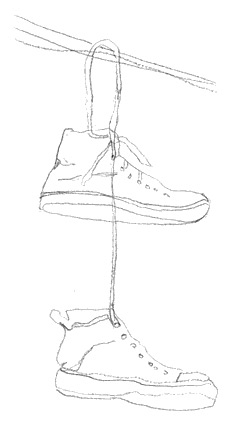
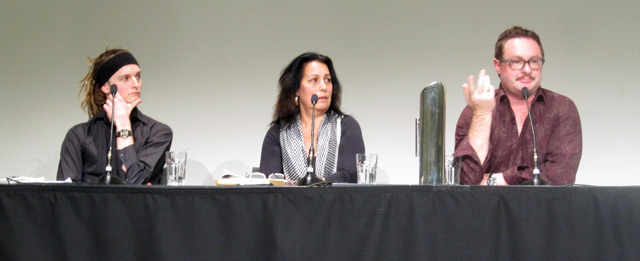

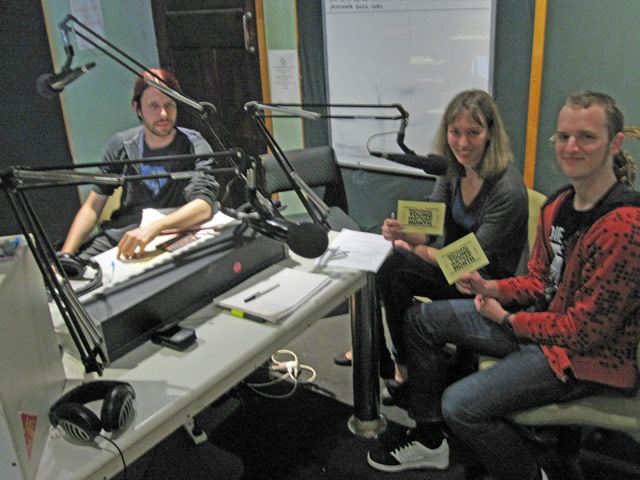
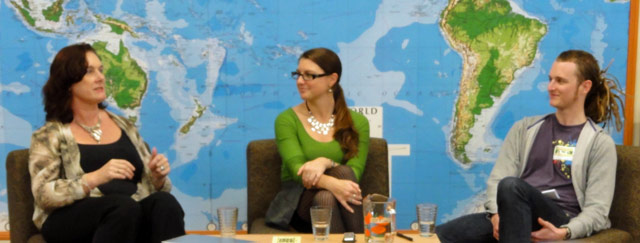
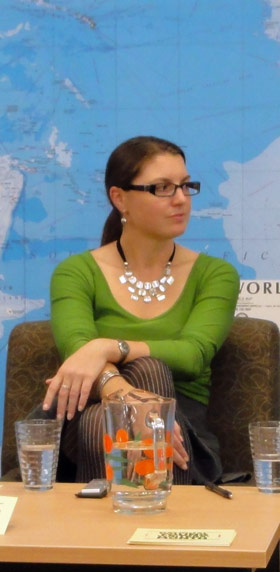 Christina [pictured right]: I think that’s probably one thing that… this is National Young Writers’ Month coming up, and I think it’s great when people have a real passion for writing and I interview a lot of young people for jobs. I’ll say “what is it that you love about journalism, and why do you want to be a journalist?” A lot of them say, “I really love to write”. And that’s really important, because you can’t teach someone to write well. You can sort of hone their skills and get them to a reasonable standard, but if they’re not a born writer, you can’t teach them to be.
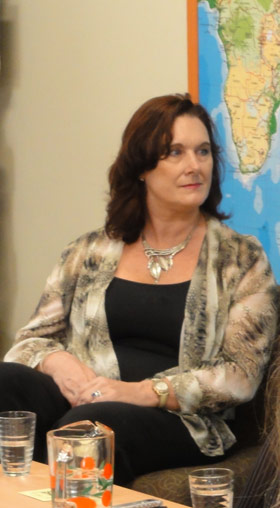 Janette [pictured left]: I think the reality is that in today’s world it’s accepted that most people will have two or three careers. Just because you happen to start doing something at 20 doesn’t necessarily mean you’ll be doing it 40. And I left News Limited after 20 years. I hit the 20 year mark and went, “okay, what do I really want to do now?” Because I could stay there quite happily for the next 20 years after that.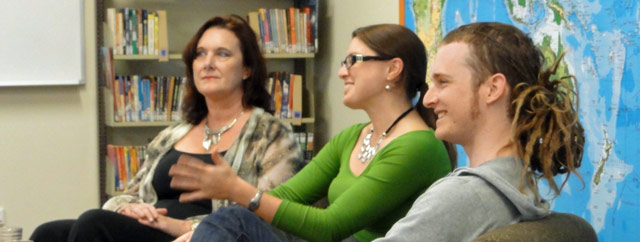
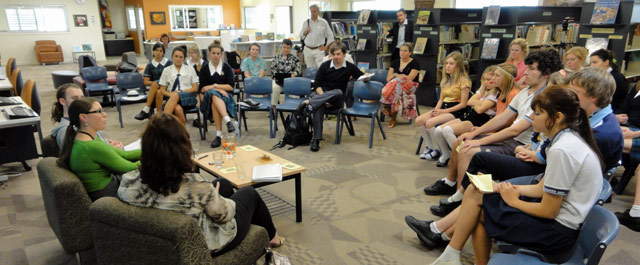
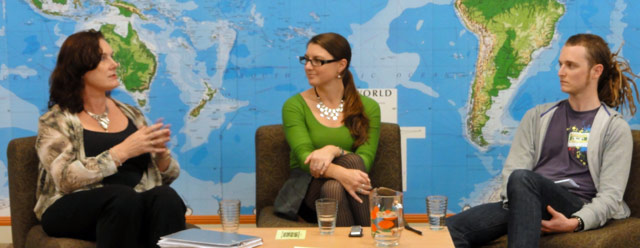
 Scott [pictured right]: I studied a Bachelor of Journalism at UQ, and my biggest regret is I didn’t start writing or looking for stories in my first year. You should always be looking for stories, even if they’re just writing on a blog or something, or looking for small places that are easy to get into. You should always be looking for stories.
 Andrew [pictured left]: Janette made a reference earlier to how, when she was editor, she would commission experts in certain areas to write opinion pieces or write features on those topics. It doesn’t have to be that way. To give an example, I now do some video game journalism for a website called IGN. The way I got into that was because late last year… to give you a bit of background info, Australia’s video game development industry is about 700 people-strong. That’s 700 people who are involved in making video games you play on PlayStation or Xbox or Nintendo.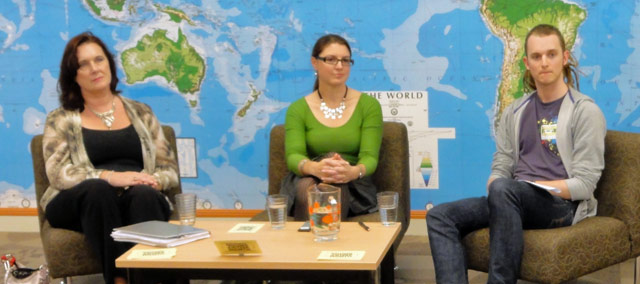

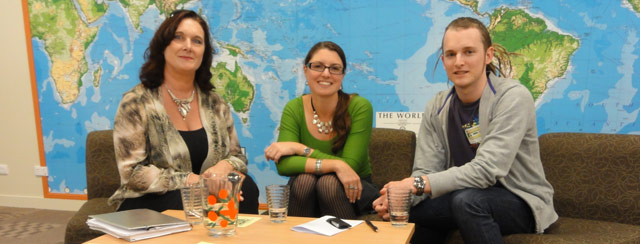

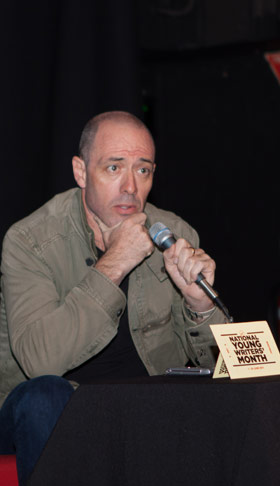 John: I’ve had the same thing. My writing, particularly the freelance work divides up into two eras: before
 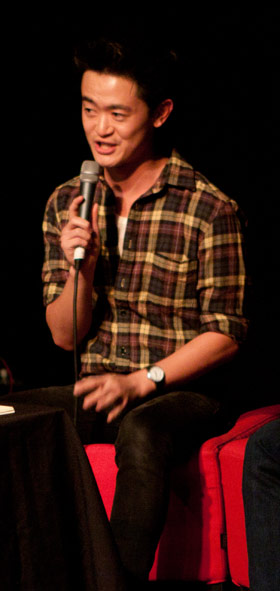 Ben: I did creative writing, or as a lot of my peers call it, creative shiting. And it’s funny; when I started doing creative writing over at QUT I think I was the third generation through. It was still a very new course. Creative writing courses in general were very new then. And I had the choice then in my mind between creative writing and a pure journalism degree. I just didn’t think I had the discipline to be a daily news journalist, so I backed off from that path.
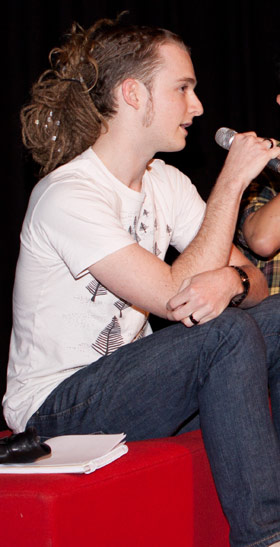 I think that every single place that I’ve started writing for the last couple of years has been because I’ve asked someone who I know knows an editor, to email-intro me to that person so that I’m not just some random guy pitching a story. It’s kind of that social proof, where someone else says, “this guy’s okay, listen to him”.
 To address your question in practical terms though: it can be great. An example: I got a very late stage commission from The Monthly 18 months ago; maybe two years ago. They lost one editor, which was bad luck. They lost another editor which was bad management… And they needed a cover story so they wanted to do something about the recession which at that stage the GFC was looming like the 1930s. And they needed it really quickly.
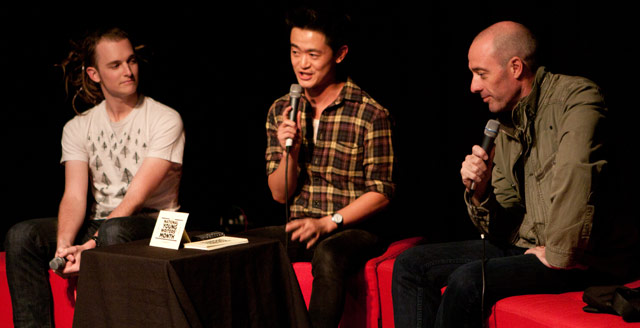
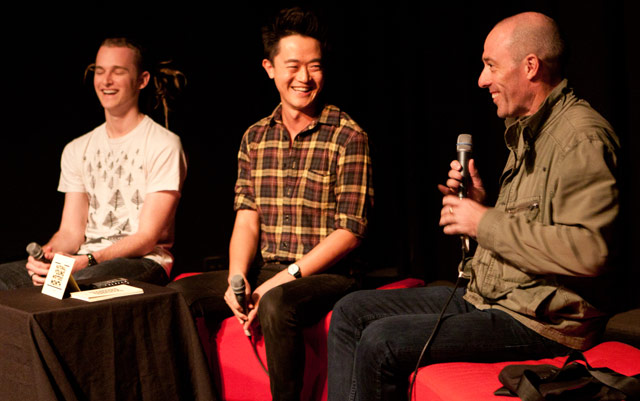
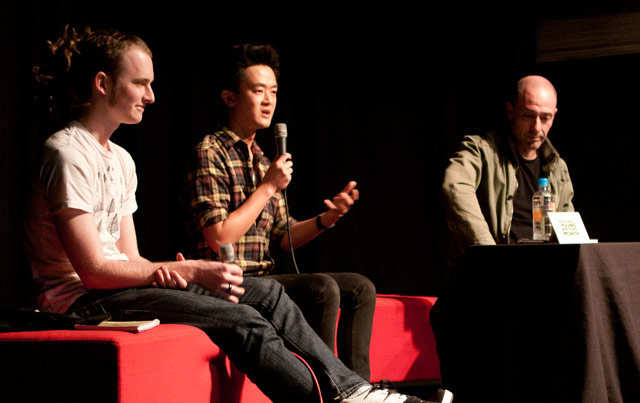
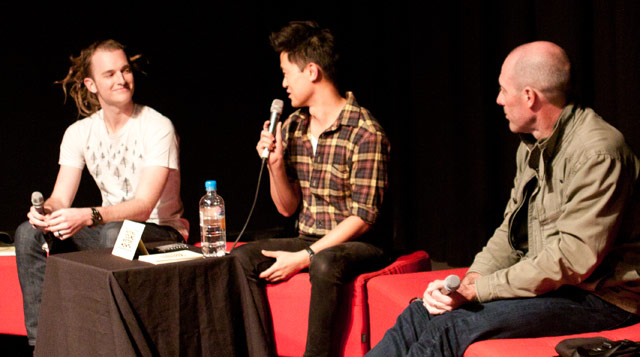
 Why I Write: Andrew McMillen
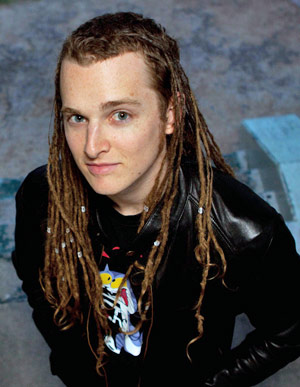 What are you most proud of?
 2010 Lizzies finalists announced